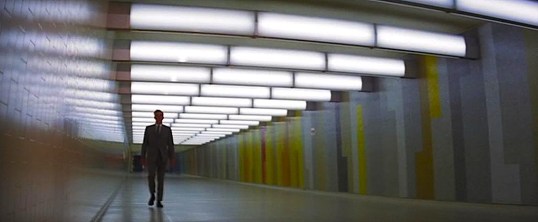
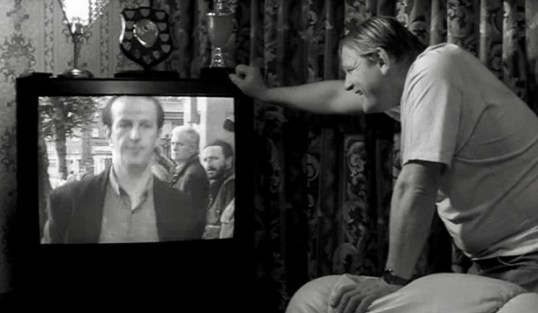
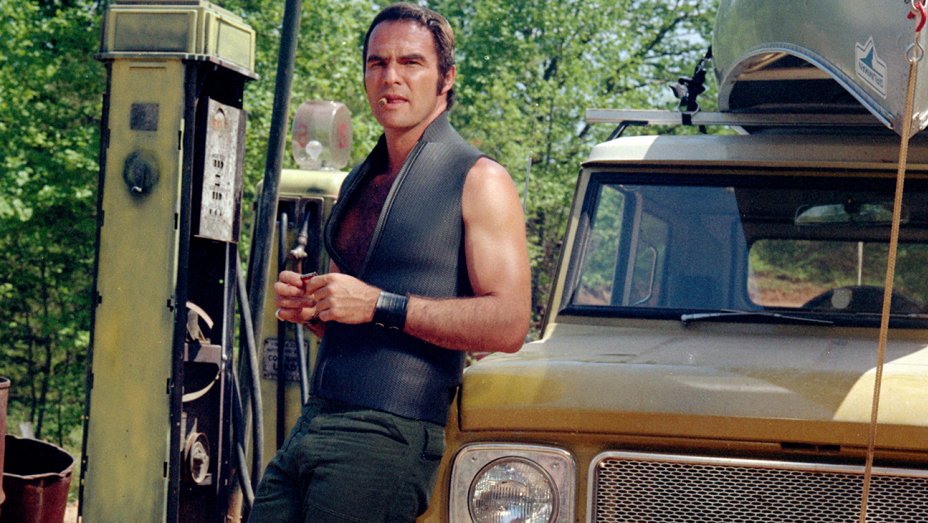
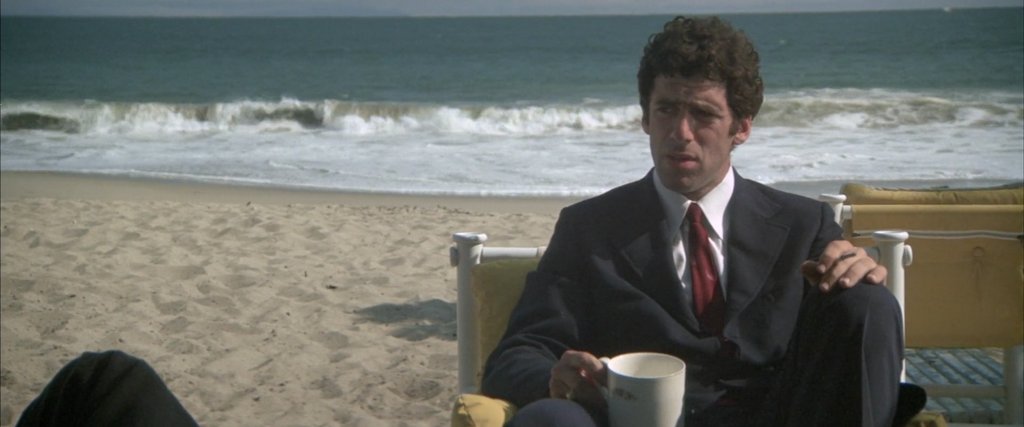
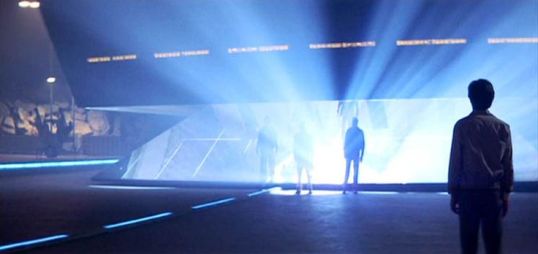
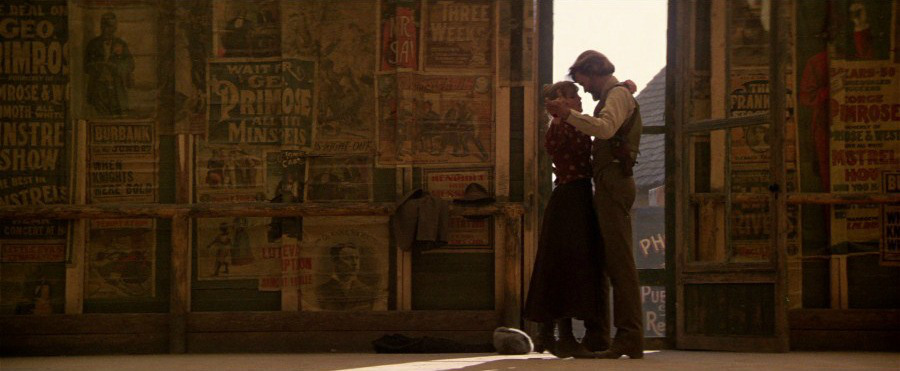
4 Shots From 4 Films: Special Vilmos Zsigmod Edition


4 Shots From 4 Films is just what it says it is, 4 shots from 4 of our favorite films. As opposed to the reviews and recaps that we usually post, 4 Shots From 4 Films lets the visuals do the talking!

Today, we pay tribute to the legendary cinematographer, Vilmos Zsigmond.  Born 90 years ago today in Hungary, Zsigmond got his start in the 60s with low-budget films like The Sadist but he went on to become one of the most in-demand cinematographers around.  In fact, of all the people who started their career working on a film that starred Arch Hall, Jr.,  it’s hard to think of any who went on to have the type of success that Zsigmond did.

Zsigmond won one Oscar, for his work on Close Encounters of Third Kind.  He was nominated for three more.  He also received a BAFTA award for his work on The Deer Hunter and was nominated for an Emmy for his work on Stalin.  He’s considered to be one of the most influential cinematographers of all time.

In honor of the legacy of Vilmos Zsigmond, here are….

4 Shots From 4 Films

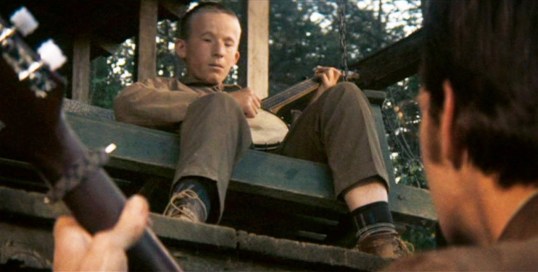
Deliverance (1972, directed by John Boorman, DP: Vilmos Zsigmond)

The Long Goodbye (1973, dir by Robert Altman, DP: Vilmos Zsigmond)

Close Encounters of the Third Kind (1977, dir by Steven Spielberg, DP: Vilmos Zsigmond)

Heaven’s Gate (1980, directed by Michael Cimino, DP: Vilmos Zsigmond)

Zardoz (1974, directed by John Boorman)


Welcome to the year 2293.  Savages known as the Brutals live in a wasteland and worship a giant stone head named Zardoz, who comes out of the sky, tells them to shoot guns and not have sex, and then dumps hundreds of firearms on them.  One Brutal, Zed (Sean Connery, wearing what appears to be a big red diaper) jumps into Zardoz’s mouth and discovers that Zardoz is actually a spaceship that is piloted by Arthur Frayn (Niall Buggy).  Zed shoots Arthur and then flies with Zardoz to the Vortex, where a bunch of overdressed and overaffected Immortals are having a perpetual garden party.

The Immortals, who can live forever because they’ve mentally learned how to slow the aging process, take an immediate interest in Zed.  They want to know where Arthur is.  Zed wants to explore the Vortex and learn what’s going on.  The Immortals assign Zed to do menial tasks.  Consuela (Charlotte Rampling) falls in love with Zed but keeps trying to kill him.  If you could live forever, the film asks, wouldn’t you eventually want to die?  I would not.

John Boorman, you nut!  Boorman is one of the greatest directors ever, responsible for Point Blank, Deliverance, and ExcaliburZardoz shows what happens when a great filmmaker falls so in love with his vision that no one can tell him that it’s not working.  Zardoz is pure Boorman, obsessed with nature, curious about paganism, and cynical about religion.  Boorman had something that he wanted to say about nature and humanity and he deserves a lot of credit for that.  He had just directed Deliverance and could have had his pick of projects in 1974.  He could have directed an action spectacular or he could have just gone home to Europe and counted his money.  Instead, Boorman decided to go with a dream project that he had been trying to put together for years.

Did it work?  No, it did not.  A few stunning images (that stone head!) aside, the movie itself is slow and talky and Sean Connery, with his deep brogue, is miscast as Zed.  (As Lisa said last night, “I’m glad to see Scotland survived the apocalypse.”)  With his pony tail and his handle-bar mustache, Connery seemed like he was doing a dry run for his Highlander character.  Charlotte Rampling is beautiful as Consuela and some viewers — mostly men — will appreciate her costumes, but the society of the Immortals is never as interesting as Boorman seems to think it is.

Zardoz is bad but still compelling because Boorman was so dedicated to whatever it was he thought the message of the movie was.  Watch it with a bud and try to figure it out,

Scenes I Love: Toshiro Mifune Meets Lee Marvin In Hell In The Pacific


In today’s scene that I love, two icons of cinematic cool meet in 1968’s Hell In The Pacific.

In this scene, Lee Marvin comes across Toshiro Mifune on the island on which they have both crashed.  There’s not much dialogue in this scene but, when you’ve got two actors like Marvin and Mifune, there doesn’t need to be much dialogue.

The Unnominated #11: The General (dir by John Boorman)


Though the Academy of Motion Picture Arts and Sciences claim that the Oscars honor the best of the year, we all know that there are always worthy films and performances that end up getting overlooked.  Sometimes, it’s because the competition too fierce.  Sometimes, it’s because the film itself was too controversial.  Often, it’s just a case of a film’s quality not being fully recognized until years after its initial released.  This series of reviews takes a look at the films and performances that should have been nominated but were, for whatever reason, overlooked.  These are the Unnominated.

Directed by John Boorman, 1998’s The General tells the story of Martin Cahill.

Martin Cahill (Brendan Gleeson) was a Dublin-based crime lord, a thief by trade who never made any apologies for his profession.  The film opens with the end of Martin Cahill’s life.  Leaving his suburban home, he’s sitting behind the steering wheel of his car when a young man runs up and shoots him in the face.  Cahill’s car rolls forward while his wife (Maria Doyle Kennedy) screams for help.  Cahill has been assassinated in front of his family and the reaction of the local police is to celebrate until Cahill’s oldest nemesis, Inspector Ned Kenney (Jon Voight), announces that they have nothing to cheer about.  The film leaves it somewhat ambiguous as to who shot Cahill, though it heavily suggests that he was shot by the IRA, both because of their mistaken belief that he was moving drugs into the neighborhood but also because of his refusal to share his profits with them.

The film flashes back and we watch as Martin Cahill, a rebellious young man who stole to impress girls and to get a shot back at the establishment, grows up to become Martin Cahill, the crime lord that the papers nickname The General.  Cahill is a professional thief and he’s fairly honest about it.  When his government-controlled flat is torn down, Cahill camps out on the site in a tent, refusing to leave because the location of the new building is to close to the police station.  He says he’d rather be moved to a richer part of town.  It’s better for his work.  As portrayed by Brendan Gleeson, Cahill is a fascinating and complex character, a ruthless criminal who is also devoted to his pigeons, his children and both his wife and his girlfriend (Angeline Bail).  (Fortunately, for Martin, his wife and his girlfriend know about each other and are good friends.)  He’s the type of crime lord who will test a man’s loyalty by nailing him to a pool table and then take him to the hospital afterwards.  “Sorry, Martin,” another associate says after Martin shoots him in the leg to make a fake break-in look authentic.  It’s hard not to like the film’s version of Martin Cahill, an intelligent and ultimately honest man who understands the importance of allowing his enemies to believe him to be a buffoon.  He may be a criminal but he considers it to be an honest living, unlike the government officials who force unwanted laws and exorbitant taxation on the citizenry  Director John Boorman certainly seems to like Cahill, which is interesting as Boorman was actually the victim of one of Cahill’s robberies.  (Boorman recreates the robbery in the film.)

The film went unnominated at the Oscars, which were dominated that year by Shakespeare in Love and Saving Private Ryan.  Brendan Gleeson definitely deserved a nomination for his charismatic performance as Martin Cahill.  Equally worthy of a nomination was Seamus Deasy’s black-and-white cinematography, which gives the film the dream-like feel of a half-remembered legend.  (The version of the film that’s on Tubi features desaturated color.  It’s actually an effective look for the film’s story but I still prefer the black-and-white original.)  Neither was nominated and, indeed, Brendan Gleeson would have to wait until 2023 to finally receive his first Oscar nominations for The Banshees of Inisherin.

The General (1998, dir by John Boorman, DP: Seamus Deasy)

Previous entries in The Unnominated:

  1. Auto Focus 
  2. Star 80
  3. Monty Python and The Holy Grail
  4. Johnny Got His Gun
  5. Saint Jack
  6. Office Space
  7. Play Misty For Me
  8. The Long Riders
  9. Mean Streets
  10. The Long Goodbye

4 Shots From 4 Films: Special 1972 Edition


4 Shots From 4 Films is just what it says it is, 4 shots from 4 of our favorite films. As opposed to the reviews and recaps that we usually post, 4 Shots From 4 Films lets the visuals do the talking!

Since we already highlighted Cabaret today, here are a few the classic films that we released the same year.

4 Shots From 4 1972 Films

The Godfather (1972, dir by Francis Ford Coppola, DP: Gordon Willis)

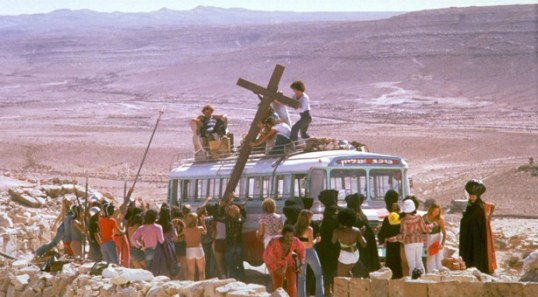
Jesus Christ Superstar (1973, dir by Norman Jewison, DP; Douglas Slocombe)

Deliverance (1972,dir by John Boorman, DP: Vilmos Zsigmond)

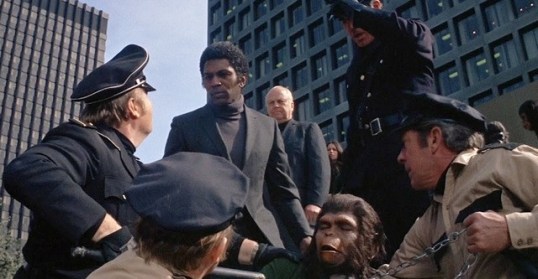
Conquest of the Planet of the Apes (1972, dir by J. Lee Thompson, DP: Bruce Surtees)

4 Shots From 4 Films: Special 1967 Edition


4 Shots From 4 Films is just what it says it is, 4 shots from 4 of our favorite films. As opposed to the reviews and recaps that we usually post, 4 Shots From 4 Films lets the visuals do the talking!

Today, we take a look at a classic cinematic year.  It’s time for….

4 Shots From 4 1967 Films

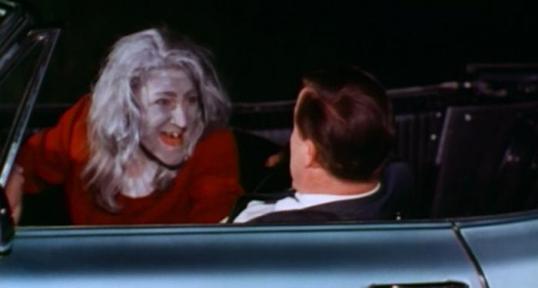
Something Weird (1967, dir by Herschell Gordon Lewis, DP: Andy Romanoff)

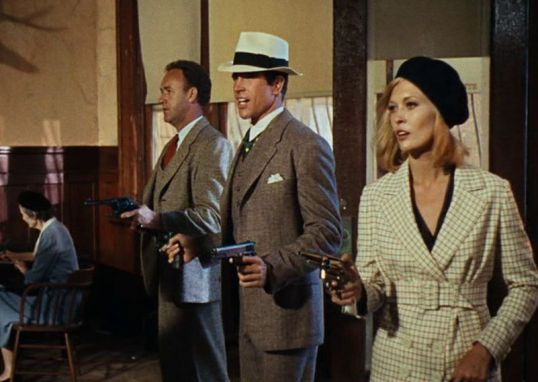
Bonnie and Clyde (1967, dir by Arthur Penn, DP: Burnett Guffey)

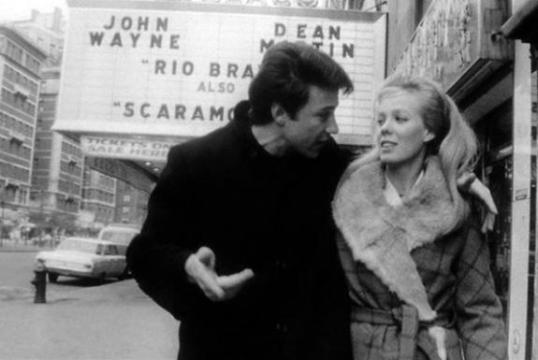
Who’s That Knocking On My Door (1967, dir by Martin Scorsese, DP: Michael Wadley and Richard Coll)

Point Blank (1967, dir by John Boorman, DP: Philip H. Lathrop)

Excalibur (1981, directed by John Boorman)


During the Dark Ages, Britain is at war.  King Uther Pendragon (Gabriel Byrne) leads his men against The Duke of Cornwall (Corin Redgrave).  Uther and his men swear their allegiance to God and St. George but they trust in the magic of the mysterious Merlin (Nicol Williamson).

Merlin negotiates peace between Uther and Cornwall but Uther throws that peace away when he becomes obsessed with Cornwall’s beautiful wife, Igrayne (Katrine Boorman).  Merlin uses his magic to disguise Uther as Cornwall so that Uther can spend one night with Igrayne.  When Cornwall is killed in battle, Uther marries Igrayne and realizes it was never necesarry to use Merlin’s magic and that Merlin, who has the power to see the future, knew that.  Merlin takes Uther and Igrayne’s infant son from them and then disappears.  Later, Uther is killed by by three of Cornwall’s men.  Before dying, Uther drives his magic sword, Excalibur, into a stone.  On the true king of England will be able to remove it.

Uther’s son, Arthur (Nigel Terry), grows up with no knowledge about his parentage.  When he accidentally draws Excalibur out of the rock, Merlin returns to counsel the new king.  And the new king has much to learn, as not all of the nobleman are willing to accept him as their ruler.  Arthur proves himself worthy to be king while his half-sister, Morgan (Helen Mirren), waits for her chance to get revenge.

Excalibur is one of the most ambitious films made about King Arthur.  John Boorman fits the entire legend of Arthur, Lancelot (Nicholas Clay), Percevel (Paul Geoffrey), Guinevere (Cherie Lunghi), and the search for the Holy Grail into one movie and, as a result, there’s not a dull moment.  Boorman presents the reign of King Arthur as a conflict between England’s pagan past and the new era of man.  Merlin and Morgan’s magic is powerful but, in the end, power is determined by bloody battles fought by men encased in clunky armor.  Arthur, Lancelot, and the other knights claim to live by the honorable, chivalric code but only one of them is able to live up to the ideal.  The others become consumed by lust, jealousy, and a thirst for power.

In my opinion, Excalibur is the best movie made about King Arthur, mostly because John Boorman takes the story seriously and makes us feel like we are watching people who truly are living in different world and a different time.  The chivalric code is necessary to keep the peace in a time when there are multiple pretenders-to-throne.  Mordred (Robert Addie) is not just a villain because he seeks to overthrow his father but also because he is the one person to have no respect for the code or the mystic power of the Holy Grail.

Excalibur has a large cast with many familiar faces.  Keep an eye out for Patrick Stewart as one of Arthur’s earliest supporters and also Liam Neeson as a surly Sir Gawain.  Of all the Lancelots who have appeared in the movies, Nicolas Clay is the best and Helen Mirren is the perfect Morgan.  Nicol Williamson steals the movie as the mysterious Merlin.  And while Nigel Terry was too old for the scenes where Arthur is supposed to be a callow teenager, he grows into the role just as Arthur grew into being king of the Britons.

Monty Python and The Holy Grail will always make me laugh but John Boorman’s big, beautiful, and bloody Excalibur is the best film about Camelot.

Scene That I Love: Dueling Banjos from John Boorman’s Deliverance


Diliverance (1972,dir by John Boorman, DP: Vilmos Zsigmond)

Today’s scene that I love comes from John Boorman’s 1972 film, Deliverance.  For the longest time, I thought that this scene was improvised and the kid with the banjo just happened to be hanging out around the set.  That makes for a nice story but I have recently read that this scene was actually scripted and the kid, while a local, was hired ahead-of-time to show up and play the banjo.

From Deliverance, here are the Dueling Banjos!

8 Shots From 8 Films: Special John Boorman Edition


4 (or more) Shots From 4 (or more) Films is just what it says it is, 4 (or more) shots from 4 (or more) of our favorite films. As opposed to the reviews and recaps that we usually post, 4 (or more) Shots From 4 (or more) Films lets the visuals do the talking.

Today, the Shattered Lens wishes a happy 92nd birthday to British director John Boorman.

Boorman is one of those great director who sometimes doesn’t seem to get as much credit as he deserves.  An undeniably idiosyncratic director, Boorman easily moved from genre to genre and who brought his own individual style to each of his films.  Sometimes, critics and audiences responded to that vision and sometimes, they didn’t.  And yet even Boorman’s so-called failures have come to be appreciated over the years.  Zardoz is a cult classic.  Even The Exorcist II: The Heretic is not quite the disaster that some insist.  If nothing else, it’s one of the strangest studio productions to ever be released.

At his best, Boorman is one of the most influential directors of all time.  How many neo-noirs have ripped off the look and the feel of Point Blank?  The ending of Deliverance has been imitated by a countless number of horror films and, indeed, every backwoods thriller owes a debt to Boorman’s film about four businessmen spending a weekend canoeing.  Excalibur is one of the most elegiac of all the Arthurian films while Hope and Glory retains its power to make audiences both laugh and cry with its portrayal of life on the British homefront during World War II.  Meanwhile, films like The General and The Emerald Forest gave underrated characters actors like Powers Boothe and Brendan Gleeson a chance to shine.

So today, in honor of the career and the legacy of John Boorman, here are….

8 Shots from 8 John Boorman Films

Point Blank (1967, directed by John Boorman, DP: Philip H. Lathrop)

Deliverance (1972, directed by John Boorman, DP: Vilmos Zsigmond)

Zardoz (1974, directed by John Boorman, DP: Geoffrey Unsworth)

The Exorcist II: The Heretic (1977, dir by John Boorman, DP: William A. Fraker)

Excalibur (1981, dir by John Boorman, DP: Alex Thomson)

The Emerald Forest (1985, dir by John Boorman. DP: Philippe Rousselot)

Hope and Glory (1987, dir by John Boorman, DP: Philippe Rousselot)

The General (1998, dir by John Boorman, DP: Seamus Deasy)

Scenes That I Love: Lee Marvin on Point Blank


100 years ago today, Lee Marvin was born in New York City.  One of the great screen tough guys, Lee Marvin played stoic and determined men who you didn’t want to upset.

That was certainly true of his role as Walker in 1967’s Point Blank.  A thief who was double crossed by his partner and the organization to which his partner was in debt, Walker is determined to get back the money that he stole from someone else.  Relentlessly, Walker moves from one mob boss to another and repeatedly, those bosses make the mistake of thinking that they can double cross him again.

Point Blank (1967, directed by John Boorman)

In this scene, which was reportedly considered to be shockingly violent by 1967 standards, Carter (Lloyd Bochner) attempts to fool Walker, just to discover that Walker is smarter and far more ruthless than anyone realizes.