Review: The Silent Hour (dir. by Brad Anderson)


“One missing piece doesn’t make you any less whole.” — Ava Fremont

The Silent Hour is the kind of mid-budget thriller that used to quietly fill up Friday night multiplex lineups, and there’s something refreshing about that. It is not reinventing the genre, but it does just enough with its premise of hearing loss, a deaf witness, and a sealed-off apartment block to feel engaging instead of disposable. When it leans into that sensory angle and the physical geography of the building, it clicks; when it falls back on stock corrupt-cop beats, you can feel the air go out of the room a little.

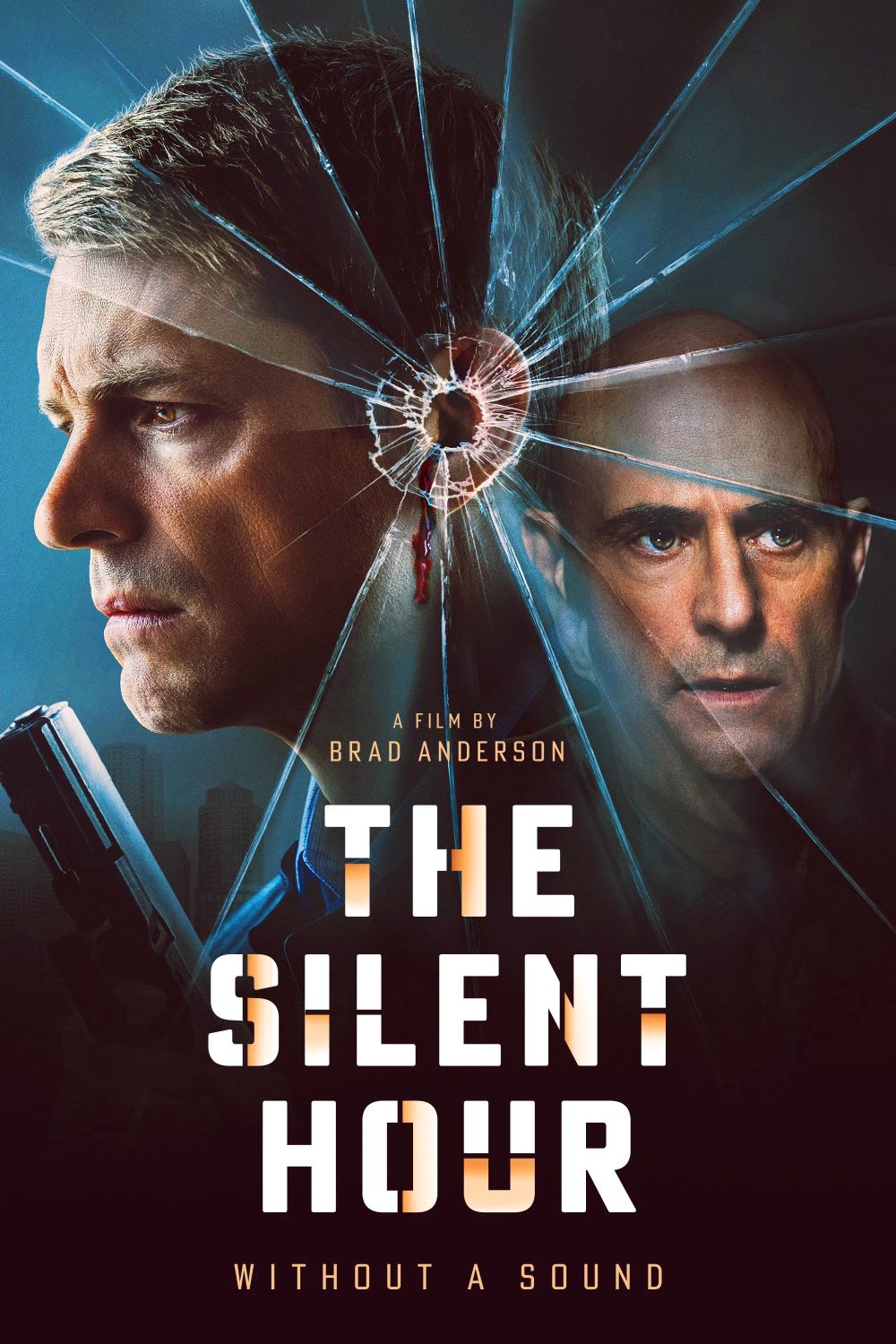
The setup is straightforward: Boston detective Frank Shaw (Joel Kinnaman) is struggling with permanent hearing loss after an on-the-job accident, trying to find a way back onto the force and into his own life. He is brought in because he knows some sign language and is asked to help take the statement of Ava Fremont (Sandra Mae Frank), a deaf photographer who has video evidence of a brutal gang murder. Once Frank leaves her run-down apartment building, he realizes he forgot his phone, heads back, and walks straight into a hit team sent to silence Ava; the rest of the film traps them inside the almost-condemned complex with a crew of killers who, crucially, they often cannot hear coming.

Director Brad Anderson has always had a knack for tense, contained spaces, and you can feel the same instincts here that powered films like Session 9 and Transsiberian, even if The Silent Hour is more conventional. The apartment block is shot as a grim, half-abandoned maze: flickering lights, long hallways, and just enough remaining tenants to complicate any hope of a clean escape. Anderson stages several sequences as slow, creeping cat-and-mouse instead of wall-to-wall gunfire, which fits the “you can’t hear the danger” concept nicely and gives the movie a more claustrophobic vibe than the plot synopsis might suggest.

Where the film genuinely distinguishes itself is in how it uses sound—or sometimes refuses to use it. Scenes that shift into Frank’s perspective often dampen or distort the audio, letting the score fall away so small vibrations, visual cues, and body language carry the tension, while Ava’s point of view goes further, dropping into near-total silence and forcing the audience to scan frames the way she would. It is not as radical as something like A Quiet Place, but it is effective, and the sound department clearly understands that “absence” can be as expressive as any bombastic action mix.

Kinnaman slides comfortably into this kind of bruised, low-key action role, and here he plays Frank as a guy permanently half a step behind the world around him, frustrated but not wallowing. The script gives him some predictable beats—guilt, self-destructive drinking, a shot at redemption—but Kinnaman sells the physical awkwardness of someone relearning how to move and work while not fully trusting his own body. Sandra Mae Frank is the movie’s secret weapon, though; as Ava, she never reads as a passive victim, and there is a practical, almost sardonic edge to the way she navigates the situation that helps keep the film from turning mawkish about disability.

The dynamic between Frank and Ava is also where the film finds its heart, even if it is pretty lightly sketched. Their communication is messy at first—his sign language is rusty and limited, hers is fast and precise—but that awkwardness becomes part of the tension, because a misread sign or delayed understanding can get people killed in this environment. As they settle into a rough rhythm, the movie quietly nudges Frank toward accepting that his hearing loss is not just a temporary obstacle but a permanent part of who he is now, and Ava is allowed to be more than a symbolic “guide” through that, with her own fears and bad decisions hanging over her.

On the flip side, the actual crime plot is about as standard as they come. The villains are corrupt cops cleaning up a messy murder, and if you have seen more than a couple of thrillers, you will probably guess who is dirty long before the script “reveals” it. There are a few half-hearted attempts at moral compromise and temptation—a hefty bribe, old loyalties—especially around Frank’s former partner Doug Slater (Mark Strong), but the story never digs into systemic rot or moral ambiguity in any meaningful way; it just uses corruption as a convenient engine to keep the bullets and double-crosses coming.

Structurally, the film works best as a series of mini-scenarios inside the building rather than as a twisty conspiracy. You get sequences where Frank and Ava navigate dark stairwells while trying to stay ahead of men they can feel but not hear, tense face-offs in cramped apartments with panicked tenants, and a few well-staged bursts of violence that remind you this is still a pretty nasty situation. The climax leans into fire, chaos, and one last push for survival, and while the resolution lands exactly where you’d expect, the final quieter beats give the characters a bit of closure that feels earned rather than tacked on.

Performance-wise, the supporting cast does its job without stealing the movie. Mekhi Phifer and Mark Strong bring some veteran presence as fellow cops circling around Frank, and even when the writing nudges them toward archetype, they at least feel like people who have known each other for years rather than walking plot devices. The henchmen are more one-note, essentially “the guys with guns” hunting through the building, but the film leans on their physicality and menace instead of trying to give everyone a tragic backstory, which is probably the right call for a lean thriller like this.

If there is a frustration here, it is mostly about missed potential. The core hook—two people with hearing loss trying to survive in a sound-dependent cat-and-mouse game—is strong enough that you can imagine a slightly sharper script pushing much harder on point of view, communication breakdown, and the way the police institution treats disability. Instead, The Silent Hour uses those elements as flavoring around a very familiar skeleton, resulting in a movie that is solid and sometimes gripping but rarely surprising.

Taken on its own terms, though, The Silent Hour is a tight, competently staged thriller that understands how to milk a confined space and an offbeat sensory angle for suspense. The running time is under two hours, the pacing stays brisk, and there are enough well-executed set pieces and committed performances to make it an easy recommendation if you are in the mood for a darker, low-key action night. It will not stick with you the way the very best of Brad Anderson’s work does, but as a late-night watch with the lights down and the volume doing most of the heavy lifting, it gets the job done.
Review: Silent Night (dir. by John Woo)


“I can’t speak, but I’ll make them listen.” — Brian Godlock

Silent Night (2023) finds John Woo making his first American action film in two decades, since the disappointing Paycheck in 2003. While it’s definitely a step up from that sci-fi thriller misfire, Silent Night still doesn’t quite reach the heights of Woo’s Hong Kong classics or even his best Western productions like Face/Off. This latest outing is a lean, mostly dialogue-free revenge thriller that has Woo’s fingerprints all over it—a mix of balletic violence and emotional anguish—but it also shows the limitations of trying to recapture that old Woo magic in a very different cinematic landscape.

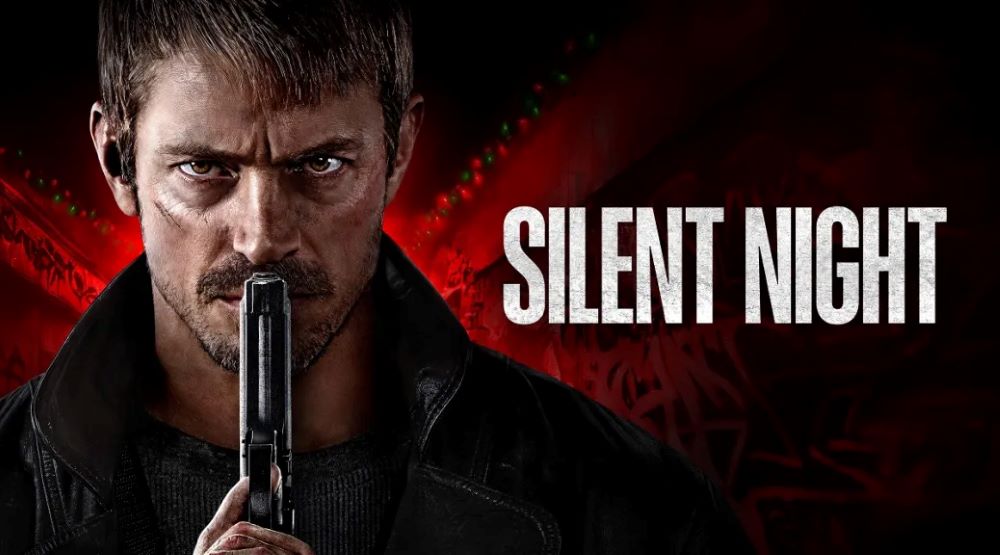
The story is simple: Joel Kinnaman plays Brian Godlock, an electrician whose son is killed in a gang shootout on Christmas Eve, and he himself is shot in the throat, losing his voice. The film then follows Brian’s quiet but brutal quest for revenge a year later. The choice to tell this nearly wordless story is a bold gamble, and for much of the film, the absence of dialogue adds power to the emotions and the tension. Kinnaman’s physical performance carries most of the weight—his grief, anger, and determination are all conveyed through body language and expression. This is one of the biggest strengths of Silent Night: Woo’s ability to communicate story and feeling visually, which harkens back to the silent films of early cinema, blending with his signature poetic violence.

That said, the silence also highlights the script’s thinness. The supporting characters, including Brian’s wife (Catalina Sandino Moreno) and a sympathetic detective (Kid Cudi), feel underdeveloped, serving more as plot functions than full people. This narrow focus on Brian’s pain and revenge means the film sometimes feels emotionally shallow beyond the core trauma. Compared to Woo’s earlier work, where secondary characters and relationships added layers of complexity and intensity, Silent Night is more singular and direct, for better and worse.

When it comes to action, Woo shows he still has the chops. The gunfights and hand-to-hand scenes are meticulously choreographed, emphasizing realism with a solid dose of stylized flair. It’s a return to the grounded grit Woo displayed in some of his earlier Hong Kong films, leaving behind some of the higher-octane operatic excess of his best-known Hollywood hits. The violence feels impactful and earned, avoiding cheap spectacle for a more tactile, bone-crunching effect.

Still, Silent Night doesn’t quite have the scope and scale of Face/Off or The Killer. It lacks the grandeur and intricate storytelling that made those films iconic. Instead, it’s a tighter, moodier experience that prioritizes emotional atmosphere over plot complexity. This stripped-down approach is refreshing to a degree, but it can also become monotonous—especially since the lack of dialogue and limited character development demand more patience from the viewer.

Comparing it directly to PaycheckSilent Night is a clear improvement. Paycheck was widely regarded as a forgettable action film that failed to capitalize on Woo’s talents, stuck with a muddled sci-fi plot and lacking the emotional firepower Woo excels at. Silent Night ditches the high-concept sci-fi for a more grounded, personal revenge story, allowing Woo to bring more of his hallmarks to bear—the intense physical performances, a palpable sense of loss, and carefully crafted action sequences.

However, it’s important to temper enthusiasm with the fact that Silent Night is not a full return to Woo’s prime Hong Kong cinema or his best Hollywood days. It’s missing some of the poetry, charm, and iconic bravado of movies like Hard Boiled or Face/Off, where Woo’s characters felt larger than life and the action was operatic and unforgettable. Here, the film often feels restrained, even muted, perhaps reflecting a director adapting to new cinematic expectations but also struggling to fully bring himself back to the forefront in the American industry.

Silent Night is a worthwhile viewing for fans of John Woo and action cinema looking for something different—one part homage to classic revenge tales, one part experiment in silent storytelling. It’s emotionally raw, visually precise, and markedly better than Paycheck, but it also lacks the fire and inventiveness that made Woo a legend. It’s a step forward and a reminder that even the greatest filmmakers can evolve and sometimes falter. If Woo is finding his voice again, it’s decidedly quieter but still unmistakably his own.

Review: Icefall (dir. by Stefan Ruzowitsky)


“You don’t find redemption in warmth. You fight for it in the cold.” — Ani

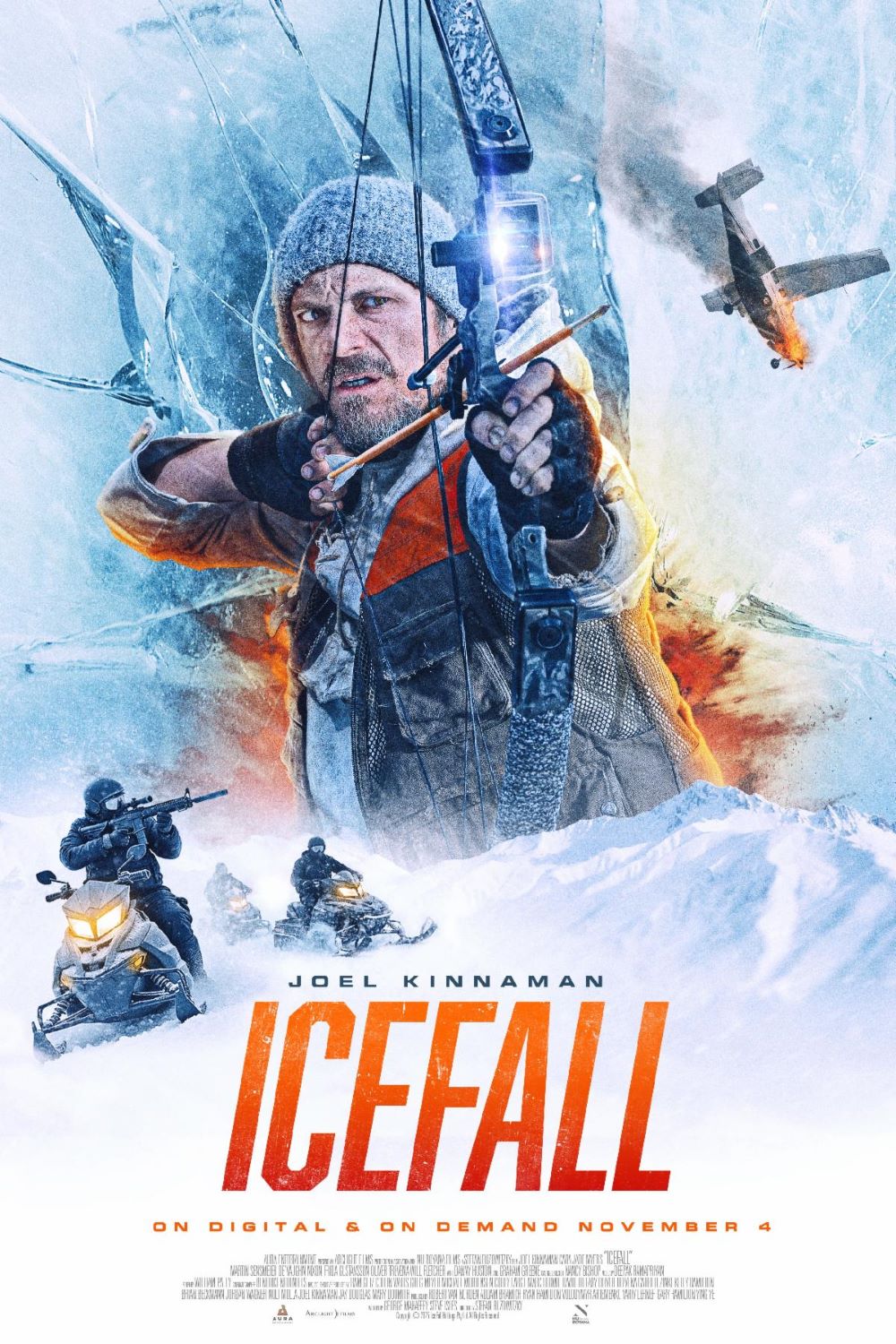
Icefall (2025) is a survival thriller set deep in a frozen wilderness where Ani, a determined Indigenous game warden, and Harlan, a grizzled poacher, find themselves forced together to evade criminals hunting down a crashed plane’s cash stash. Their uneasy alliance forms the heart of the movie, supported by the biting cold, shifting ice, and relentless danger that keeps the tension alive throughout.

The film benefits significantly from its leads’ performances, especially Joel Kinnaman’s portrayal of Harlan. Kinnaman has become something of a seasoned veteran in this kind of gritty thriller and action role, having built a career playing characters who balance toughness with a hint of vulnerability. His familiarity with this genre brings a dependable authenticity to Harlan, who feels weathered but not worn out, someone who understands survival instinctively. Alongside Cara Jade Myers’ portrayal of Ani, their on-screen chemistry roots the film in more than just action beats, making their relationship genuinely engaging amid the harsh landscape.

Speaking of the environment, Icefall uses its setting as more than just a backdrop. The fragile ice and near-empty wilderness create natural obstacles that heighten the sense of peril, reinforcing the story’s theme that nature itself is an adversary. The melting ice becomes a constant threat, lending the narrative a slow-burning pressure that’s as effective as any chase or gunfight. This atmospheric tension is one area where the film really earns its keep, immersing viewers in the dangerous beauty of its frozen world.

However, Icefall stumbles when it comes to story originality and pacing. The film’s premise feels familiar—dangling on the edge of a formula that fans might recognize as similar to the 1993 Sylvester Stallone thriller Cliffhanger. While Cliffhanger had that film’s villain as a magnetic and complex antagonist, Icefall misses that mark. Its criminals lack charisma and depth, removing a vital layer of excitement and tension from the story. Without a compelling foil for Harlan and Ani, many confrontations fall flat, and the thriller’s pulse falters.

The plot is further weakened by a somewhat cluttered narrative, introducing a secret government biohazard subplot that feels shoehorned in and detracts from the simpler core survival story. Characters occasionally make choices that seem more dictated by the demands of the script rather than believable motivations. These factors lead to inconsistent pacing, which can frustrate viewers looking for a tight, focused thriller.

Visually, the film offers moments of stark beauty but is uneven technically. Some sequences perfectly capture the isolating chill and danger of the icy wild, while others suffer from abrupt editing and less convincing digital embellishments that distract from the intended immersion. The cinematography shifts between grand vistas and awkward close-ups, occasionally disrupting the flow of tension.

Characterization is uneven as well. Ani shines intermittently but sometimes veers into typical thriller protagonist territory, exhibiting moments of indecision or cliché. Kinnaman’s Harlan remains the more grounded and believable figure, benefiting from his extensive experience playing similar roles. Meanwhile, the villains fail to rise above stereotype, lacking the nuance or menace that could have made the story pulse with higher stakes.

Still, when the film settles into the rhythm of survival—the crunch of snow underfoot, the slow erosion of trust, the ever-present threat of dissolving ice—Icefall delivers a tense, atmospheric experience. It’s not a revelatory thriller, but it does offer enough grit and moodiness for a single viewing, especially for fans of cold-climate survival dramas.

Icefall is a mixed bag: it has strong performances, especially from Joel Kinnaman, who clearly knows the ropes of this genre and plays an experienced, weathered survivor with ease. The film’s use of environment is a big plus, giving it an edge that many thrillers lack. Yet it suffers from an unoriginal plot that recalls better films like Cliffhanger but without their charismatic antagonists, plus narrative distractions and technical inconsistencies. It’s an okay watch for those in the mood for a frosty thriller with solid leads but never quite rises to leave a lasting impression.

Comic-Con’s First Look At The Suicide Squad


SuicideSquad

“If anything goes wrong we blame them. We have built-in deniability.” — Amanda Waller

When will studios finally realize that showing any video reel, trailer or teaser at Comic-Con’s Hall H will inevitably be leaked if no official release has been made. It’s the nature of the internet and has become a sort of ritual each summer when Comic-Con rolls around. Some studios have been better with whetting the appetite of fans by giving those who can’t make Hall H with something to see. Others seem intent on trying to control what comes out of Hall H. It’s almost as if they’re saying “sucks to be you” if one couldn’t attend Comic-Con and get a seat in Hall H.

This year it seems Warner Brothers is that studio that’s trying to stamp out all the leaked footage shown at this year’s Hall H during their industry panel. It was a panel that was seen as the best thing about the Hall H gatherings. They did the right thing about releasing the latest trailer for Batman v. Superman: Dawn of Justice to the public and not just keeping it for the Hall H crowd. Yet, they whiffed big time by not doing the same for the Suicide Squad trailer (or first look as some call it).

Inevitably some in Hall H were kind enough to turn on their smartphones and video a rough and grainy look at the trailer which was then uploaded onto the internet. This was the first look a majority of comic-book and film fans got of Suicide Squad. Not a good look, but fans were playing this leaked footage nonstop. So, taking a page out of Marvel Studios PR playbook after the first Avengers: Age of Ultron trailer leaked in a very non-HD version, Warner Bros. has finally surrendered and released an HD-version of the Suicide Squad trailer.

All is right with the world.

Trailer: The Darkest Hour (Official)


Timur Bekmambetov is not the director of this upcoming alien invasion film The Darkest Hour. The director is actually one Chris Gorak, but the trailer is definitely pushing Bekmambetov’s name as if he is the director. Then again I think the film does seem to have Bekmambetov’s stylistic flourishes written all over it.

The Darkest Hour looks to be set in Russia from beginning to end as we follow a group of young Americans on vacation and hitting up all the party night spots in Moscow. This makes for an interesting premise in that we see an alien invasion from a wholly different perspective. It’s an alien invasion seen through the Russian perspective even if half the cast are American tourists.

I hadn’t heard much about this film until now, but after seeing the trailer I’m definitely going to run out and see it when it comes out.

The Darkest Hour is set for a December 23, 2011 release date.