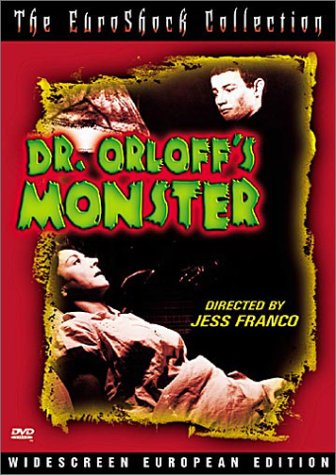
International Horror Film Review: Dr. Orloff’s Monster (dir by Jess Franco)


This 1964 Spanish film takes place in Austria.

The notorious Dr. Orloff is dying.  Orloff was the lead character in director Jess Franco’s The Awful Dr. Orlof.  (The spelling of Orlof’s last name changes from film to film.)  In the first film, Orlof (played with maniacal relish by Howard Vernon) was a father driven mad by his daughter’s disfigurement.  With the help of his mute servant, he murdered women so that he could perform skin transplants in order to give his daughter back her beauty.  In Dr. Orloff’s Monster, Dr. Orloff is a more of a generic mad scientist and he is now played Javier de Rivera.  Knowing that his time is running out, Orloff passes along his secrets to one of his disciples, Dr. Conrad Jekyll (Marcelo Arroita-Jáuregui).

(In the dubbed American version of the film, Dr. Jekyll’s name is changed to Dr. Conrad Fisherman.)

Dr. Jekyll returns to his own remote Austrian castle.  He’s soon joined by his innocent niece Melissa (Agnes Spaak).  Melissa is searching for her father, Andros (played by Hugo Blanco).  What she doesn’t know is that Dr. Jekyll earlier caught Andros in bed with Jekyll’s wife, Inglud (Luisa Sala).  Jekyll murdered Andros.  This led to Inglud becoming an alcoholic.

However, thanks to the teachings of Dr. Orloff, Jekyll knows how to bring Andros back to life.  Unfortunately, the reanimated Andros is a hulking monster who Conrad uses to kill all of his former mistresses.  It turns out that Inglud wasn’t the only one who had trouble sticking to marriage vows.  Soon, Inspector Klein (Pastor Serrado) is investigating a growing number of nightclub-related murders.  Inspector Klein is also falling in love with Melissa, which has the potential to make things more than a bit awkward.

Dr. Orloff’s Monster (which is also known as The Mistresses of Dr. Jekyll) was Franco’s first sequel to The Awful Dr. Orlof and it was also the tenth film that was he was credited with directing.  (As Franco was a prolific filmmaker who used a huge amount of pseudonyms and whose films were often released under several different titles, we will probably never have a definite answer on how many films he actually directed over the course of his long career.)  Particularly when compared to Franco’s later films, Dr. Orloff’s Monster seems rather restrained.  As always with Franco, there’s a bit of nudity and an emphasis on murder but the violence is rather bloodless and the usual Franco perversions are hinted at without being explicitly shown.  Instead, with this film, Franco emphasizes atmosphere over shock.  The black-and-white cinematography creates the feel of a perfect noir, with Andros emerging from the shadows to attack his victims and then retreating back into the darkness.  This, along with a deliberate pace and Franco’s frequent use of close-ups, gives Dr. Orloff’s Monster the feeling of a languid but menacing dream.  With this film, Franco fills the screen with nightmarish ennui.

Unfortunately, the film suffers due to the absence of Franco’s usual villain, the great Howard Vernon.  Vernon always brought a hint of old world decadence to his performances and the rather bland Marcelo Arroita-Jáuregui is simply not as interesting as Dr. Jekyll.  Despite his death at the start of the film, Dr. Orloff would appear in other Franco films and, fortunately, Howard Vernon would return to play him.
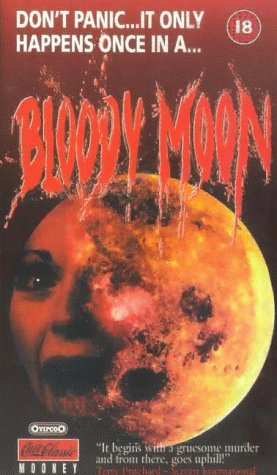
International Horror Film Review: Bloody Moon (dir by Jesus Franco)


A 1981 West German/Spanish co-production, Bloody Moon open with a disfigured man named Miguel (Alexander Waechter) putting on a Mickey Mouse mask and sneaking into a party being held on the campus of a private school that is known as (deep breath) Europe’s International Youth-Club Boarding School of Languages.  It’s a school that is meant for the young, the rich, and the unburdened.  In short, it’s not a place for Miguel at all.

With his face safely hidden behind the smiling image of Disney’s favorite mouse, Miguel meets a young woman who is dancing by herself.  She mistakes him for her boyfriend and heads into a nearby bungalow with him.  They start to make love but — uh oh! — the mask falls off!  The woman screams at the sight of Miguel’s scarred face.  Miguel grabs a pair of scissors and stabs her to death while Mickey Mouse’s smiling face smiles on the floor.  (One can only imagine how Disney reacted to this film.)

A few years later, Miguel is being released from a mental hospital.  He’s released into the custody of his sister, Manuela (Nadja Gerganoff).  Miguel’s doctor (played by the film’s director, Jesus “Jess” Franco) says that Miguel should be fine as long as he’s not around anything that reminds him of the incident.  Manuela says that she’ll look after him and then promptly takes him back to the school where he committed the murder.  What part of not reminding him did she fail to understand?

Manuela does actually have an excuse for bringing Miguel to the school with her, though.  She and her aunt, Countess Maria (Maria Rubio), own the school.  Countess Maria is an angry, wheelchair-bound woman who is convinced that Manuela wants to kill her so that she can take over the school and it does seem that Manuela does have some hostility towards her aunt.  Of course, another reason for bringing Miguel back to the school to live with her is that he and Manuela have an incestuous relationship …. or, at least, they did.  Now that Manuela refuses to sleep him, Miguel is reduced to lurking around campus and staring at all the students while they sunbathe topless at the pool.  While Manuela stands naked in her room and stares at the moon (the bloody moon?), Miguel is hunched down in the shrubbery and peeping through windows.

Among the students is Angela (Olivia Pascal).  Angela is upset because she discovered a dead body but no one’s willing to believe her because she also enjoys reading mystery novels.  Angela knows that someone is committing murders on campus but is it Miguel or it is Professor Alvaro (Christoph Moosbrugger) or could it even be the enigmatic Bueno (Otto Retzer), a bald guy who seems to randomly pop up around campus?  Can Angela convince her remarkably stupid classmates that there’s a murderer on campus before it’s too late?

Bloody Moon was one of the many films directed by the Spanish auteur and former Orson Welles collaborator, Jesus Franco.  In a career that lasted over 60 years, Franco directed at least 173 feature films.  (It’s felt that he actually directed quite a bit more, usually under a pseudonym.  Franco, himself, claimed that he didn’t really remember how many films he had directed.)  As a director, Franco is remembered for his low budgets, his unapologetic embrace of the sordid, his rather casual attitude towards maintaining continuity from one scene to another, and for occasionally framing an interesting shot or two.  By his own admission, Bloody Moon was not a personal project for Franco.  It’s something that he did for the money, as a director-for-hire.  However, Bloody Moon is unmistakably a Franco film.  The budget is low.  The subject matter is often so sordid that it borders on parody.  As far as continuity goes, Angela goes from wearing a nightshirt when she discovers a dead body inside her bungalow to wearing a colorful sweater when she runs outside in a panic.  (I guess she could have stopped to change clothes with a dead body on the bed and a killer lurking somewhere in the bungalow but I doubt it.  When there’s a dead body on your bed, modesty should be the least of your concerns.)  And yet, as silly as it all is, there are moments when Bloody Moon does achieve a certain dream-like intensity.  The mix of badly dubbed performers, sudden jump cuts, bloody violence, and the total lack of narrative logic makes Bloody Moon feel a bit like a filmed nightmare.  It works despite itself.

Bloody Moon is one of the films that was, for a while, banned in the UK due to its violence and bloodshed.  And indeed, there is a lot of blood and the violence is a bit more graphic than what one might expect to find in the American slasher films that Bloody Moon was obviously meant to capitalize upon.  This film is notable for just how cruel the killer is.  Not even Michael Myers or Jason Voorhees resorted to using a giant radial saw.  That said, this is one of those films that has a reputation for being bloodier than it actually is.  The majority of the film is taken up with scenes of people wandering around campus, either searching for their friends or stalking a potential victim.  Personally, I felt the nonstop searching scenes added to the film’s dreamlike feel but I imagine those who only watch films like this for the kills will find it all to be a bit slow.

Bloody Moon was clearly made to capitalize on the success of American slasher films like Halloween and Friday the 13th.  That said, Bloody Moon has more in common with the Italian giallo genre, right down to the whodunit nature of the plot, the ludicrously sleazy motives of the killer, and the total lack of intentional comic relief.  Like so many giallo films, Bloody Moon takes place in a world where everyone’s either a victim or a killer and no one’s particularly likable.  It’s not one of Franco’s personal films but there’s still enough of his signature style to appeal to his fans.  As with most of Franco’s film, it will be best appreciated by those who like a little ennui mixed with their horror.

4 Shots From 4 Jess Franco Films


4 Shots From 4 Films is just what it says it is, 4 shots from 4 of our favorite films. As opposed to the reviews and recaps that we usually post, 4 Shots From 4 Films lets the visuals do the talking.

Today, we pay tribute to the enigmatic master of Spanish horror and suspense, Jesus “Jess” Franco!  It’s time for….

4 Shots From 4 Jess Franco Films

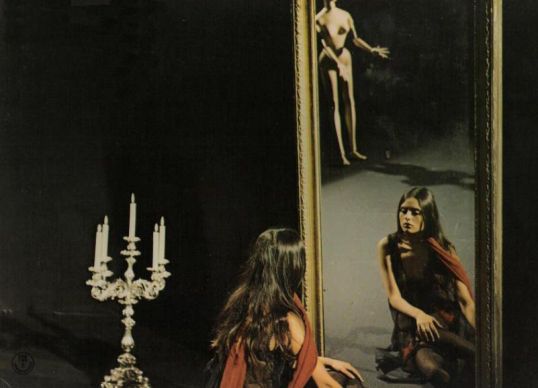
Vampyros Lesbos (1970, dir by Jess Franco, DP: Manuel Merino)

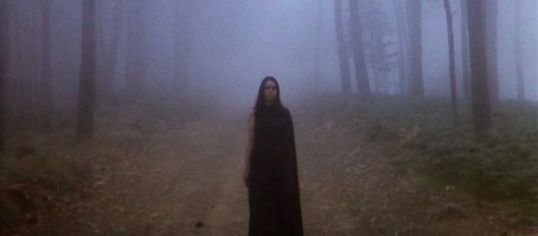
Female Vampire (1973, dir by Jess Franco, DP: Jess Franco)

Countess Perverse (1973, dir by Jess Franco, DP: Manuel Merino)

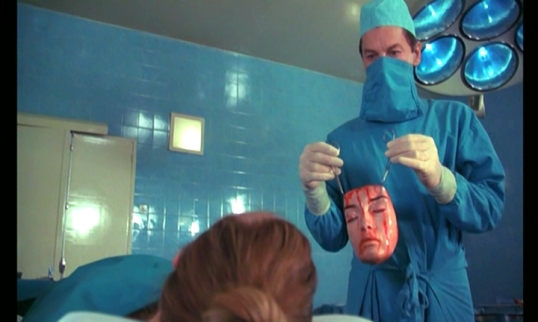
Faceless (1988, dir by Jess Franco, DP: Maurice Fellous)


4 Shots From 4 Jess Franco Films: The Awful Dr. Orloff, Vampyros Lesbos, Female Vampire, Faceless


4 Shots From 4 Films is just what it says it is, 4 shots from 4 of our favorite films. As opposed to the reviews and recaps that we usually post, 4 Shots From 4 Films lets the visuals do the talking!

This October, we’ve been using 4 Shots From 4 Films to pay tribute to some of our favorite horror directors!  Today, we recognize the one and only Jesus “Jesse” Franco!

4 Shots From 4 Films

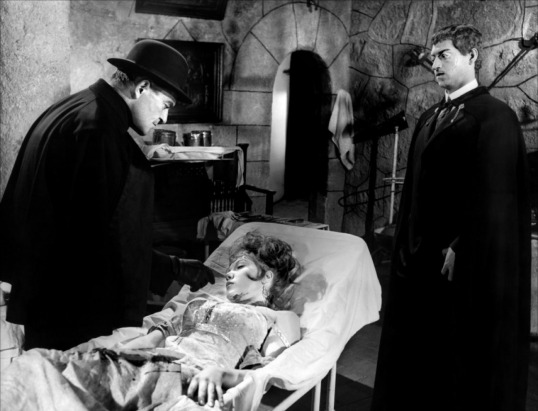
The Awful Dr. Orloff (1962, dir by Jess Franco)

Vampyros Lesbos (1970, dir by Jess Franco)

Female Vampire (1973, dir by Jess Franco)

Faceless (1988, dir by Jess Franco)


4 Shots From 4 Films: Special Jess Franco Edition


4 Shots From 4 Films is just what it says it is, 4 shots from 4 of our favorite films. As opposed to the reviews and recaps that we usually post, 4 Shots From 4 Films lets the visuals do the talking!

Today is the 90th anniversary of the birth of Jesus Franco!  One of the most prolific filmmakers of all time, Franco made movies that …. well, they’re not easy to describe.  Jess Franco was responsible for some of the most visually striking and narratively incoherent films ever made.  He made films that you either loved or you hated but there was no mistaking his work for being the work of someone else.

Today, in honor of his birthday, here are….

4 Shots From 4 Films

The Awful Dr. Orloff (1962, dir by Jess Franco)

The Blood of Fu Manchu (1968, dir by Jess Franco)

Vampyros Lesbos (1970, dir by Jess Franco)

Countess Perverse (1973, dir by Jess Franco)

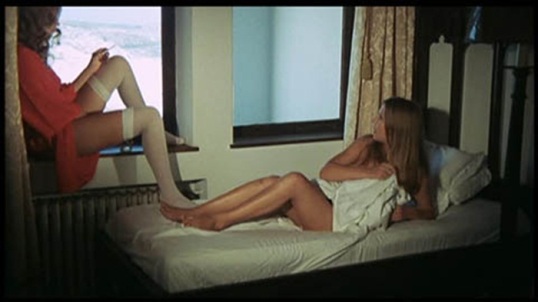
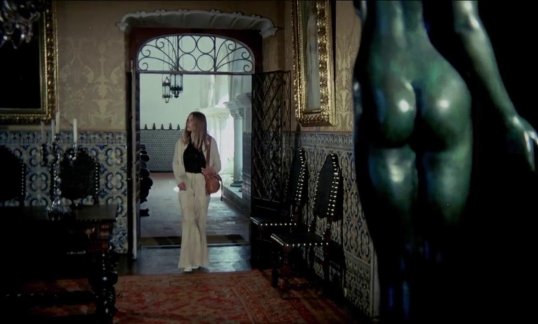
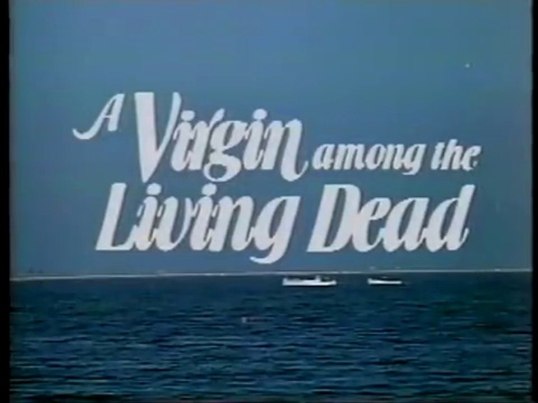
International Horror Review: A Virgin Among The Living Dead (dir by Jess Franco)


This 1973 Spanish-French-Italian production’s title is both its greatest strength and also its greatest weakness.

On the one hand, it’s impossible to forget a title like A Virgin Among the Living Dead.  It’s a title that mixes both horror and sex, which are two things of which audiences simply cannot get enough.  On the other hand, this is a a Jess Franco film and the title — which is so blatant and over-the-top — sounds like it could almost be a parody of Franco’s “unique” style of film-making.  If you were coming up with a fake Franco film, you would probably give it a title that sounded a lot like “A Virgin Among the Living Dead.”  A Virgin In The Castle of Dr. Orloff, perhaps.

Interestingly enough, Franco absolutely hated the film’s title.  It, and quite a few other titles, were slapped onto the film by distributors who were apparently unconcerned with the fact that the film was not meant to be one of Franco’s typical, give-me-my-paycheck exploitation films.  Franco’s title for the film was Night of the Shooting Stars, which is a bit bland but perhaps also a bit more honest.  Incidentally, the film was also released under the titles Christina, Princess of Eroticism and The Erotic Dreams of Christina, which again were titles that Franco disliked.

In the version I saw (and, admittedly, there’s several versions floating around), it’s never even stated that the film’s frequently unclothed protagonist, Christina (Christina von Blanc), is a virgin.  When compared to the other decadent members of her family, she certainly is innocent.  For instance, she doesn’t drink blood or engage in strange purification rituals.  When the cheerfully cynical Uncle Howard (Howard Vernon, because this is a Franco film, after all) plays a waltz while another member of the family is dying upstairs, Christina is properly shocked.  But, at no point, is Christina identified as being a virgin.

In fact, Christina is rather uninhibited, nonchalantly greeting strangers (and a rather creepy servant, played by Franco himself) in her underwear, sleeping naked in a room with an unlocked door, and later casually skinny dipping in a nearby swamp.  (When she’s informed that two wide-eyed townspeople were watching her from a nearby hill, she shrugs it off.)  Perhaps she’s meant to be an Eve-like character, unaware of sex or her nudity until she eats from the tree of knowledge.  Am I giving too much credit to Jess Franco?  As is often the case with Franco, it’s hard to say.

As far as the film itself goes …. well, the plot isn’t always easy to follow.  Christina has come to her family’s ancestral home for the reading of her dead father’s will.  Her father hanged himself and, though he’s dead, he keeps showing up.  Christina immediately discovers that the other members of her family are collection of rogues, eccentrics, and blood drinkers.  She also eventually learns that all the members of her family are the living dead and that they’re all worried that Christina will make them leave the estate.  Or are they?  Is Christina just dreaming all of this or is it really happening?  Is the Queen of Night really coming to claim everyone’s soul or is that just a part of Christina’s hallucinations?

A Virgin Among The Living Dead features all of Franco’s usual directorial quirks.  The story rambles.  Franco alternates between scenes of surreal beauty and scenes of almost indifferent framing.  At times, the score is hauntingly ominous and then, at other times, it sounds like it was lifted from a 70s porno.  Christina comes across as being a beautiful blank but Howard Vernon is memorably perverse as Uncle Howard and all the members of the family are amusingly decadent.  For once, though, all these quirks work to the film’s advantage, creating a surreal dreamscape that truly does seem to exist in a land between life and death.  A Virgin Among The Living Dead truly does become a work of pure cinema, one in which the the visuals and the mood become the narrative as opposed to the film’s story itself.

Franco may have hated the title that was slapped on it but this is actually one of his better films.  Unfortunately, how you react to the film will probably depend on which version you see.  There are several floating around, some of which feature hardcore inserts that were filmed by other directors.  There’s another version that features extra zombie footage that was filmed by Jean Rollin.  The Redemption Blu-ray features Franco’s cut of the film, with no hardcore or extra zombie footage.  That said, the scenes that Rollin shot are included as an extra.  Personally, I like Rollin’s zombie footage but, at the same time, I can also see how its inclusion would have destroyed the film’s already deliberate pace.

(And, of course, it goes without saying that I’m opposed to producers inserting extra scenes into any film, especially when that footage wasn’t directed by the original director.)

Anyway, A Virgin Among The Living Dead never reaches the existential heights of Female Vampire but it’s still one of Franco’s “good” films.  Even if he did hate the title….

4 Shots From 4 Jess Franco Films: The Awful Dr. Orloff, Count Dracula, A Virgin Among The Living Dead, Female Vampire


4 Shots From 4 Films is just what it says it is, 4 shots from 4 of our favorite films. As opposed to the reviews and recaps that we usually post, 4 Shots From 4 Films lets the visuals do the talking.

Yesterday, we paid tribute to Jean Rollin.  Today, we pay tribute to another master of Eurohorror with….

4 Shots From 4 Jess Franco Films

The Awful Dr. Orloff (1961, dir by Jess Franco)

Count Dracula (1970, dir by Jess Franco)

A Virgin Among The Living Dead (1971, dir by Jess Franco)

Female Vampire (1973, dir by Jess Franco)

4 Shots From Horror History: Psycho, The Pit and the Pendulum, The Awful Dr. Orlof, Black Sabbath


This October, I’m going to be doing something a little bit different with my contribution to 4 Shots From 4 Films.  I’m going to be taking a little chronological tour of the history of horror cinema, moving from decade to decade.

Today, we start the 1960s!

4 Shots From 4 Films

Psycho (1960, dir by Alfred Hitchcock)

Psycho (1960, dir by Alfred Hitchcock)

THe Pit and the Pendulum (1961, dir by Roger Corman)

The Pit and the Pendulum (1961, dir by Roger Corman)

The Awful Dr. Orlof (1962, dir by Jesus Franco)

The Awful Dr. Orlof (1962, dir by Jesus Franco)

Black Sabbath (1963, dir by Mario Bava)

Black Sabbath (1963, dir by Mario Bava)

The TSL’s Daily Horror Grindhouse: Faceless (dir by Jess Franco)


FacelessPoster1988

Whenever it comes time to review a film like 1988’s Faceless, movie bloggers like me are faced with a very important question.  Which name should we use for this film’s prolific director?  The director was born Jesus Franco Manera and, for a very small handful of his 200+ film, he’s actually credited by his full name.  However, for the majority of his films, he dropped the Manera.  Sometimes, he is credited as Jesus Franco and then other times, the director’s credit reads Jesse Franco or just simply Jess Franco.

Myself, I usually prefer to go with “Jess Franco,” because it just seems to go with his “never give up” style of filmmaking.  At the same time, it seems rather appropriate that Franco is known by more than one name because he was a director with a many different personas, occasionally a serious artist, occasionally a subversive prankster, and sometimes a director-for-hire.  Franco was a lover of jazz and his films often had a similarly improvised feel.  Sometimes, the results were, to put it lightly, not very memorable.  But, for every Oasis of the Zombies, there was always a chance that Franco would give the world a film like Female Vampire.  The imdb credits Franco with directing 203 films before his death in 2013 but it’s generally agreed that he probably directed a lot more.  A lot of his films may not have worked but the ones that did are memorable enough to justify searching for them.

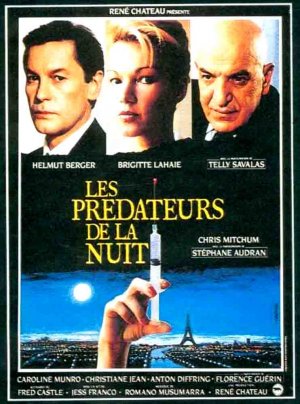
Faceless is Franco’s take on Eyes Without A Face, as well as being something of a descendant of his first film, The Awful Dr. Orloff.  All three of these films deal with a doctor trying to repair a loved one’s disfigured face.  In Faceless, the doctor is Dr. Flammad (Helmut Berger), a wealthy and decadent Paris-based plastic surgeon.  One night, while out with his sister Ingird (Christiane Jean) and his nurse and lover Nathalie (Brigitte Lahaie, the former pornographic actress who appeared in several of Jean Rollin’s best films, including the brilliant Night of the Hunted), Dr. Flammad is confronted by a former patient.  Flammad botched her operation so the patient tries to get back at him by tossing acid in his face.  However, Ingrid shoves Flammad out of the way and ends up getting splashed by the acid instead.

Now disfigured, Ingrid spends her time hidden away in Flammad’s clinic and wearing a mask.  Flammad and Nathalie start to kidnap models and actresses, searching for a perfect face.  Flammad’s plan is to perform a face transplant, giving Ingrid a new and beautiful face.

Needless to say, a face transplant is not a simple thing to do.  In order to get some advice, they go to the mysterious Dr. Orloff (Howard Vernon) and Orloff directs them to a Nazi war criminal named Dr. Moser (Anton Diffring).  Now, if you’re not familiar with Franco’s work, the scene with Dr. Orloff will probably seem like pointless filler.  However, if you are a Francophile, you will feel incredibly relieved to see Howard Vernon suddenly pop up.  When it comes Franco’s films, a Howard Vernon cameo is usually a good sign.

Flammad’s search for the perfect face is complicated by the fact that his assistant, the moronic Gordon (Gerard Zalcberg), keeps accidentally killing and otherwise damaging all of the prospects.  As the bodies continue to pile up, Nathalie even points out that there’s “too many dead bodies” in the clinic.

(Of course, Nathalie isn’t doing much to solve that problem.  When the film got to the moment where Nathalie plunged a syringe into one troublesome patient’s eye, I ended up watching the movie between my fingers.)

Eventually, Nathalie kidnaps a coke-addicted model named Barbara (Caroline Munro).  Flammad thinks that Barbara might finally be the perfect face that they’ve been looking for but there’s a problem.  (Actually, two problems if you count Gordon…)  Barbara’s father (Telly Savalas) is a wealthy industrialist and he wants his daughter back.  He hires an American private investigator, Sam Morgan (Chris Mitchum, looking a lot like his father Robert), to track her down.

Actually, it’s not that much of a problem.  It quickly turns out that Sam is kind of an idiot.  Plus, since he’s American, nobody in Paris wants to help him.  A Paris police inspector orders him to go home, yells at him for always chewing gum, and then adds, “You are not Bogart!”

And things only get stranger from there…

Faceless is one of Franco’s better films, a mix of over-the-top glamour (Faceless was filmed in Paris, after all) and grindhouse sleaze.  Though there is a definite storyline, the film still feels like an extended improvisation, with characters and plot points coming out of nowhere and then disappearing just as quickly.  If we’re going to be totally honest, the film is kind of a mess but it’s a glorious and stylish mess, one that is never less than watchable.

One of the great tragedies of American politics is that Chris Mitchum has twice been defeated when he ran for a seat in the U.S. House of Representatives (though he did come close to winning in 2014).  Not only would it be great to have Robert Mitchum’s son as a member of Congress but it would be even better to know that our laws were being written, in part, by the star of Faceless.  Unfortunately, Chris is sitting out the 2016 election.  Hopefully, he’ll reconsider and file for at least one office.

Run, Chris, run!

Christopher Lee, R.I.P.


Jinnah

The picture above is Christopher Lee in the 1998 film Jinnah.  In this epic biopic, Lee played Muhammad Ali Jinniah, the founder of modern Pakistan.  Up until yesterday, I had never heard of Jinnah but, after news of Lee’s death broke, Jinnah was frequently cited as being Lee’s personal favorite of his many roles and films.

Consider that.  Christopher Lee began his film career in the 1940s and he worked steadily up until his death.  He played Dracula.  He played The Man with the Golden Gun.  Christopher Lee appeared, with his future best friend Peter Cushing, in Laurence Olivier’s Oscar-winning Hamlet.  He played Seurat in John Huston’s Moulin Rouge.  He appeared in both The Lord of the Rings and the Hobbit trilogies.  He appeared in several films for Tim Burton.  He even had a small role in Martin Scorsese’s Hugo.  He appeared in two Star Wars prequels.  He appeared in the original Wicker Man (and reportedly considered it to be his favorite of his many horror films).  He appeared in Oscar winners and box office hits.  And, out of all that, Christopher Lee’s personal favorite was Jinnah, a film that most people have never heard about.

Unless, of course, you live in Pakistan.  When I did a google search on Christopher Lee, I came across several Pakistani news sources that announced: “Christopher Lee, star of Jinnah, has died.”

And really, that somehow seems appropriate.  Christopher Lee was the epitome of an international film star.  He worked for Hammer in the UK.  He worked with Jess Franco in Spain and Mario Bava in Italy.  He appeared in several movies in the United States.  And, in Pakistan, he played Jinnah.  And I haven’t seen Jinnah but I imagine he was probably as great in that role as he was in every other role that I saw him play.  Over the course of his long career, Christopher Lee appeared in many good films but he also appeared in his share of bad ones.  But Christopher Lee was always great.

It really is hard to know where to begin with Christopher Lee.  Though his death was announced on Thursday, I haven’t gotten around to writing this tribute until Friday.  Admittedly, when I first heard that Lee had passed away, I was on a romantic mini-vacation and had promised myself that I would avoid, as much as possible, getting online for two days.  But, even more than for those personal reasons, I hesitated because I just did not know where to start when it came to talking about Christopher Lee.  He was one of those figures who overwhelmed by his very existence.

We all know that Christopher Lee was a great and iconic actor.  And I imagine that a lot of our readers know that Lee had a wonderfully idiosyncratic musical career, releasing his first heavy metal album when he was in his 80s.  Did you know that Lee also served heroically during World War II and, after the war ended, helped to track down fleeing Nazi war criminals?  Did you know that it has been speculated that Lee may have served as one of the role models for James Bond?  (Ian Fleming was a cousin of Lee’s and even tried to convince Lee to play Dr. No in the first Bond film.)  Christopher Lee lived an amazing life, both on and off the screen.

But, whenever one reads about Christopher Lee and his career or watches an interview with the man, the thing that always comes across is that, for someone who played so many evil characters, Christopher Lee appeared to be one the nicest men that you could ever hope to meet.  Somehow, it was never a shock to learn that his best friend was his frequent screen nemesis, Peter Cushing.

Christopher Lee is one of those great actors who we assumed would always be here.  The world of cinema will be a sadder world without him.

Legends together

Legends together

Here is a list of Christopher Lee films that we’ve reviewed here on the Shattered Lens.  Admittedly, not all of these reviews focus on Lee but they do provide a hint of the man’s versatility:

  1. Airport ’77
  2. Dark Shadows
  3. Dracula A.D. 1972
  4. Dracula Has Risen From The Grave
  5. Dracula, Prince of Darkness
  6. Hercules in the Haunted World
  7. The Hobbit
  8. The Hobbit: Battle of the Five Armies
  9. Horror Express
  10. The Horror of Dracula
  11. Hugo
  12. Jocks
  13. The Man With The Golden Gun
  14. The Satanic Rites of Dracula
  15. Scars of Dracula
  16. Scream and Scream Again
  17. Season of the Witch
  18. Starship Invasions
  19. Taste The Blood of Dracula
  20. The Wicker Tree

Sir Christopher Lee was 93 years old and he lived those 9 decades in the best way possible.  As long as there are film lovers, he will never be forgotten.