The TSL’s Daily Horror Grindhouse: Faceless (dir by Jess Franco)


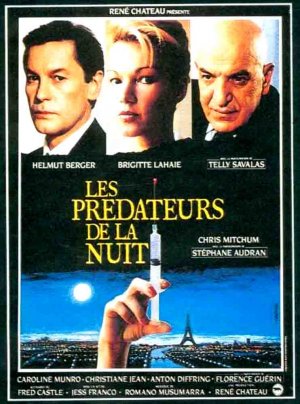
FacelessPoster1988

Whenever it comes time to review a film like 1988’s Faceless, movie bloggers like me are faced with a very important question.  Which name should we use for this film’s prolific director?  The director was born Jesus Franco Manera and, for a very small handful of his 200+ film, he’s actually credited by his full name.  However, for the majority of his films, he dropped the Manera.  Sometimes, he is credited as Jesus Franco and then other times, the director’s credit reads Jesse Franco or just simply Jess Franco.

Myself, I usually prefer to go with “Jess Franco,” because it just seems to go with his “never give up” style of filmmaking.  At the same time, it seems rather appropriate that Franco is known by more than one name because he was a director with a many different personas, occasionally a serious artist, occasionally a subversive prankster, and sometimes a director-for-hire.  Franco was a lover of jazz and his films often had a similarly improvised feel.  Sometimes, the results were, to put it lightly, not very memorable.  But, for every Oasis of the Zombies, there was always a chance that Franco would give the world a film like Female Vampire.  The imdb credits Franco with directing 203 films before his death in 2013 but it’s generally agreed that he probably directed a lot more.  A lot of his films may not have worked but the ones that did are memorable enough to justify searching for them.

Faceless is Franco’s take on Eyes Without A Face, as well as being something of a descendant of his first film, The Awful Dr. Orloff.  All three of these films deal with a doctor trying to repair a loved one’s disfigured face.  In Faceless, the doctor is Dr. Flammad (Helmut Berger), a wealthy and decadent Paris-based plastic surgeon.  One night, while out with his sister Ingird (Christiane Jean) and his nurse and lover Nathalie (Brigitte Lahaie, the former pornographic actress who appeared in several of Jean Rollin’s best films, including the brilliant Night of the Hunted), Dr. Flammad is confronted by a former patient.  Flammad botched her operation so the patient tries to get back at him by tossing acid in his face.  However, Ingrid shoves Flammad out of the way and ends up getting splashed by the acid instead.

Now disfigured, Ingrid spends her time hidden away in Flammad’s clinic and wearing a mask.  Flammad and Nathalie start to kidnap models and actresses, searching for a perfect face.  Flammad’s plan is to perform a face transplant, giving Ingrid a new and beautiful face.

Needless to say, a face transplant is not a simple thing to do.  In order to get some advice, they go to the mysterious Dr. Orloff (Howard Vernon) and Orloff directs them to a Nazi war criminal named Dr. Moser (Anton Diffring).  Now, if you’re not familiar with Franco’s work, the scene with Dr. Orloff will probably seem like pointless filler.  However, if you are a Francophile, you will feel incredibly relieved to see Howard Vernon suddenly pop up.  When it comes Franco’s films, a Howard Vernon cameo is usually a good sign.

Flammad’s search for the perfect face is complicated by the fact that his assistant, the moronic Gordon (Gerard Zalcberg), keeps accidentally killing and otherwise damaging all of the prospects.  As the bodies continue to pile up, Nathalie even points out that there’s “too many dead bodies” in the clinic.

(Of course, Nathalie isn’t doing much to solve that problem.  When the film got to the moment where Nathalie plunged a syringe into one troublesome patient’s eye, I ended up watching the movie between my fingers.)

Eventually, Nathalie kidnaps a coke-addicted model named Barbara (Caroline Munro).  Flammad thinks that Barbara might finally be the perfect face that they’ve been looking for but there’s a problem.  (Actually, two problems if you count Gordon…)  Barbara’s father (Telly Savalas) is a wealthy industrialist and he wants his daughter back.  He hires an American private investigator, Sam Morgan (Chris Mitchum, looking a lot like his father Robert), to track her down.

Actually, it’s not that much of a problem.  It quickly turns out that Sam is kind of an idiot.  Plus, since he’s American, nobody in Paris wants to help him.  A Paris police inspector orders him to go home, yells at him for always chewing gum, and then adds, “You are not Bogart!”

And things only get stranger from there…

Faceless is one of Franco’s better films, a mix of over-the-top glamour (Faceless was filmed in Paris, after all) and grindhouse sleaze.  Though there is a definite storyline, the film still feels like an extended improvisation, with characters and plot points coming out of nowhere and then disappearing just as quickly.  If we’re going to be totally honest, the film is kind of a mess but it’s a glorious and stylish mess, one that is never less than watchable.

One of the great tragedies of American politics is that Chris Mitchum has twice been defeated when he ran for a seat in the U.S. House of Representatives (though he did come close to winning in 2014).  Not only would it be great to have Robert Mitchum’s son as a member of Congress but it would be even better to know that our laws were being written, in part, by the star of Faceless.  Unfortunately, Chris is sitting out the 2016 election.  Hopefully, he’ll reconsider and file for at least one office.

Run, Chris, run!

Christopher Lee, R.I.P.


Jinnah

The picture above is Christopher Lee in the 1998 film Jinnah.  In this epic biopic, Lee played Muhammad Ali Jinniah, the founder of modern Pakistan.  Up until yesterday, I had never heard of Jinnah but, after news of Lee’s death broke, Jinnah was frequently cited as being Lee’s personal favorite of his many roles and films.

Consider that.  Christopher Lee began his film career in the 1940s and he worked steadily up until his death.  He played Dracula.  He played The Man with the Golden Gun.  Christopher Lee appeared, with his future best friend Peter Cushing, in Laurence Olivier’s Oscar-winning Hamlet.  He played Seurat in John Huston’s Moulin Rouge.  He appeared in both The Lord of the Rings and the Hobbit trilogies.  He appeared in several films for Tim Burton.  He even had a small role in Martin Scorsese’s Hugo.  He appeared in two Star Wars prequels.  He appeared in the original Wicker Man (and reportedly considered it to be his favorite of his many horror films).  He appeared in Oscar winners and box office hits.  And, out of all that, Christopher Lee’s personal favorite was Jinnah, a film that most people have never heard about.

Unless, of course, you live in Pakistan.  When I did a google search on Christopher Lee, I came across several Pakistani news sources that announced: “Christopher Lee, star of Jinnah, has died.”

And really, that somehow seems appropriate.  Christopher Lee was the epitome of an international film star.  He worked for Hammer in the UK.  He worked with Jess Franco in Spain and Mario Bava in Italy.  He appeared in several movies in the United States.  And, in Pakistan, he played Jinnah.  And I haven’t seen Jinnah but I imagine he was probably as great in that role as he was in every other role that I saw him play.  Over the course of his long career, Christopher Lee appeared in many good films but he also appeared in his share of bad ones.  But Christopher Lee was always great.

It really is hard to know where to begin with Christopher Lee.  Though his death was announced on Thursday, I haven’t gotten around to writing this tribute until Friday.  Admittedly, when I first heard that Lee had passed away, I was on a romantic mini-vacation and had promised myself that I would avoid, as much as possible, getting online for two days.  But, even more than for those personal reasons, I hesitated because I just did not know where to start when it came to talking about Christopher Lee.  He was one of those figures who overwhelmed by his very existence.

We all know that Christopher Lee was a great and iconic actor.  And I imagine that a lot of our readers know that Lee had a wonderfully idiosyncratic musical career, releasing his first heavy metal album when he was in his 80s.  Did you know that Lee also served heroically during World War II and, after the war ended, helped to track down fleeing Nazi war criminals?  Did you know that it has been speculated that Lee may have served as one of the role models for James Bond?  (Ian Fleming was a cousin of Lee’s and even tried to convince Lee to play Dr. No in the first Bond film.)  Christopher Lee lived an amazing life, both on and off the screen.

But, whenever one reads about Christopher Lee and his career or watches an interview with the man, the thing that always comes across is that, for someone who played so many evil characters, Christopher Lee appeared to be one the nicest men that you could ever hope to meet.  Somehow, it was never a shock to learn that his best friend was his frequent screen nemesis, Peter Cushing.

Christopher Lee is one of those great actors who we assumed would always be here.  The world of cinema will be a sadder world without him.

Legends together

Legends together

Here is a list of Christopher Lee films that we’ve reviewed here on the Shattered Lens.  Admittedly, not all of these reviews focus on Lee but they do provide a hint of the man’s versatility:

  1. Airport ’77
  2. Dark Shadows
  3. Dracula A.D. 1972
  4. Dracula Has Risen From The Grave
  5. Dracula, Prince of Darkness
  6. Hercules in the Haunted World
  7. The Hobbit
  8. The Hobbit: Battle of the Five Armies
  9. Horror Express
  10. The Horror of Dracula
  11. Hugo
  12. Jocks
  13. The Man With The Golden Gun
  14. The Satanic Rites of Dracula
  15. Scars of Dracula
  16. Scream and Scream Again
  17. Season of the Witch
  18. Starship Invasions
  19. Taste The Blood of Dracula
  20. The Wicker Tree

Sir Christopher Lee was 93 years old and he lived those 9 decades in the best way possible.  As long as there are film lovers, he will never be forgotten.

Embracing the Melodrama Part II #34: Nightmares Come At Night (dir by Jess Franco)


nightmarescome2big For the past two weeks, I’ve been in the process of reviewing 126 cinematic melodramas.  Embracing the Melodrama Part Two started in 1927 with a look at Sunrise and now, 33 reviews later, we’ve finally reached the 70s.  And what else can I say about that other than to exclaim, “Yay!”

Seriously, a lot of good films were released in the 1970s.

We begin the 70s by taking a look at a film from the iconic and (to some people) infamous Spanish director Jess Franco.  Over the course of 54 years, director Jesus Franco Manera was credited with directing 203 films.  In all probability, the workaholic Franco directed a lot more than he’s been credited with.  As I wrote about Franco in my previous review of Female Vampire: “Among critics, Franco is usually either dismissed as a total hack (and/or pervert) or embraced as the living embodiment of the auteur theory.  Though no one’s quite sure how many films Franco has directed, Franco himself has estimated that he’s directed more than 200 films and, for the most part, he has financed and distributed them all on his own.  Franco has worked in every genre from thriller to comedy to hardcore pornography, but he is probably best known for directing low-budget, occasionally atmospheric erotic horror films.”

Now, I have to admit that I feel a little guilty about using a paragraph from an old review in a new review.  (And, as you may have noticed, I reviewed Female Vampire before Franco passed away in 2013.)  But, then again, it feels somewhat appropriate because Franco was famous for and unapologetic about taking bits and pieces of old and unfinished films and inserting them into new films.  That’s certainly the case with his 1970 film Nightmares Come At Night.

Nightmares Come At Night opens with Anna (Diana Lorys) living in an atmospheric mansion with her lover, Cynthia (Colette Giacobine).  Anna is haunted by frequent nightmares where she sees herself killing strange men with a spear.  Cynthia arranges for Anna to talk to an enigmatic doctor (Paul Muller).  Anna tells the doctor about how she was once a famous erotic dancer until she met Cynthia.  At this point, we get several lengthy flashbacks of Anna dancing in an oddly desolate club, all of which adds to the film’s ennui-drenched atmosphere.

Talking to the doctor doesn’t do Anna much good and she continues to have her nightmares except now the nightmares also seem to feature men giving lengthy monologues.  It soon becomes obvious that the neurotic Anna is being held as a virtual prisoner in the house by the dominating Cynthia.

(It’s a bit like a Lifetime movie, except everyone’s naked for 85% of the film’s running time.)

Meanwhile, we occasionally get shots of two people staring out of an unrelated window.  Eventually, we realize that they’re supposed to be Cynthia’s neighbors.  One of them is played by Franco’s frequent muse, Soledad Miranda.  (Miranda would tragically die in an automobile accident in 1970.)  Anyone who is familiar with Franco’s work will immediately notice that Miranda’s look in Nightmares was later duplicated by Lina Romay in Female Vampire.  The neighbors are obsessed with Anna.  As the film progresses, we discover that, when not looking out the window, they spend most of their time lying on a filthy mattress.  At one point, the camera zooms in for a close-up of the graffiti that’s been written on the wall over the mattress.

LIFE IS ALL SHIT, it reads.

To a certain extent, it’s pointless to say that Nightmares Come At Night is a disjointed film because almost all of Franco’s films were disjointed.  That’s actually what gave even the weakest of his films an odd and memorably dreamlike feel.  But Nightmares Come At Night is even more disjointed than usual.  That’s because Nightmares Come At Night was made out of a mix of footage shot for other films.  The scenes with Soledad Miranda were for an earlier, unfinished film.  Those scenes were combined with the footage of Anna, Cynthia, and the doctor.  The end result is a film that doesn’t necessarily much sense but you still have to admire Franco’s refusal to let any footage go to waste.

Ultimately, as with so many Franco films, Nightmares Come At Night is less about plot and all about atmosphere.  This is a film that is full of ennui and existential decadence.  It’s not one of Franco’s best films but, much like last year’s underrated California Scheming, it’s a bit of a minor existential classic when taken on its own terms.

(Please note: the trailer below is mildly NSFW.  Watch at your own risk.)

6 Trailers For A Million Views


Hi!  It’s time for yet another edition of Lisa Marie’s Favorite Grindhouse and Exploitation Film trailers so let’s just jump right into it, shall we?  I’m going on vacation next week and I’m currently attempting to do about a thousand things at once (and it’s not as easy as it looks) so I’m going to keep my commentary to a minimum for this edition.  Fortunately, these trailers speak for themselves.

1) The Castle of Fu Manchu (1968)

2) Zeder (1983)

3) Freeway (1996)

4) The Gumball Rally (1976)

5) Unhinged (1982)

6) Two Orphan Vampires (1997)

Regardless of how busy I may be, I will always find the time to let people know that this is one of my favorite films from one of my favorite directors, the great Jean Rollin.

 What do you think, Trailer Kitty?

Doc, the judgmental Trailer Kitty

6 More Trailers From The Girl Who Can Be Your Dream or Your Nightmare


How can I be your dream?  Because even though I’m currently all the way in Arlington, celebrating my niece’s 3rd birthday (Happy Birthday, Shannon! — that’s the cool thing about the Internet, this’ll still be here in the future for her to read), I still made the time to put together this weekend’s edition of Lisa Marie’s Favorite Grindhouse and Exploitation Trailers.  And I can be your nightmare because … well, that’s my little secret.

Anyway, here’s this weekend’s trailers…

1) Beyond Evil (1980)

Several posts ago, I featured a trailer for a movie called Death Has Blue Eyes.  (I love that title, by the way.  I’m going to call my autobiography Lisa Marie Has Mismatched Eyes.)  Judging from the trailer, this movie could have been called Evil Will Have Wide Lapels.  Speaking of eyes, this is yet another movie from 1980 to feature someone shooting beams from her eyes.  Apparently, eye beams were a big deal in the early 80s.

2) The Dark (1979)

For example, The Dark came out in 1979 and what does it feature?  That’s right — laser beams being shot from the eyes.  Seriously, was this a metaphor for all the cocaine that I’ve heard people were snorting back then? 

3) Parts: The Clonus Horror (1979)

Films in the 70s and the early 80s were apparently not just obsessed with aliens shooting lasers from their eyes.  They were also obsessed with character actor Keenan Wynn.  He was featured in The Dark and, that same year, he was also featured in Parts: The Clonus Horror.  As for Clonus Horror, I’m guessing that it must be a grindhouse version of one of last year’s best films, Never Let Me Go.

4) The Clones (1973)

Speaking of clones, here’s the trailer for The Clones.  Now, some people have claimed that this might be the most boring trailer ever but I kinda like it just because I think the constant switching from the overly dry voice over to the more surreal scenes of the film creates a kinda neat effect.  Believe it or not, I actually have a battered old VHS copy of this film.  And it’s not half bad.  It ends with this really neat gunfight at an abandoned amusement park that — for some reason — just happens to be sitting out in the middle of Death Valley.  Oh, and John Drew Barrymore is in it, acting like John Drew Barrymore.  (I also love the fact that apparently, cloning was such a new concept at this point that the trailer had to include a guide to make sure people understood how to properly pronounce the word.)

5) Rituals (1977)

Actually, I guess the 70s most have been scary all around because apparently, not even Hal Holbrook was safe.  I’ve heard good things about this movie though I’ve never actually seen it.  I know Code Red announced a DVD release but is Code Red even in business anymore?  It’s difficult to keep track.  Anyway, this looks like a good movie to have on hand if I ever have to justify why I don’t camp.

6) Venus In Furs (196?)

Well, the 70s are pretty icky, huh?  Maybe it’d be better if we took our cinematic time machine back to the 60s, when this adaptation of the Marquis De Sade’s Venus in Furs was apparently made and released.  I don’t know much about this film beyond the fact that it is not to be confused with Jess Franco’s Venus in Furs, which starred James Darren and Klaus Kinksi.

Six Trailers of the Supermoon


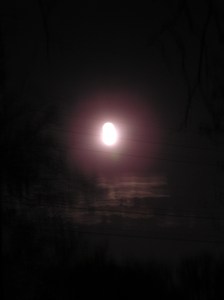
Picture of supermoon taken by Erin Nicole Bowman

Apparently, as I sit here in my underwear and glasses, the Earth is about as close to the moon as it will ever get.  Because of that, the moon is huge out in the night sky.  Or at least that’s what I’m hearing.  It looks pretty normal to me but anyway, this is being referred to as being “Supermoon.”  I’m not sure why.  If I stood less than an inch from your face, would that suddenly make me Super Lisa? 

But anyway, this weekend’s slightly intoxicated edition of Lisa Marie’s Favorite Grindhouse and Exploitation Trailers is dedicated to Supermoon.

1) Werewolves on Wheels (1971)

Of course, a gigantic full moon would bring a werewolf film with it.  This is one of the thousand or so biker films to come out in the late 60s and early 70s.  These films were interesting mostly from the point of view of how they mixed other genres with the biker conventions.  Werewolves on Wheels did it with lycanthrophy.

2) Werewolf of Washington (1973)

Actually, since it’s a supermoon, we better include two werewolf-themed trailers.  This is for the Werewolf of Washington, starring Dean Stockwell.  For some reason, I’ve actually got several copies of this on DVD (I think this is one of those films that somehow found its way into the public domain) but I’ve yet to actually sit down and watch it.  I think my hesitation has to do with the fact that it appears to be a political satire and it was made in the 70s.  That sounds like a combination for boredom, to be honest.

3) Psych-Out (1968)

Before Dean Stockwell could become a werewolf, he had to serve as Jack Nicholson’s hippie guru in Richard Rush’s Psych-Out.

4) The Shooting (1967)

But before Jack Nicholson could become a hippie, he was a sinister gunman in Monte Hellman’s existential grindhouse western, The Shooting.  The Shooting, which co-stars Warren Oates and Millie Perkins, is an unacknowledged classic and a movie that I’m going to have to review one of these days.  Perkins, by the way, was married to none other than Dean Stockwell.

5) Cockfighter (1974)

And then, 7 years later, Hellman, Oates, and Perkins reunited to make an odd little film called Cockfighter.  This is another film I have to review though I also have to say that, as a former country girl who has actually seen a few cockfights, cockfighting is right up there with dogfighting as far as sickening sadism is concerned.*

6) Macon County Line (1974)

And, of course, while some people in the south were going to cockfights, others were apparently getting killed by redneck lawmen in films like the ’74 classic, Macon County Line.

In honor of Supermoon, I’m going to include two extra trailers.  Seriously, don’t ever doubt that Lisa loves you.

7) The Education of Sonny Carson (1974)

While rural audiences (probably made up of people I’m distantly related to) spent 1974 cheering police brutality and animal cruelty, urban grindhouse audiences were enjoying films like this one.

8 ) Bloody Moon (1981/2)

Finally, since we’re under a supermoon, here’s the trailer for Jesus Franco’s infamous (and frequently banned) slasher Bloody Moon.  I haven’t seen Bloody Moon (copies aren’t that easy to find) but seriously, the involvement of Jesus Franco tells me all I probably need to know.**

—–

*If you’ve got a cock, use it to spread love, not hate.

** Well, we’ll see about that.  I just ordered a copy off of Amazon.

My Top Ten Books About The Movies


I love movies and I love books so I guess it would stand to reason that I love books about movies the most of all.  (I also love movies about books but there are far fewer of those, unfortunately.)  Below are my personal favorites.  I’m not necessarily saying that these are the ten greatest film books ever written.  I’m just saying that they’re the ones that I’m always happy to know are waiting for me at home.

10) Soon To Be A Major Motion Picture by Theodore Gershuny — This is one of the great finds of mine my life.  I found this in a used bookstore and I bought it mostly because it only cost a dollar. Only later did I discover that I had found one of the greatest nonfiction books about the shooting of a movie ever written!  Gershuny was present during the filming of a movie called Rosebud in the early 70s.   I’ve never seen Rosebud but, as Gershuny admits, it was a critical disaster that managed to lose a ton of money.  The book provides a fascinating wealth of backstage gossip as well as memorable portraits of director Otto Preminger and actors Robert Mitchum (who was originally cast in the lead role), Peter O’Toole (who took over after Mitchum walked off the set), and Isabelle Huppert.   If nothing else, this book should be read for the scene where O’Toole beats up critic Kenneth Tynan.

9) Suspects by David Thomson — A study of American cinema noir   disguised as a novel, Suspects imagines what would happen if George Bailey from It’s a Wonderful Life fell in love with Laura from the movie of the same name.  Well, apparently it would lead to Sunset Boulevard’s Norma Desmond having an affair with Chinatown’s Noah Cross and to one of George’s sons, sensitive little Travis, getting a job in New York City as a Taxi Driver.  And that’s just a small sampling of what happens in this glorious mindfuck of a novel.

8 ) Profondo Argento by Alan Jones — Long-time fan Alan Jones examines each of Dario Argento’s films (even Argento’s obscure historical comedy The Five Days of Milan) and proceeds to celebrate and (in many cases) defend Argento’s career.  Jones also interviews and profiles several of Argento’s most frequent collaborators — Daria Nicolodi, Asia and Fiore Argento, Simon Boswell, Claudio Simonetti, Keith Emerson, George Romero, Lamberto Bava, Michele Soavi, and many others.  Jones’ sympathetic yet humorous profile of Luigi Cozzi is priceless.

7)  Spaghetti Nightmares by Luca Palmerini — Spaghetti Nightmares is a collection of interviews conducted with such Italian filmmakers as Dario Argento, Ruggero Deodato, Umberto Lenzi, Lucio Fulci, and others.  Among the non-Italians interviewed are Tom Savini (who, as always, comes across as appealingly  unhinged) and David Warbeck.  (Sadly, both Warbeck and Fulci would die shortly after being interviewed.)  What makes this interesting is that, for once, Argento, Fulci, et al. are actually being interviewed by a fellow countryman as opposed to an American accompanied by a translator.  As such, the subsequent interviews turn out to be some of the most revealing on record.

6) Sleazoid Express by Bill Landis and Michelle Clifford — Landis and Clifford’s book is both a history and a defense of the old grindhouse theaters of New York City.  Along with describing, in loving and memorable detail, some of New York’s most infamous grindhouses, they also write about some of the more popular movies to play at each theater.  Along the way, they also offer up revealing profiles of such legendary figures as David Hess and Mike and Roberta Findley.  Reading this book truly made me mourn the fact that if I ever did find myself in New York City, I won’t be able to hit the old grindhouse circuit.

5) Beyond Terror: The Films of Lucio Fulci by Stephen Thrower — Fulci has always been a terribly underrated director and, indeed, it’s easy to understand because, in many ways, he made movies with the specific aim of alienating and outraging his audience.  It requires a brave soul to take Fulci on his own terms and fortunately, Stephen Thrower appears to be one.  Along with the expected chapters on Fulci’s Beyond Trilogy and on Zombi 2, Thrower also devotes a lot of space to Fulci’s lesser known works.  Did you know, for instance, that before he became the godfather of gore, Fulci specialized in making comedies?  Or that he also directed two very popular adaptations of White Fang?  Thrower also examines Fulci’s often forgotten westerns as well as his postapocalyptic sci-fi films.  And, best of all, Thrower offers up a defense of the infamous New York Ripper that, when I read it, actually forced me to consider that oft-maligned film in a new light.  That said, Thrower does admit to being as confused by Manhattan Baby as everyone else.

4) Immoral Tales by Cathal Tohill and Pete Toombs — Tohill and Toombs offer an overview of European “shock” cinema and some of the genre’s better known masters.  The book contains perhaps the best critical examination of the work of Jean Rollin ever written.  The authors also examine the work of Jesus Franco and several others.  This is a great book that reminds us that the Italians aren’t the only ones who can make a great exploitation film.

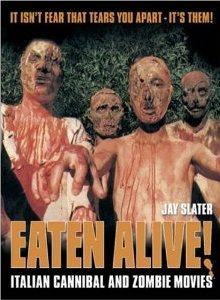
3) Eaten Alive by Jay Slater — This book offers an overview of the Italian film industry’s legendary cannibal and zombie boom.  Along with reviewing every Italian movie to feature even the slightest hint of cannibalism or the living dead (this is one of the few books on Italian cinema that discusses both Pasolini and Lucio Fulci as equals), Eaten Alive also features some very revealing interviews with such iconic figures as Catriona MacColl, Ian McCullough, and especially Giovanni Lombardo Radice.  Radice, in fact, also contributes a memorable “guest” review of one of the movies featured in the book.  (“What a piece of shit!” the review begins.)  Memorable reviews are also contributed by Troma film founder Lloyd Kaufman who brilliantly (and correctly) argues that Cannibal Holocaust is one of the greatest films ever made and Ramsey Campbell who hilariously destroys Umberto Lenzi’s infamous Nightmare City.

2) The Book of the Dead by Jamie Russell — If, like all good people, you love zombies then you simply must do whatever it takes to own a copy of this book.  Starting with such early masterpieces as White Zombie and I Walked With A Zombie, Russell proceeds to cover every subsequent zombie film up through George Romero’s Land of the Dead.  Russell offers up some of the best commentaries ever written on Romero’s Dead films, Fuci’s Beyond Trilogy, Rollin’s Living Dead Girl, and Spain’s Blind Dead films.   The pièce de résistance, however, is an appendix where Russell describes and reviews literally ever zombie film ever made.

1)  All The Colors Of the Dark by Tim Lucas  — This is it.  This is the Holy Grail of All Film Books.  If you’ve ever asked yourself if any book is worth paying close to 300 dollars, now you have your answer.  This one is.  Tim Lucas offers up the most complete biography of director Mario Bava ever written.  In fact, this may be the most complete biography of any director ever written!  Lucas examines not only Bava’s life but also every single movie that Bava was ever in any way connected to, whether as a director or as a cameraman or as the guy in charge of the special effects.  This is 1,128 pages all devoted to nothing but the movies.  This is the type of book that makes me thankful to be alive and I owe a huge debt of gratitude to Tim Lucas for writing it.