ALFRED HITCHCOCK PRESENTS (TV Series) – S1, E20: “And So Died Riabouchinska,” starring Claude Rains and Charles Bronson!


I’ve never been a rabid consumer of horror films, but I do love Alfred Hitchcock. And when you consider that Charles Bronson was featured three times in his TV series, ALFRED HITCHCOCK PRESENTS, you know I’m all in. Bronson first appeared in the season 1 episode, “And So Died Riabouchinska” which starred the Invisible Man himself, Claude Rains! I thought it would be fun to revisit this early episode from the classic TV series. 

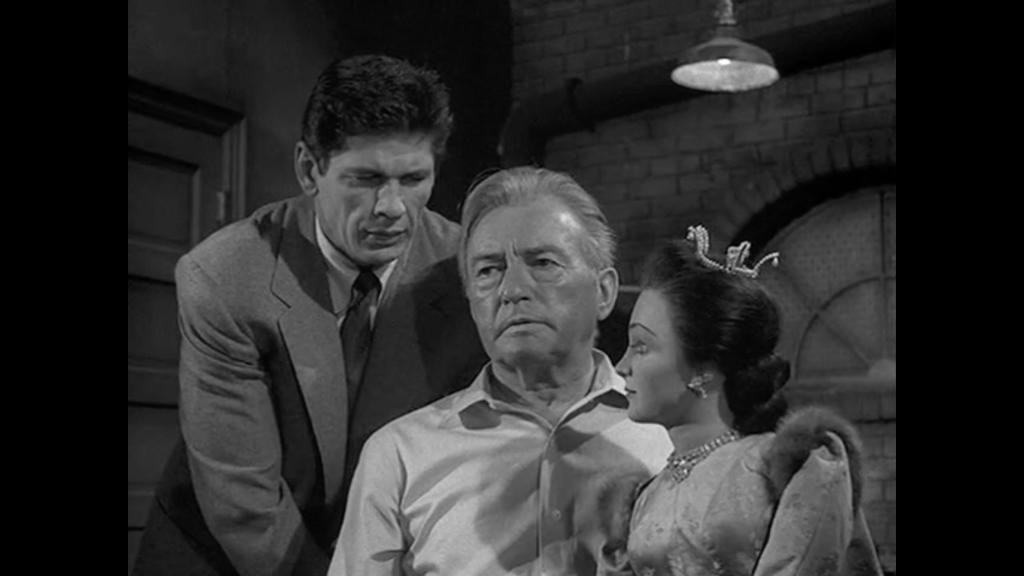
When a juggler named Ockman is found dead in the basement of a vaudeville theater, Detective Krovitch (Charles Bronson), a no-nonsense police investigator, is on the case. The prime suspect quickly emerges to be John Fabian (Claude Rains), a ventriloquist whose act revolves around his beautiful female dummy, Riabouchinska, who we find out is modeled after a long, lost love. As Krovitch interrogates Fabian and all of those around him, including his embittered wife Alyce (Wynne Miller), and her lover, the shady manager Douglas, it becomes clear that the ventriloquist has a dark and dangerous past. We discover a Fabian who is lost in a world of obsession, self delusion and even perversion, a world that the now deceased Ockman was threatening to expose.  Without giving too much away, this episode blends psychological horror with police procedural and spits out an episode that still resonates loudly on the freaky-meter!

Adapted by Mel Dinelli from Ray Bradbury’s short story, “And So Died Riabouchinska” is an exceptional entry in Season 1 of the ALFRED HITCHCOCK PRESENTS TV series. Claude Rains is incredible as Fabian. It’s a thespian tour-de-force, with Rains creating a role that’s creepy, pathetic, and oddly relatable all at the same time. I haven’t seen many of Rains’ most notable works, but based on his performance here, I do know that he’s amazing. Charles Bronson, whose strong screen presence was as obvious as the nose on his face, even this early in his career, goes toe to toe with Rains (and Riabouchinska) and helps ground the episode in something resembling the real world. It’s not a showy role for the legendary tough guy, but he conveys the toughness and authority that would go on to define his career. Performances aside, the episode is truly set apart with an emotional storyline that plumbs the depths of the human psyche in a way that seems daring for 1956 television. There are parts of this episode that will definitely make you squirm in your seat! 

Overall, in my opinion, “And So Died Riabouchinska” is an essential episode of the ALFRED HITCHCOCK PRESENTS series. It’s a lot of fun seeing Hitchcock introduce the show at the beginning and wrap it up at the end, but the best part is the fact that the story that takes place in-between is creepy, clever, and compulsively re-watchable.
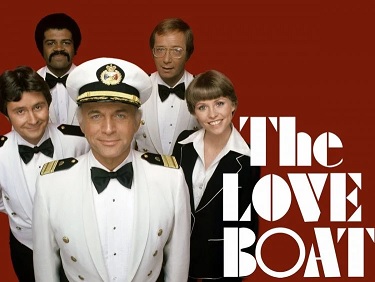
Retro Television Reviews: The Love Boat 2.7 “Ship of Ghouls”


Welcome to Retro Television Reviews, a feature where we review some of our favorite and least favorite shows of the past!  On Wednesdays, I will be reviewing the original Love Boat, which aired on ABC from 1977 to 1986!  The series can be streamed on Paramount Plus!

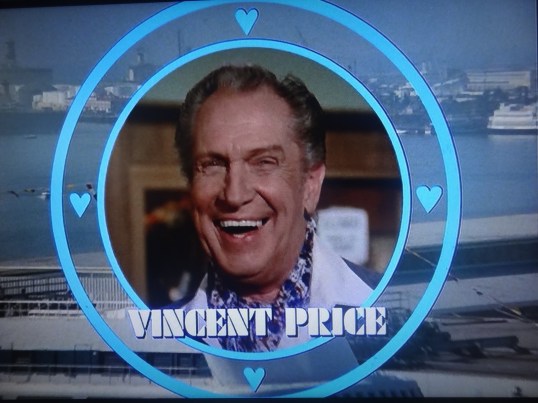
This week, Vincent Price comes aboard for a special Halloween episode!

This is actually, the second time that I’ve reviewed this episode.  I also watched and reviewed it back in 2021.  I enjoyed it the first time that I watched it and my opinion remained the same the second time I watched it.  Still, I’m glad that I rewatched the episode as opposed to trying to write a second review from memory.  There were a few details that I had forgotten.

Anyway, it’s time for…. SHIP OF GHOULS!

Episode 2.7 “Ship of Ghouls”

(Originally aired on October 28th, 1978, dir by Roger Duchowny)

It’s time for the annual Halloween cruise and Captain Stubing is super excited because he has hired The Amazing Alonzo (Vincent Price) to provide the cruise’s entertainment.  Alonzo is a master illusionist and hypnotist, who can trick people into seeing just about anything.  The episode really doesn’t explain just how exactly Alonzo is able to hypnotize people by just saying a few words to them but no matter.  This is The Love Boat and Vincent Price is …. well, he’s Vincent Price.  Vincent comes across like he’s having the time of his life in this episode and, as such, we accept that Alonzo can cause a bunch of people to think that Gopher and Doc have been turned into two donkeys.  We accept that he can fool the Captain into thinking that the ship’s pool has been turned into a giant ice cream sundae.  We even accept that he can make Isaac’s head appear in a glass of beer.  We accept all of it because it just feels wrong to get hung up on logic when Vincent Price is involved.

The Amazing Alonzo is having so much fun flirting with his elderly groupies and casting spells that his long-suffering fiancé, Ramona (Joan Blondell), dumps him and instead moves into the Captain’s quarters.  At first, Alonzo is jealous of the Captain but he soon comes to realize that the Captain is not romantically interested in Ramona and is just letting her stay in his quarters because she needs some place to stay.  Alonzo also discovers that he can no longer hypnotize people without Ramona’s support.  At the big Halloween party, Alonzo freezes time and apologizes to Ramona.  He also confesses to her that his real name is Wendell.  They walk out of the ship’s ballroom, hand-in-hand.  Yay!

Needless to say, Vincent Price was the highlight of this episode.  However, as was always the case with The Love Boat, there were other passengers on the cruise.

For instance, nine year-old Bobby Diller (Charlie Aikman) is a habitual liar and prankster.  His behavior may be bratty but that’s largely due to the fact that his parents (Gary Collins and Mary Ann Mobley) are getting back together after previously getting a divorce and he’s worried that they’re going to split up again.  Fortunately, Bobby’s lying comes in handy when he spots Karen (Barbara Anderson) preparing to throw herself overboard.   Bobby tells Karen that his mother committed suicide and that he’s never gotten over it.  Karen changes her mind about committing suicide.  Once Karen is safely back on deck, Bobby admits that he lied but then adds, “It’s the last lie I’ll ever tell!”

Why was Karen suicidal?  Karen was a model until a car accident left her with a scar on her face.  Karen is convinced that no one will ever find her to be beautiful again.  Of course, Gopher and Doc both find her to be beautiful and they spend the entire cruise hitting on her and arguing over which one of them has the right to dance with her and have dinner with her.  (As I’ve said in the past, The Love Boat really was a floating HR nightmare.)  Karen, unfortunately, thinks that they’re just doing this as a favor to Karen’s best friend, cruise director Julie.  Fortunately, Bobby’s lie convinces Karen that people can sincerely care about one another.  Also, Karen realizes that she’s too good for either Gopher or Doc.  Good for her!

This was a good episode.  Vincent Price was a delight as always and Barbara Anderson was sympathetic Karen.  All Halloween cruises should be as entertaining as The Love Boat‘s!

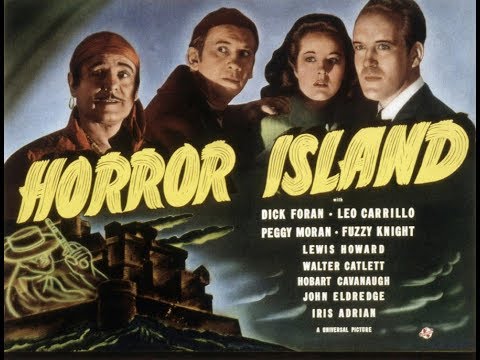
Halloween Havoc!: HORROR ISLAND (Universal 1941)


gary loggins's avatarcracked rear viewer

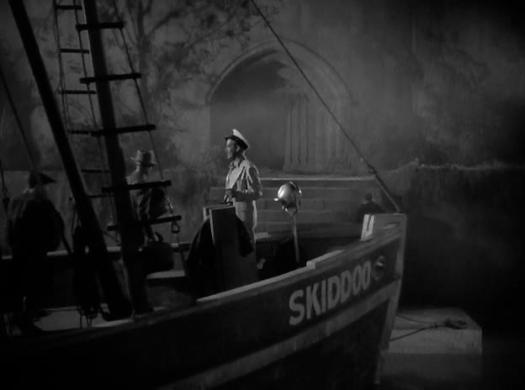
Universal Pictures kept cranking out the horrors, but HORROR ISLAND isn’t one of them. It’s as misleading a title as Hollywood ever produced, more of a comedy/mystery with some “old dark house” elements thrown in for good measure. This little ‘B’ was released as a double feature with MAN MADE MONSTER, and while its good for what it is, it ain’t horror!

Atmospherically directed by George Waggner and shot by Universal workhorse Woody Bredell , HORROR ISLAND  begins spookily enough with a peg-legged sailor trodding the docks attacked by the mysterious Phantom. Rescued from the briny water by hard-pressed for cash entrepreneur Bill Martin and his pal Stuff Oliver, we learn the sailor is Tobias Clump, a Spaniard who claims he has half a map of Sir Henry Morgan’s buried treasure – and The Phantom just stole the other half! Bill happens to have inherited Morgan’s Island, where twenty…

View original post 240 more words

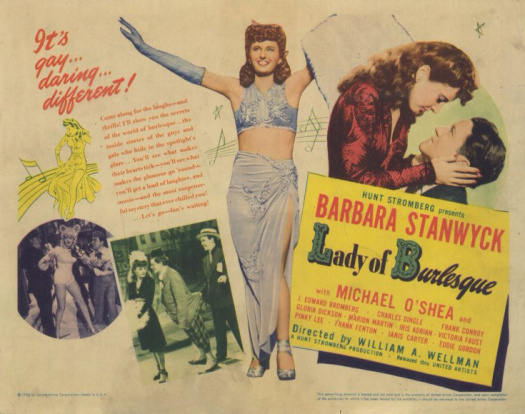
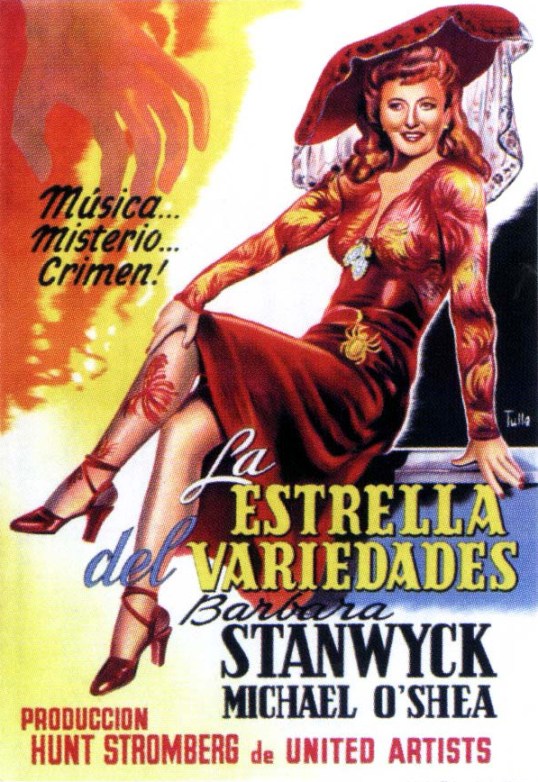
Bump’N’Grind: LADY OF BURLESQUE (United Artists 1943)


gary loggins's avatarcracked rear viewer

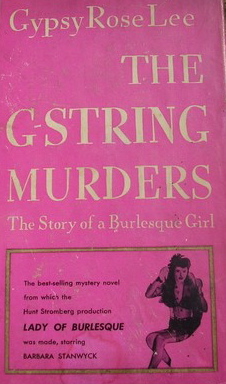
Famed striptease artist Gypsy Rose Lee published a steamy mystery novel called “The G-String Murders” in 1941, all about backstage intrigue at a burlesque house. The book was a best seller, and so of course Hollywood came a-calling, and William Wellman was assigned the director’s job for LADY OF BURLESQUE, a somewhat sanitized version of Gypsy’s racy tome, though Wellman and screenwriter James Gunn got away with what they could in those heavy-handed Production Code days.

The film opens with the glittering lights of The Great White Way, then takes a turn onto 42nd Street, where benevolent burlesque impresario S.B. Foss (J. Edward Bromberg) has purchased the old Opera House to present his bump’n’grind shows. Barbara Stanwyck plays new headliner Dixie Daisy, and (as they said back then) va-va-voom…

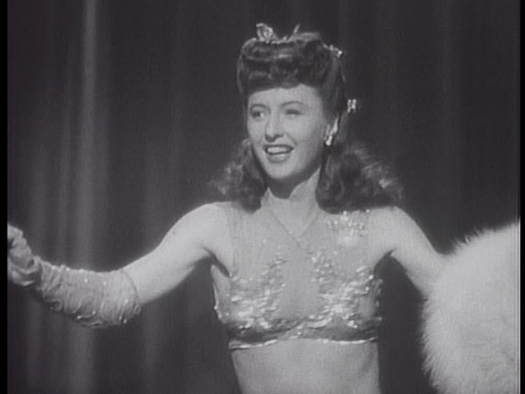
La Stanwyck is some kinda hot in her skimpy Edith Head-designed costume! Dixie sings “Take It Off the E-String, Put It…

View original post 483 more words

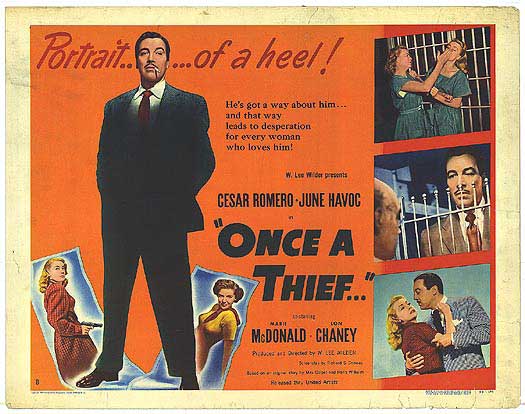
Female Trouble: ONCE A THIEF (United Artists 1950)


gary loggins's avatarcracked rear viewer

I devote a lot of time and space on this blog writing about ‘B’ Movies, those frequently overlooked quickies from days past made on the cheap for the bottom of a double feature bill. Some are highly innovative, others less so, but they served as a kind of on-the-job-training ‘film school’ before there was such a thing. Most (but not all) of them have something to offer, whether a performance by a cast member on their way up (or down) or an early effort by a future director of note. Recently, I watched ONCE A THIEF, and while it certainly broke no new ground, I found it a tight little ‘B’ noir featuring in this case a female protagonist trapped in that familiar downward spiral.

‘B’ Movie Queen June Havoc (sister of famed ecdysiast* Gypsy Rose Lee) is the troubled gal in question, a down on her luck lady named…

View original post 429 more words

The Fabulous Forties #50: Lady of Burlesque (dir by William A. Wellman)


40s

Way back in April, I started on a series of reviews.  I announced that I would be watching and reviewing all 50 of the public domain films included in Mill Creek’s Fabulous Forties box set.

At the time, I expected that it would take me maybe two weeks.  At the most, two and a half.  After all, I wondered, how long can I take?  Well, needless to say, it took me a little longer than two weeks.  In fact, it took me nearly 3 months.  (In my defense, May turned out to be a very busy month for me and I wasn’t able to review a single Fabulous Forties film.)  However, what’s important is that, after all this time, I am currently writing up the last of my Fabulous Forties reviews!

(And, right now, you’re reading it.)

On the whole, the Fabulous Forties has turned out to be pretty uneven box set.  It contains a few classics, like My Man Godfrey, His Girl Friday, and The Last Chance.  There are several good films, like The Black Book and Trapped.  And then there’s quite a few mediocre and forgettable films, like The Town Went Wild and Jungle Man.  (Dear God, Jungle Man…)  As I started on the final film in the set, I wasn’t sure what I was about to see…

Well, no worries!  The Fabulous Forties ends on a high note!  The 50th film is the wonderfully entertaining 1943 comedy-musical-mystery Lady of Burlesque!

Poster - Lady of Burlesque_03

Lady of Burlesque (which was released in the UK under the title Striptease Lady) takes place in an old and somewhat decrepit New York burlesque house, the type of place where the audience is almost all male, the owners are somewhat sleazy, and the performers are a cross between cynical veterans and naive newcomers who are hoping for their first big break.

As quickly becomes apparent, the theater would fall apart if not for its main attraction, Dixie Daisy (Barbara Stanwyck).  Dixie serves as a mentor for the newcomers and a confidante for the veterans.  She knows how to keep the audience entertained, even when two dancers are loudly screaming at each other offstage.  She knows how to deal with the sleazy owners and how to placate the owners of the Chinese restaurant next door.  Dixie also knows better than to get romantically involved with any of male comics who perform at the theater but that doesn’t stop her from flirting with one of them, Biff Brannigan (Micahel O’Shea, playing his role with an almost poignant earnestness).  As I watched the film, I could tell that Barbara Stanwyck was neither a natural dancer nor singer but it didn’t matter because, whether Dixie was trying to keep peace backstage or performing onstage and singing a song called, “Take It Off The E-String, Play It On The G-String,” Stanwyck totally committed herself to the role.

Plus, her outfits were to die for!

barbara_stanwyck_001_lady_of_burlesque

Seriously, as I watched Lady of Burlesque, I totally wanted to get a job dancing in an old timey burlesque house!  If only I had a time machine…

Of course, it should be understood that the acts in Lady of Burlesque are risqué but, by today’s standards, they’re also rather innocent.   The jokes may be full of double meaning but it’s all hidden in the subtext.  The costumes may be sexy but they also stay on.  (That probably had more to do with the production code than to do with the realities of 1940s burlesque.)

Anyway, Lady of Burlesque is technically a murder mystery but mostly, it’s just an excuse to show the performances happening onstage and a few comedic (and occasionally dramatic) vignettes of what it was like to be backstage in a burlesque house.  Two dancers are murdered but the show must go on.  Even as Dixie solves the murders and tries to keep everyone calm, the show must go on.  In fact, that’s one of the true joys of Lady of Burlesque.  Regardless of what madness might be going on backstage, the show never stops!  In fact, the film often seems undecided about whether or not the backstage murders are bad because of the loss of life or the fact that they threaten to interrupt the performances onstage.  Lady of Burlesque becomes a tribute to the work ethic of entertainers everywhere!

Lady of Burlesque was based on a novel by Gypsy Rose Lee.  The name of that novel was The G-String Murders.  Not surprisingly, that title was changed for the film version.

il_570xN.228180639

Well, that concludes the Fabulous Forties!  In a few weeks, I’ll start in on my next Mill Creek box set, the Nifty Fifties!  Until then, enjoy Lady of Burlesque!

The Fabulous Forties #14: The Stork Club (dir by Hal Walker)


40s

For the past two weeks, I have been reviewing all fifty of the films to be found in Mill Creek’s Fabulous Forties DVD box set!  It’s been four days since I reviewed the 13th film in the set, Scared Stiffwhich is probably the longest bloggng break that I’ve ever taken in my life.  However, I am proud to say that I am back and ready to review the 37 remaining films!

Yay! Lisa’s back!

Now, I know what you’re asking.  Why, if I am about to review a film from the 1940s, am I sneaking a random Degrassi GIF into this review?  Well, unfortunately, the movie that I’m about to review isn’t that interesting and there’s not a whole lot to be said about it.  I’ve found some enjoyable and interesting films in the box set — The Black Book, Trapped, the original Jungle Book — but I’ve also found a few that are pretty forgettable.  So, why not liven things up with a shout-out to my favorite show?

Anyway, the 14th film from The Fabulous Forties Box Set was 1945’s The Stork Club.

220px-Stork_Club_poster

When I saw that this film was called The Stork Club, my first thought was that it would be a comedy about pregnancy.  But it turns out that I was totally wrong.  Apparently, The Stork Club was a very popular New York nightclub in the 1940s and this film was meant to take advantage of that popularity.  (That said, according to the imdb, The Stork Club was not filmed at the actual Stork Club but instead on a Hollywood soundstage.)

As for the film’s story — well, this isn’t going to make much sense but here’s what happens.  A millionaire named J.B. (charming, Irish-accented Barry Fitzgerald) falls into a pond and nearly drowns.  Fortunately, his life is saved by Judy (Betty Hutton).

J.B. wants to reward Judy but, for some reason, he doesn’t want her to know that he’s rich.  So, with the help of his lawyer (Robert Benchley), he anonymously arranges for Judy to get both a new apartment and an unlimited credit line at all of New York’s best stores!

But J.B. also wants to keep an eye on Judy and make sure that she’s happy.  But he still doesn’t want her to know that he’s a millionaire or that he’s her benefactor.  After he finds out that she’s a hatcheck girl at the Stork Club, he arranges to get hired on as a busboy.  However, he gets fired after just one night and, believing him to be poor and homeless, Judy invites him to stay at her new apartment.

J.B. agrees and, in the film’s best, non-musical moment, he watches as Judy recklessly spends his money on new clothes.  It turns out that Judy thinks that the apartment and the credit line are all gifts from the owner of the Stork Club and she’s offended because she thinks the owner is trying to steal her away from her boyfriend, Danny Wilson (Don DeFore).

Danny is a bandleader but he’s been serving in the U.S. Army.  When Danny finally returns home, Judy is excited about arranging for him to get an audition to play at the Stork Club.  However, Danny is more concerned about the fact that Judy has a mysterious benefactor and that she’s now living in a luxury apartment with a mysterious old man.

Could Judy be a kept woman!?  Both Judy and J.B. insist that she is not but Danny refuses to believe them because Danny is kind of a jerk.  Of course, Danny isn’t meant to be a jerk but, by today’s standards, he’s definitely a jerk.  Judy could do so much better!

Anyway, the plot’s not really that important.  It’s mostly just an excuse for Betty Hutton to sing a few songs and that’s when the movie is at its best.  Check out some of Betty’s performances below:

Anyway, The Stork Club was pleasant but not particularly memorable.  When it works, it’s largely due to the endless charm of Betty Hutton and Barry Fitzgerald.  It may not seem like much today but I’m sure that, for audiences dealing with the contemporary horrors of World War II, The Stork Club presented a nice diversion.