4 Shots From 4 Films: Special Humphrey Bogart Edition


4 Shots From 4 Films is just what it says it is, 4 shots from 4 of our favorite films. As opposed to the reviews and recaps that we usually post, 4 Shots From 4 Films lets the visuals do the talking.

Today is not just Christmas!  It is also Humphrey Bogart’s birthday!  Bogart was born 126 years ago, today!  And that means that it’s time for….

4 Shots From 4 Films

Dead End (1937, dir by William Wyler)

Casablanca (1943, dir by Michael Curtiz)

The Big Sleep (1946, dir by Howard Hawks)

The African Queen (1951, dir by John Huston)

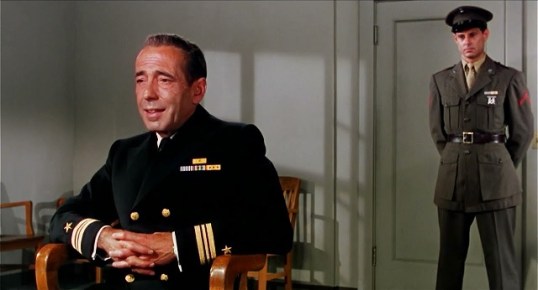
Scene That I Love: Queeg Cracks in The Caine Mutiny


The Caine Mutiny (1954, dir by Edward Dmytryk, DP: Franz Planer)

Today’s scene that I love comes from 1954’s The Caine Mutiny.

In this scene, Captain Queeg (Humphrey Bogart) is cross-examined by Barney Greenwald (Jose Ferrer).  The court martial concerns whether or not an officer under Queeg’s command was justified in taking over the ship from Queeg.  Greenwald, tasked with defending the head mutineer, knows that the only way to win the case is to expose Queeg himself as a paranoid and unstable officer.  Greenwald does his job but he’s not happy about it.

This scene, directed by Edward Dmytryk, features both Bogart and Ferrer at their absolute best.

10 Oscar Snubs From the 1940s


Ah, the 40s! For most of the decade, the world was at war and the Academy’s nominations reflected that fact. The best picture lineups alternated between patriotic films that encouraged the battle against evil and darker films that contemplated both the mistakes of the past and what threats might be waiting in the future.  With the Academy being even more aware than usual that films and awards could be used to send a message, the snubs continued.

1940: John Carradine Is Not Nominated For The Grapes of Wrath

John Carradine’s first credited film appearance was in 1930 but Carradine himself claimed that he had appeared as an uncredited extra in over 70 films before getting that first credit.  Carradine would continue to work until his death 58 years later.  John Carradine did so many films that he was still appearing in new releases in the 90s, years after his death.  He appeared in over 234 films and in countless television shows.  He was a favorite of not only Fred Olen Ray’s but also John Ford’s.

Unfortunately, Carradine was never nominated for an Oscar, despite the fact that he did appear in some classic films.  (He also appeared in a lot of B-movies, which is perhaps one reason why the Academy was hesitant to honor him.)  Personally, I think Carradine most deserved a nomination for playing “Pastor” Jim Casy in John Ford’s The Grapes of Wrath.  Carradine is ideally cast as the former preacher turned labor activist.  When he’s alive, he gives the Joads hope.  When he dies, both the Joads and the audience start to realize how difficult things are truly going to be.

1942: Ronald Reagan Is Not Nominated For Best Supporting Actor For Kings Row

Kings Row is an enjoyably over-the-top small town melodrama and future President Ronald Reagan is fantastic in the film, with his natural optimism providing a nice contrast to the truly terrible things that happen to him and his loved ones over the course of the film.  Reagan was not nominated for this performance, the one that both he and the most of the critics agreed was his best, but he should have been.

1943: Hangmen Also Die Is Not Nominated For Best Picture

Fritz Lang’s anti-Nazi classic was not nominated for Best Picture and only received two nominations (for Sound and Score).  That year, the Best Picture winner was another anti-Nazi classic, Casablanca.

1943: Shadow Of A Doubt Is Ignored

Today, it is recognized as one of Hitchcock’s best but, in 1943, Shadow of a Doubt couldn’t even score a nomination for Joseph Cotten’s wonderfully diabolical turn as Uncle Charlie.  One gets the feeling that the film’s satirical jibes at small town America and its theme of evil hiding behind a normal façade were not what the Academy was looking for at the height of World War II.  It’s a shame because, in many ways, Cotten’s Uncle Charlie was the perfect symbol of the enemy that the Allies were fighting.

1944: Tallulah Bankhead In Not Nominated For Best Actress For Lifeboat

Unlike Shadow of a Doubt, Hitchcock’s Lifeboat received several Oscar nominations.  However, Tallulah Bankhead was not nominated for Best Actress.  Perhaps the Academy was scared of what she might say if she won.

1944: Fred MacMurray and Edward G. Robinson Are Not Nominated For Double Indemnity

For all the nominations that this classic noir received, somehow neither Fred MacMurray nor Edward G. Robinson were nominated for their roles.  Both actors are brilliantly cast against type in this film.  MacMurray uses his trademark casual glibness to portray Walter Neff as being an arrogant man who is hardly as clever as he thinks that he is.  Meanwhile, Robinson’s more introspective performance leaves you with little doubt that, if anyone can solve this case, it’s him.  While Barbara Stanwyck was (rightfully) nominated, it’s had to believe that both MacMurray and Robinson were snubbed.

1946: Thomas Mitchell and Lionel Barrymore Are Not Nominated For Best Supporting Actor For It’s A Wonderful Life

As wonderful as James Stewart and Donna Reed are, it just wouldn’t be Bedford Falls without Uncle Billy and Mr. Potter!  Thomas Mitchell breaks your heart in the scene where he tries to remember what he did with the lost money.  And, for audiences who had just lived through the Great Depression, Lionel Barrymore represented every businessman who cared more about money than people.  It’s impossible to imagine the film without them …. or without Henry Travers, for that matter!  Seriously, very few films have received three best supporting actor nominations but It’s A Wonderful Life deserved to be one of them.

1948: Humphrey Bogart Is Not Nominated For Best Actor For The Treasure of the Sierra Madre

The Treasure of the Sierra Madre received four Oscar nominations.  Somehow, not one of those nominations was not for Humphrey Bogart.

1948 and 1949: Red River, Fort Apache, and She Wore A Yellow Ribbon Are Not Nominated For Best Picture

The public may have loved Westerns but the Academy largely shied away from them, with a few notable exceptions.  Howard Hawks’s Red River and John Ford’s Fort Apache and She Wore A Yellow Ribbon are today all recognized as being classic Hollywood films.  However, the Academy, then at the height of its bias towards “genre” films, didn’t honor any of them.

1949: James Cagney Is Not Nominated For Best Actor For White Heat

“Top of the world, ma!”  Maybe so, but not top of the Oscars.  The Academy was always more interested in honoring Cagney for being a song-and-dance man than for honoring him for his iconic gangster roles.

Agree?  Disagree?  Do you have an Oscar snub that you think is even worse than the 10 listed here?  Let us know in the comments!

Up next: Get ready to hate the commies and to love Ike because the 50s are coming!

10 Oscar Snubs From The 1930s


Ah, the 1930s. America was mired in the Great Depression. FDR was plotting to pack the courts.  The American public, sick of playing by the rules and getting little in return, began to admire gangsters and outlaws.  The horror genre became the new way to vent about societal insecurity. In Europe, leaders were trying to ignore what was happening in Italy, Spain, and Germany. As for the Academy, it was still growing and developing and finding itself. With people flocking to the movies and the promise of an escape from reality, the Academy Awards went from being an afterthought to a major cultural event.

And, of course, the snubs continued.

1930 — 1931: Crime Doesn’t Pay For Little Caesar and The Public Enemy 

When people think about the 1930s, gangsters are probably one of the first things that come to mind.  In the 30s, audiences flocked to movies about tough and streetwise criminals who did what they had to do in order to survive during the Depression.  Unfortunately, the Academy was not always as quick to embrace the gangster genre.  Though The Public Enemy did pick up a nomination for its screenplay, both it and Little Caesar were largely ignored by the Academy.  Not only did the films fail to score nominations for Best Picture but neither James Cagney nor Edward G. Robinson would be nominated for bringing their title characters to life.  It’s a crime, I tells ya.
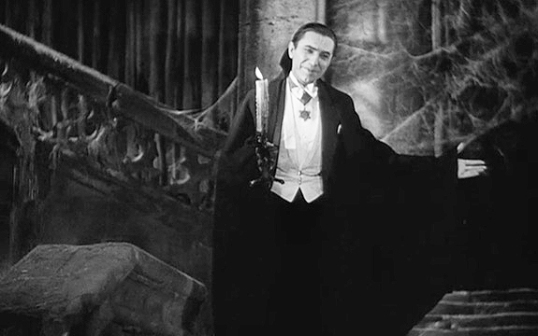
1930 — 1931: Bela Lugosi Is Not Nominated For Best Actor For Dracula

Admittedly, the 1931 version of Dracula is a bit of a creaky affair, one that feels quite stagey to modern audiences.  But Bela Lugosi’s performance in the title role holds up well, despite the number of times that it has been parodied.  Unfortunately, from the start, the Academy was hesitant about honoring the horror genre.

Frankenstein (1931, dir by James Whale)

1931 — 1932: Boris Karloff Is Not Nominated For Best Actor For Frankenstein

Again, the Academy snubbed an iconic horror star.  Not only was Boris Karloff not nominated for Frankenstein but the film itself was not nominated for Best Picture, despite being infinitely better than at least one of the 8 films that were nominated.  (That film, by the way, was Bad Girl.  When is the last time that anyone watched that one?)  In fairness to the Academy, they did honor one horror film at that year’s awards.  Fredric March won Best Actor for Dr. Jekyll and Mr. Hyde.  Of course, he also tied with Wallace Beery, who was nominated for The Champ.  Obviously, the Academy still had to work out its feelings towards the horror genre, a process that continues to this very day.

1932 — 1933: King Kong Is Not Nominated For Best Picture

Oh, poor King Kong.  Film audiences loved him but the Academy totally ignored both him and his film.  Unfortunately, back in 1933, the Academy had yet to introduce a category for special effects.

1932 — 1933: Duck Soup Is Ignored By The Academy

King Kong was not the only worthy film to be ignored at the 1932-1933 Oscars.  The Marx Brothers’s greatest film also went unnominated.

1934: The Scarlet Empress Is Not Nominated For Best Picture

Josef von Sternberg’s surreal historical epic was totally ignored by the Academy.  Not only did it miss out on being nominated for Best Picture but the sterling work of Marlene Dietrich and Sam Jaffe was ignored as well.  How was the opulent set design ignored?  How did it not even pick up a nomination for costume design?  My guess is that Paramount chose to promote Cleopatra at expense of The Scarlet Empress.  Either the way, the Best Picture Oscar was won by one of my favorite films, It Happened One Night.

1935: Fred Astaire and Ginger Rogers Are Not Nominated For Top Hat

Top Hat scored a best picture nomination but the film’s two stars went unnominated.

1936: My Man Godfrey Is Nominated For Everything But Best Picture

My Man Godfrey, a classic screwball comedy, was nominated for Best Actor, Best Actress, Best Supporting Actor, Best Supporting Actress, Best Director, and Best Screenplay but somehow, it was not nominated for Best Picture.  It’s a shame because My Man Godfrey, along being a very funny movie, is also a film that epitomizes an era.  Certainly, it’s far more entertaining today than the film that won Best Picture that year, The Great Ziegfeld.  (Interestingly enough, William Powell played the title role in both Godfrey and Ziegfeld.)

1937: Humphrey Bogart Is Not Nominated For Best Supporting Actor in Dead End

Dead End featured one of Bogart’s best gangster roles.  As a gangster who returns to his old neighborhood and is rejected by his own mother, Bogart was both menacing and, at times, sympathetic.  Like Cagney and Robinson, Bogart definitely deserved a nomination for his portrayal of what it was like to live a life of crime.  Unfortunately, Bogart was an actor who was taken for granted for much of his career.  It wasn’t until he played Rick Blaine in Casablanca that the Academy would finally nominate him.

The Adventures of Robin Hood (1938, dir by Michael Curtiz)

1938: Errol Flynn Is Not Nominated For Best Actor In The Adventures of Robin Hood

This is truly one of the more shocking snubs in Academy history.  Errol Flynn’s performance as Robin Hood pretty much set the standard for every actor who followed him.  Russell Crowe is undoubtedly a better actor than Flynn was but Crowe’s dour interpretation of Robin could in no way compete with the joie de vivre that Flynn brought to the role.

Agree?  Disagree?  Do you have an Oscar snub that you think is even worse than the 10 listed here?  Let us know in the comments!

Up next: 1940s, in which Hollywood joins the war effort and the snubs continue!

Dead End (1937, dir by William Wyler)

Horror on TV: Tales From The Crypt 6.15 “You, Murderer” (dir by Robert Zemeckis)


To be honest, tonight’s episode of HBO’s Tales From The Crypt isn’t really a traditional horror story.  Instead, it’s a somewhat satiric homage to film noir.  But I’m going to share it anyway. Halloween is about more than just ghouls and ghosts and goblins, right?

You, Murderer is an experiment that doesn’t quite work but is interesting all the same.  This episode is basically one long POV shot.  Whenever our protagonist sees his reflection, we see Humphrey Bogart staring back at us.  Actual footage of Bogart was used in the show.  Sometimes it work, sometimes it just looks strange.  But it’s always interesting!

This episode originally aired on January 25th, 1995.  Enjoy!

https://youtu.be/4b45ytx3Ft4

Lisa Reviews An Oscar Nominee: The Treasure of the Sierra Madre (dir by John Huston)


Last night, for the first time, I watched the 1948 Best Picture nominee, The Treasure of the Sierra Madre.

Directed by the legendary John Huston and featuring a wonderful performance from the equally legendary Humphrey Bogart, The Treasure of the Sierra Madre has a reputation for being one of the greatest films ever made.  It’s a reputation that is more than deserved.  That makes the film a pleasure to watch but, unfortunately, it also makes it somewhat intimidating to write about.

(In the past, Leonard and I have discussed how it’s so much more difficult to write a review of a good film than it is to write a review of a bad film.  Sad to say, it’s often easier to be negative than it is to be positive.  Writing a review of a bad film only requires the ability to be snarky.  Writing a review of a good, much less a great film, is far more difficult.  It’s one thing to realize a film is good.  It’s another thing to try to explain why.)

The Treasure of Sierra Madre tells the story of three Americans in Mexico, drifters living on the edge of society.  Fred C. Dobbs (Humphrey Bogart) and Bob Curtin (Tim Holt) spend their days begging for spare change and taking whatever work they can find.  When they meet an eccentric but wise prospector named Howard (Walter Huston), the three of them end up going on a quest for gold.  It’s not a spoiler to tell you that the three men find their gold, though Dobbs is shocked to discover that gold dust can easily be mistaken for sand and doesn’t naturally shine in the sun.  Just as Howard warned would happen, the three men start to grow paranoid about their newfound wealth.  Meanwhile, others — including a pushy American named Cody (Bruce Bennett) and an outlaw known as Gold Hat (Alfonso Bedoya) — show up near the camp, leaving the men to wonder how far each of them will go to protect their shares of the treasure.

When the three of them first meet in a dirty flophouse, Howard warns Dobbs and Curtin that gold will drive a man to insanity.  Howard says that he knows because it’s happened to him more than once.  Still, as we watch the three prospectors descend further into paranoia with each new bag they fill with gold dust, we can’t help but wonder if the gold is driving them crazy or if it’s just causing them to reveal their true selves.  From the minute we first see Dobbs on a street in a Mexican city, begging for money and snarling at a child (played, incidentally, by a very young Robert Blake) who tries to sell him a lottery ticket, it’s obvious that Dobbs is desperate, angry, and resentful.  Finding the gold doesn’t do anything to alleviate the anger that Dobbs feels towards the world as much as it just gives him an excuse to indulge in it fully.  Whereas, in the past, Dobbs always had to hold back his anger in hope of getting another handout, the gold allows him to fully embrace his seething resentment.  Compared to Dobbs, Howard and Curtin don’t seem to change quite as much.  Of course, it should be remembered that Howard is an old man who knows that he doesn’t have much time left.  Meanwhile, Curtin is often too busy reacting to Dobbs’s anger to truly indulge in his own.  Watching the film, you have to wonder how things would have gone if Dobbs hadn’t been there.  Without the distracting of Dobbs’s growing instability, would Curtin have remained the sane member of the group?  The scene where Curtin first meets Cody suggests that, on his own, Curtin is just as capable of being as paranoid as Dobbs.

Indeed, though greed is certainly a motivating force in The Treasure of the Sierra Madre, it’s not the film’s main subject.  Instead, this film is a study of men living on the fringes of society.  We learn surprisingly little about how Dobbs and Curtin came to be two beggars living in Mexico.  We learn a bit more about Howard’s background, largely because Howard likes to talk.  But again, we don’t really learn that much about who Howard was before he became a prospector.  Howard, Curtin and Dobbs are forgotten men, without any real friends or family.  They’ve got each other, though that bond doesn’t always appear to be a particularly strong one.  Howard and Curtin have managed to find some sort of peace with their existence.  Dobbs has not.  While the film may partially be a portrait of the corrosive effects of greed, it’s also a character study of three men who have been forgotten and abandoned and how they deal with living outside of the world that everyone else takes for granted.

There’s much to love in The Treasure of the Sierra Madre, from John Huston’s powerful direction to the dark humor that runs through some of the film’s best moments.  Houston fills the film with little details that make it feel authentic.  (My favorite little moment came towards the end when a man facing a firing squad makes sure that he’s wearing his hat before he’s shot.)  Walter Huston, Tim Holt, Bruce Bennett and Alfonso Bedoya all give strong performances, though the film is dominated by Humphrey Bogart.  Walter Huston won a (deserved) Academy Award for his performance but one of Bogart’s best performances somehow went unnominated.  Bogart gives a ferocious and never less than compelling performance as Dobbs.  At his worst, Dobbs is almost like a trapped animal, roaming the cage of his existence and snapping at anyone who gets too close.  At the same time, Dobbs’s naked desperation makes it impossible not to feel some sympathy for him.  Bogart was never more vulnerable than when Dobbs was begging for money and never more frightening than after he got it.

The Treasure of the Sierra Madre is a classic, one that has been endlessly imitated but which will probably never be equaled.  Nominated for four Oscars, The Treasure of the Sierra Madre won three (for John Huston’s direction and screenplay and for Walter Huston’s performance as Howard) but it lost best picture to Laurence Olivier’s Hamlet.  As much as I like Hamlet, this is a case where the Academy made a mistake.

4 Shots From 4 Films: Special Humphrey Bogart Edition


4 Shots From 4 Films is just what it says it is, 4 shots from 4 of our favorite films. As opposed to the reviews and recaps that we usually post, 4 Shots From 4 Films lets the visuals do the talking.

Today is not just Christmas!  It is also Humphrey Bogart’s birthday!  Bogart was born 121 years ago, today!  And that means that it’s time for….

4 Shots From 4 Films

Dead End (1937, dir by William Wyler)
Casablanca (1943, dir by Michael Curtiz)

The Big Sleep (1946, dir by Howard Hawks)

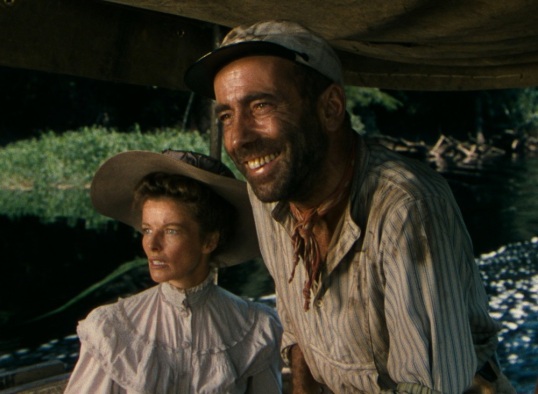
The African Queen (1951, dir by John Huston)

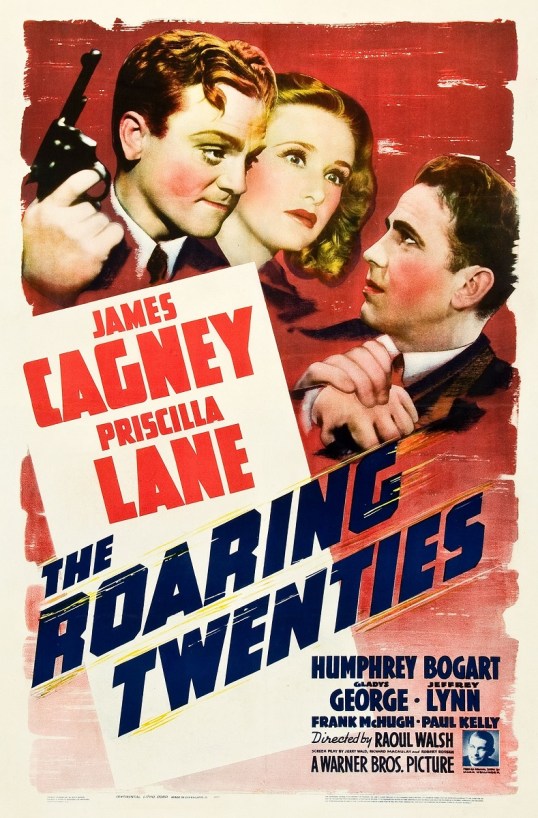
An Offer You Can’t Refuse #7: The Roaring Twenties (dir by Raoul Walsh)


The 1939 gangster epic, The Roaring Twenties opens with newsreel footage of men like Franklin D. Roosevelt, Winston Churchill, and Adolf Hitler.  We watch as they give speeches and as armed soldiers march across Europe.  For those of us watching in the present, these are figures from the past.  For audiences in 1939, though, these were the men who were shaping both their present and their future.

A narrator informs us that the world has changed much over the past few years and that it’s on the verge of changing again.  The world is preparing for war and who knows what society is going to look like afterwards.  (Interestingly enough, at the time that The Roaring Twenties was released, the U.S. was officially neutral when it came to the war in Europe, with many politicians arguing that the U.S. should pursue an isolationist foreign policy.  Though the film seems to be speaking to a nation that was already committed to war but that was actually not the case.)  The narrator goes on to say that it’s easy to forget what America was like just 20 years ago.  World War I was ending.  Soldiers were returning home.  Prohibition has just become the law of the land and, as a result, there was now a whole new way to make illicit cash.  It was a different era, the narrator tells us, one that is running the risk of being forgotten.

With that narration, it’s made obvious that The Roaring Twenties is designed to be more than just a gangster film.  It’s also a history lesson.  With Americans aware that another war might be coming, perhaps they needed to be reminded of what happened during and after the previous one.  By that same token, with people across the world already dying in the fight for freedom, perhaps Americans needed to be reminded of what happened the last time they allowed the government to take those freedoms away.

The Roaring Twenties tells the story of three men who first met in 1918, while they were all hiding out in a foxhole while a bloody and violent war rages all around them.  (The narrator somewhat archly notes that the three men — like all the men who fought and died in World War I — had been told that they were making “the world safe for democracy.”)  The three of them become friend while under fire and they remain friends when they return home to a war-weary nation that refuses to take care of its veterans.  Unfortunately, that friendship doesn’t survive the roaring 20s.

George Holly (Humphrey Bogart) is a former saloon keeper who becomes a major bootlegger after the passage of prohibition.  George is the type who takes pleasure in gunning down a 15 year-old during World War I.  (“He’ll never make 16,” George says after pulling the trigger.)  He doesn’t improve once he returns home but he does find a lot of success as a bootlegger.  Soon, he’s got a mansion.  He’s got bodyguards.  He goes to the best clubs and owns the best clothes.  Prohibition may have been meant to put George Holly out-of-business but instead it’s made him a rich and influential man.

Lloyd Hart (Jeffrey Lynn) is a college-educated idealist, one who becomes a lawyer once he returns home.  Even the most successful of bootleggers needs a good lawyer but Lloyd refuses to compromise his belief in the law, even when it comes to helping out his friends.  Lloyd will eventually end up working out of the district attorney’s office, where he builds cases against men like George Holly.

And finally, there’s Eddie Bartlett (James Cagney).  Eddie is the film’s main character.  He’s a criminal but, unlike George, he’s not totally corrupt.  In many ways, he’s an idealist but he’s never as self-righteous as Lloyd.  While his friends worry about their place and their role in society, Eddie is just trying to survive.  Before he went off to war, Eddie was a mechanic but, once he returns, he discovers that his job has been filled.  With no other work available, Eddie is finally hired to drive a cab.  What is those cabs could be used to smuggle alcohol?  Eddie finds himself working with Panama Smith (Gladys George) while, at the same time, going to war with Nick Brown (Paul Kelly).  In between making and losing a fortune (due to both the end of prohibition and the 1929 stock market crash), Eddie falls in love with singer Jean Sherman (Priscilla Lane).  Because Eddie can’t leave the rackets, Jean ends up married to Lloyd instead.

The film follows these characters, from 1918 to 1933.  Along the way, it also provides a critique of prohibition.  Prohibition is presented as being a bad law, one that led to men like George Holly getting rich and which destroyed the lives of countless people.  By making liquor illegal, the film argues, it also made it appealing to people who would have otherwise never had a drink.  There’s a definite appeal to the forbidden.  Interestingly enough, Eddie never takes a drink while he’s getting rich smuggling the stuff.  It’s only after prohibition is repealed and Eddie finds himself once again reduced to driving a cab for a living that he becomes a drunk.  Rich George and educated Lloyd might survive the end of prohibition by Eddie — who was as much a foot soldier during prohibition as he was during World War I — against finds himself cast out by a society that wants to forget about the national trauma that it’s just gone through.  Eddie, however, isn’t going to go down without a fight.  He’s played by James Cagney, after all.

The Roaring Twenties is a true classic.  It works as a gangster movie, a historical epic, and a portrait of the side effects of out-of-control regulation.  It tells the story about what happens when society becomes more interested in governing people than in helping them.  Indeed, the film asks, what were men like Eddie Bartlett supposed to do when, after risking their lives for their country, they returned home to discover that their jobs were gone, rent had gone up, and the government wouldn’t even allow them to commiserate their sorrows over a cold beer?  Who can blame America for rebelling?  Who can blame the Eddie Barletts of the world for doing what they had to do to survive?

Finally, not only does The Roaring Twenties feature brilliant performances from genre veterans like Bogart and Cagney (in fact, this is a probably Cagney’s best gangster performance) but it also recreates the 20s with such skill that you can’t help but wish that you could have been a part of it.  It all ends with a brilliant final scene on the steps of a church.  “He used to be a big shot!”  Yes, he was.

This is definitely an offer not to refuse.

Previous Offers You Can’t (or Can) Refuse:

  1. The Public Enemy
  2. Scarface
  3. The Purple Gang
  4. The Gang That Could’t Shoot Straight
  5. The Happening
  6. King of the Roaring Twenties: The Story of Arnold Rothstein 

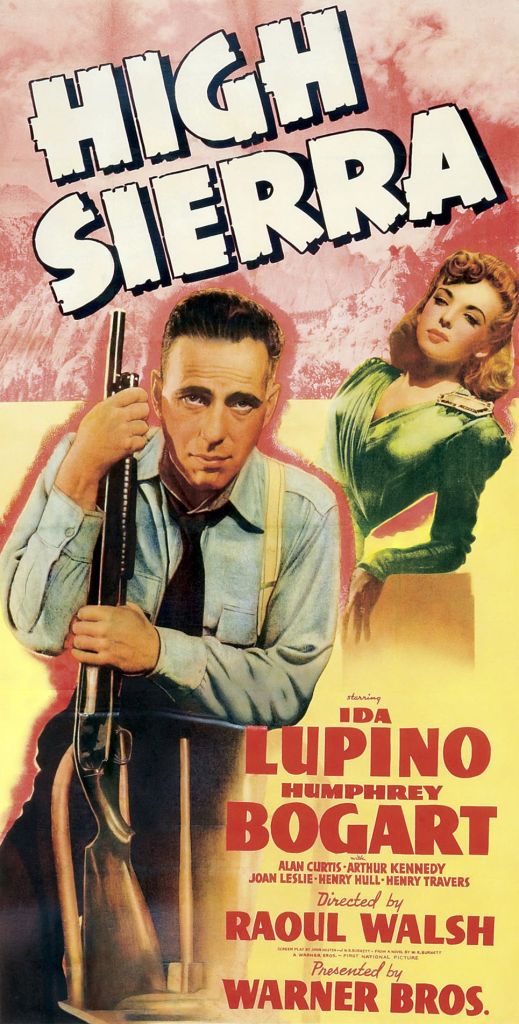
Crashing Out: Humphrey Bogart in HIGH SIERRA (Warner Brothers 1941)


gary loggins's avatarcracked rear viewer

Humphrey Bogart played yet another gangster in Raoul Walsh’s HIGH SIERRA, but this time things were different. Bogie had spent the past five years at Warner Brothers mired in supporting gangster parts and leads in ‘B’ movies, but when he read John Huston and W.R. Burnett’s screenplay, he knew this role would put him over the top. James Cagney and Paul Muni both turned it down, and George Raft was penciled in to star, until Bogie put a bug in his ear and Raft also refused it. Bogart lobbied hard for the role of Roy Earle, and his instincts were right: not only did HIGH SIERRA make him a star at last, it led to him getting the lead in his next picture THE MALTESE FALCON , the directorial debut of his good friend Huston.

Roy Earle is an old-school criminal pardoned from an Indiana prison thanks to the machinations…

View original post 698 more words

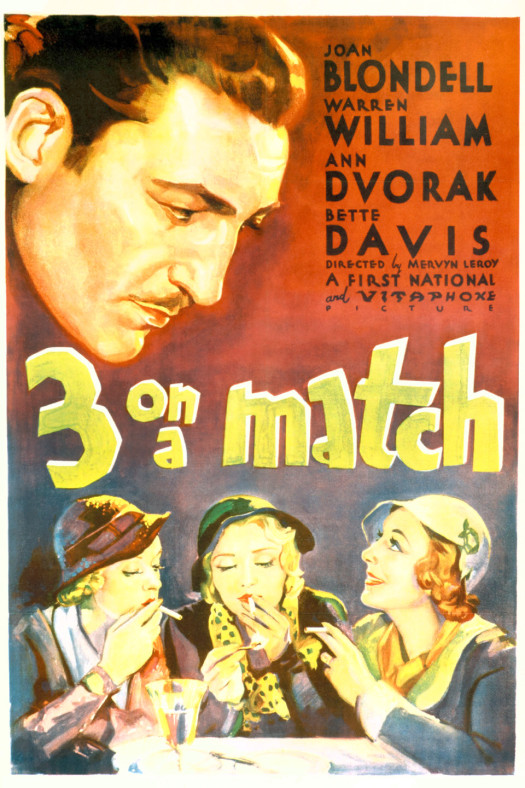
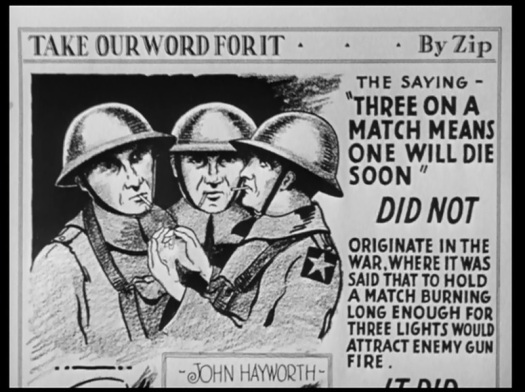
Pre Code Confidential #26: THREE ON A MATCH (Warner Brothers 1932)


gary loggins's avatarcracked rear viewer


Mervyn LeRoy is usually talked about today as a producer and director of classy, prestige pictures, but he first made his mark in the down-and-dirty world of Pre-Code films. LeRoy ushered in the gangster cycle with LITTLE CAESAR, making a star out of Edward G. Robinson, then followed up with Eddie G in the grimy tabloid drama FIVE STAR FINAL . I AM A FUGITVE FROM A CHAIN GANG tackled brutal penal conditions in the South, GOLD DIGGERS OF 1933 featured half-naked showgirls and the Depression Era anthem “Remember My Forgotten Man”, and HEAT LIGHTNING was banned by the Catholic Legion of Decency! LeRoy’s style in these early films was pedal-to-the-metal excitement, and THREE ON A MATCH is an outstanding example.

The film follows three young ladies from their schoolgirl days to adulthood: there’s wild child Mary, studious Ruth, and ‘most popular’ Vivien. I loved the way writer Lucien Hubbard’s…

View original post 554 more words