Horror Film Review: Eegah! (dir by Arch Hall, Sr.)


First released in 1962, Eegah! has a reputation for being one of the worst films ever made.

Usually, whenever I come across a film with that type of reputation, my natural instinct is to be a contrarian and to argue that the film is not so much bad as its just misunderstood.  I can’t really do that with Eegah!  Eegah! is a legitimately bad movie, though I don’t know if I’d call it one of the worst.  It’s a low budget vanity project and, quite frankly, I think snarkiness is better directed at big budget vanity projects.  Eegah! is bad but it’s also bad enough to be entertaining in a train wreck sort of way and there’s something to be said for that.

While driving at night, 30 year-old teenager Roxy Miller (Marilyn Miller) runs over Eegah (Richard Kiel), a giant caveman who has somehow gone unnoticed up until that moment.  Eegah runs off into the desert.  Roxy tells her boyfriend, Tom (Arch Hall, Jr.) and Tom’s father, Robert (Arch Hall, Sr., who also directed) about her encounter.  While Tom plays his guitar and sings a sappy ballad, Robert goes into the desert in search of Eegah.  When Robert doesn’t return, Tom and Roxy grab a dune buddy and head into the desert.

Roxy finds Eegah and Robert first.  Eegah grabs Roxy and takes her to a nearby cave, where Robert is waiting for them.  Eegah can’t speak and does most of his communication by swinging around a club and being a bit too handsy.  (There’s one painting on the wall of his cave but it’s not very good.)  Eegah, despite his fearsome appearance, seems to actually be pretty amiable.  But then he falls in love with Roxy and becomes rather possessive.  When Roxy gives Robert a shave, the bearded Eegah demands a shave as well.  He’s fairly handsome without the beard but still, it’s hard not to get grossed out by the way he tries to lick up the thick shaving cream that’s covering his face.

Eventually, Tom rescues Roxy and Robert and not a minute too soon!  There’s a party in town and Tom and his band are scheduled to play!  Eegah, upset that Roxy has left him, picks up his club, puts on his best animal skin, and heads into town on a rampage!

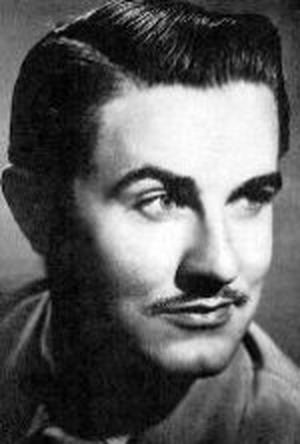
Eegah (and, yes, I’m dropping the exclamation point) was produced and directed by Arch Hall, Sr.  (He receives a story credit as well.)  It was actually one of many movies that Hall Sr. made, all in an effort to make his son into a film star.  In Eegah, Arch Hall, Jr. performs two songs and dances with Roxy.  The film positions him as a teen idol but Hall, Jr. doesn’t seem to be particularly comfortable with the role.  Of course, it doesn’t help that he’s working with an absolutely terrible script.

I do, however, appreciate the performance of Richard Kiel as Eegah.  Kiel does the best that anyone could with the role, playing him as being  giant who simply doesn’t understand that you can’t walk around with the a club in public without someone calling the police.  Poor Eegah!  He doesn’t even know what the police are.

Eegah! (yeah, I’ll return it’s exclamation point for the next-to-last paragraph) is a film that is so ineptly done and poorly written that it becomes rather fascinating to watch.  It’s boring only if you’re the type who can’t appreciate terrible dialogue, terrible camera placement, and the type of acting that can only be found in a film that was directed, produced, and essentially written by one guy trying to make his reluctant son into a star.

Arch Hall, Jr. was far less interested in being a star and instead became a pilot and pursued his love of flying.  As for Richard Kiel, he went on to play Jaws, one the greatest of the James Bond henchmen.

Horror On The Lens: Plan 9 From Outer Space (dir by Edward D. Wood, Jr.)


Today, we pay respect to Edward D. Wood, Jr. on the date of his birth.  He was born 101 years ago today.

Some films need no introduction and that’s certainly the case with Wood’s 1957 masterpiece, Plan 9 From Outer Space.

Plan 9 is a film like no other, a film that mixes UFOs with zombies and which ends with a rather sincere plea for world peace.  When Eros the Alien explains that the Solarnite bomb could destroy the entire universe, the film’s hero, airline pilot Jeff, doesn’t point out that Eros’s logic doesn’t make sense.  Instead, he just says that he’s glad that America is the one that has the bomb.  “You’re stupid!  Stupid minds!” Eros shouts before Jeff flattens him with one punch.  Go Jeff!  Don’t take any backtalk from that judgmental alien!

From Criswell’s introduction to Tor Johnson’s rise from the dead to Lyle Talbot casually standing with his hands in his pockets while a UFO explodes above him, Plan 9 is a true classic of some sort.

Can you prove it didn’t happen?

6 Edward D. Wood Jr. Trailers For Horrorthon


Since today would have been the 101st birthday of director Edward D. Wood, Jr., it seems appropriate to dedicate this week’s edition of Lisa Marie’s Favorite Grindhouse Trailers to him!

Below …. can you handle six trailers for six Ed Wood films!?

Watch, if you dare!

  1. Glen or Glenda (1953)

2. Jail Bait (1954)

3. Bride of the Monster (1955)

4. Plan 9 From Outer Space (1957)

5. Night of the Ghouls (1958)

6. The Sinister Urge (1960)

20 Horror Movies For The Weekend (10/10/25)


It’s time for another round of movie recommendations for the Halloween season!

Universal Horror On Prime

It’s the Halloween season and I am happy to say that Prime has a few classic, old school horror films.  I know that they probably take some getting used to for modern audiences but I personally love the old horror movie.

Dracula (1931), for instance, has a reputation for being rather stagey and that reputation is actually justified.  It was based less on Bram Stoker’s classic novel and more on the subsequent stage play.  That said, years of bad imitations have not diminished the strength of Bela Lugosi’s performance as Dracula.  Though this film is, understandably, dominated by Lugosi, I’ve always appreciated the performances of Dwight Frye and Edward Van Sloan as well.  Dracula is on Prime.

Frankenstein (1932) also features Edward Van Sloan and Dwight Frye, along with Mae Clarke as Elizabeth, Colin Clive as Henry Frankenstein, and Boris Karloff as the Monster.  Nowhere near as campy as its reputation would seem to suggest, Frankenstein is actually a thoughtful and rather sad horror film.  Karloff’s performance as the Monster has never been equaled and the scene where he unknowingly tosses the little girl in the lake to see if she will float is a classic moment of Universal horror.  Frankenstein is on Prime.

Needless to say, any viewing of Frankenstein should be immediately be followed by the second part of the story, Bride of Frankenstein (1935).  Bride of Frankenstein opens with Elsa Lanchester (as Mary Shelley) revealing that there is more to her story than revealed in the first film.  Lanchester returns towards the end of the film, playing the title character.  Her reaction to being brought to life is heart-breaking.  Boris Karloff is even better in this film than he was in the first one.  Of the old Universal horror films, this is the best.  It can be viewed on Prime.

The Invisible Man (1933) is often overlooked when it comes to discussing the classic Universal horror films but I’ve always enjoyed.  The special effects are effective to this day and Claude Rains gives an excellent performance as the title character.  The Invisible Man can be viewed on Prime.

Finally, I have to mention one of my personal favorites.  Creature From The Black Lagoon (1953) may have come out 20 years after the first wave of Universal horror films but it’s still an undeniable classic.  The scenes of the Creature and Julia Adams swimming underwater are like a surreal and beautiful ballet.  The Creature itself remains one of the best of Universal’s monsters.  It can be viewed on Prime.  (We’ll be watching it tomorrow for #ScarySocial!)

British Horror Online

In the 1950s, Britain’s Hammer Studios made their own version of the classic horror tales.  Hammer’s films were in color and featured a combination of blood and cleavage that made them very popular with audiences in both the U.K. and the U.S.  Even more importantly, they featured actors like Peter Cushing and Christopher Lee.

Curse of Frankenstein (1957) featured Peter Cushing as the Baron and Christopher Lee as the monster.  If the first Frankenstein presented the scientist as being misguided but ultimately well-intentioned, the Hammer version presents Baron von Frankenstein as being a man who is all-too eager to play God, mostly for the sake of his own ego.  Lee is an effective Monster but the true monster here is Cushing’s mad scientist.  Curse of Frankenstein can be viewed on Tubi.

Horror of Dracula (1958) was the first of many Hammer films to feature Christopher Lee as Dracula and Peter Cushing as Van Helsing.  (Somewhat sweetly, the two actors were best friends off-screen.)  Lee eventually grew bored with the Hammer Dracula films but, in the first one, he gives an intense and almost feral performance as the blood-thirsty vampire.  I’ve always preferred Cushing’s kindly Van Helsing to his cruel Frankenstein.  Horror of Dracula can be viewed on Tubi.

Hammer was not the only British studio creating memorable horror films.  Amicus Productions was responsible for some classic films of their own.  One of my favorites is Scream and Scream Again (1970), which manages to be a horror film, a science fiction film, and a conspiracy thriller all in one.  Christopher Lee and Peter Cushing appear in small roles while Vincent Price plays the scientist at the heart of the thriller.  The late Michael Gothard plays a killer who, when handcuffed to a car, simply rips off his hand in order to make his escape.  Scream and Scream Again can be viewed on Tubi.

In Death Line (1972), Donald Pleasence gives one of his best performances as an alcoholic cop who is investigating a series of disappearances in London’s underground.  Hugh Armstrong plays the rather pathetic cannibal who is only capable of saying, “Mind the gap….” Christopher Lee has a cameo.  Death Line can be viewed on Prime.

Finally, I have to recommend something from the underrated director Pete Walker.  The Flesh and Blood Show (1972) is a fun and macabre little horror story about actors rehearsing a play in an isolated theater.  Needless to say, they aren’t alone.  It can be viewed on Tubi.

Italian Horror Online

With this upcoming Monday being Columbus Day, here are some Italian horror recommendations.

Of course, any discussion Italian horror has to start with Mario Bava.  Black Sabbath (1963) is one of Bava’s best films, an anthology film that features three classic tales.  Boris Karloff appears in the second story, playing a patriarch who has been transformed into a vampire.  All three of the stories are wonderfully scary and entertaining and they all reveal Bava as a true master of horror.  Black Sabbath can be viewed on Tubi.

Baron Blood (1972) deals with a mansion, a curse, and an ancient evil.  The great Joseph Cotten stars.  Remember that story about the hole in Russia from which you could supposedly hear the screams of the people in Hell?  The “screams’ were even recorded.  It was later determined that the screams in question had been lifted from this very film.  Baron Blood can be viewed on Tubi.

Mario Bava’s Lisa and the Devil (1973) is a surreal mix of giallo mystery and demonic horror.  Elke Sommer plays Lisa (hey!) who finds herself stranded in a mansion and experiencing what may or may not be a dream.  Telly Savalas plays the mysterious Leandro, who may or may not be the other title character.  The film can be viewed on Tubi.

Bava’s final film as a director was 1977’s Shock, a brilliant and frightening ghost story starring Daria Nicolodi and John Steiner.  Nicolodi gives an intense and riveting performance as a mental fragile woman who may or may not be haunted by her ex-lover’s ghost.  The hallway scene is horrifying.  It can be viewed on Tubi.

Mario Bava’s son, Lamberto Bava, has gone on to have a directorial career of his own.  He is perhaps best-known for directing the Dario Argento-produced Demons (1985), in which the audience of horror movie is transformed into a collection of blood-thirsty demons.  It’s a wonderfully over-the-top horror film and it can be viewed on Tubi.

Lamberto Bava also directed A Blade In The Dark (1983), an excellent giallo about a film composer who is on a deadline but still finds time to get caught up in the brutal murders that all seem to be occurring around his duplex.  This was one of the first giallo films that I ever saw and I was pretty much hooked from the beginning.  The murder scene that takes place over the sink still freaks me out.  It can be viewed on Tubi.

Finally, I have to recommend a few films from Lucio Fulci, the genius who was responsible for some of the most visually stunning (albeit narratively incoherent) Italian horror films of all time.

First off, any discussion of Fulci’s horror work has to start with Zombi 2 (1979).  Though the film was sold as being a “sequel” to Dawn of the Dead, Zombi 2 is actually a separate story and a horror classic in its own right.  As opposed to the gray-skinned members of the undead that populated Romero’s films, Fulci’s zombies truly do look as if they’ve spent the last decade buried underground and they attack with a disturbing relentlessness.  One zombie battles a shark underwater.  A conquistador zombie digs its way out of the ground, in a scene that is actually shown from the zombie’s point of view!  The final scene is a classic and was apparently shot without bothering to get any permits ahead of time.  Zombi 2 is on Tubi.

Finally, any discussion of Fulci has to include his masterwork, The Beyond trilogy.  These three films, which are loosely-connected, are about as surreal and dream-like as they come, as narrative coherence is sacrificed for nightmarish visuals that truly do stick with the viewer.

In the first part of the trilogy, City of the Living Dead (1980), Christopher George and Catriona MacColl visit a small New England town where a priest’s suicide has opened a portal to Hell.  The great Giovanni Lombardo Radice makes his film debut as Bob the Pervert, who has a bad experience with a drill to the head but who still returns to get a measure of revenge.  City of the Living Dead can be viewed on Pluto TV.

The second part of the trilogy, The Beyond (1981), takes place in New Orleans.  Catriona MacColl plays a different character here, a woman trying to reopen a hotel where, decades ago, a painter was lynched.  The charming David Warbeck plays a doctor who has to deal with the dead coming back to life.  Cinzia Monreale plays the beautiful, blind, and enigmatic Emily.  The Beyond is about as close as the Italian horror industry ever got to capturing the feel of classic H.P. Lovecraft story.  The ending will stick with you.  It can be viewed on Tubi.

Finally, The House By The Cemetery (1981) features Catriona MacColl as yet another new character.  This time, she and her husband and their son move into a house in New England, little realizing that the house’s previous inhabitant, Dr. Fruedstein, is still in the basement.  This bloody film was apparently Fulci’s biggest hit in the States.  Dr. Fruedstein is a terrifying creation and the film ends on a note of haunting ambiguity.  This film can be viewed on Tubi.

That’s all I have room for in this entry but I imagine I’ll be writing about a lot more about Italian horror as the month progresses!

Click here for last week’s recommendations.


Music Video of the Day: Can I Play with Madness by Iron Maiden (1988, directed by Julian Doyle)


Director Julian Doyle also directed videos for Kate Bush but he may be best known for working as an editor on several Monty Python and Terry Gilliam films, including Life of Brian, Time Bandits, The Meaning of Life, Brazil, and Terry Jones’s Mr. Toad’s Wild Ride.

Enjoy!

The TSL Horror Grindhouse: Dance of the Damned (dir by Katt Shea)


In 1989’s Dance of the Damned, Cyril O’Reilly plays a vampire with a sensitive side.

The Vampire is out on his nightly prowl.  He goes to a strip club where he finds himself drawn to a dancer named Jodi (Starr Andreef).  The Vampire is drawn to Jodi because Jodi is thinking of committing suicide.  It’s her son’s birthday and the boy’s father refuses to even let her see him.  The Vampire approached Jodi and says the wants to talk to her because he hasn’t talked to anyone in a long time.  He offers to pay Jodi one thousand dollars if she’ll come back to his house and have a conversation with him.

Because the Vampire doesn’t drive, they take a city bus back to his place.  While sitting on the bus, they are harassed by two wannabe punks.  The Vampire pierces one of their eyes with the stem of a rose.  Oddly, Jodi barely notices.

At the house, the Vampire reveals his fangs and explains that he rarely feasts but tonight is one of those nights when he does.  He says that he picked Jodi because he could sense her loneliness and could tell that she wanted to die.  He also explains that, contrary to the vampire mythology, Jodi will not turn into a vampire after he drinks her blood.  Instead, she’ll just die.  Jodi’s response is to shoot the Vampire several times.  The bullets fall off of his body.

Jodi and the Vampire end up talking.  In fact, Dance of the Damned often feels more like a one-act play than a traditional vampire film.  Both Jodi and the Vampire are lonely and they discuss what its like to feel like they have nothing in the world.  The Vampire cannot exist in the daylight and, as a stripper, Jodi’s life is centered around the night as well.  When Jodi learns that the Vampire has never been to the beach because he never felt like there was much point in going during the night, Jodi insists that they go immediately.  The Vampire discovers what sand feels like.  He struggles to walk on it which was kind of weird but whatever.  At least the movie was trying to do something different!

The main theme of the film is that both the Vampire and Jodi are outsiders.  The Vampire was born a vampire and has no idea what it’s like to be a mortal being that can safely walk around in the daylight.  Because he has scars from a childhood incident with the humans, even the Vampire’s own people have rejected him.  Jodi, meanwhile, has been rejected by conventional society because she’s a stripper and now, she can’t even see her own child.  They are two outsiders who are linked together by their feelings of being lost.  Over the course of the night, they fall in love but it’s obvious that only one will still be around the next night and it’s also fairly obvious which one it will be.

I liked Dance of the Damned, though I imagine that it might be too talky for a lot of fans of the horror genre.  It’s more of a dual character study than a traditional vampire film.  Just as she did with films like Poison Ivy and The Rage: Carrie 2, director Katt Shea uses the horror genre as a way to explore the pressure that society puts on women to act, look, and dress a certain way.  Shea’s direction is moody and atmospheric and she gets an excellent performance from Starr Andreef.  Dance of the Damned is not a film for everyone but for those who are looking for a little emotional honesty to go along with their horror, it’s an intriguing film.

Horror On TV: Hammer House Of Horror #9: Carpathian Eagle (dir by Francis Megahy)


Tonight’s episode of Hammer House of Horror is Carpathian Eagle.

Men are being murdered in bed by a woman who removes their heart.  Inspector Clifford (Anthony Valentine) investigates with the help of a true crime historian named Natalie (Suzanne Danielle).  Natalie tells the story of an ancient Carpathian countess who murdered men in the same way and suggests that the murders might be the work of a modern-day descendant.  The truth turns out to be a bit more complicated, if also a bit predictable.

This is not my favorite episode Hammer House of Horror but still, it’s worth watching to catch a young Pierce Brosnan in an early small role.  This episode originally aired on November 8th, 1980.

October Hacks: Out of the Dark (dir by Michael Schroeder)


In 1989’s Out of the Dark, a man dressed in a clown costume is killing phone sex operators.  He lurks in the darkness and jumps out of the shadows to commit his dastardly crimes.  Especially during the first hour or so, the film has its share of both suspense and gruesome moments.  In the style of Italian giallo and pre-Halloween American slasher pics, the film actually tries to create some mystery about who the killer could be.  Lt. Frank Meyers (Tracey Walter) suspects that the killer might photographer Kevin Silvers (Cameron Dye).  Kevin and his girlfriend, Kristi (Lynn Danielson-Rosenthal), think that the police should be taking a closer look at David Stringer (Bud Cort), an accountant who has an office in the same building as the phone sex company.  Meanwhile, Detective Langella (Divine) thinks that the murders might be linked to a serial killer who is targeting prostitutes.

The main problem with Out of the Dark is that it’s pretty obvious from the start who the killer is and it’s hard not to judge the people who can’t figure it out for themselves.  The movie doesn’t really offer up enough viable suspects to keep you guessing and than it spends so much time trying to make it look like one of the suspects is guilty that any experienced film watcher will automatically know that he isn’t.  The viewers are supposed to be shocked by the killer’s identity but there’s nothing shocking about it.  It’s pretty obvious.

On the plus side, Out of the Dark does have a one-of-a-kind cast.  Divine and Tracy Walter play detectives.  Bud Cort is intense and nerdy as the bitter accountant.  Cameron Dye is vacuously handsome as the photographer.  Geoffrey Lewis shows up as an alcoholic.  Lainie Kazan plays an aging prostitute.  Tab Hunter drives a car.  Paul Bartel manages a motel and gets upset when he sees the blood pooling in one of his rooms.  And finally, Karen Black plays the owner of the phone sex company and gives a far better performance than the material actually deserves.  Black brings some much needed emotional reality to the film.

As I said at the start of this review, Out of the Dark has its moments.  The clown costume is truly creepy and the opening murder is all the more disturbing because it happen outside and in a public park.  (You do have to wonder how no one noticed a weirdo dressed like a clown wandering around.)  A scene in which the clown attacks a phone sex operator who has agreed to serve as bait is also well-done and genuinely frightening.  The story moves at a quick and steady pace and it deserves some credit for ending on a definitive note as opposed to trying to copy the ambiguity that was so popular with other slasher films of the era.

If only the identity of the killer had actually been a surprise, Out of the Dark would probably be considered a classic.  As it is, it’s just another well-made slasher film.

Doctor Who — Invasion of the Dinosaurs (1974, directed by Paddy Russell)


Fresh from defeating an attempt by a Sontaran to disrupt British history, the Third Doctor (Jon Pertwee) and his newest companion, reporter Sarah Jane Smith (Elisabeth Sladen), return to present-day London and discover that it has been transformed into a ghost town.  Dinosaurs are roaming the streets.  The Doctor teams up with UNIT to try to figure out who has been monkeying with time but what he doesn’t know is that the trusted Captain Yates (Richard Franklin) is working with the people responsible for the dinosaur invasion.

Invasion of the Dinosaurs was the second serial of the 11th season.  Like The Sea Devils, this was another case where I read the novelization long before I got a chance to see the actual serial.  Well-written by Malcolm Hulke, the novelization really got me excited to watch Invasion of the Dinosaurs.  It did not prepare me for how fake the dinosaurs would look.

It was to be expected, though.  Classic Doctor Who was never known for its wonderful special effects.  Instead, it was known for rubber monsters, torn costumes, and alien landscapes that were often made out of cardboard.  For many of us, that was a part of its charm.  The dinosaurs in this serial look like toys that have been unleashed on a still photo of London.  I’ve read that the serial was criticized for its bad dinosaur effects when it originally aired 1974 and that was long before Jurassic Park made everyone take the idea of seeing a realistic dinosaur for granted.


Despite the very fake dinosaurs, Invasion of the Dinosaurs still has one of the better scripts of the Pertwee era.  The villains aren’t the typical evildoers who usually showed up on Doctor Who.  Instead, they are people who have convinced themselves that the only way to save humanity is to dial back time to what they consider to be the “Golden Age,” before technology and industry blighted what they believe to be the ideal landscape.  Of course, they plan to take only the very best among the population to their golden age with them.  The villains are elitist environmentalists, convinced that they and only they know what is best.  This may be the first episode of Doctor Who where the main antagonist, Sir Charles Grover (Noel Johnson), is a member of Parliament.

Captain Yates’s betrayal of UNIT and the Doctor adds some emotional depth to this story.  While Yates was never as important a character as the Brigadier or Sgt. Benton, he was still present for almost all of the Third Doctor’s adventures and the small scenes where he would flirt with Jo Grant were some of the most awkward moments of the Pertwee era.  Captain Yates was a loyal member of the Third Doctor’s entourage and his betrayal was motivated not by greed or resentment but instead by a desire to make the world a better place.  The novelization made it clear that it was actually the terrible things that Yates saw as a member of UNIT that convinced him that time needed to be turned back.

This was the final Jon Pertwee story to be set entirely on Earth and, though Yates and the Brigadier would return for Pertwee’s final serial, it was the last true UNIT story of the Pertwee years.  Jon Pertwee had already decided that the 11th season would be his last.  The 12 season would feature a new Doctor.  And while the BBC considered actors like Graham Crowden, Bernard Cribbins, and Jim Dale for the role, the Fourth Doctor was ultimately be played by Tom Baker, an actor who was working as a construction worker when Invasion of the Dinosaurs first aired.

Doctor Who would never the same.