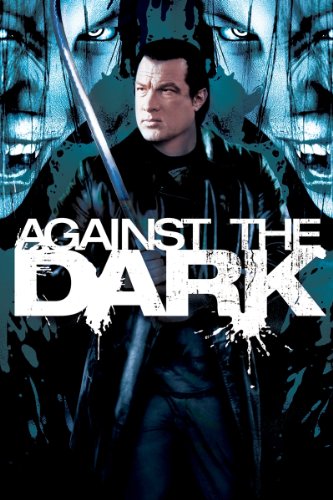
Against The Dark (2009, directed by Richard Crudo)


Legend has it that Steven Seagal’s film career was the result of a bet. The story goes that, in the late 80s, superagent Michael Ovitz, who was then the most powerful man in Hollywood, bet a studio exec that he could make the least appealing man he knew into a movie star. That man was Ovitz’s self-defense instructor, Steven Seagal.

I don’t know if that story is true but it’s as good an explanation as we’re going to get at to why Seagal was ever asked to star in a movie. Despite being a terrible actor who was universally disliked by everyone who worked with him, Steven Seagal was briefly a star in the 90s. Along with Jean-Claude Van Damme and Dolph Lundgren, he was one three top B-action stars around. Lundgren’s appeal was that he could actually act. Van Damme’s appeal was that he was a true athlete and actually could do all of his own stunts. As for Seagal, he was packaged to be a star. He appeared in movie with actors who were talented enough to carry the drama while Seagal whispered his lines. He also worked with talented action director like Andrew Davis. For a while there, Seagal had it all.

It fell apart, of course. Seagal was his own worst enemy, fabricating details of his biography and acting like an ass whenever the cameras weren’t rolling. He was notorious for being difficult and every young actress trying to make it in the 90s had at least one horror story about Seagal harassing them at an audition. His appearance on Saturday Night Live was so bad that it’s still talked about as an example of what can happen when the show gets stuck with a terrible host.  According to the show’s then-cast members, Seagal insisted that the writers come up with a skit in which he would play a therapist who raped his patients. (Check out Tom Shales’s Live From New York for the details on Seagal’s time as host.) He directed two awful movies. Audiences cheered when his character was blown up in Executive Decision.  People stopped showing up for his movies and, for the past few years, Seagal has been better known as a tireless advocated for Vladimer Putin than for his work as a direct-to-video action star.

Against The Dark is one of Seagal’s many direct-to-video movies.  It’s also his first horror movie.  The movie takes place in the future, when vampire/zombie hybrids have taken over the city.  The film misses a major opportunity by not casting Steven Seagal as the head vampire.  When this film was made, Seagal was nearly 60, overweight, and out-of-shape.  He had the right look to play a decadent vampire king but instead, he was just plays his regular Seagal role.  He and his squad patrol the city with samurai swords, hacking up any vampires that they come across.  Seagal’s not actually in much of the film and his stunt double does most of the work.  When Seagal does appear, he looks like he’s trying to catch his breath.  It’s obvious that this film was just a paycheck for him.  There’s no speeches about protecting the environment.  He doesn’t even get out his guitar and sing.

Most of the movie deals with a separate group of survivors, who are stranded in a hospital and who are trying to find a way to escape before the military blows up the city.  Some of the fight scenes, especially the ones that don’t involve Seagal, are not terrible but the film itself is so badly lit that you usually can’t tell who is fighting whom.  There is one memorably weird scene of a female vampire filing down her fans so that she can pass as human but the movie doesn’t really follow up on it.  The movie doesn’t do much with any of it ideas.  Its obvious that vampires and zombies were used because they were hot and someone figured out that even Seagal’s fans were getting bored with him just fighting drug dealers and mercenaries.

Against the Dark is bad, even by the standards of late era Seagal.  Shortly after the movie was released, Seagal tried to reinvent himself as a reality TV star with Steven Seagal: Lawman.  When that and a subsequent threat to run for governor of Arizona didn’t do much for his career, Seagal went to Russia and, after receiving Russian citizenship, declared that he considered Vladimer Putin to be “like a brother” to him.  When asked about Seagal’s claim, Putin’s spokesman replied, “”I wouldn’t necessarily say he’s a huge fan, but he’s definitely seen some of his movies.”  Hopefully, the movie was Under Siege and not Against The Dark.
 

Game Review: How The Monsters Appeared In The Wasteland (2021, V. Dobranov)


How The Monsters Appeared In The Wasteland is an entrant in 2021 Interactive Fiction competition.  Browse and experience all of the games by clicking here.

The world has ended. Chaos reigns. Only savagery remains. At the start of this game, you and your partner are in your hovercraft, making your away across the wasteland, when you’re attacked by a crew straight out of a Mad Max film. From the start, there’s more to do than to just sit down in gunner’s seat and open fire. The hovercraft has been damaged and it’s up to you to make the repairs as quickly as possible. Once you do start shooting, the game’s not over. Ammo is limited and your pursuers are relentless.

How The Monsters Appeared In The Wasteland is a game devoted to the best part of any action movie, the chase. Though the game sounds simple, some of the puzzles do require some attention to detail. There’s more to winning than just being a good shot. This is a well-written Twine game that puts your right at the heart of the action.

Play How The Monsters Appeared In The Wasteland.

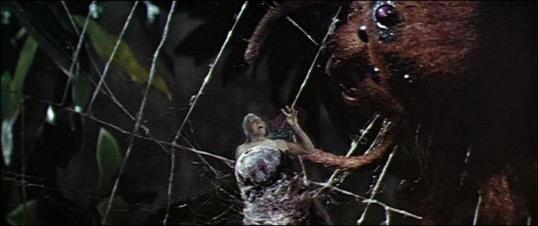
Scenes That I Love: “Help me!” from The Fly


The Fly (1958, D: Kurt Neumann)

One of the great things about the original, 1958 version of The Fly is that, even though it starred Vincent Price, Price didn’t play the Fly.  Instead, for once, Price was allowed to be the voice of reason, the guy who said, “Maybe don’t mess around with the laws of time and space.”

Today’s scene that I love is from the ending of the original Fly.  Supposedly, Price had a hard time filming this scene because whenever he heard the recording of David Hedison crying out, “Help me!,” he would start laughing.  Still, if you know what spiders actually do to the flies that they capture, you can’t help but sympathize with our misdirected scientist in the web.  Destroying him with a rock was probably the most merciful thing that anyone could do.

4 Shots From 4 Vincent Price Films


4 Shots From 4 Films is just what it says it is, 4 shots from 4 of our favorite films. As opposed to the reviews and recaps that we usually post, 4 Shots From 4 Films lets the visuals do the talking!

I woke up today to discover that Vincent Price was trending on Twitter. He was specifically trending because someone did a thread about Price’s political activism. This was something that I already knew about but most people on Twitter are stunned to discover that people actually did good things before the creation of social media.

Once I got over feeling elitist and superior, I thought to myself that it was actually kind of nice that people still love Vincent Price. He’s definitely one of my favorite actors. He started out as a mainstream studio actor, reading for the role of Ashley Wilkes in Gone With The Window and being considered for Mr. Potter in It’s A Wonderful Life. But he found his true stardom as a horror actor, bringing life to films that often would have been dead without his wonderful presence.

There’s no way that we can do Horrorthon without paying tribute to the great Vincent Price. Here are….

4 Shots From 4 Vincent Price Films!

House on Haunted Hill (1959, dir by William Castle, DP: Carl E. Guthrie)


The Masque of the Red Death (1964, dir by Roger Corman, DP: Nicolas Roeg)


Witchfinder General (1968, dir by Michael Reeves, DP: John Coquillon)


Scream and Scream Again (1969, dir by Gordon Hessler, DP: John Coquillon)

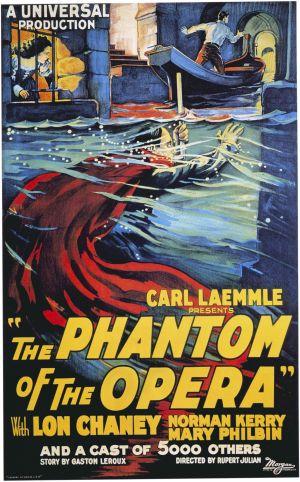
Horror On The Lens: The Phantom of the Opera (dir by Rupert Julian)


Today’s horror movie on the Shattered Lens is both a classic of silent era and one of the most influential horror films ever made.  It’s one that I previously shared in 2013, 2015, 2016, 2108, 2019, and 2020 but it’s such a classic that I feel that it is worth sharing a second (or fifth or even a sixth or perhaps a seventh) time.

First released in 1925, The Phantom of the Opera is today best known for both Lon Chaney’s theatrical but empathetic performance as the Phantom and the iconic scene where Mary Philbin unmasks him. However, the film is also a perfect example of early screen spectacle. The Phantom of the Opera was released during that period of time, between Birth of the Nation and the introduction of sound, when audiences expected films to provide a visual feast and Phantom of the Opera certainly accomplishes that. Indeed, after watching this film and reading Gaston Leroux’s original novel, it’s obvious that the musical was inspired more by the opulence of this film than by the book.

This film is also historically significant in that it was one of the first films to be massively reworked as the result of a poor test screening. The film’s ending was originally faithful to the end of the novel. However, audiences demanded something a little more dramatic and that’s what they got.


Horror on TV: Friday the 13th: The Series 1.19 “The Quilt of Hathor” (dir by Timothy Bond)


On tonight’s episode of Friday the 13th: The Series, it appears that Ryan might be tempted to abandon searching for haunted antique when the quest to find a cursed quilt leads him to a religious cult that has rejected “modern” society.

Honestly, at this point, a religious cult that has rejected social media could probably win over a lot of adherents.  However, I think things are a bit more sinister in this case.

Tonight’s episode first aired on May 7th, 1988.  Fear not the “To be continued” ending!  We’ll have the second part of this story tomorrow night!

Enjoy!

The TSL’s Grindhouse: The Last Laugh (dir by Jeremy Berg)


Myles (Steve Vanderzee) is a once-hot comedian whose career has been going downhill ever since 1) his wife died in a car accident and 2) he started taking medication to control his moods. Myles has now gone from playing packed comedy clubs to appearing in sleazy dives where he’s regularly cheated out of getting paid.

However, it appears that Myles finally has a chance to get back up on top! He’s been booked as the opening act for an egotistical comedy superstar! All Myles has to do is deliver one good set and his life will no longer be a joke. The only problem is that there’s a dead body in Myles’s dressing room and the staff of the theater is disappearing one-by-one. There’s a murderer stalking the theater and, at times, it seems like only Myles can see him. Is Myles — who hasn’t taken his pills — losing it or is there really a killer in the wings?

That’s the question asked by 2020’s The Last Laugh. It’s an intriguing question and the premise has a lot of promise but, unfortunately, the execution leaves even more to be desired. Not only are the victims rather generic but you also never really feel as if you know Myles. The film doesn’t show us much of his act so you really don’t know if the guy’s even all that funny. Since a lot of the movie hinges on whether or not Myles is willing to blow his shot at stardom in order to expose the murderer, it would be helpful to actually care about whether or not Myles becomes a star or not. Unfortunately, Myles isn’t really that likable or interesting of a character so who cares?

I did like the fact that the people behind The Last Laugh paid homage to some classic Italian horror films. Several of the shots of the killer creeping through the theater appeared to pay homage to Michele Soavi’s StageFright and there’s also a clever shout out to the Short Night Of The Glass Dolls at the end of the film. Unfortunately, there’s not really enough to the plot of The Last Laugh to make it memorable and the ambiguous ending will probably leave most viewers angry rather than intrigued. (Personally, I usually like ambiguous endings but, in this case, it just felt a little lazy.)

The Last Laugh has promise but it doesn’t really live up to it.

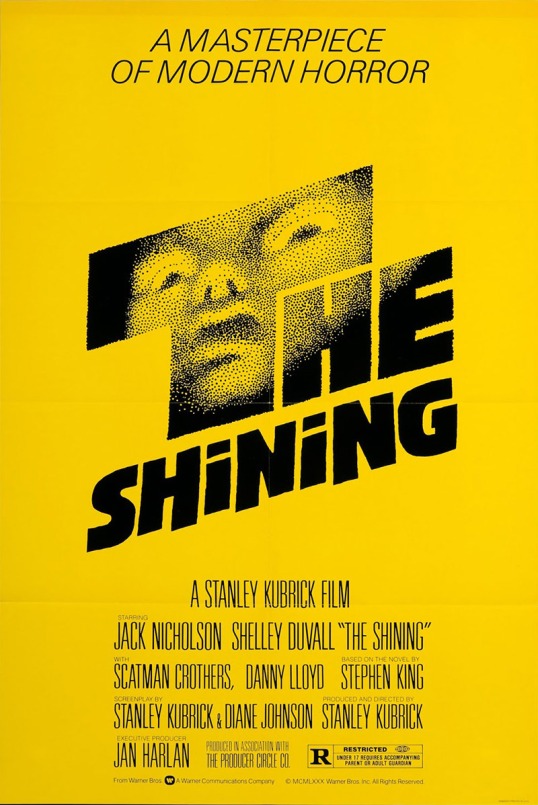
Horror Scenes That I Love: The Redrum Scene From The Shining


Today, the Shattered Lens wishes a happy 49th birthday to Danny Lloyd, the child actor who — at the age of 6 — brought Danny Torrance to life in Stanley Kubrick’s version of The Shining. After appearing in one made-for-TV movie after The Shining, Lloyd retired from acting. (He did make a cameo appearance in Doctor Sleep.) He went on to become a teacher. Somewhat sweetly, it’s been reported that, during the filming of The Shining, Kubrick went out of his way to keep Lloyd from knowing that he was appearing in a movie about killer ghosts and a father attempting to kill his family.

In honor of Danny’s birthday, here’s a scene that I love from Stanley Kubrick’s The Shining!

Horror Novel Review: The Boy Next Door by R.L. Stine


Oh my God, a super cute boy has moved in next door! Squee!

Seriously, Scott, the title character of this 1996 YA thriller from R.L. Stine, seems like he could be the perfect neighbor. He’s handsome. We’re told that he’s charming, though you don’t really see much of that in the book. He’s a star football player and, obviously, that’s a very important thing in the world of R.L. Stine. And, perhaps most importantly, Scott’s single! Of course, Scott’s single because he previous kind of girlfriend jumped into a pool that happened to be empty at the time. Scott was the one who encouraged her to do it.

Scott, you see, has some issues. He expects every girl that he meets to live up to an impossible ideal that he’s apparently created from watching old sitcoms from the 1950s. What the means is no makeup, no flirting, and definitely no short skirts! Scott really gets worked up over short skirts, to the extent that he’ll kill anyone who wears one. AGCK!

(If I had been a student at Scott’s high school, I would have been so dead.)

Scott’s new neighbor Crystal and her best friend, Lynne, both think Scott is totally hot and want to date him. Unfortunately, they both wear short skirts and Scott even catches Lynne putting on lipstick. Even if he wasn’t a puritanical incel murderer, Scott would still be creepy because he always seems to be staring through the windows of Crystal’s house. You would think that would be a red flag but …. well, Scott’s a football player and this is an R.L. Stine novel.

Fortunately, Crystal has a sister named Melinda who likes to read books and who doesn’t wear makeup so it seems pretty clear that she’s going to be the secret weapon to stopping Scott. But will it be too late for either Lynne or Crystal?

Scott is revealed to be a killer during the first few pages of this book so I have to admit that, the whole time I was reading it, I was waiting for one of those out-of-nowhere R.L. Stine twists. I was expecting Scott to discover that he was actually suffering from amnesia and that his real name was Jake. I was waiting for someone to reveal themselves to be a ghost. I was thinking, at one point, that it was all a dream. But nope, there’s no twist. This is one of the most straight-forward Stine books that I’ve ever read.

At times, the book felt like one of those weird Lifetime movies where everyone keeps talking about “girl power” and how no one has the right to judge you for behaving and dressing the way you want but, at the same time, you can’t help but notice that it’s always the really independent and fun-loving girls that end up getting killed. The Boy Next Door seems to be all over the place. On the one hand, Scott is a crazy puritan. On the other hand, almost every girl in the book is portrayed as being shallow and easily fooled. I was happy that Scott was presented as being a total monster but couldn’t the girls have been a little less naïve? Couldn’t they have at least acknowledged that Scott’s behavior was pretty creepy even before he turned out to be a killer? It doesn’t help that the plotting throughout the book feels rather random. There’s a lot of convenient coincidences, including one that happens during the climax. Chekhov wrote that, if you introduce a gun at the start of the story, it must be fired by the end of the story. One gets the feeling that Stine would be the type to forget to introduce the gun but still have someone fire it. One also gets the feeling that Stine may have been in a hurry when he wrote The Boy Next Door.

(Don’t worry, though. you’re still loved, R.L! Thank you for Fear Street!)

Anyway, the lesson here is that if the boy next door flies into a rage every time you put on lipstick, you don’t need him in your life! Even if he does play football….