October True Crime: Swearing Allegiance (dir by Richard Colla)


“Greenish brown female sheep,” the two lovers at the center of 1997’s Swearing Allegiance often tell each other.

It’s their code and only they understand what it means.  It’s not that hard to figure out.

Greenish Brown = Olive

Female Sheep = Ewe

Olive Ewe.

Say it out loud.

I love you.

That seems cute until you really think about it.  David Graham (David Lipper) and Diane Zamora (Holly Marie Combs) are high school sweethearts in Texas.  They go to different high schools but they’re totally in love (or they say).  David is planning on attending the Air Force Academy in Colorado.  Diane is entering the Naval Academy and she hopes to someday be an astronaut.  Diane is so convinced that she and David are going to be together forever that she loses her virginity to him.  David, for his part, seems to be a bit of a lunkhead but he leads the ROTC with an intense determination.  They’ll tell anyone who asks that they’re going to get married and be together forever.

And yet, neither one ever really tells the other, “I love you.”  Instead, they speak through code.  It’s cute.  It’s the sort of thing that I used to do when I was like 12.  But when you’re nearly an adult and you’re still saying, “Greenish Brown Female Sheep,” it suggests that you might not be as ready for life outside of high school as you think you are.

One night, after a teary David confesses to Diane that he cheated on her with one of his teammates on the school’s track team, Adrianne “A.J.” Jones (Cassidy Rae), Diane snaps.  Instead of dumping David, she tells him that the only way they can make things right is by murdering Adrianne, which is what they proceed to do.  They almost get away with it.  With the police focusing their attention on the wrong guy, David and Diane leave town for their respective colleges.  David and Diane swear to themselves that, from now on, they are going to live with honor and loyalty….

This made-for-TV movie was based on an actual crime that happened outside of Mansfield, Texas in 1995.  For years, the crime itself lived on as a cautionary tale that was told to teenage girls (including myself) in order to keep us from sneaking out and sneaking around.  Interestingly enough, in 2005, Zamora’s attorney said that the prosecution deliberately withheld evidence that David Graham had been lying about having sex with Adrianne Jones as a part of twisted scheme to keep Diane from breaking up with him.  I don’t know if that’s true or not but I do know that, whatever may have happened between Adrianne and David Graham, she deserved better than to be murdered and then turned into a cautionary tale.

One thing I do like about the film is that it is clearly on Adrianne’s side.  Cassidy Rae gives a sympathetic performance as Adrianne, playing her as a genuinely nice person who fell victim to David and Diane’s toxic relationship.  David Lipper is a bit blank-faced as David but Holly Marie Combs is appropriately intense as the obsessive Diane Zamora.  The film actually aired before the case went to trial, which shows that, even in the 90s, there was always a thin line between tragedy and entertainment.

Zamora and Graham are currently both in prison.  Zamora took a polygraph in 2007 but the results were tossed out when it was determined that she was trying to alter her breathing to fool the machine.  As Zamora now claims that Graham alone was responsible for killing Adrianne, I imagine they’re no longer speaking about greenish brown female sheep.

Lisa Marie Reviews An Oscar Nominee: Born On The Fourth of July (dir by Oliver Stone)


In 1989, having already won an Oscar for recreating his Vietnam experiences in Platoon, director Oliver Stone returned to the war with Born On The Fourth Of July.

Based on the memoir of anti-war activist Ron Kovic, Born on the Fourth of July stars Tom Cruise as Kovic.  When we first meet Kovic, he’s growing up on Long Island in the 50s and 60s.  He’s a clean-cut kid from a nice family.  He’s on the school wrestling team and he’s got a lot of friends.  When he was just 15, he heard John F. Kennedy telling people to ask what they can do for their country and he was inspired.  He decided he wanted to join the Marines, despite the fact that his father (Raymond J. Barry) was still haunted by the combat that he saw in World War II.  (In one of the film’s better scenes, a young Kovic notices that the elderly veterans marching in the Independence Day parade still flinch whenever they hear a firecracker.)  He enlists in the Marines after listening to a patriotic speech from a recruiter (played by Tom Berenger).  Ron runs through the rain to attend his prom and has one dance with Donna (Kyra Sedgwick), on whom he’s always had a crush.  There’s nothing subtle about the way that Stone portrays Kovic’s childhood.  In fact, one might argue that it’s a bit too idealized.  But Stone knows what he’s doing.  The wholesomenss of Kovic’s childhood leaves neither him nor the viewer prepared for what’s going to happen in Vietnam.

Vietnam turns out not to be the grand and patriotic adventure that Kovic thought it would be.  After Sgt. Kovic accidentally shoots one of his own men in a firefight, he is ordered to keep quiet about the incident.  After he is wounded and paralyzed in another firefight, Kovic ends up in a Hellish VA hospital, surrounded by men who will never fully recover from their mental and physical wounds.  Kovic is eventually returns home in wheelchair.  The film then follows Kovic as he goes from defending the war in Vietnam to eventually turning against both the war and the government.  At one point, he ends up with a group of disabled vets in Mexico and there’s a memorable scene where he and another paraplegic (Willem Dafoe) attempt to fight despite having fallen out of their chairs.  Eventually, Kovic returns to America and turns his anger into activism.

There’s nothing subtle about Born On The Fourth Of July.  It’s a loud and angry film and Oliver Stone directs with a heavy-hand.  Like a lot of Stone’s films, it overwhelms the viewer on a first viewing and it’s only during subsequent viewings that one becomes aware of just how manipulative the film is.  Tom Cruise gives a good performance as Ron Kovic but his transformation into a long-haired, profane drunk still feels as if it happens a bit too abruptly.  A good deal of the film centers on Kovic’s guilt about accidentally killing one of his men but the scene where he goes to the soldier’s family and asks them for forgiveness didn’t quite work for me.  If anything, Kovic came across as being rather self-centered as he robs the man’s mother and father of the belief that their son had at least died heroically in combat as opposed to having been shot by his own sergeant.  Did Kovic’s need to absolve himself really give him the right to cause this family more pain?  Born on the Fourth Of July is an effective work of agitprop.  On the first viewing, you’ll want to join Kovic in denouncing the military and demanding peace.  On the second viewing, you’ll still sympathize with Kovic while also realizing that he really owes both his mother and father an apology for taking out his anger on them.  By the third viewing, you’ll be kind of like, “Wow, I feel bad for this guy but he’s still kind of a jerk.”  That said, when it comes to making an effective political film, Adam McKay could definitely take some lessons from Oliver Stone.  Born On The Fourth of July is at its best when it simply captures the feeling of living in turmoil and discovering that the world is not as simple a place as you once believed.  As idealized as the film’s presentation of Kovic’s childhood may be, anyone who has ever felt nostalgia for an earlier and simpler world will be able to relate.

Oliver Stone won his second Best Director Oscar for Born On The Fourth Of July.  The film itself lost Best Picture to far more genteel version of the past, Driving Miss Daisy.


Bad Medicine: Dr. Giggles (1992, directed by Manny Coto)


In 1957, the citizens of the town of Moorheigh discovered that their local doctor was doing experiments on his patients, removing their hearts and using them to try to bring his dead wife back to life.  The townspeople responded by executing Dr. Rendell and chanting a poem that goes, “This town has a doctor named Rendell/Stay away from his house because he’s the doctor from Hell.”  They would have killed Dr. Rendell’s son too, except that Evan, Jr. escaped by sewing himself up in his mother’s corpse and then later using a scalpel to cut his way out.

Thirty-five years later, Evan, Jr. (Larry Drake) returns to Moorheigh, looking to get revenge on the town.  Because of his evil laugh, he is now known as Dr. Giggles and he has a medical-related one liner for every occasion.  When Dr. Giggles learns that Jennifer (Holly Marie Combs) needs a heart monitor, Dr. Giggles decides to stalk her while killing all of her interchangeable friends.  Dr. Giggles says that he wants to give her a new heart, preferably one that he’s ripped out of someone else’s body.  Jennifer is not very appreciative.

Dr. Giggles was meant to be a franchise started, in the fashion of the Nightmare on Elm Street and Friday the 13th films.  It was a franchise that would never be because there wasn’t much that could be done with Dr. Giggles that wasn’t done during the first film.   Larry Drake was a good actor but, other than the scene where he used a scalpel to cut himself out of a dead body, there was nothing about Dr. Giggles that distinguished from all the other horror movie slasher.  He wasn’t a dream weaver like Freddy or indestructible like Jason.  He was just a dude dressed like a doctor who giggled too much.

For a better film featuring Larry Drake as a villain, do yourself a favor and watch Sam Raimi’s Darkman.

Hallmark Review: Love’s Complicated (2016, dir. Jerry Ciccoritti)


IMG_4006

Last night at the Oscars we had a comedy bit where black actors were inserted into movies that were nominated for awards. They took somewhat humorous shots at The Martian and Joy. Then The Danish Girl came up. I haven’t seen it yet and I’ve heard it’s god awful. None of that matters. They inserted comedic actor Tracy Morgan into the movie, put him in a dress, then told us to laugh at him because he was a man in a dress who was being the black version of the trans woman from the film. Then for more shits and giggles, they actually had him eat a danish. That was vile and despicable. I have been laughed at for something as simple as wearing tights. I can’t possibly imagine walking outside in a dress right now, and have even less courage to do so after last night’s display of kicking an even smaller minority to the curb while supposedly trying to send a message about having another minority appear more often in films. While I seriously doubt she would have done it, having Laverne Cox of Orange Is The New Black fame, who is both black and trans, do that might have actually sent a positive message. Thank you very much Oscars for making it clear that not only was it worth dragging on the blacks in film thing so long that it started to feel like a joke itself, but for giving all trans women a punch in the face. Much appreciated.

That right there is an example of the central theme of this movie. Not avoiding conflict. That can be for a number of reasons. Not letting other people make decisions that should be yours since it is your life. Not being paralyzed by a fear of conflict when facing it could lead to a much needed reconciliation. Not letting other people treat you like trash, but standing up for yourself instead. It can also be something as simple as saying, “No, you have no right to do that. I want the refund I’m owed.” The book this movie is based on is even called My Life As A Doormat. So how the hell did this movie end up being called Love’s Complicated? I’m guessing Hallmark has a quota to meet of movies with “love” in the title. Honestly, love barely is a part of the movie.

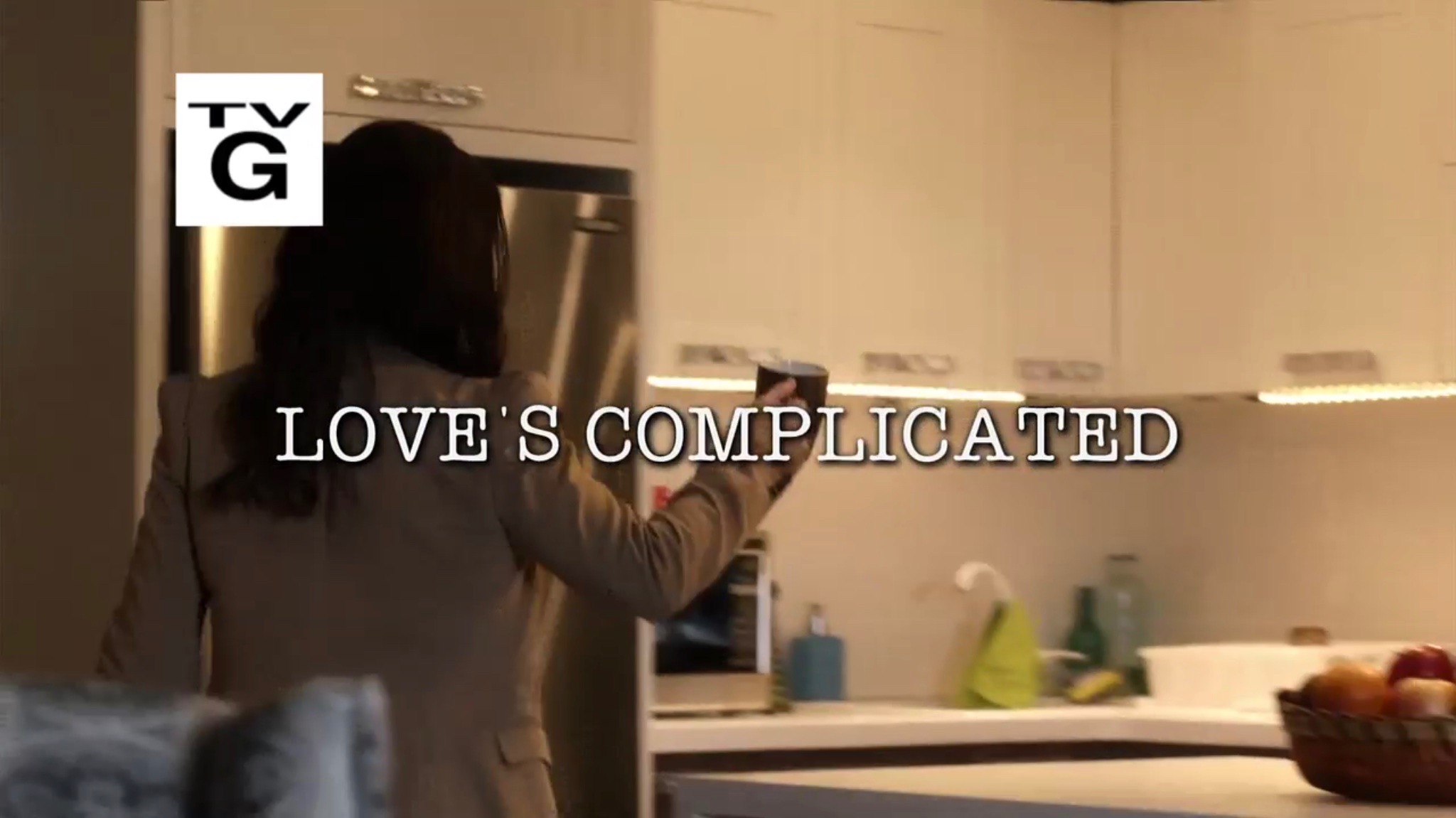
The movie begins by quickly showing us Leah (Holly Marie Combs), who is a writer, at home before cutting to a radio station to introduce us to Cinco (Ben Bass). He isn’t a shock jock or a woman hating radio personality. I think the best way to describe him is as a debater. He is someone who isn’t afraid to express his opinion, but we will get to his fear of conflict issue later. During this opening credit sequence it cuts back and forth between them. We find out one useful piece of information here, and that is that Leah isn’t a big fan of his. We’ll find out later that he didn’t give a favorable review to her last book. And segue!

IMG_4077

We are now with Leah and Catherine Disher from The Good Witch. Hmm…I think there’s an in-joke here. She is told her book needs serious work. Basically spice things up by adding some conflict. The very thing that is the Source of the problems in her life.

IMG_4095

I love that Leah has one of those keyboards similar to the old IBM keyboards. Those things are very satisfying to type on. It makes sense that a writer would have one. I could mention the roommate here, but she’s a minor character. She’s what I call a nudger character in Hallmark movies. A character who isn’t unimportant, but is really there to show up occasionally to nudge the main character in the right direction.

IMG_4150

Now we meet Leah’s boyfriend Edward (Randal Edwards). As you can see, it looks like Leah just wishes she could freeze him in place so she could get up without having to confront him. Anyways, the two of them soon go off to a party where she insists on wearing a red dress that he isn’t so happy with. Now for plot I guess, here’s Cinco just hanging out in the flowers to run into Leah at the party.

IMG_4269

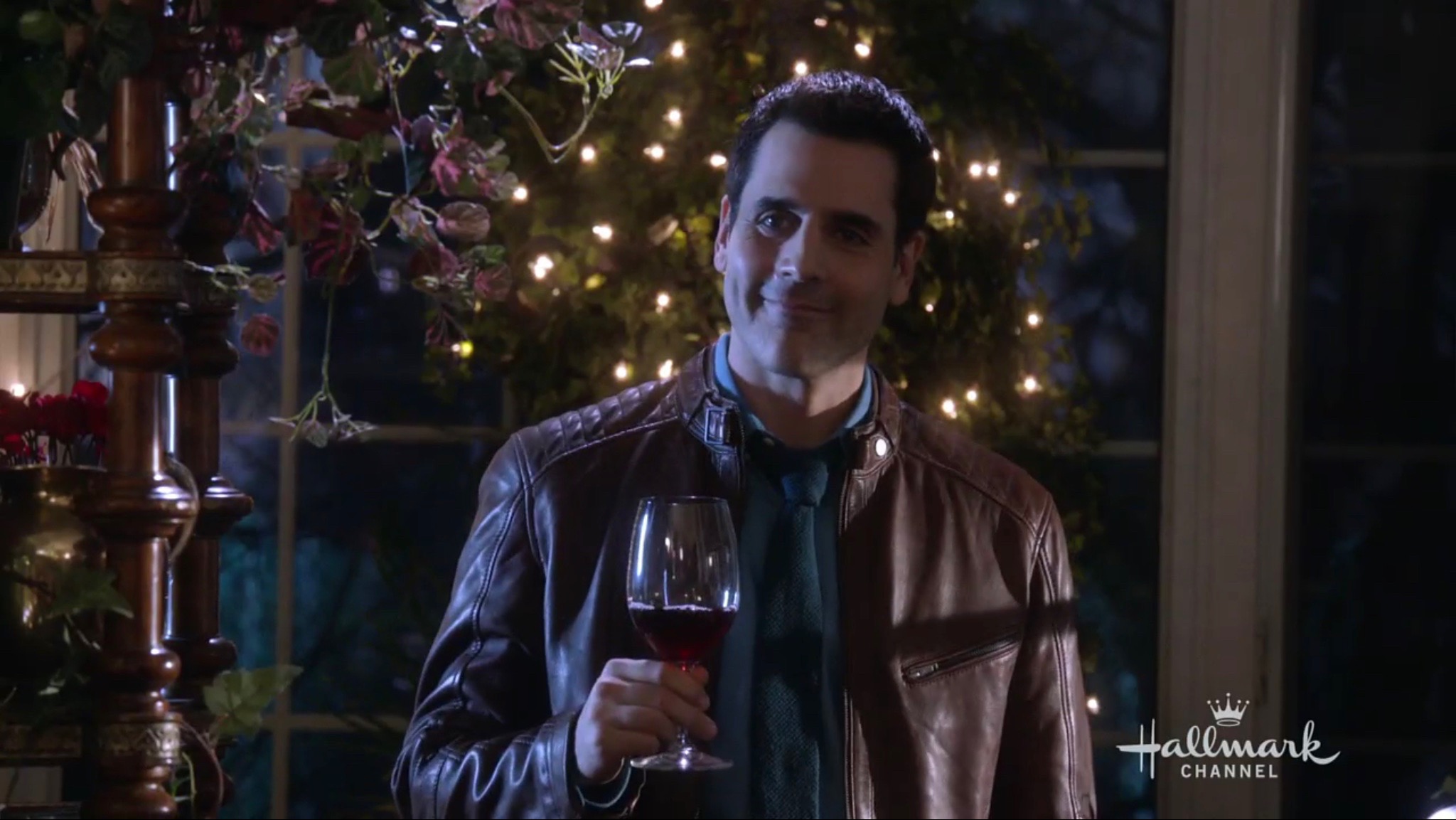
He actually tells her to throw the wine in his face because of his bad review of her book. Of course her being non-confrontational means she doesn’t. Although, I bet she would have liked to make him explode if she could. She’ll come around eventually.

Phew! Three references to Charmed should be enough.

Next for reasons that are beyond me, Leah’s boyfriend gives her a coupon to a conflict management course. I’d say just for plot, but Edward is really odd in this so I buy that he gives this to her, and then doesn’t show up because he meant it to be just for her.

IMG_4456

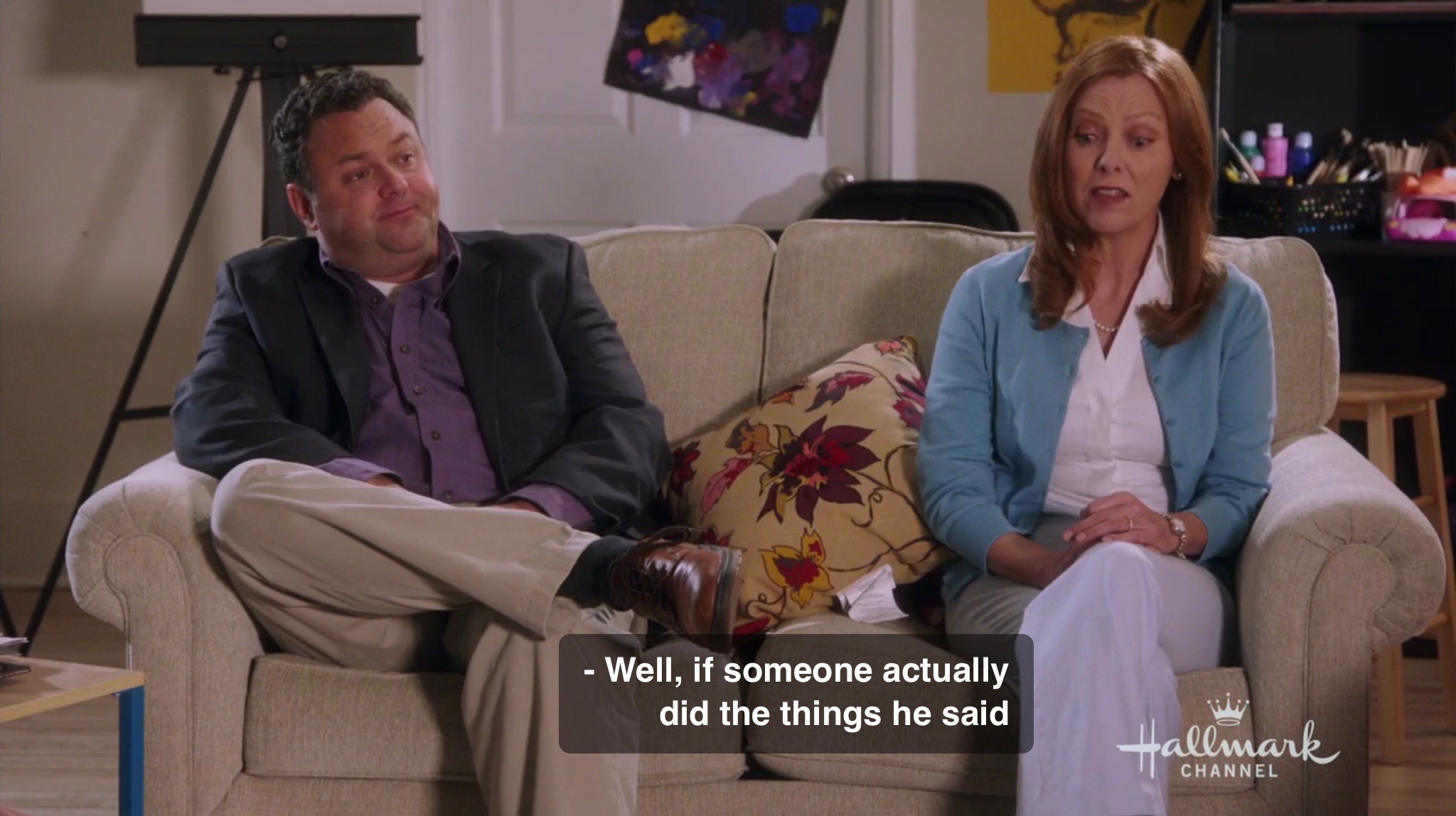
She goes, and of course for again reasons, Cinco is there. There also are a few other people there including a married couple named Robert (Brad Borbridge) and Glenda (Precious Chong). Sorry, I wasn’t able to avoid that witch reference. It’s in the movie after all. Although, I’m still not sure why Catherine Disher’s character is named J.R. I’m really not sure what a reference to Dallas is doing here, but okay.

Believe it or not, that’s all the setup that’s necessary for this movie. She keeps going back to the group and never tells them Edward is a boyfriend till the end of the film. She does learn to not be afraid of conflict, which was systemic in her case. She helps Cinco in turn to take a chance and visit his father who he hasn’t spoken to in awhile. Instead of fearing a confrontation, he just gives him a hug. In his case it works. At the end of the film, he and his father, who both love to argue, are having a lively debate on the radio. The other people in the class come around too. In the end, she breaks it off with Edward, writes a book called My Life As A Doormat, and winds up with Cinco.

IMG_6584

As I hope you can tell, the love part is incidental to the story of overcoming a fear of conflict. I like that the film was clearly done on the cheap, but they told a story that didn’t require more money in order to tell. I appreciate it when a film molds itself to the production constraints rather than feeling like it’s running into money walls. That said, there are several times when it feels like the movie thinks we have spent more time with the characters than we actual have. I would give it a marginal recommendation.

Now since I feel better than when I wrote my last Hallmark review, here are the normal things you’ve come accustomed to seeing in my reviews.

IMG_6191

I actually like this fake computer screen. It’s cartoony sure, but it has the right elements.

IMG_5656

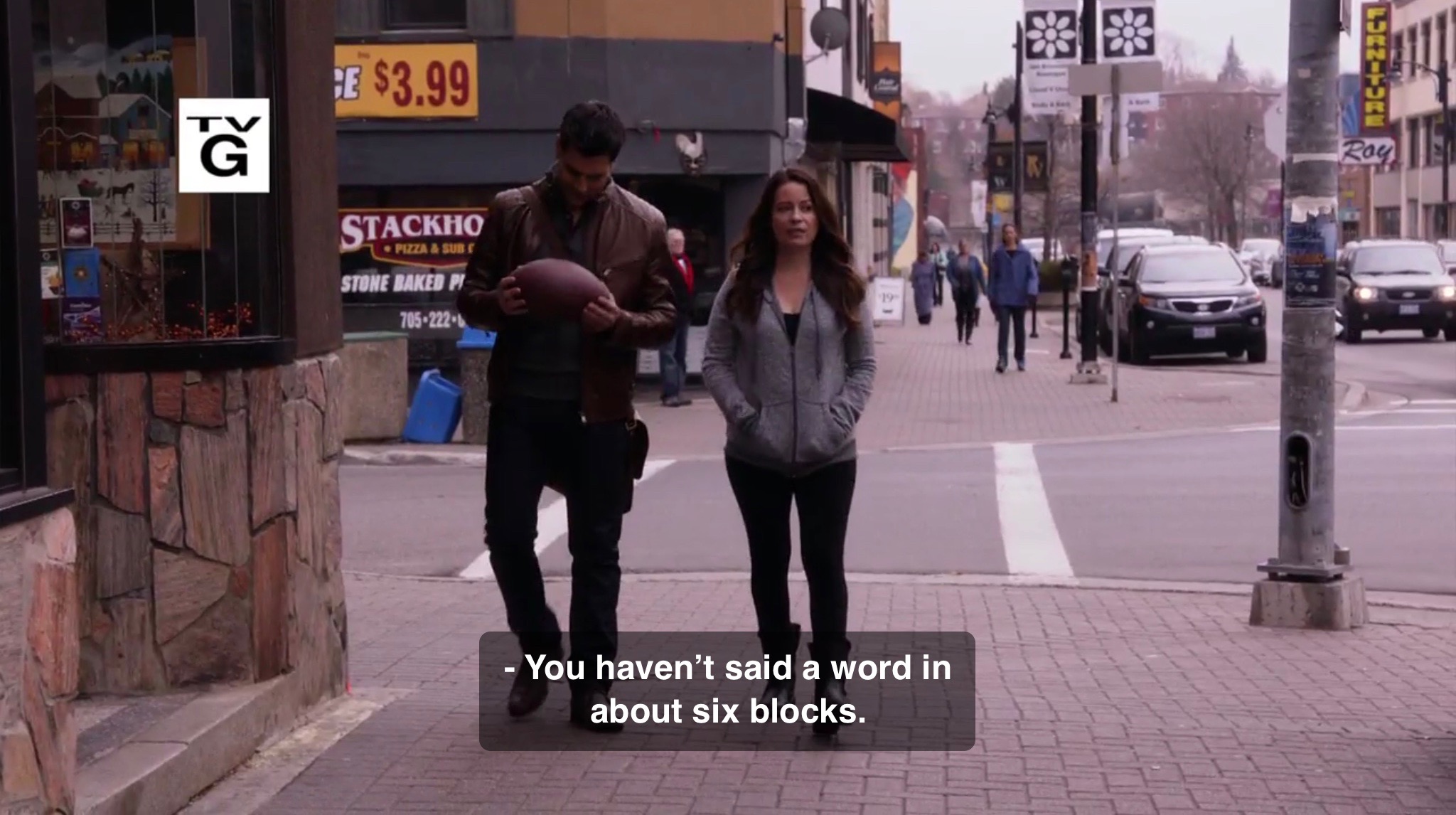
This shot tells us that at least this part was done in Sudbury, Ontario. I believe this is the first Hallmark movie I’ve seen shot there.

IMG_6284

This shot though, is from Minnesota.

However, the movie either doesn’t mention it at all, or makes very little fuss about where it’s supposed to take place. It’s not like so many Hallmark movies that really try to convince you it’s the US when it’s Canada.

Embracing the Melodrama Part II #91: A Reason to Believe (dir by Douglas Triola)


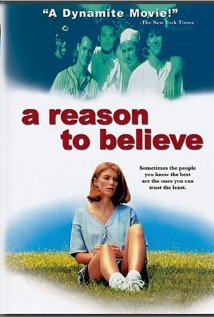
A Reason to BelieveThroughout the late 90s, a rather obscure film from 1995 called A Reason To Believe used to show up on Cinemax fairly frequently. I was 11 when I first saw it.  At the time, I was indulging in my rebellious streak by secretly staying up past my bed time and sneaking into the living room, where I would watch whatever forbidden sordidness what being aired.  Because I didn’t want to wake anyone up, I would watch with the volume turned almost all the way down.  Hence, when I first saw A Reason To Believe, I literally had to sit less than an inch away from the TV just so I could hear the dialogue.

And I remember that, at the age of 11, A Reason To Believe really blew me away.  I thought it was one of the greatest films that I had ever seen.  The fact that the film involved college students made me feel like I was both watching a movie for adults and getting a preview of what life would be like when I was older.  All of the sex and the language made me feel like I was getting away with something while I was watching it.  At one point, there was a shot of Sharon (played by Holly Marie Combs) putting a condom on Wesley’s (Danny Quinn) erect penis and I found myself glancing over my shoulder, convinced that at any minute a responsible adult was going to enter the living room and say, “WHAT ARE YOU WATCHING!?”

So, when I recently rewatched A Reason To Believe, I did so wondering how the film would hold up now that I’m an adult.  Not surprisingly, a good deal of the film now seemed to be heavy-handed.  For every good line in the script, there was a line that was way too obvious.  Characters who were funny when I was 11 — like dorky stoner Potto (Keith Coogan) — now seemed to be annoying.  And, of course, my more experienced eyes immediately realized that Holly Marie Combs was putting that condom on a prosthetic penis.

And yet, A Reason To Believe is still fairly effective and probably deserves to be better known than it actually is.  Usually, I refuse to give extra credit for good intentions but I’m willing to make an exception for A Reason To Believe because the film deals with a subject that, now more than ever, needs to be dealt with.

Charlotte (Allison Smith) is a student at an unnamed generic university.  When her boyfriend, Wesley (Danny Quinn), has to go away for the weekend, he asks Allison not to go to Viking, an annual party thrown by his fraternity.  Charlotte promises that she won’t but then goes anyway.  At Viking, she hangs out with Wesley’s best friend, Jim (Jay Underwood).  Jim is also dating Allison’s friend, Judith (Kim Walker).  Realizing that she’s had too much to drink, Allison attempts to leave the party but instead, Jim leads her into his bedrom.  He kisses her.  She says no but Jim forces himself on her.  Repeating all the old bullshit excuses (i.e., Charlotte was flirting with him, all girls say no when they mean yes, and all the rest) Jim seems to truly believe that the sex was consensual.  Charlotte knows it was rape.

At first, Charlotte doesn’t want to face what happened.  When she finally does go to the university administration and reports what happened, the frat — including her boyfriend — comes together to protect Jim.  Charlotte’s friends — like Judith — abandon her.  Her only supporter is Linda (Georgia Emelin), an anti-fraternity campus activist who is more interested in Charlotte as a means to an end than as a human being.

A Reason To Believe held up fairly well.  Yes, it’s heavy-handed and a lot of the dialogue is too spot-on and literal.  I could have done without the scenes featuring Obba Babatunde as a bombastic professor.  However, Allison Smith and Jay Underwood both gave excellent performances in the two lead roles and the film deserves a lot of credit for not shying away from just how misogynistic the fraternity/sorority culture can truly be.  Ultimately, flaws and all, it’s a valuable, realistic, and angry portrayal of rape culture and it deserves to be seen for that reason.

It can currently be viewed on YouTube.