This is Croatia’s entry in this year’s Eurovision Song Contest. I might share some of the other entries throughout this week.
Enjoy!
This is Croatia’s entry in this year’s Eurovision Song Contest. I might share some of the other entries throughout this week.
Enjoy!
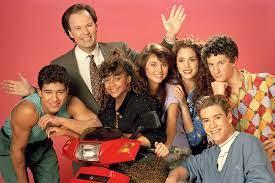
Saved By The Bell is the show that will not die.
Saved By The Bell started out in 1989, airing on NBC on Sunday mornings. The show followed the adventures of Zack Morris, AC Slater, Screech, Jessie Spano, Kelly Kapowski, and Lisa (hey!) Turtle as they navigated their way through Bayside High. It’s bit of an odd show, in that there was no real continuity and Zack was a designated hero who often came across as being a young sociopath. Zack and his friends were rich and, with the notable exception of Jessie, apolitical. The only time they all, as a group, cared about anything was when there was an oil spill near the duck pond that was just because Zack had befriended one of the ducks. The humor was goofy but the acting was occasionally better than it had any right to be. (Mario Lopez was the cast MVP.)
Saved By The Bell had a loyal audience when it originally aired but it owes it popularity to syndication. When I was in high school and college, Saved By The Bell always seemed to be playing somewhere. I have friends who scheduled their day around, though none of them will admit it now. As I sit here writing this, Saved By The Bell can currently be viewed on about a dozen different streaming services and there’s currently a very self-aware reboot streaming on Peacock. Reruns of this show will probably be outlive us all. There’s no escaping the Bell.
Interestingly enough, for all of the show’s cultural cachet, there are really one three episodes of Saved By The Bell that are really “must-see.” The first one, of course, was the infamous episode where Jessie got hooked on sugar pills and ended up shouting, “I’m so excited!” when Zack tried to get her to wake up. The second one was the episode where Zack passed out in his garage and dreamt about the future of his band, Zack Attack. (“Friends forever. It’s an nice idea.”) And finally, there’s the “No Hope With Dope” episode.
First airing in 1991 (on November 30th, to be exact), “No Hope With Dope” feels like a time capsule. Big-time movie star Johnny Dakota (played by Eddie Garcia) comes to Bayside and, after Zack leads the students in an anti-drug rap song, Johnny decides to shoot his latest anti-drug PSA at the high school. This not only gives Jessie a chance to once again tell everyone about her sugar pill addiction (which I’m sure everyone at the school was sick of hearing about) but it also gives Zack, Slater, and Screech the excuse to become amateur narcs. When they discover a joint in a Bayside bathroom, they immediately accuse Scud, who is wearing a Slayer t-shirt and is therefore the number one suspect. Scud reveals that he only smokes cigarettes because, when it comes to marijuana, “Not even I’m that dumb!” Slater still destroys Scud’s cigarette because cigarettes can kill too.
However, at a big movie star party, Zack and Kelly are offered a joint by — OH MY GOD! — Johnny Dakota! Though Johnny doesn’t actually try to force the death weed on the two of them after they initially refuse it, Zack and Kelly are so disgusted by Johnny’s actions that they leave the party. The Bayside Gang announces that they cannot sanction Johnny’s buffoonery. (“The reputation of Bayside was at stake!” Jessie says.) Johnny gets mad and leaves.
Watching this episode today, most viewers will probably say, “BUT IT WAS JUST A JOINT!” Seriously, it’s not like Johnny was snorting coke in Mr. Belding’s office or shooting heroin in the school’s locker room or anything similar to that. Johnny was only doing something that, today, is legal in many states and probably will be legal in every state by the time 2030 rolls around. And yet, everyone at Bayside acts so shocked to discover that someone who is apparently the biggest film star in the world occasionally smokes weed. The way that Zack and the gang react to marijuana in 1991 in comparison to how most people react to it in 2022 is one of the things that makes this episode such a guilty pleasure. It’s a time capsule with a laugh track.
(Of course, one reason why “No Hope With Dope” became such a popular episode is that much of the show’s later audience was probably high when they first saw it.)
Anyway, Johnny’s gone and Bayside is still eager to make an anti-drug PSA. Fortunately, Mr. Belding has a friend at NBC! It turns out that the then-president of the network went to school with Mr. Belding! He agrees to come to Bayside and share with everyone his hit new idea for the fall season: Don’t. Do. Drugs. He also does the old, “Maybe I could produce a TV show about a bunch of rich high school kids …. nah, it would never work!” joke. “Come back and visit any time,” Jessie tells him. Yeah, Jessie, I’m sure that’ll happen….
The show ends with the Bayside “No Hope With Dope” PSA and these few minutes are what transforms this episode into a true cultural landmark. Watch it below and be sure to note that, when Screech pops out of the locker, there’s a picture of John Lennon smoking a joint on the door.
Previous Guilty Pleasures

The 1992 film, Rage and Honor, tells the story of two people from different worlds, who come together to kick ass and save a declining American city.
Preston Michaels (Richard Norton) is a cop from Australia who has come to America as a part of an exchange program. When he’s not working undercover, he’s supplementing his income by working as a bodyguard for what appears to be an 80s cover band.
Kris Fairfield (Cynthia Rothrock) is a teacher at the local high school who also moonlights as a karate instructor. She’s haunted by the death of her parents and the subsequent disappearance of her brother. She cares about her students, even though hardly any of them actually appear in the film. In fact, the whole high school teacher thing never really matters much in the grand scheme of things.
Preston and Kris are teaming up to take down spacey drug lord Conrad Drago (Brian Thompson). Conrad has a fierce mullet, a cocaine addiction, and a knowledge of all of the body’s pressure points. His girlfriend is Rita (Terri Treas) and the only thing that could possibly prevent Drago and Rita from taking over the city is a tape that reveals Rita and a bunch of crooked cops killing someone. Kris and Preston are trying to find the tape before Drago and Rita find it. Somehow, it all eventually leads to a homeless stock broker named Baby (Stephen Davies) and a weird fight club that’s run by Hannah the Hun (Alex Datcher).
It’s an incredibly silly film, to be honest. It’s the type of film where Preston gets shot once in the side and once in the leg and neither time does it slow him down. (He does mention that his leg hurts at one point but he never starts to limp or anything like that.) Kris, meanwhile, is given a tragic backstory that is explained to us in-between scenes of awkward comedic relief. Hannah goes from being a calculating villainous to a heroic ally, without the film attempting any explanation as to why. Meanwhile, despite Brian Thompson’s best efforts to be menacing, Conrad is written as being some sort of flakey, New Age drug dealer. He’s about as intimidating as the biggest guy in a drum circle. There’s really not much rage or honor to be found in Rage and Honor.
And yet, it was impossible for me to dislike the film. Every time Cynthia Rothrock did a flying kick and sent some jerk flying, the film won me back. Unfortunately, she didn’t really get to do as much fighting as she should have. She had to share the screen with Brian Thompson and Richard Norton, who both received fight scenes of their own. All three of them looked good fighting but Cynthia was the clear star. What she lacked in actual acting ability, she made up for with pure enthusiasm. Watching her, you realized that she was not only good at fighting but she enjoyed it as well. For all the film’s flaws, Cynthia kicked everyone’s ass and that’s really all that mattered. It was empowering and, even more importantly, it was a lot of fun to watch.
Go, Cynthia, go!
Previous Guilty Pleasures
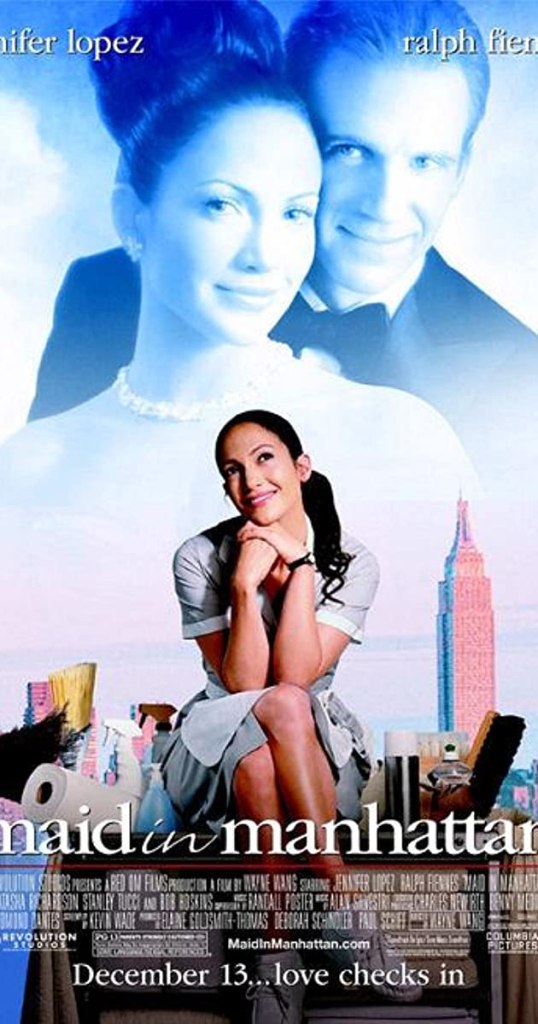
Whenever I see that the 2002 film, Maid in Manhattan, is going to be playing on HBO or Cinemax, I always think to myself, “I can’t understand why everyone hates on this film. I mean, it’s not that bad. It may be predictable and silly but it’s kind of sweet and Jennifer Lopez and Matthew McConaughey have a tame but sexy chemistry.”
Of course, then I watch the film and I discover that Maid in Manhattan is not the film where Jennifer Lopez and Matthew McConaughey fall in love. That’s The Wedding Planner. Instead, Maid in Manhattan is the one where Jennifer Lopez is a maid who works in a big fancy hotel and who is a single mother to a precocious child who is obsessed with Richard Nixon. Maid in Manhattan is also the one where Jennifer Lopez falls in love with Ralph Fiennes. Fiennes plays a candidate for the U.S. Senate. Everyone is worried that he’ll never make it to Washington if people discover that his girlfriend is a maid. I think his bigger problem is that he’s a Republican running for the U.S. Senate in New York. (At least, I assume he’s a Republican because — as we learn from his conversations with Lopez’s son — he certainly seems to know a lot about and be rather sympathetic to Richard Nixon.)
I still like Maid in Manhattan, though perhaps not as sincerely as I like The Wedding Planner. Some of that is because Maid in Manhattan takes place during the Christmas season and I love a good wintry romance. Some of it is because this is probably the only mainstream film to feature people discussing the good points of Richard Nixon. There’s the fact that Jennifer Lopez is always perfectly cast as someone determined to make something out of her life, regardless of whether or not the world supports her or not. She’s always had the ability to make steely ambition sympathetic and that’s a good ability to have when you’re playing a maid who is determined to get promoted into management.
Finally, there’s the odd romantic pairing of Ralph Fiennes and Jennifer Lopez. It’s one of those things that shouldn’t work and yet, strangely, it does. Fiennes always brings a certain off-center, neurotic energy to his performances, which not only explains why he’s played so many villains but also why it’s strange to see him starring in a romantic comedy. And yet, that odd energy is exactly what Maid in Manhattan needs. It keeps the viewer on their toes and it makes the surprising discovery that Fiennes and Lopez have romantic chemistry all the more rewarding.
Don’t get me wrong, of course. This is a deeply silly movie and there’s a lot of less than sparkling dialogue and the plot falls apart if you even start to think about it. The entire story revolves around mistaken identity, with Fiennes not realizing that Jennifer Lopez is a maid and …. well, it’s all a bit unnecessarily complicated. The film also takes Fiennes’s political aspirations a bit too seriously. It’s not quite as bad the whole thing with Matt Damon running for the Senate in The Adjustment Bureau (“Due to his charming concession speech, he will someday be elected President,” — whatever, Beto) but it gets close.
But, still — I love romance and I love New York and the pairing of Jennifer Lopez and Ralph Fiennes in Maid in Manhattan is just too strange (and oddly effective) for me to resist.
Previous Guilty Pleasures
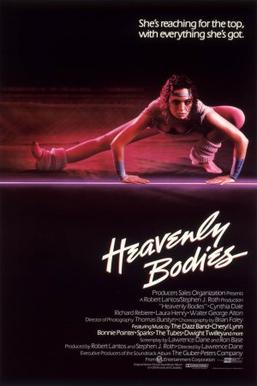
“She’s reaching the top …. with everything she’s got!”
That’s the tag line of the 1984 Canadian film, Heavenly Bodies. It’s a perfectly vapid tagline for an entertainingly vapid movie. It was on TCM last night and I just finished watching it. It takes a lot to get me out of my horror film habit in October but how could I resist a movie about Canadian gym rivalries?

Now, even though this isn’t a horror film, it is a Canadian film from the 80s which means that it features a lot of performers who will be familiar to fans of old school slasher films. For instance, the film stars Cynthia Dale, who was also in the original My Bloody Valentine. Cynthia plays Samantha, an administrative assistant who quits her job and opens up her own independent gym, Heavenly Bodies. Samantha is an aerobic dance instructor, perhaps the best in all of Ontario. Samantha is also a single mother but there’s no better way to find a lover than to teach him aerobics.
Heavenly Bodies was also directed by a veteran of Canadian exploitation, Lawrence Dane. Remember Happy Birthday To Me? He plays the father in that movie. I’d love to know the story of what led to Lawrence Dane not only directing but apparently also helping to write the script for a movie about an independent health club. I mean, to go from working with David Cronenberg and winning Genie Awards to directing Heavenly Bodies seems like quite a career trajectory. As a sidenote, how much more interesting would Heavenly Bodies be if it had been directed David Cronenberg? I imagine that all the leg cramps would be a bit more graphic.
Samantha is selected to host her own exercise show on Canadian TV and a bigger Canadian gym decides that the only way to deal with this upstart is to destroy Heavenly Bodies by buying out their lease …. or something. To be honest, I really couldn’t follow half the plot of Heavenly Bodies. I just know that there was a lot of dancing and lot of exercising and a lot of shots of Samantha walking around Toronto. The film came out a year after Flashdance and all of the scenes of Samantha walking around the city are basically filmed in exactly the same way as the shots of Jennifer Beals walking around Pittsburgh. (There’s even a scene where Samantha stands in front of a poster for Flashdance, trying to convince people to join her gym.) Whereas you kind of admired the way that Jennifer Beals handled herself on the dangerous streets of Pittsburgh, you never really worry about Samantha because …. well, it’s Toronto. As I watched the film, I started to think about the fact that Canada consistently sends its best actors to the U.S. while those of us in the States consistently send our bad movies up north. I’m not sure if that’s really a fair trade.
Anyway, the two gyms decide to settle their differences with an exercise marathon that is televised on Canadian TV. (I’m going to assume that the film takes place in-between hockey seasons.) Basically, the exercise marathon is one of those things where you have two teams and everyone just keeps exercising until they drop. The last person standing is the winner and their gym gets …. I don’t know, bragging rights? I mean, I’m not even how they were able to convince anyone to put an exercise marathon on TV. I guess it was an 80s thing.
Can you guess who wins the exercise marathon?
Listen, Heavenly Bodies is technically a bad movie but I still like it because there’s a lot of dancing and everyone in the cast is so enthusiastic about whatever it is that they think they’re doing. There’s something to be said for enthusiasm. Add to that, the exercise marathon just has to be seen to believed. This is a film of the 80s and its Canadian to boot so how can it not be a guilty pleasure of sorts?
Previous Guilty Pleasures

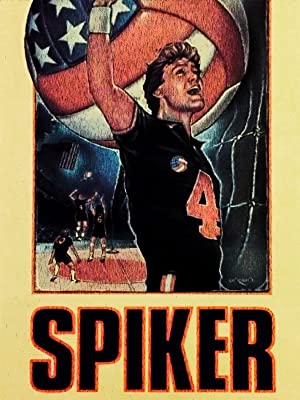
The 1985 film, Spiker, is an attempt to make an exciting movie out of the one of the most boring sports in the world, men’s volleyball. Not only does the film attempt to make volleyball look exciting but it attempts to do it on absolutely no budget. Anyone who doesn’t appreciate the combination of guts and foolishness necessary to even attempt this is not a real film fan.
Spiker follows a group of college volleyball players as they train to qualify for the Olympics. Or, at least, that’s what I think is supposed to be going on. The plot is really difficult to follow, not because it’s complex but just because it’s volleyball and who cares? We learn that the coach of the team (played by Michael Parks) is a tough taskmaster. We learn that one of the players needs to get his act together and be more mature. We learn that another member of the team has a wife who is jealous of all of his volleyball groupies. Eventually, the team competes in Japan and Poland. In Japan, the teammate who needs to get his act together gets drunk and wanders around with two prostitutes. Poland, meanwhile, is represented by a high school gym and four women doing the polka. One Polish woman asks a member of the team to smuggle out some letters. Which he does. Yay. Exciting.
As I said, there’s a lot of volleyball in Spiker but you’re never really sure if the American team is winning or not. Unless it’s being played on a beach and everyone’s wearing a skimpy bathing suit, volleyball is a thoroughly uncinematic sport. I mean, what do you think of when you think about volleyball in the movies? You think about Carrie White not hitting the ball and then burning down the school. What you don’t wonder is, “I wonder who was winning when Carrie missed that hit?”
What makes Spiker a pleasure is it’s determination. The film is truly convinced that it can somehow make volleyball exciting and you have to admire it for being so sure of itself. It’s kind of like those people who spend night after night in Marfa, waiting for the UFOs to arrive. They may be crazy but you can’t help but admire their dedication, even while you’re laughing at some of the absolutely atrocious dialogue.
The other thing that makes Spiker a guilty pleasure is the extremely intense and almost unhinged performance of Michael Parks at the volleyball coach. Parks plays the coach as being tough-as-nails and always in a bad mood. The film’s best scene features him throwing volleyball after volleyball at a player who has displeased him. Parks does so with a look of grim determination on his face, the sign of a dedicated method actor giving it his best even in a B-movie that he probably agreed to do because he needed to pay the rent. What makes Parks’s performance so memorable is that he never really seems angry. Instead, he just seems to be perpetually annoyed and that makes him all the scarier. Anger, after all, passes. Annoyance is forever.
Spiker is a bad film but it’s endlessly watchable precisely because it so misjudged. You can’t help but find both it and Michael Parks’s performance to be oddly fascinating.
Previous Guilty Pleasures

A few weeks ago, I was looking through the Guide and I noticed that MeTV had apparently started airing a show called The Powers of Matthew Star.
The name immediately intrigued me, though I wasn’t quite sure why. I think that some of it just had to do with how silly it sounded. The Powers of Matthew Star. Of course, someone named Matthew Star would have powers. But what type of powers? Since his last name was Star, it would probably be a good guess that they would be extraterrestrial powers and since his first name was Matthew, it stood to reason that he was either an angel or a human-alien hybrid, or perhaps an alien pretending to be a human.
As I pondered just who Matthew Star could be and what his powers were, I suddenly realized the real reason why the title jumped out at me. I had actually heard of this show before. Several years ago, while I was reviewing all of the Friday the 13th films for this site, I came across several references to The Powers of Matthew Star. That was because the show had featured by Amy Steel (who survived Friday the 13th Part II) and Peter Barton (who did not survive Friday the 13th — The Final Chapter).
Because The Powers of Matthew Star airs at four in the morning (Sunday morning, to be exact) I set the DVR to record it. I’ve now watched a handful of episodes and I like the show, even though I’m still not really sure what’s going on.
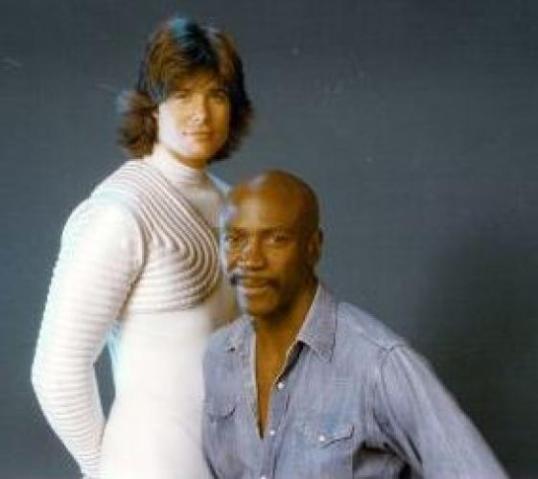
As I suspected, Matthew Star (played by Peter Barton) is an alien who is pretending to be a human. Each episode opens with a narrator explaining how Matthew Star ended up on Earth but I have to admit that I’ve found the narration next to impossible to actually follow. As far as I can tell, Matthew Star is actually a member of alien royalty but, after his home planet was either conquer or blew up, he had to go to Earth in order to hide out from another alien race that wants to destroy him. Because he looks like a teenager, Matthew has to go to high school and deal with high school stuff while, at the same time, solving crimes for the government. As far as his powers are concerned, he can apparently move stuff with his mind but he has to be careful about moving too much because then his cover might get blown and the aliens that are searching for him might destroy Earth.
Matthew’s guardian is Walt Shepherd (Louis Gossett, Jr.), who is a teacher at the high school and who knows about Matthew’s powers. I think Walt is actually supposed to be another alien, though the episodes I’ve seen have not exactly been clear about this. Matthew’s best friend is Pam (Amy Steel), who is the editor of the school newspaper. Matthew has a crush on her but he’s not sure if he can ask her to prom because he’s an alien and he’s got other aliens looking for him.

From what I’ve seen, the show’s a bit silly. For instance, one episode featured Matthew and Shepherd going to Italy on some sort of top secret government job. The very next episode featured Matthew using his powers to win a high school football game and it ended with a message about the importance of education. Despite my love of Italy, I preferred the football game episode to the secret agent episode. The football game episode was so achingly sincere that it was hard not to enjoy it.
And really, from what I’ve seen, that’s the main appeal of The Powers of Matthew Star. It’s silly and the plot is difficult to follow but there’s an overwhelming sincerity to the show’s portrayal of Matthew as an alien who just wants to save the Earth, enjoy high school, and work up the courage to ask Pam out on a date. If I had been alive and like 13 years old in 1982, I would have had such a huge crush on Peter Barton. Barton is incredibly likable as Matthew Star and he and Amy Steel are a cute couple whenever the show allows them to get together.
Unfortunately, according to Wikipedia, it appears that the whole high school angle of the show was dropped after the first 12 episodes. (MeTV is only 7 episodes in.) Starting with the 13th episode, Matthew was no longer a high school student, Amy Steel was no longer on the show, and every episode featured Matthew and Shepherd exclusively using their powers to defeat terrorists and other criminals. That doesn’t sound like it’ll be as much fun. I’ll probably stop DVRing the show once that happens.
Until then, though, I’m enjoying the adventures of Matthew Star, alien royalty-turned-high school student!
Previous Guilty Pleasures

As I write this, I’m watching Bar Rescue on the Paramount Network and I’m trying to figure out why it is that I like this annoying show.
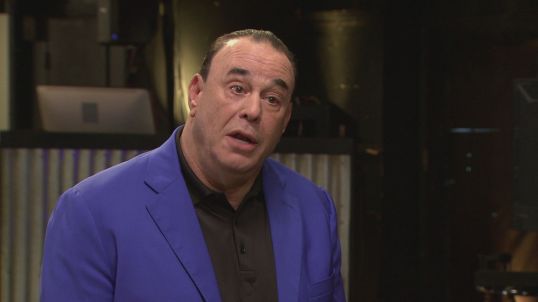
Bar Rescue, of course, is one of those shows where a jackass goes into a failing business — in this case, a bar — and basically screams at everyone for an hour until the bar starts making money. It stars Jon Taffer, who has all of the charm of a low-level gangster who desperately needs to make his quota for the week or else the capo is going to break his thumbs. The main them of each episode is that Taffer takes “bar science” very seriously and apparently cannot fathom a world where anyone tries to do anything different or quirky with their business.
If you search the internet, you’ll find all sorts of stories about the bars that Taffer “saved.” A good deal of them went out of business after Taffer gave them their makeover. Several of them immediately went back to the way they were running things pre-Bar Rescue. Some of those bars have survived and some of them have not. Taffer always makes a big deal about renaming almost every bar that he saves. It’s rare that anyone sticks with Taffer’s new name.
I have to admit that I rarely drink so I’ve never really cared that much about bars. In fact, it’s kind of hard for me to imagine anyone caring about the decor of the place where they’re getting drunk. That may be one reason why I always find it oddly compelling to listen to Taffer rant and rave, as if designing the perfect bar is somehow the same thing as restoring the Sistine Chapel. Whenever Taffer brings in his bar experts, I find myself smirking a little bit because Taffer’s experts are usually just people who are obviously angling for a show of their own. The “experts” tend to be so condescending that I actually look forward to people talking back to them.
Speaking of people talking back, another reason that I watch Bar Rescue is because there’s always a chance that someone might throw a punch at Jon Taffer. Seriously, he’s just obnoxious! It’s interesting to compare him to someone like Gordon Ramsay, who is just as loud and overbearing but who also somehow remains likable through the whole ordeal. Taffer just comes across as being a bully.
(What’s funny is that, while I was researching the bars that the show previous rescued, I came across several comments from people who worked at those bars. Most of them said that Taffer was actually very polite and rather affable off-camera. He plays a bully for the ratings and …. well, Hell, I’m watching so I guess it’s working.)
Watching the show in the age of Coronavirus, Bar Rescue almost feels like an artifact from a different age. Today, I watch it and I notice the huge crowds of people, all pressed up against each other in the bar. I notice all of the hand-shaking. (Taffer almost always shakes the bar owner’s hand at the end of each episode.) Just the fact that the show features a different bar every week makes Bar Rescue feel like something you might find in a time capsule.
Like I said, I don’t usually drink. But, as soon as all this is over, I’m going out and getting so drunk. (Well, buzzed. Actually, I’ll probably just go out and have a glass of water while everyone else gets drunk. But still, I’m going out, dammit!) Until then, I guess I can just watch Bar Rescue….
Previous Guilty Pleasures

Utopia ended on a Halloween.
Now, I’m not talking about utopia as a concept. I imagine that there are still people out there who think that the idea of creating a utopia is a a viable one. (I’m not one of those people but that’s mostly because I think living in a perfect world would be hella dull.) Instead, I’m talking about a reality television show that premiered in September of 2014 and which was canceled one month later.
Though it’s pretty much forgotten today, Utopia was a pretty big deal in the months leading up to its first episode. It’s estimated that Fox spent 50 million dollars to develop and promote the show. Not only would Utopia air twice a week but, much in the style of Big Brother, audiences would be able to watch the show’s participants interact live online. The commercials, which were inescapable that summer, explained that 12 people with radically different philosophies would be expected to come together and form a new society on a California farm. An atheist would live with a minister! A libertarian would have to work with a socialist! An attorney would have to find common ground with an ex-con! A huntress would eat at the same table as a vegetarian! The show was an experiment that would last an entire year and it would answer the question: Can different people come together to start a brave new world?
I have to admit that I was kind of excited for the show. Utopia started just as the 16th season of Big Brother came to an end. That season was one of the worst in the history of Big Brother, largely as the result of the show’s producers putting the insufferable Frankie Grande in the House and then trying to rig the show in his favor. After a terrible season of Big Brother, I was actually had hope that maybe Utopia would be everything that Big Brother had ceased being.

Of course, I was wrong. From the first episode of Utopia, it became obvious that we would never learn whether people could come together to start a brave new world because, for the most part, no one on the show was interested in doing that. There was a lot of drinking, of course. There was also an entire episode devoted to one of the Utopians, a pastor, worrying that he would lust in his heart for the female Utopians unless they started wearing more clothes. For two episodes, a redneck named Red announced that he wanted to start his own society in the woods but eventually he changed his mind. The Utopians lived on a farm but only doomsday prepper Bella seemed to have any farming experience and, as quickly became obvious in her case, having experience doesn’t necessarily mean that you know what you’re doing.
It was a weird show. I’m assuming that Fox thought that there would be instant conflict if they put a libertarian and a socialist together but, for the most part, no one on the show ever discussed their differing philosophies. In fact, it was hard to see that any of them had any philosophy as all. Hex was regularly described as being a “huntress,” despite the fact that we never saw her hunt. Rob was described as being a libertarian but we never actually saw him discuss what that meant and he acted like just as much of a petty authoritarian as the other members of the cast. The show tried to create the appearance of conflict but, like most Americans outside of Twitter, the cast dealt with their differences by not really discussing them. So, as a result, we ended up with entire episodes devoted to doomsday prepper Bella getting upset because veterinary assistant Bri wanted to have some say in how the farm animals were fed.
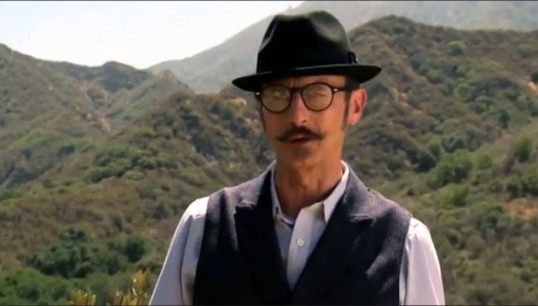
The one thing that kept all of this from being unbearable dull was that the show’s perpetually optimistic host, Dan Piraro, described every minor event in breathless detail. When one of the Utopians got too drunk and acted like an ass, he was put on a trial. The end result of the trial? Everyone asked him to please not get drunk and act like an ass again. “And so the Utopians have created a legal system!” Piraro exclaimed.
As the show progressed, the Utopians started to get bored. Some of them voluntarily left Utopia, largely because they just wanted to find something better to do with their time. After the show’s producers tried to turn attorney Mike Quinn into the star of the show and centered a few episodes around his relationship with “polyamorous Dedeker,” he abruptly left. (“And so Mike leaves Utopia….”) Whenever an old Utopian left, two prospective new ones would be brought in and would explain why they should be selected to live in Utopia but the new Utopians soon proved themselves to be just as boring as the old ones. The Utopians attempted to raise money for food by opening up their farm to the general public. Huntress Hex gave hunting lessons and revealed that she wasn’t really sure how to use a bow and arrow. One of the new arrivals attempted to create a website for the farm, just to have the site besieged by online trolls. Ratings crashed and the show soon went from airing twice a week to only airing on Fridays.
And yet, the worse the show got, the more fascinating it became. Utopia offered audiences the opportunity to watch a month-long train wreck as it unfolded. It was so bad that you couldn’t look away and each attempt by Fox to somehow spice up the show only made it more of a disaster. I would watch each episode just to see how much more pointless the show could become.

The final episode aired on Halloween and it featured the host wearing a cape and, if I remember correctly, plastic fangs at one point. By this point, Fox had changed the show’s concept. Now, the viewers would vote each week on who they wanted to banish from Utopia. (“But I’m an atheist!” Hex wailed, “America’s going to hate me!”) Or, at least, that’s what the show’s producers said was going to happen. Instead, Utopia was canceled before America ever got a chance to vote.
Interestingly, the only people shocked by Utopia‘s cancellation were the people living on the farm. Apparently, the day after Halloween started out normally for them and for whoever might have been watching them on the live feeds. Sometime in the afternoon, the feeds abruptly went down and never came back up. From what I’ve read, the Utopians were called into a meeting and told that they were going home immediately.
Utopia has never been tried again but I fondly remember watching it. The Utopians failed to create a brave new world but they kept me amused for 12 episodes.

Previous Guilty Pleasures
“We are students…..we are seekers…..and sometimes we are warriors. And each time we help someone, I feel like I’m one step closer to finding the truth…”
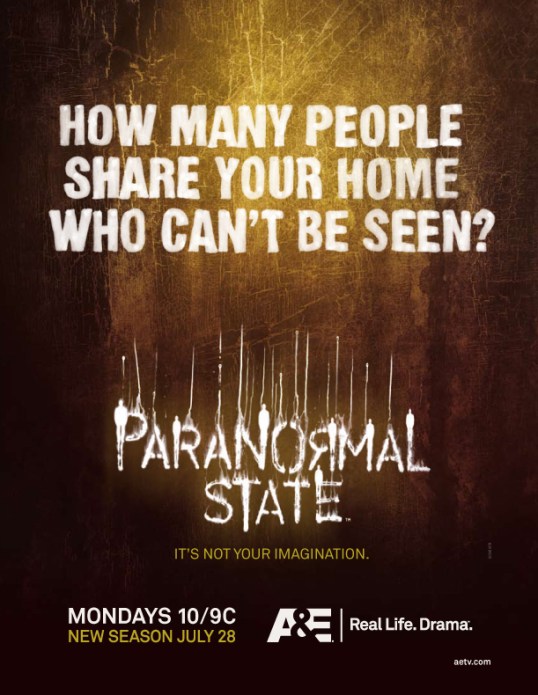
The words opened up all 86 episodes of Paranormal State, a “reality” show that ran on A&E from 2007 to 2011. They were delivered by Ryan Buell, who was the head of the Pennsylvania State University Paranormal Research Society. Buell also narrated every episode of Paranormal State and perhaps the most memorable thing about the show was the strangely robotic sound of his narration. Buell delivered his lines in a memorably flat monotone, one that rarely betrayed a hint of emotion while talking about the spirits that the Team supposedly dealt with in each and every episode. Even when Buell talked about the demon that had supposedly been stalking him since childhood, he did so with all the emotion of Alexa confirming a grocery list.
Paranormal State was one of those shows where people would around in a dark house with an infrared camera while randomly saying stuff like, “Did you feel that? I felt a suddenly cold wind in this room. You’ll just have to take my word for it.” Occasionally, a light would get knocked over or a door would close on its own. Along with asking each other if they had felt anything, the members of the Paranormal Research Society were also fond of asking, “Did you hear that?” and “Oh my God, did you just see that?” I always liked it when they would review the film in slow-motion and point at a barely visible smudge on the image and say, “There it is. There’s the spirit.” Ultimately, it would usually lead to a medium being called in and wandering around the house and going, “It’s time for you to move on, spirit. Whisper something if you’re here. Oh my God, did you hear that?”
It was all pretty obviously staged and kind of dumb but I still enjoyed the show because I liked the idea of a bunch of college students skipping class so that they could spend the night in a deserted barn while waiting for the ghost of a angry farmer to push over a pitchfork or something. I mean, if my college had given credit for ghost hunting, I totally would have done it! The show may have been fake but it was fun to pretend that it was real.
After the show ended, Ryan Buell had his personal difficulties, which I’m not going to dwell on. As for the show, it actually lives on. I recently came across reruns on the FYI network and I’ve lost track of the number of people I’ve met who, like me, can recite that opening narration by heart. Seriously, it just gets in your head.
Previous Guilty Pleasures
 Through the Shattered Lens