Review: Icefall (dir. by Stefan Ruzowitsky)


“You don’t find redemption in warmth. You fight for it in the cold.” — Ani

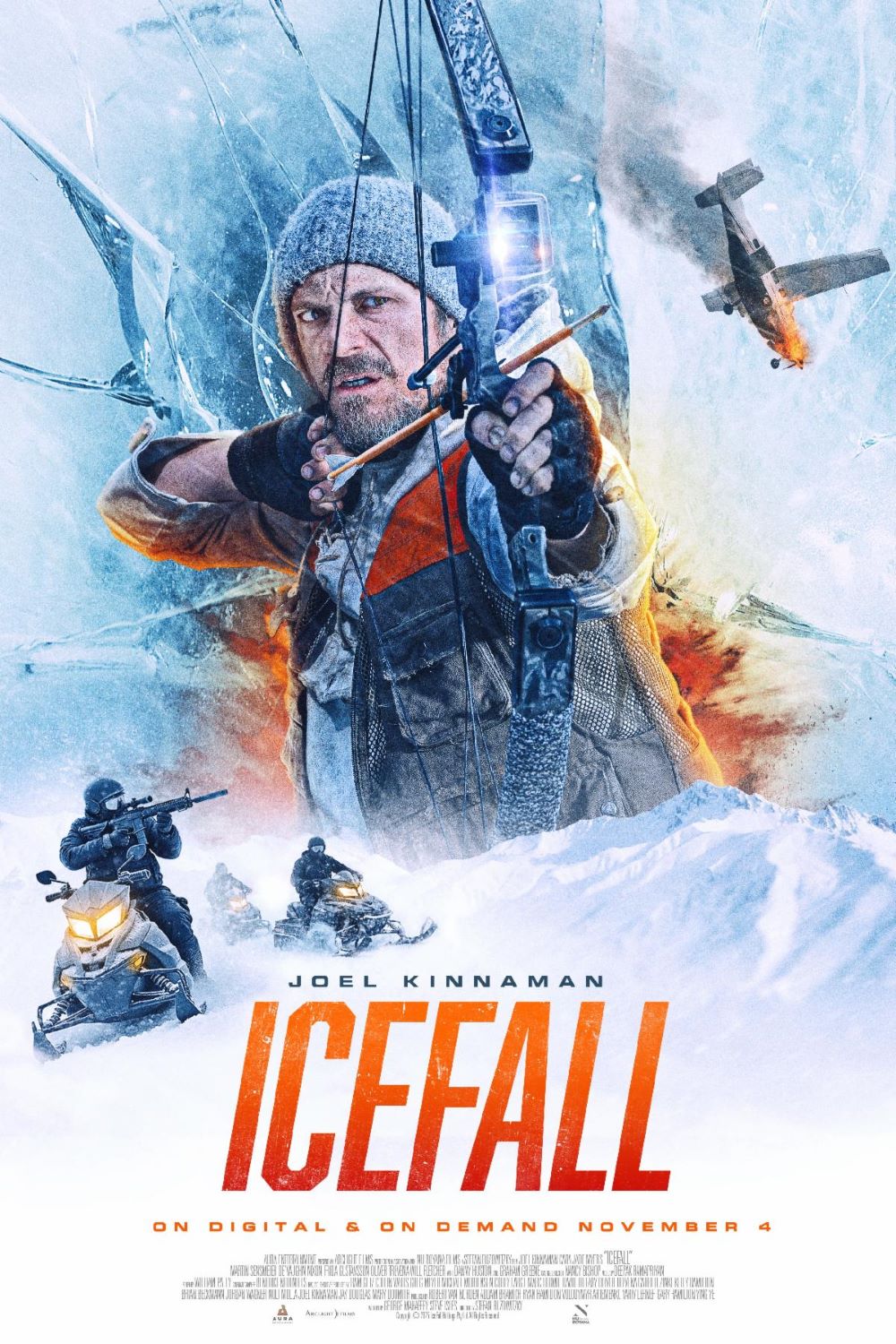
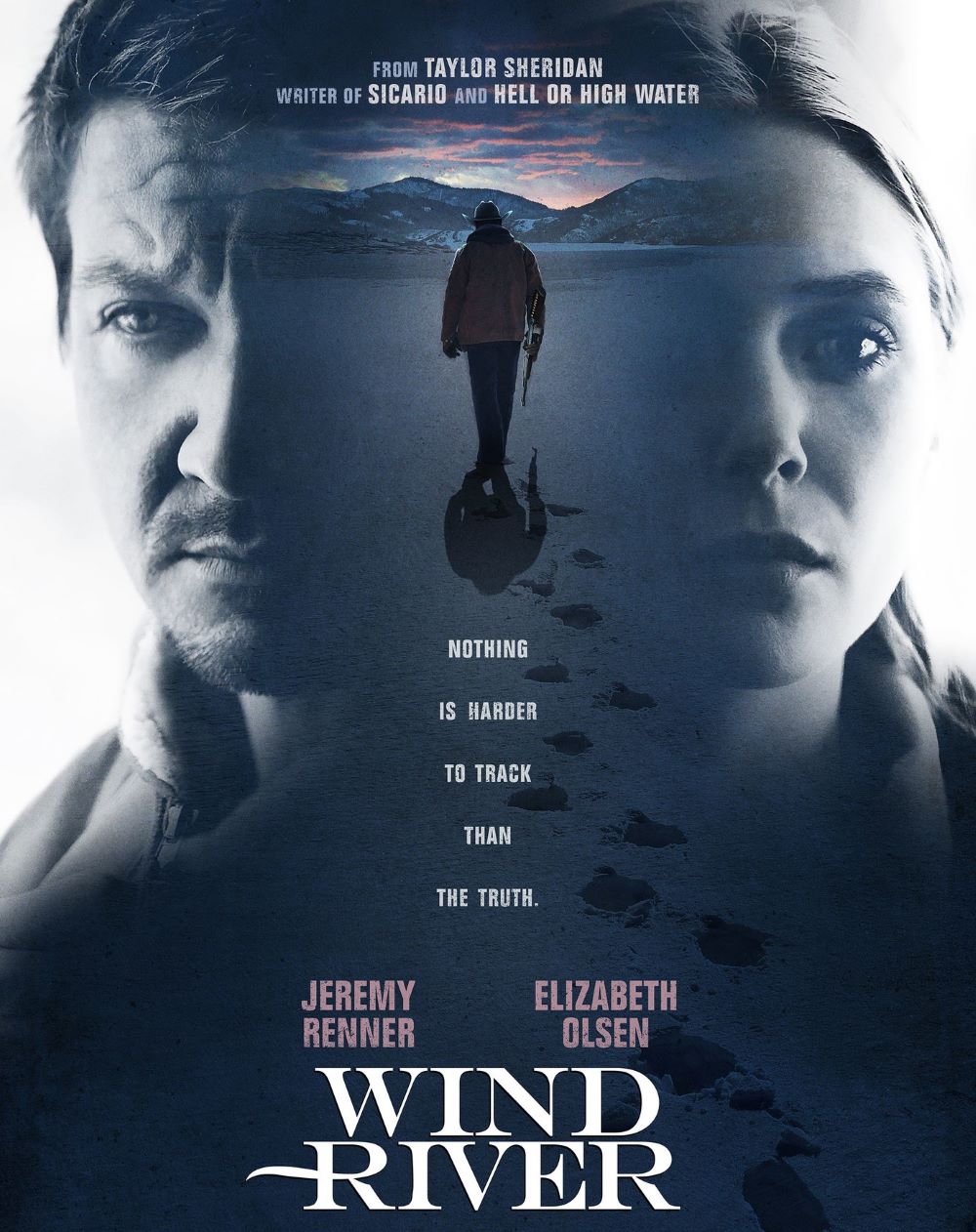
Icefall (2025) is a survival thriller set deep in a frozen wilderness where Ani, a determined Indigenous game warden, and Harlan, a grizzled poacher, find themselves forced together to evade criminals hunting down a crashed plane’s cash stash. Their uneasy alliance forms the heart of the movie, supported by the biting cold, shifting ice, and relentless danger that keeps the tension alive throughout.

The film benefits significantly from its leads’ performances, especially Joel Kinnaman’s portrayal of Harlan. Kinnaman has become something of a seasoned veteran in this kind of gritty thriller and action role, having built a career playing characters who balance toughness with a hint of vulnerability. His familiarity with this genre brings a dependable authenticity to Harlan, who feels weathered but not worn out, someone who understands survival instinctively. Alongside Cara Jade Myers’ portrayal of Ani, their on-screen chemistry roots the film in more than just action beats, making their relationship genuinely engaging amid the harsh landscape.

Speaking of the environment, Icefall uses its setting as more than just a backdrop. The fragile ice and near-empty wilderness create natural obstacles that heighten the sense of peril, reinforcing the story’s theme that nature itself is an adversary. The melting ice becomes a constant threat, lending the narrative a slow-burning pressure that’s as effective as any chase or gunfight. This atmospheric tension is one area where the film really earns its keep, immersing viewers in the dangerous beauty of its frozen world.

However, Icefall stumbles when it comes to story originality and pacing. The film’s premise feels familiar—dangling on the edge of a formula that fans might recognize as similar to the 1993 Sylvester Stallone thriller Cliffhanger. While Cliffhanger had that film’s villain as a magnetic and complex antagonist, Icefall misses that mark. Its criminals lack charisma and depth, removing a vital layer of excitement and tension from the story. Without a compelling foil for Harlan and Ani, many confrontations fall flat, and the thriller’s pulse falters.

The plot is further weakened by a somewhat cluttered narrative, introducing a secret government biohazard subplot that feels shoehorned in and detracts from the simpler core survival story. Characters occasionally make choices that seem more dictated by the demands of the script rather than believable motivations. These factors lead to inconsistent pacing, which can frustrate viewers looking for a tight, focused thriller.

Visually, the film offers moments of stark beauty but is uneven technically. Some sequences perfectly capture the isolating chill and danger of the icy wild, while others suffer from abrupt editing and less convincing digital embellishments that distract from the intended immersion. The cinematography shifts between grand vistas and awkward close-ups, occasionally disrupting the flow of tension.

Characterization is uneven as well. Ani shines intermittently but sometimes veers into typical thriller protagonist territory, exhibiting moments of indecision or cliché. Kinnaman’s Harlan remains the more grounded and believable figure, benefiting from his extensive experience playing similar roles. Meanwhile, the villains fail to rise above stereotype, lacking the nuance or menace that could have made the story pulse with higher stakes.

Still, when the film settles into the rhythm of survival—the crunch of snow underfoot, the slow erosion of trust, the ever-present threat of dissolving ice—Icefall delivers a tense, atmospheric experience. It’s not a revelatory thriller, but it does offer enough grit and moodiness for a single viewing, especially for fans of cold-climate survival dramas.

Icefall is a mixed bag: it has strong performances, especially from Joel Kinnaman, who clearly knows the ropes of this genre and plays an experienced, weathered survivor with ease. The film’s use of environment is a big plus, giving it an edge that many thrillers lack. Yet it suffers from an unoriginal plot that recalls better films like Cliffhanger but without their charismatic antagonists, plus narrative distractions and technical inconsistencies. It’s an okay watch for those in the mood for a frosty thriller with solid leads but never quite rises to leave a lasting impression.

Blue Ridge (2020, directed by Brent Christy)


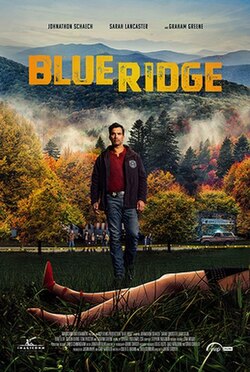
Former Green Beret Justin Wise (Johnathon Schaech) is the new sheriff of the small mountain town of Blue Ridge.  Sheriff Wise is so good at his job that he can just step inside of a gas station and figure out that it’s been robbed just by observing that the millennial behind the counter isn’t look at his phone.  The sheriff has a phone-obsessed millennial daughter (Taegen Burns) and a supportive ex-wife (Sarah Lancaster), who works as a waitress.

He also has a big mystery on his hands when the daughter of Cliff McGrath (Graham Greene) is found murdered.  The McGraths thinks that the Wade family is responsible.  The Wades have a long-standing grievance against the McGraths.  Sheriff Wise and Deputies Dobson (Lara Silva) and Thompson (Ben Esler) have to solve the mystery before a full-out war breaks out in town.

I was not surprised to discover that this was a pilot for television series.  The movie has the homey feel of the type of mystery show that your parents or grandparents would watch every Friday night.  Sherriff Wise may not be as old as my parents but he definitely shares their feelings about phones and trying to understand what’s wrong with the kids today.

It’s an old-fashioned movie but it’s mildly diverting and it does hold your attention.   Johnathon Schaech gives a strong performance as the sheriff who can beat up three people at once but who still gets nervous before asking a woman out on a date.  Graham Greene and Tom Proctor both give good performances as the rival family patriarchs and the mystery takes some interesting turns.  Blue Ridge did a good job of brining its small town setting to life.  Blue Ridge is good enough to be a pleasant afternoon diversion.

Scenes I Love: The Third Man


Orson Welles has been a giant of the film industry since he first stepped foot in it with his masterpiece Citizen Kane. He has been lauded as one of the greatest filmmakers and his innovation in the techniques of filmmaking continues to influence past, present and future filmmakers.

Yet, he wasn’t just a great director but a great writer and producer. He was also a great actor both on-screen, and previously, on stage where he honed his craft. He has had some memorable moments in all the films he’s acted in (even his final film which was the cult classic animated film feature Transformers: The Movie, where he was the voice of a planet-devouring transforming robot planetoid).

It is his brief but great monologue past the halfway mark of the classic noir film The Third Man that is my choice for Scenes I Love and another entry in the “Great Film and TV Monologues” series.

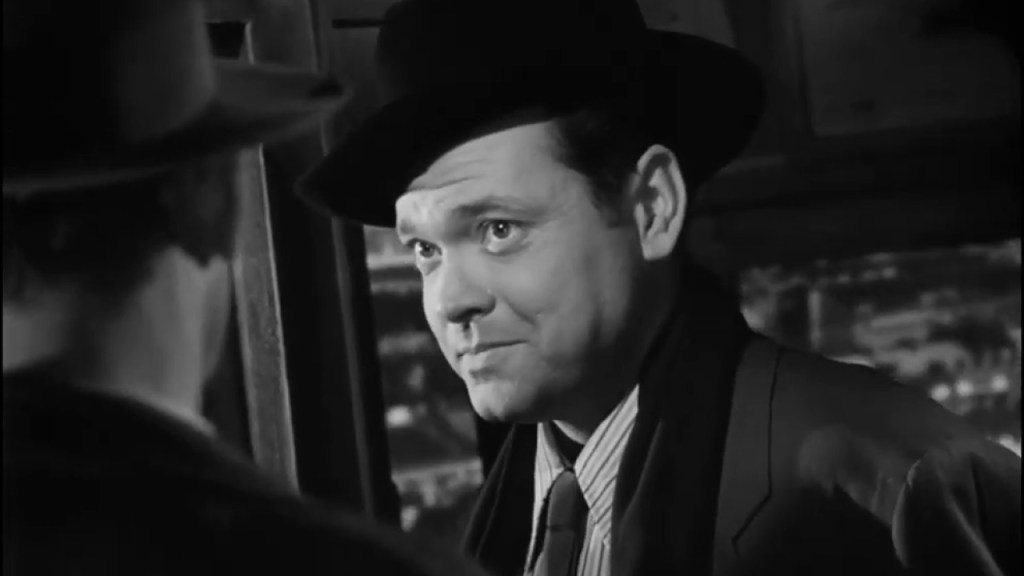
Welles plays the amoral Harry Lime who meets up with his childhood friend Holly Martins. As they ride the famous Wiener Riesenrad in Vienna, Welles waxes poetic about the insignificance of people, in general. How, from the the heights of the Riesenrad, people looked like little dots and would one dot or a group of them be missed if they suddenly stopped moving.

Yet, it is when Lime and Martins exit the ride that Welles’ as Harry Lime performs what is considered one of the greatest monologues ever put on film and, most likely, one of the briefest. It is a philosophical observation on the cynics take on the violent nature of man and how it affects society.

The monologue itself wasn’t written by the film’s writer, Graham Greene, but was inserted in the script by Orson Welles himself. The Third Man was one of the greatest films ever produced even without Welles’ contribution as a writer, but we should be all glad that he decided to add this brief monologue which helps explains the character of Harry Lime and the meaning of the “third man”.

Great Film and TV Monologues

Icarus File No. 22: Revolution (dir by Hugh Hudson)


1985’s Revolution opens on July 4th, 1776.  The Declaration of Independence has just been published.  The streets are full of people celebrating.  A statue of King George is pulled down.  In her carriage, the wealthy Mrs. McConnahay (Joan Plowright) turns up her nose to the enthusiastic rebels, including the fanatical Liberty Woman (Annie Lennox).  Mrs. McConnahay’s daughter, Daisy (Nastassja Kinski) is intrigued by this idea of freedom and equality.

Fur trader Tom Dobbs sails his boat into Hudson Harbor.  Tom is Scottish, illiterate, and very much a man of the 18th Century.  However, he’s played by Al Pacino, who was none of those things.  After Revolution was released to desultory reviews, Pacino took four years off from the movies and watching this film, one can see why.  Pacino is miscast as Dobbs and, as a result, he gives the type of truly bad performance that can only be given by a great actor.  Unable to disguise the fact that he had the accent of a modern-day New Yorker, Pacino resorts to mumbling the majority of his lines.  Tasked with playing a character who has no idea how to deal with the history-making events in which he finds himself, Pacino alternates between a blank look and with bulging his eyes like a madman, proving that it’s far more difficult to play an uneducated character than an educated one.  Why cast Pacino, who can be one of our most exciting actors, as a character who can barely speak and who has neither the intensity of Michael Corleone or the subversive wit of Tony Montana?  Due to Pacino and Kinski having zero chemistry, the scenes where Tom falls in love with Daisy are almost painful to watch.

The film follows Tom as he and his son, Ned (Simon Owen when the film begins, Dexter Fletcher by the time the action moves to Valley Forge), as they find themselves conscripted into the Revolutionary Army.  Eventually, Ned is abducted into the British army and serves as a drummer boy under the sadistic watch of Sgt. Major Peasy (Donald Sutherland).  The idea behind the film isn’t a bad one.  It attempts to portray the American Revolution through the eyes of the average citizen.  Instead of focusing on the Founding Fathers, Revolution tries to tell the story of the everyday people who found themselves in the middle of the war.  Tom loses his boat and (temporarily) he loses his son.  Fortunately, this is one of those films where people are constantly running into each other by chance, regardless of whether it makes any sense or not.  Daisy goes from seeing Tom in New York to randomly coming across him in a field to eventually finding him in Valley Forge.  It’s not because she’s specifically looking for him.  Instead, he just happens to be there.

Why does Revolution fail?  A lot of it comes down to Pacino’s performance, though Pacino certainly isn’t the only talented actor to give a not-quite good performance in Revolution.  (Donald Sutherland has never been more wasted in a film.)  The script is full of dialogue like, “My mouth belongs where I place it.”  (Pacino gets stuck with that one.)  Hugh Hudson directs in a leaden manner.  Towards the end of the film, there is one brilliant sequence where Tom wanders through the streets of New York and, for a few minutes, the film comes to like with a spontaneity that was previously lacking.  Unfortunately, it’s just one sequence in a very long movie,

To be honest, we could use some good films about the American Revolution and I’m not talking about elitist nonsense like Hamilton.  No taxation without representation.  It’s still a good message for us all.

Previous Icarus Files:

  1. Cloud Atlas
  2. Maximum Overdrive
  3. Glass
  4. Captive State
  5. Mother!
  6. The Man Who Killed Don Quixote
  7. Last Days
  8. Plan 9 From Outer Space
  9. The Last Movie
  10. 88
  11. The Bonfire of the Vanities
  12. Birdemic
  13. Birdemic 2: The Resurrection 
  14. Last Exit To Brooklyn
  15. Glen or Glenda
  16. The Assassination of Trotsky
  17. Che!
  18. Brewster McCloud
  19. American Traitor: The Trial of Axis Sally
  20. Tough Guys Don’t Dance
  21. Reach Me

The Films of 2025: Laws of Man (dir by Phil Blattenberger)


Laws of Man opens with two U.S. marshals driving through the desert of Utah.  Tommy Morton (Jackson Rathbone) is young and impulsive, a Korean war vet who is quick to open fire.  Frank Fenton (Jacob Keohane) is older and more cautious.  He also served in the military, though his service was during World War II.  Frank is haunted by flashbacks to a particularly gruesome battle.  Tommy and Frank may spend most of their time wearing black suits in the desert but neither one breaks a sweat.

The year is 1963.  Kennedy is in the White House.  The communists are on the move.  And Tommy and Frank are busy executing arrest warrants in the most desolate part of the country.  An attempt to arrest Mormon cult leader Crash Mooncalf (Ricard Brake) leads to a bloody shootout that leaves Mooncalf and his followers dead.  Their next assignment leads them to a small town in Nevada, where Bill Bonney (Dermot Mulroney) and his violent family is suspected of killing local ranchers and stealing their land.

From the minute that Tommy and Frank arrive in Nevada, something feels off.  They stay at a cheap motel, where Tommy picks up a woman named Dinah (Ashley Gallegos) and Frank spends his time talking to a bartender named Callie (Kelly Lynn Reiter).  An old rancher named Don Burgess (Forrie J. Smith) shows off his gun and says that he would rather suffer a violent death than give up his land.  A traveling preacher named Cassidy Whitaker (Harvey Keitel) approaches Frank in the parking lot and starts talking about sin and redemption.  Meanwhile, FBI agent Galen Armstong (Keith Carradine) appears to be curiously unconcerned with the Bonneys and their reign of violence.  As for the sheriff (Graham Greene), he spending his time sitting outside a burned-out ranch house.  The charred bodies of the owners are still inside, seated around the dinner table.

An attempt to arrest Bill Bonney at his home leads to a violent shootout, one in which no one is killed but Bill is still not happy about having a bunch of bullet holes in his roof.  Tommy and Frank attempt to serve the arrest warrant, just to discover that it’s not going to be as easy as they thought.  Frank, whose World War II flashbacks are getting more and more intense, wants to leave town.  Tommy, however, is obsessed with discovering what exactly everyone is hiding.

And, through it all, people who know their history will notice that the film is taking place in November of 1963 and the 22nd is rapidly approaching….

Laws of Man gets off to a strong start but begins to meander about halfway through.  Luckily, the film’s final third features a wonderfully insane twist that recaptures the viewer’s attention.  No matter what you may think is going on in the film, it can’t prepare you for just how weird things eventually get.  Laws of Man is an entertaining film, one that is occasionally a bit too self-consciously quirky for its own good but which ultimately works.  Jackson Rathbone and Jacob Keohane both give strong performances in the lead roles and the familiar faces in the film’s supporting cast all do their best to bring the film’s often surreal world to life.  Dermot Mulroney and Keith Carradine give especially strong performance while Harvey Keitel appears to be having fun as the offbeat preacher.

Laws of Man managed to truly take me by surprise.  For fans of paranoid cinema, it’s definitely worth making time for.


Goodnight, Vienna: THE THIRD MAN (British Lion 1949)


gary loggins's avatarcracked rear viewer

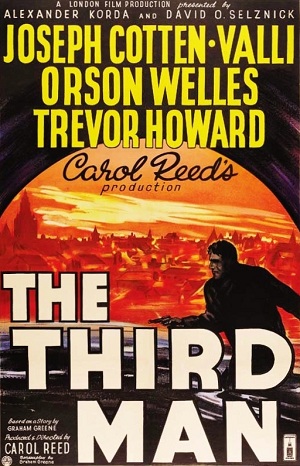
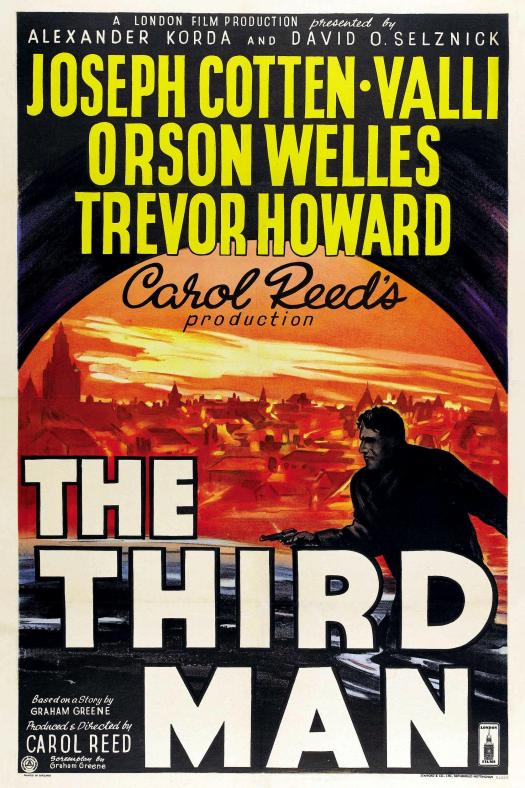
I’m just gonna come right out and say it: THE THIRD MAN is one of the greatest movies ever made. How could it not be, with all that talent, from producers Alexander Korda and David O. Selznick, director Carol Reed , screenwriter Graham Green, and cinematographer Robert Krasker, to actors Orson Welles, Joseph Cotten, Alida Valli , and Trevor Howard. It’s striking visuals, taut direction, and masterful acting transcend the film noir genre and make THE THIRD MAN one of the must-see films of 20th Century cinema.

The story starts simply enough, as American pulp novelist Holly Martins arrives in post-war Vienna to meet up with his old pal Harry Lime, only to learn that Harry was recently killed in a car accident. He attends the graveside service, meeting Harry’s mysterious actress girlfriend Anna Schmidt, and is quickly pulled down a rabbit hole of intrigue and deception involving the British…

View original post 363 more words

Shattered Politics #86: Casino Jack (dir by George Hickenlooper)


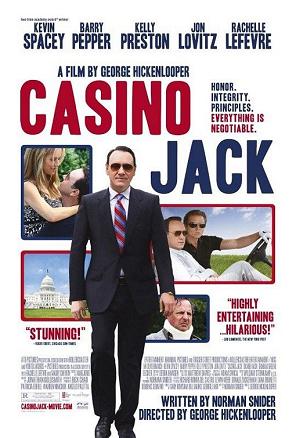
Casino_JackI had two reactions to the 2010 film Casino Jack.

My first reaction was to think, “Wow, Kevin Spacey really can act!”  I mean, don’t get me wrong.  I knew that, especially when working with a director who is strong enough to curb his natural tendency to go overboard, Kevin Spacey was capable of giving a great performance.  However, Spacey is one of those actors who has such a unique look and style about him that I think sometimes we forget that he’s capable of doing more than just playing variations on Kevin Spacey.*

And it is true that, in the role of real-life Washington D.C. lobbyist Jack Abramoff, Kevin Spacey gave a performance that was full of the usual Spacey tricks.  By that, I mean we got the Spacey voice going from a purr to a roar in just a manner of seconds.  We got the Spacey glare, where he narrows his eyes and stares at whoever has offended him with an intensity that lets you know that something bad is about to happen.  We got that somewhat strained Kevin Spacey smile, the way facial expression that lets us know that we don’t want to know what’s going on behind that friendly facade.

But, even though Spacey was up to his usual tricks, all of those tricks still came together to create a unique character.  As I watched the film, I forgot that I was watching Kevin Spacey.  Instead, I really felt that I was watching and listening to one of the most powerful lobbyists in American history.

And, when Abramoff was eventually arrested and prosecuted for defrauding his clients, I couldn’t help but feel a little bit of sympathy for him.  Spacey plays the character with such a combination of hyperactive charm and righteous fury that you can’t help but be a little bit enthralled by him.  That’s not to say that Kevin Spacey turns Jack Abramoff into a sympathetic character.  (Indeed, as good as Spacey is, there are a few moments when his contempt for Abramoff comes through and his performance suddenly turns into a one-dimensional caricature.)  But what Spacey does do is show that Jack Abramoff was less an inhuman monster and more the logical product of Washington culture.  The only difference between Abramoff and everyone else in Washington is that Abramoff got caught.

But, at the same time, the move itself is never quite as interesting as Spacey’s lead performance. The movie’s main theme appears to be that Washington is corrupt and we’d do better if we curtailed the power of lobbyists but … well, do you really need a movie to tell you this?  I mean I’m pretty much apolitical and I knew that long before I saw Casino Jack!

Casino Jack: Good performance.  Boring message.  Bleh movie.

http://www.youtube.com/watch?v=w1igM1mfzPI

* This is better known as the Christopher Walken syndrome.

Scenes That I Love: The Cuckoo Clock Speech From The Third Man


ThirdManUSPoster

Some movies are merely good.  Some movies are undeniably great.  And then, a handful movies are so amazingly brilliant that, every time you watch, you’re reminded why you fell in love with cinema in the first place.

The Third Man is one of those brilliant films.

Directed by Carol Reed and scripted by novelist Graham Greene, The Third Man takes place in the years immediately following the end of World War II.  Pulp novelist Holly Martins (Joseph Cotten) comes to Vienna to search for his old friend Harry Lime (Orson Welles).  Upon arriving, Holly is shocked to learn that Harry makes his living selling diluted penicillin on the black market.

In the classic scene below, Harry and Holly have a clandestine meeting in a Ferris wheel and Harry justifies both his actions and the lives that have been lost as a result of them.

While Orson Welles’ performance is (rightfully) celebrated, I’ve always felt that Joseph Cotten’s work was even more important to the film’s success.  While Welles made Harry Lime into a charismatic and compelling villain, it was  Cotten who provided the film with a heart.

A Quickie With Lisa Marie: Brighton Rock (dir. by Rowan Joffe)


Brighton Rock is a British film noir that’s currently both playing in limited release and which is also available via video-on-demand.  Based on a novel by Graham Greene, Brighton Rock is the story of Pinkie (Sam Riley), a sociopathic gangster who murders a gambler.  The chase leading up to the murder is witnessed by a mousey waitress named Rose (Andrea Riseborough) who doesn’t realize what she’s actually seen.  In order to keep her quiet, Pinkie marries Rose.  Rose, however, works for Ida (Helen Mirren) and Ida just happens to have been friends with the murdered gangster.  Realizing that Rose is in danger, Ida takes it upon herself to expose Pinkie for the murderer he is.

Brighton Rock is a visually striking film and it has a handful of good performances but it never quite comes together.  Before making his feature film directing debut here, Rowan Joffe wrote the script for last year’s The American and, much like The American, Brighton Rock has an abundance of style and is full of references to the classic crime films of the 60s and 70s.  Also, much like The American, the style — too often — seems to exist separately from any larger vision.  As a result, the film ultimately feels like several disconnected — if pretty scenes — strung together by convenience.  The film has an intriguing-enough plot but the narrative lacks any sort of forward momentum.  Interestingly enough, Greene used the story of Pinkie, Rose, and Ida to examine larger theological issues within the Catholic church.  With the exception of a scene where Pinkie prays, an over-the-top sequence featuring a judgmental nun, and a few inserts of crucifixes artfully hanging on grimy walls, Joffe pretty much jettisons the story’s religious angle but without it, Pinkie and Rose’s actions make a lot less sense. 

Joffe’s decision to cast Sam Riley, whom I’ve had a crush on ever since I first saw Control, in the lead role of Pinkie is problematic.  It’s not that Riley gives a bad performance because he doesn’t.  He makes a convincing psychopath and if he’s never quite charming enough to be a true anti-hero, he’s still makes Pinkie into a compelling figure.  Unfortunately, Riley is still totally miscast in the film.  In Graham Greene’s original novel, Pinkie was only 17 years old.  Sam Riley is 31 and looks even older.  Unfortunately, all of the other characters in the film continually refer to him as “the kid.”  John Hurt, at one point, gives a monologue in which he wonders how someone so young could be so evil.  But Riley isn’t young and as a result, I found myself wondering just how old someone had to be before they were considered to be an adult in 1960s England.

Still, if nothing else, Joffe gets some good performances from his supporting cast.  Andrea Riseborough manages to be both poignant and annoying as Rose while Andy Serkis appears to be having a lot of fun playing a slightly ludicrous gangster.  Not surprisingly, Helen Mirren commands every scene she appears in and she and John Hurt have got a great chemistry.  Regardless of how you might feel about the film as whole, it’s impossible not to enjoy their scenes together.  They’re final scene together made me squeal with delight and, in the end, that has to count for something.