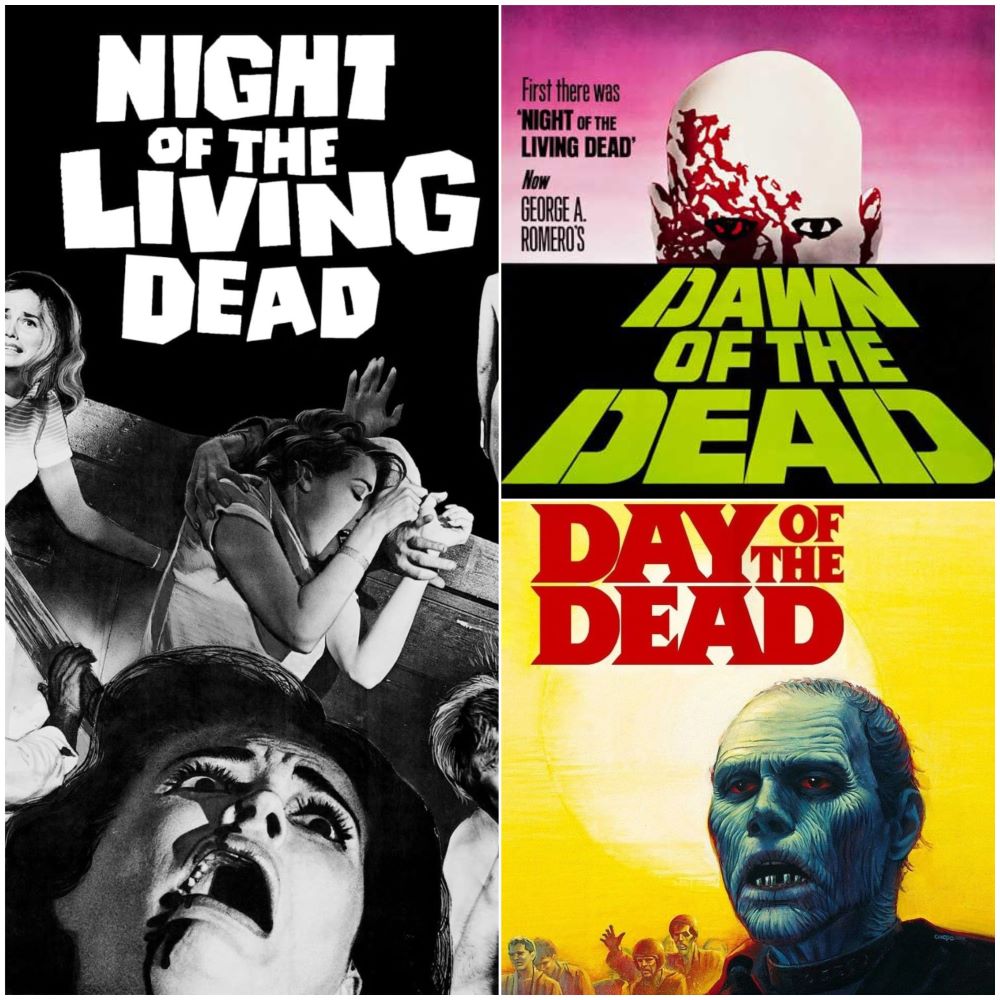
The Dead Among Us: Exploring Society and Self in Romero’s Trilogy


“When there’s no more room in hell, the dead will walk the earth.” — Peter

George A. Romero’s zombie trilogy—Night of the Living Dead (1968), Dawn of the Dead (1978), and Day of the Dead (1985)—stands as a landmark achievement in horror cinema, weaving the evolution of the zombie genre with a profound commentary on human nature and societal collapse. Emerging during periods of significant social and political upheaval, each film reflects the anxieties, tensions, and cultural dynamics of its decade. Romero’s zombies were not merely monsters to instill fear but mirrors reflecting society’s darkest fears, prejudices, and failures. The trilogy explores pressing questions about survival, morality, racial and class structures, and the fragility of human relationships when civilization breaks down, making these films persistently relevant beyond their gore and suspense.

What makes Romero’s trilogy particularly striking is its layered richness—each installment presents a standalone narrative that deepens the conversation about humanity’s response to apocalypse while encapsulating the spirit of its era. Night of the Living Dead confronts issues of race, violence, and distrust within a claustrophobic haven; Dawn of the Dead takes viewers to a sprawling shopping mall, a metaphor for 1970s consumer culture’s hollow comforts and social alienation; and Day of the Dead delves into the psychological and ideological fractures under extreme duress in a military bunker, highlighting themes of authoritarianism, scientific ethics, and the struggle for hope in despair. Together, these films form a powerful, intergenerational critique that resonates with viewers as much for their social insights as for their seminal contributions to the horror genre.

The Real Threat: Humans Versus Zombies

In Romero’s trilogy, the zombies provide relentless external pressure, but it is human flaws that become the dominant threat. Night of the Living Dead introduces the idea that fear, selfishness, and mistrust within small groups erode their chances of survival. The movie’s confined setting in a rural farmhouse encapsulates a microcosm of society teetering on the brink. Ben, played by Duane Jones, stands out not just for his calm leadership but also for the racial and social tensions his presence introduces—especially in conflict with Harry, whose obsession with control echoes real-world social divides. The film’s infamous ending, where Ben is killed by a white posse, resonates as a powerful allegory for racial violence, underscoring that the apocalypse in Romero’s world is as much a societal failure as a supernatural event.

Moving to Dawn of the Dead, the threat shifts toward a metaphorical critique of consumer culture. The survivors’ refuge in a shopping mall represents a modern temple of capitalism, filled with distractions and material goods that provide temporary relief but ultimately expose human weakness. The zombies’ endless wandering in this retail environment ridicule our real-world repetitive consumption, blurring lines between life and death. Human conflicts intensify as greed and recklessness among the survivors hasten their downfall. The bikers’ violent intrusion and consequent chaos symbolize how societal fractures and selfishness can undo fragile pockets of order. Here the zombies are a mirror to humanity’s brainless rituals, and the real menace is people’s inability to rise above base instincts.

In Day of the Dead, the human threat turns authoritarian and fractured. Set in a cramped underground bunker, the story mines the clash between military pragmatism and scientific inquiry. Soldiers and scientists represent ideologies that fail to reconcile, leading to paranoia, cruelty, and betrayal. Dr. Logan’s work with Bub—the zombie who exhibits flickers of memory and humanity—raises ethical questions, while Captain Rhodes’ hardline attitude embodies the brutal will to survive at any cost. The psychological breakdowns and mounting violence illustrate Romero’s grim thesis: when order and communication collapse, humanity itself becomes the deadliest monster. Romero’s zombies evolve here beyond simple horror fodder into symbolic reflections of humanity’s tragic failures.

Reflecting the Decades

Night of the Living Dead uses black-and-white cinematography to invoke a stark, documentary-like immediacy. This choice grounds the horror in a realism that intensifies dread, making the threat palpable and the social commentary more haunting. The film’s sound design—ambient crickets, creaking homes, radio reports—immerses viewers in a palpable tension. The limited setting and raw performances engage the audience emotionally, resembling a tragic stage play with themes of mistrust and panic spiraling out of control.

Dawn of the Dead shifts dramatically in visual and tonal approach. Its vibrant color palette contrasts the black-and-white predecessor, reflecting the mall’s artificial glow and the pop culture that it satirizes. The film balances broad dark humor with shocking gore, crafting an atmosphere that is surreal yet recognizably familiar. Tom Savini’s makeup and effects render the zombies grotesquely vivid, framing the film’s critique of capitalism with visceral impact. The pacing is more expansive, covering diverse spaces and character arcs as the survivors roam the mall’s labyrinthine insides, a metaphor for society’s complex detours and distractions.

Day of the Dead reverts to a darker, claustrophobic visual style in shadowy tunnels and corridors. The lighting is grim, reflecting the emotional suffocation and moral decay of its characters. Savini’s effects reach a gruesome peak here; every bite, wound, and decomposing corpse is rendered with intense anatomical detail. The film’s soundscape—filled with eerie silence punctuated by horrific violence—places viewers deep in the bunker’s oppressive atmosphere. Its pacing allows tension to build relentlessly, mirroring the psychological disintegration on screen. The film’s tone is unyieldingly bleak, underscoring an apocalypse not just of bodies but of hope and humanity.

The Films as Cultural Mirrors

Romero’s films serve as powerful cultural artifacts, each embodying concerns of its time.

Night of the Living Dead arrived in the late 1960s amid civil rights movements and the Vietnam War. The casting of Duane Jones as Ben was revolutionary, providing an implicit challenge to racial norms without overt political messaging. The film’s stark rural setting underscores isolation and vulnerability, while the tense, fractured group dynamics mirror societal conflicts over race, power, and distrust. The film’s haunting finale, with Ben’s death at the hands of a white mob, connects it powerfully to ongoing real-world violence against African Americans and demands reflection on humanity’s darkest impulses.

In contrast, Dawn of the Dead reflects the 1970s’ explosion of consumer and mass culture. Adventure into a shopping mall—a temple of capitalist excess—becomes a metaphor for societal malaise. Romero critiques consumerism’s seductive yet dehumanizing effects, suggesting that even amid an apocalypse, humans cannot escape compulsions to buy, hoard, and consume. The characters’ indulgence in the mall’s resources reveals social and moral exhaustion, and their downfall exposes the fragility beneath the comfortable facade of consumer society. The film’s biting humor and grotesque shocks harbor an underlying sadness about alienation and decay.

Day of the Dead encapsulates 1980s political anxieties around militarism, institutional authority, and distrust. The bunker setting becomes a suffocating arena where ideological conflicts tear apart what little society remains. This film foregrounds questions around science versus brute force, morality versus survival, and communication breakdown as symbolic of a society fracturing under Reagan-era pressures. The mental breakdowns and spiraling violence illustrate a grim view that humanity might be beyond redemption when stripped of trust and compassion. Its darkness reflects the decade’s cultural cynicism and fears of social disintegration.

Microcosms of Society

Romero’s stories unfold through tight-knit groups whose conflicts illuminate broader social themes.

In Night, Ben’s calm and tactical leadership contrasts sharply with Harry Cooper’s selfishness and paranoia. Their tensions reflect generational and racial divides. Ben strives for unity while Harry clings to control, highlighting a central question of cooperation versus individualism in survival. The other characters, including the traumatized Barbara and the fragile family unit, represent varying responses to fear, illustrating fractured human connections intensified by crisis.

Dawn enlarges the survivor group and diversifies personality types: news reporter Francine, biker gang members, military-like figures, and civilians who each represent different social attitudes. Their conflicts—between indulgence and survival, hope and despair—reflect their inability to fully commit to collective welfare. The chaotic intrusion of bikers on the mall roof, desperate to claim resources, accelerates the internal collapse, demonstrating the fragility of constructed order amid human greed.

Day uses a sharply divided group between scientists and soldiers, emphasizing ideological conflict. Dr. Logan embodies scientific curiosity and empathy, while Captain Rhodes champions military control and harsh pragmatism. Their clash catalyzes the group’s disintegration. Supporting characters like Miguel display mental fragility brought on by isolation and stress. Bub, the experimental zombie, emerges as a surprising figure of sympathy and ethical ambiguity, challenging simplistic notions of life and death. The bunker thus becomes a pressure cooker for the darkest human and philosophical dilemmas.

Evolution of the Undead as Symbol

Zombies are initially mindless monsters but become more layered symbols throughout the trilogy.

In Night, zombies are terrifying yet simple threats. Their inexplicable transformation turns death into relentless hunger, symbolizing uncontrollable social forces and fears of decay.

In Dawn, zombies’ repetitive behavior in the mall symbolizes consumerism’s zombification of society—mindless consumption, ritual, and alienation repeated beyond death. They act as dark reflections of the living’s mechanical habits.

Day transforms zombies into tragic figures represented by Bub, whose flickers of memory and social responsiveness invite empathy. This evolution raises moral questions about identity, consciousness, and the possibility of redemption or understanding within terror. The zombies become mirrors not only of societal collapse but of humanity’s potential for both cruelty and compassion.

Legacy and Impact

Romero’s trilogy didn’t merely redefine zombies but transformed horror into a powerful vehicle for social commentary, intertwining visceral storytelling with sharp critiques of society’s deep flaws and fears. Each film uses the undead not only as monsters but as metaphors reflecting the social and political issues of its time, making the horror resonate beyond the screen.

Night of the Living Dead broke ground by embedding racial and societal tensions into the horror narrative during a turbulent period of the 1960s civil rights movement and political unrest. The black lead character’s fate and the film’s stark depiction of fear and mistrust captured fractured American society—highlighting systemic racial violence, distrust, and the breakdown of community bonds. The zombies, once mindless folk creatures, became symbols of societal collapse, indiscriminate and relentless, emphasizing the idea that the real destruction comes from within human systems and relationships.

Dawn of the Dead advanced Romero’s social critique by targeting consumerism and capitalist excess. The setting of the shopping mall as a sanctuary turned trap was a brilliant allegory for how materialism numbs society, creating cycles of empty consumption akin to the zombies’ repetitive wandering. The film studied societal emptiness beneath the comforts of consumer culture, exploring how greed, self-interest, and a loss of empathy undermine collective survival. Notably, Romero touched on economic and racial inequalities, reflecting real struggles faced by minority and marginalized communities, such as urban violence and police brutality, though these themes are more coded than in Night.

Day of the Dead delivers a bleak critique of institutional failure and authoritarianism amid the 1980s political climate. The bunker’s contained setting represents a society strangled by mistrust between military power and scientific inquiry. As paranoia grows, ethical boundaries and communication collapse, showing a dystopia where humanity’s darkest traits rise to the surface. Characters personify ideological conflicts, illustrating the futility of survival without unity or compassion. The ethical complexity introduced through Bub, the almost-human zombie, forces deeper reflection on humanity and monstrosity. The film presciently portrays societal fragmentation, authoritarian impulses, and mental health crises as ongoing threats to civilization, deepening Romero’s grim message that humanity’s greatest dangers lie within itself.

Romero’s films continue to influence horror and popular culture by demonstrating how genre cinema can engage with pressing social issues. They laid the groundwork for zombie stories as allegories for everything from capitalism and consumerism to racial injustice and political dysfunction. Examples of films and shows influenced by Romero’s Dead trilogy are numerous and diverse. The 2004 remake of Dawn of the Dead by Zack Snyder revitalized zombie cinema for a modern audience while keeping the core social commentary, inspiring other fast-paced, action-oriented zombie films. The television series The Walking Dead drew heavily from Romero’s depiction of the undead apocalypse and the struggles of survivors, exploring themes of community, morality, and leadership in a broken world. Films like 28 Days Later introduced a new breed of zombies with ultra-fast infection rates, yet owe a thematic debt to Romero’s human-centric apocalyptic narratives. The video game series Resident Evil incorporates survival themes and social breakdown, reflecting the fractured human relationships Romero explored. Even non-zombie films like The Road invoke similar bleak atmospheres and moral complexities in post-apocalyptic settings. Romero’s influence also extends to comics, literature, and other media, making his trilogy a foundational pillar in modern horror and pop culture.

In sum, Romero’s trilogy remains a vital cultural touchstone. Each film captures the zeitgeist of its era while addressing timeless questions about human nature, survival, and society under crisis. The powerful fusion of gore, suspense, and social commentary in these movies gives them lasting relevance and impact far beyond the horror genre. They compel audiences to confront the monsters outside and the darker forces within themselves and their communities.
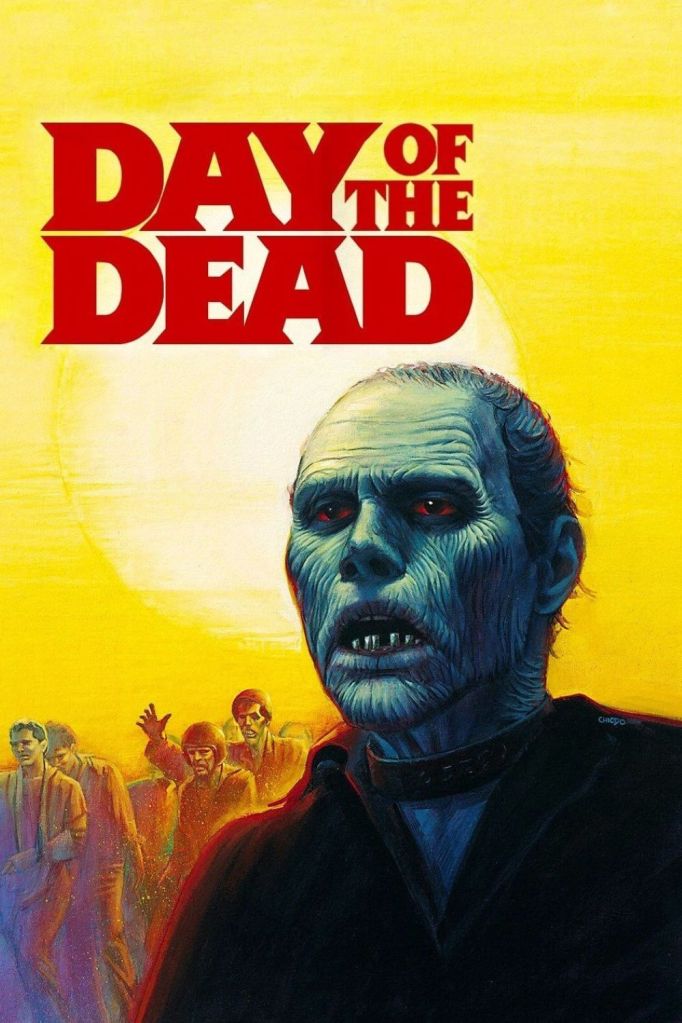
Horror Review: Day of the Dead (dir. by George A. Romero)


“You want to put some kind of explanation down here before you leave? Here’s one as good as any you’re likely to find. We’re bein’ punished by the Creator…” — John “Flyboy”

George A. Romero’s 1985 film Day of the Dead stands as an unflinching and deeply cynical meditation on the collapse of society amid a relentless zombie apocalypse, intensifying thematic and narrative complexities first introduced in Night of the Living Dead (1968) and Dawn of the Dead (1978).

Originally, Romero envisioned the film as an epic, describing it as “the Gone with the Wind of zombie films.” His screenplay featured above-ground scenes and a more expansive narrative, but budget cuts halved the original $7 million budget to $3.5 million, forcing a drastic paredown. While much grandiosity was lost, the trimming resulted in a tighter narrative and heightened the nihilistic tone, deepening the film’s focused exploration of humanity’s darkest aspects during apocalypse.

Set after civilization has collapsed, Day of the Dead places viewers in the suffocating confines of a missile silo bunker in Florida, where scientists and soldiers struggle for survival and solutions amid encroaching undead hordes. The claustrophobic atmosphere—born partly from the abandonment of Romero’s broader original sequences—intensifies the tension between the hopeful scientific pursuit of salvation and the harsh pragmatism of military authority. These competing ideologies escalate into authoritarian violence, embodying the fractured microcosm of a dying society.

Within this claustrophobic world, a third group—composed of characters Flyboy and McDermott—emerges as a stand-in for the rest of humanity. They observe the scientists and soldiers—institutions historically symbols of security and innovation—but witness how these deeply entrenched ways of thinking only exacerbate problems instead of solving them. This third faction characterizes humanity caught between rigid orders and doomed pursuits, reflecting Romero’s broader commentary on societal stagnation and fragmentation.

Central to this conflict are Dr. Logan, or “Frankenstein,” a scientist obsessed with controlling the undead through experimentation, and Captain Rhodes, the hardened soldier who believes survival demands ruthless control.

Logan’s controversial research seeks to domesticate and condition zombies, notably through his most celebrated subject, Bub—the undead zombie capable of rudimentary recognition and emotion—challenging assumptions about humanity and monstrosity.

Here the film benefits greatly from the extraordinary practical effects work of Tom Savini, whose contributions on Day of the Dead are widely considered his magnum opus. Savini’s makeup and gore effects remain unsurpassed in zombie cinema, continually influencing horror visuals to this day. Drawing from his experience as a combat photographer in Vietnam, Savini brought visceral realism to every decomposed corpse and violent injury. The close-quarters zombie encounters showcase meticulous practical work—detailed wounds, biting, and dismemberment—rendered with stunning anatomical authenticity that predates CGI dominance.

Bub, also a masterclass in makeup and animatronics, embodies this fusion of horror and humanity with lifelike textures and movements that blur the line between corpse and creature, rendering the undead terrifyingly believable.

The film captures the growing paranoia and cruelty as resources dwindle—food, ammunition, and medical supplies—and the fragile social order begins to shatter. The characters’ mounting desperation illustrates Romero’s thesis that humanity’s real enemy may be its own incapacity for cooperation.

The moral and social decay is vividly portrayed through characters like Miguel, whose mental breakdown sets destructive events in motion, and Rhodes, whose authoritarian survivalism fractures alliances and moral compass alike. Logan’s cold detachment and experiments push ethical boundaries in a world on the brink.

Romero’s direction combines claustrophobic dread with stark psychological terror, further amplified by Savini’s effects. The cinematography’s low lighting and tight framing create an oppressive environment, while graphic violence underscores a world irrevocably broken. The unsettling sound design—moans, silences, sudden outbreaks—immerses viewers in a relentless atmosphere of decay and fear.

Romero described Day of the Dead as a tragedy about how lack of human communication causes chaos and collapse even in this small slice of society. The dysfunction—soldiers and scientists talking past each other, eroding trust, spirals of paranoia—serves as a bleak allegory for 1980s America’s political and cultural fragmentation. Failed teamwork, mental health crises, and fatal miscommunication thrive as the bunker metaphorically becomes a prison of fractured humanity.

Though not as commercially successful as its predecessors, Day of the Dead remains the bleakest and most nihilistic entry in Romero’s Dead series. Its overall grim tone, combined with mostly unlikable characters, establishes it as the most desolate and truly apocalyptic film of the series. The characters often appear fractured, neurotic, and unable to escape their own destructive tendencies, making the story’s world feel even more hopeless and devastating.

Far beyond a simple gore fest, Day of the Dead serves as a profound social critique infused with psychological depth. It explores fear, isolation, authority abuse, and the ethical limits of science, reflecting enduring anxieties about society and survival. The film’s unsettling portrayal of humanity’s failings, embodied in broken relationships and moral decay, presents a harsh reckoning with what it means to be human when humanity itself is the ultimate threat to its own existence. This thematic complexity, combined with Romero’s unyielding vision and Savini’s unparalleled effects, crafts a chilling and unforgettable cinematic experience.

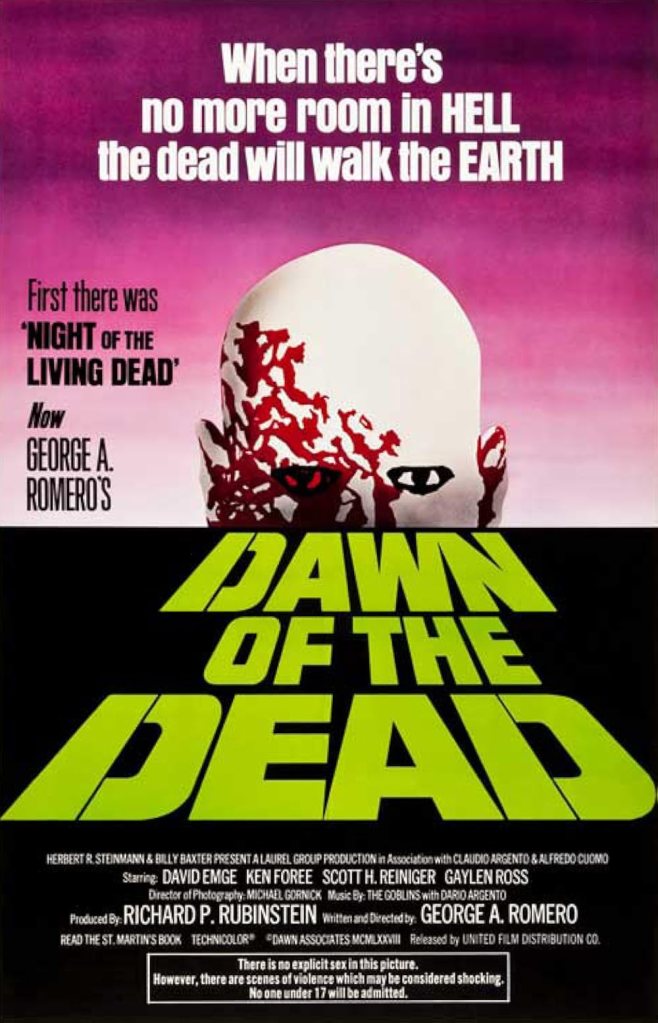
Horror Review: Dawn of the Dead (dir. by George A. Romero)


“When the dead walk, señores, we must stop the killing… or lose the war.”

In 1968, horror cinema was irrevocably changed by the emergence of George A. Romero’s vision, signaling the beginning of a transformative era for the genre. Romero, who had spent much of his early career making industrial and educational films, shifted gears dramatically by crafting Night of the Living Dead, an independent film that did more than just scare audiences—it shattered the conventions of horror. This was a film that rejected the glossy, Gothic monsters of studios like Universal and Hammer, replacing them with raw, unvarnished depictions of human decay and social collapse. The fear Romero invoked was no longer supernatural; it was born from human frailty and social upheaval.

Night of the Living Dead introduced audiences to an entirely new kind of monster: the zombie, not as a mystical or alien infection, but as the reanimated corpse of an ordinary person. This change was more than cosmetic. It shifted the source of horror from “the other” to a reflection of ourselves. Death itself had become weaponized, turning friend into foe in the most visceral way imaginable. The infection was no longer a far-off fantasy but an internal threat. Although the word “zombie” was scarcely spoken in Romero’s first three Dead films, the concept solidified into the cultural lexicon, haunting audiences with the idea that anyone—even the people closest to us—could become the enemy.

Despite the landmark impact of Night of the Living Dead, it would take a decade before Romero was able to produce its sequel. The first film’s shocking violence and disturbing social commentary made Hollywood studios wary of financing a continuation. However, a breakthrough came when Italian horror maestro Dario Argento learned of Romero’s plans and offered to co-finance Dawn of the Dead under the condition that he would receive European distribution rights and be allowed to edit a version for his audience. This international collaboration proved pivotal, allowing Romero to create what many consider not just a sequel but a towering masterpiece of horror cinema.

Released in 1978, Dawn of the Dead solidified Romero’s reputation as a visionary filmmaker willing to confront uncomfortable truths. The Motion Picture Association of America refused the film an R-rating due to its graphic content, and Romero opted to release it unrated to avoid association with the X-rating, which was then primarily linked to pornography. While this restricted the number of theaters willing to show the film, it did not hinder its success. The movie drew large audiences hungry for a horror story that dared to depict society’s unraveling with brutal honesty.

From its opening, Dawn of the Dead confronts viewers with the chaos midst societal collapse rather than building toward it. Traditional authority figures—news anchors, government officials, police—are portrayed as overwhelmed, often ineffective, and sometimes themselves sources of danger. The film’s opening sequence, set inside a frenzied television newsroom, captures this chaos vividly; reporters and producers struggle to maintain composure while the world outside falls apart. This scene encapsulates one of Romero’s central themes: the erosion of trust in institutions during extreme crisis. As media credibility falters, survivors are left in an informational vacuum, further imperiling their ability to cooperate or find sanctuary. This mistrust resonates strongly today, echoing recent real-world crises where institutional failure has worsened public panic and political division.

A critical early sequence—the tenement raid—brilliantly illustrates the film’s social complexity. The conflict here stems not only from the undead but from a clash of cultures: the low-income inhabitants hold tightly to their traditions, especially the respect and mourning of their dead, while the government, scientists, and law enforcement—detached “outsiders”—seek to destroy the infected bodies coldly as threats. This refusal to recognize the residents’ humanity and cultural practices sparks a brutal firefight, symbolizing the broader breakdown of social cohesion. Romero uses this conflict to show that the apocalypse is fueled as much by misunderstandings and institutional coldness as by the undead threat itself.

Within this crumbling world, the film centers on four survivors who become our guides through Romero’s apocalyptic landscape: Roger (Scott Reiniger) and Peter (Ken Foree), two disillusioned Philadelphia SWAT officers who desert after that violent raid; Stephen (David Emge), a helicopter pilot; and Fran (Gaylen Ross), a television producer. These characters represent the fractured remnants of a society that once clung to institutions but is now adrift. Their escape from Philadelphia aboard a stolen news helicopter is less a triumphant flight than a retreat into uncertainty.

Their destination is a suburban shopping mall near Monroeville, Pennsylvania. The mall, abandoned but intact, quickly becomes their fortress. Clearing out the zombies inside and barricading the doors seems like a triumph—an oasis amid apocalypse. The survivors revel in a surreal form of luxury that stands in stark contrast to the danger outside. For a time, they indulge in consumer comforts previously unattainable: fine clothes, gourmet food, and even jewelry. This phase is both a coping mechanism and a critique. Romero uses the mall setting as a dark mirror to American consumer culture. The shoppers turned zombies wander these halls as if drawn by habit, herding toward the very symbols of consumption that once defined the pre-apocalyptic world.

Romero’s critique extends beyond consumerism run amok; he exposes consumerism itself as a new religion for America. In the 1970s, as economic and social uncertainties shook the nation, megamalls emerged as the new temples of worship where consumer habits became ritualistic acts of devotion. The film’s setting drives home this analogy—the mall is not simply a marketplace but a sacred space where the rituals of buying and consuming provide meaning and identity. The zombies’ relentless, automatic wandering through the mall’s stores reflects a zombified devotion to these rituals, implying that consumerism has replaced spiritual and community values, offering hollow salvation in its place.

This portrayal is not accidental but deliberately satirical. The mall is a gilded cage, symbolizing consumerism’s dominance over American identity. Even in the apocalypse, the survivors replicate the rituals of capitalism, clinging to items of superficial value and meaning. The zombies’ mindless shuffling through stores like Woolworth’s and the food court underscores this grotesque cycle. Romero’s message is sharp: consumerism is a kind of death, a trance that distracts from and perhaps accelerates societal decay. The film implies that in America, the line between life and death blurs within the walls of the shopping mall because it is there that life’s priorities have long been warped.

While consumerism forms a visible backdrop, Dawn of the Dead probes deeper, exposing a darker undercurrent: humanity’s inherent violent nature as the real engine of destruction. The undead are monstrous and fearful, but they lack the complexity and self-destructiveness of the living. Throughout the film, Romero presents violence not as a rare failing but as a baseline condition of human behavior. The survivors themselves struggle to suppress impulses of aggression, paranoia, and selfishness that grow more toxic over time.

Roger’s reckless bravado during their clearing of the mall leads to a fatal bite from a zombie, making his death a metaphor for the cost of unchecked aggression. The living kill as readily as the dead, but with purpose and calculation that is often more destructive. The raiding biker gang that ultimately invades the mall appears as a harsh symbol of this self-inflicted violence. Unlike the zombies, whose threat is instinctive, the bikers wield cruelty consciously, plundering and destroying the survivors’ fragile sanctuary. Their incursion shatters any illusion of security and exposes the futility of individualistic survival strategies when cooperation is absent.

The unraveling of the survivors’ cohesion over the course of the film underscores one of Romero’s most bleak insights: humanity’s greatest enemy is itself. Even small groups that depend on trust and unity quickly fragment amid fear and scarcity. Despite the severity of their predicament, the four protagonists are often consumed by petty grievances, distrust, and self-preservation. Romero suggests that unless cooperation becomes a collective imperative, survival is impossible. The dead multiply endlessly, but it is the living who ensure society’s demise by turning against each other first.

Romero’s Dawn of the Dead also marks the cinematic arrival of Tom Savini, whose pioneering make-up effects would forever transform horror filmmaking. Savini and members of his team not only crafted many of the film’s grisly effects but also played some of the biker gang antagonists, blending artistry and performance. While the gore in Dawn can appear somewhat garish or cartoony on film, largely due to lighting effects and the practical limits of makeup technology at the time, Savini’s work set the standard for modern horror effects. His techniques and vision became the bedrock of the gore genre, influencing decades of horror cinema thereafter. His legacy continued as he later directed the 1990 remake of Night of the Living Dead, bringing Romero’s seminal vision to a new generation with his signature effects sensibility.

Ken Foree’s portrayal of Peter anchors the film emotionally; his performance balances toughness with vulnerability, capturing a man grappling with the collapse of law and societal norms while striving to retain his humanity. Scott Reiniger’s Roger provides a volatile contrast—impulsive, reckless, and ultimately tragic—as his aggression leads directly to his downfall. David Emge’s Stephen and Gaylen Ross’ Fran round out the core survivors, expressing pragmatism, grief, and the desperate need for connection as their world crumbles. Their dynamic interactions highlight Romero’s warning: human connection in times of extremity is fragile and fraught, undermined by fear and mistrust.

Romero’s expert use of sound and music further elevates the film. The eerie muzak playing through the mall’s PA system contrasts sharply with the groans of the undead and sudden bursts of violence, creating a haunting dissonance between normalcy and chaos. This effective sound design emphasizes the thematic conflict between consumerist detachment and encroaching apocalypse.

Beyond its horror, Dawn of the Dead serves as a time capsule of late-1970s American socio-political anxieties. America was reeling from the disillusionment of Vietnam, shaken by the Watergate scandal, and grappling with urban decay and economic malaise. The film vividly captures this zeitgeist: a society where institutions are distrusted, violence is normalized, and consumerism both numbs and destroys. Romero’s criticism extends to Cold War paranoia, reflected in his depiction of apocalypse not as a sudden cataclysmic event but a slow, grinding decline fueled by human self-destruction.

Romero’s directing style—unpolished at times but unflinching—adds authenticity to the film’s grim message. His use of long takes, handheld camera work, and naturalistic performances grounds the supernatural in the everyday, making the horror tangible. The bleak humor sprinkled throughout, such as the zombies’ fascination with the mall’s siren and muzak, darkens the tragedy with satirical bite.

Dawn of the Dead does not offer easy hope. Its ending—marked by betrayal, destruction, and resignation—echoes Romero’s worldview: humanity’s baser instincts, left unchecked, will always undermine salvation. Yet, in this stark vision lies an ironic beauty: survival is not only about killing or hiding but the recognition of our shared flaws and the possibility, however slim, of striving beyond them.

In conclusion, Dawn of the Dead remains a masterpiece of horror, combining groundbreaking practical effects, compelling performances, and incisive social commentary to create a film that is as relevant today as it was nearly fifty years ago. Romero’s work challenges viewers to confront the monsters within us all and questions whether human nature’s violent and consumerist impulses might prove more lethal than any undead army. Its enduring legacy lies not just in its scares but in its profound understanding of societal collapse and the fragile bonds that sustain civilization.

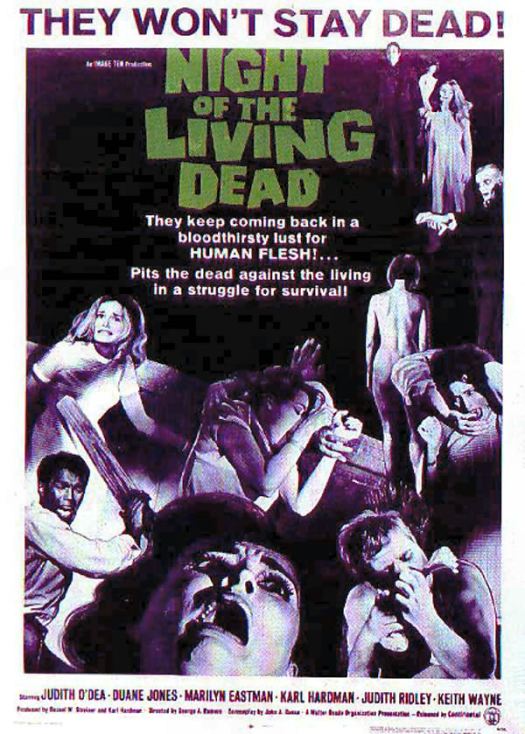
Halloween Havoc!: NIGHT OF THE LIVING DEAD (The Walter Read Organization1968)


gary loggins's avatarcracked rear viewer

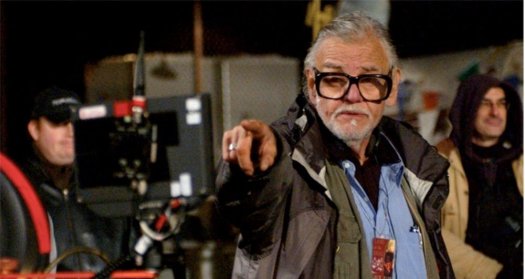
The late, great George A. Romero’s first feature, NIGHT OF THE LVING DEAD, was shot in the wilds of Pittsburgh, PA on a budget of $114,000. This unheralded,  gruesome little indie became a landmark in horror, influencing and inspiring generations of moviemakers to come. Better scribes than your humble correspondent have written countless analyses on the film, so I’m going to give you my perspective from my first viewing of the film… at the impressionable age of 13!

My cousin and I, both horror buffs, first saw it as the bottom half of a double feature in 1970. The main attraction was EQUINOX , which came highly recommended by Forrest J Ackerman , editor of the Monster Kid’s Bible, FAMOUS MONSTERS OF FILMLAND. As we eagerly awaited the main attraction, we sat through the warm-up, NIGHT OF THE LIVING DEAD. At first, we thought it was an older rerelease, because…

View original post 622 more words

The Zombie King: RIP George A. Romero


gary loggins's avatarcracked rear viewer

Way back in 1970, my cousins and I went to a horror double feature at the old Olympia Theater in New Bedford. The main attraction was called EQUINOX , which came highly recommended by Famous Monsters of Filmland magazine.  Quite frankly, it sucked, but the bottom half of that double bill was an obscure black & white films that scared the shit out of us! That movie was George A. Romero’s NIGHT OF THE LIVING DEAD.

NOTLD (1968)

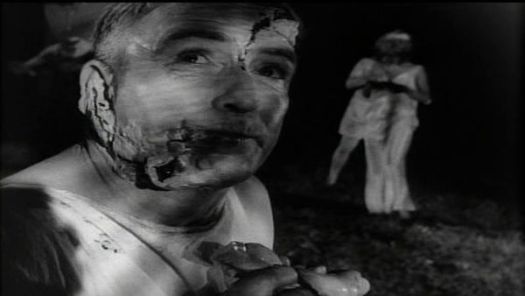
From the creepy opening in a cemetery (“They’re coming to get you, Barbara”) to the gross-out shots of zombies feasting on human entrails, from the little girl eating her father’s corpse to the tragic final scene when the hero (a black man, no less!) is shot by the cops, NIGHT OF THE LIVING DEAD was an edge-of-your-seat nightmare of horror. There were no stars in it, unless you count Bill Cardille, a local…

View original post 337 more words

Horror Scenes I Love: In the Mouth of Madness


sutter-canes-agent

John Carpenter’s contribution and influence in horror and genre filmmaking could never be disputed. This man’s films, especially his work from the 70’s and early 80’s have made him one of the undisputed masters of horror (joined by such contemporaries as Wes Craven and George A. Romero). While his worked had become so-so at the tail-end of the 1990’s and quite sparse during the 2000’s his name still evokes excitement whenever something new comes out where he’s intimately involved in it’s creation (these days a series of synth-electronic albums).

It was during the mid-1990’s that we saw a John Carpenter already tiring of constantly fighting the Hollywood system, yet still game enough to come up with some very underrated and underappreciated horror and genre films. One such film was 1995’s In the Mouth of Madness. This was a film that didn’t so well in the box office yet has become a cult horror classic since. Part of his unofficial Apocalypse Trilogy (The Thing and Prince of Darkness the other two), In the Mouth of Madness combined Lovecraftian eldritch horror with the horror of the mundane that made Stephen King so popular with the masses.

This scene early in the film just showcases not just Carpenter’s masterful camera and editing work, but was ahead of its time in exploring the toxic nature of fandoms and groupthink. In 1995 such a concept might have been relegated to B-movie horror, but in 2016 it’s become synonymous with such everyday occurrences and topics as Gamergate, Tea Party and Trump supporters to SJW crusaders, Marvel vs. DC and Democrats and Republicans. Everyone believes their group to be the only righteous in whatever argument they happen to be part of and everyone else must be silenced (and in the scene below silenced equates to death).

John Carpenter might have turned into that old and cantankerous, albeit cool, dude who couldn’t care less what you thought of him, but it seems that he saw what was happening today as far back as the 1990’s.

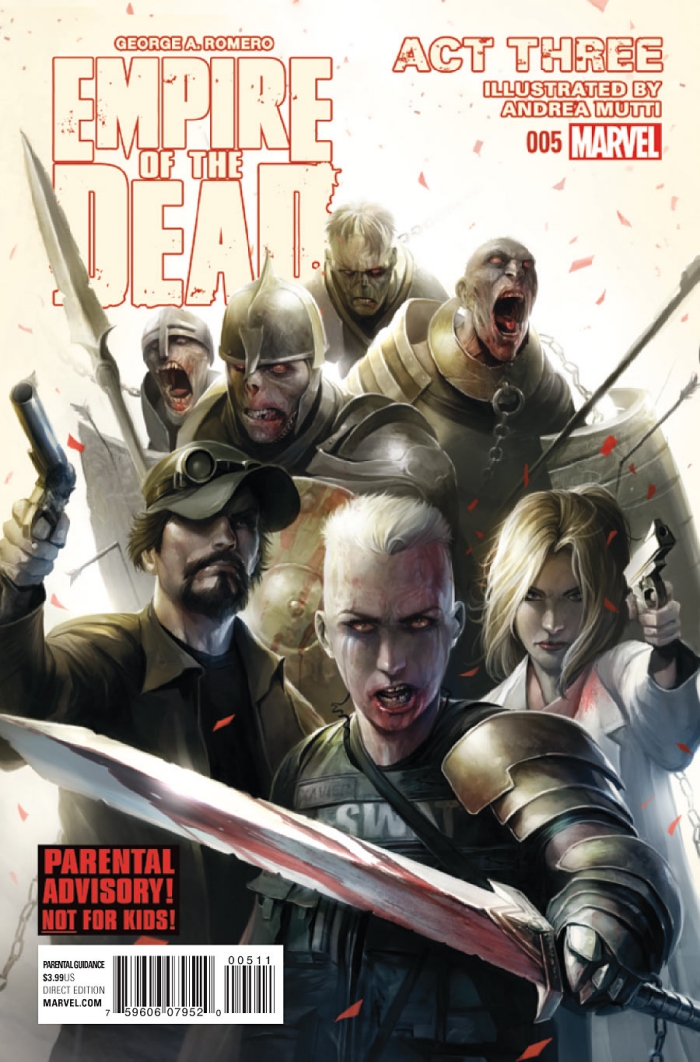
George Romero’s Climactic (?) Finale Is Upon Us In “Empire Of The Dead : Act Three” #5


12369-thumb

So, this is it : no more set-up, build-up, dust-up, or even cover-up : with George Romero’s Empire Of The Dead : Act Three #5, the father of the modern (and, heck, post-modern) zombie genre brings his fifteen-issue four-color epic to a close.  Goodbye, Paul Barnum. Goodbye, Dr. Penny Jones. Goodbye, Mayor Chandrake. Goodbye, Jo. And, most especially, goodbye, Xavier.

Does everyone get a happy ending? I suppose that would be telling, and since dishing out overly-specific “spoilers” isn’t my stock in trade, I’ll just say this much — the story reaches what I’m sure most folks (myself included) would call a decent conclusion, but there’s a lot left hanging, which is especially strange considering that this final installment almost feels more like an epilogue than anything else.

Da70IJh-EMPDEAD_3_5_4

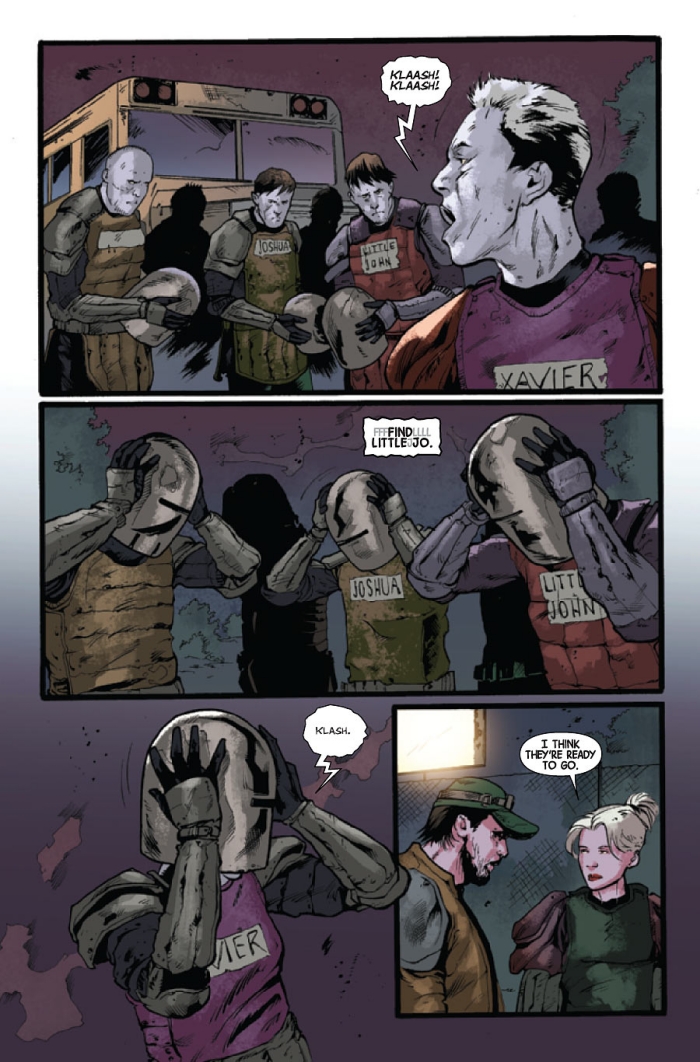
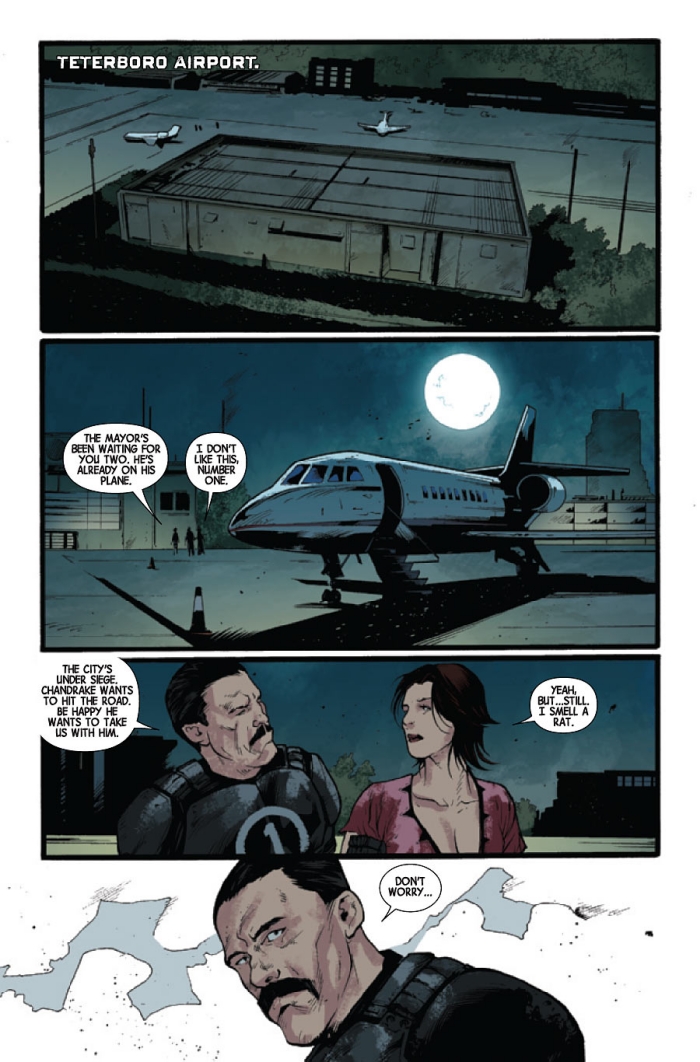
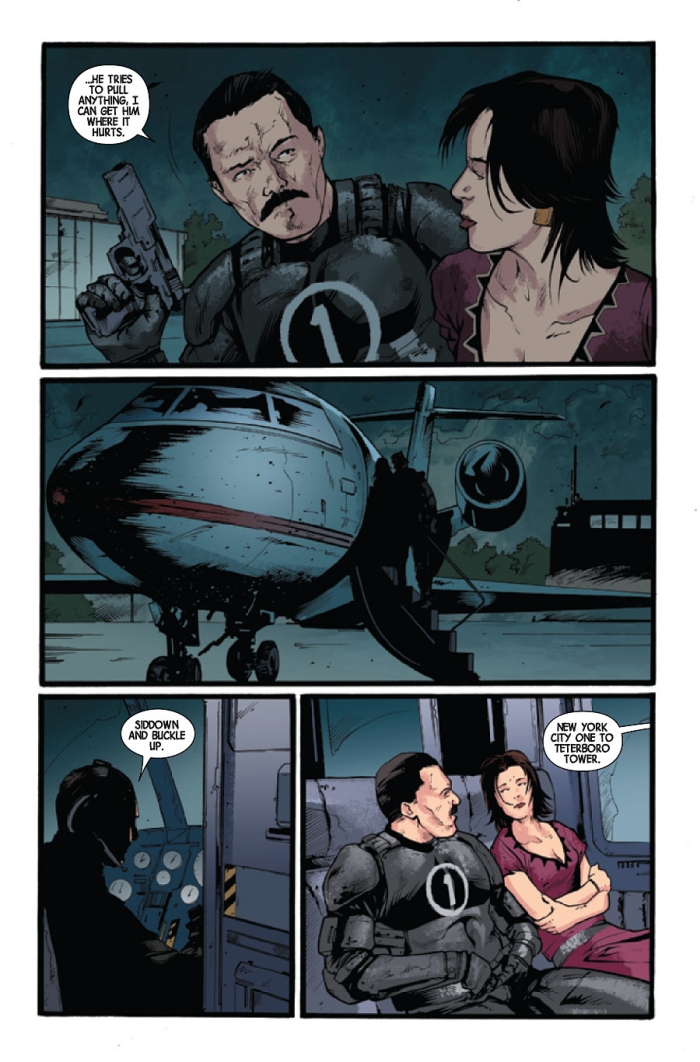
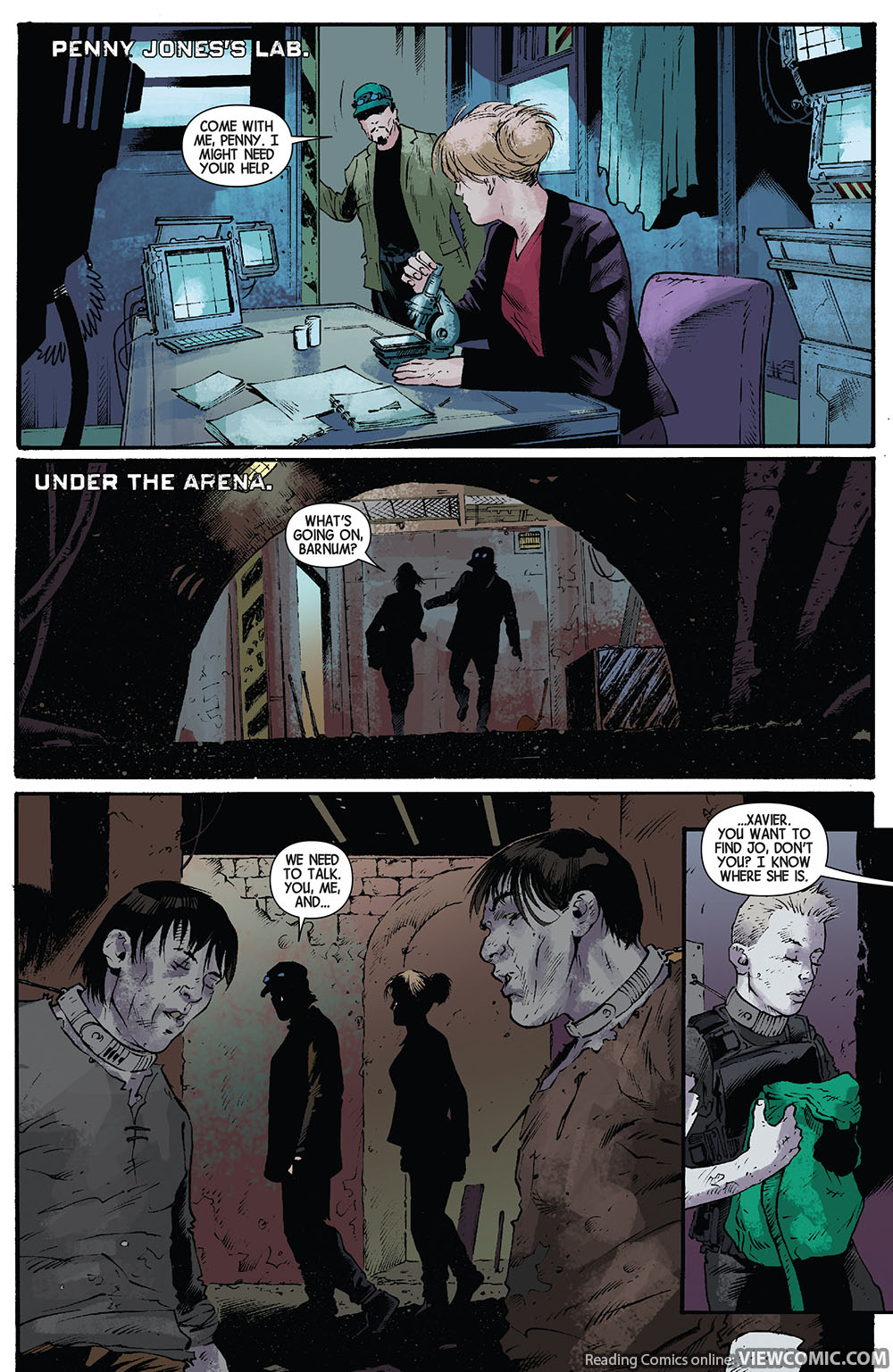
Please allow me to explain since you, dear reader, deserve at least that much : a good number of plotlines actually wrapped themselves up last issue (the aerial bombardment of New York, the fall of the vampire ruling class, the daring raid on the Federal Reserve, the final fate of characters like Dixie Peach and Lilith), so the only remaining order of business here is for Paul, Penny, and Xavier to rescue “street urchin” Joe and the other kids from the “blood farm” they’ve been shipped to that was discovered by Detective Perez. Which they do in rather spectacular fashion thanks to an all-out invasion courtesy of an army of zombies that has bused in specifically for the occasion. It’s fun, it’s action-packed, it’s well-illustrated by Andrea Mutti with help from inker Roberto Poggi, and Romero’s script is a reasonably compelling little page-turner. But —-

There’s no polite way to get around this, so I’ll just say it : you folks out there who have been “trade-waiting” this series definitely made the right choice,  because this is really the second part of a two-part finale that feels truncated in both directions when read individually, but will feel much more seamless when taken as a whole.miTiCYc-EMPDEAD_3_5_5

That’s hardly a crime, of course — in fact, one could argue that it’s standard operating procedure in modern comics for the monthly “singles” to feel like disjointed segments of a larger whole (look no further than Scott Snyder and Greg Capullo’s celebrated current run on Batman for perhaps the best evidence of this “trend”) — but for the seven-thousand-or-so of us that actually have been reliably plunking down $3.99 month-in, month-out for this series, it does rather show us up as, well — suckers.

qoJ7mjH-EMPDEAD_3_5_6

The other semi-glaring weakness when looking at the series as a whole is that some intriguing ideas that were dropped in here and there along the way appear to have been given the “one-and-done” treatment. It was strongly intimated, for instance, that Barnum might be a vampire himself, but that was never picked up on again, nor do we get any sort of conclusion to Detective Perez’s storyline (well, okay, we do, but he doesn’t seem to be around for it, which is odd, to say the least). So it’s not like everything is wrapped up nice and tidy with a bow here. Most of the big stuff does get a chance to reach the finish line, but some minor to semi-major details are left dangling. So be prepared for that.

Hopefully the forthcoming-at-some-point-here here TV series will address those issues, sure, but it would have been nice to see everything that was brought up in the comic be addressed by the comic before the curtain (prematurely) fell on it, ya know what I’m sayin’?

All in all, then, this isn’t so much an unsatisfying conclusion as it is an incomplete one (even though logically speaking, I suppose, the two should go hand-in-hand). I like the spot where Romero leaves most of his characters (be on the lookout for a really nifty twist involving Mayor Chandrake), and the final page is uncharacteristically optimistic, so in the end our guy George, Mr. Mutti, Mr. Poggi, and cover artist extraordinaire Francesco Mattina have my thanks. I was hoping for a perfect finale, of course, as one always does, but hey, good enough is — well, good enough. And this was certainly that.

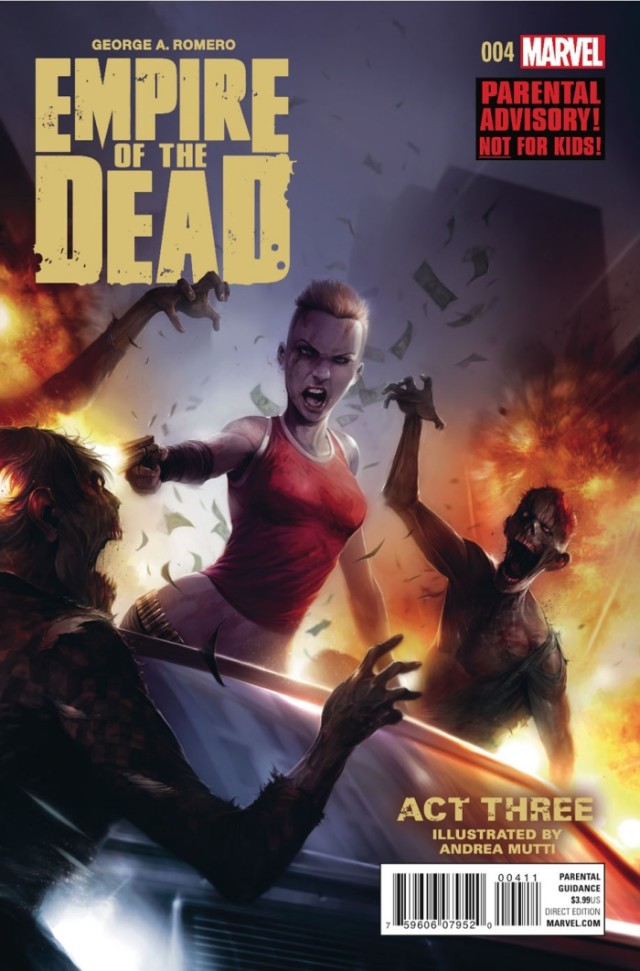
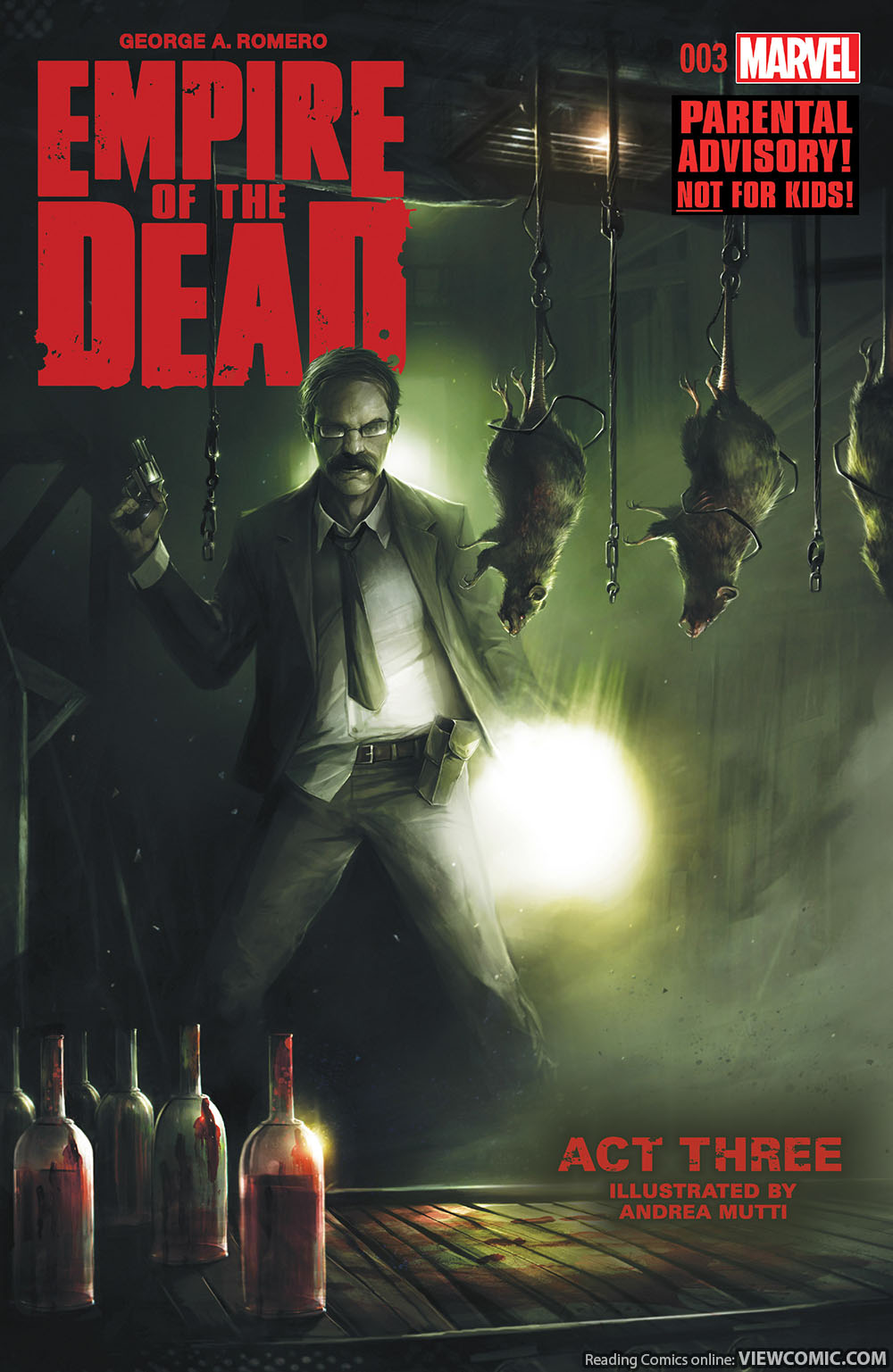
George Romero’s Grand(?) Finale Begins In “Empire Of The Dead : Act Three” #4


8250-thumb-640x971

Do those title-page recaps that Marvel runs on the first page of all their books these days bug you? I have to admit that they usually work my nerves and that I see them as a less-than-clever way to shave a page off the actual story and art in any given issue while still enabling the publisher to cynically claim that their books offer “21 pages of editorial content.” In the case of George Romero’s Empire Of The Dead, however,  I’ll make an exception, for one simple reason : as we all know, Romero uses his zombie tales as  allegory for socio-political commentary here in the “real world” (think of Night Of The Living Dead‘s cautionary messages about racism and prejudice, Dawn Of The Dead‘s bleak examination of rampant consumerism, and Day Of The Dead‘s gleeful deconstruction of Cold War paranoia), and the intro page that’s currently running in Empire sums up the creator of the modern concept of the zombie’s primary political message for this series quite nicely indeed with the simple sentence “New York has become a fortress of isolation against the undead plague.”

Now, think about this : Donald Trump is proposing the absurd idea of building a wall along the entire length of the U.S./Mexican border,  and doubling down on the crazy by suggesting that he’ll force Mexico to pay for it, while just yesterday, one of his rivals for the GOP nomination, the risible Scott Walker, one-upped Trump by suggesting that we should do the same thing along the Canadian border, as well — because apparently poutine smuggling is becoming a huge problem or something. Now, while this “Fortress America” idea may sound appealing to the genuinely paranoid out there, I would humbly suggest that before we all stand up and cheer for this new emphasis on “national security,” we should take a moment and consider the fact that walling the rest of the world out also necessarily means that we would be walling ourselves in —and as Romero has shown us both in Land Of The Dead and here in the pages of Empire, that’s a recipe for disaster.

rPh5TVe-empire42

Don’t get me wrong — the American populace has good reason to be angry and afraid these days : our home values have plummeted, the stock market is being exposed as the high-risk casino it is, our meager retirement savings are slipping away, the cost of living is going through the roof, wages are stagnant at best for most of us, and we’re staring at a heap of debt that will take centuries, probably even generations,  to pay off. Obviously, those problems didn’t just create themselves — someone is to blame. But what Trump, Walker, and too many other demagogues looking to cash in on the wave of populist anger are looking to do is to misdirect that rage while keeping the party going for themselves and their billionaire buddies. Who’s fault is it that we’re in the mess we’re in? Are a few illegal immigrants the cause of our predicament, or is it the billionaire class?

Come on, you know the answer — the problem is that folks see the billionaire class as being untouchable, and don’t think that’s ever going to change. Those illegal immigrants, though — why, we see ’em just about every day. They’re scattered about here, there, and everywhere. They represent an easy target, while the rich are a tough one, and if there’s one thing Americans have become accustomed to, it’s taking on easy targets. Why, just look how well that worked out in Vietnam. Or Iraq. Or Afghanistan. Now it seems we’re being prepped to bring the war home and take on the Mexicans who are doing the menial labor that our economy needs to keep going. And, I guess, the Canadians, too. I expect this new “war” to be just as successful as all those others.

FI5hODF-empire43

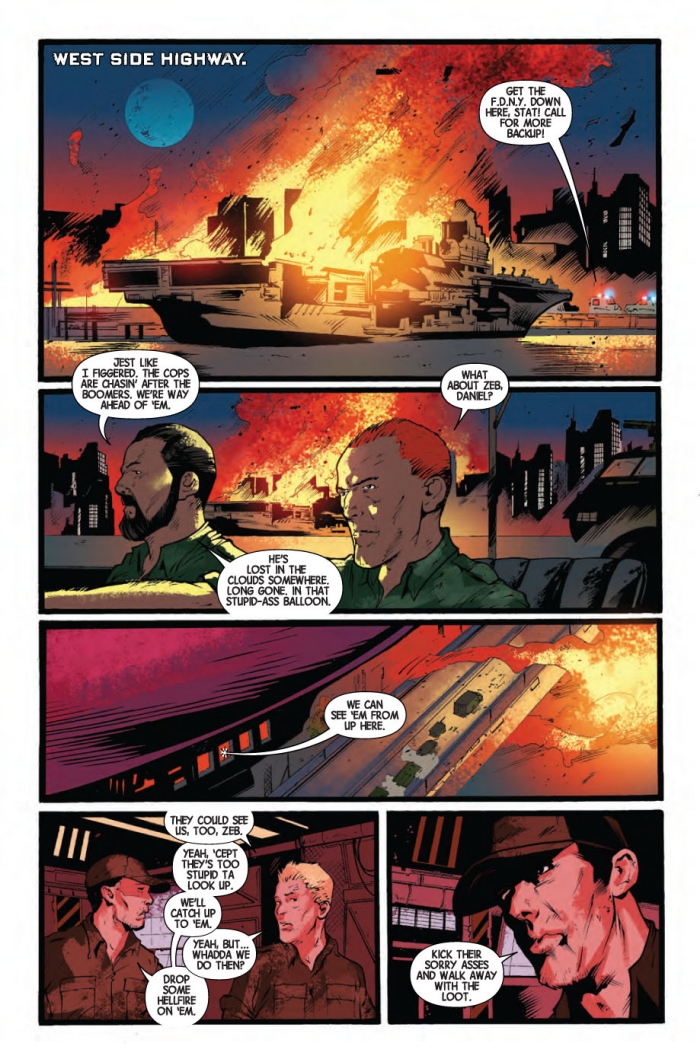
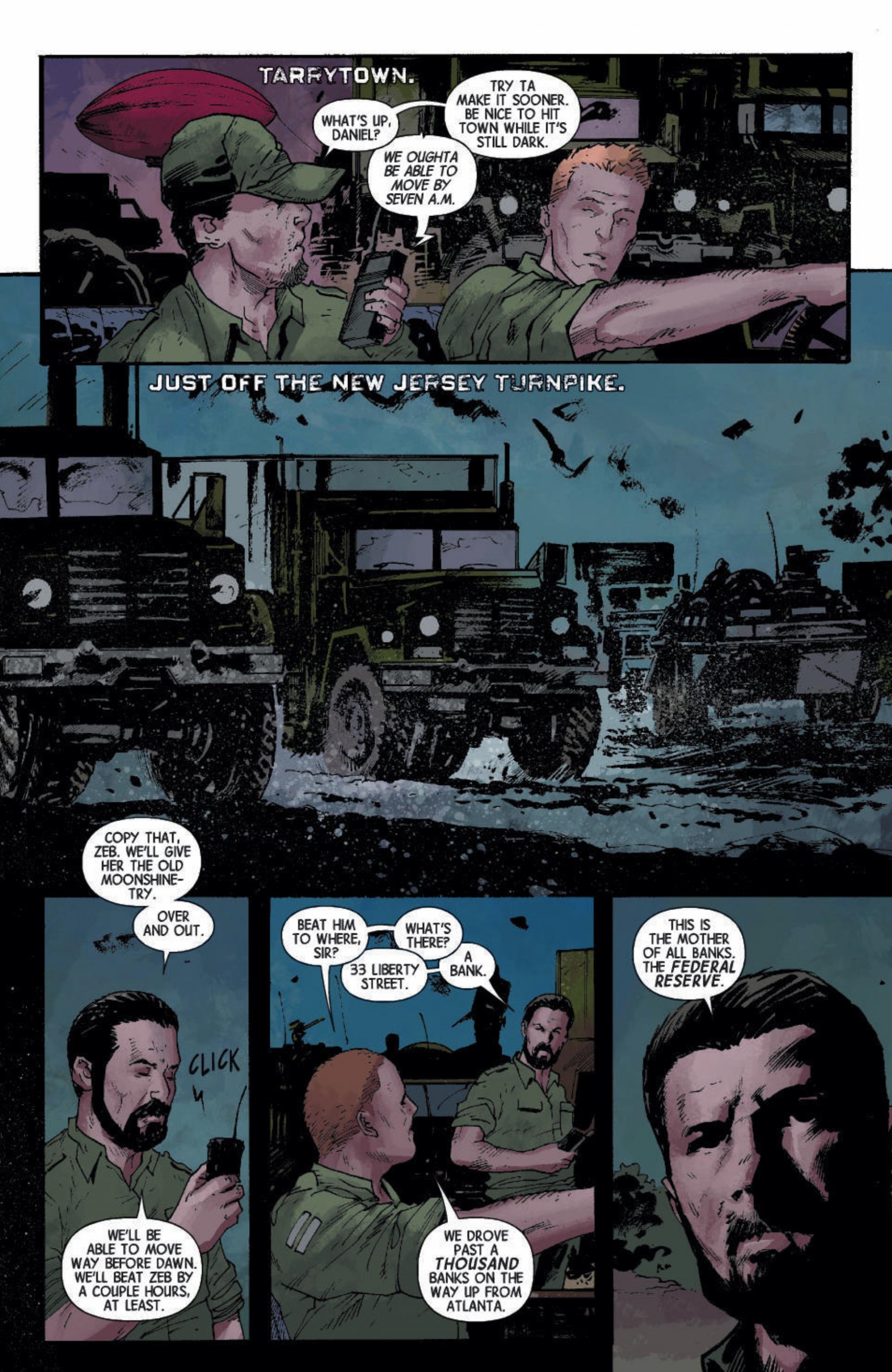
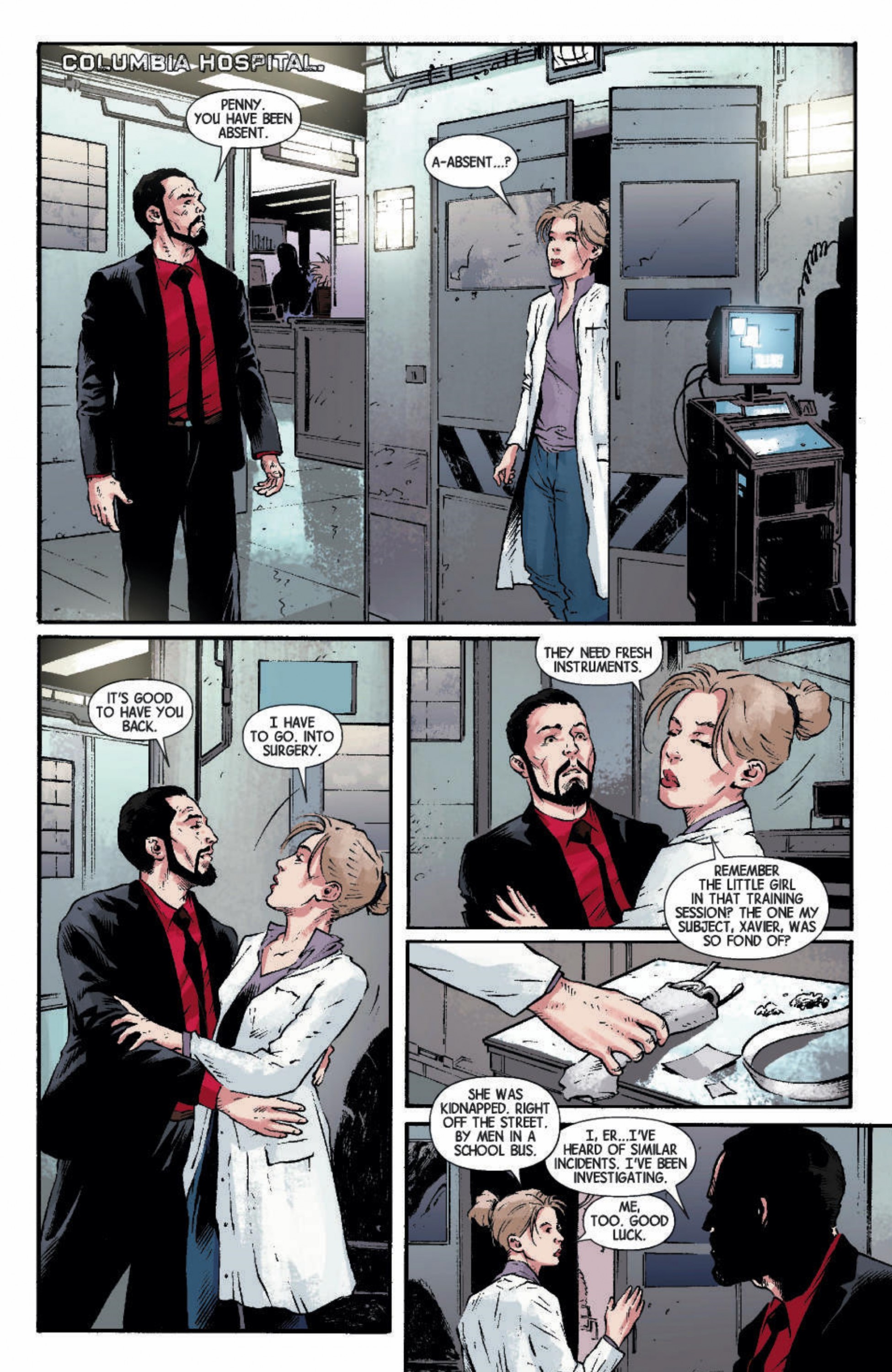
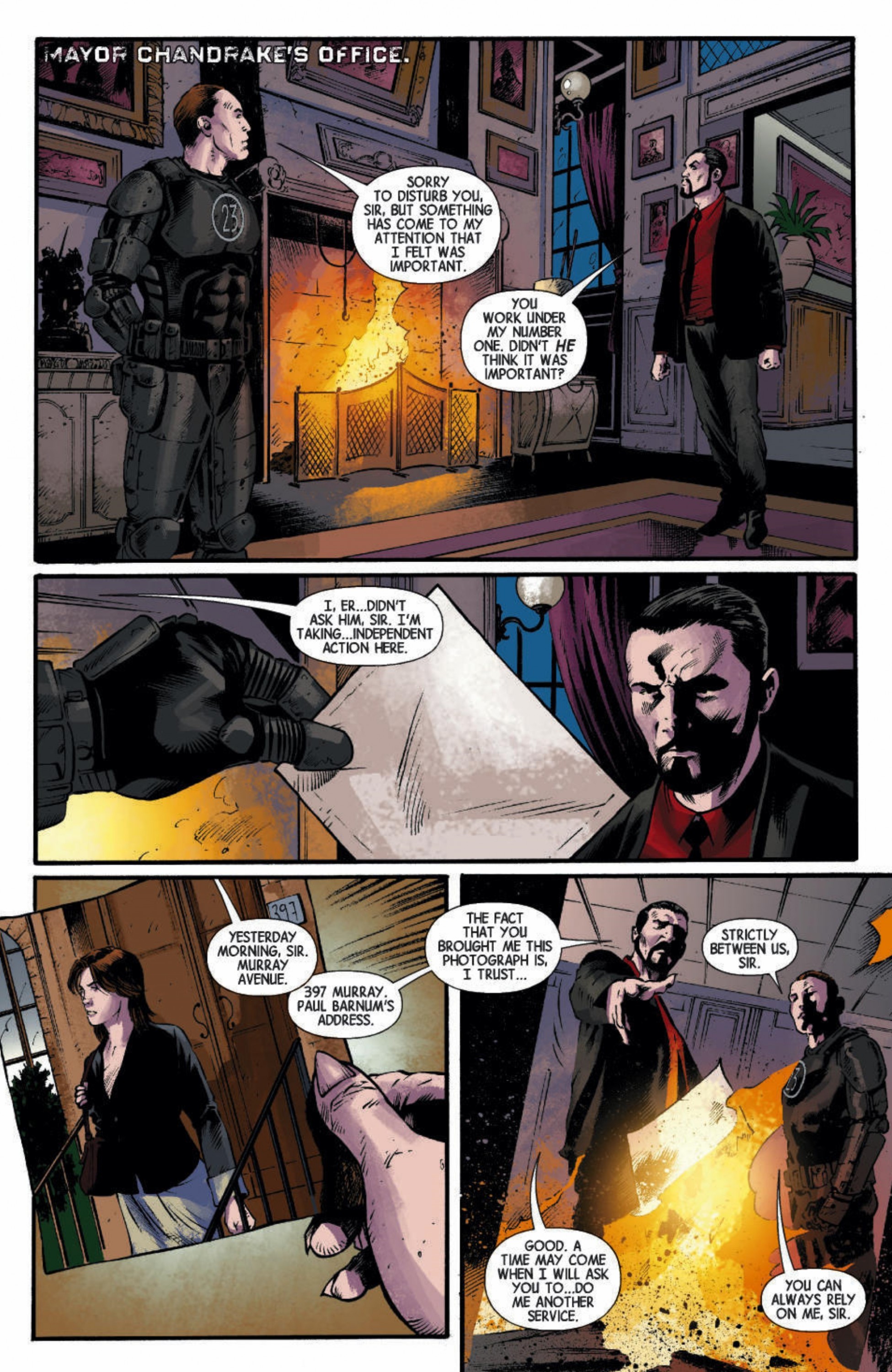
In Empire Of The Dead : Act Three #4, Romero’s vampire-run New York finally falls. The vampires, obviously, are a stand-in for the capitalist ruling class in this particular story, and while we don’t see a number of our key players (there’s no sign of Paul Barnum, Dr. Penny Jones, Mayor Chandrake, Xavier, or Detective Perez, for instance), it’s nevertheless a reasonably exciting issue in that we get to witness the Federal Reserve robbery go, as the Brits would charmingly put it, “tits-up,” the aerial war between the so-called “rebel” factions do the same, and everyone’s escape plans — most notably Dixie Peach and Runyon’s — come to a screeching halt. Once the shit hits the fan and the barbarians (or, in this case. zombies — who are, of course, Romero’s fictional equivalent for “the rabble,” i.e. those of us who aren’t part of the so-called “1%”) are inside the gates, all bets are off, and no amount of “security” can save you.

That being said, the decision to leave most of the principal cast out of the picture in this series’ penultimate issue is a curious one, to say the least, and I have to wonder how exactly Romero intends to wrap up all their various storylines in a scant 20 pages next month. My best guess is that we’ll probably be getting an extra-length issue with a $4.99 cover price.

Xp3JKZ4-empire44

Or will we? With sales on Empire hovering around the 8,000 mark (for an idea of just how bad that is, consider that my current favorite comic, Alan Moore and Jacen Burrows’ Providence, is selling over twice that despite the fact that it’s being published by Avatar Press, pretty much the smallest publishing outfit going, it hasn’t been optioned for television, and it’s barely being promoted by Diamond — oh, and it may also be worth noting that Providence is eschewing all current sales trends by actually selling better every month so far, while Empire is the poster child for the years-long trend of books dropping in circulation every month), it’s hard to imagine Marvel editorial “green-lighting” a higher page count for the finale. I guess we’ll just have to wait and see.

In any case, it’s apparent that by the time Empire Of The Dead ends, there won’t be too many of us left paying attention, and that’s a shame. The third act has been a fun and exciting roller-coaster ride with unifrmly better scripting and characterization than the second, and the arrival of Andrea Mutti (aided by Roberto Poggi,who takes over as full inker on all pages with this issue) has really kicked the quality of the artwork up a notch. Throw in some fantastic covers from Francesco Mattina, and all in all this has been $3.99 (fairly) well-spent every month. I’m going to miss this book when it’s over — but I guess we’ve still got the TV series to look forward to, and hopefully if that’s a success people will pick the comics up in trade paperback format to see what they missed out on.

George Romero Winds Things Down — And Up — In “Empire Of The Dead : Act Three” #3


p_15_0 copy

Yeah, I know — this review is late. But hey, so was the book. So let’s explain both, shall we?

The third issue of George Romero’s Empire Of The Dead Act Three didn’t exactly meet its monthly deadline, but there’s good reason for that — artist Andrea Mutti now has a (much-deserved) high profile gig as the regular penciller and inker on Brain Wood’s new long-form historical series for Dark Horse, Rebels, so obviously something in the schedule has to get shunted to the back burner. I would expect, therefore, that the final two issues of Empire will likewise hit shops a week or two after their initial solicitation dates, so we might as well get used to it. Likewise, he’s brought in fellow Italian Roberto Poggi to help out with the inking chores on this series (meaning that, when we include cover painter Francesco Mattina — who does another bang-up job on this issue — we’ve got an all-Italian art team in place now), but fear not : their brush styles are very similar indeed and even on a third or fourth glance through the book it’s pretty hard to tell who inked which particular pages or panels. I believe the world we’re looking for here is seamelss. As for why I’m late with this review, the reasons are far more prosaic : my LCS got shorted on the book and didn’t get in more copies until this past Wednesday. So there ya go.

The biggest news as it relates to this series, though, happened well “off-page” between the last issue and this one — Empire Of The Dead has, perhaps to no one’s surprise, been optioned for television. Sure, sales haven’t been great on this title on the whole, but any zombie project with Romero’s name attached to it is bound to attract Hollywood interest on some level, and while it sounds like it may be a year or two before this finally hits our TV screens, the various press releases related to it definitely give off the confident vibe that it is coming and that this won’t be one of those projects that  languishes in development or pre-production hell forever. Or until the rights expire, take your pick. The undead in all their various forms are a hot property right now, and all indications are that the producers want to get the ball rolling with this one as fast as humanly possible. Time will tell, of course, as it always does, but my money is on this turning up on some cable network or other sometime in, say, the tail end of 2016. If I were a betting man, I’d even be willing to place a modest wager on it.

p_15_2 copy

So, hey, that’s all fine and good, but what about what’s happening in the actual comic?

I’m glad you asked, because the shit really is hitting the fan hot and heavy now. Election day has arrived in post-zombie-apocalypse New York, and even though the Federal Reserve back is being robbed, an aerial bombardment is plastering the city, and various members of our rogues gallery, most notably Dixie Peach, can see the writing on the wall and have decided to beat a hasty retreat, Mayor Chandrake’s still got this thing in the bag. Chilly Dobbs was always a pretty worthless wind-up-toy of an opponent, and his backers leave him high and dry before the ballots are even counted. Good thing there’s a bar close by for him to drown his sorrows at.

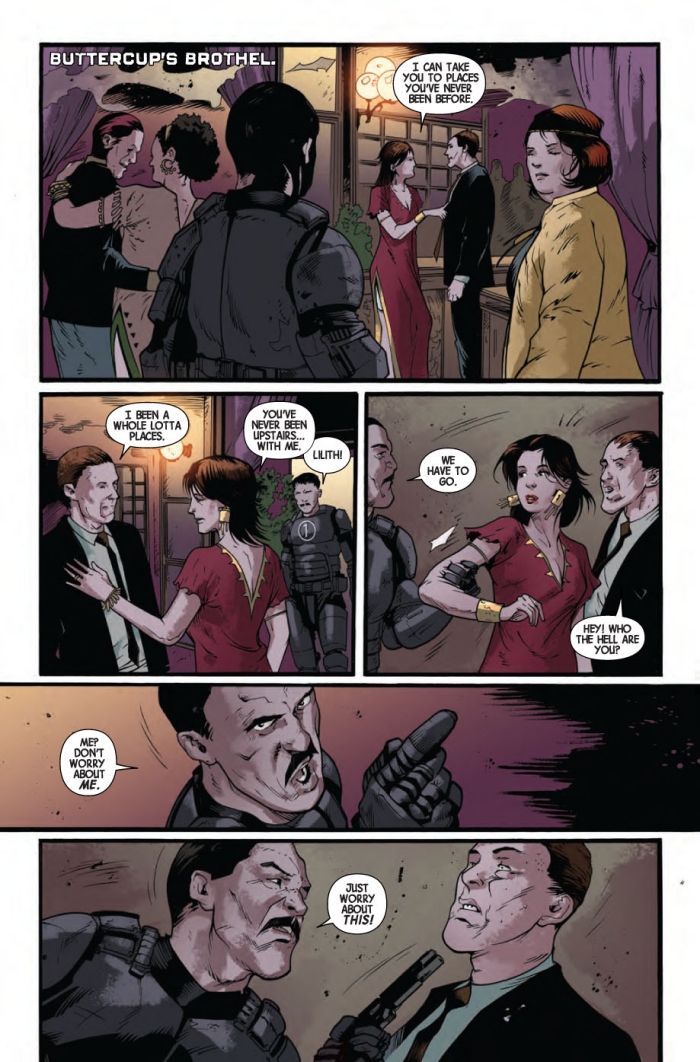
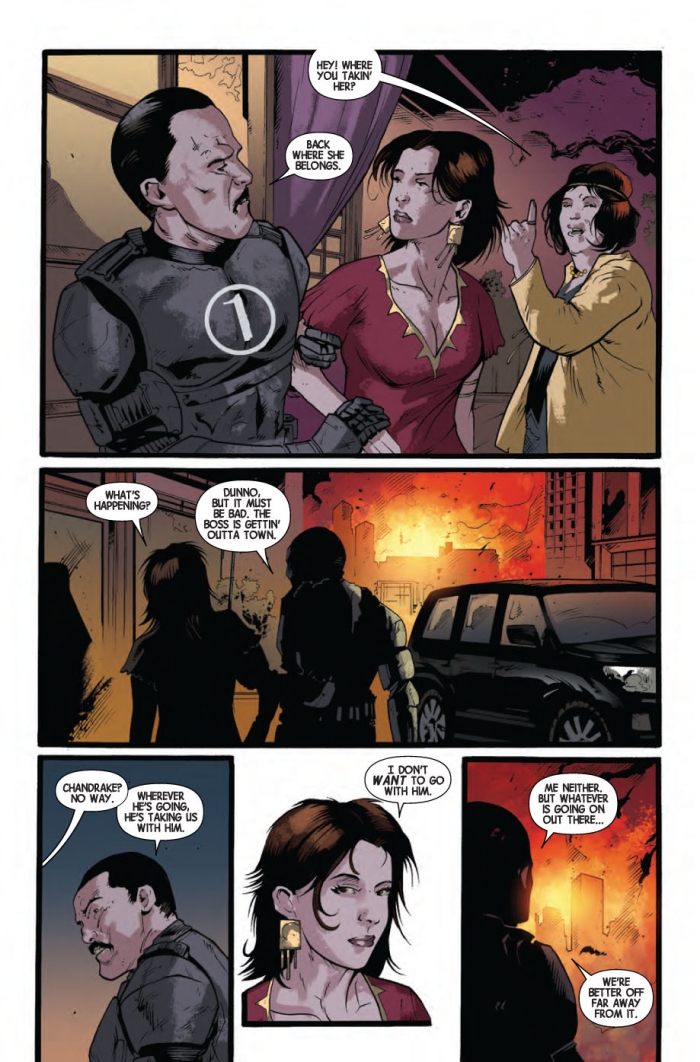
Chadrake’s victory proves to be short-lived, though, as the entire edifice that is his power structure is crumbling fast. Detective Perez has the workings of the “relocation camp” for kids figured out, and he’s out to bring the whole place down — with Paul Barnum, Dr. Penny Jones, and semi-intelligent zombie Xavier coming to much the same decision, although arrived at of their own accord, more or less simultaneously. Might now be a good time for Chandrake to head for the exit himself? If so, what will be left? And who will be in charge of whatever remains?

p_15_6 copy

These are the burning questions that will be with us as this series finally wraps up, and for those who have been waiting for that always-just-around-the-corner “big payoff,” this is the issue where we start to get it in earnest. Events are moving along at breakneck speed now, and a suitably epic finale appears to be in the works. Those of us who have stuck with this comic are definitely buckled in good and tight for the duration, methinks.

p_15_9 copy

The art, as you can see from these sample pages, looks darn good, Romero’s dialogue is starting to feel a bit less clunky, and the various plot points, disparate as they all were not so terribly long ago, are converging in near-relentless fashion. The zombie-vampire war with humans caught in the middle is upon us, and I don’t know about you, but that sure sounds like my idea of a good time!

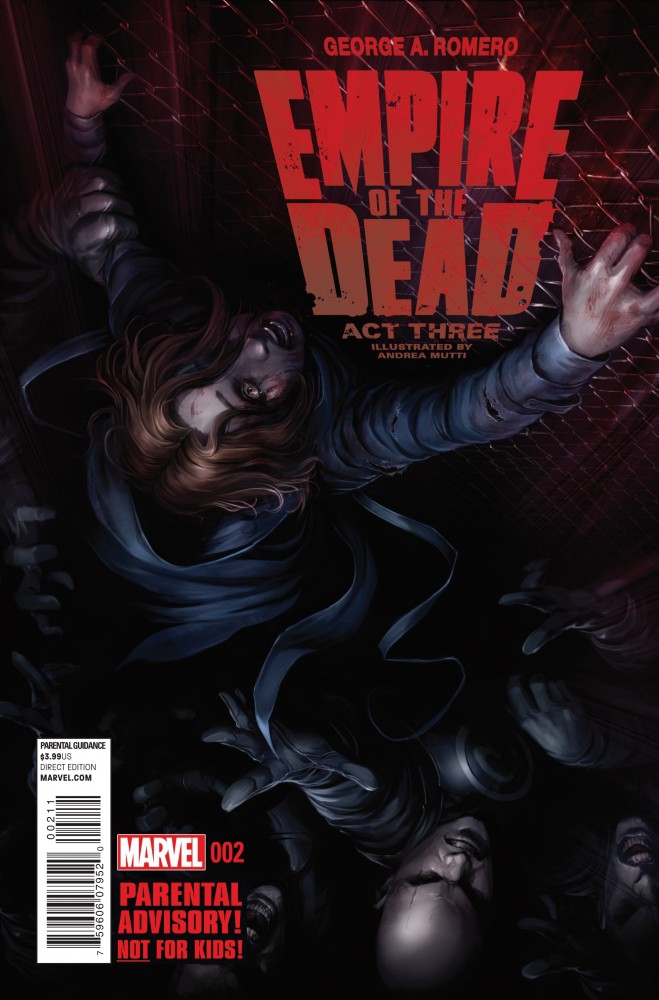
It’s The Beginning Of The End In “Empire Of The Dead : Act Three” #2


EmpireoftheDeadActThree002cvr-659x1000

Okay, if we want to be technically accurate about things, I guess we could say that last month’s opening installment of George Romero’s Empire Of The Dead : Act Three was the “beginning of the end,” since it appears that some combination of editorial decision-making on Marvel’s part and agreement among the book’s creators (specifically, I’m sure, Romero himself) has come about to wrap this four-color epic up a bit sooner than originally announced (after three five-issue “arcs” rather than the previously-mentioned four or five — that’s what selling fewer than 10,000 copies a month does, ya know), but it didn’t really feel like the big wrap-up was imminent until this second issue hit the stands today. Gone is some of the dilly-dallying that had slowed down previous issues here and there, gone are a fair number of the supporting players (although they’re sure to be back), and, most crucially — gone are the zombies!

Seriously. There’s not a one of ’em to be found in the pages of this book. And that’s more than just a little weird.

122-1951x3000

Wih the “shamblers” having temporarily shambled off-stage, our erstwhile “street urchin,” Jo, takes commands the spotlight for about the first half of this issue, as she makes a new friend in her detention center/concentration camp, and the two of them quickly try to effect an escape once they figure out —or at least make an educated guess at — the true purpose of their new “home.”  After that,  it’s back to the “palace intrigue” swirling around Mayor Chandrake, his less-than-faithful wife, and his quickly-falling-apart-at-the-seams political opponent, Chilly Dobbs. Trust me when I say if our vampiric sitting chief executive of New York can’t beat this guy, well — he just plain doesn’t deserve to stay in office.

Dr. Penny Jones pops up for a brief moment — as seen below — but don’t expect any appearances from Paul Barnum. Detective Perez, or Xavier this time out — the action here is pretty concentrated and generally of the “set-up-for-a-big-climax” variety. The “rebel crew” once — and possibly still, to some extent — allied with Dixie Peach has a big part to play, though, as they reveal an audacious scheme to rip off the Federal Reserve Bank of New York in the midst of all their otherwise-random destruction — and that destruction finally begins in earnest as this issue wraps up.

222-1951x3000

As you can see from the preview pages I’ve included with this review (feeling decidedly un-lazy today), Andrea Mutti continues with his obviously-Maleev-influenced ways here and the art looks pretty good on the whole, certainly a step up from what we were served in the second act, while Romero, for his part,  has thrown all subtlety out the window with his scripting and is painting his characters with pretty broad brush-strokes at this point. Yeah, it may be clumsy at times,  but it  serves the purposes of the story just fine now that we’re in “time is definitely of the essence” mode.

418-1951x3000

So, yeah — the end is nigh, and in Empire Of The Dead : Act Two #3 you can definitely feel it fast approaching. The once-sprawling chessboard is getting tighter and tighter as the pieces move ever closer together and the moves they’re able to make become reduced exponentially. I have a pretty solid feel of where it’s all going and where each of our players is going to end up once it’s finished, but I certainly wouldn’t put it past Romero to still have a wild card or two left in his hand (shit, I’m mixing my game metaphors here) that he’s saving for precisely the right moment.