What’s an Insomnia File? You know how some times you just can’t get any sleep and, at about three in the morning, you’ll find yourself watching whatever you can find on cable? This feature is all about those insomnia-inspired discoveries!

If, after watching Promise last night, you discovered that you were still suffering from insomnia, you could have watched the very next film that premiered on TCM. That film was the 1997 biopic, George Wallace.
Like Promise, George Wallace was originally made for television. Also, much like Promise, George Wallace is a character study of a conflicted man who makes many people uncomfortable and it’s also well-acted by a cast of veteran performers. That, however, is where the similarities end. Whereas Promise was ultimately a rather low-key and human drama, George Wallace is an epic. Clocking in at nearly 3 hours and telling a story that spans decades, George Wallace attempts to use one man’s life story as a way to tell the entire story of the civil rights movement.
That’s a tremendously ambitious undertaking, especially for a film that had to conform to the demands of 1990s television. Therefore, it’s probably not surprising that the movie, as a whole, is uneven. It’s not a bad movie but, at the same time, it doesn’t quite work.
First off, we need to talk about who the historical George Wallace was.
(Here’s where I get to show off my amazing history nerd powers. Yay!)
George Wallace served a total of four terms as governor of Alabama. A protegé of a populist known as “Big Jim” Folsom, Wallace first ran for governor in 1958. He campaigned as a moderate who supported integration and, as a result, he was defeated by the KKK’s endorsed candidate, John Patterson. (Oddly enough, a fictionalized version of Patterson was the hero of the classic and racially progressive 1955 film, The Phenix City Story.) When Wallace ran again in 1962, he ran as an outspoken segregationist and defeated his former mentor, Jim Folsom. Infamously, Wallace is the governor who stood in the schoolhouse door and announced that Alabama would never accept integration. Unable to succeed himself, Wallace arranged for his wife, Lurleen, to be elected as governor. Lurleen subsequently died in office, succumbing to cancer while Wallace was running for President as the candidate of the American Independent Party. (As of this writing, Wallace is the last third party presidential candidate to carry any states.) Reelected governor in 1970, Wallace married Folsom’s niece and made another presidential run. However, after a string of primary victories, that campaign was cut short when Wallace was shot and crippled by Arthur Bremer. (Bremer would serve as the inspiration for Robert De Niro’s Travis Bickle in Taxi Driver.) Confined to a wheelchair, Wallace served as governor until 1978 and, in 1976, ran for President one final time. After being out of office for four years, he was elected Governor for one final term in 1982. Late in life (and, it should be pointed out, long after integration had been generally accepted as the law of the land), Wallace renounced his segregationist past and publicly apologized for standing in the schoolhouse door. During his final campaign for governor, he won a majority of the black vote and he proceeded to appoint more blacks to state positions than any governor before him.
George Wallace lived a long, dramatic, and interesting life and he’s still a very controversial figure. Who was the real George Wallace? Was he a political opportunist who used racism to further his career? Was he truly a racist who saw the error of his ways and repented or did he only pretend to renounce his former beliefs once they were no longer popular? And, even if Wallace was sincere in his regret, did he deserve to be forgiven or should he always be remembered as the villainous caricature that Tim Roth portrayed in Selma? If we forgive or make excuses for the actions of a George Wallace, do we run the risk of diminishing the success and importance of the civil rights movement?
And I, honestly, have no answers to those questions. Unfortunately, neither does George Wallace. But before we get into that, let’s consider what does work about this film.
George Wallace opens in 1972 with Wallace campaigning in Maryland. Wallace is played by Gary Sinise and his second wife, Cornelia, is played by a very young Angelina Jolie. Sinise and Jolie both give brilliant performances, perhaps the best of their respective careers. Sinise plays Wallace as a calculating and charismatic politician who is also a very angry man. Throughout every second of his performance, we are aware of Wallace’s resentment that his political success in Alabama has potentially made him unelectable in the rest of the country. Watching Sinise as Wallace, you see a man who believes in himself but doesn’t necessarily like the person that he’s become. Meanwhile, Jolie plays Cornelia like a Southern Lady MacBeth and watching her, I remembered how, at one time, Angelina Jolie really did seem like a force of nature. The Angelina Jolie of George Wallace is the wild and uninhibited Jolie of the past (the one who once said, “You’re in bed, you’ve got a knife, shit happens.”), as opposed to the safe and conventional Jolie of the present, the one who is currently directing rather stodgy movies like Unbroken and By The Sea.
After Wallace is shot, the film goes into flashback mode. We watch as Wallace goes from being a liberal judge to being the segregationist governor of Alabama. Mare Winningham plays Lurleen Wallace while Joe Don Baker plays Big Jim Folsom. They all do a pretty good job but the flashback structure is so conventional (and so typical of a made-for-tv biopic) that it makes the film a bit less interesting.
There’s also a character named Archie. Played by Clarence Williams III, Archie is literally the only major black character in the entire film. He is portrayed as being a former convict who has been hired to serve as Wallace’s valet. While Wallace plots to thwart the civil rights movement, Archie stands in the background glowering. At one point, he’s even tempted to kill Wallace. However, after Wallace is shot, Archie helps to take care of him. The film suggests that being shot and subsequently cared for by Archie is what led to Wallace renouncing his racist views. (The film also suggests that Wallace was never that much of a racist to begin with and, instead, was just so seduced by power that he would say whatever he had to say to win an election in Alabama.)
At the end of the film, we’re informed that almost everyone in the film was real but that Archie was fictional. The problem, of course, is that the film is suggesting that the fictional Archie is responsible for the real-life Wallace both rejecting racism and apologizing for the all-too real consequences of racism. The film ends with the realization that the filmmakers were so convinced that audiences would not be able to accept an ambiguous portrait of a public figure that they created a fictional character so that Wallace could have a moment of redemption.
(It also doesn’t help that a film about civil rights only features one major black character and that character is a fictional valet who doesn’t get to say much.)
In the end, the film doesn’t seem to be certain what it’s trying to say about Wallace and the meaning of his dramatic life. That said, I enjoyed watching George Wallace because of the acting and because, as a history nerd, I always enjoy seeing historical figures portrayed on-screen, even if the filmmakers don’t seem to be quite sure what they’re tying to say about them.
George Wallace was directed by John Frankenheimer, a good director who, it appears, was constrained by the demands of 1990s television. If George Wallace were made today, it would probably air on HBO and would probably be allowed to take more of a firm stand one way or the other on Wallace’s character. That said, it would probably also be directed by Jay Roach who, to put it lightly, is no John Frankenheimer.
Anyway, George Wallace doesn’t quite work but it’s definitely interesting. Watch it for Gary and Angelina!
Previous Insomnia Files:
- Story of Mankind
- Stag
- Love Is A Gun
- Nina Takes A Lover
- Black Ice
- Frogs For Snakes
- Fair Game
- From The Hip
- Born Killers
- Eye For An Eye
- Summer Catch
- Beyond the Law
- Spring Broke
- Promise
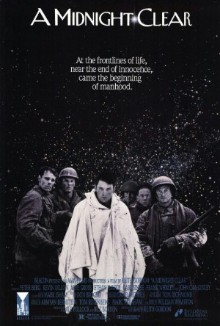 In December of 1944, with the world at war and Christmas approaching, a small U.S. Army Intelligence squad is sent to a deserted chateau near the German lines. The squad, which was decimated during the Battle of the Bulge, is made up of six young soldiers who all have genius IQs. They’ve been hardened by war but they’re still young enough to have some hope for the future. Leading them is “Mother” Wilkinson (Gary Sinise), an officer who cares about his men but who has been mentally struggling with not only the war but also with the recent death of a child back home.
 Through the Shattered Lens