Horror Review: A House of Dynamite (dir. by Kathryn Bigelow)


“So it’s a fucking coin toss? That’s what 50 billion dollars buys us?” — Secretary of Defense Reid Baker

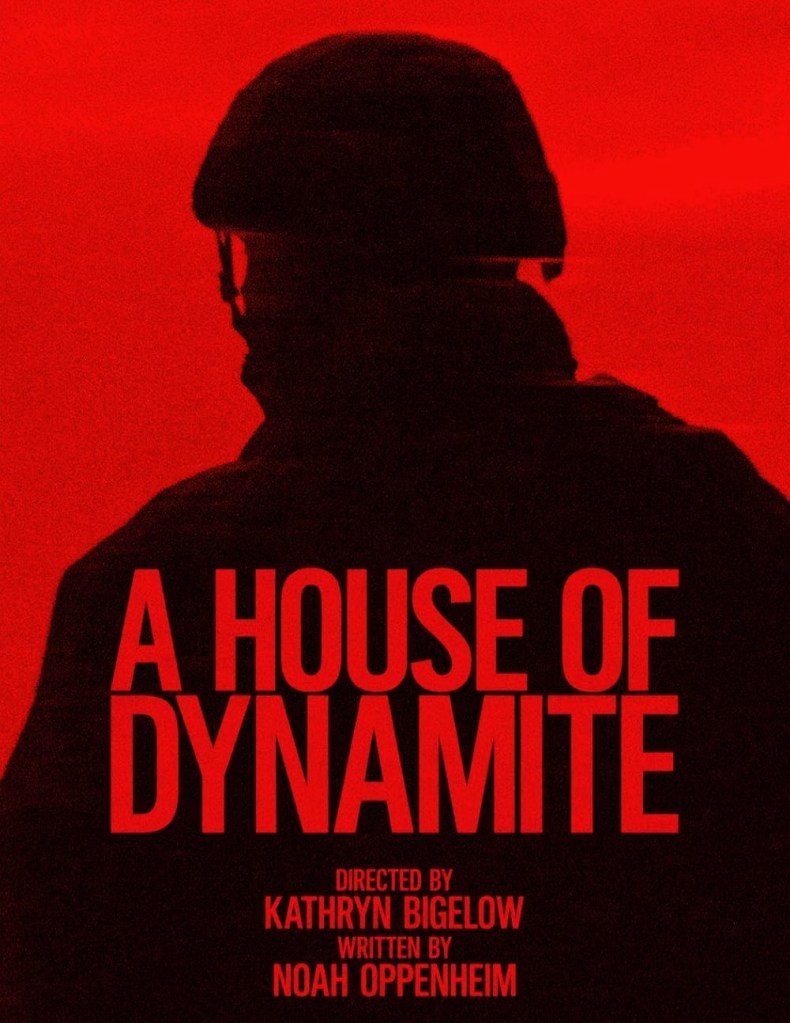
The end of the Cold War was supposed to close a chapter of fear. With the superpowers stepping back from the brink, the world briefly believed it had entered an era of stability. Yet that promise never held. The weapons remained, the rivalries adapted, and the global machinery of deterrence continued to hum beneath the surface. Kathryn Bigelow’s A House of Dynamite faces this reality head-on, transforming the mechanics of modern nuclear defense into something unnervingly human. On the surface, it plays as a high-tension political technothriller, but beneath that precision lies a deeply existential horror film—one built not on shadows or monsters, but on daylight, competence, and the narrow margins of human fallibility.

The premise is piercingly simple. An unidentified missile is detected over the Pacific. Analysts assume it’s a test or a glitch—another false alarm in a world overflowing with them. But within minutes, as conflicting data streams converge, what seemed routine begins to look real. The film unfolds in real time over twenty excruciating minutes, charting the reactions of those charged with interpreting and responding to the potential catastrophe. Bigelow divides the film into three interwoven perspectives: the White House Situation Room, the missile intercept base at Fort Greely, and the President’s mobile command aboard Marine One. The structure allows tension to grow from every direction at once, each perspective magnifying the other until the screen feels ready to collapse under its own pressure.

Capt. Olivia Walker (Rebecca Ferguson), commanding officer of the Situation Room, anchors the story with calm professionalism that gradually frays into disbelief. Ferguson’s performance is clear-eyed and tightly modulated—precise, disciplined, and quietly devastating. She stands as the rational center inside chaos, her composure the last gesture of control in a world that no longer follows reason.

Over her is Adm. Mark Miller (Jason Clarke), Director of the Situation Room, who represents the institutional embodiment of confidence. Clarke plays him with methodical restraint, a man who trusts procedure long after it stops earning trust. Miller’s authority is both comforting and horrifying: a portrait of leadership built on ritual rather than certainty.

At Fort Greely, Anthony Ramos brings an intimate immediacy as the officer charged with the missile intercept. His scenes hum with kinetic dread—the physical execution of decisions made thousands of miles away. Through him, the film captures the most primal kind of fear: acting when hesitation could mean extinction, knowing that success and failure are separated only by chance.

The President, portrayed by Idris Elba, spends much of the crisis in motion—first within the cocoon of the presidential limousine, and later, aboard Marine One as it carves through blinding daylight. Elba gives a performance of subtle, steady erosion. At first, he embodies unshakeable calm, a figure of poise and authority; but as the situation deepens, his steadiness wanes. Words become shorter, pauses longer. Every decision carries consequences too vast for resolution. It is a measured, understated portrait of power giving way to human uncertainty.

Bigelow’s direction is stripped of ornament and focused on precision. Barry Ackroyd’s cinematography heightens the claustrophobia of command centers—the sterile light, the reflective glass, the sense that every surface observes its occupants—while his exterior scenes pierce with harsh brightness, suggesting that no sanctuary exists under full exposure. Kirk Baxter’s editing maintains an unrelenting pulse, cutting with mathematical precision while preserving the eerie stillness of the moments where no one dares to speak.

​A House of Dynamite also shows how even with the most competent experts—military, intelligence, and political—working to manage an escalating crisis, there is no path to victory. The professionals at every level stop seeking to prevent the worst and instead focus on saving what they can when the worst becomes inevitable. The film’s scariest revelation is not the potential for destruction, but the paralysis that intelligence creates. If the brightest, most disciplined people in the world cannot find an answer, what happens when power falls into the hands of those less prepared or less rational? In its quiet way, the film poses that question that we see more and more each day on the news and on social media and we are left with silence and realization of the horror of it all.

Despite its precision, the film isn’t without flaws. Bigelow’s triptych structure—cutting between the three perspectives—works brilliantly to escalate tension, yet the repetition of similar beats slightly blunts the impact. Each segment revisits the same crisis rhythms—a data discrepancy, an argument over authority, another uncertain update—sometimes slowing the natural momentum. While the repetition underlines the futility of bureaucratic systems in chaos, the transitions don’t flow as fluidly as the rest of the film’s airtight craftsmanship. The result is a film that is gripping overall, occasionally uneven in rhythm, but never less than absorbing.

When the final minutes arrive, Bigelow declines to deliver resolution. No mushroom clouds, no catharsis. The President sits in Marine One, head down with the weight of the world on his shoulders as he contemplates his options in the Black Book (options in how to retaliate) and knowing that he has no good choices in front of him. The world remains suspended between survival and oblivion, and the silence that follows feels heavier than sound. The ending resists closure because endings, in the nuclear age, are an illusion—the fear continues no matter what happens next.

In a year crowded with strong horror releases—SinnersWeapons, The Long Walk and Frankenstein among them—A House of Dynamite stands apart. Dressed in the crisp realism of a technothriller, it’s a horror film defined by procedure, light, and silence. Bigelow builds terror from competence, from the steady voices and confident gestures of people trying to manage the unmanageable. This is not the chaos of fiction but the dread of reality, a reminder that the systems meant to preserve and protect might one day fail to deliver on its promise. For all its precision and restraint, A House of Dynamite shakes in the memory long after it ends—the year’s most quietly terrifying film.

Nuclear Close Calls: The situation and question brought up in the film has basis in history as there has been many instances of close calls and false alarms. The film itself doesn’t confirm that the missile detonated, but the implications in past confirmed events just shows how close the world has been to a completed catastrophe.
JUROR #2 (2024) – Another Gift from Clint Eastwood


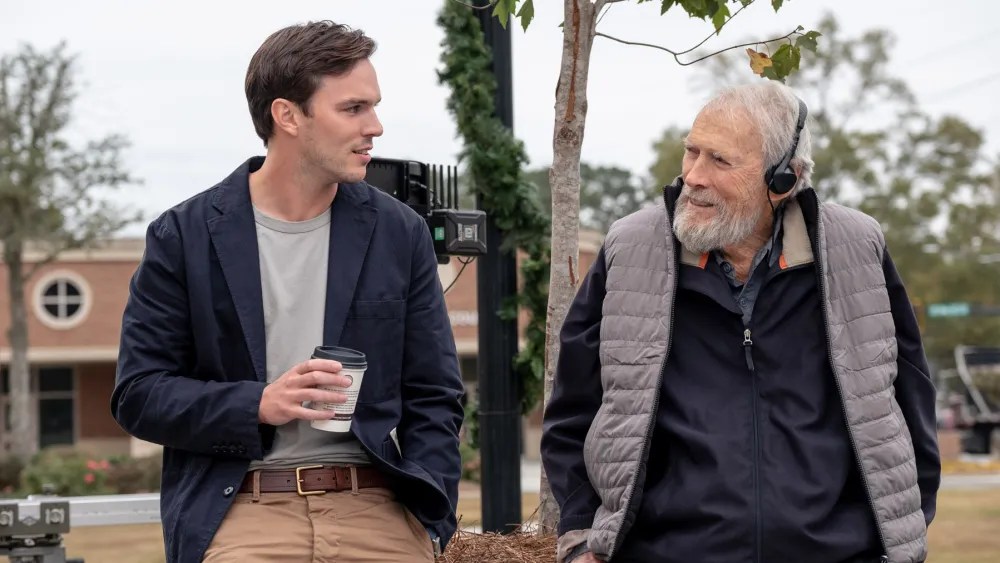
I’ve really been looking forward to seeing JUROR #2, Clint Eastwood’s most recent directorial effort, since I first read about it a year or two ago. Any film from the aging icon is a gift to his fans at this point, so it seems appropriate that I watched it for the first time on Christmas Eve. I still don’t understand the release strategy for the film, considering it was released in a few theaters and then pushed out to streaming platforms a little over a month later. That seems strange for a movie with this kind of pedigree, but I guess that doesn’t really matter at this point. 

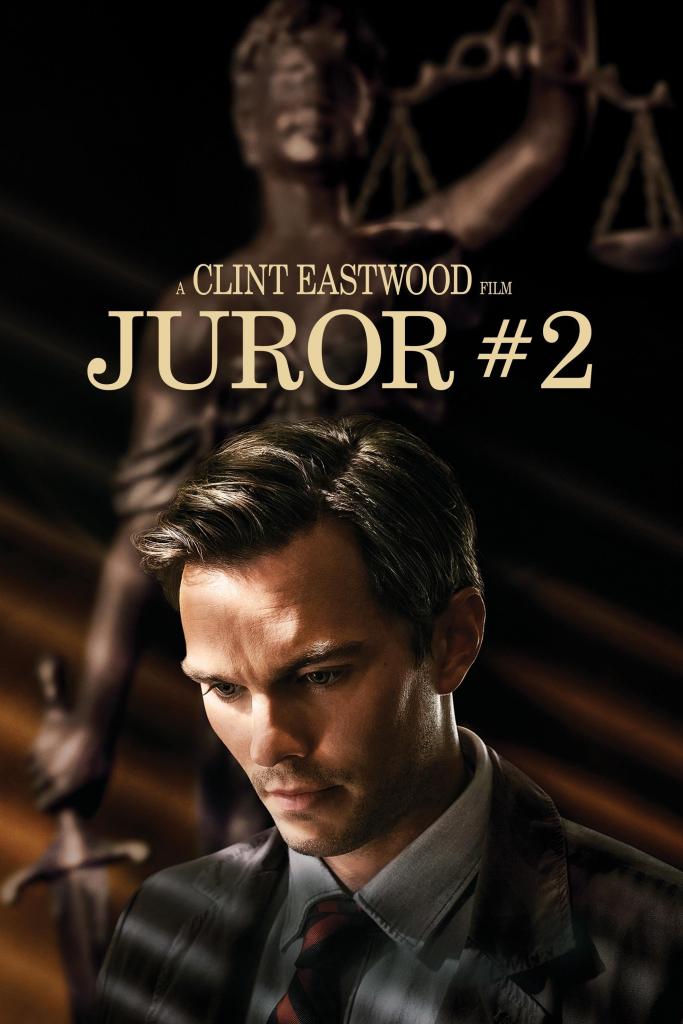
The plot revolves around Justin Kemp (Nicholas Hoult), a seemingly nice guy who’s going to be a dad any day now. I know that because his wife Allison (Zoey Deutch) looks like she could pop at any moment. He tries to use that pregnancy to get out of jury duty, but to no avail. Of course he gets selected to serve. As District Attorney Faith Killebrew (Toni Collette) begins laying out the facts of a horrific murder case against James Michael Sythe (Gabriel Basso), Justin begins to immediately realize that the wrong guy may have been arrested for the crime. How does he know they’ve got the wrong guy? Because Justin now thinks that he may be the one responsible for an accidental hit and run killing of the victim, Kendall Carter (Francesca Eastwood). The remainder of the film deals with Justin’s moral dilemma as he attempts to serve on the jury, protect his own freedom, and not send an innocent man to jail. This plot does require a pretty big suspension of disbelief, but if you’ll just go along with it, the movie does present some interesting ideas.

I’ll say right off the bat that I like JUROR #2. This was a relief to me because as much as I wanted to like Eastwood’s prior film CRY MACHO, at the end of the day it just wasn’t a very good movie. I’ve always enjoyed courtroom thrillers, and it doesn’t seem we get to see many of them anymore. Our main character Justin Kemp has a troubled past, but he’s truly turned his life around. The fact that he now finds himself in a seemingly impossible moral position is a strong hook that pulled me in. Director Eastwood takes his time here and tightens the grip on Justin, leaving him with few options, as he tries to figure out what to do. I’ve never served on a jury, and I’ve never really wanted to. I’m not sure I want the responsibility of deciding a person’s guilt or innocence. Eastwood’s film doesn’t change my mind in this area. It shows us some jurors who have made up their minds based on pre-conceived notions, regardless of the evidence. It shows us other jurors who want to convict just so the trial can be over and they can get on with their lives. It shows us witnesses who are willing to identity people just to please the prosecution. Considering what we know as the audience, these are glaring but realistic weaknesses of our nation’s system of justice. 

Eastwood assembled a good cast with Nicholas Hoult, Toni Collette, J.K. Simmons, and Kiefer Sutherland, actors that I always find worth watching. Hoult and Collette do most of the heavy lifting. JUROR #2 is set in Georgia, and I appreciate that Hoult, who’s from England, and Collette, who’s from Australia, don’t overdo the southern accents. J.K. Simmons is very impressive as an ex-cop who’s serving on the jury who is convinced of the defendant’s innocence. Unfortunately, his character exits the film fairly early, and he’s sorely missed. I’ve been a big fan of Kiefer Sutherland since I was a teenager, and I consider “24” one of my all time favorite shows. His role is pretty small here. He’s good, but from what I’ve read, he really just wanted to work with Eastwood. I also enjoyed seeing Gabriel Basso (Hillbilly Elegy) and Francesca Eastwood (Clint’s daughter) in the film. 

Clint Eastwood amazes me. In his legendary six decade career, he has been a part of some of the best films of all time. DIRTY HARRY, THE OUTLAW JOSEY WALES, and UNFORGIVEN are included in my list of all-time favorites. JUROR #2 is not in their league, and it’s certainly not a perfect film. But it is an entertaining film that tells an interesting story and even makes you think a little bit. And with that I say, thanks for another gift, Clint! 

The Films of 2020: Hillbilly Elegy (dir by Ron Howard)


Oh, Hillbilly Elegy.

This is a film that I think a lot of people expected to be an Oscar contender because it was directed by industry favorite Ron Howard, it was based on a genuinely moving best seller, and the cast included Amy Adams and Glenn Close, two actresses who are more than overdue for their first Academy Award.  I don’t think anyone expected it to win much, largely because Ron Howard isn’t exactly the most groundbreaking director working in Hollywood, but it was still expected to be contender.

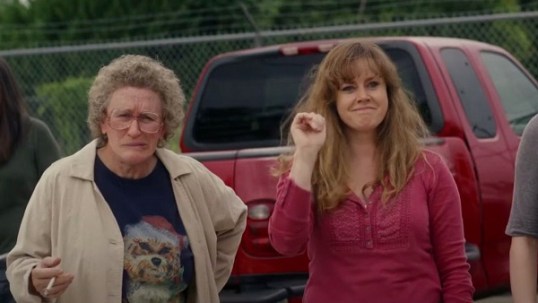
Even before it was released, there were a few signs that Hillbilly Elegy might not be the award-winning film that some were expecting.  The first images from the film featured Glenn Close and Amy Adams looking like characters from some sort of ill-conceived SNL sketch.  Then the trailer came out and it was so obviously Oscar bait-y and heavy handed that it was hard not to suspect that the film was trying just a bit too hard.  By the time the film itself finally premiered in November, I think a lot of people were specifically waiting for their chance to skewer it.

Make no mistake about it, Hillbilly Elegy deserves a certain amount of skewering.  Its a bit of a tonal mess and, far too often, it feels as if Ron Howard is inviting us to gawk at the film’s characters as opposed to showing them any sort of real empathy.  Those critics who have claimed that the film occasionally feels like “poverty porn” have a point.

And yet, despite all of those legitimate complaints, I would argue that the film is partially redeemed by the performance of Glenn Close.  Close plays Meemaw, who always seems to be carrying a lit cigarette and who has no hesitation about threating to beat the Hell out of her children and her grandchildren.  Meemaw lives in a cluttered house that probably reeks of smoke.  The TV is almost always on.  Meemaw is a fan of Arnold Schwarzenegger.  If you’ve ever wanted to hear Glenn Close say, “Hasta la vista, baby,” this is the film for you.  Meemaw is a somewhat frightening character (during one flashback, she sets her drunk husband on fire) but she’s also the most caring character in the film.  When it becomes obvious that her drug addict daughter, Bev (Amy Adams), is incapable of taking care of J.D. (played by Owen Aszatlos as a teen and Gabriel Basso as an adult), Meemaw essentially kidnaps J.D. and take him home with her.  Close’s performance is undeniably theatrical but it works.  She communicates that underneath all the bluster and the profanity and the anger and the cigarette smoke, Meemaw truly does love her family.  Glenn Close transcends the film’s flaws and brings some real heart to the story.

Hillbilly Elegy opens with J.D. as a student at Yale Law School, hoping to get accepted for a prestigious summer internship.  Meanwhile, all the other Ivy Leaguers treat J.D. like some sort of alien on display because he’s originally from Kentucky, he served in the army, and he went to a state school.  Though ambitious and intelligent, J.D. still feels likes an outsider.  When he goes to a banquet and discovers that he’ll be required to use different forks throughout the meal, he calls his girlfriend (Frieda Pinto) and gets a quick lesson on which fork to use when.

Unfortunately, before the meal even starts, J.D. gets a call from his sister, Lindsay (Haley Bennett), telling him that Bev has overdosed on heroin and is at the hospital.  J.D. has to drive all the way to Ohio so that he can try to get his mother into a drug rehab.  Because Bev doesn’t have medical insurance and would rather just stay with her good-for-nothing boyfriend, that turns out to be a bit more difficult than J.D. was anticipating.  The film becomes a race against time to see if J.D. can get his mom taken care of and still make it back to Connecticut so that he can interview for a prestigious internship.  Along the way, there are frequent flashbacks to Meemaw telling the young J.D. that he can be something better than just a hillbilly.  All he has to do is try and not give up.

By structuring his film as a series of flashbacks, Ron Howard ensures that there’s really not any suspense about whether or not J.D. is going to be able to escape from Appalachia.  Since we’ve already seen that the adult J.D. is going to be end up going to Yale, it’s hard to get worried when we see the teen J.D. smoking weed and hanging out with a bunch of losers.  We know that J.D. is going to get over his adolescent rebellion and get his life straightened out.  The film tries to create some tension about whether or not J.D. is going to be able to make his internship interview but, again, J.D. is going to Yale and living with Frieda Pinto.  From the minute we see J.D., we know that he’s going to be just fine regardless of whether he gets that internship or not.  In fact, his constant worrying about missing his interview starts to feel a bit icky.  While Bev is dealing with her heroin addiction, Ron Howard is focusing on J.D. driving back to Connecticut as if the audience is supposed to be saying, “Oh my God, has he at least reached New Jersey yet!?”  This is the type of storytelling choice that could only have been made by a very wealthy and very comfortable director.  It reminded me a bit of The Post and Steve Spielberg’s conviction that, when it came to the decision to publish the Pentagon Papers, audiences would naturally be more interested in the owner of the newspaper than the people who actually did the work breaking the story.  Here, Howard seems to be saying, “Yes, Bev might overdose and die having never reconciled with her son but the real tragedy is that J.D. might have to settle for his second choice as far as prestigious summer internships are concerned.”

Along with the story’s structural issues, the film also suffers because the usually wonderful Amy Adams is miscast as Bev.  Adams acts up a storm as Bev but the performance itself a bit too obvious and on-the-surface.  While Glenn Close disappears into the role of Meemaw, you never forget that you’re watching Amy Adams playing a character who is a bit more troubled than the usual Amy Adams role.  You don’t think to yourself, “Oh my God, Bev is losing it.”  Instead, you think, “Amy Adams sure is yelling a lot in this movie.”  Somehow, Hillbilly Elegy makes Amy Adams feel inauthentic, which is something that, before I watched this film, I wouldn’t have believed to be be possible.

Aside from Glenn Close’s performance, Hillbilly Elegy doesn’t quite work and that’s a shame because I do think that a good film could have been made from Vance’s book.  Unfortunately, Ron Howard doesn’t bring any sort of grittiness to the film’s depiction of what it’s like to be poor and forgotten in America.  Instead, the film feels just a bit too slick.  It attempts to be both a film about poverty and a crowd pleaser.  When the movie should be showing empathy for its characters, it puts them on display.  When it should be challenging the audience, it pats us on the back as if we should feel proud of ourselves merely because we spent two hours watching J.D. and his family.  The film just doesn’t work.  No wonder Meemaw prefers watching The Terminator.

Review: Super 8 (dir. by J.J. Abrams)


The 1980’s was a special time in my life. It was another phase in my development in loving film. That decade saw many films starring kids and teens in coming-of-age tales both comedic, thrilling, dramatic and poignant. While there were many filmmakers who delved into this genre it was Steve Spielberg who mined it to great effect culminating in his classic boy-meets-alien film, E.T.: The Extra-Terrestrial. It’s been almost 30 years since the release of that film and now comes a filmmaker who seem to have grown up idolizing and loving Spielberg films of that era. The year is now 2011 and J.J. Abrams is that filmmaker who dared to pay homage to those very same coming-of-age Spielberg films of the 80’s with his very own simply titled Super 8.

From the very moment the film begins there’s a sense of wonderment as we, the audience, meet young kids who become the central characters of Super 8. The film takes place in the early days of 1979 in the town of Lillian, Ohio as Joe Lamb (Joel Courtney) tries to cope with the death of his mother. His friends keep him busy and dwelling on this tragedy through the Super 8 film they’re making in their spare time after school. These early scenes we begin to see the dynamics of the group as Joe acts as the calming influence on the group’s filmmaker, Charles (Riley Griffiths), the neurotic actor in Martin (Gabriel Basso) and the group’s stuntman/special effects tech in Carey (Ryan Lee). They all meet up at an old train depot where they plan to shoot scenes for their Super 8 zombie film. Into this eclectic group of kids comes in Alice (Elle Fanning) to play the wife to Martin’s detective character in their film.

It’s the scenes between the kids which lifts Super 8 from just being a nostalgic film to one that’s charming and magical. These scenes captures the creativity and youthful energy kids have always had no matter the era and place. These kids don’t act like stereotypes of what Hollywood thinks kids in films should act. There’s still little of the cynical teen dialogue that films nowadays give kids to say to make them seem more mature and worldly. There’s a sense of innocence in how these kids interact with each other. Some have called these scenes as being too on-the-nose nostalgic of Spielberg films of the 80’s. What some might call nostalgic I prefer to call as timeless. I still remember myself behaving with my childhood friends the way these kids did in this film

If Super 8 had just been about these group of kids trying to finish their Super 8 zombie film I conjunction with the dysfunction in the two main leads in Joe and Alice’s home life then Abrams film would’ve been the instant classic some have dubbed it. There’s only one problem with this and that’s the last half hour of the film and the scenes leading up to that involving the train derailment and the arrival of the U.S. Air Force to clean things up. The film begins to take on a split personality as these new elements get introduce to what has been a great coming-of-age story.

It’s these new elements and the final half hour which shows Abrams trying to combine a sweet story of kids and their lives growing up in small-town with an otherworldy and conspiracy tale that seem to come out of left field. By the time the final act of Super 8 arrives it becomes a different film altogether and the transition doesn’t work as well as the filmmakers might have hoped it would. Sure, this final reel has the thrills, explosions and danger, but the tonal shift in the story became so jarring that I had wished that Abrams just made two films instead of one. One film being the coming-of-age story and the other a thrilling sci-fi film.

Despite this I still enjoyed the film and I definitely loved the first two-thirds. The performances by Joel Courtney and Elle Fanning as Joe and Alice became the focal point for the story’s emotional foundation. Elle Fanning’s performance as Alice was one of the best things about Super 8. She nails every scene where she has to show extreme ranges of emotions but at the same time not try to oversell them. There’s a scene in the middle of the film where she begins to recount a personal detail as Joe sits behind her listening. Emotions begin to overwhelm her, but as kids moving towards teenhood are wont to do she tries to hold back the tears just waiting to flow freely and the sobs wanting to escapes. I wouldn’t be surprised if this scene alone had more than a couple people in the audience remembering similar events in their lives and just sobbing along with Alice.

Super 8 has been advertised as this mysterious film that may or may not have aliens but does pay homage to Spielberg and kid films of the 80’s. Abrams’ film definitely delivers on the thrills in the end, but it could’ve been so much more if it just stayed on course with just being about the kids and their magical time together making an amateur Super 8 zombie film in 1979. That would’ve been a film that deserved labels of instant classic.

All in all, Super 8 comes across as one of the more entertaining and magical films of the summer of 2011 if not the entire year. Make sure to stick around as the end credits roll to see the fruits of the kids labor titled simply as “The Case”.

Super 8 (Super Bowl TV Spot)


I’ve always looked at all J.J. Abrams productions with some guarded optimism since so many people seem to hype his stuff. I liked his reboot of Star Trek, but was very so-so on his Mission Impossible 3. I will admit that he does have a good batting average when it comes to tv and now film. His latest film is Super 8.

This Super Bowl tv spot shows more than the teaser trailer with the train wreck and the steel door being pounded at. The film looks to be set sometime around the 1950’s if the set is to be believed. Some have reacted to info leaked about this film as Abrams’ homage on a certain family-friendly Spielberg alien film from the early 80’s.

Super 8 looks like the one film this summer that the less I know about it the better I’ll enjoy it when it finally comes out on June 10, 2011.