Welcome to Retro Television Reviews, a feature where we review some of our favorite and least favorite shows of the past! On Saturdays, I will be reviewing The American Short Story, which ran semi-regularly on PBS in 1974 to 1981. The entire show can be purchased on Prime and found on YouTube and Tubi.
This week, we have an adaptation of a Henry James short story.
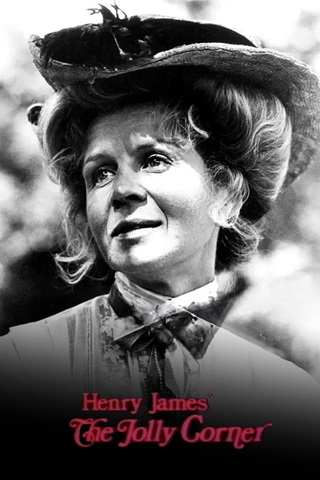
Episode #3 “The Jolly Corner”
(Dir by Arthur Barron, originally aired in 1975)
In 1906, Spencer Brydon (Fritz Weaver) returns to America from Europe, where he’s spent the majority of his adult life. Brydon has specifically returned to oversee some properties that he has inherited, including his childhood home and an adjacent building that’s going to be turned into an apartment complex. The middle-aged Brydon reconnects with his old friend, Alice Shaverton (Salome Jens), and finds himself wondering what type of man he would have come if he had stayed and worked in America as opposed to living a life of leisure in Europe.
Soon, Spencer comes to feel that his alternate “American” self is actually haunting his childhood home, his so-called “Jolly Corner.” His American self haunts him like a ghost, a menacing shadow that continually forces him to ask “what if?” He becomes obsessed with both his former home and his shadowy alter ego. But is this American version of Spencer Brydon real? And if it is real, what does it want from the Spencer Brydon who went to Europe?
This was a really well-done adaptation of a Henry James short story, one that was full of gothic atmosphere and which featured a compelling lead performance from Fritz Weaver. As directed by Arthur Barron, this episode did a good job of portraying the story’s horror elements while also reminding us that James’s story, for all of its talk of ghosts and alternate realities, is ultimately a portrait of a really bad midlife crisis. Spencer did what a lot of rich Americans do. He went to Europe to escape the responsibilities of his home country. And now, in middle-age, he’s asking himself, “Is this all there is?”
If nothing else, watching this episode might inspire the viewer to read more Henry James. That’s a good thing.
Welcome to Late Night Retro Television Reviews, a feature where we review some of our favorite and least favorite shows of the past! On Fridays, I will be reviewing Friday the 13th: The Series, a show which ran in syndication from 1987 to 1990. The entire series can be found on YouTube!
This week, we start season 3!
Episode 3.1 and 3.2 “The Prophecies”
(Dir by Tom McLoughlin, originally aired on October 7th, 1989)
The third season starts with a 90-minute episode, one that was split into two parts when the show was later re-aired. It’s a rather strange episode, one that takes the Curious Goods crew far from Canada and one that also see Ryan transformed into a…. well, we’ll get to that.
When the episode starts, Ryan is in a state of shock because he recently ran into his mother (Jill Frappier) while visiting the grave of his brother. His mother walked out on Ryan and his father after the death of Ryan’s brother and the reunion between the two leaves Ryan feeling conflicted. As he blames himself for both the death of his brother and his father, he can’t help but wonder what he would do if he had the opportunity to do everything over again.
Meanwhile, Micki is running the antique store with none other than Johnny Ventura. Last season, Micki disliked Johnny and she had ever right to as Johnny tended to be a little bit stalker-ish in his behavior towards her. But, with the start of this season, it appears that all has been forgiven.
As for Jack, he’s in a small town in France. He received a letter from Sister Adele (Marie-France Lambert) telling him about some apocalyptic visions that she’s been having. Those visions are largely the result of fallen angel Asteroth (Fritz Weaver), who is determined to bring the AntiChrist into the world by following the step laid out in the Books of Lucifer. He has to kill a nun and he’s decided that Adele is that nun. However, Asteroth cannot get to her.
But then Jack gets shoved down a flight of stairs and ends up in the hospital. Ryan, Micki, and Johnny fly over to France. Ryan is promptly possessed by the Devil and he murders Sister Adele! But now, for some reason, Asteroth also needs to murder a young girl who seems to know Ryan and whose presence in the episode is never really explained. In order to free Ryan from being possessed, it’s necessary to transform him back into a small child. Eventually, God gets tired of all this and Asteroth bursts into flame.
The ending is a bit ambiguous about what this all means but I do know that this was John D. LeMay’s last episode and that Johnny Ventura will become a series regular as well. (Steven Monarque, who played Johnny, is still listed as a guest star in this episode.) So, I guess Ryan, who no longer has any memory of Micki or any of his Curious Goods adventures, is going to go live with his mother and grow up again and I’d love to know how Jack and Micki are going to explain that to his mom.
This was a weird way to write Ryan out of the show. (If anything, Ryan sacrificing himself to save Micki and/or Jack would have made much more sense and been just as powerful an ending.) But, with all that mind, this was still a good episode. While the episode did not film in France, it does feature some location work in Quebec and those scenes are full of ominous atmosphere. Fritz Weaver was an appropriately creepy Asteroth. Speaking of being creepy, John D. LeMay did a great job playing possessed Ryan. This episode was not always easy to follow but it was scary and atmospheric and it worked surprisingly well.
Welcome to Late Night Retro Television Reviews, a feature where we review some of our favorite and least favorite shows of the past! On Wednesdays, I will be reviewing Monsters, which aired in syndication from 1988 to 1991. The entire series is streaming on YouTube.
This week, Monsters brings together horror and noir!
Episode 2.7 “Jar”
(Dir by Bette Gordon, originally aired on November 1st, 1989)
Having been hired to find a missing woman, cynical private investigator Jack Bateman (Richard Edson) begins his investigation at the seedy bayou motel where the woman was last seen. However, Mr. Hallet and Jack are not the only people at the hotel. Ann Spiros (Gina Gershon) arrives with her loutish husband, the wealthy George (Ed Kovens). Ann wants to get rid of her husband and she and Jack seem to share an immediate attraction to each other. Does Mr. Hallet have something hidden away in all of his mason jars that could help Ann with that? Of course, he does. The show is called Monsters. This episode is called Jar. One doesn’t have to be a genius to figure out that something pretty extreme is about to happen in that isolated hotel and that it’s going involve something in a jar.
(Someday, remind me to write a post about all of the historical figures who had certain body parts preserved in a jar. I don’t know why that would happen but no matter. You can still see a few inches of Napoleon if you want to, though it might not be the part of him that you want to see.)
From the sultry saxophone on the soundtrack to the shadow visual style, this episode announces itself from the start as being an homage to film noir. It works far better than I think anyone would have any reason to expect. The bayou hotel is wonderfully atmospheric and steamy location. One can literally feel the humidity that runs through this episode. Though he was a bit young for the role, Richard Edson is a convincing hard-boiled detective. Gina Gershon, as always, is a perfect femme fatale and seems to relish the opportunity to keep the audience guessing as to he motivations. Ed Kovens is properly unsympathetic as the wealthy husband. (Can you imagine how unpleasant noirs like this would be if the husbands were decent guys who just minded their own business? It’s a good thing that they’re always louts.) Finally, Fritz Weaver gives a nicely eccentric performance as old Mr. Hallet. This episode is full of schemes and forbidden passions. Fans of noir will appreciate the episode.
What’s especially surprising is just how well the supernatural and the monsters are all integrated into the noir format. The monsters feel as if they belong in the story just as much as the hard-boiled detective and the sultry wife. It takes a while for the monsters to do their thing but when they do, they definitely make an impression.
Monsters can be a bit of uneven show. But Jar is definitely a triumph.
The first episode of The Martian Chronicles ended with a dying Jeff Spender (Bernie Casey) warning John Wilder (Rock Hudson) that humans settling on Mars would be the worst thing that could ever happen to the once powerful red planet.
The second episode, called The Settlers, sets about to prove Spender right. By 2004, humans are desperately leaving the war-torn Earth for a new home on Mars. They rename all of the Martian landmarks, honoring the men who died exploring the planet. In one of the few deliberately funny moments of this entire miniseries, it’s revealed that the canal that Briggs threw his beer cans in was eventually named Briggs Canal. There’s one unfortunate shot of a line of miniature space ships that are supposed to be orbiting Mars and waiting for their chance to land. The episode then gets down to showing what the settlers do to Mars.
It’s nothing good. The main town looks like a traveling carnival, full of bars and crime. Many of the people who come to Mars are people who are fleeing something on Earth and Col. Wilder has his hands full trying to keep the peace. All of the Martians are believed to be dead but it turns out that there are still a few out there. Using their mental powers, they disguise themselves as humans. A large part of the second episode deals with a Martian who approached an elderly couple, disguised as their dead son. Even though they know that he’s not really their son, they allow him to live in their home. But, when the Martian goes to the city, he becomes overwhelmed by all the thoughts that bombard his mind. Everyone sees him as being someone that they care about. Even the local priest, Father Peregrine (Fritz Weaver), sees the Martian as being Jesus. (That’s no big deal today but that had to have been controversial in 1980.) Eventually, the Martian becomes so overwhelmed that he dies while a group of humans gawk at him.
As for Father Peregrine and Father Stone (Roddy McDowall, who spent most of his later years appearing in miniseries like this one), they explore the Martian mountains, searching for three lights that have been reported as hovering in the sky. When they find the lights, the lights explain that they are ancient Martians who long ago abandoned their corporeal bodies. They also somewhat implausibly say that they worship the same God as the two priests. In a departure from Bradbury’s original short stories (in which Bradbury was skeptical about the idea of bringing religion to the Mars), Father Peregrine commits to building a church so that, even on the Red Planet, people can worship.
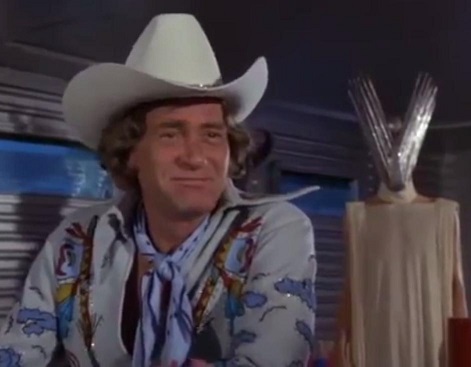
Finally, Sam Parkhill (Darren McGavin) has achieved his dream of building a restaurant on Mars. He says that, as soon as more Earthlings arrive, he’ll be rich because every trucker will stop off at his place for a bite to eat. When a Martian suddenly shows up in the diner, Parkhill panics and shoots him. When more Martians show up, Parkhill flees. It’s only when the Martians catch up to him does he learn that they’re giving him a grant for half the land on Mars. “Tonight’s the night,” they tell him, “Prepare.” Old Sam Parkhill’s pretty excited until he looks through a space telescope and sees that Earth, the home of his future customers, is now glowing with the sure sign of nuclear fire. I can’t remember how old I was when I first saw this episode on late night Baltimore TV but I do remember being thoroughly freaked out by the scene where Sam watches as a fiery glow encircles the Earth and the planet’s green surface turns brown. It’s the most powerful moment in the miniseries and a fitting visualization of Bradbury’s concerns about the nuclear age.
As for the rest of The Settlers, it’s good but it’s not as strong or as cohesive as the first episode. The Martin shapeshifter story is good but the two priests in the mountains felt like they were included to keep religious viewers happy and their segment takes too many liberties with Bradbury’s original material. Then, Darren McGavin returns to the story. dressed like a cowboy and getting chased by a Martian sandship and The Martian Chronicles goes back to being one of the coolest miniseries to ever be broadcast.
With Earth dead, would Mars follow? That was the theme of the next episode of The Martian Chronicles, which we’ll look at tomorrow.
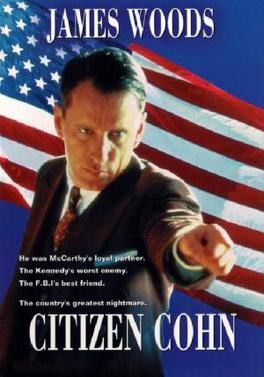
The year is 1986 and the powerful attorney Roy Cohn (James Woods) is dying. The official story is that Cohn has liver cancer but the truth is that he’s dying of AIDS. As he lies in his hospital bed, he thinks about his past and the events the led to him becoming one of the most feared and powerful men in America. He is haunted by the ghosts of his many enemies, people like communist spy Ethel Rosenberg (Karen Ludwig) and his former colleague, Bobby Kennedy (David Marshall Grant).
Not surprisingly, a good deal of Cohn’s memories center around his association with Sen. Joseph McCarthy (Joe Don Baker), a charismatic alcoholic who, in the 50s, charged that he had a list with the names of communist spies deep within the government. Cohn and Kennedy served as the counsels on McCarthy’s committees. Cohn is with McCarthy from the beginning and he’s with him until the end of the senator’s career. In fact, it’s Cohn’s own shadowy relationship with an army private that ultimately leads to McCarthy’s downfall.
Except for one aspect of the film, Citizen Cohn is one of the best films to ever be produced by HBO. The film covers a lot of history in a little less than 2 hours and it does so in a way that is always interesting and easy to follow. By including incidents from every phase of Cohn’s life, as opposed to just focusing on his time as McCarthy’, the film also shows how someone like Roy Cohn can become a behind-the-scenes power player despite the majority of the country having no idea who he is. James Woods gives one of his best performances as the hyperactive and unapologetically corrupt Cohn while Joe Don Baker is perfect as the self-pitying Joseph McCarthy.
The problem with the film, and your mileage may vary on how big an issue this is, is that it almost presents Cohn’s final days — dying of AIDS in a lonely New York hospital room — as being some sort of deserved fate for everything that he did wrong in life. For me, even in the case of someone like Roy Cohn, that’s a step too far and it comes very close to presenting AIDS as some sort of divine punishment (which, itself, comes dangerously close to mirroring the homophobic statements that were made — and still are being made — by anti-gay activists). That may not have been the film’s intention but, with the flashback structure and all of his dead enemies materializing to taunt Cohn as he lies dying, it’s still a very valid interpretation.
Some of that is perhaps unavoidable. Cohn, in both real life and the film, died largely unrepentant for anything he did during his life. As the central character of a biopic, Cohn never has the type of big moment that you would hope for, where he would realize that it was wrong for him to destroy so many lives and show at least a hint of contrition for his past behaviors. That Roy Cohn is even a compelling character is a testament to the talent of James Woods because it’s certainly not due to any sort of hidden goodness lurking underneath the surface of Cohn’s snarling personality. The lack of apologies and regrets that made Cohn a powerhouse in real life also makes him an ultimately unsatisfying subject for a movie.
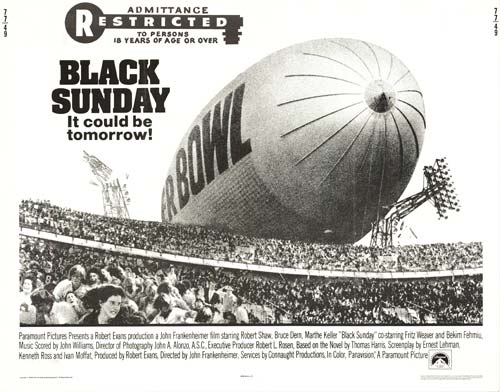
My New England Patriots aren’t in this year’s big game, and I can’t stand that big-headed Peyton Manning, so my interest in tonight’s Super Bowl is minimal. And the halftime show does nothing for me: Coldplay is probably one of my least favorite bands (Beyoncé’s OK, though). So if like me, you’re not planning on spending much time watching Roger Goodell’s season-ending spectacular (can’t stand Goodell, either) may I suggest an alternative, namely John Frankenheimer’s thriller BLACK SUNDAY.
No, it’s not the 1960 Barbara Steele/Mario Bava horror classic, this BLACK SUNDAY is a rousing political thriller about terrorist organization Black September plotting a strike against America at the biggest game of them all, the Super Bowl. Beautiful but deadly terrorist Dahlia (Marthe Keller) has recruited the bitter, unstable blimp pilot Michael Lander (Bruce Dern at his 70’s psycho best) to turn the blimp into the ultimate suicide bomb, with plastique explosives setting…
Oh, Cobbler, Cobbler — what a frustrating film you are!
There was a time when everyone was excited about seeing The Cobbler. It was originally scheduled to come out in 2014 and, along with Men, Women, & Children, it was supposed to be part of the dramatic recreation of Adam Sandler.
After all, one of the main reason why critics like me hate to see Adam Sandler devoting his time to stuff like That’s My Boy is because, in the past, Sandler has actually proven himself to be a surprisingly good and likable dramatic actor. Unfortunately, dramatic Sandler films never seem to make much money and, as a result, Sandler goes back to making films where he, David Spade, and Chris Rock play former high school classmates. If only one Sandler dramedy could be a success, we tell ourselves, then he’d never feel the need to make another movie like Jack and Jill…
(And yes, I realize that’s probably wishful thinking on our part. Even if Adam Sandler somehow won an Oscar, I get the feeling he’d follow the win by starting work on Grown Ups 3….)
The Cobbler promised that not only would Sandler be playing a more low-key role than usual but he would also be directed by Thomas McCarthy, who previously directed the excellent The Visitor and Win Win. Based on his previous films, McCarthy seemed to be the perfect filmmaker to give Adam Sandler some credibility.
And, let’s not forget, that not only would Sandler be working with Thomas McCarthy but Men, Women, & Children was being directed by Jason Reitman! At one point, it truly appeared that 2014 was going to be the year that we saw the rebirth of Adam Sandler.
And then Men, Women, & Children came out and was a disaster, despite the fact that Sandler got fairly good reviews. Meanwhile, rumors started to swirl that just maybe The Cobbler wasn’t as good as McCarthy’s previous film. When The Cobbler‘s release date was pushed back to 2015 … well, we all knew what that meant.
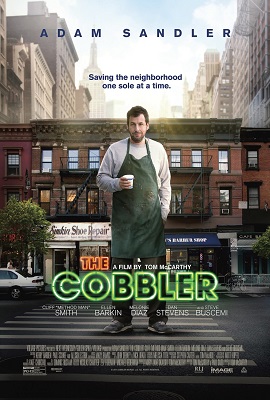
Anyway, The Cobbler was released in a few theaters earlier this year and on VOD. It’s now available on Netflix. I watched it last week and it’s really not as bad as I expected it to be. Of course, that’s not to say that it’s particularly good either. It’s not terrible but it is disappointing. Considering the director and the supporting cast (Dustin Hoffman, Steve Buscemi, Dan Stevens, and Melonie Diaz, who was way too good in Fruitvale Station for you not to regret how this film totally wastes her), The Cobbler should at least be interesting. Instead, it’s just kind of bland.
However, Adam Sandler does give a pretty good performance. In this film, he plays Max, a shy and emotionally withdrawn cobbler. He comes from a long line of cobblers and he inherited his store from his father (Dustin Hoffman). Years before the film begins, Max’s father mysteriously vanished. Now, Max spends his time going to and from work and taking care of his dementia-stricken mother. His only friend is Jimmy (Steve Buscemi), the paternal barber who works next door.
In the basement of Max’s shop, there’s an old stitching machine. About 30 minutes into the film, Max discovers that if be puts on a pair of shoes that have been repaired using the machine, he can physically transform into whoever owns the shoes. After experimenting with being different people, Max eventually puts on his father’s shoes. Transforming into his father, he has dinner with his mother.
The next morning, his mother dies. Max cannot even afford to buy her a good headstone. However, a local criminal (played by Method Man) has dropped off his shoes to be repaired. Perhaps, by wearing the criminal’s shoes, Max can come up with the money…
I’m probably making The Cobbler sound a lot more interesting than it actually is. And seriously, it sounds like it should a really good and thought-provoking movie. Unfortunately, McCarthy awkwardly tries to combine the broadly comedic elements (i.e., Sandler transforming into a variety of eccentric characters) with the dramatic (which includes not only Max’s anger at his father but a few murders as well). The film never finds a consistent tone and, as such, it remains an interesting idea in search of a stronger narrative. Watching the film as it wanders from scene to scene, it’s impossible not to mourn all of the missed opportunities.
But, as I said, Adam Sandler does well. Hiding his face behind a beard and only occasionally offering up a sad smile, Sandler gives a low-key performance that is full of very genuine melancholy. In this film, he proves that he can act when he wants to. You just wish that the rest of The Cobbler lived up to his performance.
Unfortunately, as far as the box office is concerned, The Cobbler is the least financially successful film that Sandler has ever appeared in. This means that plans for Grown-Ups 3 are probably already underway…
(For those keeping track of the progress of Embracing The Melodrama Part II, we are now 123 reviews down with 3 to go.)
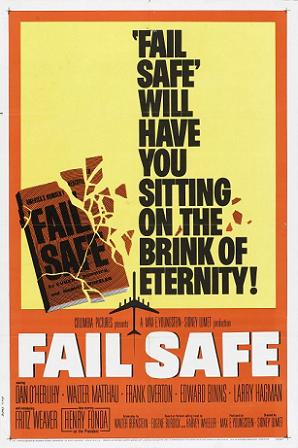
After watching Dr. Strangelove, you may find yourself asking what that film would have been like if it had treated its doomsday scenario seriously. Well, you can find out by watching yet another film from 1964, Sidney Lumet’s Fail-Safe.
What’s Fail-Safe about? Well, basically, it tells the exact same story as Dr. Strangelove, except without the humor. Once again, an American bomber is accidentally ordered to launch a nuclear attack against Russia. Again, the President (played, somewhat inevitably, by Henry Fonda) has to have an awkward conversation with the leader of Russia. Again, a sinister defense advisor (this time played by Walter Matthau) argues that the world can survive a nuclear war.
Admittedly, there is no equivalent to George C. Scott’s Buck Turgidson in Fail-Safe. However, there is a General Black (Dan O’Herilihy) who has a recurring nightmare about watching a bullfight while the sky around him glows with radiation.
Fail-Safe has the same plot as Dr. Strangelove but none of the humor. In fact, Fail-Safe has absolutely no humor at all. It’s one of the most somber films that I’ve ever seen. It has a good opening with General Black’s nightmare and an effective ending that makes excellent use of freeze frames but the middle of the film is basically just a collection of endless debates.
And I’m sure that approach made sense at the time because, after all, Fail-Safe was dealing with a serious theme, it was directed by a serious filmmaker, and it featured a bunch of serious actors. And maybe if I had never seen Dr. Strangelove, Fail-Safe would not seem like such a slow and boring movie. But I have seen Dr. Strangelove and, as a result, it’s impossible to watch Fail-Safe without wanting to hear Henry Fonda say, “You can’t fight here! This is the war room!”
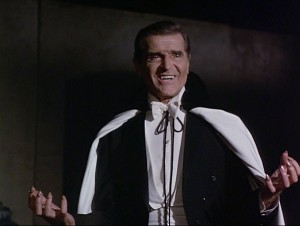
Much like Thriller, Night Gallery is an old horror anthology series that I’ve recently discovered thanks to reruns on Me-TV. Airing in the early 70s and hosted by Twilight Zone‘s Rod Serling, Night Gallery usually featured two or three stories per episode and even provided a few early credits for director Steven Spielberg.
Of course, Spielberg didn’t direct the episode below but that’s okay. It’s still pretty good. It tells two stories. In A Question of Fear, Leslie Nielsen plays a mercenary who takes a bet to spend the night in a haunted house. In The Devil Is Not Mocked, Dracula talks about how he fought the Nazis during World War II. Interestingly enough, Dracula is played by Francis Lederer who, 13 years later, played the same role in The Return of Dracula.
The episode of Night Gallery was originally broadcast on October 27th, 1971.
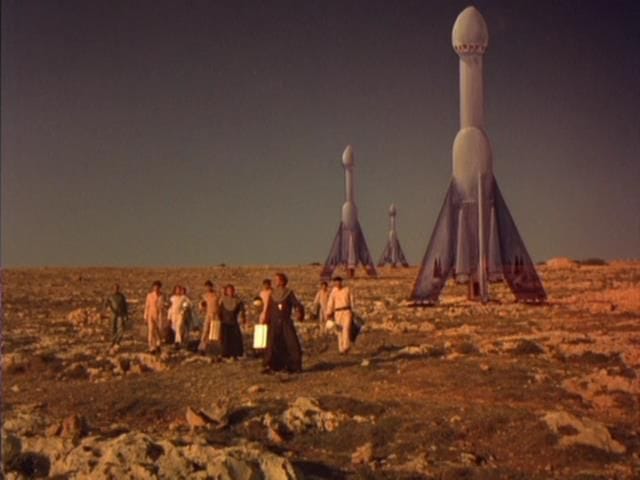
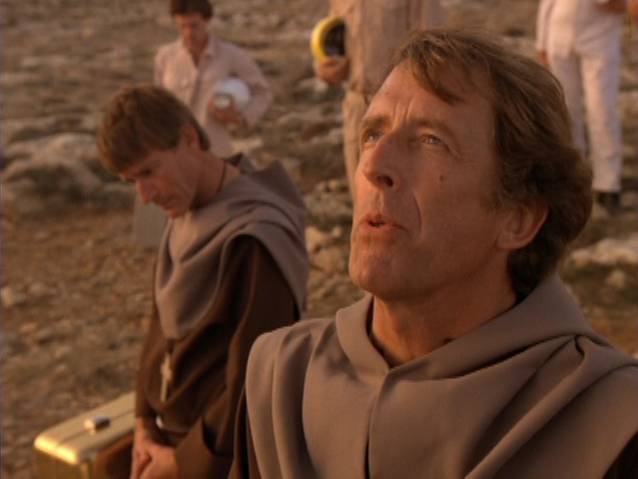
Tonight’s ghost of Christmas Past was recommended to me by the TSL’s own editor-in-chief, Arleigh Sandoc. This episode of the Twilight Zone originally aired on December 20th, 1985. Based on a short story by Arthur C. Clarke, The Star features two men — one a scientist and one a priest — exploring the remains of a long dead alien civilization and discovering a connection to our own society.





 Through the Shattered Lens