Happy Birthday in heaven to Director John Sturges! đźŽ‰


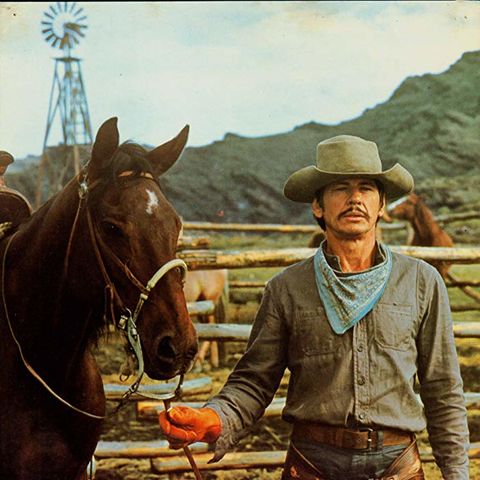
Director John Sturges was born on January 3rd, 1910. He directed some of my favorite movies, and many of them starred my movie hero, Charles Bronson. The picture above is from 1973’s CHINO!

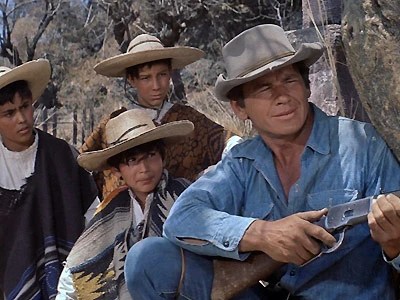
Charles Bronson’s second role in a film was in Sturges’ THE PEOPLE AGAINST O’HARA from 1951, starring Spencer Tracy. The picture below isn’t a very good picture as Bronson was only in one scene. Can you spot Bronson??

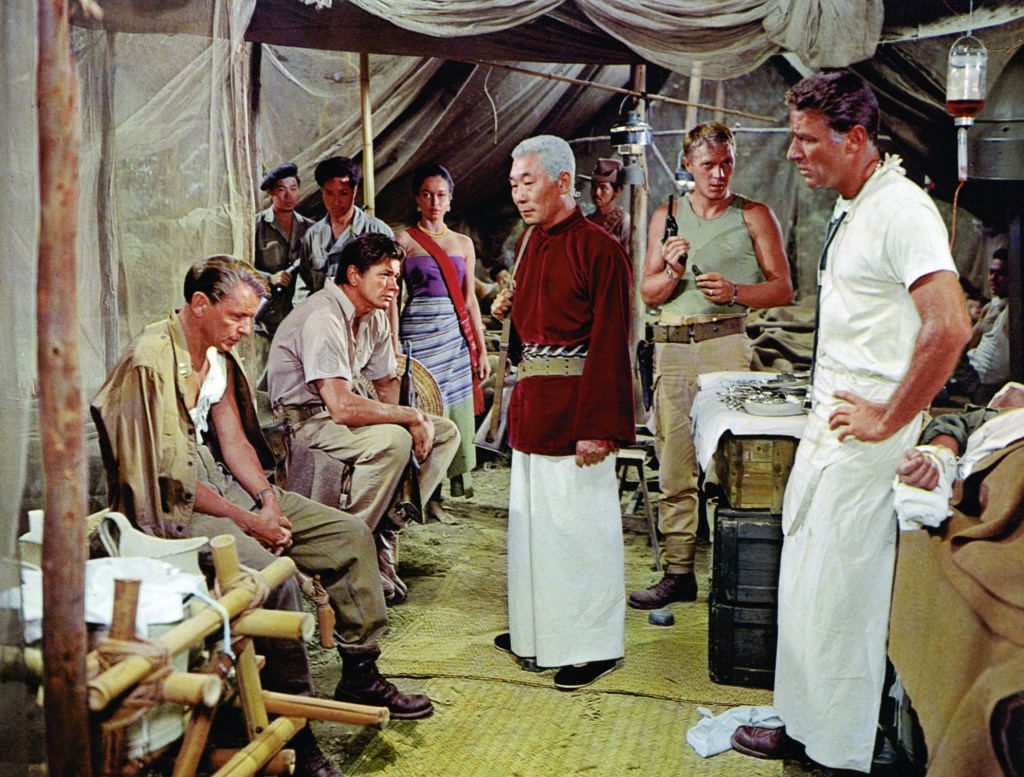
In 1959, Sturges would direct Charles Bronson in NEVER SO FEW, which co-starred Frank Sinatra and Steve McQueen.

Just a year later in 1960, Sturges would direct Bronson and an all star cast that included Yul Brynner, Steve McQueen, James Coburn and Robert Vaughn in THE MAGNIFICENT SEVEN, a remade of the Akira Kurosawa classic THE SEVEN SAMURAI. Bronson’s role as Bernardo O’Reilly is one of the best in the entire film.

John Sturges would direct Charles Bronson again in 1963 in the classic film THE GREAT ESCAPE, which also starred Richard Attenborough, Steve McQueen, James Garner, James Coburn and Donald Pleasence. Charles Bronson drew on his experience in the coal mines of Pennsylvania when he played “The Tunnel King” in the classic World War II film. Charles Bronson is one of the characters who actually escapes, which made me very happy!

John Sturges would direct Charles Bronson one more time in the underrated western from 1973, CHINO (pictured at the top). Sturges was a phenomenal director, and Charles Bronson was in some of his very best work! As Charles Bronson’s biggest fan, Sturges will always be one of my favorite directors!!

Song of the Day: Moonraker by Shirley Bassey


In honor of National Science Fiction Day, today’s song of the day comes from the film that sent James Bond into space!

Released in 1979, Moonraker may not get as much respect as some of the Bond films but I’ve always liked it.  The theme song was the third and final Bond song to be performed by Shirley Bassey.  The song was originally written for Frank Sinatra but he turned it down.  Johnny Mathis then agreed to perform the song but he backed out at the last minute.  Shirley Bassey came in to record the song just weeks before the film was due to premiere.

Because this is a 70s film, there were two versions of this song, the original and the disco.  Because I’m the one writing this post, we’re going with the disco version.

Where are you, why do you hide
Where is that moonlight trail that leads to your side?
Just like the moonraker goes in search of his dream of gold
I search for love, for someone to have and hold

I’ve seen your smile in a thousand dreams
Felt your touch, and it always seems
You love me, you love me

Where are you, when will we meet?
Take my unfinished life and make it complete
Just like the moonraker knows
His dream will come true someday
I know that you are only a kiss away

I’ve seen your smile in a thousand dreams
Felt your touch, and it always seems
You love me, you love me

Songwriters: John Barry / Hal David

Music Video of the Day: I’ve Got You Under My Skin by Frank Sinatra and Bono (1993, directed by Kevin Godley)


For his 1993 album Duets, Frank Sinatra teamed up with other singers to reinterpret some of his best-known songs.  For I’ve Got You Under My Skin, he teamed up with U2’s Bono and thoroughly sung him under the table.

The music video was directed by Kevin Godley, who was one of those directors who ended up working with just anyone who was anybody.  In the video, Bono looks very excited to be there.  Frank looks a little less excited.

At the same time this album came out, SNL broadcast a skit featuring Phil Hartman as Frank Sinatra, bullying all the other singers and refusing to actually record with them.  “There’s a twenty on the dresser, now get out!”

Enjoy!

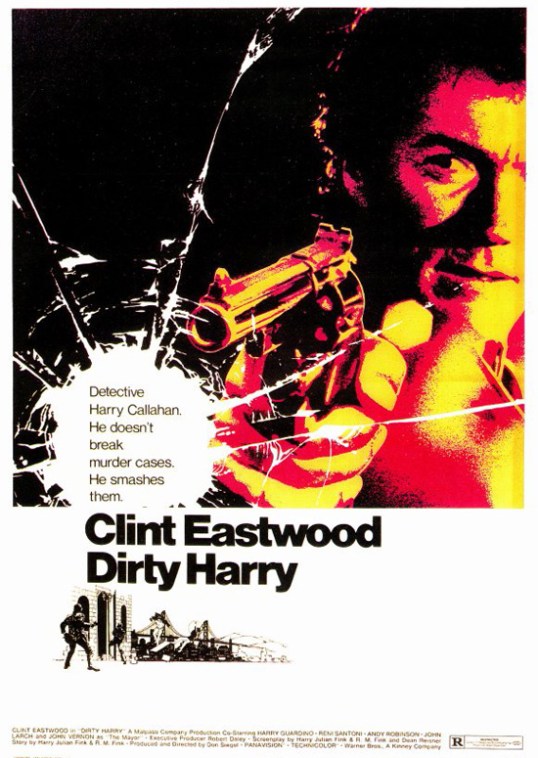
“Do ya feel lucky, Pilgrim?” What Dirty Harry Could Have Been


Paul Newman as San Francisco Police Detective Harry “Dirty Harry” Callahan?

Today, it sounds unthinkable that the outspokenly liberal Newman could ever have been a contender for the role of Harry Callahan, a police detective who is quick with a quip but even quicker on the trigger.  As everyone knows, Clint Eastwood played Harry and, as a result, he finally became as big of a star in the United States as he already was in Europe.  Today, it’s impossible to imagine anyone other than Clint Eastwood torturing the Scorpio Killer for information and then announcing himself to be “all torn up about his rights.”  Just try to imagine Paul Newman snarling as reflexively as Clint Eastwood did upon hearing that the whiny guy in the liberal office taught constitutional law at Berkeley.  Try to imagine Paul Newman calling someone “a punk” or bragging about the power of his gun.  It can’t be done.

And yet, as hard as it is to believe, Clint Eastwood was not the first choice for Harry Callahan.  In fact, Eastwood apparently wasn’t even on Warner Bros.’s list of contenders when they initially bought the rights for the script that would eventually become Dirty Harry.
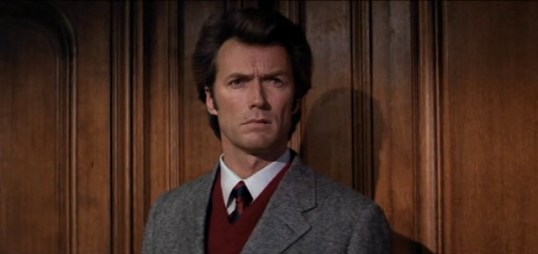
Written by Harry Julian Fink and Rita M. Fink, that script was originally called Dead Right and it took place in New York.  In the original script, Harry Callahan was world-weary, veteran New York cop, in his 50s and just a few months away from retirement.  In the original script, Harry pursued a serial killer named Travis.  When Warner Bros. bought the script in 1969, they viewed it as being a potential vehicle for Frank Sinatra with Irvin Kershner directing.  (Kershner is probably best remembered for later directing The Empire Strikes Back.)  As was his habit, Sinatra immediately demanded rewriters.  John Milius wrote three drafts, each one expanding on the idea of Callahan as a rebel against the system.  Terrence Malick (yes, that Terrence Malick) was also brought it and came up with a storyline in which the serial killer would specifically be targeting mobsters and other people who had escaped justice.  Somewhere, amongst all the rewrites, the action moved from New York to Seattle.

After all that effort, why didn’t Frank Sinatra play Harry Callahan?  Reportedly, he broke his hand and, as a result, he was told that he wouldn’t be able to hold a microphone or a gun or anything else while it was healing.  Since you really can’t have Harry Callahan without a gun, Sinatra left the project and Irvin Kershner went with him.
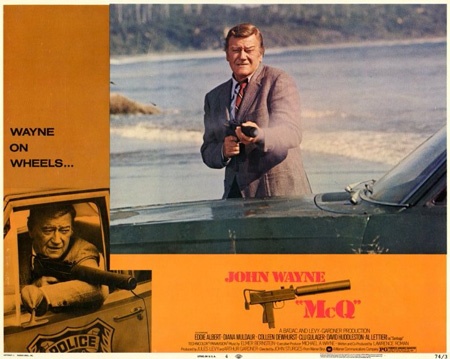
While trying (unsuccessfully) to recruit Sidney Pollack as their new director, Warner Bros. searched for a new leading man.  Reportedly, the script ended up on John Wayne’s desk.  Wayne later said that he turned down the role because he felt the violence was gratuitous.  Other sources indicate that John Wayne actually was interested in the role but that the studio didn’t consider him to be contemporary enough.  (After the success of Dirty Harry, Wayne would play a similar cop character in McQ and would provide a hint of what Dirty Harry starring John Wayne would have been like.)  Burt Lancaster turned down the role because he didn’t like the script’s politics.  Lee Marvin and Robert Mitchum both turned down the role because they refused to play cops.  George C. Scott reportedly refused the role because of the violence.  Marlon Brando was considered but, probably wisely, was never approached.
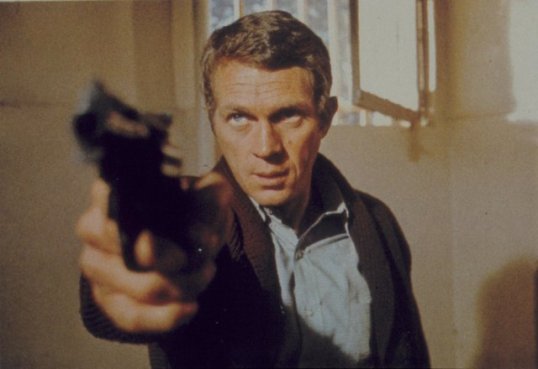
Having been turned down by all of the older tough guys, Warner Bros. went with the younger tough guys.  Steve McQueen turned down the role because he had already played a cop in Bullitt and he felt the critics would accuse him of repeating himself.  (He was probably right.)  Paul Newman refused the role on political grounds but, as he often tended to do whenever he turned down a role, he also recommended another actor for the part.  That actor was Clint Eastwood who was an old friend of Newman’s and who, obviously, had no problems with the film’s politics.

(Let’s take a moment to give some respect to Paul Newman, who was reportedly one of the nicest guys in Hollywood.)

Once Eastwood was on board, his requested that his friend and frequent collaborator, director Don Siegel, be hired to direct the film.  The script was again rewritten, moving the action to San Francisco and making Harry into a far less talkative character.  The serial killer known as Travis became the serial killer known as Scorpio.  The idea of the killer targeting criminals was abandoned at Siegel’s insistence, though Eastwood liked the idea enough to use it for Dirty Harry’s first sequel, Magnum Force.
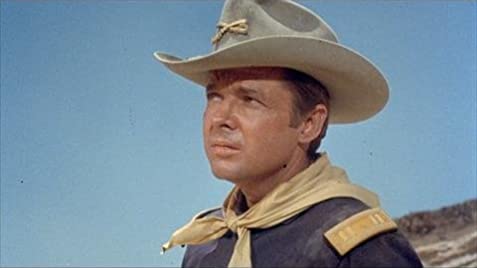
Audie Murphy

Originally, James Caan was approached for the role of Scorpio but Caan turned it down (which, of course, left him free to play Sonny in The Godfather).  Perhaps most intriguingly, Audie Murphy was offered the role.  Murphy was one of the most decorated combat soldiers of World War II.  He had gone from the Army to appearing in movies.  By the time Dirty Harry went into production, Murphy was largely appearing in B-westerns and was as known for his temper as his films.  (He was acquitted of attempted murder shortly before filming began on Dirty Harry.  Murphy said that his anger issues were largely due to the trauma of World War II and he was one of the first prominent people to openly speak about what has since become known as PTSD.)  Murphy undoubtedly would have been an intimidating Scorpio but he died in a plane crash before he could accept or refuse the role.
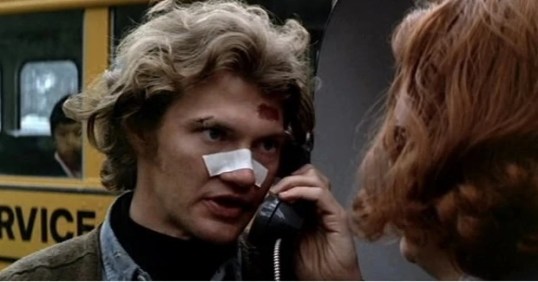
Instead, the role went to Andrew Robinson, who an unknown at the time.  He was also, in real life, a pacifist who had difficulty not flinching whenever he had to fire a rifle in the film.  That said, Robinson gave a brilliantly unhinged performance as Scorpio and reportedly had to get an unlisted telephone number because of all the angry and threatening phone calls that he received after the movie was released.

Now, I have to admit that I personally find the idea of Frank Sinatra/James Caan or, for that matter, a John Wayne/Audie Murphy police procedural to be kind of intriguing.  And goodness know, I would certainly like a chance to see Marlon Brando doing the “do you feel lucky, punk?” speech.  In the end, though, I think things turned out for the best.
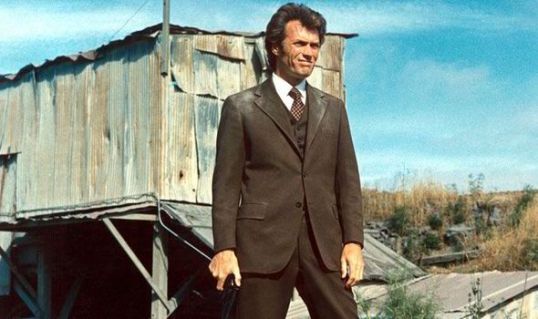
Great Moments in Television History #18: Frank Sinatra Wins An Oscar


On this date, 68 years ago, Frank Sinatra won his only Oscar when Mercedes McCambridge announced that he had won Best Supporting Actor for his role in From Here To Eternity. This is the role that some claimed the mob got for him, though the truth was that he was given the role after his-then wife, Ava Gardner, made an appeal to studio head, Harry Cohn. At that time, Gardner was actually a bigger star than Sinatra, whose career was considered to be in decline.

Sinatra in decline? The Academy disagreed! And so did the audiences who would make Sinatra a star for many decades to come.

Previous Moments In Television History:

  1. Planet of the Apes The TV Series
  2. Lonely Water
  3. Ghostwatch Traumatizes The UK
  4. Frasier Meets The Candidate
  5. The Autons Terrify The UK
  6. Freedom’s Last Stand
  7. Bing Crosby and David Bowie Share A Duet
  8. Apaches Traumatizes the UK
  9. Doctor Who Begins Its 100th Serial
  10. First Night 2013 With Jamie Kennedy
  11. Elvis Sings With Sinatra
  12. NBC Airs Their First Football Game
  13. The A-Team Premieres
  14. The Birth of Dr. Johnny Fever
  15. The Second NFL Pro Bowl Is Broadcast
  16. Maude Flanders Gets Hit By A T-Shirt Cannon
  17. Charles Rocket Nearly Ends SNL

Music Video of the Day: My Way by Frank Sinatra (1974, dir by ????)


This was filmed at Madison Square Garden, back in 1974. I’m sharing this on Presidents Day because I’m sure this is the song that most presidents would probably sing while being kicked out of the White House. We really should consider using My Way as the new national anthem.

Enjoy!

Great Moments In Television History #11: Elvis Sings With Sinatra


The fourth episode of The Frank Sinatra Timex Show was officially called It’s Nice To Go Trav’ling but it’s unofficial name was Welcome Home Elvis.  That’s because this special, which aired on May 12th, 1960, also marked Elvis Presley’s first appearance on television after his release from the U.S. Army.

It was a 30-minute special, sponsored by Timex.  Elvis only appeared in 8 of those minutes.  The rest of the show’s running time was made up of Frank Sinatra hanging out with his Rat Pack pals.  Still, in those 8 minutes, Elvis performed with Sinatra and television history was made.  (Elvis even wore a tuxedo for the occasion, so he would fit in with Frank and the pack.)  This special was the highest rating program of the week and it proved that being away in Germany hadn’t diminished Elvis’s popularity one bit.

Elvis, who was born 87 years ago on this day, would later go on to star with Nancy Sinatra in 1968’s Speedway.

Previous Great Moments In Television History:

  1. Planet of the Apes The TV Series
  2. Lonely Water
  3. Ghostwatch Traumatizes The UK
  4. Frasier Meets The Candidate
  5. The Autons Terrify The UK
  6. Freedom’s Last Stand
  7. Bing Crosby and David Bowie Share A Duet
  8. Apaches Traumatizes the UK
  9. Doctor Who Begins Its 100th Serial
  10. First Night 2013 With Jamie Kennedy

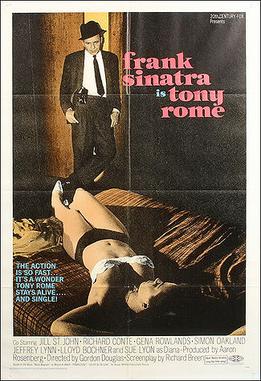
Cleaning Out The DVR: Tony Rome (dir by Gordon Douglas)


The 1967 film, Tony Rome, is about a detective named …. can you guess it?

That’s right! Tony Rome!

Tony works out of Miami and, because he’s played by Frank Sinatra, you can be sure that he’s a tough guy who knows how to throw a punch but who, at the same time, also knows how to have a good time. He’s got a bottle of liquor in the glove compartment. He’s got his own boat. He’s got a snappy quip for every occasion and a properly cynical sense of humor but at the same time, he also cares about doing the right thing. He says what’s on his mind and if that hurts your feelings, tough. Again, none of this should be a surprise, considering that he’s played by Frank Sinatra and Sinatra could play these type of sentimental tough guys in his sleep.

That’s not to say that Sinatra sleepwalks through the role, of course. Far from it. As played by Sinatra, Tony comes across as an authentic tough guy, as someone who has seen it all and who, as a result, understands that importance of stopping to have a drink and appreciate the world around him. Tony Rome might be a Rat Pack-style private investigator but that doesn’t mean he can’t solve the case and, even while Tony’s having a good time, Sinatra never lets you forget that he takes his job very seriously.

As for the film, it’s a story that beings when Tony is hired to drive a passed out rich girl back to her home. This leads to him investigating a jewelry theft and eventually discovering an extortion plot. Sue Lyon plays the rich girl. Gena Rowlands plays her stepmother while Simon Oakland (the psychologist at the end of Psycho) plays her father. Richard Conte, who played bad gangster Barzini in The Godfather, plays Tony Rome’s best friend on the police force. (Every good private eye has a best friend on the police force.) Jill St. John plays Ann Archer, who helps Tony out with his investigation. Ann is recently divorced. Will Tony claim her heart or will she go back to her husband? It wouldn’t be a Sinatra film without a little heartbreak. (To a large extent, St. John’s performance here feels like a slightly more serious version of the performance she would later give as Tiffany Case in Diamonds are Forever, which is perhaps as close as we’ll ever get to a Rat Pack-style James Bond film.)

The story itself is surprisingly easy to follow. This is not one of those detective stories that will leave you shocked over who turns out to be the bad guy. For a film that often takes something of a light-hearted approach to Tony’s efforts to solve the mystery, it’s also a rather violent film. More than a few people get killed. Tony gets kicked in the ribs at one point and the sound of the 50-something Sinatra groaning in pain is disconcerting. Of course, Tony recovers quickly and immediately gets his revenge. When you watch the scene, you think to yourself that anyone who would try to beat up Frank Sinatra has to be a fool. That’s largely because Tony is Sinatra and Sinatra is Tony.

It’s an entertaining film, one that works well as a time capsule of what it was like to cool and swinging and middle-aged in 1967. Tony Rome is smart enough to focus more on Sinatra’s charisma than on trying to impress the viewers with its own cleverness. If I ever have to hire a private detective, I hope he’s like Tony Rome. I hope he gets the job done. I hope he has a good time while doing it. And I hope he comes with his own Nancy Sinatra-sung theme song. That’s not too much to ask, is it?