Tonight, HBO will be premiering a film version of Ray Bradbury’s Fahrenheit 451. This version will star Michael B. Jordan as “fireman” Guy Montag and Michael Shannon as Montag’s boss, Captain Beatty. It’s one of the more eagerly anticipated films of the current television season but it’s not the first version of Fahrenheit 451 to be filmed.
The first version was released, by Universal Pictures, in 1966. It was the first (as well as only) English langauge film to be directed by the great French filmmaker, Francois Truffaut. (It was also Traffaut’s first color film, allowing the flames to burn in bright yellow and red.) Unfortunately, Truffaut would later describe the film as being his “saddest and most difficult” film making experience.
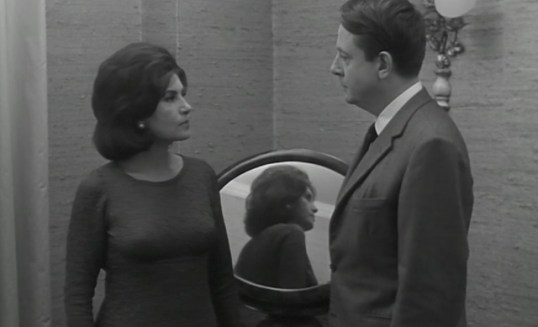
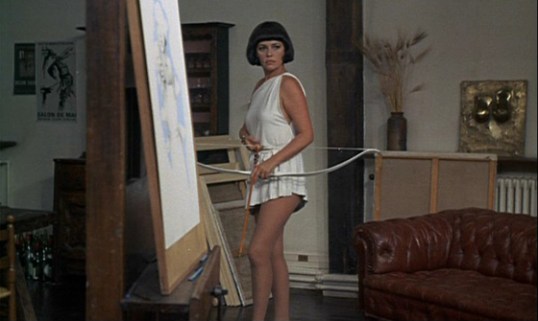
Though there are a few noticeable differences, the film sticks closely to the plot of Bradbury’s novel. Guy Montag (Oskar Werner) is a “fireman” in the near future. Montag lives in a society where books have been banned and the populace is kept to docile through a combination of pharmaceuticals and mindless television programming. Montag’s wife, Linda (Julie Christie), is content to live life without questioning anything. However, when Montag meets a school teacher named Clarisse (also played by Christie), all of his previous assumptions are challenged. What if the government isn’t always right? What if ignorance isn’t bliss? What would happen if, instead of burning books, Montag actually read one? After witnessing a woman choosing to self-immolate herself so that she can die with all of her books, Montag is finally ready to quit being a fireman. But his captain (Cyril Cusack) tells Montag that he needs to go on one more call, this one to Montag’s own house.
Truffaut’s film leaves out most of the overly sci-fi elements of Bradbury’s original novel. For instance, in the novel, Montag is terrified of the robots dogs that the firemen use but the dogs never appear in Truffaut’s film. As well, Traffaut totally eliminates the character of Faber, the former English professor who uses a portable communicator to keep in contact with Montag. (Today, of course, that hardly seems like science fiction.) In Truffaut’s film, the setting is designed to appear as contemporary and familiar as possible, a reminder that the story may have been sent in the future but that the issues it dealt with were relevant to the present. With this film, Truffaut asked the audience, “How different is the world today from the world of Bradbury’s novel?”
Truffaut’s other big departure from Bradbury’s text was to cast Julie Christie as both Clarisse and Linda. In the book, Montag’s wife was named Mildred and Bradbury went of out of his way to establish her as being the exact opposite of Clarisse. In Truffaut’s film, the double casting of Christie seems to suggest that Clarisse and Linda are two sides of the same character. Montag loves them both, though each appeals to a different part of Montag’s psyche. Linda appeals to the side of Montag that wants to just accept things the were they are and be happy. Clarisse, meanwhile, represents the part of Montag that wants to be free to feel everything, even if it means occasionally being unhappy or uncertain. When Montag finally meets the Book People, he discovers that they are just as fanatical about memorizing and reciting books as Linda was about watching her television shows. Was this intentional on Truffaut’s part, a suggestion that both the government and the rebels are, like Clarisse and Linda, two sides of the same coin?
It’s an intriguing but uneven movie. Truffaut apparently didn’t have a great working relationship with Oskar Werner and, at times, Werner doesn’t seem to be particularly invested in the role of Montag. (Interestingly enough, it’s also been suggested that Jacqueline Bisset’s character in Day For Night was inspired by Truffaut’s experiences working with Julie Christie in this film.) When the characters interact, the dialogue sometimes feel stiff and dull, as if Truffaut never got over his discomfort with having to direct a film in something other than his native French. At the same time, the film is full of hauntingly beautiful images, from the defiant woman standing in the middle of her burning books to the Book People walking through the snow. Truffaut makes brilliant use of color and the visuals are often strong enough to overcome even Oskar Werner at his most sullen.
Fahrenheit 451 is an imperfect movie but one worth seeing. Will the new HBO version be able to match it? We’ll find out soon enough.