I have to admit that I kind of went back and forth on whether or not to share the trailer for Dear Evan Hansen, the film adaptation for the Tony-award winning Broadway musical.
It’s been a while since I’ve seen a trailer greeted with this much derision. My natural instinct is to be a contrarian and to try to defend it. (Remember …. I proudly put Money Plane on my list of the best films of 2020. I campaigned, albeit unsuccessfully, for Kesley Grammar to receive a Best Supporting Actor nomination for his career-defining performance as The Rumble in that same film. I’ve voted for multiple third party candidates and I still hold on to hope that Degrassi will somehow be renewed for another season. I am not scared of embracing a lost cause.) However, I actually agree with a lot of the comments that have been made about this trailer. For instance, it does give away almost the entire plot. And it does tend to go on and on. (No trailer should be over 3 minutes long.) And, perhaps most importantly, Ben Platt does look way too old to be playing a depressed and insecure high school kid.
It should, of course, be noted that Ben Platt originated the role of Evan Hansen, playing the role from the first reading of the show all the way to Dear Evan Hansen‘s eventual Broadway premiere. He played the role for three years. He won a Tony Award for playing Evan Hansen. One could argue that Ben Platt earned the right to recreate the role on film. However, judging from the trailer, Ben Platt may be 27 but looks at least ten years older. He looks less like Julianne Moore’s son and more like her younger brother. The attempts to make him look like a high school student just seem to age him even more. On stage, this would be less of an issue. However, watching the trailer, it’s pretty much the only thing that you can think about.
That said, this film was directed by Stephen Chbosky. Chbosky also wrote and directed one of my favorite films of all time, The Perks of Being A Wallflower. My hope is that Chbosky can pull it off and that Ben Platt’s performance will be so effective that it won’t matter that he’s way too old for the role.
Anyway, with all that in mind, here’s the trailer:
Today is the 124 anniversary of the birth of Frank Capra and, in honor of this day, here’s a scene from one of my favorite films of all time, 1946’s It’s A Wonderful Life. In this wonderfully acted and directed scene, George Bailey tells off Mr. Potter, for the first but certainly not the last time:
4 (or more) Shots From 4 (or more) Films is just what it says it is, 4 (or more) shots from 4 (or more) of our favorite films. As opposed to the reviews and recaps that we usually post, 4 (or more) Shots From 4 (or more) Films lets the visuals do the talking.
109 years ago today, Richard Brooks was born in Philadelphia, Pennsylvania. He would go on to become an iconoclastic director, making films that challenged taboos and often dealt with the social issues that most mainstream Hollywood filmmakers refused to touch. With In Cold Blood, he launched the entire true crime genre. With Elmer Gantry, he was one of the first American directors to examine how religion became a big business. Throughout his long career, Brooks was a consistent opponent of bigotry, censorship, and hate. As one of the few independent directors to regularly work and achieve prominence during the studio era, he was a trailblazer for many today’s best directors.
In honor of the date of his birth, it’s time for….
6 Shots From 6 Richard Brooks Films
Blackboard Jungle (1955, dir by Richard Brooks, DP: Russell Harlan)Cat On A Hot Tin Roof (1958, dir by Richard Brooks, DP: William Daniels)Elmer Gantry (1960, dir by Richard Brooks, DP: John Alton)In Cold Blood (1967, dir by Richard Brooks, DP: Conrad Hall)Bite The Bullet (1975, dir by Richard Brooks, DP: Harry Stradling, Jr.)Looking for Mr. Goodbar (1977, dir by Richard Brooks, DP: John A. Fraker)
Sometimes, it takes a really good actor to give a really bad performance.
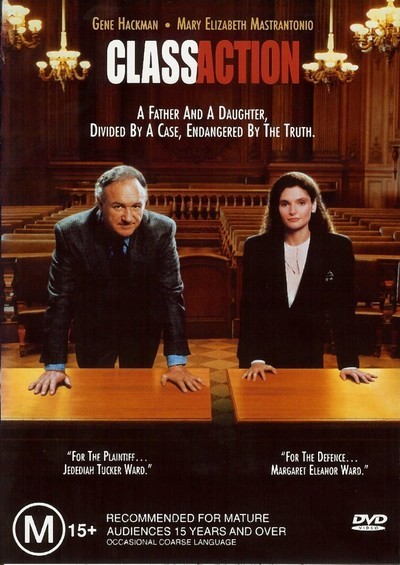
That’s what I found myself considering tonight as I watched the 1991 film, Class Action. I recorded this film off of Starz a few months ago, mostly due to the fact that I usually enjoy legal dramas. Class Action is about a father and a daughter, both of whom are attorneys, who find themselves facing each other in court. Gene Hackman plays Jedediah Ward Tucker while Mary Elizabeth Mastrantonio played Maggie, his daughter.
From the very first scenes, Jed Tucker is portrayed as being a firebrand, a crusader who stands up for the little guy against big corporate interests. (“Jed Ward is a great man!” one his clients exclaims while the other lawyers nod along in agreement.) Tucker is flamboyant, loud, perpetually outraged, in love with attention, and determined to make the world a better place. This is the type of role that would probably encourage any actor to overact just a bit. However, when you cast someone like Gene Hackman in the role, the performance becomes a masterclass in overacting. Gene Hackman was never a particularly subtle actor to begin with and casting him as Jed Tucker guarantees about two hours of Hackman bellowing, smirking, occasionally flirting, and basically coming across less like Gene Hackman and more like someone doing a particularly antic impersonation of Gene Hackman. Hackman goes so over overboard in the role that it becomes rather fascinating to watch. You watch and you ask yourself, “How much louder can he get? He much more obviously can he telegraph his intentions? Just how Gene Hackmanish is Gene Hackman going to get in this film?” Don’t get me wrong, Gene Hackman was a great actor. (He famously retired in 2004, after the indignity of appearing in Welcome to Mooseport.) One need only watch Bonnie and Clyde, The French Connection, Unforgiven, and The Royal Tennenbaums to see that Gene Hackman was a great actor. But sometimes, it takes a great actor to give a memorably bad performance.
Gene Hackman’s performance, as overbaked as it may be, is actually the only interesting thing about Class Action. It’s a well-made but ultimately rather silly mix legal maneuvering and family drama. Jed was a terrible father so Maggie becomes a corporate attorney in order to spite him. Class Action so embraces the idea that all professional women are motivated by daddy issues that even Aaron Sorkin would probably look at it and say, “Whoa, that’s really demeaning.” At one point, Maggie says to her father, “Have you ever considered that I might be a good attorney?,” just to have her father smirk and say that’s only because he’s her father. Jed’s response is to be expected, as he’s kind of an arrogant windbag. The problem is that the movie itself doesn’t seem to be willing to consider that Maggie could be a good attorney.
The other problem, of course, is that Class Action makes its good guys and its bad guys so painfully obvious that it’s hard to take any of the conflicts seriously. Of course, the big corporate law firm is going to be evil and of course, Jed Ward’s associates are going to be saints even if Jed isn’t. Laurence Fishburne plays Jed’s protégée and he gets stuck with all of the worst lines. Far more entertaining is future U.S. Senator and presidential contender Fred Dalton Thompson, playing a doctor who explains why it actually costs less for a car company to settle a lawsuit than to fix a design flaw.
Class Action is a forgettable film, not so much terrible as just bland. That said, if you want to hear some vintage Gene Hackman-style yelling, this might be the film for you.
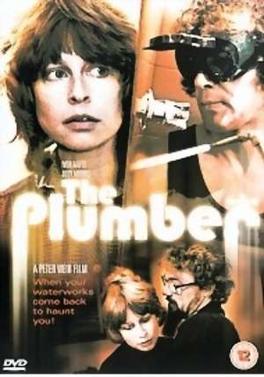
Peter Weir’s 1979 film, The Plumber, is essentially a battle of wills between two very different characters.
Jill Cowper (Judy Morris) is a masters student in anthropology. She’s educated, articulate, liberal-minded, and upper middle class. She’s married to Dr. Brian Cowper (Robert Coleby), a highly respected academic who is on the verge of being offered a position with the World Health Organization.
Max (Ivar Kants) is the plumber at the Cowpers’s building. We don’t find out much about his background, though it’s hinted that he’s had some previous trouble with the law. Max is friendly and talkative and, as soon becomes clear, amazingly determined. When he shows up at the Cowpers’s apartment, he tells Judy that he’s simply doing a check on all the building’s bathrooms. When Judy lets him in to do his inspection, Max announces that he needs to fix something with the plumbing. It should only take a day or two.
Except, of course, it takes more than a day or two. Max continually shows up at the apartment, usually waiting until Brian has left for the day. His comments to Jill become more and more intrusive and, whenever Jill takes offense, Max says that she’s misinterpreting him and that he’s just trying to be friendly. When Jill tells Brian that she thinks Max is intentionally destroying the plumbing so that he’ll have an excuse to be in the apartment, Brian refuses to believe her. When Jill tells her best friend, Meg (Candy Raymond), about what’s going on, Meg says that Max seems handsome and harmless.
Meanwhile, Max continues to work in the apartment’s bathroom, eventually turning it into a maze of pipes that seems to be constructed specifically to trap anyone unfortunate enough to enter the room….
The Plumber was originally made for Australian television. Though it was given a limited theatrical release in the United States (largely due to the arthouse success of Peter Weir’s previous films, The Last Wave and Picnic at Hanging Rock), The Plumber feels very much like a made-for-TV movie or perhaps an extended episode of an anthology series. It has a brisk 76-minute running time and visually, it features none of the striking imagery that one typically associates with Weir’s cinematic work. There’s no beautiful or majestic shots of the outback (like in Picnic at Hanging Rock) or the ocean (like in Master and Commander: Far Side of the World). Instead, the film takes place in the type of ugly and soulless cityscape that Harrison Ford was escaping from in Witness.
That said, The Plumber is still a memorable piece of work, one that feels perhaps more relevant today than when it was first released. Anyone who has ever dreaded having to take their car in for repairs or having to call someone out to fix an appliance will be able to relate to what Judy goes through with Max. The film is a reminder that, as much as we tell ourselves otherwise, we really are at the mercy of strangers. Judy may be better educated than Max and she may have more money than Max but what she doesn’t have, at least until the end of the film, is Max’s animal cunning. Max knows exactly what to say to get inside of the apartment and, once he’s inside, he knows exactly what to do to make it impossible for Judy to keep him from returning.
As upsetting as Max’s actions are, what’s even more upsetting is how everyone refuses to believe Judy when she tries to tell them what’s going on. Judy is told she is overreacting. Judy is told that she just doesn’t understand how these things work. Max gets offended that Judy doesn’t appreciate all of the hard work that he’s doing for her, despite the fact that she never asked him to do any of it. He does everything short of telling her that she needs to smile more. He’s the ultimate toxic presence, invading Judy’s life and refusing to leave. Everyone has had to deal with a Max but, for women, he’s an especially familiar and loathsome figure. The film may have clearly been made for Australian television but its themes are universal.
Because almost all of the action takes place in one small apartment, The Plumber is undeniably stagey. (It’s easy to imagine it as being a two-act play.) However, it’s also very well-acted and occasionally even darkly humorous. (As loathsome as Max is, it’s hard not to laugh a little when you see the maze of pipes he’s constructed in the bathroom.) It occasionally shows up on TCM so keep an eye out.
4 (or more) Shots From 4 (or more) Films is just what it says it is, 4 (or more) shots from 4 (or more) of our favorite films. As opposed to the reviews and recaps that we usually post, 4 (or more) Shots From 4 (or more) Films lets the visuals do the talking.
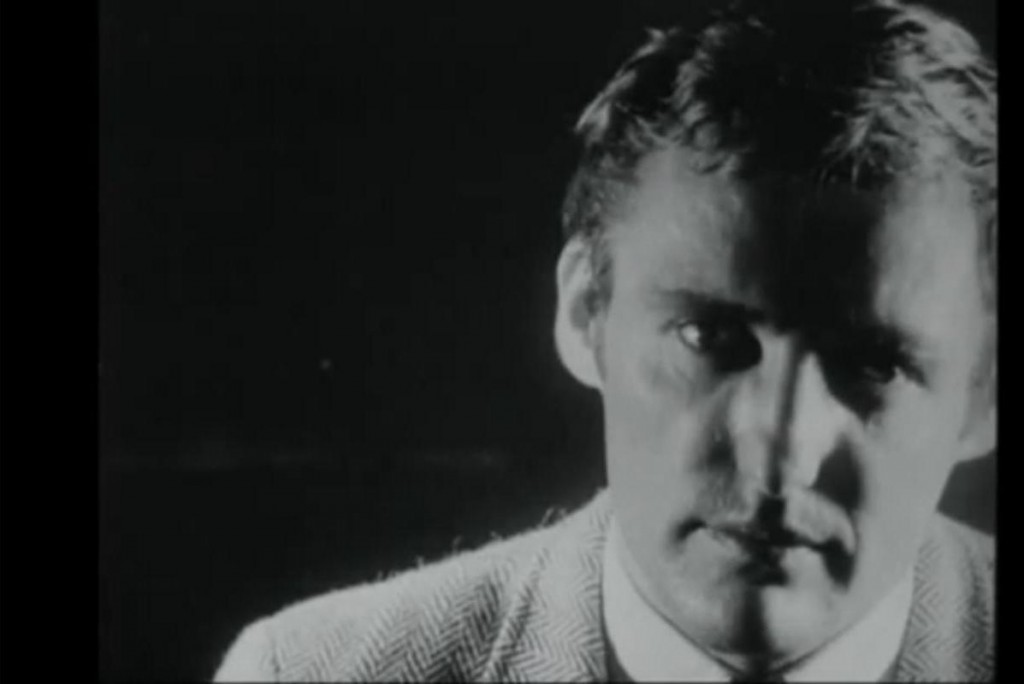
85 years ago, Dennis Hopper was born in Dodge City, Kansas.
It seems rather appropriate that one of America’s greatest cinematic outlaws was born in a town that will be forever associated with the old west. Dennis Hopper was a rebel, back when there were actual consequences for being one. He started out acting in the 50s, appearing in films like Rebel Without A Cause and Giant and developing a reputation for being a disciple of James Dean. He also developed a reputation for eccentricity and for being difficult on set and he probably would have gotten completely kicked out of Hollywood if not for a somewhat improbable friendship with John Wayne. (Wayne thought Hopper was a communist but he liked him anyways. Interestingly enough, Hopper later became a Republican.) Somehow, Hopper managed to survive both a raging drug addiction and an obsession with guns and, after a mid-80s trip to rehab, he eventually became an almost universally beloved and busy character actor.
Hopper, however, always wanted to direct. He made his directorial debut with 1969’s Easy Rider, a film that became a huge success despite being an infamously chaotic shoot. The success of Easy Rider led to the Hollywood studios briefly trying to produce counter-culture films of their own. Hopper was given several million dollars and sent to Peru to make one of them, the somewhat dangerously titled The Last Movie. Unfortunately, The Last Movie, was such a bomb that it not only temporarily derailed Hopper’s career but it also turned Hollywood off of financing counter culture films. Hopper spent a decade in the Hollywood wilderness, giving acclaimed performances in independent films like Tracks and The American Friend, even while continuing to increase his reputation for drug-fueled instability. Hopper would eventually return to directing with his masterpiece, 1980’s Out of the Blue. (Out of the Blue was so controversial that, when it played at Cannes, Canada refused to acknowledge that it was a Canadian production. It played as a film without a country. Out of the Blue, however, is a film that has stood the test of time.) Unfortunately, even after a newly cleaned-up Hopper was re-embraced by the mainstream, his directorial career never really took off. He directed 7 films, of which only Easy Rider and Colors were financially successful. Contemporary critics often didn’t seem to know what to make of Dennis Hopper as a director. In recent years, however, Hopper’s directorial efforts have been reevaluated. Even The Last Movie has won over some new fans.
Today, on his birthday, we honor Dennis Hopper’s directorial career with….
7 Shots From 7 Dennis Hopper Films
Easy Rider (1969, dir by Dennis Hopper, DP: Laszlo Kovacs)The Last Movie (1971,dir by Dennis Hopper, DP: Laszlo Kovacs)Out of the Blue (1980, dir by Dennis Hopper, DP: Marc Champion)Colors (1988, dir by Dennis Hopper, DP: Haskell Wexler)The Hot Spot (1990, dir by Dennis Hopper, DP: Ueli Steiger)Backtrack (1990, dir by Dennis Hopper, DP: Edward Lachman)Chasers (1994, dir by Dennis Hopper, DP: Ueli Steiger)
The Chase, a small-town Texas melodrama from 1966, opens with Robert Redford escaping from prison.
Redford is playing Bubber Reeves. Bubber, we’re told, has spent the last few years in a tough Texas prison, convicted of a murder that he didn’t commit. Now, he’s on the run and he’s probably returning to his hometown. His wife, Anna (Jane Fonda), still lives there, though Anna is now having an affair with Jake Rogers (James Fox). Jake is the son of the most powerful man in town, Val Rogers (E.G. Marshall). Jake also used to be Bubber’s best friend but now, he’s wracked with guilt about his affair with Anna.
Meanwhile, the townspeople are all worried that Bubber is going to seek revenge on the people who were responsible for him going to prison. Some of them know that he was actually innocent and some of them think that he’s actually the killer that he’s been made out to be but what they all have in common is that they’re worried about what Bubber’s gong to do when he shows up. Maybe they should have thought about the possibility of him getting mad and vengeful before they gave him a nickname like Bubber.
Anyway, Sheriff Calder (Marlon Brando) is convinced that Bubber is innocent but the townspeople still want him to allow them to gun Bubber down as soon as they see him. Sheriff Calder, however, is determined to keep the peace and make sure that the law prevails. He’s a man of unimpeachable integrity, working in a town full of people who are too cowardly to concern themselves with doing the right thing.
As everyone waits for Bubber to arrive. tempers come to the surface, a good deal of alcohol is consumed, and secrets are revealed. It all ends in tragedy, of course. One of the final scenes clumsily recreates the assassination of Lee Harvey Oswald. The Chase wouldn’t be an achingly self-serious film from 1966 if it didn’t.
There’s a few obvious problems with The Chase, the main one being that Robert Redford, who was 30 years-old when The Chase was released, looks surprisingly good for someone who has spent the last few years locked away in a tough Texas prison. Redford manage to escape from prison and run through a swamp without getting one single hair out of place. There’s nothing particularly dangerous about Redford in this film, which is surprising when you consider that The Chase was made just three years before Redford’s convincing turn as a laconic (if charming) killer in Butch Cassidy and the Sundance Kid. For The Chase to work, Bubber Reeves would have to be a force of nature but, whenever Redford’s on screen, you just find yourself wondering how someone who looks that good got stuck with a nickname like Bubber. The townspeople talk about Bubber like he’s a wild outlaw but Redford is just too laid back to pull it off. He comes across less like a wanted criminal and more like a California surfer who has somehow found himself in rural Texas.
As for the rest of the cast — well, there’s a lot of them. It’s a big ensemble film and good luck to anyone trying to keep track of who is related to who. Surprisingly enough, Marlon Brando is very convincing as a Texas sheriff, never allowing Sheriff Calder to turn into a stereotype. Less surprising is the fact that Robert Duvall, playing an frustrated husband, is also convincing in his role. Brando and Duvall, of course, would both go on to co-star in The Godfather. (Supposedly, when shooting of The Godfather began, Duvall was the only member of the cast with no fear of joking around with Brando, largely because they had bonded while working on The Chase.) Unfortunately, as good as Brando and Duvall are, they’re both let down in the hair department. Brando gets stuck with a hairpiece while Duvall is forced to go with a comb-over.
Some of the other performers are good and some of them are bad but none of them are particularly convincing as the residents of a small Texas town. James Fox, for instance, is very British. Jane Fonda and Angie Dickinson (cast as Calder’s wife) seem to be bored. E.G. Marshall is believably rich but never believably Southern. The other performers all tend to overact, especially once the people in town start drinking, shooting, hitting, and, in some cases, dancing. Somehow, Shelley Winters is not in the film, even though it seems like she should be.
The Chase was directed by Arthur Penn and written by Lillian Hellman. (The screenplay was based on a play and novel by Horton Foote.) Penn would follow up The Chase with Bonnie and Clyde and Alice’s Restaurant, two films that also dealt, for more successfully, with The Chase‘s themes of violence, community hypocrisy, and outlaw romanticism. Jane Fonda would go on to play Lillian Hellman in the 1977 film, Julia. For Julia, Fonda was nominated for an Oscar. For The Chase, she was not.
The Chase is one of those films that wants to say something important but doesn’t seem to be quite sure what. It’s a long and dramatic movie that doesn’t really add up to much. In the end, I think the main lesson to be learned here is not to allow your children to get a nickname like Bubber. There’s just no escape from a bad nickname.
I’d be lying if I said this looked like it was a particularly good film but it’s a film that takes place in Texas so I’m kind of legally obligated to share the trailer.
The trailer for The Green Knight dropped earlier today and what else can I say other than that it looks amazing! Dev Patel stars and visionary David Lowery directs. (Lowery previously directed my favorite film of 2017, A Ghost Story.)
Stillwater is a film that I’ve been hearing about for a while. It was directed by Tom McCarthy, who previously did the Oscar-winning (if subsequently kind of forgotten) Spotlight and it stars Matt Damon as a man who tries to prove that his estranged daughter (Abigail Breslin) is not guilty of the murder for which she’s been convicted.
Originally, it was thought that Stillwater would be done in time for a late 2019 release but ultimately, it got a 2020 release date. But then pandemic occurred and everything got pushed back and, as a result, Stillwater is now set to be released on July 30th.
The trailer finally dropped today and …. well, its looks okay. To be honest, it kind of looks like one of those films that shows up, without much fanfare, on Netflix. But McCarthy’s strongest trait, as a director, has always been his ability to inspire and capture good performances and it looks like Matt Damon is very well-cast in the lead role. I’ve always felt that Matt Damon is one of those actors who is so consistently good that he gets taken granted.




 Through the Shattered Lens