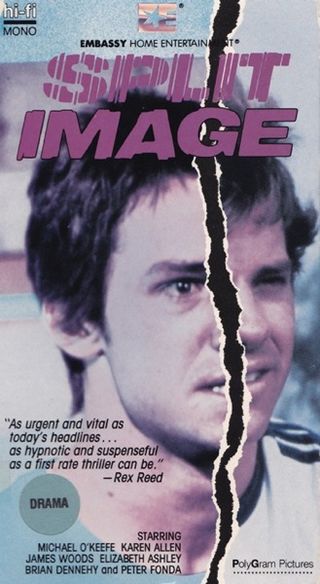
Embracing the Melodrama Part II #67: Split Image (dir by Ted Kotcheff)


Split_Image_VHS_coverUnlike Desperate Lives, the 1982 melodrama Split Image is available to be viewed on YouTube.  In fact, you can watch it below and I suggest that you do so.  It’s a pretty good film and, apparently, it’s never been released on DVD or Blu-ray and it’ll probably never be available on Netflix either. So, if you’ve ever wanted to see Peter Fonda play a cult leader, your best bet is to watch the video below.

But before you watch the video, here’s a little information on Split Image, one of the best films that you’ve never heard of.

Essentially, the film follows the same plot as the Canadian film Ticket To Heaven.  A college athlete (played by Michael O’Keefe) starts dating a girl (Karen Allen) who is a member of a sinister religious cult.  Soon, O’Keefe is a brainwashed member of the cult and only answering to the name of Joshua.  (The head of the cult is played, in an appropriately spaced-out manner, by Peter Fonda.)  His parents (Brian Dennehy and Elizabeth Ashley) hire a cult deprogrammer (James Woods) to kidnap their son and break Fonda’s hold on him.  However, it turns out that Woods’ methods are almost as psychologically destructive as Fonda’s manipulation.

Even if it’s not quite as memorably creepy as Ticket To Heaven, Split Image is still a well-made film, featuring excellent performances from Dennehy, Woods, O’Keefe, and Fonda.  However, for me, the most interesting thing about Split Image is that it was largely filmed and set down here in Dallas.  Just watch the scene where Woods and his men attempt to kidnap Michael O’Keefe.  It was shot on the campus of Richland Community College, which is one of the places where I regularly go to run.

(Interestingly enough, 33 years after the release of Split Image, Richland still looks exactly the same!)

You can watch Split Image below!
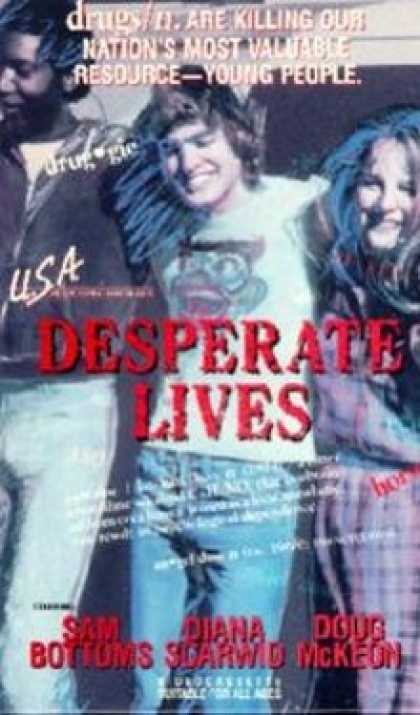
 

Embracing the Melodrama Part II #66: Desperate Lives (dir by Robert Michael Lewis)


DL-cov2YouTube, my old friend, you have failed me.

For the longest time, the 1982 anti-drug melodrama Desperate Lives has been available for viewing on YouTube.  I first watched it two years ago, after I read an online article about a scene in which a teenage Helen Hunt takes PCP and jumps through a window.  And, when I watched it, I was stunned.  I knew that the film was going to be over-the-top and silly, largely because it’s hard to imagine how a film featuring a teenage Helen Hunt taking PCP could be anything other than that.  But, even with my experience of watching over the top message movies, nothing could have quite prepared me for Desperate Lives.

So, I figured, for this review, that I’d say a few snarky words about Desperate Lives and then I’d just add something like, “And you can watch it below!”  And then I would embed the entire movie and all of y’all could just click on play and watch a movie on the Lens.

Unfortunately, Desperate Lives has been taken off of YouTube.  I assume the upload violated some sort of copyright thing.  And really, it’s kinda stupid because seriously, Desperate Lives is one of those films that really deserves to be seen for free on YouTube.

Oh well.  You can still watch a video of Helen Hunt jumping through that window.  The video below also features some additional elements from Desperate Lives.

For instance, you get to see Diana Scarwid playing the angriest high school guidance counselor in the world.  Scarwid knows that students like Helen Hunt are using drugs and that her fellow faculty members are turning a blind eye to everything’s that’s happening.  From the minute she first appears on screen, Scarwid is shouting at someone and she doesn’t stop screaming until the film ends.

And you also get to see Doug McKeon, playing Helen Hunt’s brother.  McKeon goes for a drive with his girlfriend, who has just taken PCP herself.  As their car goes flying off a mountain, she says, “Wheeee!”

In the video below, you also get to see that the only reason Helen Hunt used drugs was because her boyfriend begged her to.  That’s a scenario that seems to show up in a lot of high school drug films and it’s strange because it’s something that I’ve never actually seen happen or heard about happening in real life.  In fact, in real life, most users of hard drugs are actually very happy to not share their supply.

Unfortunately, the video below does not feature any scenes of Sam Bottoms as the world’s most charming drug dealer and that’s a shame because he gives the only good performance in the entire film (sorry, Helen!).

Even worse, the video doesn’t include any scenes from the film’s memorably insane conclusion, in which Scarwid searches every single locker in the school and then interrupts a pep rally so she can set everyone’s stash on fire in the middle of the gym.  Making it even better is that all the students are so moved by Scarwid’s final speech that they start tossing all of the drugs that they have on them into the fire.

Which means that the film essentially ends with the entire school getting high off of a huge marijuana bonfire.

No, that scene cannot be found in the video below.  But you can find Helen Hunt jumping through a window so enjoy.

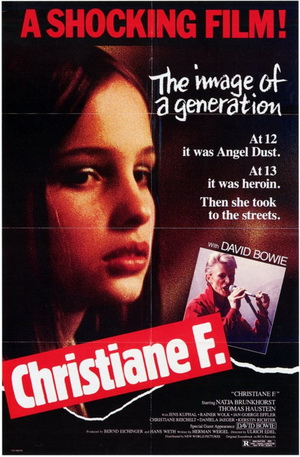
Embracing the Melodrama Part II #65: Christiane F. — We Children Of The Banhof Zoo (dir by Uli Edel)


Christiane_F_Poster Dedicated to: Andreas W. “Atze” (1960 – 77), Axel W. (1960 – 77), Babette D. “Babsi” (1963 – 77) and all others who didn’t have the luck and strength to survive.

— End credits dedication of Christiane F. (1981)

After watching Out of the Blue, be sure to watch the 1981 German film Christiane F.  Like Out of the Blue, Christiane F. tells the story of what happens with adolescent aimlessness turns into self-destruction.  Like Out of The Blue, Christiane F. centers on one alienated girl and, like Out of the Blue, it features a dark ending.  Unlike Out of the Blue, Christiane F. is actually based on a true story and that makes it all the more disturbing.

Another difference between Out of the Blue and Christiane F. is that, while Out of the Blue‘s Ceebe was motivated by anger, 13 year-old Christiane (Natja Brunckhorst) is mostly just bored.  She lives in a drab apartment in Berlin, with her mother and her younger sister.  Whenever we see Christiane walking among the concrete buildings that make up her neighborhood, we can see why she’s so frustrated with her life.  She lives in a world that literally has no personality or hope for the future.

With nothing else to look forward to, Christiane becomes obsessed with going to Sound, a club that is advertised as the “most modern discotheque in Europe.”  Wearing makeup and high heels and lying about her age, Christiane manages to get into Sound and discovers an entire new world.  She meets the charismatic Detlef (Thomas Haustein) and a whole new group of friends.  All of her new friends use drugs and, eager to fit in and hoping to impress Detlef, Christiane is soon taking part.  She quickly goes from smoking pot to shooting heroin to working as a prostitute to finance her habit…

And you know what?  Just from the description, Christiane F. sounds like a typical histrionic anti-drug film, a German version of Reefer Madness.  Anti-drug films are always based on the idea that the worst possible thing that could happen will always happen and that’s certainly what happens in Christiane F.  However, Christiane F. never sinks to the level of propaganda.  There’s an authenticity to the film’s portrait of what it’s like to feel lost and alienated.  It captures the gnawing despair of feeling as if the rest of the world knows something about happiness that you’ll never be able to understand.

Which is not to say that the film doesn’t work as an anti-drug film.  I would never do heroin anyway but if I was so inclined, Christiane F. would change my mind.  As Christiane and her friends become addicts, the film takes on an element of Cronenbergian body terror.  When Christiane’s friends overdose, the camera lingers over their thin, scarred, and blue bodies.  In perhaps the film’s most shocking scene, Christiane is attacked in a public restroom by a junkie who steals her heroin and then proceeds to shoot up in front of her, plunging the syringe into his neck.

Christiane F. is a powerful film, featuring an excellent lead performance from Natja Brunckhorst and a great soundtrack from David Bowie.  Watch it with Out Of The Blue but make sure you’ve got a comedy ready to go afterward.


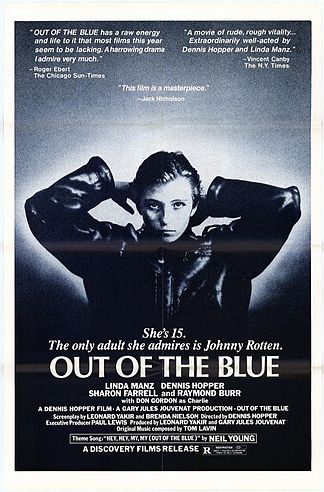
Embracing the Melodrama Part II #64: Out of the Blue (dir by Dennis Hopper)


Out_of_the_Blue_Film“Subvert normality.”

— Cebe (Linda Manz) in Out of the Blue (1980)

The 1980 Canadian film Out of the Blue opens with a terrifying scene.  Don Barnes (Dennis Hopper), drinking a beer and playing with his daughter while driving a truck, crashes into a school bus.  The bus is full of children, many of whom are seen being thrown into the air as the truck literally splits the bus in half.

Don is sent to prison.  His wife, Kathy (Sharon Farrell), becomes a drug addict.  His daughter, Cebe (Linda Manz), grows up to be an angry and alienated teenager.  Cebe spends her time either aimlessly wandering around her economically depressed hometown or else ranting about the phoniness of society to anyone who will listen (and quite a few who won’t).  Much like the killer cops in Magnum Force, all of her heroes are dead.  Occasionally, she sees a pompous therapist (Raymond Burr) whose liberal humanism turns out to be just as empty as the reactionary society that Cebe is striking out against.  Cebe’s heroes are Elvis, Sid Vicious, and her father.

When Don is finally released from prison, he returns home and he announces that he’s straightened out his life.  He promises that he’ll stay sober and he’ll be a good father.  That, of course, is all bullshit.  Soon, Don is struggling to hold down a job and spending his time drinking with his friend Charlie (Don Gordon).  Anyone who has ever had to deal with an alcoholic father will be able to painfully relate to the scenes where Don goes from being kind and loving to demonic in a matter of seconds.

Eventually, it all leads to a violent ending, one that is powerful precisely because it is so inevitable.

Out of the Blue is one of my favorite films, one that I relate to more than I really like to admit.  Directed in a raw and uncompromising manner by Dennis Hopper, Out of the Blue is a look at life on the margins of society.  And while some would argue that not much happens in the film between the explosive opening and the equally explosive ending, nothing needs to happen.  The power of the film comes not from its plot and instead from the perfect performances of Linda Manz, Dennis Hopper, Sharon Farrell, and Don Gordon.  Only Raymond Burr feels out of place but there’s a reason for that.

As much as I love Out of the Blue as a movie, I love the story of its production as well.  Originally, Out of the Blue was to be your typical movie about a rebellious teen who is saved by a patient and compassionate counselor.  Dennis Hopper was originally just supposed to co-star.  However, after the shooting started to run behind schedule, the film’s original director was fired.  Hopper talked the producers into letting him take over as a director.

This was the first film that Hopper was allowed to direct since the 1971 release of the infamous flop, The Last Movie.  Hopper, who was then best known for his drug use and his alcoholism, promised to be on his best behavior.  However, he then proceeded to secretly rewrite the entire film.

When Raymond Burr showed up to shoot his scenes, he was under the impression that he was still the star of the film.  Hopper essentially proceeded to shoot two separate films.  One film followed the original script and starred Raymond Burr.  The other was Hopper’s vision.  When it came time to take all of the footage and edit together the film that would be called Out of Blue, only two of Burr’s scenes made it into final cut and, in both of those scenes, Burr’s character is portrayed as being clueless.

Out of the Blue is not a happy film but it’s a good one.  More people need to see it.

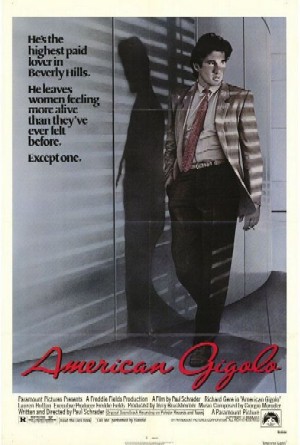
Embracing the Melodrama Part II #63: American Gigolo (dir by Paul Schrader)


American_gigolo_postWell, here we are!  A month and two days ago, I announced the start of Embracing the Melodrama Part II, a 126-film series of reviews.  At the time, I somewhat foolishly declared that I would manage to review all of these films in just three weeks!  Four weeks later and we have finally reached the halfway point.

So yeah…

Anyway!  We started this series of reviews with 1927’s Sunrise and we have worked our way through the films of the 30s, the 40s, the 50s, the 60s, and the 70s.  And now, as we hit the halfway point, it’s appropriate that we start a new cinematic decade.

In other words, welcome to the 80s!

Let’s start the 80s off with the 1980 film, American Gigolo.  Directed by Paul Schrader, American Gigolo is — much like Schrader’s Hardcore and The Canyons — a look at the sleazier side of life in California.  Julian Kaye (Richard Gere) is the most successful male escort in Los Angeles.  He’s handsome, he’s confident, he speaks multiple languages, and he maintains a proper emotional distance from … well, from everyone.  He’s got a fast car, expensive clothes, a great apartment, and — because it is the 80s after all — a small mirror that is perpetually coated in cocaine residue.

We don’t really learn much about Julian’s past.  We don’t know much about who he was before he became the American Gigolo.  (If this movie were made today, American Gigolo would be a part of the MCU and would end up joining The Avengers.)  However, the film is littered with clues.  For instance, we know that he used to work exclusively for Anne (Nina Van Pallandt) but he’s become so successful that Anne has lost her hold over him.  Before Julian worked for Anne, he worked for Leon (Bill Duke), a gay pimp.

Julian’s sexuality is a big question mark throughout the entire film.  Though all of his current clients are female and Julian brags about his ability to leave a woman feeling sexually satisifed, the film leaves it ambiguous as to whether or not he actually likes women.  (It’s suggested — though never explicitly stated — that Julian slept with men while he was working for Leon.)  Ultimately, for someone who has sex for a living, Julian seems oddly asexual.  It’s hard not to feel that Julian is only truly capable of desiring his own carefully constructed image.

Is Julian capable of love?  That’s the question that Michelle Stratton (Lauren Hutton) has to consider.  Michelle is unhappily married to a member of the U.S. Senate but she’s having an affair with Julian.

Michelle’s relationship with Julian is tested when Julian is accused of murdering one of his clients.  While Julian begs both his clients and his business associated to provide him with an alibi, he discovers that he’s basically alone.  Convinced that someone’s trying to frame him, Julian destroys his apartment and his car searching for clues.  As he grows more and more paranoid, his perfect image starts to crack and Michelle has to decide whether or not to sacrifice her marriage to protect him.

American Gigolo is technically a murder mystery but the murder doesn’t really matter.  Instead, it’s a character study of a man who is empty inside until, in Job-like fashion, he loses everything.  It’s also a very watchable exercise in pure, sleek, and probably cocaine-fueled style.  Richard Gere has always been an oddly hollow actor (and that’s not necessarily meant as a criticism) and that suggestion of inner emptiness makes him the perfect choice for the role of Julian Kaye.

American Gigolo is making the premium cable rounds right now.  Keep an eye out for it and don’t be surprised if you find yourself singing Call Me afterwards.

Embracing the Melodrama Part II #62: Time After Time (dir by Nicholas Meyer)


TimeAfterTime79So, I just gave the 1979 film Home Before Midnight a fairly negative review but I simply cannot end the 70s section of Embracing the Melodrama on such a negative note!  So, before we move on to the 80s, allow me to suggest another film from 1979 that you could watch while you’re not watching Home Before Midnight!

Time After Time opens in London.  The year is 1893.  Writer H.G. Wells (Malcolm McDowell) is having a dinner party so that he can show off his latest invention, a time machine.  Among his guests is a surgeon named John Stevenson (David Warner).  What nobody at the party suspects is that Stevenson also goes by the name Jack the Ripper and that he enjoys killing prostitutes.  When a detective from Scotland Yard shows up at Wells’s home, Stevenson jumps into the time machine and escapes into the future.  Since Stevenson does not have the “non-return key,” the machine returns back to 1893 but Stevenson has apparently escaped.

Wells uses the machine to pursue Stevenson and soon finds himself in 1979 San Francisco.  Wells had expected to find that the future would be a utopia but instead, he discovers the world of 1979 is loud, polluted, violent, angry, and dangerous.  (Kinda like the world of 2015…)  As Wells pursues Stevenson, he struggles to adjust to the world of the “future,” and he also meets a bank clerk, Amy Robbins (Mary Steenburgen).

Time After Time is probably the sweetest movie ever made about Jack the Ripper and that’s largely because of the romance between both Wells and Amy and the two actors who played them.  After watching Time After Time, I was not surprised to learn that McDowell and Steenburgen got married shortly after appearing in this film.  They were so incredibly sweet together!

Add to that, considering the he’s best known for playing villains and other menacing types, it’s interesting to see Malcolm McDowell plays such a gentle and nice character.  Wells’ befuddlement is charming to watch.  There’s a great scene where Amy calls Wells on a landline phone and Wells stares down at the receiver in frightened amazement.

Time After Time is a really good and likable movie.  It’s sweet and it proves that even hunting for Jack the Ripper can be a romantic experience if it’s done with the right person.  Watch it and enjoy!

Embracing the Melodrama Part II #61: Home Before Midnight (dir by Pete Walker)


-Home_Before_Midnight-_DVD_coverIf there’s any director who deserves to be rediscovered and be given a critical reevaluation, it’s … well, I was going to say that it’s Pete Walker but honestly, I’ve only seen a handful of Walker’s films.  And really, my admiration of Walker as a filmmaker is largely due to one film, 1974’s Frightmare.  So, I’ll just say that, based on Frightmare, Walker might deserve a critical reevaluation.

Unfortunately, I’m not reviewing Frightmare right now.  Instead, I’m taking a quick look at another Pete Walker film, 1979’s Home Before Midnight.

It’s going to be a quick look because there’s really not that much to say about Home Before Midnight.  The film opens with two 14 year-old girls hitchhiking.  Carol (Debbie Linden) is blonde and wild.  Ginny (Alison Elliott) is brunette and responsible.  They end up getting picked up by a truck driver who quickly decides that he’d rather just give a ride to Carol.  So, Carol and the driver drive off together and Ginny ends up alone and, once again, hitchhiking.  Eventually, Ginny is picked up by Mike (James Aubrey), a songwriter in his 30s.

Not realizing that Ginny is only 14 years old, Mike takes her back to his flat and they have sex.  Afterward, Mike discovers just how young Ginny is and tells her that they can be friends but that they can’t have sex because it’s illegal.  Ginny agrees.

And then Mike and Ginny end up having sex again anyway…

Anyway, as you can probably guess, things don’t go well as far as Mike and Ginny’s “romance” is concerned.  Though Ginny swears to her parents that she and Mike are just friends, her parents see Mike being interview on television, along with an unlikely rock star named Nick (Chris Jagger, far less charismatic brother of Mick).  When Mike is asked if he has a girlfriend, Nick announces that not only does Mike have a girl but her name is Ginny.  Soon, Ginny is moving on to boys her own age and Mike is on trial.

As someone whose first “serious” boyfriend was 9 years older than her and who has always appreciated a certain maturity in men, there were a few bits of Home Before Midnight to which I could relate.  Occasionally, the first part of the film even captures the excitement of having a secret and forbidden love.

But ultimately, the film just fails.  To put it lightly, Home Before Midnight is no An Education.  Instead, it’s a painfully boring film, one that pretends to examine a serious issue but then doesn’t even play fair.  We’re told that Ginny is 14 but the actress playing her was 20 and looked and acted like she was close to 30.  As well, about 90 minutes into the film, Ginny’s personality is totally changed, the better to portray Mike as somehow being a victim.  The film makes so many excuses for Mike and the camera spends so much time lingering on Ginny’s frequent naked body (and remember, Ginny is being played by a 20 year-old but is only supposed to be 14) that it actually becomes creepy to watch.

Ultimately, the most interesting thing about Home Before Midnight is the fact that it features Mick Jagger’s younger brother, Chris, in a supporting role.  Chris Jagger looks close enough to Mick that you would guess that they were related.  But Chris has absolutely none of Mick’s charisma and it’s actually funny to hear Chris continually being described as being one of the biggest stars in the world.  Chris Jagger makes Justin Bieber look like Adam Levine.

If you still want to see this boring and creepy movie, it’s currently available on Netflix.  However, I would suggest that your time would be better spent watching any other Pete Walker film.

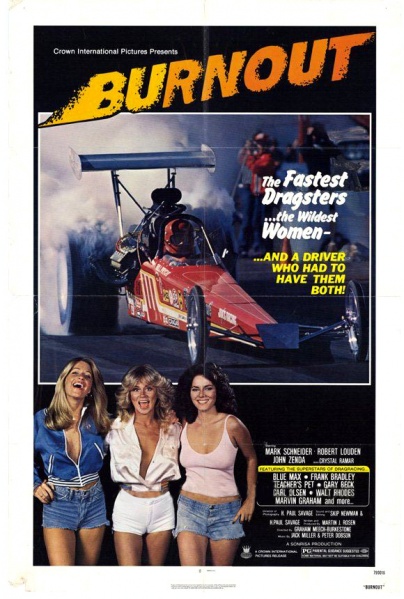
Embracing the Melodrama Part II #60: Burnout (dir by Graham Meech-Burkestone)


404px-BurnoutLe sigh.

In the future, when I decide to do a HUGE and impractical series of reviews, I’m going to make sure that I only include films that I’ve already seen.  Because, seriously, I added Burnout without knowing much about the film, other than it was a Crown International Film.  Eventually, I hope to be able to say that I’ve reviewed every single film released by Crown International.  I knew that I’d have to watch and review Burnout some time so why not now?

CIP_Logo

Before adding the film to my list of films to review, I did at least read a synopsis of the film’s plot.  Here’s what it says on the back of Mill Creek’s Savage Cinema box set:

“A trouble teenager, whose sole desire is to become a great drag racer, almost ruins his own dreams when he spurns his dad’s racing advice.  But support from his girlfriend enables him to prove his abilities to the racing world.”

Hey, that sounds really melodramatic, doesn’t it?  (In fact, it sounds kinda like the plot of the film At Any Price…)  That’ll be perfect for a series called Embracing the Melodrama, Part II.  Let’s watch it right now…

Well, don’t bother.  Burnout is basically 75 minutes of stock footage with 15 minutes of bad actors mouthing really bad dialogue.  Whenever we watch the races, we hear an announcer saying stuff like, “This is really exciting!” or “This is his first time to race!” or “OH MY GOD!  THIS IS REALLY FREAKING EXCITING!” (okay, I may have imagined that last one) and you have to be thankful for the announcer because otherwise, you’d never know who actually won anything.  This is one of the worst acted, worst edited, worst directed, worst written films that I’ve ever seen.  And, after countless posts in which I’ve defended their films, I have to announce that this is probably a strong contender for the worst film to ever be released by Crown International.

Bleh!  Enough of this review.  Burnout is 90 minutes of my life that I will never get back.  I refuse to spend any more time thinking about it.


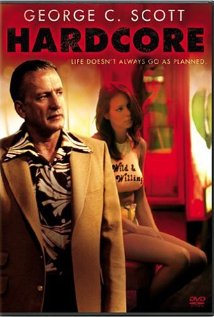
Embracing the Melodrama Part II #59: Hardcore (dir by Paul Schrader)


Hardcore_(1979_film)

“Turn it off…turn it off…turn it off…TURN IT OFF!” — Jake Van Dorn (George C. Scott) in Hardcore (1979)

Jake Van Dorn (George C. Scott) is a businessman who lives in Grand Rapids, Michigan.  He’s a deeply religious man, a sincere believer in predestination and the idea that only an elite few has been prelected to go to Heaven.  Jake is divorced (though he occasionally tells people that his wife died) and is the father of a teenage girl named Kristen (Ilah Davis).

One of the first things that we notice about Jake is that there appears to be something off about his smile.  There’s no warmth or genuine good feeling behind it.  Instead, whenever Jake smile, it’s obvious that it’s something he does because that what he’s supposed to do.  Indeed, everything Jake does is what he’s supposed to do and he expects his daughter to do the same.

When Kristen goes to a church camp in California, she soon disappears.  Jake and his brother-in-law, Wes (Dick Sargent), fly down to Los Angeles and hire a sleazy private investigator, Andy Mast (Peter Boyle), to look for her.  A few weeks later, Andy shows Jake a pornographic film.  The star?  Kristen.

Jake is convinced that Kristen has been kidnapped and is being held captive.  Wes tells Jake that he should just accept that this is God’s will.  Andy tells Jake that, even if he does find Kristen, Jake might not want her back.  Finally, Jake tells off Wes, fires Andy, and ends up in Los Angeles himself.  Pretending to be a film producer and recruiting a prostitute named Nikki (Season Hubley) to serve as a guide, Jake searches for his daughter.

The relationship between Jake and Nikki is really the heart of the film.  For Jake, Nikki becomes a temporary replacement for his own daughter.  For Nikki, Jake appears to be the only man in the world who doesn’t want to use her sexually.  But, as Jake gets closer and closer to finding his daughter, Nikki realizes that she’s getting closer and closer to being abandoned.

Hardcore is a pretty good film, one that was shot in location in some of the sleaziest parts of 70s Los Angeles.  Plotwise, the film is fairly predictable but George C. Scott, Season Hubley, and Peter Boyle all give excellent performances.  (The scenes were Scott pretends to be a porn producer are especially memorable, with Scott perfectly capturing Jake’s discomfort while also subtly suggesting that Jake is enjoying himself more than he wants to admit.)  And, even if you see it coming from miles away, the film’s ending will stick with you.

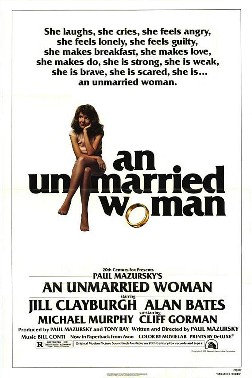
Embracing the Melodrama Part II #58: An Unmarried Woman (dir by Paul Mazursky)


Unmarried_womanI have mixed feelings about the 1978 best picture nominee An Unmarried Woman and I really wish I didn’t because this is one of those films that I really want to love.

Erica (Jill Clayburgh, who did not win the Oscar that she deserved for this film) appears to have the perfect life.  She works at an art gallery in New York.  She has smart, sophisticated friends.  She has an accomplished teenager daughter (Lisa Lucas).  She has a beautiful apartment.  Early on in the film, she wakes up and literally dances from her bedroom to the living room and back again.

And, of course, she has a husband.  His name is Martin and he’s a successful stock broker.  Of course, there are hints that everything might not be perfect.  She and Martin are a cute couple but they’re not exactly passionate.  One need only watch Erica carefully wash dogshit off of Martin’s expensive running shoes to tell who is getting the most out of the marriage.  Add to that, Martin is played by Michael Murphy and, as anyone familiar with 70s cinema knows, Murphy specialized in playing well-dressed, outwardly friendly heels.  And, of course, the film is called An Unmarried Woman and the title can’t be true as long as Erica’s married.

So, you’re not exactly surprised when Martin suddenly breaks down in tears and tells Erica that he’s fallen in love with a younger woman and that he’s leaving her.

The rest of the film deals with Erica’s attempts to adjust to suddenly being an unmarried woman and a single mom.  We follow as she struggles to get back her confidence.  The scenes of Erica dealing with her suddenly rebellious daughter really struck home to me, largely because I’m a rebellious daughter of divorce myself.  There’s a few great scenes of Erica turning to her girlfriends for support.  (Importantly, one of Erica’s friends is happily married, as if the film wants to make sure that we understand that not all marriages are as bad as Erica and Martin’s.)  We watch as Erica starts dating again, having a memorable one-night stand with the obnoxious but oddly likable Charlie (Cliff Gorman).  Finally, she ends up dating a rugged, bearded artist (Alan Bates) and she has to decide whether she wants to remain independent or not.

And it’s all amazingly well-acted and fun to watch but I have to admit that I was a little bit disappointed the first time that I saw An Unmarried Woman.  For some reason, I couldn’t bring myself to like it as much as I wanted.  The more I thought about it, the more clear my issue with it became.

As a character, Eric was simply too wealthy.

As I watched Erica struggle with being an unmarried woman, it was hard for me not to compare her struggles with the struggles that my own mom had to deal with after her divorce.  The film, and specifically Clayburgh’s lead performance, got so much right.  But there’s a difference — a huge difference — between an unmarried woman who has an apartment in Manhattan and a dream job at an art gallery and a woman like my mom who worked multiple jobs, spent hours worrying about how to pay the bills, and who had to do all of this while dealing with four stubborn daughters.  And so, whenever I saw Erica talking to her therapist about how upset she was over suddenly being single, there was a part of me that wanted to say, “Try doing it while living in South Dallas and having to deal with a brat like me.”

The second time that I watched An Unmarried Woman, I was able to better appreciate the film.  Now that I knew that Erica’s experiences were not going to be universal, I could focus on Jill Clayburgh’s great performance in the lead role.  I could marvel at how marvelously wimpy Michael Murphy was in the role of Martin.  I could laugh at Cliff Gorman’s comedic performance.  As for Alan Bates as that bearded artist — well, sorry, that still didn’t work for me.  Eventually, I could accept Erica’s perfect apartment and her perfect job but suddenly introducing a perfect boyfriend who also happened to be a passionate and financially successful painter; it all felt like a bit too much.

But, in the end, An Unmarried Woman is a good film and a valuable historical document of its time.  If for no other reason, see it for Jill Clayburgh’s lead performance.