Embracing the Melodrama #47: Cruel Intentions (dir by Roger Kumble)


For the past 10 days, I’ve been reviewing some of the most and least memorable melodramas ever filmed.  Starting with 1916’s Where Are My Children?, we’ve been moving chronologically through film history.  We’re now coming to the end of the 90s and what better way to end that decade than by taking a look at 1999’s Cruel Intentions?

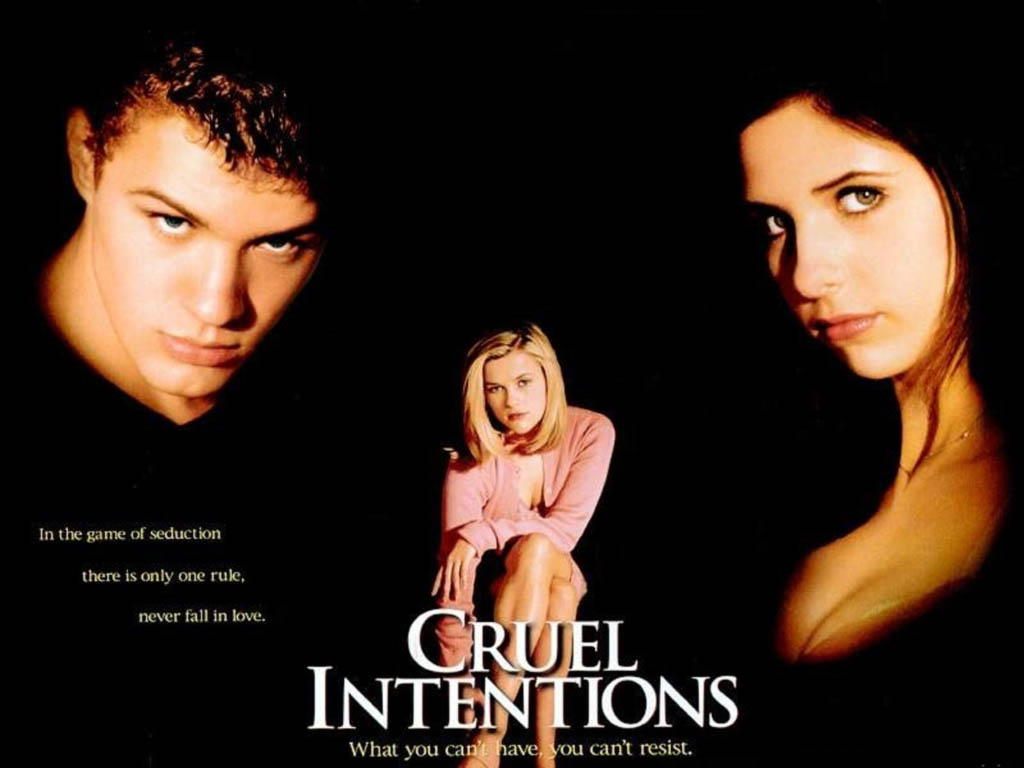
Cruel Intentions takes place in the upscale world of a New York private school.  Rich and popular Kathryn Merteuil (Sarah Michelle Gellar) is also a manipulative hypocrite who destroys reputations on a whim and carries cocaine in her ever-present cross necklace.  Kathryn is upset because her boyfriend has recently dumped her and is now dating the sweet and innocent Cecile (Selma Blair).  Kathryn asks her decadent cousin Sebastian Valmont (Ryan Phillippe) to seduce Cecile.  However, Sebastian refuses, saying that the challenge would be too easy.  Instead, he plans to seduce Annette Hargrove (Reese Whitherspoon), who has recently written an acclaimed essay about the importance of chastity and who also happens to be the daughter of the school’s headmaster.  Kathryn is intrigued by Sebastian’s plan and makes a bet with him.  If Sebastian manages to take Annette’s virginity than Kathryn will have sex with him…

Now, if you’ve already read my previous review of Dangerous Liaisons, the plot of Cruel Intentions probably sounds a bit familiar.  That’s because both of these films are based on the same source material —  Les Liaisons dangereuses by Pierre Choderlos de Laclos.  The main difference between the two films — beyond the fact that Dangerous Liaisons is set in pre-Revolutionary France and Cruel Intentions is set in 1990s New York — is that Dangerous Liaisons uses the material to comment on the excesses of the rich while Cruel Intentions is all about style.

And, to be honest, while Dangerous Liaisons is undoubtedly the better film, Cruel Intentions is a lot more fun.  I first saw Cruel Intentions shortly before I started my sophomore year of high school and I excitedly thought to myself, “So this is what high school is going to be like!”  Well, unfortunately, it turned out that I was wrong but oh well!  (Though, in all fairness to the film, I went to a public high school in the suburbs of Dallas as opposed to a rich private school in New York.)  The movie still a lot of fun, even if it didn’t quite match up with reality.  Everything from the costumes (I absolutely LOVED every single outfit that Sarah Michelle Gellar wore and, even before it was revealed to be full of cocaine, that cross necklace was to die for) to the ornate sets to the wonderfully melodramatic and self-aware performances — it all works towards creating a vivid and engrossing alternative universe.

So no, don’t take Cruel Intentions seriously.

Just enjoy the dance while it lasts.
cruel-intentions

Tomorrow, embracing the melodrama enters the 21st Century!
Embracing the Melodrama #46: Wild Things (dir by John McNaughton)


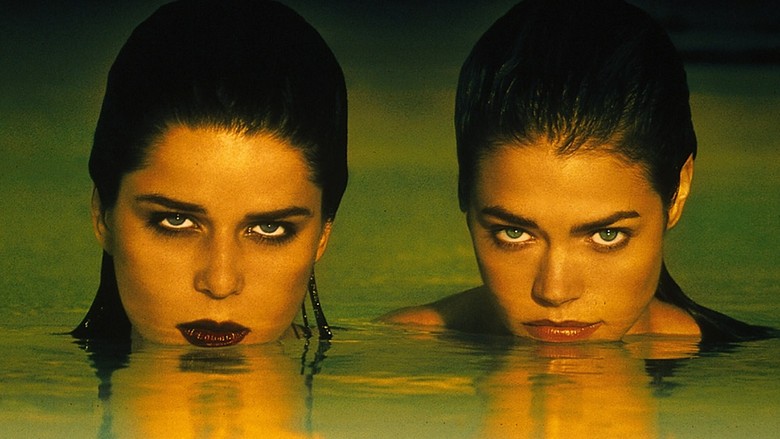
The 1998 film Wild Things starts out like a standard B-movie.  It take place in Florida so, of course, we get a lot of shots of the sun setting on the bayous and crocodiles staring at the camera as if to ask, “What are you looking for?”  Boats skim the water.  High school guidance counselor Sam Lombardo (Matt Dillon) walks across campus while all of the toned and tanned students stop to admire him.  Local rich girl Kelly Von Ryan (Denise Richards) smirks and says something snarky.  Detective Ray Duquette (Kevin Bacon) shows up in the background and stares at the world from behind dark glasses and a serious expression.  Meanwhile, local poor girl Suzie (Neve Campbell) goes back to her home, which happens to be located right behind an alligator farm.

Judging from the first few minutes, Wild Things could just as easily be an episode of CSI Miami.

But then Bill Murray shows up as Kenneth Bowden, a hilariously sleazy attorney who spends most of the movie wearing a neck brace, just in case the insurance company is watching him.

And then Theresa Russell shows up Kelly’s mother, standing on a balcony in a gold bikini and hitting on every passing man like the world’s most hyperactive cougar.

And then Carrie Snodgress shows up as Suzie’s mother, complete with an over-the-top white trash accent.

By the time that Robert Wagner shows up and literally growls at Matt Dillon: “You’re finished, Lombardo!  Finished!,” you realize that Wild Things is probably the most self-aware B-movie ever made and it’s all the better for it.

As for the plot — well, let’s see if I can keep track.  Suzie and Kelly both accuse Sam of rape.  Sam claims to be innocent but nobody in town believes him.  Sam is forced to hire the disreputable Kenneth Bowden to defend him.  During the trial, Kenneth is able to prove that Kelly blamed Sam for the suicide of her father while Suzie is angry that Sam once refused to bail her out of jail on a drug charge.  To get revenge, Kelly and Suzie decided to frame Sam.  Sam is acquitted and, again with Bowden’s help, is able to negotiate an 8 million dollar settlement for defamation.  True, Sam does lose his job but at least he’s a rich man now…

But wait a minute.

The movie still has a little over an hour to go.

Could it be that there’s more to this story?

Well, of course, there is.  It turns out that Sam, Kelly, and Suzie have been working together all the time.  The accusations, the trial, the defamation suit — it was all a part of a grand scheme to get the money.  Sam, Kelly, and Suzie celebrate their success with champagne and a threesome.

While everyone else in town seems to be ready to move on from the entire scandal, Detective Ray Duquette is telling anyone who will listen that he thinks that Sam, Kelly, and Suzie were all in on it together.  Even when Ray is ordered by his superiors to back off, Ray continues to investigate the case.

And why?

Because Ray Duquette is a cop who gets results!

Well, maybe.

Actually, it doesn’t take long to realize that there’s something off about Ray.  For one thing, his obsession with Sam really does seem to be a personal thing.  On top of that, Ray has a past connection with Suzie…

Wild Things has everything that you could hope for from a good exploitation film: a script that is full of double and triple crosses, unapologetically pulpy dialogue, over-the-top performances, and lots of sex.  Yesterday, I reviewed Normal Life and praised John McNaughton’s decision to play up the banality of the film’s characters and locations.  With Wild Things, McNaughton takes the exact opposite approach, playing up every sordid and tawdry detail to such an extent that the film itself eventually transcends such mundane concepts as good and bad.

Wild Things is a lot of fun and it’s also one of the best films of the 1990s.

Wild Things

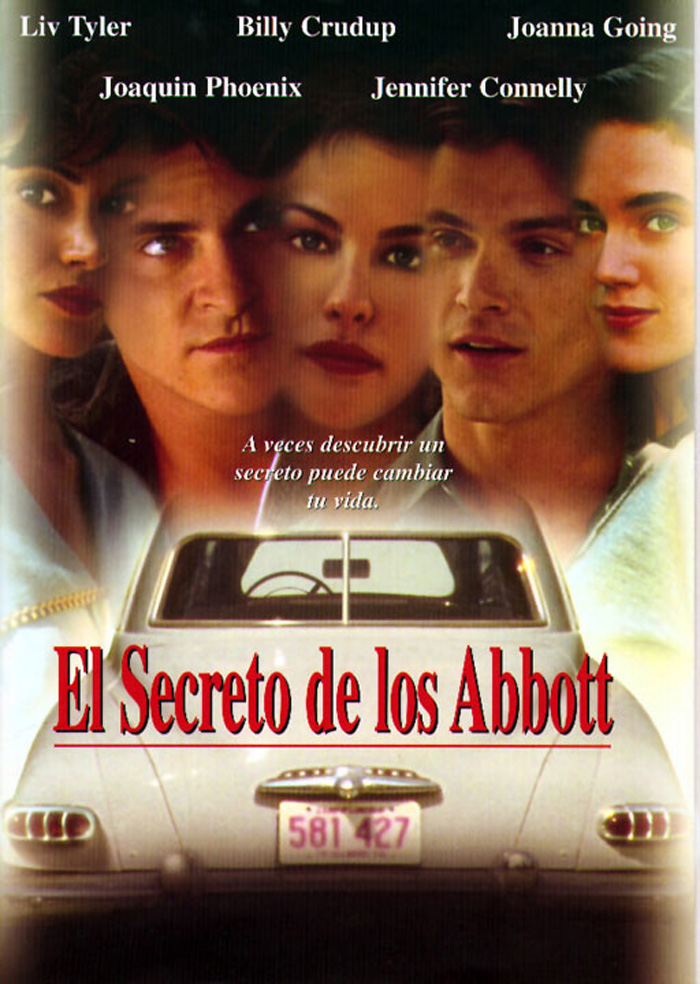
Embracing the Melodrama #45: Inventing the Abbotts (dir by Pat O’Connor)


First released in 1997, Inventing the Abbotts is a small town, romantic melodrama about two families in the 1950s.  One family is poor.  One family is rich.  As you can probably guess, each is fated to determine the destiny of the other.

Decades ago, Lloyd Abbott (Will Patton) and Holt were business partners.  However, after Lloyd had an affair with Holt’s wife (Kathy Baker), their friendship ended.  Lloyd eventually becomes the richest man in town and has three beautiful daughters: dutiful Alice (Joanna Going), wild Eleanor (Jennifer Connelly), and virginal Pam (Liv Tyler).  Holt is long since dead and his two sons, Jacey (Billy Crudup) and Doug (Joaquin Phoenix) live next door to the Abbotts.  While the bitter Jacey is obsessed with the Abbott family and ends up pursuing both Eleanor and the married Alice, Doug claims not to care about the Abbotts.  However, despite his claimed indifference, Doug soon finds himself falling in love with Pam.  Will Doug and Pam be together or will Lloyd succeed in keeping them apart?

To be honest, Inventing the Abbotts is not a particularly good film.  It moves way too slowly, Doug and Jacey frequently swtich personalities whenever the plot demands it, the story is way too predictable, the voice over narration is way too obvious, and Jennifer Connelly’s character leaves the film way too early.  This is one of those films that is determined to make sue that you never forget that it’s taking place in the 50s and you can be sure that every cliché that you associate with that decade will pop up at least once.  There are a few scenes that could have been easily been replaced with a picture of Joaquin Phoenix holding a sign reading, “It’s the 50s,” without causing us to miss out on any important information.

And yet, I still liked Inventing the Abbotts.  I think it really comes down to the fact that I’m the youngest of four sisters and therefore, I have a weakness for movies about sisters.  And the sisters in Inventing the Abbotts are all perfectly cast and believable as siblings so, for me, the movie was redeemed because of the number of scenes to which anyone who is a sister or who has a sister will be able to relate.

As such, despite its flaws, Inventing the Abbotts is definitely a guilty pleasure for me.

Your results may vary.

Inventing the Abbotts

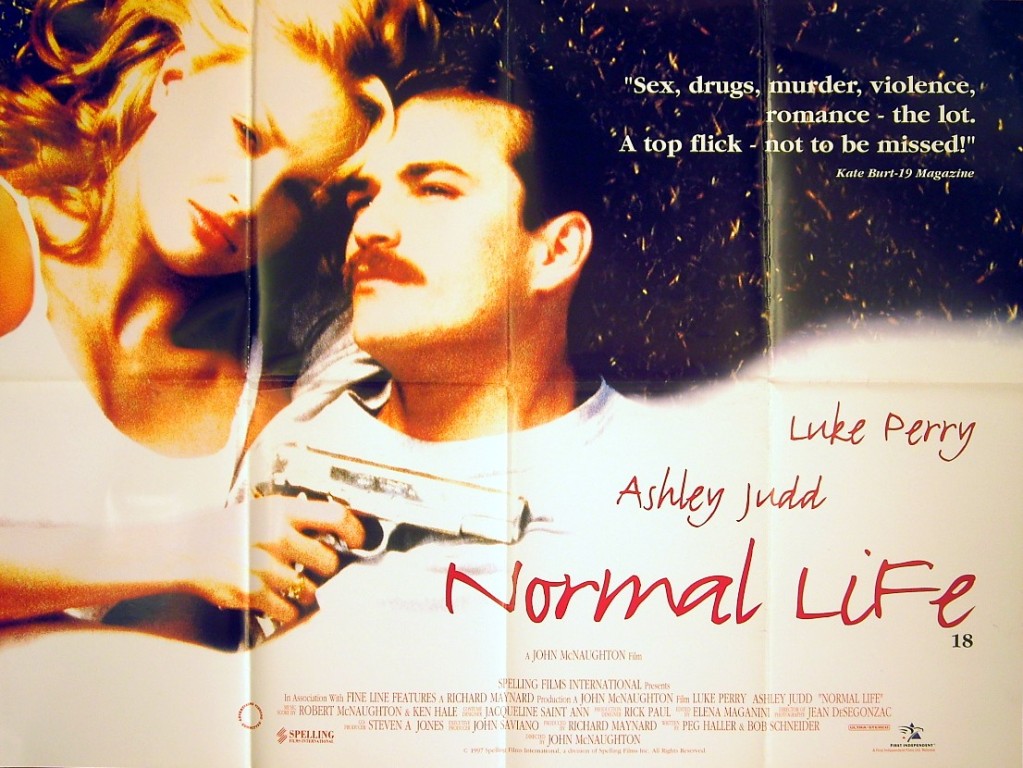
Embracing the Melodrama #44: Normal Life (dir by John McNaughton)


Digital StillCamera

Out of all the sin-in-the-suburbs films that I’ve watched recently, 1996’s Normal Life is one of the best.  Judging from the lack of reviews of this film online, it also appears to be one of the least known.  So, allow me to rectify that by telling you a little about Normal Life.

In Normal Life, Luke Perry plays Chris Anderson, a seemingly naive police officer.  From the minute that we first see Chris, it’s obvious that he’s a cop.  With his thinning hair, his anonymous mustache, and his deliberately calm and controlled manner, there’s no way that Chris could be anything else.

One night, Chris goes out to a bar and sees Pam (Ashley Judd) getting into a fight with her date and cutting her hand.  Chris, playing the hero, bandages it and then asks her for a dance.  For him, it’s love at first sight.  Soon, Chris is taking Pam on dates to the shooting range and, before you know it, they’re married.  Pam, it soon becomes obvious, is emotionally unstable.  She deals with disagreements by threatening to kill herself and trashing the apartment that she shares with Chris.  She makes little secret of how little respect she has for Chris’s family and she often goes out of her way to embarrass him.  However, Chris will never leave her because he’s in love with the idea of being the only one who can save her.  And, even though Pam may not admit it, she wants to be saved.  Chris gives her stability while Pam gives Chris a taste of excitement that his life would otherwise lack.

Unfortunately, even after Chris loses his job, Pam continues to spend money extravagantly.  Soon, in order to support his wife, Chris starts to utilize his law enforcement experience by robbing banks.  Now that they finally have money, they are able to move to a perfect house in the suburbs and Chris is able to pursue his lifelong dream of opening and running a small used bookstore.

However, Pam eventually discovers that Chris is a bank robber and soon decides that she wants to rob a bank with him.  Chris knows that it’s a mistake to involve the unpredictable Pam but, as the film makes clear, he will always chose her happiness over everything else…

Normal Life was directed by John McNaughton, who also directed the seminal serial killer film Henry: Portrait of a Serial Killer.  And while Normal Life is a far less disturbing film than Henry, it does utilize a similar technique of emphasizing just how banal Chris’s suburban lifestyle really is.  When Chris isn’t robbing banks or dealing with his suicidal wife, he’s essentially a rather boring guy who is perfectly happy to spend his days running his little bookstore.  The best scenes in the film are the ones where Chris simply walks to the doorway of his house, the placid calmness of the suburbs providing a strong contrast to what we know is going on inside that house and inside Chris’s head.

Of the two lead performers, Ashley Judd has the showier role and she does give a fantastically brave performance, providing an honest and sympathetic portrayal as a character who is not always pleasant to watch.  Luke Perry, however, is even better.  Whereas Judd is playing a character who is literally incapable of hiding her emotions, Perry has to play a character who keeps all of his emotions hidden.  Judd’s performance is almost totally external while Perry’s performance is largely internal and, when those two techniques come together, it tells us all we need to know about why Chris and Pam are fated to be together.

Normal Life is a film that you need to see.  And you can watch it below!

Embracing the Melodrama #43: The Piano (dir by Jane Campion)


I recently watched the 1993 best picture nominee The Piano and all I can say is that it is going to be a struggle to put into words just how much I loved this film.

Taking place in the 19th century, The Piano tells the story of Ada (Holly Hunter), a Scottish woman who hasn’t spoken since she was 6 years old.  Like many things in this enigmatic film, the reason why Ada stopped speaking is never clearly stated.  What is known is that she communicates through sign language and by playing her piano.  While Ada is usually a black-clad and somber figure, she comes to life when she plays the piano.  Ada also has a daughter named Flora, the result of a brief affair that Ada had with one of her teachers.  Unlike her mother, Flora (played by 10 year-old Anna Paquin, long before True Blood) is rarely silent and delights in telling elaborate lies about how her father died.

the-piano-01

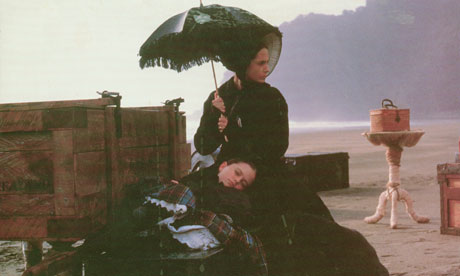
Ada’s father sells her into marriage to a New Zealand frontiersman named Alisdair (Sam Neill), a man who Ada has never even met.   When Ada and Flora first arrive in New Zealand, they are dropped off on the beach and forced to wait a night until Alsdair can meet them.  In the film’s most hauntingly beautiful scenes, Ada plays her piano on that beach while Ada dances in the surf.  It’s during those scenes that The Piano reveals three of its greatest strengths: the lush cinematography of Stuart Dryburgh, the haunting score composed from Michael Nyman, and the fact that Hunter and Paquin are totally believable as mother and daughter.  Not only is it easy to imagine Paquin growing up to look like Holly Hunter, but the two actresses even manage to perfectly imitate each other’s gestures and facial expressions.  Most of the reviews that I’ve read of  The Piano tend to emphasize the film’s focus on the conflict between the sensual and repressed but to me, the film works just as well as an exploration of the strong bonds that naturally exist between mothers and daughters.  I’m not ashamed to admit that when I look at the picture above, I reminded of how, when I was Flora’s age, I also used to hide behind my mom whenever I saw anyone that I didn’t know coming our way.

When Alisdair does finally show up to take them to their new home, he proves to be a rather cold and distant figure.  It would have been very easy for the film to portray Alisdair as being a completely heartless villain but, as played by Sam Neill, Alisdair is potrtayed as being less a traditional villain and more as just being a painfully unimaginative man who is incapable of understanding why Ada’s piano is so important to her.  To Ada, the piano and its music equals the life and freedom that she’s not allowed to experience.  To Alisdair, the piano is simply a bulky object that will not fit into his small house.  Over Ada’s objections (luckily, Flora is on hand to translate her sign language), Alisdair first leaves the piano on the beach and then agrees to sell it to Baines (Harvey Keitel), another white settler who — unlike Alisdair — is comfortable with the natives and their customs.

Baines, however, allows Ada to come over to his hut and play the piano.  He offers to give the piano back to her — key by key — if she agrees to continue to come to his hut and play while he watches and “pleasures” himself.  Reluctantly, Ada agrees but soon, she and Baines are falling in love.

Needless to say, when Alisdair finds out what has been going on at Baines’s hut, he is not happy.  As he largely considers to be his property, bought and paid for, he also feels that he has the right to decide whether or not she’s capable of playing her piano…

The Piano: Holly Hunter and Anna Paquin

The Piano is a simply an amazing and visually sensual film that is blessed with excellent lead performances from Hunter, Keitel, Neill, and Paquin.  As directed by Jane Campion, The Piano plays out as both a delirious homage to gothic romanticism and a feminist parable about the way that even women who aren’t mute are still punished for expressing their honest desires.

And, of course, there’s that amazing score:

Embracing the Melodrama #42: Indecent Proposal (dir by Adrian Lyne)


This one is just dumb.

First released in 1993 and something of a perennial on AMC, Indecent Proposal tells the story of David (Woody Harrelson) and Diane (Demi Moore), two kids who meet in high school, get married, and end up living what, in Hollywood, passes for an average, middle class lifestyle — which is to say, Diane is a successful real estate broker, David is an architect, and they’re in the process of building their dream house on the beach.  (Just like everyone else you know, right?)  However, the economy goes bad, David loses his job, and they find themselves deep in debt.

Desperately, they decide to take a gamble.  Literally.  They go to Las Vegas and, at first, it seems like everything’s going to be alright.  David has a run of luck and makes a lot of money.  They make so much money that David and Diane end up having sex on top of it.  Now, I have to admit, if I ever won $25,000 dollars in Vegas, I would probably spread it on a bed and roll around naked on it as well.  But only if it was paper money.  Coins would probably be uncomfortable and I’d hate to end up with a hundred little impressions of George Washington’s profile running up and down my body.

But anyway, David and Diane make the mistake of sticking around in Vegas for a second day and they end up losing all of the money that they previously won and you better believe that when the chips are pulled away, Diane is shown trying grab them in slow motion while going, “Noooooo!”  Soon, David and Diane are sitting in an all-night diner and trying to figure out what to do next.  A waitress overhears them and sadly shakes her head.  Obviously, she’s seen a lot of movies about Las Vegas.

Anyway, this movie is too dumb to waste this many words on its plot so let’s just get to the point.  David and Diane meets John Gage (Robert Redford), a millionaire who offers to give David a million dollars in exchange for having one (and only one) commitment-free night with Diane.  David and Diane agree and then spend the rest of the movie agonizing over their decision.  Eventually, this leads to Diane and David splitting up, John Gage reentering the picture and proving himself to be not such a bad guy, and David eventually buying a hippo.

It’s all really dumb.

Anyway, I was planning on making quite a few points about this set-up but, quite frankly, this film is so dumb that I’m getting annoyed just writing this review.  So, instead of breaking this all down scene-by-scene, I’m just going to point out a few things and then move on to better melodramas.

1) Every character in the movie has a scene where they eventually ask what we (the viewing audience) would do if we were in a similar situation.  “Would you have sex for a million dollars?”  Well, let’s see.  Basically, the deal seems to be that you have safe, non-kinky, missionary position sex with a millionaire who you will never have to see again after you get paid.  And you’re getting a million dollars in return.  Would I do it?  OF COURSE, I’D DO IT!  It’s a million dollars, it’s just one night, and it’s not like you’re being asked to fuck Vladimer Putin or something.  If the film wanted to create a true moral dilemma, they should have cast someone other than Robert Redford as John Gage and they should have had Gage propose something more than just one night.  If Gage had been played by an unappealing actor (or perhaps if the film were made today with Redford looking as craggly as he did in Capt. America or All Is Lost) or if it had been a million dollars for Diane to serve as a member of Gage’s harem for a year, the film would have been far different and perhaps not any better but at least all of the subsequent angst would have made sense.

2) What really annoyed me is that, after Diane returns from her night with Gage, neither she nor her husband ever cash that million dollar check.  If you’re going to agree to the stupid deal, at least take advantage of it.

3) Finally, why would you accept a check for something like that?  Did Gage write, “For letting me fuck your wife” in the memo line?  Why not get paid in cash so, at the very least, you don’t have to deal with IRS?

Seriously, this movie is just dumb.

Original Cinema Quad Poster - Movie Film Posters


Embracing the Melodrama #41: Poison Ivy (dir by Katt Shea)


“I still think about her. I guess, still love her. She might have been even more alone than I was. I miss her.” — Syvlie Cooper (Sara Gilbert) reflects on her murderous BFF Ivy (Drew Barrymore)

1992’s Poison Ivy is narrated by alienated and confused Sylvie (Sara Gilbert), a teenager who describes herself as being  “the politically / environmentally-correct feminist poetry-reading type.”  Syvlie has issues.  Her father (Tom Skerritt) is a self-righteous television pundit while her mother (Cheryl Ladd) is stuck at home, confined to bed and slowly dying.  Ivy’s only friend is her dog, Fred.  Sylvie deals with her alienation by constantly lying, often claiming that her real father is actually a black man who had an affair with her mother.

When Sylvie sees a girl (Drew Barrymore) brazenly swinging on a rope with her skirt around her waist, she is immediately fascinated. After spending a while obsessing over the girl’s physical appearance, Sylvie tells us, “Maybe I’m a lesbian…no definitely not.  I really wish we could be friends.”  Her desire for friendship continues even after Sylvie witnesses the girl violently euthanize a dog that’s been hit by a car.

Later, at school, Sylvie finds herself sitting in detention for calling in a bomb threat to her father’s show.  When the girl joins her in detention, Sylvie strikes up a conversation with her.  It turns out that the girl knows who Sylvie’s father is and that she considers him to be “an asshole.”  However, that still doesn’t prevent the girl from accepting a ride home with Sylvie and her father.  When introducing the girl, Sylvie calls her “Ivy,” presumably after one of the girl’s tattoos.  What’s interesting — and probably often missed — is that the girl herself never introduces herself as Ivy.  It’s a name given to her by Sylvie.

Not wasting any time, Ivy is soon Sylvie’s best friend and is even living in Sylvie’s house.  At first, Ivy is exactly the best friend that Sylvie needs, encouraging her to come out of her shell, take chances, and even get a tattoo.  However, soon, Ivy is not just helping Sylvie do everything that she’s ever wanted to but she’s also acting on all of Sylvie’s subconscious desires as well.  Ivy first manages to bond with Sylvie’s mother and then proceeds to seduce her father.  Finally, even Fred finds himself preferring the company of Ivy to his original owner…

Is there anything more wonderful than female friendship?  I think not but then again, that’s really not relevant to Poison Ivy because this film has not interest in being a realistic look at the relationship between Sylvie and Ivy.  Instead, it’s a hyper-stylized take on the type of material that you would normally expect to find in a trashy novel and the movie is all the better for it.  Fortunately, the movie was directed by Katt Shea who brings a sensitivity to material that a male director would probably only view as an excuse for titillation.

I think the film is best interpreted as being Sylvie’s fantasy.  In fact, I would argue that the case could be made that the entire film takes place in Sylvie’s head.  It’s her fantasy of having the type of uninhibited friend who will encourage her to conquer all of her fears and who will accept her for all of her strange quirks.  However, that’s not just Sylvie’s fantasy.  That’s a universal fantasy that every teenage girl has had (and probably a few teenage boys as well).  Is there any wonder that the film ends with Sylvie admitting that she still misses Ivy?

992POI_Drew_Barrymore_001

Embracing the Melodrama #40: Bugsy (dir by Barry Levinson)


Bugsy5lrg

Let’s continue to embrace the melodrama with the 1991 best picture nominee Bugsy.

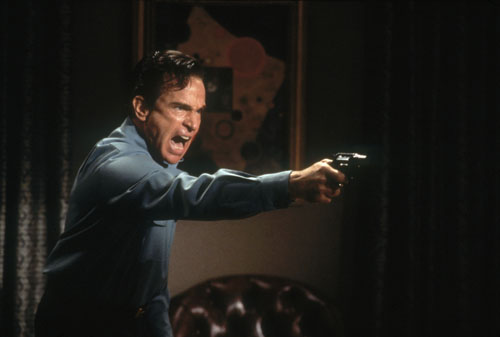
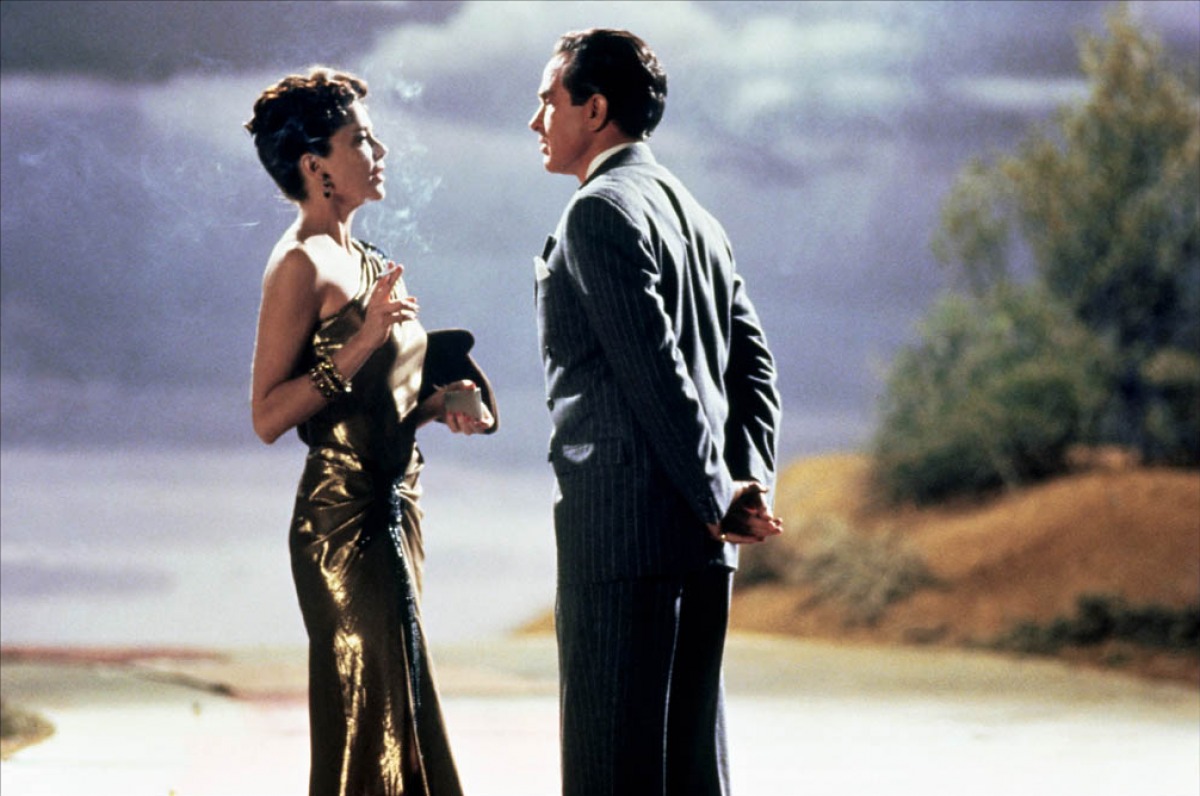
Gangster Benjamin Siegel (Warren Beatty) may be known as Bugsy but nobody dares call him that to his face.  Siegel may be best known for his quick temper and his willingness to murder anyone who gets in his way, but Ben insists that he’s not as crazy as everyone considers him to be.  Instead, Ben knows that he’s a very special person, a visionary businessman whose business just happens to be organized crime.  Along with his childhood friends Lucky Luciano (Bill Graham) and Meyer Lansky (Ben Kingsley), Siegel is one of the founders of the modern American crime syndicate.  Unlike his more practical-minded partners, Siegel revels in being a public figure.  Bugsy examines how Siegel became a celebrity gangster and how that celebrity eventually led to his downfall.

As the film opens, Luciano and Lansky send Siegel out to Los Angeles, specifically to look after their west coast business operations.  Before Siegel leaves, he is specifically told to keep a low profile.  So, of course, as soon as Siegel arrives in Los Angeles, he starts hanging out with actor George Raft (Joe Mantegna) and having a very public affair with actress Virginia Hill (Annette Bening).  Siegel quickly falls in love with the glamour and glitz of Hollywood and starts to think of himself as being a movie star.  When he’s not working with violent gangster Mickey Cohen (Harvey Keitel) to control the Los Angeles underworld, Siegel is attending film premieres and even shooting a Hollywood screen test.  Back in New York, Luciano and Lansky can only watch as their childhood friend goes out of his way to defy their instructions and become the most famous gangster in America.

Eventually, Siegel goes on a gambling trip to Nevada and comes up with an idea that is destined to change America forever.  With funding from Lansky and Luciano, Siegel begins construction on the Flamingo Hotel and Casino in Las Vegas, Nevada.  However, Siegel’s plans are so extravagant and, in many ways, impractical that the budget soon soars out of control.  Not helping matters is the fact that Virginia is embezzling money from the casino’s budget.  Even after Siegel finds out, he can’t bring himself to be angry at her.  He understand that he and Virginia are essentially cut from the same cloth.

However, back in New York, Luciano grows more and more frustrated with Siegel’s wasteful ways and Lansky comes to realize that he can only protect his friend for so long…

Bugsy is a big, extravagant movie that tries to be a few too many things at once.  Over the course of two and a half hours, it attempts to be a love story, a biopic, a classic gangster film, an allegory for the American dream, a history lesson, a period piece, and finally, a metaphor for the act of filmmaking itself.  (When Siegel complains that Luciano and Lansky don’t understand why the Flamingo has to be huge, it’s hard not to feel that he’s meant to be a stand in for every director who has ever had his budget cut by a meddling studio executive.)  When a film tries to be so many different things all at once, you can’t be surprised when the end result is a little uneven.  Bugsy starts out slowly but gradually picks up speed and the final part of the movie is everything that one could hope for from an epic gangster film.

The film works best as a character study of a man who, in the best American tradition, attempts to reinvent himself by moving out west.  Back in New York, Ben is known as a cold-blooded and dangerous killer.  However, once he arrives in Los Angeles, Ben attempts to recreate himself as a celebrity and then as a visionary.  For him, the Flamingo is about more than money.  The Flamingo is about being remembered for something other than his nickname.  The Flamingo is his way to escape from his past.  However, as Bugsy makes clear, the past can be ignored but it never goes away.

bugsy-1991-09-g

Embracing the Melodrama #39: True Colors (dir by Herbert Ross)


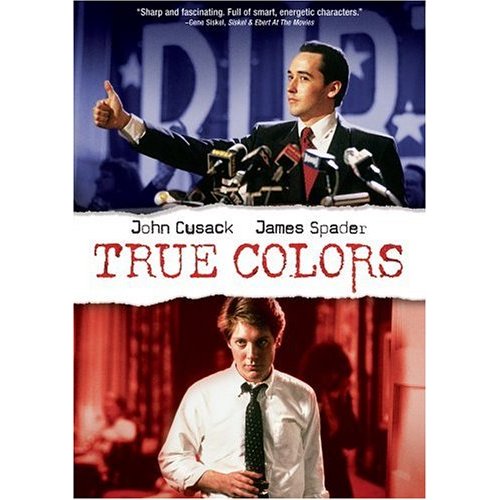
True Colors

For the past 9 days, I’ve been posting chronological reviews of 54 of the most (and least) memorable melodramas ever filmed.  I started with a film from 1916 and yesterday, I completed the 80s.  Today, we start in on the 90s with the 1991 political drama True Colors.

True Colors tells the story of two ambitious law students.  Tim Gerritty (James Spader) is a wealthy idealist who wants to work at the Justice Department so he can uncover and prosecute political corruption.  His roommate and eventual best friend is Peter Burton (John Cusack).  Although Peter initially lies about his background, it’s eventually revealed that he comes from a poor family and the result of growing up in poverty has left Peter with an obsessive desire for revenge on everyone who has ever looked down on him.  And how is Peter planning on getting that revenge?  By marrying the daughter of Sen. James Stiles (Richard Widmark) and eventually running for a seat in the U.S. House.  Despite the fact that Tim happens to be in love with Sen. Stiles’s daughter as well, he still supports his friend Peter and even agrees to be his best man.  However, as Peter gets closer and closer to achieving his goals, Tim starts to reconsider their friendship….

There’s a scene about halfway through True Colors, in which Peter Burton attempts to blackmail Sen. Stiles into supporting his political career.  Stiles agrees but then angrily adds, “God help you when the people find out.  They always do, you know.”  I was naturally waiting for Peter to come up with a properly sarcastic response but instead, Peter simply looks down at the ground, properly chastened.  It’s a jarringly false note and, unfortunately, everything that comes after this scene feels equally false.  The film, which starts out as such a strong portrait of what happens with friendship comes into conflict with ambition, ends up turning into a painfully predictable political diatribe, the type of thing that makes the portrait of politics in The Adjustment Bureau seem subtle and nuanced by comparison.  When Tim decided to betray Peter, it should be a moment full of moral ambiguity.  Instead, we’re expected to ignore their long friendship and just be happy that Tim is willing to do the right thing and protect the integrity of the American political process.

And, who knows?  Maybe that’s the way people viewed politics back in the early 90s.  But for audiences today, it all feels really naive and simplistic.

But, if you can manage to look past the film’s weak’s script, you can enjoy the acting.  John Cusack is wonderfully intense as Peter, making the character compelling even when the screenplay lets him down.  Watching him in True Colors is like watching the performance that he should have given in The Butler.  James Spader is sympathetic as Tim and, like Cusack, his performance almost allows him to overcome a script that doesn’t seem to realize that Tim is essentially a self-righteous jerk.  And finally, there’s Mandy Patikin who has a lot of fun playing the local crime boss who sponsors Peter’s career and who, in one memorable (if out-of-place ) scene beats up a shark that’s jumped up on the desk of his yacht.

Much like High Stakes, True Colors is one of those obscure films that occasionally pops up on cable, usually late at night and usually serving as filler between showings of better-known films.  Keep an eye out for it, if just for the chance to enjoy the performances.

Embracing the Melodrama #38: High Stakes (dir by Amos Kollek)


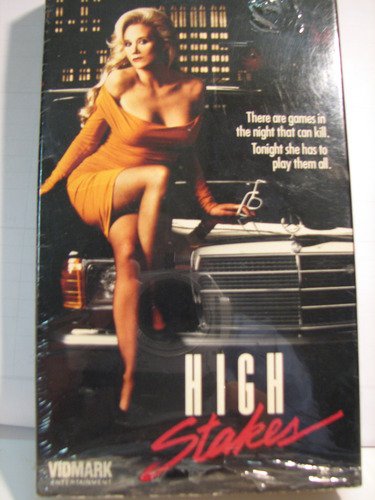
High Stakes

Yesterday, I said that Dance or Die was the most obscure film that I would be reviewing for this series of melodramatic film reviews.  Well, I may have spoken too soon.  Originally, I was not planning on reviewing the 1989 film High Stakes for this series.  Until a few nights ago, I had never even heard of it.  However, I watched it late last night and I realized immediately that I had to include it in this series.

High Stakes is one of those odd, older films that occasionally pops up as filler on Encore, playing in between showings of movies that people have actually heard of.  When I first came across this film listed in the guide, it was mentioned that High Stakes was Sarah Michelle Gellar’s film debut.  However, before all of my fellow Buffy fans get all excited, they should be aware that Sarah was only 12 years old when she appeared in High Stakes and she spends most of her screen time going, “Mommy!”  If not for her name in the credits, you would never suspect that the little girl playing Sally Kirkland’s daughter would later grow up to play one of the most iconic characters in film history.

Sarah plays the daughter of Bambi (Sally Kirkland), an aging New York-based prostitute and stripper who works for the demonic pimp Slim (Richard Lynch).  Bambi hates her life but she does what she has to do to support her daughter.  One night, Bambi finds a man passed out in the garbage across the street from her apartment.  That man is John Stratton (Richard LuPone), a crooked stock broker who has recently grown disillusioned with his greed-fueled life.  John is laying in the garbage because he’s just been mugged.  Despite her natural instincts, Bambi takes sympathy on John and allows him to come up to her apartment.  John and Bambi start to talk about their respective lives, just to have the conversation interrupted by one of Slim’s henchmen showing up at the apartment and demanding money.  John and the henchmen get into a physical altercation and soon, he and Bambi find themselves on the run with $4,000 of Slim’s money.

As directed by Amos Kollek, High Stakes is essentially two different stories.  One of which is rather conventional thriller, in which John and Bambi have to escape from Slim.  The thriller elements are rather predictable, distinguished only by Richard Lynch’s notably unhinged performance.  The other part of the film is the opposites-attract love story between John and Bambi and these scenes work a lot better.  LuPone and Kirkland have a lot of a chemistry and some of the best moments in the film are the ones where the characters simply talk about their different lives.  Kirkland, in particular, does a good job and she manages to bring some unexpected shadings to a stock role.  She’s especially good in her scenes with Sarah Michelle Gellar, radiating a very natural maternal instinct.  By the end of the film, you truly like Bambi and root for her.  Despite all of my natural expectations, High Stakes turned out to be a rather sweet and touching film.

High Stakes may be an obscure film but it’s definitely one to keep an eye out for the next time it shows up on Encore.

Sarah Michelle Gellar and Sally Kirkland in High Stakes

Sarah Michelle Gellar and Sally Kirkland in High Stakes

That concludes the 80s.  Tomorrow, we’ll start in on the 90s.