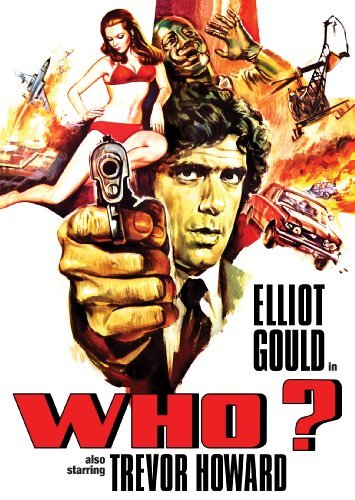
Lucas Martino (Joseph Bova), an American scientist who was previously captured by the Soviets in East Berlin and who was gravely injured in a terrible car crash, is finally returned to the Americans. But is it really Dr. Martino? Making identification difficult is that the Soviets had to totally rebuild Martino’s body after his car crash. He appears to still have one of his original arms but he’s otherwise a cyborg. He now has a metal head with an expressionless face. Is he really Lucas Martino or is he a spy? Even though his fingerprints check out, it’s possible that the real Martino’s arm could have been surgically grafted onto an imposter’s body.
It falls to agent Shawn Rogers (Elliot Gould) to determine whether or not this Martino is the real Martino. Rogers interrogates the man claiming to be Martino but struggles to determine whether or not the man is who he claims to be. Complicating matters is that, even if Martino is Martino, it’s possible that he could have possibly been brainwashed by Shawn’s Soviet counterpart, Col. Azarin (Trevor Howard). As Shawn interrogates Martino, the film frequently shows Azarin asking Martino the exact same questions. Is the film showing what Shawn thinks happened or is the film showing what actually happened?
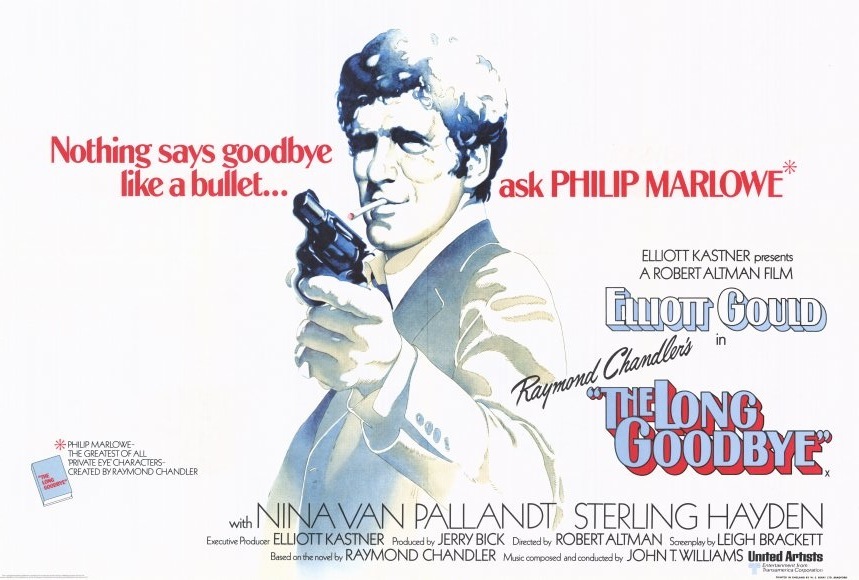
Who? is based on a classic sci-fi novel by Algis Budrys. It’s pretty faithful to its source material but it doesn’t really work as a film. Some of that is because, despite the fact that Bova gives a good performance, the cyborg makeup is never really convincing. Many potentially dramatic scenes are ruined by how silly Bova looks. Trevor Howard is too British to be convincing as a sinister Russian and Elliott Gould is likewise miscast as Shawn Rogers. Gould was always at his best playing quirky, counter-cultural characters. Just think about his performance in Robert Altman’s The Long Goodbye, where Gould was such a strange P.I. that it allowed Altman to deconstruct the entire genre. In Who?, Gould is meant to be a much more conventional secret agent and he seems lost in the role.
Speaking of Robert Altman, he’s the type of director who probably could have worked wonders with Who? I think Michael Crichton probably could have pulled off the film. Maybe Mike Hodges, as well. But Jack Gold was a much less adventurous director than any of these filmmakers and his direction in Who? is often too low-key and conventional. I kept waiting for the film to really go for it and challenge my expectations and surprise me but it never did. Who? doesn’t seem to know what type of film it wants to be. Is it a spy thriller or a sci-fi film or an examination of what it means to be human? It tries to be all three but just doesn’t succeed.
The idea behind the movie is a good one and Budrys’s book remains intriguing. This is one that I wouldn’t mind seeing remade, perhaps by someone like Denis Villeneuve or Alex Garland.
I recorded the 1980 film, The Last Flight of Noah’s Ark, off of TCM because I looked at the title and the fact that it starred Elliott Gould and I figured that it would be a film about an expedition to recover the actual Noah’s Ark. I figured that it would feature scenes of Elliott Gould and Christopher Plummer (who I just assumed would be in the movie) climbing Mount Ararat and having comical disagreements about all of the snow. I also assumed that the movie would end with the real Noah’s Ark sliding down the mountain while Gould and Plummer tried to steer it.
Seriously, it sounded like fun!
Of course, it turned out that I was wrong.
It turns out that The Last Flight of Noah’s Ark is about an out-of-work pilot named Noah Dugan (Elliott Gould) who has a gambling problem and owes a lot of money to the mob. Normally, you’d be worried that this means Dungan has a contract out on his life but instead, it just means that a bald guy named Benchley (Dana Elcar) keeps popping up and saying that Dugan’s got a week to come up with the money.
Since this film was made before our current socialist moment, Dugan is forced to get a job. Unfortunately, the only one that he can get involves flying a missionary (Genevieve Bujold) and a bunch of animals to a South Pacific island. Dugan agrees but, because the plane is an old World War II bomber, he ends up having to make an emergency landing on a remote and uncharted desert isle.
Of course, it quickly turns out that Dugan, the missionary, and the animals aren’t alone! First off, it turns out that two orphans (played by Ricky Schroder and Tammy Lauren) stowed away on the airplane. And then, we discover that there are two Japanese soldiers stranded on the island as well! They’ve been there since World War II! Fortunately, one of them is named Cleveland (John Fukioka) and can speak English.
(As for Christopher Plummer, he’s nowhere to be seen because he’s not in the movie.)
Anyway, can you guess what happens? If you think that Noah and the gang turn the plane into a big boat, you’re on the right track. If you think that cynical Noah turns out to actually have a soft spot when it comes to children, you’re right. If you think that Noah and the missionary embark on the most chaste romance in movie history …. oh my God, have you seen this movie before!?
Here’s the thing with The Last Flight of Noah’s Ark — the animals are cute. I mean, the animals really are adorable. There’s this one duck who has more screen presence than every human in this movie. And normally, I’d say that cute animals can save just about any movie but this might be the exception to the rule.
I mean, I get it. This was a movie for kids and that’s great. But my God, this is a slow movie. We start with Dugan getting threatened by the gamblers and then it’s another 25 minutes before Dugan even starts the engine on that plane. I get that this is a family film but I imagine that even families in 1980 would have been bored to death by it. Elliott Gould certainly seems to be bored, as he gives a performance that all but screams, “Where’s my paycheck!?”
What would have improved The Last Flight of Noah’s Ark?
“Dedicated to the veteran who traded his place on the front line for a place on the unemployment line. Peace is Hell.”
— the end credits of Mean Johnny Barrows (1976)
“He’s not that mean.”
— Me, while watch Mean Johnny Barrows
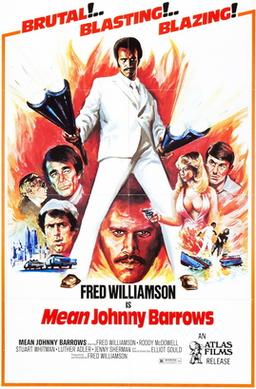
Who is Johnny Barrows? As played by blaxploitation star Fred Williamson, Johnny Barrows is a former football great who later served in Vietnam and won several silver stars. As a soldier, he killed an untold number of people but he is always quick to explain that he wouldn’t do the same thing as a civilian. Even after the war ended, Johnny remained in the army, teaching new recruits. He was good at his job but, one day, a racist officer decided to play a stupid trick on Johnny. During a training exercise, that officer put a live landmine out on the training grounds. After defusing the mine, Johnny promptly punched the officer. The result? A dishonorable discharge and the lesson that peace is Hell.
Johnny returns to Los Angeles and discovers that the country he fought for isn’t willing to fight for him. Because of his dishonorable discharge, Johnny can’t find a good job. Because he can’t find a job, he can’t afford a place to live. Johnny stays on the streets. His only friend is a self-described philosophy professor (Elliott Gould, in an amusing cameo) who teaches Johnny all about soup kitchens.
When Johnny steps into an Italian restaurant and asks for food, he is shocked to discover that the owner, Mario Racconi (Stuart Whitman), knows who he is. Mario says that he played against Johnny in a high school football game. (Perhaps Johnny’s shock is due to the fact that Mario appears to be at least ten years older than him.) Mario gives Johnny something to eat and even offers him a job. Realizing that the work is mob-related, Johnny says that he’s not interested. He’s not going to break the law…
And here’s where we run into a problem with the film’s title. The film is entitled Mean Johnny Barrows but, so far, he’s been almost painfully nice. Then again, Mild Johnny Barrows doesn’t have much of a ring to it.
Anyway, Johnny does try to stay out of trouble. He even manages to land a demeaning job cleaning the toilets at a gas station. But his boss (R.G. Armstrong) is a real jerk and Johnny has his dignity, no matter how much the world wants to take it away from him. Finally, Johnny agrees to work with the Racconi Family. Not only does he become friends with Mario but he also falls for Mario’s girlfriend, Nancy (Jenny Sherman).
Unfortunately, not all Mafia families are as kind-hearted and generous as the Racconi Family. The Da Vinci family wants to flood Los Angles with drugs. It’s all the master plan of Tony Da Vinci (Roddy McDowall). Tony is eager to prove himself to his father and what better way to do that than to smuggle heroin? Tony also loves flowers because … well, why not? Anyway, when the Racconis object to Tony’s scheme, a mob war erupts. Nearly all of the Racconis are killed. It looks like it’s time for Johnny Barrows to put on his white suit, pick up a gun, and get vengeance for his surrogate family.
There are some pretty obvious problems with Mean Johnny Barrows, not the least of which is the casting of Roddy McDowall — perhaps the least Italian actor in the history of cinema — as a ruthless mafioso. After having starred in several successful blaxploitation films, Fred Williamson made his directorial debut with Mean Johnny Barrows. Williamson’s inexperience as director shines through almost every minute of Mean Johnny Barrows. Though he does well with the action scenes, there are other parts of the film where Williamson doesn’t even seem to be sure where he should point the camera. With almost every role miscast, the performances are pretty inconsistent but Williamson gives a good performance (it’s obvious that he understood his strengths and weaknesses as an actor) and Elliott Gould is an entertaining oddity as the Professor.
If anything saves the film, it’s that Williamson’s anger at the way America treats its veterans feels sincere. The heart of the film is in the first half, which details Johnny’s struggle to simply survive from one day to the next. Even if Williamson’s direction is often shaky, the film’s rage is so authentic that you do get caught up in Johnny’s story. The film ends on a properly down note, suggesting that, for men like Johnny Barrows, there is no hope to be found in America.
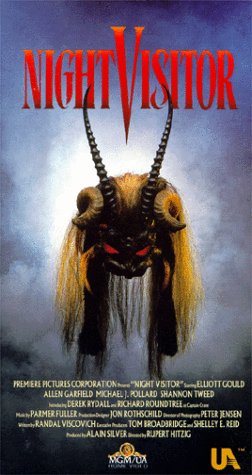
Billy Colton (Derek Rydall) is a teenager who has a reputation for exaggeration. Lisa Grace (Shannon Tweed) is his next door neighbor, a high-priced prostitute who does not mind if Billy spies on her. When Billy tries to tell everyone about his wild new neighbor, no one believes him. Billy decides to prove his story by grabbing his camera and sneaking next door. Instead of getting proof that she’s a prostitute, Billy witnesses his neighbor being murdered by a robed Satanist, who just happens to be Zachary Willard (Allen Garfield), Billy’s hated science teacher! Billy goes to the police with his camera but Captain Crane (Richard Roundtree) points out that Billy forgot to take off the lens cap.
What can Billy do? He knows that Zachary and his strange brother, Stanley (Michael J. Pollard), are sacrificing prostitutes to Satan but he can’t get anyone to believe him. Working with his best friend (Teresa Van der Woude) and a burned out ex-cop (Elliott Gould), Billy sets out to stop the Willard Brothers.
Combine Rear Window with late 80s Satanic conspiracy theories and this is the result. Not as bad as it sounds, Night Visitor is an unfairly obscure movie about Satanism in suburbia. While it has its share of dumb moments (like when Billy uses a watermelon to end a car chase), it also has enough good moments that suggest that Night Visitor is deliberately satirizing the excesses of the Satanic panic that, at the time of filming, was sweeping across the nation. It also has a once in a lifetime cast. Along with those already mentioned, keep an eye out for character actor extraordinaire Henry Gibson and future adult film star Teri Weigel. Allen Garfield is especially good as the evil Mr. Willard. Any actor can say, “I sacrifice you in the name of Satan.” It takes a good actor like Allen Garfield to say it without making anyone laugh.
One final note: this movie was originally called Never Cry Devil, which is a much better title than Night Visitor.
Dr. Judd Stevens (Roger Moore) is a mild-mannered Chicago psychologist who has never been in any trouble, so why has one of his patients and his receptionist been murdered? Lt. McGreavy (Rod Steiger), who has a personal grudge against Stevens, thinks that the doctor himself might be responsible. Dr. Stevens thinks that the first murder was a case of mistaken identity and that he is being targeted for assassination. Detective Angeli (Elliott Gould) says that he is willing to consider Stevens’s theory but can Stevens trust him? Or should Dr. Stevens put his trust in a veteran P.I. (Art Carney) or maybe even his newest patient (Anne Archer)?
An example of one of the “prestige” pictures that Cannon Films would produce in between Chuck Norris movies, The Naked Face has the potential be intriguing but both the direction and the script are too formulaic to be effective. Even though the movie does not work, it is always interesting to see the non-Bond films that Roger Moore made while he was playing the world’s most famous secret agent. In The Naked Face, a lot of time is spent on establishing Judd Stevens as being the exact opposite as James Bond. Stevens doesn’t drink or smoke and he is devotedly loyal to the memory of his dead wife. When someone offers him a gun, Stevens replies, “I don’t believe in them.” Unlike Bond, Dr. Stevens does not have the ability to come up with one liners. He barely ever cracks a smile. Moore is miscast in the role but he still does a better job than Rod Steiger, who bellows all of his lines, and Elliott Gould, who spends the movie with his head down. I don’t blame him.
One final note: As much as The Naked Face tries to distance itself from the Bond films, it does feature one other connection beyond the casting of Moore. David Hedison, who plays Dr. Stevens’s friend and colleague, also played Felix Leiter in Live and Let Die and Licence to Kill.
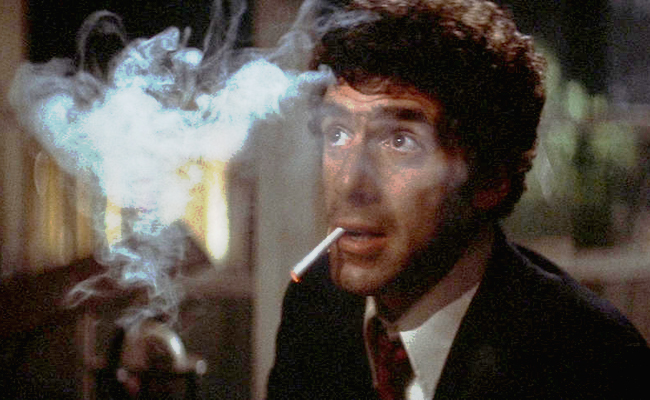
Elliott Gould was a hot Hollywood commodity in the early 1970’s. The former Mr. Barbra Streisand broke through in the 1969 sex farce BOB & CAROL & TED & ALICE, earning an Oscar nomination for supporting actor. He was marketed as a counter-culture rebel, quickly appearing in MOVE, GETTING STRAIGHT, LITTLE MURDERS, and Robert Altman’s M*A*S*H. But his flame dimmed just as fast, and his erratic onset behavior and rumored drug abuse caused him to become unemployable. When Altman decided to make the neo-noir THE LONG GOODBYE, he insisted on casting Gould as Philip Marlowe. The film put Gould back on the map, and though critics of the era weren’t crazy about it, THE LONG GOODBYE stands up well as an artifact of its era and a loving homage to Raymond Chandler’s hard-boiled hero.
Philip Marlowe is clearly an anachronism is 70’s LA, with his ever-present cigarette, cheap suit, beat-up ’48 Lincoln…
“Oh we must be doin’ somethin right to last 200 years…”
— Haven Hamilton (Henry Gibson) in Nashville (1975)
The 1975 Best Picture nominee Nashville is the epitome of an ensemble film. It follows 24 characters as they spend five days wandering around Nashville, Tennessee. Some of them are country music superstars, some of them are groupies, some of them are singers looking for a first break, and at least one of them is an assassin. The one thing that they all have in common is that they’re lost in America. Released barely a year after the resignation of Richard Nixon and at a time when Americans were still struggling to come to terms with the turmoil of the 60s, Nashville is a film that asks whether or not America’s best days are behind it and seems to be saying that they may very well be. (That’s a question that’s still being asked today in 2015.) It’s appropriate, therefore, that Nashville both takes place in and is named after a city that everyone associates with perhaps the most stereotypically American genre of music that there is.
Nashville follows 24 characters, some of whom are more interesting than others. For five days, these characters wander around town, occasionally noticing each other but far more often failing to make any sort of connection.
Haven Hamilton (Henry Gibson) is a veteran star, a somewhat comical character who sings vapid songs about home and family and who smiles for the public while privately revealing himself to be petty and vain. His son, Bud (Dave Peel), is a Harvard graduate who acts as his father’s business manager. Oddly enough, Haven is an unlikable character until the end of the film when he suddenly reveals himself to be one of the few characters strong enough to keep Nashville for descending into chaos. Meanwhile, Bud seems to be a nice and modest guy until he takes part in humiliating another character.
Haven’s lover is Lady Pearl (Barbara Baxley), who owns a nightclub and spends most of the film drinking. Much like Haven, she starts out as a vaguely comical character until she finally gets a chance to reveal her true self. In Pearl’s case, it comes when she delivers a bitter monologue about volunteering for Bobby Kennedy’s presidential campaign.
Haven’s lawyer is Delbert Reece (Ned Beatty), an obsequies good old boy who is married to gospel singer Linnea (Lily Tomlin). They have two deaf children. Linnea has learned sign language. Delbert has not. Over the course of the film, both Delbert and Linnea will be tempted to cheat. Only one of them actually will.
And then there’s Barbara Jean (Ronee Blakley), a mentally unstable singer who has come to Nashville with her manipulative husband/manager, Barnett (Allen Garfield). Almost every character in the film wants something from Barbara Jean. A mostly silent Vietnam veteran named Kelly (Scott Glenn) claims that his mother knows Barbara Jean. A nerdy guy named Kenny (David Hayward) comes to Nashville just to see her perform.
Both Kelly and Kenny end up getting to know Mr. Green (Keenan Wynn), a rare Nashville resident who doesn’t seem to care about music. However, Mr. Green’s spacey niece, L.A. Joan (Shelly Duvall), is obsessed with having sex with as many musicians as possible.
Among those being targeted by L.A. Joan is Tom Frank (Keith Carradine), one-third of the folk trio Bill, Mary, and Tom. Unknown to Bill (Allan F. Nicholls), Tom is sleeping with Bill’s wife, Mary (Cristina Raines). Unknown to Mary, Tom is sleeping with almost every other woman in Nashville as well. When Tom takes to the stage at Pearl’s nightclub and sings a song called I’m Easy, the audience is full of women who think that he’s specifically singing to them.
Another one of Tom’s songs, the appropriately titled “It Don’t Worry Me,” is frequently sung by Albuquerque (Barbara Harris), who spend the entire film trying to get discovered while hiding out from her much older husband, Star (Bert Remsen).
Another aspiring star is Sulleen Grey (Gwen Welles), who is a tone deaf waitress who suffers the film’s greatest humiliation when she agrees to perform at a political fund raiser without understanding that she’s expected to strip while singing. Trying to look after Sulleen is Wade (Robert DoQui), who has just been released from prison.
And then there’s the loners, the characters who tend to pop up almost randomly. Norman (David Arkin) is a limo driver who, like everyone else in Nashville, wants to be a star. The hilariously bitchy Connie White (Karen Black) and the bland Tommy Brown (Timothy Brown) already are stars. (The character of Tommy Brown is one of Nashville’s oddities. He’s listed, in the credits, as being a major character but he only appears in a few scenes and never really gets a storyline of his own.) There’s the Tricycle Man (Jeff Goldblum), a silent magician who mysteriously appears and disappears throughout the film.
And, finally, there’s Opal (Geraldine Chaplin), an apparently crazed woman who is wandering around Nashville and pretending to be a reporter for the BBC. (It’s never specifically stated that Opal is a fake but it’s fairly obvious that she is.) How you feel about the character of Opal will probably determine how you feel about Nashville as a whole. If you find Opal to be a heavy-handed caricature, you’ll probably feel the same way about the rest of the film. If you find the character of Opal to be genuinely amusing with her increasingly pretentious musings, you’ll probably enjoy Nashville.
There is one more very important character in Nashville. He’s the character who literally holds the film together. He’s also the reason why I’m including Nashville in this series of reviews about political films. That character is named Hal Phillip Walker and, though he’s never actually seen in the film, he’s still the driving force behind most of what happens. Walker is a third-party presidential candidate, a man who seems to be universally admired despite the fact that his campaign appears to just be a collection of vapid platitudes. Walker’s campaign manager, John Triplette (Michael Murphy), comes to Nashville and sets up the Walker For President rally. That’s where Nashville reaches its violent and not-all-together optimistic climax.
Reportedly, Nashville is a favorite film of Paul Thomas Anderson’s and you can see the influence of Nashville in many of Anderson’s films, from the large ensemble to the moments of bizarre humor to the refusal to pass judgement on any of the characters to the inevitable violence that ends the film. Also, much like Anderson’s films, Nashville seems to be a film that was specifically made to divide audiences. You’re either going to think that Nashville is a brilliantly satirical piece of Americana or you’re going to think it’s a self-indulgent and self-important mess.
As for me, I think it’s great and I think that, after you watch it, you should track down and read Jan Stuart’s The Nashville Chronicles: The Making of Robert Altman’s Masterpiece. It’s the perfect companion for a great film.
Let’s continue to embrace the melodrama with the 1991 best picture nominee Bugsy.
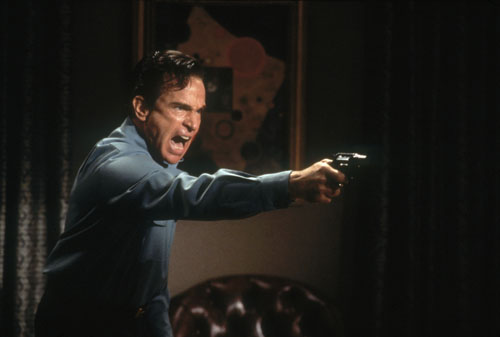
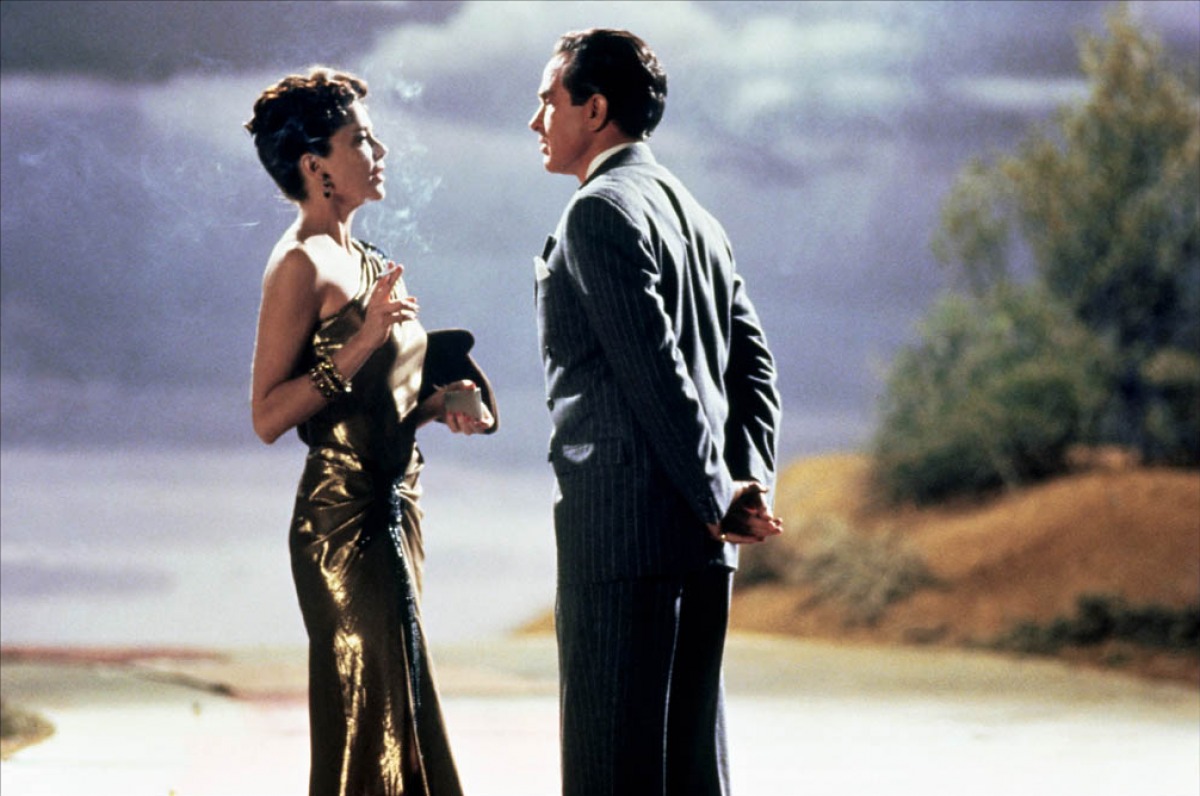
Gangster Benjamin Siegel (Warren Beatty) may be known as Bugsy but nobody dares call him that to his face. Siegel may be best known for his quick temper and his willingness to murder anyone who gets in his way, but Ben insists that he’s not as crazy as everyone considers him to be. Instead, Ben knows that he’s a very special person, a visionary businessman whose business just happens to be organized crime. Along with his childhood friends Lucky Luciano (Bill Graham) and Meyer Lansky (Ben Kingsley), Siegel is one of the founders of the modern American crime syndicate. Unlike his more practical-minded partners, Siegel revels in being a public figure. Bugsy examines how Siegel became a celebrity gangster and how that celebrity eventually led to his downfall.
As the film opens, Luciano and Lansky send Siegel out to Los Angeles, specifically to look after their west coast business operations. Before Siegel leaves, he is specifically told to keep a low profile. So, of course, as soon as Siegel arrives in Los Angeles, he starts hanging out with actor George Raft (Joe Mantegna) and having a very public affair with actress Virginia Hill (Annette Bening). Siegel quickly falls in love with the glamour and glitz of Hollywood and starts to think of himself as being a movie star. When he’s not working with violent gangster Mickey Cohen (Harvey Keitel) to control the Los Angeles underworld, Siegel is attending film premieres and even shooting a Hollywood screen test. Back in New York, Luciano and Lansky can only watch as their childhood friend goes out of his way to defy their instructions and become the most famous gangster in America.
Eventually, Siegel goes on a gambling trip to Nevada and comes up with an idea that is destined to change America forever. With funding from Lansky and Luciano, Siegel begins construction on the Flamingo Hotel and Casino in Las Vegas, Nevada. However, Siegel’s plans are so extravagant and, in many ways, impractical that the budget soon soars out of control. Not helping matters is the fact that Virginia is embezzling money from the casino’s budget. Even after Siegel finds out, he can’t bring himself to be angry at her. He understand that he and Virginia are essentially cut from the same cloth.
However, back in New York, Luciano grows more and more frustrated with Siegel’s wasteful ways and Lansky comes to realize that he can only protect his friend for so long…
Bugsy is a big, extravagant movie that tries to be a few too many things at once. Over the course of two and a half hours, it attempts to be a love story, a biopic, a classic gangster film, an allegory for the American dream, a history lesson, a period piece, and finally, a metaphor for the act of filmmaking itself. (When Siegel complains that Luciano and Lansky don’t understand why the Flamingo has to be huge, it’s hard not to feel that he’s meant to be a stand in for every director who has ever had his budget cut by a meddling studio executive.) When a film tries to be so many different things all at once, you can’t be surprised when the end result is a little uneven. Bugsy starts out slowly but gradually picks up speed and the final part of the movie is everything that one could hope for from an epic gangster film.
The film works best as a character study of a man who, in the best American tradition, attempts to reinvent himself by moving out west. Back in New York, Ben is known as a cold-blooded and dangerous killer. However, once he arrives in Los Angeles, Ben attempts to recreate himself as a celebrity and then as a visionary. For him, the Flamingo is about more than money. The Flamingo is about being remembered for something other than his nickname. The Flamingo is his way to escape from his past. However, as Bugsy makes clear, the past can be ignored but it never goes away.
Am I too young to start feeling nostalgic for the past?
It’s been 6 years since I graduated from the University of North Texas and, as much as I enjoy officially being an adult and all that good stuff, I have to admit that there’s a part of me that misses being in college. Even though I know that I will be returning to school to work on my master’s, there’s a part of me that really regrets that I’ll never again get to be an undergrad with the rest of my life in front of me.
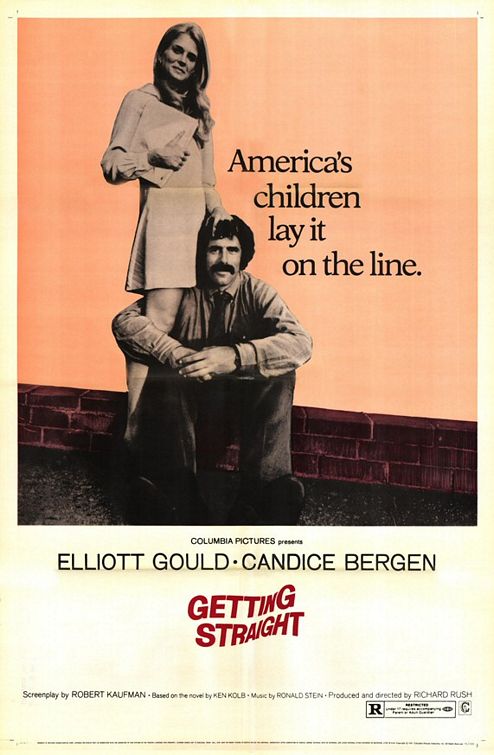
Fortunately, I review movies so, whenever I start to feel nostalgic for the past, I can just watch and review a movie. Last week, I was missing college. So, I watched a few films about college. The first film that I watched was from 1970 and it was called Getting Straight.
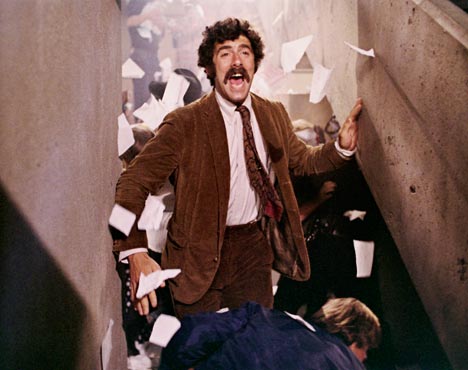
One of the first things that you notice while watching Getting Straight is that director Richard Rush apparently made the decision to film nearly the entire movie in extreme close-ups. When Nick, a spaced-out hippie played by Robert F. Lyons, steps into a room and starts laughing, the camera zooms in so close that you can practically see down the back of his throat. When Jan (played by a very young Candice Bergen) breaks down into tears after getting beaten up at a political demonstration, the camera so obsessively lingers over her tear-stained face that the viewer is left with little choice but to consider just how terrible a performance Bergen is actually giving. When Harrison Ford shows up in an early role, the camera zooms into his face, as if to force us to say, “Hey, that’s Harrison Ford!” Meanwhile, the star of the film, Elliott Gould, is in almost every scene and, thanks to Rush’s love of extreme close-ups, it’s hard not to focus on the fact that his thick sideburns and his walrus mustache looks like they are threatening to devour his entire face.
Elliott Gould plays Harry Bailey, a grad student at an unnamed California university. In his undergraduate days, Harry was a political activist who, we’re told, marched for civil right as Selma. Then he served in Viet Nam and not as some conscientious objector either (though that would have made sense, considering his political beliefs). No, Harry saw combat. And, while doing all of that, Harry also somehow found time to be in Paris during the 1968 student strike. However, Harry is now back in America and all he wants to do is get his master’s in education so that he can teach the underprivileged.
Along with his prominent facial hair and his colorful past, the main thing that you notice about Harry is that he yells. A lot.
Harry yells because his professors expect him to show up for classes that he doesn’t care about. When those same out-of-touch professors expect Harry to take a test that he doesn’t consider to be important, he gets his friend Nick to take it for him. Nick, being an idiot, signs his name to the test but then marks it out and writes down Harry’s name instead.
Harry yells because a bunch of student activists expect him to join their protests. Harry tells them that they’re shallow and the only reason they care about politics is because “protests are sexy.” Despite his condescending attitude, the rest of the student body continues to look up to Harry. I imagine it has something to do with the hypnotic power of his mustache.
Harry yells because a professor suggests that F. Scott Fitzgerald might be gay. Harry also says that Arizona is the best state of the union because it has the lowest occurrence of homosexuality. If nothing else, all of this serves to remind us that this film was made in 1970.
Mostly, however, Harry just yells at his girlfriend, Jan. Jan lies about being pregnant and Harry yells. Jan says that she’s thinking about getting married. Harry yells that she is a “dumb broad.” Jan says she’s on her period. Harry yells that she’s lying and that he’ll be over later that night. Harry yells when Jan breaks up with him. Harry yells when Jan introduces him to her new boyfriend, despite the fact that Harry has been screwing — in extreme close-up — every other undergrad on campus. Harry yells at her that she might as well just be a “man with a hole.”
In other words, Harry is a self-righteous jerk. Harry is a misogynist. Harry is a hypocrite. Harry is an asshole. And yet — probably because this film was made in 1970 — Harry is also supposed to be the film’s hero. Harry is supposed to be the character that we sympathize with and, indeed, every other character in the film is totally charmed by Harry and his behavior. Even poor abused Jan continues to come to Harry, despite the fact that her next door neighbor is Harrison Ford!
Harrison Ford in Getting Straight
Yes, there are many very valid criticisms to be made about Getting Straight. Harry is unlikable. Candice Bergen gives an amazingly bad performance. Richard Rush’s direction shows an overdependence on close-ups and rack focus shots, techniques that he uses so frequently that they eventually lose all meaning but instead simply come across as being nervous tics. Like so many of the counter cultural films of the early 70s, Getting Straight is an excruciatingly sexist film. That’s one thing that the films of both the counter-culture and the establishment had in common, a deep disdain and fear of women in general. Harry may claim that the student protestors are only into politics because they want to get laid but it’s hard to see how he’s any better. The middle stretch of Getting Straight could have just as easily have been called Harry Must Get Laid.
However, Getting Straight does get one thing right. It perfectly captures the atmosphere of college. From the pompous and out-of-touch professors to the creepy old grad students (that would be Harry) to the portentous seriousness of the student activists, Getting Straight captures all of that perfectly. As such, Getting Straight might not really work as a dramatic film but it’s definitely worthwhile as a record of a specific time and place. Much of what today seems annoying about a film like Getting Straight is really nothing more than a recording of what was once considered to be culturally acceptable.
Getting Straight is a portrait of 1970 that makes me glad that I was born in 1985.
Note that this isn’t the only review for Contagion.
Arleigh has an in-depth review of the film, which is also available to see, whereas this is more of a summary. As it’s for the same film, I’ve used the same tags that were in Arleigh’s post.
Before I start, I have to say that I haven’t had a theatre be so quiet during a film since I went to see Mirrors, and that was because there was no one there. My showing for Contagion was packed, but no one made a sound throughout the film. I coughed twice (because I had to), and you wouldn’t believe how many heads turned in my general direction. If nothing else, it shows that the movie had some impact to the audience, and that’s always (okay, usually) interesting to see. By the time the movie is over, you will probably pay attention to how many times you touch your face or the objects around you.
If there’s one thing I can give director Steven Soderbergh, it’s that he has a great ability to work with ensemble casts. He did a great job in getting everyone to work together on the Oceans Eleven remake and sequels. He also walked away with a Best Director Oscar for Traffic. His films have the ability to avoid having his stars chew up enough screen time that they appear to be an actual center character. Catherine Zeta-Jones’ had a character who’s story was just as strong as Benecio Del Toro’s.
On this, Contagion is no different. In essence, it’s almost like watching cameos in a miniseries.
Although the film is peppered with various actors, no one person can be considered the main character of the film. Soderbergh is able to get them all to play their roles well. He and Scott Z. Burns – one of the writers on The Bourne Ultimatum and a collaborator with Soderbergh – give us a number of perspectives for this story and damn, the whole thing is very tight overall. The movie has very little wasted space.
Like the story itself, the movie moves at a great pace, opening with Elizabeth Emhoff (Gwenyth Paltrow) on her second day after exposure to the virus after returning from a trip to Hong Kong. This eventually escalates to other infections reported in other areas around the world. In an effort to contain and understand what they’re dealing with, the Center for Disease Control starts an investigation. Lead by Dr. Ellis Cheever (Lawrence Fishburne), he sends Dr. Erin Mears (Kate Winslet) to Minnesota to determine the scale of the problem.
In addition to the CDC’s efforts, the World Health Organization also gets involved, sending their own field agent to Hong Kong, played by Marion Cotillard. Both doctors come up with information that appear to be helpful for the overall investigation in various ways.
The other two angles in the film are through a conspiracy theory blogger / investigative reporter played by Jude Law and Mitch Emhoff (Matt Damon), who has to deal with the impact of his wife’s sickness. Enrico Colantoni, Brian Cranston, Sanaa Lathan, Elliot Gould and Jennifer Ehle round out the cast. It should be noted that Ehle is the daughter of Kenneth Branaugh’s Hamlet actress Rosemary Harris, who looks remarkably like her mother. That’s just something that caught my eye.
In terms of the Kid Factor, I would be hesitant to take kids to see this unless they had a pretty clear handle on death or getting sick. Teens and adults could probably handle the film, but anyone under than that may freak out a little. Mind you, there’s very little gore in this film. When I think about it, there’s not even a whole lot of blood. There is some violence though as the story escalates and humanity goes wild, but it’s not that far a cry from many zombie movies. It’s up to the parents discretion on whether their kids should see this.
I should also point out that the music in this film is also very good. Cliff Martinez, who also worked on the score for Drive (also out this month) did an impressive job with an electronic score that sits in the background of the film, but also fits the pacing of the film well. It’s worth giving it a listen if at all possible. This quick review was actually written to the Contagion score.
Contagion is definitely worth seeing, easily recommended, but if you happen to be particular about germs, note that this may not be the most comfortable film to watch. Don’t be shocked if you end up hugging yourself while watching this in the theatre. With Soderbergh moving away from film directing to pursue other interests, Contagion is a nice final bow to his career.
 Lucas Martino (Joseph Bova), an American scientist who was previously captured by the Soviets in East Berlin and who was gravely injured in a terrible car crash, is finally returned to the Americans. But is it really Dr. Martino? Making identification difficult is that the Soviets had to totally rebuild Martino’s body after his car crash. He appears to still have one of his original arms but he’s otherwise a cyborg. He now has a metal head with an expressionless face. Is he really Lucas Martino or is he a spy? Even though his fingerprints check out, it’s possible that the real Martino’s arm could have been surgically grafted onto an imposter’s body.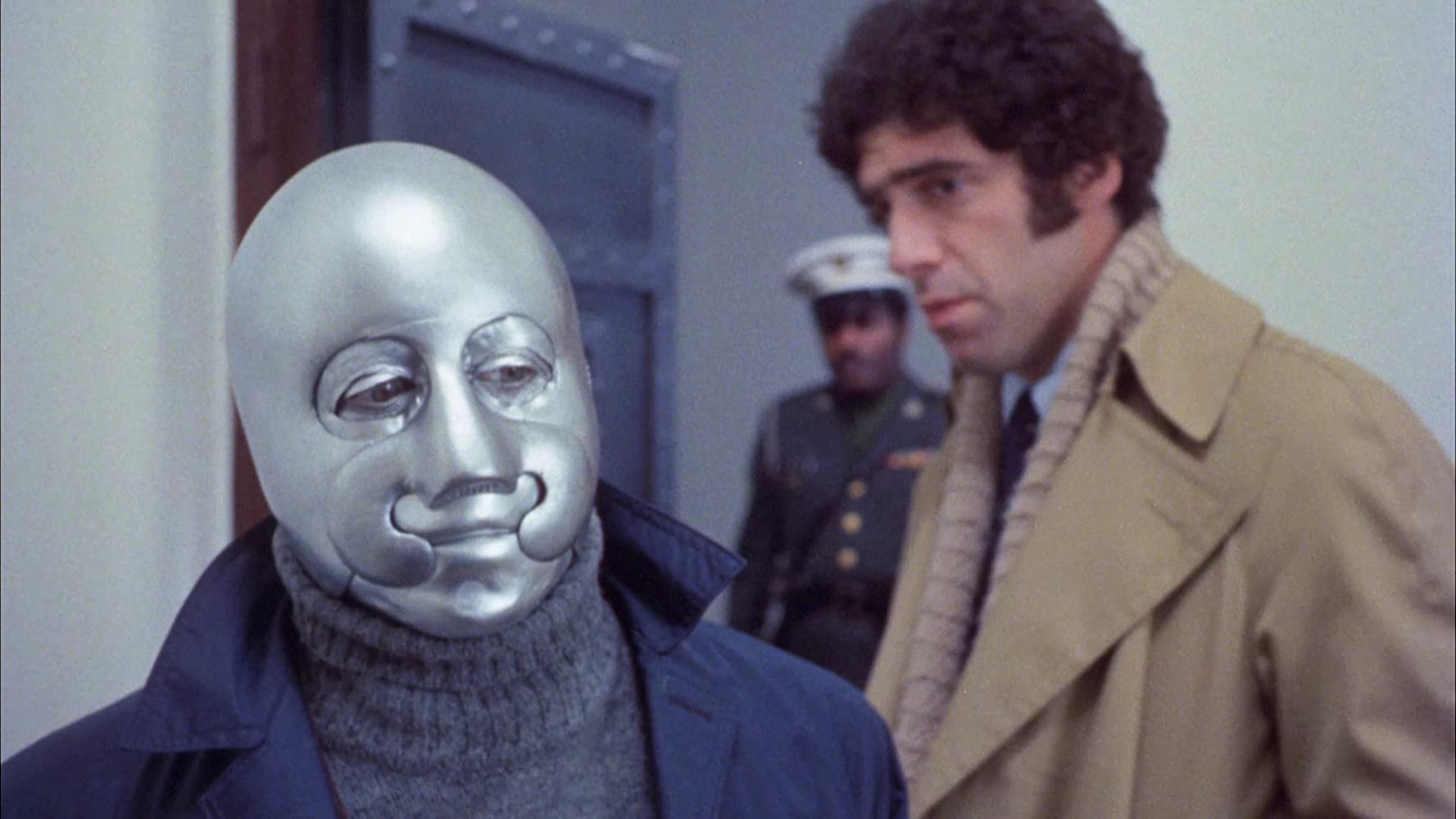

 Billy Colton (Derek Rydall) is a teenager who has a reputation for exaggeration. Lisa Grace (Shannon Tweed) is his next door neighbor, a high-priced prostitute who does not mind if Billy spies on her. When Billy tries to tell everyone about his wild new neighbor, no one believes him. Billy decides to prove his story by grabbing his camera and sneaking next door. Instead of getting proof that she’s a prostitute, Billy witnesses his neighbor being murdered by a robed Satanist, who just happens to be Zachary Willard (Allen Garfield), Billy’s hated science teacher! Billy goes to the police with his camera but Captain Crane (Richard Roundtree) points out that Billy forgot to take off the lens cap.
 Dr. Judd Stevens (Roger Moore) is a mild-mannered Chicago psychologist who has never been in any trouble, so why has one of his patients and his receptionist been murdered? Lt. McGreavy (Rod Steiger), who has a personal grudge against Stevens, thinks that the doctor himself might be responsible. Dr. Stevens thinks that the first murder was a case of mistaken identity and that he is being targeted for assassination. Detective Angeli (Elliott Gould) says that he is willing to consider Stevens’s theory but can Stevens trust him? Or should Dr. Stevens put his trust in a veteran P.I. (Art Carney) or maybe even his newest patient (Anne Archer)?



 Through the Shattered Lens