4 Or More Shots From 4 Or More Films is just what it says it is, 4 shots from 4 of our favorite films. As opposed to the reviews and recaps that we usually post, 4 Shots From 4 Films lets the visuals do the talking!
102 years ago, on this date, Marlon Brando was born in Omaha, Nebraska. One of the greatest of American actors and one of the main reasons why so many young actors became enamored with the Method, Marlon Brando played many roles in our culture. When he was young, he was a Broadway bad boy. When he went out to Hollywood, he became a legitimate movie star. In the 60s, he was a cautionary tale as his career suffered a series of notorious flops. In the 70s, he made a comeback and, in during the final years of his career, he was as known for his eccentricities as for his talent. It’s a shame that those eccentricities overshadowed Brando as an actor. When he wanted to be, he was one of the best to ever appear on stage or in the movies.
In honor of the wonderful, tragic, and talented Marlon Brando, it’s time for….
4 Shots From 4 Marlon Brando Films
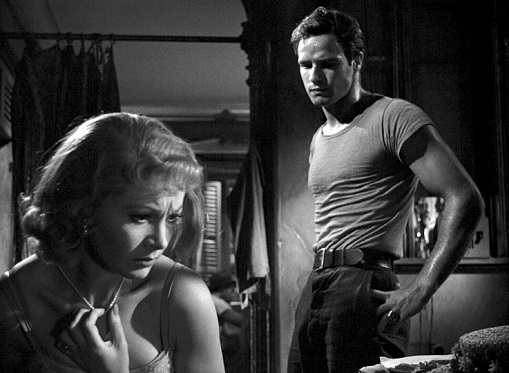
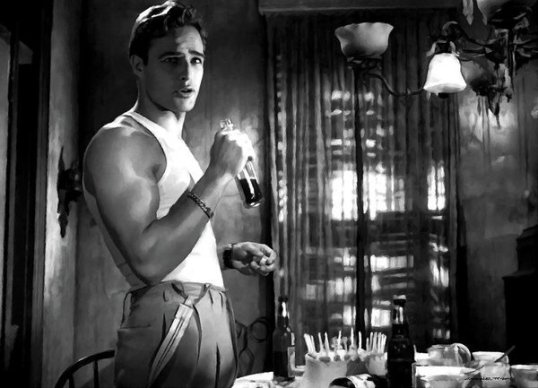
A Streetcar Named Desire (1951, dir by Elia Kazan, DP: Harry Stradling)
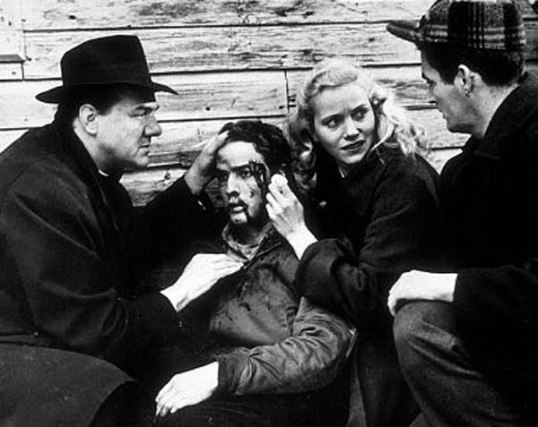
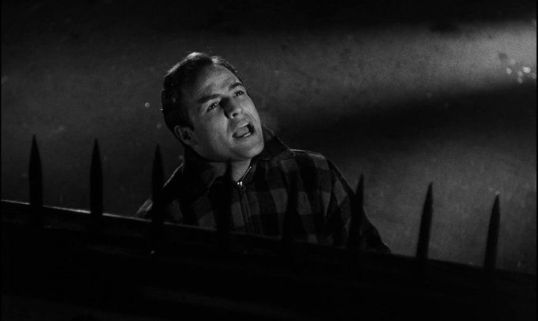
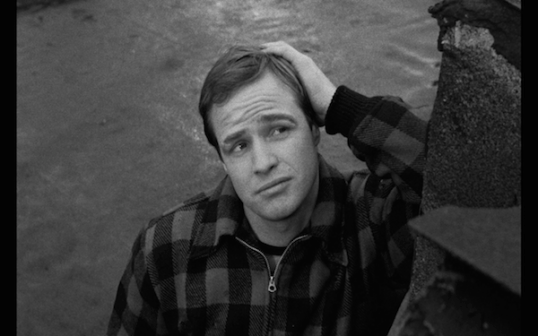
On The Waterfront (1954, dir by Elia Kazan, DP: Boris Kaufman)
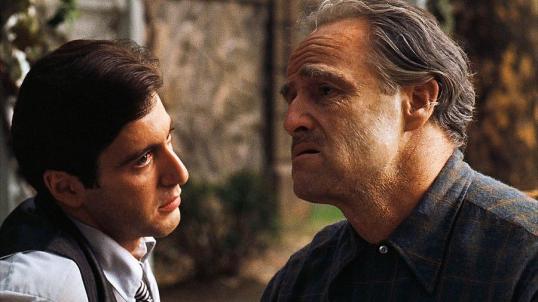
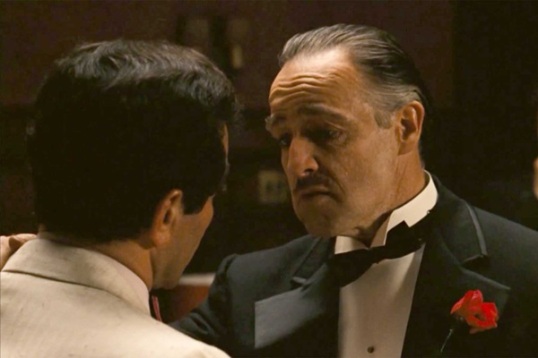
The Godfather (1972, dir by Francis Ford Coppola, DP: Gordon Willis)
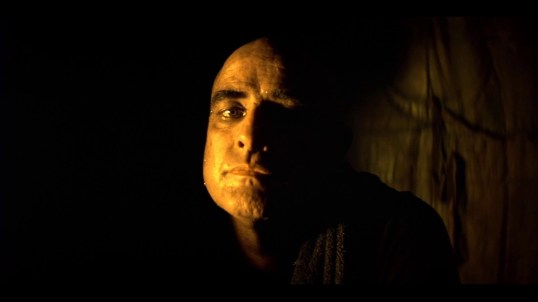
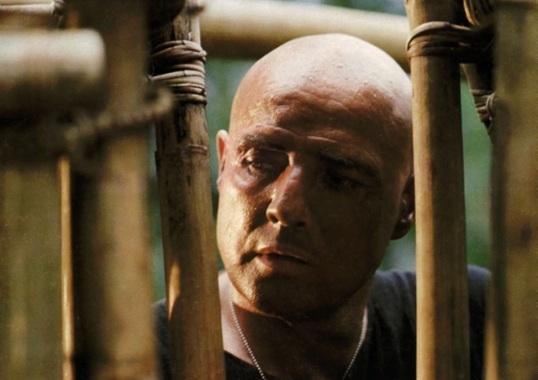
Apocalypse Now (1979, dir by Francis Ford Coppola, DP: Vittorio Storaro)
4 Or More Shots From 4 Or More Films is just what it says it is, 4 shots from 4 of our favorite films. As opposed to the reviews and recaps that we usually post, 4 Shots From 4 Films lets the visuals do the talking!
116 years ago, on this date, Elia Kazan was born Istanbul. Kazan would go on to become a groundbreaking director, both for the stage and in movies. He would play a key role in turning both Marlon Brando and James Dean into stars and he made films, like Gentleman’s Agreement and A Face In The Crowd, that challenged the political pieties of the day. Of course, he also named names in front of HUAC, a decision that continues to be controversial to this day. Two of Kazan’s films — Gentleman’sAgreement and On The Waterfront — won the Oscar for Best Picture. A Streetcar Named Desire was widely expected to win before it was upset by An American In Paris. A Face In The Crowd is often cited as being one of the most prophetic films ever made. When Kazan was given an honorary Oscar in 1999, many in the auditorium refused to applaud but his influence as a filmmaker cannot be denied.
It’s time for….
4 Shots From 4 Elia Kazan Films
A Streetcar Named Desire (1951, dir by Elia Kazan, DP: Harry Stradling)
On The Waterfront (1954, dir by Elia Kazan, DP: Boris Kaufman)
East of Eden (1955, dir by Elia Kazan, DP: Ted D. McCord)
A Face In The Crowd (1957, dir by Elia Kazan, DP: Gayne Rescher and Harry Stradling)
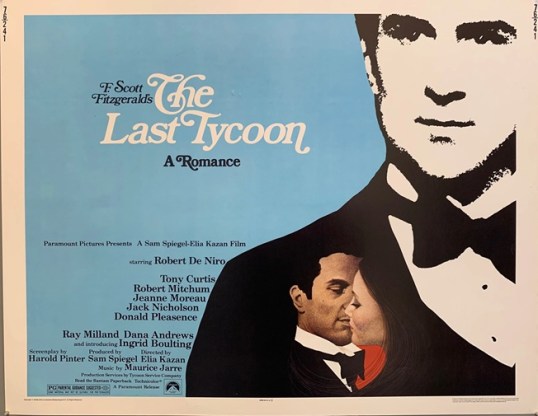
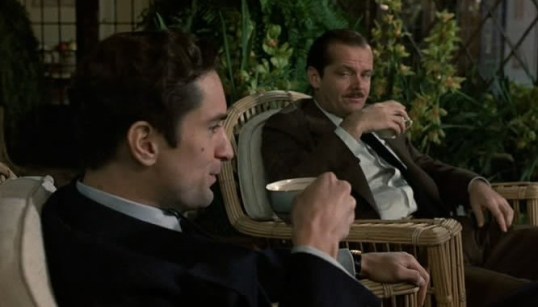
Based on the final (and unfinished) novel by F. Scott Fitzgerald, 1976’s The Last Tycoon tells the story of Monroe Stahr (Robert De Niro).
Monroe Stahr is the head of production at a film studio during the early days of Hollywood. Stahr is an unemotional and seemingly repressed man who only shows enthusiasm when he’s talking about movies. He may not be able to deal with real people but he instinctively knows what they want to see on the big screen. Stahr is a genius but he’s working himself to death, ignoring his health concerns while trying to create the perfect world through film. He’s haunted by a lost love and when he meets Kathleen Moore (Ingrid Boulting, giving a remarkably dull performance), he tries to find love with her but, naturally, he doesn’t succeed. Meanwhile, he has to deal with his boss (Robert Mitchum), his boss’s daughter (Theresa Russell), a neurotic screenwriter (Donald Pleasence), an impotent actor (Tony Curtis), and a lowdown dirty communist labor organizer (Jack Nicholson)! Sadly, for Stahr, McCarthyism is still a few decades away.
There’s a lot of talented people in The Last Tycoon and it’s undeniably interesting to see old school stars — like Mitchum, Curtis, Dana Andrews, Ray Milland — acting opposite a Method-driven, 30-something Robert De Niro. This is one of those films where even the minor roles are filled with name actors. John Carradine plays a tour guide. Jeff Corey plays a doctor. This is a film about Golden Age Hollywood that is full of Golden Age survivors. It’s a shame that most of them don’t get much to do. The Last Tycoon is a very episodic film as Stahr goes from one crisis to another. Characters show up and then just kind of disappear and we’re never quite sure how Stahr feels about any of them or how their existence really shapes Stahr’s worldview. Robert De Niro may be a great actor but, as portrayed in this film, Monroe Stahr is a boring character and De Niro’s trademark tight-lipped intensity just makes Stahr seem like someone who doesn’t have much to offer beyond employment. This is one of De Niro’s least interesting performances, mostly because he’s playing a not-particularly interesting person. Mitchum, Pleasence, and the old guard all make an impression because they’re willing to coast by on their bigger-than-life personalities. De Niro is trapped by the Method and a total lack of chemistry with co-star Ingrid Boulting.
Still, this is the only film to feature both De Niro and Jack Nicholson. (The Departed was originally conceived as a chance to bring De Niro and Nicholson together, with De Niro being the original choice for the role eventually played by Martin Sheen.) Nicholson’s role is small and he doesn’t show up until the film is nearly over. He and De Niro have an intense table tennis match. Nicholson doesn’t really dig deep into Brimmer’s character. Instead, he flashes his grin and let’s the natural sarcasm of his voice carry the scene. It’s nowhere close to being as emotionally satisfying as the De Niro/Pacino meeting in Heat. That said, Jack Nicholson at least appears to be enjoying himself. His natural charisma makes his role seem bigger than it actually is.
Why was The Last Tycoon such a disappointment? Though unfinished, the book still featured some of Fitzgerald’s best work and there’s a huge amount of talent involved in this film. The blame mostly falls on Elia Kazan, who came out of retirement to direct the film after original director Mike Nichols left the project. (Nichols reportedly objected to casting De Niro as Stahr. While it’s tempting to think that Nichols realized that De Niro’s intense style wouldn’t be right for the role, it actually appears that Nichols and De Niro sincerely disliked each other as Nichols also abandoned the next film he was hired to direct when he was told that De Niro wanted the lead role. Nichols choice for Monroe Stahr was Dustin Hoffman, which actually would have worked. If nothing else, it would have provided a Graduatereunion.) Kazan later said that he did the film solely for the money and it’s obvious that he didn’t really care much about the film’s story. The film has some good scenes but, overall, it feels disjointed and uneven. Kazan doesn’t really seem to care about Monroe Stahr and, as a result, the entire film falls flat.
4 Or More Shots From 4 Or More Films is just what it says it is, 4 shots from 4 of our favorite films. As opposed to the reviews and recaps that we usually post, 4 Shots From 4 Films lets the visuals do the talking!
101 years ago, on this date, Marlon Brando was born in Omaha, Nebraska. One of the greatest of American actors and one of the main reasons why so many young actors became enamored with the Method, Marlon Brando played many roles in our culture. When he was young, he was a Broadway bad boy. When he went out to Hollywood, he became a legitimate movie star. In the 60s, he was a cautionary tale as his career suffered a series of notorious flops. In the 70s, he made a comeback and, in during the final years of his career, he was as known for his eccentricities as for his talent. It’s a shame that those eccentricities overshadowed Brando as an actor. When he wanted to be, he was one of the best to ever appear on stage or in the movies.
In honor of the wonderful, tragic, and talented Marlon Brando, it’s time for….
4 Shots From 4 Marlon Brando Films
A Streetcar Named Desire (1951, dir by Elia Kazan, DP: Harry Stradling)
On The Waterfront (1954, dir by Elia Kazan, DP: Boris Kaufman)
The Godfather (1972, dir by Francis Ford Coppola, DP: Gordon Willis)
Apocalypse Now (1979, dir by Francis Ford Coppola, DP: Vittorio Storaro)
4 Or More Shots From 4 Or More Films is just what it says it is, 4 shots from 4 of our favorite films. As opposed to the reviews and recaps that we usually post, 4 Shots From 4 Films lets the visuals do the talking!
Today would have been Tennessee Williams’s 114th birthday! It’s time for….
4 Shots From 4 Tennessee Williams Films
A Streetcar Named Desire (1951, dir by Elia Kazan, DP: Harry Stradling)
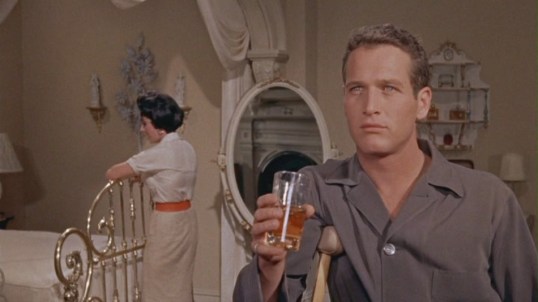
Cat On A Hot Tin Roof (1958, dir by Richard Brooks, DP: William Daniels)
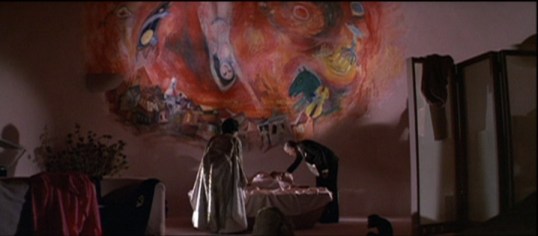
Suddenly, Last Summer (1959, dir by Joseph L. Mankiewicz, DP: Jack Hildyard)
In 1951’s A Streetcar Named Desire, the emotionally fragile Blanche (played by Vivien Leigh) has come to New Orleans to live with her younger sister, Stella (Kim Hunter). From an old and formerly wealthy Southern family, Blanche has recently lost both her job as a teacher and the plantation where she and Stella grew up. Even before that, she lost her husband to suicide. And now Blanche has been reduced to living with Stella in the run-down apartment that she shares with her brutish husband, Stanley Kowalksi (Marlon Brando).
Stanley is tough and blue-collar, an earthy gambler whose bad manners stand in sharp contrast to Blanche’s attempts to present herself as being an elegant Southern belle. Stanley, who is convinced that Blanche has money that she’s hiding from her sister, goes out of his way torment Blanche. Stella, who is pregnant, tries to keep the peace between her sister and the man who claims to love her, his family, and the Napoleonic code. (“Stella!” Stanley yells at one point, the cry of a wounded animal who desperately needs his mate.) Blanche ends up going on a tentative date with Mitch (Karl Malden), one of Stanley’s co-workers, Stanley, who sees Blanche as a threat to the life that he’s created for himself, goes out of his way to destroy even that relationship. Blanche has secrets of her own and Stanley is determined to dig them up and use them to his own advantage. When Blanche refuses to allow Stanley to destroy the fantasy world that she’s created for herself, Stanley commits an act of unspeakable violence.
Based on the play by Tennessee Williams, A Streetcar Named Desire is a recreation of the film’s legendary Broadway production. Elia Kazan, who directed the theatrical production, does the same for the film. Marlon Brando, Kim Hunter, and Karl Malden recreate their stage roles and many of the minor characters are also played by the same actors who played them on stage. The only major change to the cast is Vivien Leigh, who replaces Jessica Tandy in the role of Blanche. Tandy had won a Tony for playing the role of Blanche but the film’s producer insisted on an actress who had more box office appeal. After both Bette Davis and Olivia de Havilland (both of whom would have had too strong of a personality to be believably pushed around by Stanley) declined the role, Vivien Leigh was cast. Leigh has played Blanche on the London stage and, perhaps even more importantly, her own fragile mental health mirrored much of what Blanche had gone through before moving to New Orleans.
A few changes were made to the play. In the play, it’s made clear that Blanche’s husband committed suicide after he was caught having an affair with another man. In the film, Blanche simply says that her husband was too sensitive. The film also includes a few scenes that are set outside of the apartment in an attempt to open up the play. (That said, the film still comes across as being rather stagey.) In the play, it’s made clear what Stanley does to Blanche while Stella is at the hospital. The film leaves it ambiguous, though still providing enough hints for the audience to figure it out on their own. Finally, the film ends with a suggestion that Stanley will ultimately suffer for his bad behavior. It’s hardly a happy ending but it’s still not as dark as what happens in the play.
The film definitely retains its theatrical origins. It’s very much a filmed play and again, it can feel rather stagey. But the performance are so strong that it really doesn’t matter. A Streetcar Named Desire was the first film to win three of the acting awards, with Oscars going to Hunter, Malden, and Leigh. Marlon Brando was nominated for Best Actor but did not win, largely because he was competing against Humphrey Bogart who, himself, had never won an Oscar. (The Brando snub would be rectified when he later won for On The Waterfront.) Brando’s performance as Stanley still holds up today. He’s so ferociously charismatic that it’s actually a bit scary to watch him. One can see what drew Stella to him, even though Stanley is very much not a good man. It’s a performance that will definitely take by surprise anyone who knows Brando only from his later years, when he was known for his weight and his oft-stated boredom with acting. A Streetcar Named Desire shows just how brilliant an actor Marlon Brando was at the start of his career. The intensity of Brando’s method acting matches up perfectly with Vivien Leigh’s more traditional style of acting and the film becomes not just the story of a domineering brute and a fragile houseguest but also a metaphor for the death of the antebellum South. If Blanche represents a genteel past that may have never existed, Stanley represents the brutality of the 20th Century.
Along with the similarly dark A Place In The Sun, A Streetcar named Desire was considered to be a front runner for the 1951 Best Picture Oscar. In the end, though, the voters went for the much less depressing An American In Paris.
A Streetcar Named Desire (1951, dir by Elia Kazan, DP: Harry Stradling)
4 Or More Shots From 4 Or More Films is just what it says it is, 4 shots from 4 of our favorite films. As opposed to the reviews and recaps that we usually post, 4 Shots From 4 Films lets the visuals do the talking!
One hundred years ago and on this date, Marlon Brando was born in Omaha, Nebraska. One of the greatest of American actors and one of the main reasons why so many young actors became enamored with the Method, Marlon Brando played many roles in our culture. When he was young, he was a Broadway bad boy. When he went out to Hollywood, he became a legitimate movie star. In the 60s, he was a cautionary tale as his career suffered a series of notorious flops. In the 70s, he made a comeback and, in during the final years of his career, he was as known for his eccentricities as for his talent. It’s a shame that those eccentricities overshadowed Brando as an actor. When he wanted to be, he was one of the best to ever appear on stage or in the movies.
In honor of the wonderful, tragic, and talented Marlon Brando, it’s time for….
4 Shots From 4 Marlon Brando Films
A Streetcar Named Desire (1951, dir by Elia Kazan, DP: Harry Stradling)
On The Waterfront (1954, dir by Elia Kazan, DP: Boris Kaufman)
The Godfather (1972, dir by Francis Ford Coppola, DP: Gordon Willis)
Apocalypse Now (1979, dir by Francis Ford Coppola, DP: Vittorio Storaro)
4 Shots From 4 Films is just what it says it is, 4 shots from 4 of our favorite films. As opposed to the reviews and recaps that we usually post, 4 Shots From 4 Films lets the visuals do the talking!
Today, I’m using this feature to take a look at the history of the Academy Award for Best Picture. Decade by decade, I’m going to highlight my picks for best of the winning films. To start with, here are 4 shots from 4 Films that won Best Picture during the 1950s! Here are….
4 Shots From 4 Best Picture Winners: The 1950s
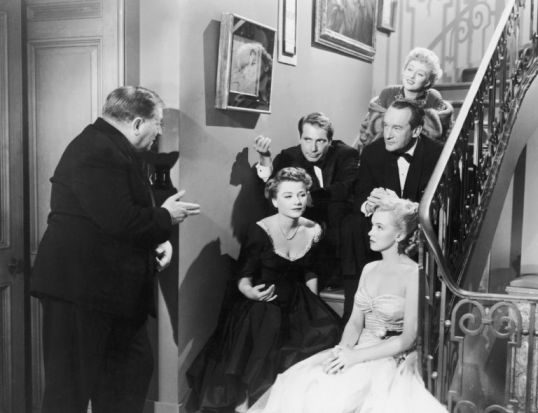
All About Eve (1950, dir by Joseph L. Mankiewicz, DP: Milton R. Krassner)
The Greatest Show On Earth (1952, dir by Cecil B. Demille, DP: George Barnes)
On The Waterfront (1954, dir by Elia Kazan, DP: Boris Kaufman)
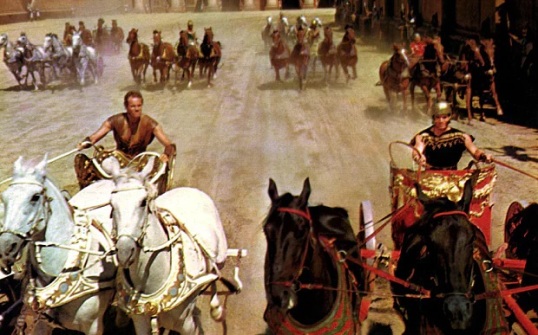
Ben-Hur (1959, dir by William Wyler, DP: Robert Surtees)
4 Or More Shots From 4 Or More Films is just what it says it is, 4 shots from 4 of our favorite films. As opposed to the reviews and recaps that we usually post, 4 Shots From 4 Films lets the visuals do the talking!
114 years ago, on this date, Elia Kazan was born Istanbul. Kazan would go on to become a groundbreaking director, both for the stage and in movies. He would play a key role in turning both Marlon Brando and James Dean into stars and he made films, like Gentleman’s Agreement and A Face In The Crowd, that challenged the political pieties of the day. Of course, he also named names in front of HUAC, a decision that continues to be controversial to this day. Two of Kazan’s films — Gentleman’sAgreement and On The Waterfront — won the Oscar for Best Picture. A Streetcar Named Desire was widely expected to win before it was upset by An American In Paris. A Face In The Crowd is often cited as being one of the most prophetic films ever made. When Kazan was given an honorary Oscar in 1999, many in the auditorium refused to applaud but his influence as a filmmaker cannot be denied.
It’s time for….
4 Shots From 4 Elia Kazan Films
A Streetcar Named Desire (1951, dir by Elia Kazan, DP: Harry Stradling)
On The Waterfront (1954, dir by Elia Kazan, DP: Boris Kaufman)
East of Eden (1955, dir by Elia Kazan, DP: Ted D. McCord)
A Face In The Crowd (1957, dir by Elia Kazan, DP: Gayne Rescher and Harry Stradling)
The director Elia Kazan was born 113 years ago, in what was then the Ottoman Empire and what is today Turkey. Though he died in 2003, Kazan has remained a controversial figure and there’s still a lot of debate over what his artistic legacy should be. As a director, he revolutionized both Broadway and Hollywood. He made films about topics that other directors wouldn’t touch and he played a huge role in making Marlon Brando a star and popularizing the method. (I’ll allow you to decide whether that’s a good or a bad thing.) He won two Oscars and he’s been cited as an influence by some of the most important directors of the past century.
Kazan was also a former communist who, at the height of the 50s red scare, testified in front of the HUAC and who “named names.” Kazan often claimed that he only identified people who had already been named. Many of his former colleagues, however, felt that Kazan had betrayed them and never forgave him. Though Kazan always denied it, many felt that his decision to name names had more to do with settling personal scores than with any actual concern about national security. Not helping matters was that Kazan’s 1954 film, On The Waterfront, was widely viewed as being Kazan’s attempt to justify being an informer. Indeed, Kazan’s post-HUAC films seemed to alternate between thinly veiled attempts to paint himself as a hero and attempts to remind people that he was still a liberal.
That adds an interesting subtext to his best film, 1957’s A Face In The Crowd. In this film, Andy Griffith plays Lonesome Rhodes, the type of down-home entertainer who would probably have been quite popular with the supporters of HUAC. A reporter played by Patricia Neal falls in love with Lonesome and helps him become a celebrity with a national following but, too late, she discovers that Rhodes is hardly the folksy and naïve country boy that she originally believed him to be. Instead, he’s a master manipulator who, drunk on his own power and fame, makes plans to transform himself into a political power. Lonesome is portrayed as being a down-home fascist, a countryfied version of the infamous Father Charles Coughlin. At the same time, one could also argue that Rhodes, with his seething contempt for the people who follow him, was also meant as a commentary on the people who claimed to represent the workers but who only saw them and their struggle as a means to an end.
A Face In The Crowd may have been Kazan’s attempt to remind his detractors that he was still a man of the Left but it’s far more interesting as a work of prophecy. There’s really not much difference between Lonesome Rhodes and the modern day celebrities and influencers who are currently famous simply for being famous and who, for the right amount of money and ego-stroking, are more than willing to propagandize for one side or the other.
In this wonderfully acted and directed scene, Lonesome Rhodes gets drunk on his own power and reveals just how corrupt his outlook has become. Making this scene all the more powerful is that it’s easy to imagine our current leaders springing something like Secretary of National Morale on us today.








 Through the Shattered Lens