Retro Television Reviews: Death Cruise (dir by Ralph Senesky)


Welcome to Retro Television Reviews, a feature where we review some of our favorite and least favorite shows of the past!  On Sundays, I will be reviewing the made-for-television movies that used to be a primetime mainstay.  Today’s film is 1977’s Death Cruise!  It  can be viewed on Tubi and YouTube.
The thing with the Love Boat is that it promises something for everyone.  It’s a place where you set a course for adventure and put your mind on a new romance.

The same cannot be said of the Death Cruise.

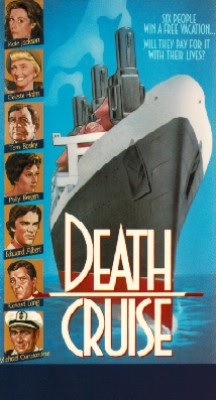
Death Cruise opens with three couples winning an all-expenses paid trip on a luxury liner.  None of the couples are in a happy marriage.  Sylvia Carter (Polly Bergen) is tired of her husband, Jerry (Richard Long), and his philandering ways.  Elizabeth Mason (Celeste Holm) is frustrated with David Mason (Tom Bosley) and his loud dinner jackets.  Mary Frances Radney (Kate Jackson) is fed up with James (Edward Albert) and his smug refusal to start a family.  Of course, it’s not just martial problems that connects these passengers.  It’s also the fact that someone on the boat is stalking and killing them, one-by-one.  Can Dr. Burke (Michael Constantine) and Captain Vettori (Cesare Danova) track down the killer before it’s too late?

Death Cruise is an enjoyably twisty little murder mystery.  It aired in 1974, a good two years before the first Love Boat pilot film appeared on television.  However, both Death Cruise and The Love Boat were produced by Aaron Spelling so the two productions definitely have a shared DNA.  The Love Boat is basically Death Cruise with the addition of a laugh track and considerably less murder.  That said, I have my doubts as to whether Doc Bricker would have been as effective a detective as Dr. Burke.

One of the most interesting things about Death Cruise is how little anyone on the boat really seems to care about the fact that the passengers are turning up dead.  In fact, one widower is asking a widow to be his date to dinner within a few hours of the deaths of their spouses.  Of course, the murderer makes sure that dinner date is canceled but it’s still hard not to wonder whatever happened to an appropriate time of grieving.  Then again, I guess if you’re on a boat for a weekend, you just do whatever feels right at the moment.

(And certainly, if they were on The Love Boat, the walking HR nightmares that was Doc Bricker wouldn’t have wasted any time asking the widows to come by his office for a examination.)

Of the victims and suspects, Richard Long and Edward Albert are memorably sleazy while Tom Bosley plays up just how annoyed he is with the whole situation.  Michael Constantine is a good detective and the movie’s final twist is nicely executed.  Personally, when it comes to cruises, I will always prefer the safety and romance of The Love Boat but Death Cruise was an entertaining nautical diversion.

Retro Television Reviews: The Love Boat 2.11 “Heads or Tails/Mona of the Movies/The Little People”


Welcome to Retro Television Reviews, a feature where we review some of our favorite and least favorite shows of the past!  On Wednesdays, I will be reviewing the original Love Boat, which aired on ABC from 1977 to 1986!  The series can be streamed on Paramount Plus!

Let’s set sail for adventure!

Episode 2.11 “Heads or Tails/Mona of the Movies/The Little People”

(Dir by George Tyne, originally aired on November 25th, 1978)

The Love Boat crew is super excited because the glamorous movie star, Mona Maxwell (Rhonda Flemming), is going to be on the cruise.  Apparently, this is not her first time to sail on the Love Boat.  Captain Stubing can’t wait to get reacquainted with her.  The walking HR nightmare that is Doc Bricker can’t wait to flirt with her.  Artie D’Angelo (Orson Bean), a passenger who owns a chain of garages, is shocked to see that his favorite movie star in on the boat.

Artie may be a big fan of Mona’s but, whenever he tries to talk to her, he finds that he simply cannot find the words.  With Doc’s help, Artie finally works up the courage to ask Mona to have dinner with him.  Mona accepts and the two of them soon find themselves falling in love.  The only problem is that Artie just cannot bring himself to believe that a big movie star like Mona would be interested in a guy like him.  Really, Artie is being way too hard on himself.  He’s a likable guy!  And, fear not, he and Mona leave ship arm-in-arm.

Meanwhile, two frat dudes — Alex (Adam Arkin) and Wally (Richard Gilliand) — have made a bet over who will be the first to sweep Julie off of her feet.  When they start the betting, it’s for money but eventually, they decide to just bet a pizza.  Julie spends time with both of them and has fun, especially with Alex.  But then a jealous Wally reveals the truth about the bet and Julie announces that she doesn’t want anything else to do with either of them.  Gopher tells Julie that she should actually be flattered that the two guys were both so determined to date her.  Apparently deciding that she’s not really bothered by the fact that both of her suitors just spent an entire weekend lying to her, Julie forgives them and then says that she’s going to spend an equal amount of time with both Alex and Wally so neither one of them will win or lose the bet.

Finally, Doug Warren (Edward Albert) is on the cruise with his parents, who are celebrating their anniversary.  Coincidentally, Doug’s co-worker, Beth (Patty McCormack), is also on the cruise!  Doug and Beth quickly fall in love but then Beth is freaked out when she sees two little people in the ship’s lounge.  She explains to Doug that little people make her nervous.  She always worries about what would happen if her child turned out to be a little people.  What she doesn’t know is that the little people — Ralph (Billy Barty) and Dottie (Patty Maloney, who also guest-starred on the famous disco-themed episode of The Brady Bunch Hour) — are Doug’s parents!

Without telling Beth why, Doug says that he can no longer see her.  A heart-broken Beth goes to the Acapulco Lounge where she gets into a conversation with Ralph and Dottie.  She discovers that Ralph and Dottie are just like everyone else and she also finds out that Doug is their very tall son.  She tells Doug that she’s no longer worried about their potential children being little people and …. you know, this plot line is just ridiculous.  Beth is prejudiced against people based on their height and she’s basically told Doug that she would freak out if her child was anything other than “normal.”  And yet, Doug and his parents act all excited when Beth announces that she still loves Doug, regardless of who his parents are.  Doug, sweetie — you can do better!

I definitely had mixed feelings about this episode.  Orson Bean and Rhonda Fleming were both perfectly charming in their storyline but the other two stories were both pretty icky.  I spent the entire episode waiting for Julie to tell off Alex and Wally and for Doug to tell off Beth and, in both cases, it didn’t happen.  This was definitely not one of the better cruises of the Pacific Princess.

Hopefully, next week’s destination will be a bit nicer.

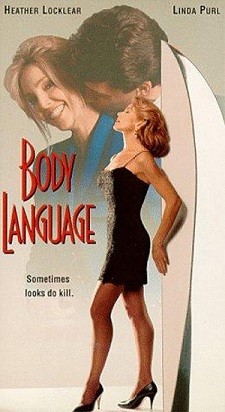
Body Language (1992, directed by Arthur Allen Seidelman)


Betsy (Heather Locklear) is a workaholic executive who has finally gotten the prize promotion at the Orpheus Capital Corporation.  Along with her new office, Betsy also gets a new assistant but when that assistant mysteriously disappears, she is replaced by Norma (Linda Purl).  Norma is just as ambitious as Betsy but she just can’t seem to make her way up the corporate ladder, no matter how hard she tries.  Norma soon grows indispensable to Betsy, comforting her when she breaks up with her boyfriend (James Acheson) and also supporting her when Betsy refuses to sleep with her sexist new boss (Edward Albert).  Before you can say “Single White Female,” Norma is dressing like Betsy, talking like Betsy, dating Betsy’s ex, and trying to take over Betsy’s life.  When Betsy eventually catches on, she discovers just how far Norma will go to be her.

It is easy to compare this film to Single White Female, though Body Language actually aired on the USA Network two months before Single White Female was released.  The main difference between the two films is that Single White Female was an R-rated theatrical release whereas Body Language is unmistakably a television production.  That means no bad language, no nudity, no graphic violence, only a little sex, and not a hint of psychological nuance beyond Norma being the type of girl who snuffs out candles with her fingers.  Single White Female‘s main strength was the effort that Jennifer Jason Leigh went to make her unstable stalker into a believable character who had more motivation than just being crazy.  The script for Body Language is less concerned with why Norma does what she does.  Betsy is glamorous and successful.  Norma is neither of those things and, in this film’s view of things, that is more than enough motivation for her to try to take over Betsy’s life.

Still, the underrated Linda Purl does the best that she can with the role of Norma and she has a few good moments where Norma lets the mask slip and reveals how unstable she actually is.  Heather Locklear matches her as the workaholic who learns that climbing the corporate ladder can be murder and she shows why she was so often cast in films like in-between appearing on shows like T.J. Hooker, Dynasty, and Melrose Place.  If you grew up in the 90s, it’s hard to watch any old Heather Locklear tv movie without feeling nostalgic.

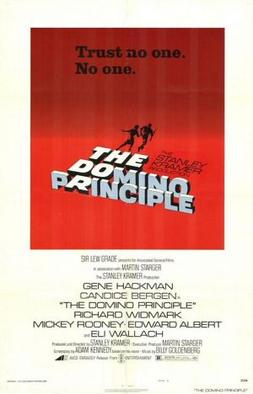
The Domino Principle (1977, directed by Stanley Kramer)


Roy Tucker (Gene Hackman) loyally served his country as a part of a “search and destroy” team in Vietnam but when he returned home, he discovered that America didn’t appreciate his sacrifice.  When he was convicted of murdering his wife’s abusive first husband, he was tossed in prison.  But now, two mysterious men (Richard Widmark and Edward Albert) have offered Tucker a chance to escape from prison and reunite with his wife (Candice Bergen) in Costa Rica.  The only catch is that they also expect Tucker to do a job for “the Organization” and assassinate an unidentified target.  As Tucker discovers, The Organization has been watching and manipulating him entire life, setting him up for this very moment.  Every small event in Tucker’s life led to another event that eventually sent him to both the war and to prison.  It’s almost like a game of dominos.  And we have a title!

The Domino Principle gets off to a good start, with a black-and-white montage of actual assassinations and then an opening credit sequence that features someone placing dominos over pictures of Roy Tucker at different ages.  (I am guessing that actual childhood photos of Gene Hackman were used because even the baby pictures feature the Hackman squint.)  However, the scene immediately following the credits features Gene Hackman and Mickey Rooney as cellmates and the film never really recovers.  Though they were both talented actors, Gene Hackman and Mickey Rooney don’t seem as if they belong on the same planet together, let alone sharing a prison cell in a grim and downbeat political thriller.  Hackman is his usual surly self, while Mickey seems like he’s going to try to get the entire prison to put on a show.  The film tries to do some unexpected things with Mickey’s character but it doesn’t change the fact that he’s Mickey Rooney and he just doesn’t belong here.

As for the rest of The Domino Principle, it’s slow and ponderous.  Best known for earnest social issue films like The Defiant Ones and Guess Whos’ Coming To Dinner, Stanley Kramer is the wrong director for a film that aspires to duplicate the conspiracy-themed atmosphere of other 70s thrillers like The Parallax View and Three Days of the Condor.  For all the time that film takes to build to its obvious conclusion, Kramer doesn’t even bother to identify who Tucker is supposed to kill or why the Organization wants him dead.  Though he seems like he should be a good choice for the lead role, Gene Hackman goes through the movie on autopilot.  Perhaps he was overwhelmed to be sharing a prison cell with Mickey Rooney or to be playing the husband of Candice Bergen, who the film unsuccessfully attempts to deglamorize.

Sadly, this would be one of Kramer’s last films.  He followed it up with The Runner Stumbles, which starred Dick Van Dyke (!) as a conflicted priest, and then went into semi-retirement.  (A few attempts to return to directing failed.)  Kramer spent his twilight years writing about movies for The Seattle Times.  Before his death in 2001, he also published a very entertaining autobiography, A Mad Mad Mad Mad World: A Life in Hollywood, which I recommend to anyone interested in the history of Hollywood.

Fist Fighter (1989, directed by Frank Zuniga)


C.J. Thunderbird (played by Jorge Rivero) is a former professional fighter who is now a miner living in Arizona.  Two years ago, Thunderbird’s best friend was killed by a fighter named Rhino (Matthias Hues).  Thunderbird swore vengeance and, when he gets a telegram informing him that Rhino has been spotted in Bolivia, Thunderbird heads down to South America, looking to settle things once and for all.  With the help of a down-on-his-luck trainer named Punchy (Edward Albert), Thunderbird nearly defeats Rhino in the ring but the fight is suddenly stopped by the local police, all of whom are paid off by local drug dealer, Billy Vance (Mike Connors).  Rhino works for Vance and Vance doesn’t want his most fearsome goon to be shown up in public.  Thunderbird and Puchy soon find themselves in one of those prisons where the inmates are forced to take part in underground cage matches.  Thunderbird’s only chance of survival and perhaps escape depends upon defeating yet another fighter, the Beast (Gus Rethwisch).

The coolest thing about Fist Fighter is that it’s called Fist Fighter.  It sounds like a title for a movie that someone made up but instead, it’s very, very real.  The 2nd coolest thing about Fist Fighter is that the hero is named Thunderbird.  I think this was Thunderbird’s only film adventure.  If Fist Fighter had made more money, it could have led to a Thunderbird franchise.  Jorge Rivero wasn’t much of an actor but he’s good in the fight scenes and Edward Albert overacts to such an extent that he easily makes up for Rivero’s inability to actually show emotion.  I also liked Mike Connors as the smug villain.  Brenda Bakker plays Billy Vance’s mistress.  Of course, she ends up falling for Thunderbird.

Fist Fighter is dumb but entertaining.  If Rivero’s role has been played by Jean-Claude Van Damme or Dolph Lundgren, two action stars who could actually act as well as convincingly fight, Fist Fighter would probably be a cult classic.  As it is, it’s one of the more entertaining of the many rip-offs of Bloodsport.

A Movie A Day #281: The House Where Evil Dwells (1982, directed by Kevin Connor)


When writer Ted Fletcher (Edward Albert) moves his family into a house in Kyoto, Japan, he does not know that the house comes with a violent history.  140 years ago, the house was occupied by a samurai and his wife.  When the samurai discovered that his wife had taken a lover, he killed both them and himself.  The three spirits remain in the house, haunting Ted and his wife, Laura (Susan George).  When a possessed Laura starts an affair with Ted’s best friend (Doug McClure), will history repeat itself?
When I was growing up, The House Where Evil Dwells used to frequently show up on television.  When you are a kid, anything that combines ghosts, sex, and samurai swords is automatically the coolest thing that you have ever seen so I used to really like The House Where Evil Dwells.  A few weeks ago, I rewatched it for the first time in years and I was shocked by how boring the movie actually is.  There are a few well-composed scenes with the ghosts silently watching the Fletcher family and Susan George does the best she can do with what she is given but has there ever been any two actors as wooden as Edward Albert and Doug McClure?  Any film about passion and anger is doomed to fail when it stars two actors who cannot show emotion.  This is one haunted house movie that will make you want to hang out with the ghosts because the living are just too boring.


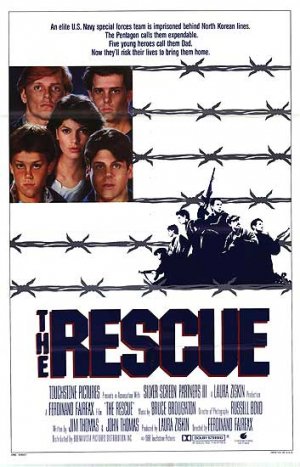
A Movie A Day #140: The Rescue (1988, directed by Ferdinand Fairfax)


A group of Navy SEALs enter North Korea on a mission to destroy a submarine that has fallen into Kim Il-sung’s hands.  They destroy the submarine but are captured before they can safely cross the border back into South Korea.  With the SEALs facing a show trial and probable public execution, Admiral Rothman (James Cromwell) draws up a plan to rescure them.  The U.S. government, not wanting to escalate the situation, shoots down the plan.  (Americans giving up?  Is Carter still president?)  However, Rothman’s nerdy son, Max (Marc Price), gets a hold of the plan.  Before you can say “Why didn’t anyone else think of this?”, he and the children of the SEALs are sneaking into North Korea and rescuing their fathers!
This is a pure 1980s film.  Like Red Dawn, it shows that America is such a great country that even our teenagers are stronger than the average well-armed communist.  Of the actors playing the rescuers, the best known is Kevin Dillon.  He plays the rebel who smokes cigarettes and rides a motorcycle.  Though their relationship may be strained, his father (Edward Albert) is still happy when Dillon suddenly shows up in North Korea.  Soon, father and son are working together to blow up America’s enemies.  This movie’s about as dumb as they come and it’s another example of Hollywood presenting North Korea as just being the junior varsity version of China but it’s also undeniably entertaining, especially if you don’t care about things like plausibility.  Watch it the next time that Kim Jong-un threatens to blow you up.  Who needs Chuck Norris when you’ve got Kevin Dillon?


The TSL’s Daily Horror Grindhouse: Galaxy of Terror (dir by Bruce D. Clark)


galaxy_of_terror

Long before Event Horizon (but, perhaps more importantly, shortly after the original Alien), there was 1981’s Galaxy of Terror!

Produced by Roger Corman and featuring production design and second unit work from James Cameron, Galaxy of Terror tells the story of what happens when, in the future, the crew of the Quest are dispatched to a mysterious planet.  They’re on a rescue mission but what they don’t realize is that they’re heading into a trap!

The crew of the Quest is virtually a who’s who of cult actors.

The youngest member of the crew is Cos.  Cos is scared of everything and, from the minute you see him, you can tell that he’ll probably be the first to die.  Cos is played by Jack Blessing, who subsequently became a very in-demand voice over artist.  You may not recognize the name or the face but you’ve probably heard the voice.

Captain Trainor, who is still troubled by a disastrous mission in the past, is played by Grace Zabriskie, who is rumored to have inspired Bob Dylan’s “Like A Rolling Stone” and who subsequently became a regular member of David Lynch’s stock company.

The fearsome Quuhod is played by one of the patron saints of exploitation filmmaking, the one and only SID HAIG!  Quuhod doesn’t say much but Sid Haig doesn’t have to say much to make an impression.

Technical officer Dameia is played by Taaffe O’Connell.  She suffers through the film’s most infamous and distasteful scenes, in which she’s assaulted by a gigantic space worm.  That scene was apparently insisted upon by Roger Corman and it’s not easy to watch.  At the same time, since the film takes place on a planet that is ruled by pure evil, the scene somehow works.  It’s that scene that tells you that Galaxy of Terror is not going to be your typical B-movie.  That is the scene that says, “This movie is going to give you nightmares!”

Ranger is played by Robert Englund!  That’s right — the original Freddy Krueger himself.  It’s interesting to see Englund in this role because Ranger is actually one of the only likable characters in the film.  It’s strange to see the future Freddy Krueger being menaced by the same type of threats that he unleashed on Elm Street.  But Englund does a good job in the role.  In fact, he does so well that you wonder what would have happened in his career if he hadn’t been forever typecast as the man of your nightmares.

The arrogant and cocky Baelon is played by future director, Zalman King.  It says something about King’s acting career that Galaxy of Terror is not the strangest film that he ever appeared in.

Burned-out Commander Ilvar is played by Bernard Behrens, who is one of those character actors who has a very familiar face.  If you watch any movie from the 80s or 90s that features a weary homicide detective or an unsympathetic bureaucrat, it’s entirely possible that he was played by Bernard Behrens.

Kore, the ship’s cook, is played by Ray Waltson, who is another one of those very familiar character actors.  Over the course of his long career, Waltson appeared in everything from The Apartment to The Sting to Fast Times At Ridgemont High to a countless number of TV shows and TV movies.  Waltson was usually cast in comedic roles so it’s interesting to see him here, playing a role that is very much not comedic.

Alluma, an empath, is played by Erin Moran, who was best known for playing Ron Howard’s bratty sister on the somewhat terrible (but apparently popular and deathless) sitcom, Happy Days.  Moran’s explosive death scene is another reason why Galaxy of Terror has a cult following.

And finally, the “star” of the film is Edward Albert, who plays Cabren.  To return to my earlier comparison to Event Horizon, Edward Albert has the Laurence Fishburne role.

Anyway, our crew is sent on a rescue mission but, when they crash land on the planet Morganthus, they find themselves outside of a desolate pyramid.  They make the mistake of exploring the pyramid and end up being confronted by their greatest fears.  (They also eventually discover that one of their crewmates is a traitor.)  It’s pretty much a typical sci-fi slasher film but it makes an impression because, thematically, it’s just so dark.  The fears that attack the crew members are so ruthless and brutal that they will take even the most jaded of horror fans by surprise.  Galaxy of Terror is relentless and merciless in its effort to scare the audience.

What especially distinguishes Galaxy of Terror is that, despite the obviously low budget, the entire film feels sickeningly real.  A lot of credit for that has to go to James Cameron, who creates a lived-in future that actually feels a lot more plausible than anything to be found in Avatar.

So, if you have the chance, turn off the lights, watch the film in the dark, and prepare for a perfect Halloween nightmare!

http://www.youtube.com/watch?v=mJO07ylhTu4

Embracing the Melodrama #31: When Time Ran Out (dir by James Goldstone)


If I had been alive in the 70s, I would have been terrified if I had ever found myself in the same general location of Paul Newman, William Holden, Ernest Borgnine, Red Buttons, Jacqueline Bisset, or Burgess Meredith.  Just based on the movies that they spent that decade appearing in, it would appear that disaster followed them everywhere.

Just consider:

Both Paul Newman and William Holden were trapped in The Towering Inferno. 

Ernest Borgnine and Red Buttons both ended up taking an unexpected Poseidon Adventure together.

Jacqueline Bisset was a flight attendant in the first Airport and nearly got killed by a mad bomber.

And finally, Burgess Meredith was a passenger on The Hindenburg.

Seriously, that’s a dangerously disaster-prone bunch of thespians!

So imagine how terrifying it must have been on the set of the 1980 film When Time Ran Out when all 6 of those actors — along with a lot of other disaster film veterans — were first gathered in one place.  People were probably running for their lives, both on-screen and off.

Lava3

When Time Ran Out takes place on an island in the South Pacific.  Shelby Gilmore (William Holden, playing yet another ruthless but essentially good-hearted businessman) owns a luxury resort that happens to be sitting dangerously close to an active volcano.  Oil rigger Hank Anderson (Paul Newman) is convinced that the volcano is about to erupt but Shelby’s son-in-law, Bob Spangler (James Franciscus), refuses to listen and claims that even if the volcano does blow, the resort will be safe.

(As a sidenote, why were William Holden’s son-in-laws always too blame in disaster movies?  First, you had Richard Chamberlain in The Towering Inferno and now, it’s James Franciscus in When Time Ran Out…)

Suspended over a volcano

Suspended over a volcano

You can just look at the film’s title (When Time Ran Out!) and guess that Bob is probably wrong.  However, Bob has other things on his mind.  First off, he’s cheating on his neurotic wife (Veronica Hamel) with a native islander (Barbara Carrera) who happens to be married to the hotel’s general manager, Brian (Edward Albert).  Brian also happens to be Bob’s half-brother and is therefore owed at least half of Bob’s fortune but nobody but Bob realizes that.

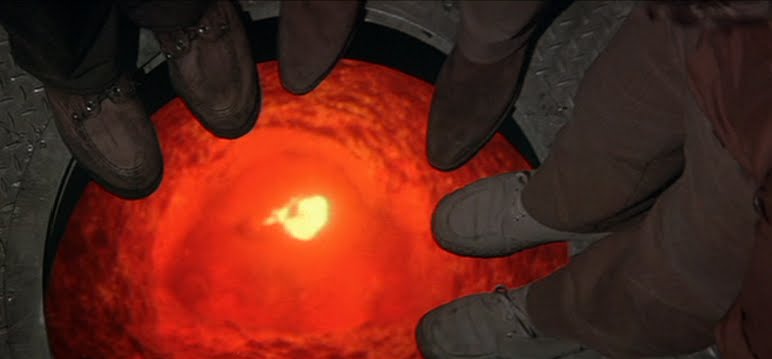
And, of course, there are other colorful guests at the hotel who will soon find themselves either fleeing from or drowning in molten lava.  There’s a white-collar criminal (Red Buttons) who is being pursued by a detective from New York (Ernest Borgnine, of course).  There’s also two retired tightrope walkers (Burgess Meredith and Valentina Cortese) and you better believe that there’s going to be a scene where one of them is going to have to walk across a plank that happens to be suspended over a river a lava…

Told ya!

Told ya!

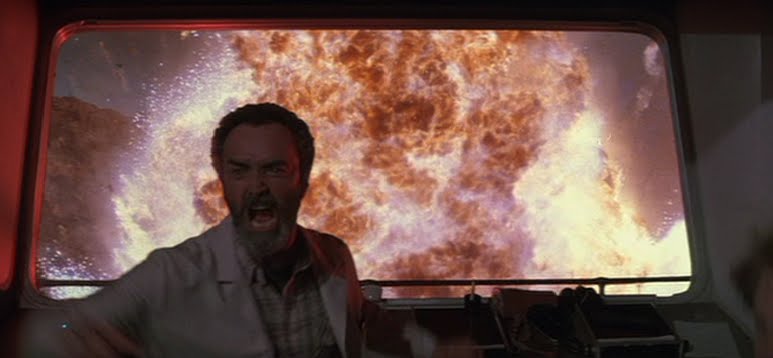
Eventually, that volcano does erupt and…well, let’s just say that When Time Ran Out is no Towering Inferno as far as the special effects are concerned.  The scene where one random fireball flies out of the volcano and heads for the resort is particularly amusing for all the wrong reasons.  Not only does the volcano apparently have perfect aim but it’s also painfully obvious that the fireball is streaking across a matte painting.  This is the type of film where, when people plunge into a river lava, they do so with heavy lines visible around their flailing bodies.  That, along with the cast’s obvious lack of interest in the material, adds up to make When Time Ran Out a film that is memorable for being so ultimately forgettable.

The Horror!

The Horror!

(It’s odd to consider that this film was directed by the same James Goldstone who directed such memorable films as Rollercoaster and Brother John.)

When Time Ran Out is something of a historical oddity because it was the last of the old 70s all-star disaster films.  (This may have been released in 1980 but it’s a 70s film through and through.)  The movie was such a monumental failure at the box office that it pretty much ended an era of disaster films.

For that reason, it also feels like an appropriate film with which to close out the 70s.  Tomorrow, we’ll continue to embrace the melodrama with the 1980s.

when time


Embracing the Melodrama #30: The Greek Tycoon (dir by J. Lee Thompson)


Theo and Liz: A Love Story

Theo and Liz: A Love Story

“The characters in this film are fictitious and any resemblance to persons living or dead is purely coincidental”. — Completely And Totally False Disclaimer From The Greek Tycoon (1978)

In order to appreciate a film like 1978’s The Greek Tycoon, it helps to be a history nerd like me.

If you are, then you probably know that, 5 years after her husband was assassinated in Dallas, former first lady Jacqueline Kennedy remarried.  Her new husband was Aristotle Onassis, a Greek shipping magnate who was 23 years older than her and who had an unsavory reputation.  Onassis was one of the world’s richest men and was known for both his extravagant life style and for being a ruthless operator.  Depending on which books you read, Onassis is portrayed as either being either one of the world’s greatest villains (and, in fact, there’s a whole school of conspiracy theorists who believed that Onassis was somehow involved in John Kennedy’s assassination) or just a casually amoral rich man who treated his new wife like his latest trophy.  Either way, he was not the sort of person who Americans expected to become the second husband of a widowed first lady.

Of course, the Greek Tycoon is not about Aristotle and Jackie Onassis.  It’s about another Greek shipping magnate with a ruthless reputation who shocks the world by marrying the widow of a martyred President.  And, if you stick with the film all the way through the end credits, you’ll even see a disclaimer to prove it!

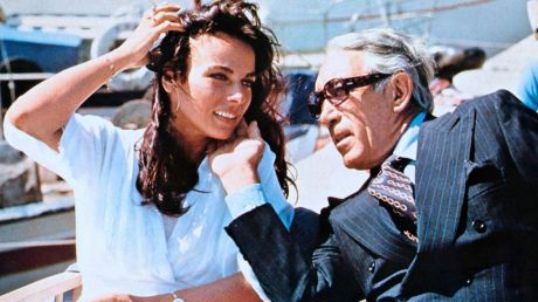
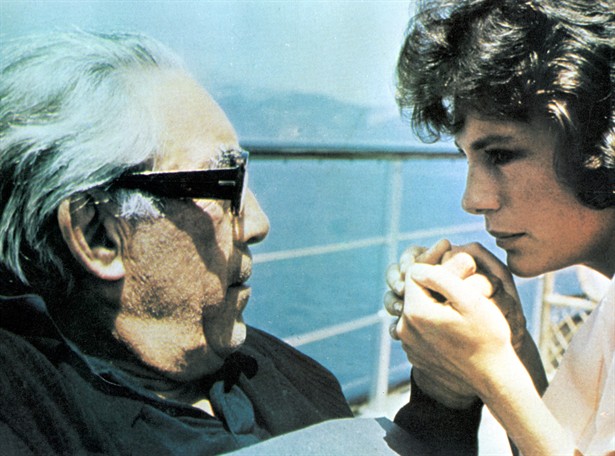
Anthony Quinn plays Theo Tomasis.  When we first meet him, he’s content to spend his time making crooked business deals and attending parties on a seemingly endless collection of white yachts.  He is grooming his son (Edward Albert) to take over the family business.  He loves both his wife Simi (Camilla Sparv) and his mistress (Marilu Tolo).  In fact, the only problem he has in his life is his business rival, Spyros (Raf Vallone, who played another Greek tycoon in The Other Side of Midnight).  Spyros happens to be Theo’s brother.  But other than that, Theo is content to spend all of his time dancing and breaking plates because, as the film reminds us every chance that it gets, he’s Greek.

However, things change for Theo when he meets Liz Cassidy (Jacqueline Bisset), the wife of young and charismatic Senator James Cassidy (James Franciscus).  Within minutes of meeting her, Theo is hitting on her but Liz loves her husband.  However, Sen. Cassidy soon becomes President Cassidy and this, of course, leads to Cassidy being assassinated while he and Liz are strolling down the beach.

Liz is soon married to the freshly divorced Theo and proving herself to be far more strong-willed than anyone realized.  Despite the anger and efforts of both Theo’s son and the dead President’s brother (Robin Clarke), Liz and Theo’s love endures and soon, they are such a glamorous and famous couple that its surprising that nobody ever suggests making a movie about them.

The Greek Tycoon is a big mess of a movie but it’s enjoyable if you know what inspired it.  (Of course, if you’re not into history and you don’t know anything about Aristotle and Jackie then you’ll probably find The Greek Tycoon to be one of the most boring movies ever made.)  To be honest, the story is never important in a film like this.  Instead, you watch for the clothes and the sets and they’re all properly glamorous in a 1970s sort of way.  Finally, you can watch this movie for Anthony Qunn’s unapologetically over-the-top performance as Theo.  I don’t know if you could necessarily say that Quinn gave a good performance here but, watching the film, it certainly does look like he was having fun.

The_Greek_Tycoon_36374_Medium