October True Crime: Murder So Sweet (dir by Larry Peerce)


1993’s Murder So Sweet, also known a Poisoned By The Love: The Kern County Murders (seriously, try to say that ten times fast), tells the story of Steven David Catlin.

Steven David Catlin lived in Bakersfield, California.  Catlin was a career criminal who was married six times and who found some personal redemption for himself as a member of the pit crew for a professional race car driver in Fresno.  Trust me, I’ve lived in enough small, country towns to know that people will overlook a lot as long as someone knows how to work on a car.

One thing that people noticed about Catlin is that the people around him had a habit of dying of mysterious illnesses.  Multiple wives, his adoptive parents, they all died with fluid in their lungs and they left behind not only a medical mystery but also quite a bit of money for Steven David Catlin.  Catlin would always insist on holding a cremation just days after his loved ones passed away.  Not only did that allow Catlin to move on but also kept anyone from being able to do a thorough autopsy.

Eventually, the police figured out that Catlin was just poisoning anyone who got on his nerves or threatened to divorce him.  He wasn’t even a particularly clever poisoner.  He used paraquet, a highly toxic herbicide and he kept the bottle sitting in plain view in his garage.  He might as well have just labeled it his “Poisoning Thermos.”  Catlin was convicted of multiple murders and he was sentenced to die in 1990.  Of course, this being California, Catlin is sill alive and sitting in San Quentin.  This really is a case of “If you lived in Texas, you’d be dead by now.”

In Murder My Sweet, Catlin is played Harry Hamlin, who steals the film as a dumb but charming redneck who walks with a confident swagger and has no fear of hitting on his ex-wife, even after he realizes that she’s trying to convince the police that he’s a murderer.  Helen Shaver played Edie Bellew, the ex who knows better than to trust Catlin.  Her current husband is played by Terence Knox and there’s plenty of scenes of him telling Edie that she needs to back off and that everyone knows that Steve Catlin isn’t a murderer.  In many ways, this is the ultimate Lifetime film in that Edie Bellew not only gets to put her ex-husband in prison but she also proves that her current husband doesn’t know what he’s talking about.

Murder My Sweet takes place in rural California and, as a result, everyone in the film speaks with a shrill country accent and we spend a lot of time in a really tacky beauty parlor.  Indeed, the film portrayal of country eccentricity is so over-the-top that I was tempted to say that it seemed as if the director was trying to rip-off David Lynch.  However, Lynch may have made films about eccentric characters but he never portrayed them as being caricatures.  Lynch loved his eccentrics while this film takes a bit of a condescending attitude towards them.  Still, it’s worth watching for Harry Hamlin’s sleazy turn as Steve Catlin, a guy who enjoys fast cars and making ice cream.

Just don’t eat that ice cream….
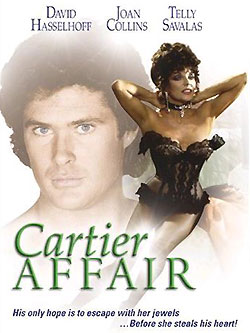
Made-For-TV Movie Review: The Cartier Affair (dir by Rod Holcomb)


In 1984’s The Cartier Affair, David Hasselhoff plays Curt Taylor.  He has spent the last few years in prison, having been convicted of selling deeds to fake oil wells.  He has passed the time by watching a soap opera that stars actress Cartier Rand (Joan Collins).  He has also managed to get in debt to the local prison mob boss, Phil Drexler (Telly Savalas).

When Curt learns that he’s being released from prison, Drexler informs him that he’s still expected to find a way to pay off his debt.  On the outside, Curt discovers that even his parole officer (Ed Lauter) works for Drexler!  Curt is assigned to become the private secretary of Cartier Rand and to steal her jewelry.  In order to get the job, Curt has to pretend to be gay.  That’s the only way that Cartier’s boyfriend (Charles Napier) would be willing to accept the idea of a male private secretary.

(Wouldn’t it just be simpler for Curt to rob a bank or something?)

Once he’s a part of the household staff, Curt discovers that Cartier is more than just the star of his favorite soap opera.  She’s someone who is tired of reciting melodramatic dialogue and kissing her co-stars.  She has serious ambitions.  Curt is immediately attracted to her and soon, Cartier is attracted to Curt.  But, of course, Curt is pretending to be gay and, to his horror, Cartier sets Curt up with one of her gay friends.

Meanwhile, the bad guys want their money….

The first half of the film is taken up by scenes of people mistaking Curt for being gay and there are more than a few moments and jokes that a film wouldn’t be allowed to get away with today.  A scene where Curt finds himself in a gay bar is cringey because, rather than asking us to laugh at Curt for panicking about finding himself in the rather innocuous location, the film asks us to instead laugh at the sight of men slow-dancing with other men.  Early on in the film, there’s a few scene where Hasselhoff overplays his attempts to come across as being gay.  Fortunately, Hasselhoff soon stops doing that and his performance improves as the film goes on.

The film gets slightly better during the second half, when Cartier learns the truth about Curt and the two of them somewhat implausibly go on the run from the bad guys.  They end up getting chased out to the desert, trading one-liners all the way, and I do have to admit that Collins and Hasselhoff displayed a surprising amount of chemistry during those scenes.

The film is tonal mishmash that doesn’t really work.  It tries to parody the type of soap operas that made Cartier Rand a star and it also tries to be a relatively exciting chase film but it keeps getting bogged down in plot points that ultimately feel rather superfluous.  My main issue that, if Drexler really wanted to get him money from Curt, it seems like he would have come up with a less complicated scheme, like robbing a bank or fencing stolen goods or something like that.  Instead, Curt is supposed to go undercover, pretend to be gay, and rob one of the most famous women on the planet.  I mean, Hell, he could have just broken into a jewelry store and gotten it all done in one night.  That said, Hasselhoff and Collins have a bit of charm to them.  It’s a shame they didn’t co-star in a better film.

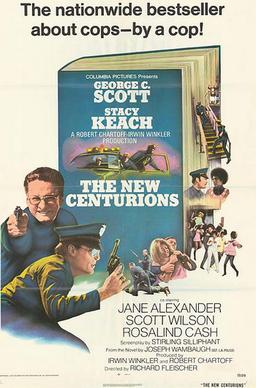
The New Centurions (1972, directed by Richard Fleischer)


Fresh from the police academy, three rookie cops are assigned to a precinct in East L.A.  Gus (Scott Wilson) is a father of three who just wants to do a good job and support his family.  Sergio (Erik Estrada) is a former gang member who saw the police academy as a way to get out of his old neighborhood, and Roy (Stacy Keach) is a new father who is going to law school at night.  Most of the movie centers on Roy, who goes from being an idealistic rookie to being a hardened veteran and who comes to love the job so much that he abandons law school and eventually loses his family.  Roy’s wife (Jane Alexander) comes to realize that Roy will never be able to relate to anyone other than his fellow cops.  Roy’s mentor is Andy Kilvinski (George C. Scott), a tough but warm-hearted survivor who has never been shot once and whose mandatory retirement is approaching.

Based on an autobiographical novel by real-life policeman Joseph Wambaugh, The New Centurion’s episodic structure allows the film to touch on all the issues, good and bad, that come with police work.  Gus is shaken after he accidentally shoots a civilian.  Sergio feels the burden of patrolling the streets on which he grew up.  Roy becomes a good cop but at the cost of everything else in his life and he deals with the stress by drinking.  There are moments of humor and moments of seriousness and then a tragic ending.  Just as Wambaugh’s book was acclaimed for its insight and its realistic portrayal of the pressures of being a policeman, the movie could have been one of the definitive portraits of being a street cop, except that it was directed in a workmanlike fashion by Richard Fleischer.  Instead of being the ultimate cop movie, The New Centurions feels more like an especially good episode of Police Story or Hill Street Blues.  (The New Centurions and Hill Street Blues both feature James B. Sikking as a pipe-smoking, martinet commander.)

George C. Scott, though.  What a great actor!  Scott only has a supporting role but he’s so good as Kilvinski that you miss him when he’s not around and, when he leaves, the movie gets a lot less interesting.  Scott makes Kilvinski the ultimate beat cop and he delivers the closest thing that The New Centurions has to a cohesive message.  A cop can leave the beat but the beat is never going to leave him.

Brad reviews DEATH HUNT (1981), starring Charles Bronson, Lee Marvin, Carl Weathers, and Andrew Stevens! 


Today is actor Andrew Stevens’ 70th birthday. I grew up watching Stevens in the Charles Bronson films 10 TO MIDNIGHT (1983) and DEATH HUNT (1981), the movie I’m reviewing today. I also enjoyed watching him in Brian De Palma’s THE FURY (1978). Later in his career he stepped behind the camera where he produces and directs mostly low budget films. As of this writing, he’s still going strong, and he’s built quite a nice career. And for me, my appreciation all started because he worked with Charles Bronson when he was in his twenties!

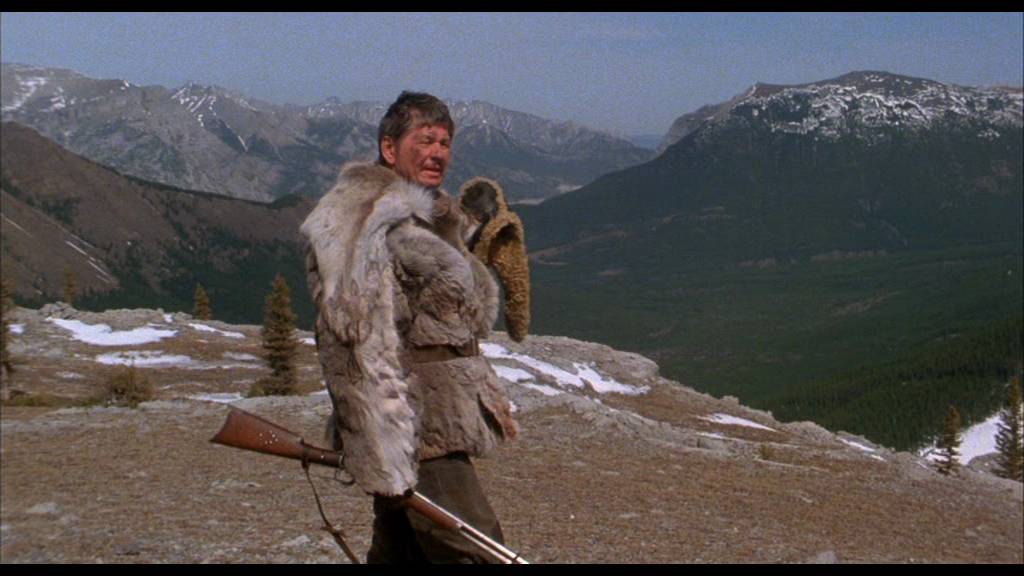
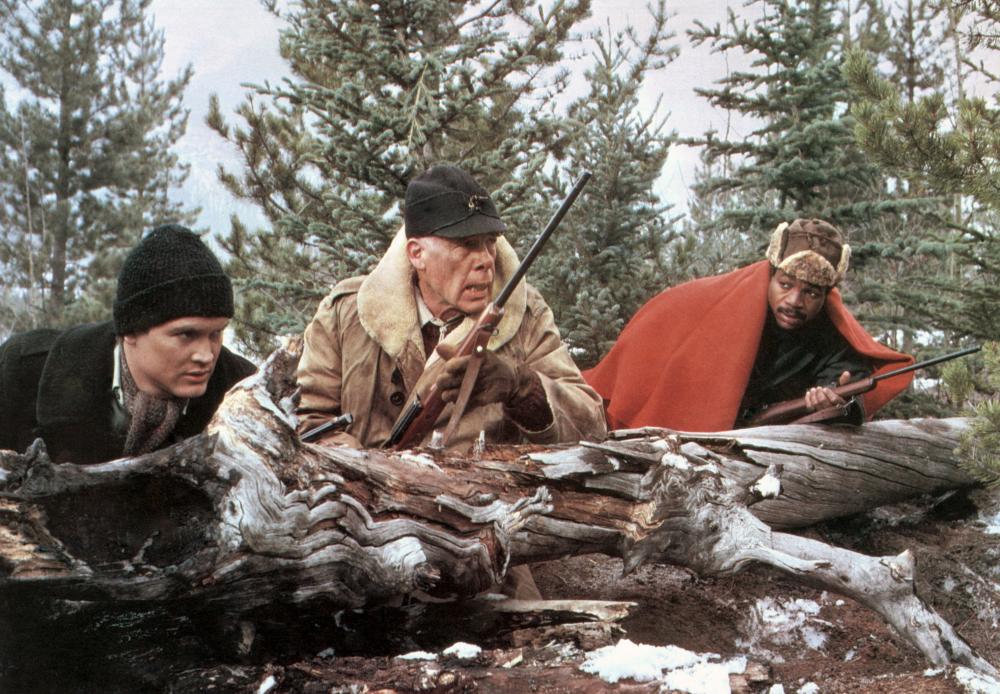
In the “based on a true story” DEATH HUNT, Charles Bronson plays trapper Albert Johnson, who lives in the Yukon Territory in the year of 1931 and just wants to be left alone. Early in the film, Johnson comes across a vicious dogfight and rescues one of the participants who’s almost dead. The problem is that the dog belongs to a piece of shit named Hazel (Ed Lauter), and even though Johnson pays him for the dog, Hazel heads to town and tells Sergeant Edgar Millen (Lee Marvin), of the Royal Canadian Mountain Police, that Johnson stole his dog. Millen doesn’t have time for Hazel’s B.S., so he tells him to go on. Millen would rather drink whiskey and hang out with his friends and co-workers in town. These people include the experienced tracker Sundog, aka George Washington Lincoln Brown (Carl Weathers), a young fresh-faced constable with the RCMP named Alvin Adams (Andrew Stevens), his latest lover Vanessa McBride (Angie Dickinson), and everyone’s favorite sidepiece, the Buffalo woman (Amy Marie George). Not willing to let things slide, Hazel and his men go up to Johnson’s cabin and start some more trouble, and one of his buddies gets his scalp shot off by the more than capable Johnson. Even though the entire mess has been started by Hazel and his crew of goons, who include character actors William Sanderson and Maury Chaykin, Millen is forced to try to bring Johnson in, so they can straighten everything out. When it seems Johnson may be about to go in with Millen, one of Hazel’s dumbass men opens fire, and all hell breaks loose. In the aftermath, Johnson escapes, kicking off a massive manhunt across the mountains and wilderness of the Yukon Territory! 

DEATH HUNT is an awesome film, primarily because it pairs Charles Bronson, as the tough mountain man, against Lee Marvin, as the seasoned lawman who probably has only one chase left in him. This is a match made in heaven, and even though the two stars share little screen time, the icons dominate each frame of the film. Their characters respect each other and you get the feeling the two men, who couldn’t be more different in real life, probably felt the same way about each other. The remainder of the cast is filled with so many recognizable names and faces. I’d say the the best performances outside of Bronson and Marvin come from Carl Weathers, Andrew Stevens and Ed Lauter. I like the camaraderie that Weathers shares with Marvin, and of course he’s a lot of help when the action starts. Initially, Stevens seems like he’s going to be another “new kid” who’s too inexperienced to be of much help, but he proves to be more than capable by the end of the film. And good grief is Lauter good at playing a piece of crap! Everything about Hazel is cruel, sadistic, and ignorant, and he plays the part perfectly. A scene where a bullying Hazel gets his comeuppance at the hands of the young Adams (Stevens), is a highlight of the film. Sadly, Angie Dickinson, one of the most beautiful women in the history of cinema, is somewhat wasted in her small, unimportant role. I still like seeing her though, even if the part is beneath her. 

Aside from the phenomenal cast that Director Peter R. Hunt (DR. NO and THUNDERBALL) was able to assemble, there are other good reasons to watch DEATH HUNT. I love movies that are filmed outside of the city, and you can’t get much further out of the city than the Canadian Rocky Mountains. This setting provides plenty of beauty, but its frozen landscape and bitter conditions also allow for a sense of loneliness, isolation and desperation to seep in for the various characters as the manhunt stretches out over time. There is also some rugged and violent action spread out through the film. I was caught off guard the first time I watched the film by some of the more graphic violence in the action scenes. I’ve already mentioned Bronson’s character basically blowing a guy’s head off, and there’s another scene involving William Sanderson getting his arm caught in a trap. These scenes make my toes curl up just thinking about them. The action highlight occurs when the men think they have killed Johnson in an explosion, to only have him emerge from the smoke and flames of his decimated cabin with slow motion shotgun blasting. It’s an incredibly badass moment in the movie and in Bronson’s overall filmography. Finally, the story is interested in contrasting the old ways of doing things, as exemplified by Bronson and Marvin, versus the new ways of doing things, as exemplified by the young Stevens and a hotshot pilot (Scott Hylands) who is called in to help with the search. Edgar Millen is somewhat of a dinosaur who isn’t ready to truly move into the 20th century. He wants to catch Johnson through old-fashioned, out maneuvering him in the wilderness, while Stevens’ character brings in a radio and the expertise to use it, and Hylands tries to locate him and gun him down from high in the sky. These two schools of thought clash and play out to varying degrees of success and failure as the chase rushes toward its conclusion.

DEATH HUNT is not a perfect film by any stretch of the imagination, but it’s been one of my favorite Bronson films since I first saw it the mid to later 80’s. Just seeing Bronson and Marvin together on screen, in a rugged, violent, badass story, goes a long way with me. It’s as simple as that! See the trailer below:

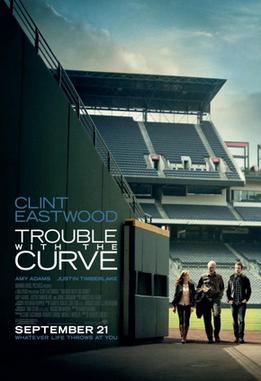
I Watched Trouble With The Curve (2012, Dir. by Robert Lorenz)


I love baseball  and all of its traditions.

I love the idea that a pitcher has a mental connection with his catcher.  I love the stories of the minor leaguers who get their chance in the majors and who stun the world by coming out of nowhere to hit a home run on their first at bat.  I love all the stories about which batters corked their bats and which pitchers could still manage to get away with throwing a spitball.  I love baseball because watching it is a relaxing way to spend an afternoon but at the same time, the game is unpredictable.  Just one hit can change the momentum of an entire game and, until that final out, the game could be won by anyone.  I especially have a place in my heart for the legendary baseball scouts, the grouchy old men who would drive out to the middle of nowhere to watch a game and search for the next great homerun hitter.

That’s one reason why I hated Moneyball.  I thought Brad Pitt, Philip Seymour Hoffman, Chris Pratt, and Jonah Hill all did a good job and I loved Brent Jennings’s performance as Ron Washington but I hated the idea that the scouts and their instincts weren’t necessary because everything could just be determined by sabermetrics.  The idea that an algorithm could tell you everything you needed to know about how to put a team together felt like a crime against everything that makes baseball special and it deeply offended me as a fan.  Moneyball may feature a baseball team but it’s a movie about business, not the game.

That’s why I’m thankful for Trouble With The Curve.

Clint Eastwood stars as Gus Lobel, one of those plain-spoken, no-BS scouts that I love so much.  All of the team owners might be into sabermetrics but Gus knows that the best way to scout a player is to actually hit the road and see him play.  For Gus, scouting is all about instincts and his own gut feeling.  Gus is everything that I love about baseball.  He’s knows the game, he knows the players, and he doesn’t need an algorithm to tell him whether or not someone should be on the field.

The movie is about Gus scouting a player who has trouble hitting the curve.  That’s something that Gus notices but the algorithm overlooks.  Accompanying Gus is his daughter, Mickey (Amy Adams), who is proud to have grown up surrounded by plain-spoken, unpretentious baseball scouts like her father and who doesn’t understand why Gus never took her on the road when she was younger.  Mickey falls for a younger scout named Johnny (Justin Timberlake), their love based on their shared knowledge of baseball.  I liked Mickey and Johnny as a couple and I appreciated the scenes where Mickey and Gus worked on their strained relationship but the best thing about this movie is that  Gus gets to prove that he knows more about baseball than all the young whipper-snappers who think they understand the game.

Trouble With The Curve is a tribute to everything that baseball is truly about.  It’s a movie that loves the game as much as I do.  Clint Eastwood and Amy Adams are a perfect father/daughter duo.  Who needs an algorithm when you’ve got Clint and Amy?

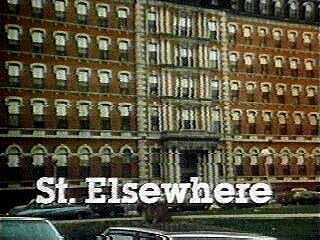
Retro Television Review: St. Elsewhere 1.19 “Working”


Welcome to Retro Television Reviews, a feature where we review some of our favorite and least favorite shows of the past! On Fridays, I will be reviewing St. Elsewhere, a medical show which ran on NBC from 1982 to 1988.  The show can be found on Hulu and, for purchase, on Prime!

This week, someone’s getting sued!

Episode 1.19 “Working”

(Dir by Bruce Paltrow, originally aired on April 5th, 1983)

Dr. Morrison becomes upset when he deduces that a patient (Ed Lauter) is trying to drink himself to death so that his family can collect his life insurance.  Dr. Chandler becomes upset when one of his patients dies while being admitted to the hospital and the family ends up suing for malpractice.  For once, Dr. Craig is not upset because he’s been charmed by a visiting surgeon (Rita Zohar) from Hungary.  And, finally, Dr. White continues to be Dr. White as he obsesses over his separation, pops pills, and screws up even the simplest of medical tasks.

It’s just another day at St. Eligius!

This was a pretty good episode.  Dr. Craig’s storyline was probably the weakest but William Daniels is such a good actor and Dr. Craig was such an interesting character that even a weak Craig storyline is still better than average.  (That said, the visiting surgeon’s amazement at visiting at actual McDonald’s was a bit heavy handed.)

What really made this episode stand out is that Denzel Washington finally got to do something more than just stand in the background and nod.  For most of the first season, Dr. Chandler has been portrayed as being perhaps the most perfect and ultra-competent resident in the history of medical residences so it was interesting to see him not having all the answers for once.  Washington did a wonderful job portraying Chandler’s transformation from being almost cocky to being worried that he actually was, in some way, responsible for his patient’s death.  (The fact that the other doctors just shrugged off the man’s death made Chandler even more determined to figure things out.)  In the past, Chandler has always been quick to call out other people’s errors and this episode actually features him nearly coming to blows with White over White’s terrible job performance. Seeing Chandler having to critically examine his own job performance brought a bit more depth to the character.

Speaking of Dr. White …. WHAT A JERK!  The first season is nearly over and it seems like the show is building up to something terrible happening to Dr. White.  Whatever it may be, it’s hard not to feel that he brought it on himself.  In a hospital full of dedicated doctors, Dr. White is the guy you never want to see come in your room.  I have no idea what’s going to happen with this doctor but I can’t imagine it will be a good thing.

Finally, Morrison’s storyline left me wondering why Morrison always ends up with the most melodramatic patients.  That said, Ed Lauter was one of the best and his scenes with Norman Lloyd’s Dr. Auschlander were wonderfully acted by both men.

This was a good episode.  We’re approaching the end of season one and I can’t wait to see how things are going to wrap up with the doctors at Boston’s most underrated hospital.

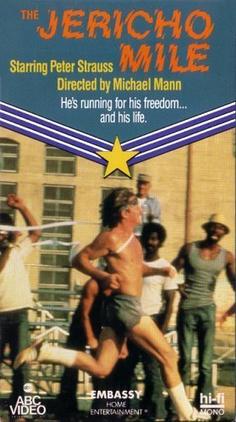
Made For TV Movie Review: The Jericho Mile (dir by Michael Mann)


1979’s The Jericho Mile tells the story of Larry Murphy (Peter Strauss).

Larry is serving a life sentence at Folsom Prison, convicted a crime that he admits to having committed.  Larry murdered his father, specifically to protect his stepsister from being raped.  Larry feels no guilt for his crime and, at the same time, he’s willing to quietly serve his sentence.  He’s a loner, avoiding the rival racial factions in the prison.  (Brian Dennehy leads the Aryans while Roger E. Moseley leads the black prisoners and Miguel Pinero is the head of the Mexican Mafia.)  Larry just wants to spend his time running around the prison yard.

When Dr. Bill Janowski (Geoffrey Lewis) sees how fast Larry can run, he arranges for a local track coach, Jerry Beloit (Ed Lauter), to come up to the prison with a few potential Olympians so that they can race Larry.  Larry manages to outrun all of them.  Jerry becomes convinced that Larry could qualify for the Olympics, if only he had a regulation track to run on.  The Warden, knowing good publicity when he sees it, assigns the inmates to build the track but doing so means dealing with Folsom’s highly charged racial politics.  No matter how fast Larry can run and no matter how inspiring it would be for Larry to go from serving a life sentence to competing in the Olympics, Folsom is still a prison and Larry is still a prisoner.  And while the guards may have the guns and may be the only ones who are allowed to go home at the end of the game, it’s the prison gangs who have all the power.  When the Aryans go on strike and refuse to work on the track, it puts Larry’s chances in jeopardy.

Of course, Larry’s chances are already in jeopardy just because of who he is.  Larry is a prisoner who refuses to show remorse.  While other prisoners embrace religion or politics and try to convince outsiders that they’ve either reformed or been wrongly convicted, Larry just wants to run.  Running is when he’s free.  (The film’s title refers to the Walls of Jericho coming down.)  And, for the other inmates, watching Larry run is a reminder that there are many ways once can escape from the drudgery of being locked away.

The Jericho Mile is a tough and rather cynical prison film, one that manages to combine downbeat social drama with a uplifting sports story.  You’ll want to cheer Larry while he’s running, even if you secretly suspect that he’s ultimately chasing something that will never happen.  Making his directorial debut, Michael Mann shot the film on location at Folsom and the cast is full of actual prisoners, all of whom bring some much need authenticity to the film’s story.  Mann never lets us forget that this is a film about people in a very dangerous situation and, even at its most inspiring, the film leaves you feeling as if violence could break out at any moment.  Peter Strauss, who usually played somewhat more refined characters, is totally believable as the taciturn Larry and character actors like Dennehy and Mosely skillfully blend in with the actual prisoners in the cast.  The Jericho Mile is a portrait of crime, punishment, and dreams.  It’s a movie that will stay with you.


Late Night Retro Television Review: Monsters 3.13 “Malcolm”


Welcome to Late Night Retro Television Reviews, a feature where we review some of our favorite and least favorite shows of the past! On Wednesdays, I will be reviewing Monsters, which aired in syndication from 1988 to 1991. The entire series is streaming on YouTube.

This week, we have an episode directed by Tom Noonan and starring Ed Lauter!  Come discover what’s eating Malcolm….

Episode 3.13 “Malcolm”

(Dir by Tom Noonan, originally aired on December 23rd, 1990)

When he was younger, Malcolm (Ed Lauter) was a romantic who played the clarinet.  Now, he’s just a boring old businessman.  When his wife (Carole Shelley) asks him to play the clarinet again, he collapses in pain.  Their doctor (Farley Granger) discovers that Malcolm has what appears to be a tumor in his stomach.  Of course, the glowing tumor is actually alive.  It’s a weird, giant worm that gives Malcolm his musical talent.  The worm is removed but now, Malcolm has lost his talent.  One night, the worm shows up again….

This was an odd and moody episode, which I guess is not surprising as it was directed by Tom Noonan, a director and actor who specializes in the odd and moody.  Moving at its own deliberate pace, the episode benefitted from a good performance from Ed Lauter, a good deal of atmosphere, and some Cronenbergian body horror.  The worm was obviously a stand-in for the self-destructive nature of many artists.  The worm gives Malcolm his talent but it also has the potential to eat him from the inside.  When the worm returns, Malcolm makes his decision and the whole thing plays out like a moody nightmare.

In other words, this was a good episode, one that was willing to be both surreal and a bit grotesque.  Tom Noonan and Ed Lauter made for an excellent combination.

Real Genius (1985, directed by Martha Coolidge)


Mitch Taylor (Gabriel Jarrett) is a teenage genius who is recruited by Prof. Jerry Hathaway (William Atherton) to study at Pacific Tech University.  The real reason why Hathaway has recruited Mitch is because Chris Knight (Val Kilmer), another genius, has been slacking on developing the power source for an experimental laser called “crossbow.”  Hathaway hopes that Mitch can get Chris to take his work seriously and to focus on the project.  Instead, Chris teaches Mitch that he has to learn how to enjoy life or his great intelligence will become a burden and he’ll end up burned out and living in the tunnel underneath the university.  That’s what happened to Laszlo Holyfield (Jon Gries).  That’s what nearly happened to Chris.  Chris is determined not to let it happen to Mitch.

Real Genius combines college hijinks with a serious examination of the pressures of being a “real genius.”  Mitch knows everything about laser physics but he still misses his parents and cries after getting yelled at by Prof. Hathaway.  He’s just a kid, no matter how smart he is.  Chris proves himself to be a good friend, encouraging Mitch to relax and enjoy life.  Just because you’re a genius doesn’t mean that you can’t have fun.  As played by Val Kilmer, Chris Knight is the best friend that everyone wishes they could have, whether they’re a genius or not.  Even when the film gets sophomoric, Kilmer plays his role seriously and never loses sight of Chris’s humanity or why it’s so important to Chris that Mitch not become consumed by the pressure of being smarter than almost everyone else in the room.  This is one of the early Val Kilmer performances that showed just how good an actor he truly was.  With Chris’s encouragement, Mitch pursues a romance with Jordan Cochran (Michelle Meyrink) and gets revenge (more than once) on the arrogant Kent (Robert Prescott).

Eventually, Chris and Mitch realize that their research is being used to construct a weapon for the CIA and this leads to the film’s famous ending.  Ever since this movie came out, there’s been a debate over whether or not a laser could be used to make popcorn and, even more importantly, whether or not a gigantic amount of popcorn could actually destroy someone’s house.  I don’t know the answers to those questions but I’d like to think that Real Genius got it right and I have no interest in any evidence that suggests otherwise.  Sometimes, you owe it yourself to believe in the power of lasers and popcorn.  The next person who takes advantage of your hard work, destroy his house with popcorn and then sing Everybody Wants To Rule The World.  Learn the lessons of Real Genius.

Finally, when I was growing up, Real Genius was one of those films that seemed to be on HBO all the time.  Somehow, I always turned it on right when the popcorn started popping.  That popcorn-filled house, followed by Everybody Want To Rule The World, was a huge part of my childhood.  Real Genius will always bring back good memories for me.

14 Days of Paranoia #2: Extreme Justice (dir by Mark L. Lester)


What type of justice?

Extreme justice, y’all!

In this 1993 film, Lou Diamond Phillips stars as Jeff Powers.  Who is Jeff Powers?  He’s a cop!  He wants to keep the street safe!  Sometimes, he knows that you have to be willing to break the rules!  He’s a cop who does things his way!

Okay, is that enough exclamation points?  I’m not just using them to be obnoxious.  The film is pretty much just one big exclamation point.  The action is hyperintense and the film is full of characters who always seem like they’re just one step away from exploding.  No one in this film is particularly calm or laid back.  From the start, everything is dialed to eleven and it just keeps going higher and higher.

After Jeff is put on probation for roughing up a suspect, he receives an invitation to join an elite squad of detective.  Led by the charismatic Detective Dan Vaughn (Scott Glenn, giving a performance that is so over-the-top that he yells straight at the camera at one point), the Special Investigative Section is the best of the bed.  Upon joining, Jeff finds himself a member of a sacred fraternity of law enforcers.  Working with men like the always amused Detective Larson (Yaphet Kotto) and the somewhat paranoid Angel (Andrew Divoff), Jeff finds himself tracking some of the biggest criminals in the city.

What Jeff also discovers is that SIS does more than just arrest criminals.  The SIS has been given an unofficial license to kill and they end up executing as many people as they take to jail.  Often times, Vaughn will tells the men to allow a crime to be committed so that they can then dispense their own brand of justice.  In the film’s most disturbing scene, the members of SIS wait until after a woman has been raped in an alley before they move to neutralize her attackers.  When Jeff finally decides that he can’t be a part of all this and tries to reveal what’s going on, he discovers that the SIS has some support in some very high places.  Who cares if the SIS is allowing crimes to be committed or if an innocent person occasionally gets caught in the crossfire?  At least they’re taking care of the criminals!

Extreme Justice is a crude and energetic film and one that is based on some of the stories that spread about the LAPD’s RAMPART division in the 90s.  That the film works is a testament to the performances of Phillips, Kotto, and Glenn and also the direction of Mark L. Lester.  An exploitation vet who occassionally made big studio action films as well, Lester keeps the pace moving at breakneck speed and, even more importantly, he allows both sides to have their say.  While Jeff is upset about SIS’s methods, Detective Vaughn is correct when he says that his unit is targeting the worst of the worst.  It makes for an unusually intelligent exploitation film, one that leaves the audience with a lot to consider.  How far would you go to keep your neighborhood safe?

Previous entries in 2025’s 14 Days Of Paranoia:

  1. The Fourth Wall (1969)