First off, we’ve got the trailer for Head, starring the Monkees! This film was co-written by Jack Nicholson.
2. The Great Rock and Roll Swindle (1980)
In the first film that Julien Temple made about the history of the Sex Pistols, Malcolm McLaren presents himself as being the genius behind the group and tries to keep viewers from noticing that Johnny Rotten refused to have anything to do with the film.
3.Stunt Rock (1978)
I know next to nothing about this film but it was directed by Brian Trenchard-Smith and that’s often a good sign.
4, Sgt. Pepper’s Lonely Hearts Club Band (1978)
Featuring Donald Pleasence singing the longest version of I Want You ever recorded!
5. The Decline of Western Civilization (1981)
From director Penelope Spheeris comes the ultimate documentary about 1980s Los Angeles punk rock.
6. The Decline of Western Civilization Part 2: The Metal Years (1988)
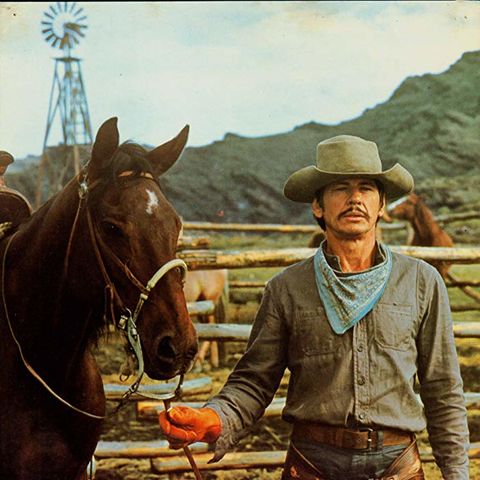
Director John Sturges was born on January 3rd, 1910. He directed some of my favorite movies, and many of them starred my movie hero, Charles Bronson. The picture above is from 1973’s CHINO!
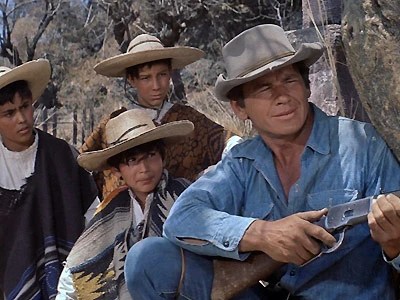
Charles Bronson’s second role in a film was in Sturges’ THE PEOPLE AGAINST O’HARA from 1951, starring Spencer Tracy. The picture below isn’t a very good picture as Bronson was only in one scene. Can you spot Bronson??
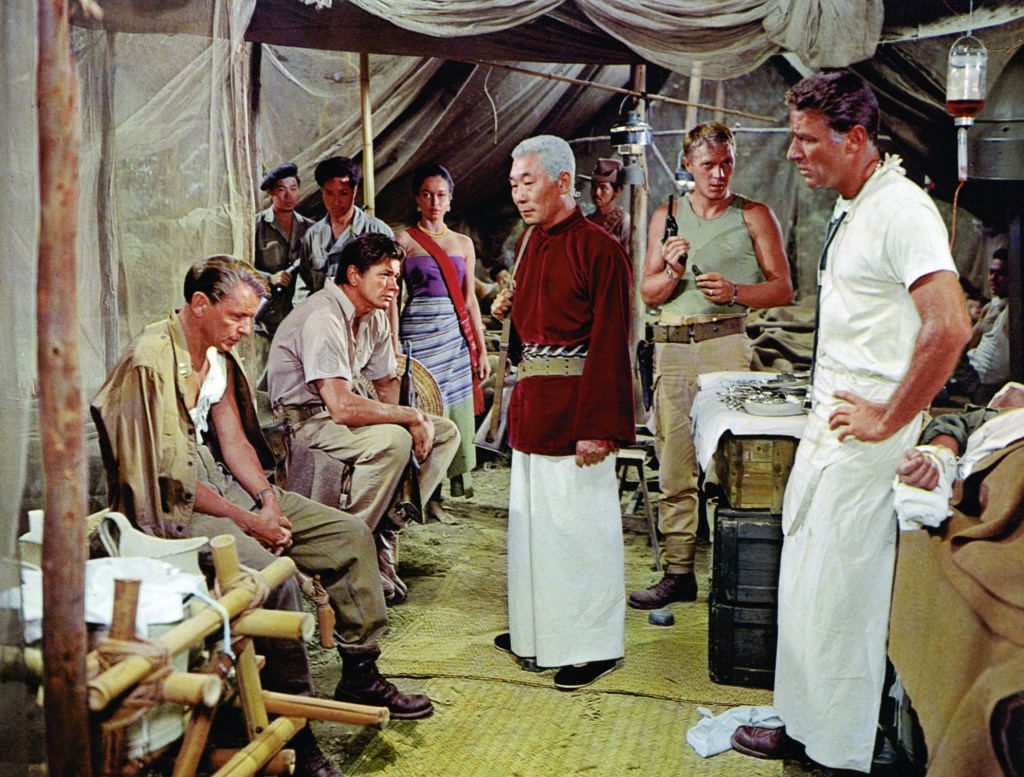
In 1959, Sturges would direct Charles Bronson in NEVER SO FEW, which co-starred Frank Sinatra and Steve McQueen.
Just a year later in 1960, Sturges would direct Bronson and an all star cast that included Yul Brynner, Steve McQueen, James Coburn and Robert Vaughn in THE MAGNIFICENT SEVEN, a remade of the Akira Kurosawa classic THE SEVEN SAMURAI. Bronson’s role as Bernardo O’Reilly is one of the best in the entire film.
John Sturges would direct Charles Bronson again in 1963 in the classic film THE GREAT ESCAPE, which also starred Richard Attenborough, Steve McQueen, James Garner, James Coburn and Donald Pleasence. Charles Bronson drew on his experience in the coal mines of Pennsylvania when he played “The Tunnel King” in the classic World War II film. Charles Bronson is one of the characters who actually escapes, which made me very happy!
John Sturges would direct Charles Bronson one more time in the underrated western from 1973, CHINO (pictured at the top). Sturges was a phenomenal director, and Charles Bronson was in some of his very best work! As Charles Bronson’s biggest fan, Sturges will always be one of my favorite directors!!
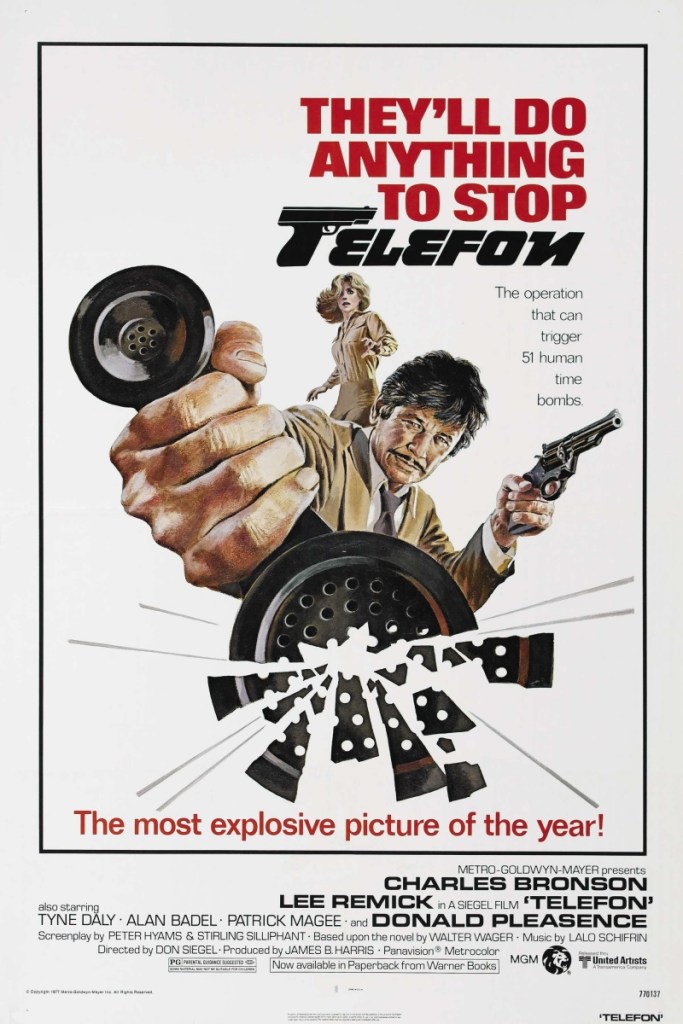
When I was a kid, FOX-16 out of Little Rock, Arkansas would have “Charles Bronson weeks” where every night they’d show a different Bronson film. I saw several of his films for the first time during those weeks and TELEFON was one of those movies. I remember really enjoying it that first time I saw it, and I’ve always carried that positive feeling with me.
The plot of TELEFON is pretty interesting. In a nutshell, Charles Bronson is Russian KGB agent, Grigori Borsov, who’s been sent to the United States to stop radical Russian Nicolai Dalchimsky (Donald Pleasance), before he can set off more hypnotized human time bombs. Lee Remick is a beautiful Russian agent (double agent?) who helps him with his mission.
I personally think TELEFON is an underrated Charles Bronson film, and it seems like a movie that has almost been forgotten. This is strange to me because it had quite the pedigree at the time of production. Bronson was a huge star at the time, and the director was Don Siegel, the man behind such classics as DIRTY HARRY, ESCAPE FROM ALCATRAZ, and THE SHOOTIST. The cast is exceptional as well, with Bronson being joined by the likes of Donald Pleasance, Lee Remick, Tyne Daly, Sheree North and Patrick Magee. The screenplay was co-written by Peter Hyams, who would go on to direct such excellent films as OUTLAND, THE STAR CHAMBER, and RUNNING SCARED. My point of sharing all of this is that true professionals were at work in front of, and behind the camera, and they created a damn fine Cold War thriller. I was glad that Shout Factory put out a nice blu ray of the film in January of 2024. Hopefully film enthusiasts will begin discovering the film again.
With that said, TELEFON isn’t a perfect film and I do have a few small complaints. First, Charles Bronson doesn’t appear in the film until we’re already 21 minutes deep. That’s a long time for me to have to wait for the man! Second, Bronson and Remick don’t have a lot of sexual chemistry. She’s beautiful and he oozes masculinity, but somehow it doesn’t really extend to a real connection between their characters. That’s one of the reasons I like it when Bronson works with his wife Jill Ireland. That chemistry is usually there between them. Third, Donald Pleasance wears several wigs and looks kind of dorky at times. Fourth, Sheree North wears a housecoat during her section of the film. If you’ve seen her in BREAKOUT with Bronson from a couple of years earlier, you understand just what a missed opportunity that was. Finally, Tyne Daly is so good in her small role, but she ultimately just kind of exits the film. I’d have liked even more of her. These are small complaints, with the exception of Bronson’s entrance & North’s wardrobe choice, that I don’t really hold against the movie.
The last thing that I want to mention is that there are a couple interesting pop culture references to TELEFON in movies that came out later. First, the writers of THE NAKED GUN borrowed the plot about hypnotized human time bombs in their own plot to assassinate the visiting Queen of England. Certain scenes are taken directly from TELEFON. I remember watching THE NAKED GUN in theaters in the late 80’s and wondering if I was the only person who realized this fact. Second, in DEATH PROOF, Quentin Tarantino used the major plot device of quoting the Robert Frost poem “Stopping by Woods on a Snowy Evening” in order to trigger something. In TELEFON, it was human time bombs. In DEATH PROOF, it was human lap dances. God bless Quentin Tarantino!
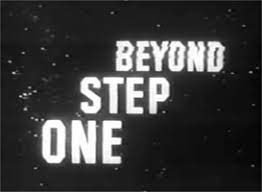
Tonight’s episode of One Step Beyond features the great Donald Pleasence, making it perfect viewing for the Halloween season!
Pleasence plays an attorney who prosecuted a man for a murder that he didn’t commit. Pleasence did so, even though a woman (Adrienne Corri) claiming to be the supposed victim of the crime came to him and said that she had not been murdered. Pleasence refused to believe her. Now, years later, his guilt is driving him mad while host John Newland looks on.
Can you prove it didn’t happen?
This episode originally aired on April 11th, 1961.
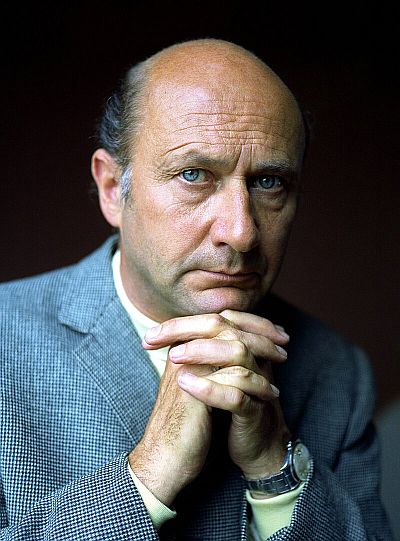
Yesterday was the 105th anniversary of the birth of the great actor Donald Pleasence.
(I know that may sound like a wordy way to say “birthday” but I always find it awkward to refer to those who are no longer with us as having a birthday.)
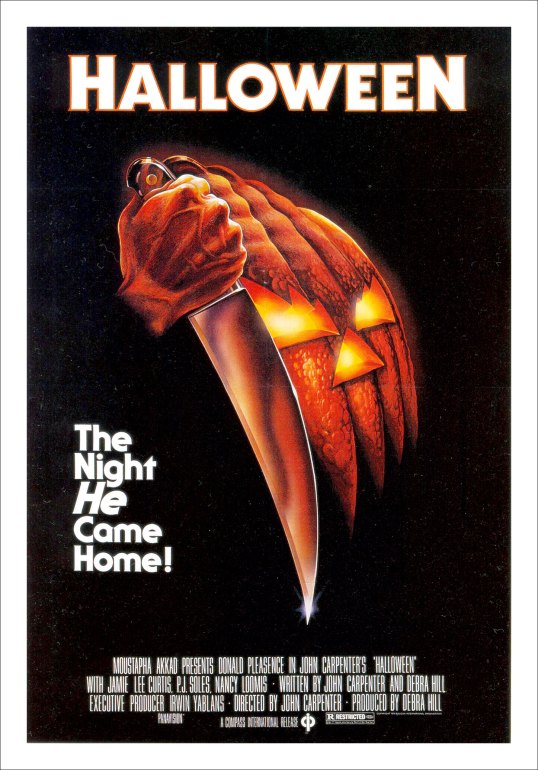
We can’t let October pass without paying tribute to Pleasence. Here is in 1978’s Halloween, playing the role for which he was best-known amongst horror fans.
First released in 1976 and based on a book that had come out ten years previously, The Passover Plot is a film that asks, “What if Jesus was a political revolutionary who faked his own death?”
Even when the film was first released, that wasn’t a particularly novel or new theory. Ever since the Crucifixion, there have been conspiracy theorists who have claimed that the entire thing was staged. Indeed, the early days of the Church were defined by conflicts between different sects debating the true nature of Jesus, with those who believed that he was the son of God and that he had risen from the dead eventually winning out over sects who claimed that Jesus was not divine or that he had actually escaped from the Romans and was instead hiding out in Egypt or even on the island that would eventually become known as Britain. (The fact that so many Gnostics and other heretics were executed by the Church and their texts suppressed only served to lend them credibility with future theorists.) Still, every few decades, some new book or film will claim that Jesus faked his death or married Mary Magdalene and gullible people will act as if this is somehow a new argument. It’s been over 20 years since all of that Da Vinci Code nonsense convinced bored suburbanites across America that they could be experts on both boxed wine and historical conspiracy theories. We’re about due for a new version of the old story.
As for The Passover Plot, it features Zalman King as Yeshua of Nazareth, an angry young man who dreams of the day when Judea will be free of the Romans. Having a knowledge of the prophecies of a messiah and also knowing that he is descended from King David, Yeshua specifically patterns his life after the prophecies and presents himself as being not just another revolutionary but instead as being sent by God. However, he is also aware that it will be necessary for him to “die” and “rise from the dead,” so he goes out of his way to force the hand of Pontius Pilate (Donald Pleasence). Having seen plenty of crucifixions when younger, Yeshua arranges for the local revolutionaries to drug him so that he’ll appear to be dead. When he later wakes up, everyone will believe that he has returned from the dead. The film ends with several title cards, all arguing that the Gospels were written long after Yeshua’s death (“Mark lived in Italy!” one title card proclaims with almost comical indignation) and were subsequently rewritten by “unknown” hands.
The Passover Plot is a weird combination of biblical epic and conspiracy thriller. Scenes of Yeshua preaching feel as if they could have come from any traditional Biblical epic but they are awkwardly placed with scenes of Yeshua having secret, melodramatic meetings with various conspirators. It would make for an interesting contrast if not for the fact that the film itself is so slowly paced and boring. Zalman King, who is best-known for his subsequent career as a softcore filmmaker, spends a lot of time yelling and smoldering intensely but he still doesn’t have the charisma or screen presence necessary to be convincing in the role. In the scene were he’s meant to be passionate, he shrieks with such abandon that he makes Ted Neeley’s performance in Jesus Christ Superstar feel restrained. This film asks us to believe that people would not only abandon their previous lives to follow Yeshua but that they would also take part in an elaborate conspiracy that could have gone wrong at any time. For that to be believable, Yeshua needs to be played by someone who doesn’t come across like the drama student that everyone dreads having to do a scene with. Far more impressive is Donald Pleasence, whose portrayal of a ruthless and unfeeling Pilate is a marked contrast to some of the more sympathetic interpretations of the character that tend turn up in the movies.
On the plus side, the film does look good. It was shot on location in Israel and there is a certain authenticity to the film’s recreation of the ancient world. Along with Pleasence, character actors like Scott Wilson (as Judas!) and Dan Hedaya get a chance to shine. But otherwise, The Passover Plot is too slowly paced and kooky for its own good. Conspiracy theorists never seem to understand that the more elaborate a conspiracy theory becomes, the less convincing it is to anyone who isn’t already a true believer. In the end, how one feels about the film’s conclusions will probably be connected to how one already views Jesus and the Church. The Passover Plot is not a film that’s going to convince anyone who wasn’t already convinced.
Donald Pleasence was born in the UK in 1919, the son of a railway station manager. Pleasence briefly tried to follow in his father’s footsteps before, at the age of 20, realizing that he would much rather be a professional actor. With his intense demeanor, Pleasence soon became an in-demand character actor and remained one for the rest of his life, only taking a break from acting when he served in World War II. (A devout Methodist, Pleasence originally registered as a conscientious objector but changed his stance once the Blitz began.) When he was taken prisoners by the Germans and sent to a POW camp, he organized plays among his fellow prisoners as a way to keep everyone’s spirits up as they waited for the war to end.
Pleasence’s experience as a POW led to him being cast in The Great Escape. His ability to play villains led to him being cast as the original Blofeld in You Only Live Twice. He appeared in classic horror films like Death Line and Wake In Fright. In 1978, he was offered the role of Dr. Loomis inHalloween, after it had been turned down by both Christopher Lee and Peter Cushing. Pleasence played Loomis with a righteous intensity that seemed to grow a bit more unhinged with each subsequent sequel. Though he was, by his own admission, not a huge fan of the genre, Pleasence became a horror icon to a whole new generation of film goers.
1998’s Halloween 4 does not have a great reputation but it does have one of my favorite Loomis scenes. In this scene, a hitchhiking Dr. Loomis is picked up by an old man (Carmen Filipi) who is on a mission of his own. It’s hard not to regret that these two didn’t get their own spin-off.
First released in 1985, Phenomena is the Dario Argento film with all the insects.
Phenomena is one of the most divisive of Argento’s film. Throughout the years, many critics have cited Phenomena as being the first Argento film to not really work. Some have called it Argento’s worst and most self-indulgent film and the first sign that he had lost his way. At the same time, I know quite a few people who consider Phenomena to be among Argento’s best films. The one thing that both camps seem to have in common is that their takes are all inspired by the film’s use of insects.
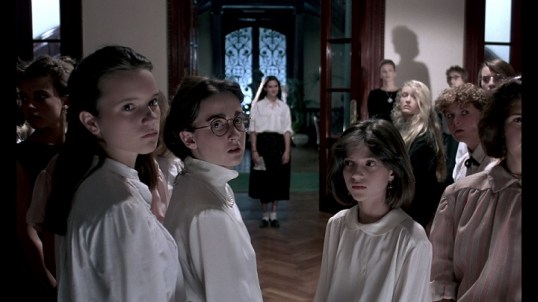
That said, Argento has always claimed that Phenomena is less about the insects and more about a world in which the Nazis conquered Europe. Much as with Argento’s claim that Tenebraeis actually a science fiction film, the idea that Phenomena takes place in a Europe controlled by Nazis can be found but only if you specifically look for it. For instance, the film is set in the Swiss countryside, with a similar emphasis on the mountains and the forests that were present in the German propaganda pictures that were taken of Hitler and his inner circle “relaxing” at his mountain residence. Much of the film takes place at a private school that is named after Richard Wagner, where the privileged students — with their always crisp uniforms and their haughty attitude — feel as if they could be descendants of the kid who sang Tomorrow Belongs To Me in Cabaret. One of the chaperones at the school is a German woman named Frau Bruckner (Daria Nicolodi). Again, much as with Tenebrae, Argento has said the Phenomena takes place in a world where terrible things have happened but the population has collectively decided to forget about them. Willfully forgotten seems to have been a major theme for Argento in the years following his unhappy experience with Inferno.
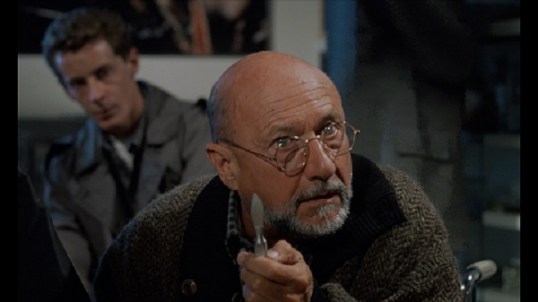
The film opens with the murder of 14 year-old Danish girl named Vera Brandt (played by Fiore Argento, the director’s daughter) who is a part of a tour group but who misses her bus. When she walks through the Swiss countryside in search of help, she comes across a house that’s not as abandoned as it originally. She is attacked and beheaded by the house’s resident. Eight months later, Vera’s decaying and maggot-covered heard is discovered and taken to forensic entomologist John McGregor (Donald Pleasence). Though McGregor uses a wheelchair, he has a monkey named Inga who takes care of him. Inga is quite capable with a straight-razor.
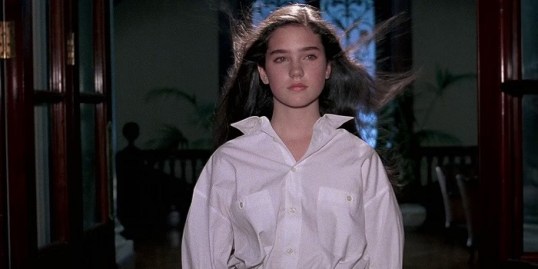
Meanwhile, chaperoned by Frau Bruckner, Jennifer Corvino (Jennifer Connelly) has just enrolled in the Richard Wagner Academy For Girls. Jennifer is the daughter of a Hollywood star. (Argento originally wanted Jennifer to be Al Pacino’s daughter, with Pacino playing himself. Pacino reportedly turned Argento down.) Jennifer is also a sleepwalker who has an intense mental connection with insects. Insects do her bidding and, in return, Jennifer protects them. When Frau Brucker and her chauffeur attempt to kill a bee, Jennifer is able to calm down the bee and set it free from the limo.
Jennifer struggles to fit in at the Academy. Much like Jessica Harper’s Suzy Banyon in Suspiria, she discovers that the other students are an idiosyncratic and not particularly friendly group. Whereas poor Suzy Banyon just had to accept her situation, Jennifer has an army of insects on her side and she’s willing to call them down on her snooty classmates. Of course, when Jennifer isn’t communing with the insects, she’s having to deal with the fact that she witnessed a murder while she was out sleepwalking. Haunted by images of the murder and being stalked by the murderer, Jennifer also learns that Frau Bruckner wants to send her to a mental hospital for being “diabolic.”
Jennifer’s only real friend in Switzerland is John McGregor and it must be said that Donald Pleasence, who was so misused in so many horror films in the 80s and 90s, is perfectly cast as the eccentric but kindly entomologist. Pleasence was one of those actors who could deliver even the strangest of lines with enough gravity to make them memorable and McGregor’s easy acceptance of the idea that Jennifer has a psychic connection with insects make it much easier for the viewer to accept it as well. As well, McGregor’s friendship with the monkey is far more touching than it has any right to be.
Phenomena is an odd mix of giallo and fantasy, with the brutal and violent murders uneasily playing out with more lyrical scenes featuring the beauty of Switzerland and the loyalty of the animal kingdom. Perhaps the best way to view Phenomena is as being an extremely bloody fairy tale, with Jennifer as a Cinderella-figure who depends on nature to stay safe from the adults and the students who stand in for the wicked stepmother and the ugly stepsisters. Visually, there are moments of haunting beauty in the film. There are other moments in which Argento seems to be determined to test how long the audience would be willing to accept the idea Jennifer and her insect army. Because of the whimsical insects, the film is often described as being an oddity in Argento’s filmography but actually, psychic insects and animals would pop up in future Argento films, so it seems that this was something that had obsessed him for a long time. Either that or the negative reaction afforded to Phenomena inspired Argento to continue to use the insects as his way of letting the critics know his true opinion of their worth.
I have to admit that I am amongst those who like Phenomena. It’s such a strange film that it’s hard for me not to admire it and, much as with Suspiria, the film benefitted from having a strong female protagonist in Jennifer Calvino. (For her part, Jennifer Connelly has said that she’s not particularly a fan of Phenomena.) Finally, this is a film that gave Donald Pleasence a chance to show what an engaging actor he could be when he had the right role. Critics be damned, I like this movie!
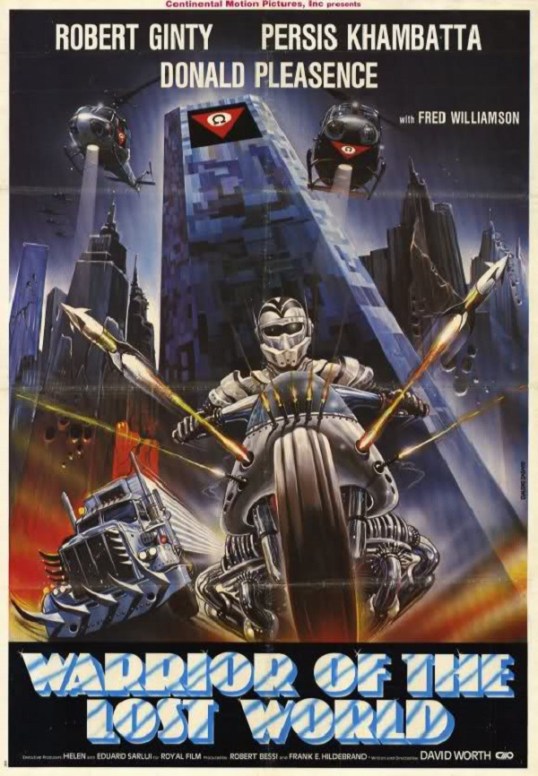
The 1983 Italian film, Warrior of the Lost World, opens with a long title card that explains that society has collapsed, due to radiation, disease, wars, and multiple bank bail-outs. The world of the future is a dangerous place, where the roads are ruled by dangerous scavengers. It’s a world where survival is not guaranteed and only those who are willing to fight will live to see another day and….
Well, look, I’ll be honest. It was a really long title card and, as anyone who knows me can tell you, I don’t have a particularly long attention span. I read about the radiation and the diseases and then I kind of zoned out. The important thing to know is that the film takes place in the future and that the film was made in the wake of the international success of The Road Warrior. In the early 80s, the Italian film industry briefly abandoned zombies to make movies about people driving cars through a post-apocalyptic landscape. In fact, I initially assumed that David Worth was a pseudonym for someone like Enzo Castelleri or even Umberto Lenzi. David Worth is actually a cinematographer who worked on a few Clint Eastwood films and who went to Italy to make his directorial debut with Warrior of the Lost World. After this film, Worth went on to direct Kickboxer and handful of others.
(One thing that’s always interesting about watching these films is discovering that people were speculating about the collapse of society long before 2023. It’s kind of nice to be reminded that people have always been panicking about something, even while society itself continued to survive and grow.)
Robert Ginty stars as The Rider, a man so tough that he doesn’t even need a name. The Rider and his motorcycle travel across the country. The Motorcycle can talk, though it’s screechy voice might make you wish that it couldn’t. It warns The Rider whenever there’s danger nearby. When a bunch of punk rock rejects attempt to attack the Rider, his motorcycle identifies them as being “dorks.” Later, when the Rider is looking at a woman who he has just saved from death, the Motorcycle orders, “Kiss the girl!” The Motorcycle has a weird quirk where it says everything three times. The Rider talks back to the Motorcycle but he always mumbles all of his lines, to the extent that it’s often difficult to really understand what he’s saying. It’s hard not to get the feeling that Robert Ginty couldn’t believe that he was actually having to pretend as if he was a heart-to-heart with a motorcycle.
(The Rider’s bike is actually named Einstein but, to me, it will always by The Motorcycle.)
After the Rider crashes into a wall, he’s nursed back to health by a bunch of old people who are trying to organize a rebellion against the evil Prossor (Donald Pleasence), who rules the State of Omega. Prossor has kidnapped the rebellion’s leader, Prof. McWayne (Harrison Muller, Jr). The old people want The Rider to accompany McWayne’s daughter, Natasia (Persis Khambatta), to Prossor’s city. The Rider whines about being asked but eventually agrees to do so. I’m not sure why The Rider agrees to help because The Rider seriously never stops complaining about how inconvenient the whole journey is. While The Rider does manage to rescue McWayne, Natasia gets left behind so, of course, the Rider has to do it all over again. Fortunately, it turns out that the Omega army isn’t quite as competent as everyone claims that they are. In fact, outsmarting Prosser is so easy that you can’t help but wonder why no one bothered to it before.
Warrior of the Lost World is not necessarily a good movie but, when watched with a group of friends and with the right snarky attitude, it is a fun movie. The action and the plotting is just so over-the-top and ridiculous that it’s hard to look away from the screen and Robert Ginty seems so genuinely annoyed by every little thing that happens that it’s hard not to wonder if maybe The Rider read the script before heading off to confront Prossor. An extended sequence is devoted to everyone singing the Rebellion’s national anthem, the great Donald Pleasence rants like a pro, Fred Williamson has a largely pointless cameo, and the film features what appears to be a 20-minute kiss between The Rider and Natasia. (The Motorcycle watches.) If you can’t have fun while watching Warrior of the Lost World, I just don’t know what to tell you.





 Through the Shattered Lens