Film Review: Two Mules For Sister Sara (dir by Don Seigel)


In 1970’s Two Mules For Sister Sara, Clint Eastwood and Shirley MacClaine take on the French!

It’s an often forgotten piece of history that, during the American Civil War, the French invaded Mexico and tried to turn it into a colony, one that was ruled by the hapless Archduke Maximillian.  The French were then led by Napoleon III, a rather enigmatic figure who spent his entire reign trying to live up to his namesake (and failing).  While the Americans would never have tolerated a French invasion of Mexico under normal circumstances, the Civil War provided enough of a distraction for Napoleon III to make his move in 1861.  Of course, as soon as the Civil War ended, America turned its attention to getting the French out of Mexico and, by the end of 1867, Maximillian had been executed and Napoleon III had withdrawn his forces.

Two Mules For Sister Sara takes place shortly after the end of the American Civil War, when the latest Mexican Revolution was in full swing.  Clint Eastwood plays Hogan, a former union officer who is now in Mexico working as a mercenary.  He’s been hired to help the revolutionaries attack a French garrison, in return for being given half of whatever is found inside.  Traveling through the desert, he comes across a group of bandits who are about to rape a woman named Sara (Shirley MacClaine).  Hogan guns down the bandits and is then shocked when Sara dons a habit and introduces herself as a nun who has been helping the revolutionaries.  She requests that Hogan travel with her and continue to protect her.  Hogan is reluctant, saying that he doesn’t want to become Sara’s mule when she already has one.  (That would be two mules for Sister Sara …. get it?)  But since Sara is a nun and claims to have no idea how to defend herself in the wilderness, Hogan agrees.  Sara and Hogan become unlikely allies as they get further and further involved in the Mexican Revolution.

Two Mules For Sister Sara owes a good deal to the Spaghetti westerns that were then coming out of Italy.  (Eastwood, of course, owed much of his stardom to his appearances in Sergio Leone’s Dollars trilogy.)  The Mexican Revolution was always a popular subject amongst the writers and directors of the Italian Spaghetti westerns.  Of course, Two Mules For Sister Sara is lacking in the political subtext that appeared in many of the Italian films.  Director Don Siegel may have been a liberal but, unlike many of his Italian contemporaries, he wasn’t a Marxist.  Instead, Two Mules For Sister Sara shows its Spaghetti influence in its panoramic visuals, it’s somewhat cynical sense of humor, and the casting of Eastwood as a taciturn mercenary whose main concern is using the revolution to make some money.  Eastwood plays a slightly more humorous version of his Man With No Name.  Hogan may be a cynic who doesn’t speak unless it’s absolutely necessary but he also possesses a good enough heart that there’s no way he’s going to abandon Sister Sara to fend for herself.  (The Man With No Name, on the other hand, would probably not have been so generous.)  Of course, Sister Sara has a secret of her own….

Supposedly, Eastwood and MacClaine didn’t get along particularly well while making Two Mules For Sister Sara.  (During preproduction, the film was envisioned as starring Eastwood and Elizabeth Taylor.)  If there was hostility between the two leads, it worked in the film’s favor because both Eastwood and MacClaine do a good job of playing off of each other.  MacClaine, at first, seems too contemporary for the role but, as the film progresses, she becomes more convincing.  There’s a revelation towards the end of the film that reveals that many of the moments that made MacClaine seem miscast were actually deliberate.  As for Eastwood, there’s a subtle humor running through his performance, as if he’s poking fun at his own tight-lipped persona. His performance here shows hints of the actor that he would become.

Two Mules For Sister Sara is an entertaining western, one that features Eastwood and Seigel celebrating and, at the same time, poking fun at the genre.  A year after this film, Eastwood and Seigel would make film history with Dirty Harry.

4 Shots From 4 Films: Special Clint Eastwood Edition


Clint Eastwood in Revenge of the Creature (1955)

4 Shots From 4 Films is just what it says it is, 4 shots from 4 of our favorite films. As opposed to the reviews and recaps that we usually post, 4 Shots From 4 Films lets the visuals do the talking!

Today is Clint Eastwood’s 95th birthday!

Though Clint famously had to go to Italy to really get his film career going, he’s gone on to become an icon of American film.  While his early films were often criticized as glorifying violence and of being reactionary, his later films have — more often than not — been meditations on aging, moral ambiguity, and what a lifetime of violence does to a person’s soul.  He’s a filmmaker whose legacy will be rediscovered and probably appreciated in the future.

Here are….

4 Shots From 4 Clint Eastwood Films

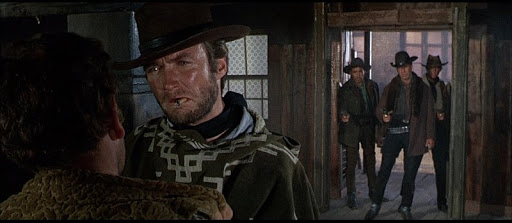
For A Few Dollars More (1965, dir by Sergio Leone)

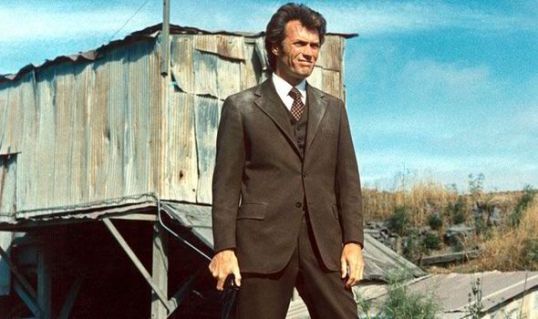
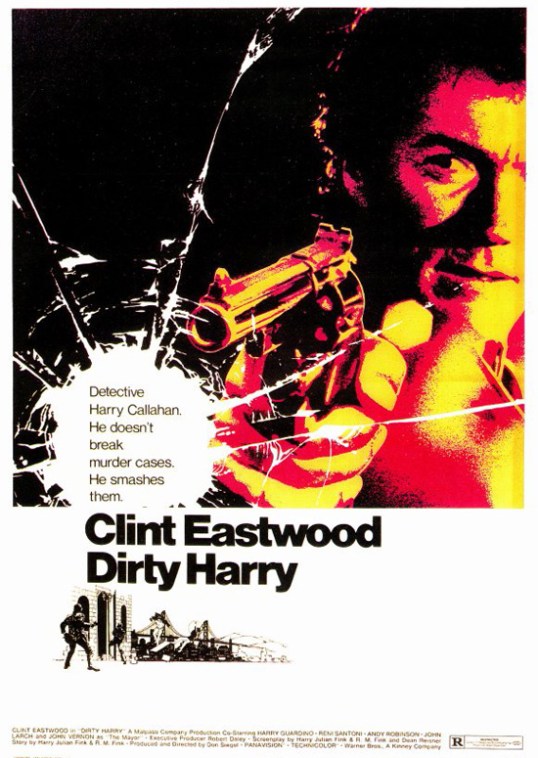
Dirty Harry (1971, dir by Don Siegel)

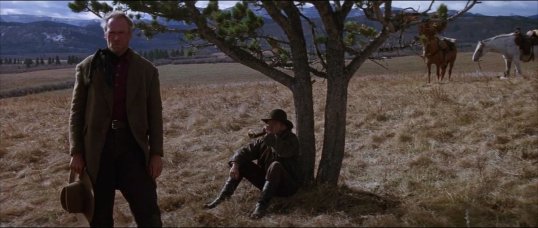
Unforgiven (1992, dir by Clint Eastwood)

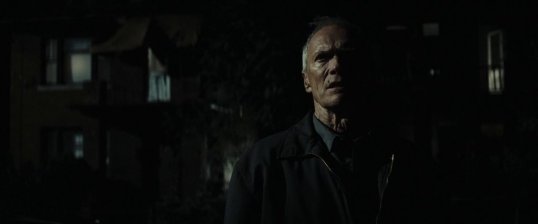
Gran Torino (2008, dir by Clint Eastwood)

I review COOGAN’S BLUFF (1968) – starring Clint Eastwood!


Here at The Shattered Lens, we’re looking forward to celebrating the birthday of Clint Eastwood on May 31st. In anticipation, I decided to revisit COOGAN’S BLUFF (1968). 

Clint Eastwood is Coogan, a tough as nails deputy sheriff from Arizona, who’s ordered by his boss, Sheriff McCrea (Tom Tully) to go to New York City and bring back the escaped killer James Ringerman (Don Stroud). When he gets to New York, he’s informed by Lieutenant McElroy (Lee J. Cobb) that Ringerman has overdosed on LSD while in the state’s custody, he’s now in the Bellevue Hospital, and he will not be released to Coogan until the state Supreme Court says so. Stuck in the Big Apple with nothing to do but flirt with probation officer Julie Roth (Susan Clark), Coogan decides to take matters into his own hands and get Ringerman out of the hospital early. He bluffs the attendants at the hospital into turning Ringerman over to him so he can catch the first plane back to Arizona. It seems like a good plan until he’s ambushed by Ringerman’s girlfriend Linny (Tisha Sterling) and his friend Pushie (David Doyle), he gets conked on the head, and he loses both his gun and his prisoner. Now, in trouble with Lieutenant McElroy and Sheriff McCrea, Coogan is ordered back home to Arizona. Determined to get Ringerman at any cost, Coogan stays in the city and leaves a trail of broken hearts and bruised bodies on his way to capturing his man! 

Made in 1968 after Eastwood’s string of excellent spaghetti westerns with Sergio Leone, COOGAN’S BLUFF may be set in contemporary times, but Coogan still seems to be a product of the old west. A big part of the fun is watching him interact with the people of New York City, where everyone is trying to take advantage of him, whether it be the cab driver, the hotel clerk, or the hooker down the hall. When he finally gets to the police station, he sees a building that’s completely overrun with criminals and crazies. He soon finds that Lieutenant McElroy follows the law down to the letter, while he treats the law as more of a set of suggestions on his way to getting the bad guys. This leads to endless frustration and almost gets Coogan arrested multiple times throughout the film as he doesn’t want to deal with all the red tape. One thing that doesn’t change whether Coogan is in Arizona or New York is his success with the ladies. They all swoon and he more than willingly obliges. The only problem for his prospect of true love is the fact that getting his guy always comes first, and he’ll use that sex appeal to get whatever information he needs. One of the main action scenes in this film, the bar fight, is set up ironically when the woman he’s “using” turns the tables and instead sets him up to be pummeled. 

COOGAN’S BLUFF is Eastwood’s first film with director Don Siegel, with whom he’d make DIRTY HARRY a few years later. You can definitely see the genesis of Harry Callahan in Walt Coogan, a man who does whatever it takes to stop criminals, is quick with a whip, and usually pisses off his superiors along the way. In some ways, you could say that Walt Coogan set the mold for the hero of cop films for the next couple of decades! It also has that sense of humor that would be a mark of Eastwood’s cop films. This one includes a funny thread that runs throughout where every person he meets assumes he’s from Texas because he wears a cowboy hat, and he always corrects them that he’s from Arizona. I get this as I always make sure people know that I’m from Arkansas! 

Overall, I really enjoy COOGAN’S BLUFF due mainly to Clint Eastwood’s excellent performance in the lead role. It was a great start to his “post Leone” career and would influence action movie heroes from that point forward. 

Scenes that Bradley loves – triggering human time bombs in TELEFON!


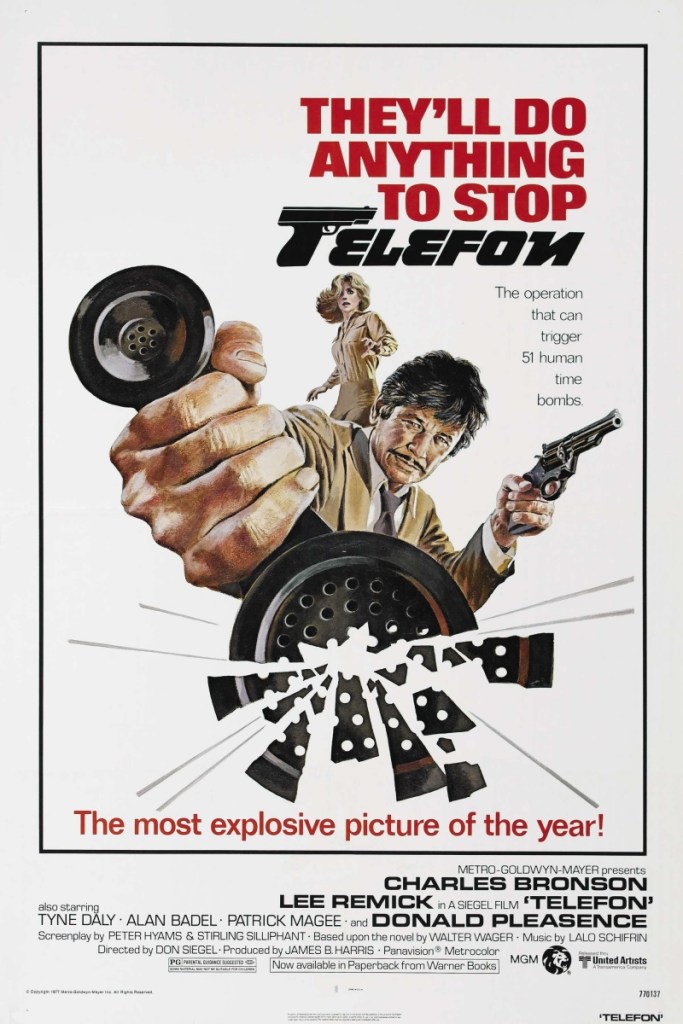
Well before THE NAKED GUN was triggering Reggie Jackson, director Don Siegel and Charles Bronson were triggering human time bombs in TELEFON (1977). Quentin Tarantino even borrowed from this film when he chose the Robert Frost poem for Stuntman Mike’s (Kurt Russell) lap dance from Arlene (Vanessa Furlito). It’s not as sexy, but it’s still a good time as Bronson tries to prevent World War III. Enjoy!

TELEFON – Charles Bronson plays a KGB agent in a movie that inspired The Naked Gun and Tarantino’s Death Proof!


When I was a kid, FOX-16 out of Little Rock, Arkansas would have “Charles Bronson weeks” where every night they’d show a different Bronson film.  I saw several of his films for the first time during those weeks and TELEFON was one of those movies.  I remember really enjoying it that first time I saw it, and I’ve always carried that positive feeling with me.  

The plot of TELEFON is pretty interesting.  In a nutshell, Charles Bronson is Russian KGB agent, Grigori Borsov, who’s been sent to the United States to stop radical Russian Nicolai Dalchimsky (Donald Pleasance), before he can set off more hypnotized human time bombs.  Lee Remick is a beautiful Russian agent (double agent?) who helps him with his mission.  

I personally think TELEFON is an underrated Charles Bronson film, and it seems like a movie that has almost been forgotten.  This is strange to me because it had quite the pedigree at the time of production.  Bronson was a huge star at the time, and the director was Don Siegel, the man behind such classics as DIRTY HARRY, ESCAPE FROM ALCATRAZ, and THE SHOOTIST.  The cast is exceptional as well, with Bronson being joined by the likes of Donald Pleasance, Lee Remick, Tyne Daly, Sheree North and Patrick Magee. The screenplay was co-written by Peter Hyams, who would go on to direct such excellent films as OUTLAND, THE STAR CHAMBER, and RUNNING SCARED.  My point of sharing all of this is that true professionals were at work in front of, and behind the camera, and they created a damn fine Cold War thriller.  I was glad that Shout Factory put out a nice blu ray of the film in January of 2024.  Hopefully film enthusiasts will begin discovering the film again.  

With that said, TELEFON isn’t a perfect film and I do have a few small complaints.  First, Charles Bronson doesn’t appear in the film until we’re already 21 minutes deep.  That’s a long time for me to have to wait for the man!  Second, Bronson and Remick don’t have a lot of sexual chemistry.  She’s beautiful and he oozes masculinity, but somehow it doesn’t really extend to a real connection between their characters.  That’s one of the reasons I like it when Bronson works with his wife Jill Ireland.  That chemistry is usually there between them.  Third, Donald Pleasance wears several wigs and looks kind of dorky at times.  Fourth, Sheree North wears a housecoat during her section of the film.  If you’ve seen her in BREAKOUT with Bronson from a couple of years earlier, you understand just what a missed opportunity that was.  Finally, Tyne Daly is so good in her small role, but she ultimately just kind of exits the film.  I’d have liked even more of her.  These are small complaints, with the exception of Bronson’s entrance & North’s wardrobe choice, that I don’t really hold against the movie.  

The last thing that I want to mention is that there are a couple interesting pop culture references to TELEFON in movies that came out later.  First, the writers of THE NAKED GUN borrowed the plot about hypnotized human time bombs in their own plot to assassinate the visiting Queen of England.  Certain scenes are taken directly from TELEFON.  I remember watching THE NAKED GUN in theaters in the late 80’s and wondering if I was the only person who realized this fact.  Second, in DEATH PROOF, Quentin Tarantino used the major plot device of quoting the Robert Frost poem “Stopping by Woods on a Snowy Evening” in order to trigger something. In TELEFON, it was human time bombs.  In DEATH PROOF, it was human lap dances.  God bless Quentin Tarantino!

Film Review: Escape From Alcatraz (dir by Don Siegel)


The 1979 film, Escape from Alcatraz, opens with Clint Eastwood and a group of policeman taking a barge across San Francisco Bay, heading towards Alcatraz Island.  As any fan of Eastwood’s 1970s film work can tell attest, this is hardly the first time that Eastwood has gone across the bay to Alcatraz.  In The Enforcer, Eastwood went to Alcatraz to kill a bunch of hippies and save the Mayor of San Francisco.  It wasn’t easy but, fortunately, Clint found a rocket launcher.

However, in Escape from Alcatraz, it’s hard not to notice that Clint is wearing handcuffs.  And the cops beat him up while traveling to the island.  And once they reach the prison …. oh my God, they’re making Clint Eastwood walk down a prison hallway naked and shoving him into a cell!  Is this some early form of 60 Days In or could it be that Clint Eastwood is playing a convict?  After starting the 70s in the role of Dirty Harry Callahan, Clint Eastwood ended the 70s playing one of the people who Callahan would have arrested.  (Or, if we’re going to be totally honest, shot.)

Specifically, Clint Eastwood is playing Frank Morris.  The real-life Morris was a career criminal.  He had a genius IQ but he loved to steal and he spent most of his known life in prison.  He was specifically sent to Alcatraz because he had a history of escaping from other prisons.  Because Alcatraz was sitting on an island in the middle of the difficult-to-cross San Francisco Bay, it had a reputation for being inescapable and, indeed, every previous escape attempt had failed and led to someone getting gunned down by the guards.  Morris, of course, immediately started to plot his escape.  Working with three other prisoners, Morris managed to tunnel his way out of the prison.  (Famously, Morris and his accomplices also managed to create papier-mâché dummy heads, which were left in their beds and kept the guards from realizing that they had escaped from their cells.)  No one knows whether Morris and his accomplices managed to cross the bay, though I think most people would prefer to think that they made it to freedom.  Our natural tendency is to root for the underdog, even if they are a group of car thieves fleeing from a federal prison.

For the most part, Escape from Alcatraz sticks to the facts of Morris’s escape.  Of course, because Frank Morris is played by Clint Eastwood, there’s never really much doubt as to whether or not he’s going to figure out a way to get out of the prison.  There’s not a prison in the world that could hold 70s-era Clint Eastwood! 

The casting of Eastwood, however, adds another layer to the story because Eastwood, especially at the time that Escape from Alcatraz was made, was the ideal representation of individualism.  From the minute the smug warden (played by Patrick McGoohan) tells Morris that it will be impossible to escape from Alcatraz, it becomes obvious why Morris has no other option but to escape.  The warden thinks that he can tell the prisoners what to do, when to talk, and what to think.  The warden expects his prisoners to live and act like monks who have taken a vow of silence but, instead of offering the hope of salvation, the warden is more concerned with exercising his own power.  The warden doesn’t flinch at taking away the rights of the prisoners, even after his actions lead to an otherwise harmless prisoner having a mental breakdown and chopping off his own fingers.  As such, Escape from Alctraz is not just another mid-budget, 70s action movie.  Instead, it’s the story of the State (represented by McGoohan) vs the Individual (represented by Eastwood).  It’s a film that says that yes, Frank Morris may be a criminal but he still has a right to his humanity.  Society may want to forget about the prisoners in Alcatraz but Frank Morris has no intention of being forgotten,

Escape from Alcatraz was Eastwood’s final collaboration with the director Don Siegel.  Siegel instinctively understood how to best use Eastwood’s laconic presence.  Siegel previously directed Eastwood in Dirty Harry, another film that featured a conflict between the State and the Individual.  Perhaps even more importantly, Siegel directed the original Invasion of the Body Snatchers, another film in which one man struggles to maintain his humanity and his sense of self.  In many ways, both Alcatraz’s warden and the alien body snatchers are portrayed as having the same goal.  They both want to eliminate free will and human emotion.  In the end, the viewer doesn’t just want Morris to escape because he’s Clint Eastwood.  Instead, the viewer knows that Morris has to escape before he’s robbed of his soul.

(Sadly, Siegel and Eastwood had a bit of a falling out during the direction of Escape from Alcatraz, with Siegel apparently buying the rights to the story before Eastwood could purchase them in order to make sure that Siegel and not Eastwood would be credited as the film’s producer.  This led to a rift between the two men, one that was wasn’t healed before Siegel’s death in 1991.  However, even after their rift, Eastwood continued to say that everything he knew about directing, he learned from watching Sergio Leone and Don Siegel.  Unforgiven was dedicated to both of them.)

Escape from Alcatraz is an enjoyable and entertainingly tense action film, one that convinces us that prison is Hell and which also features one of Eastwood’s best performances.  (Like many actors, Eastwood seems to have more fun playing a rule-breaking rebel as opposed to an upholder of law and order.)  The supporting cast is also great, with McGoohan turning the warden into a truly hissable villain.  Fred Ward, Jack Thibeau, and Larry Hankin all make good impressions as Morris’s accomplices while Roberts Blossom will break your heart as a prisoner who just wants to be allowed to paint.

Personally, I don’t know if Frank Morris survived his escape attempt but I know that Clint Eastwood definitely did.

“Do ya feel lucky, Pilgrim?” What Dirty Harry Could Have Been


Paul Newman as San Francisco Police Detective Harry “Dirty Harry” Callahan?

Today, it sounds unthinkable that the outspokenly liberal Newman could ever have been a contender for the role of Harry Callahan, a police detective who is quick with a quip but even quicker on the trigger.  As everyone knows, Clint Eastwood played Harry and, as a result, he finally became as big of a star in the United States as he already was in Europe.  Today, it’s impossible to imagine anyone other than Clint Eastwood torturing the Scorpio Killer for information and then announcing himself to be “all torn up about his rights.”  Just try to imagine Paul Newman snarling as reflexively as Clint Eastwood did upon hearing that the whiny guy in the liberal office taught constitutional law at Berkeley.  Try to imagine Paul Newman calling someone “a punk” or bragging about the power of his gun.  It can’t be done.

And yet, as hard as it is to believe, Clint Eastwood was not the first choice for Harry Callahan.  In fact, Eastwood apparently wasn’t even on Warner Bros.’s list of contenders when they initially bought the rights for the script that would eventually become Dirty Harry.

Written by Harry Julian Fink and Rita M. Fink, that script was originally called Dead Right and it took place in New York.  In the original script, Harry Callahan was world-weary, veteran New York cop, in his 50s and just a few months away from retirement.  In the original script, Harry pursued a serial killer named Travis.  When Warner Bros. bought the script in 1969, they viewed it as being a potential vehicle for Frank Sinatra with Irvin Kershner directing.  (Kershner is probably best remembered for later directing The Empire Strikes Back.)  As was his habit, Sinatra immediately demanded rewriters.  John Milius wrote three drafts, each one expanding on the idea of Callahan as a rebel against the system.  Terrence Malick (yes, that Terrence Malick) was also brought it and came up with a storyline in which the serial killer would specifically be targeting mobsters and other people who had escaped justice.  Somewhere, amongst all the rewrites, the action moved from New York to Seattle.

After all that effort, why didn’t Frank Sinatra play Harry Callahan?  Reportedly, he broke his hand and, as a result, he was told that he wouldn’t be able to hold a microphone or a gun or anything else while it was healing.  Since you really can’t have Harry Callahan without a gun, Sinatra left the project and Irvin Kershner went with him.

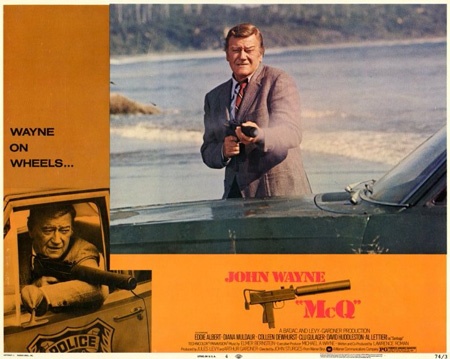
While trying (unsuccessfully) to recruit Sidney Pollack as their new director, Warner Bros. searched for a new leading man.  Reportedly, the script ended up on John Wayne’s desk.  Wayne later said that he turned down the role because he felt the violence was gratuitous.  Other sources indicate that John Wayne actually was interested in the role but that the studio didn’t consider him to be contemporary enough.  (After the success of Dirty Harry, Wayne would play a similar cop character in McQ and would provide a hint of what Dirty Harry starring John Wayne would have been like.)  Burt Lancaster turned down the role because he didn’t like the script’s politics.  Lee Marvin and Robert Mitchum both turned down the role because they refused to play cops.  George C. Scott reportedly refused the role because of the violence.  Marlon Brando was considered but, probably wisely, was never approached.

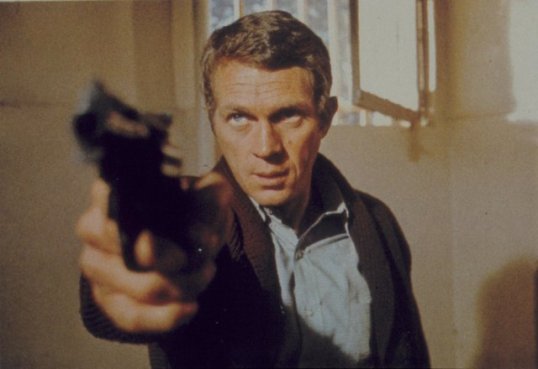
Having been turned down by all of the older tough guys, Warner Bros. went with the younger tough guys.  Steve McQueen turned down the role because he had already played a cop in Bullitt and he felt the critics would accuse him of repeating himself.  (He was probably right.)  Paul Newman refused the role on political grounds but, as he often tended to do whenever he turned down a role, he also recommended another actor for the part.  That actor was Clint Eastwood who was an old friend of Newman’s and who, obviously, had no problems with the film’s politics.

(Let’s take a moment to give some respect to Paul Newman, who was reportedly one of the nicest guys in Hollywood.)

Once Eastwood was on board, his requested that his friend and frequent collaborator, director Don Siegel, be hired to direct the film.  The script was again rewritten, moving the action to San Francisco and making Harry into a far less talkative character.  The serial killer known as Travis became the serial killer known as Scorpio.  The idea of the killer targeting criminals was abandoned at Siegel’s insistence, though Eastwood liked the idea enough to use it for Dirty Harry’s first sequel, Magnum Force.

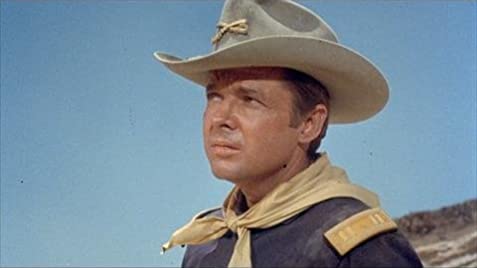
Audie Murphy

Originally, James Caan was approached for the role of Scorpio but Caan turned it down (which, of course, left him free to play Sonny in The Godfather).  Perhaps most intriguingly, Audie Murphy was offered the role.  Murphy was one of the most decorated combat soldiers of World War II.  He had gone from the Army to appearing in movies.  By the time Dirty Harry went into production, Murphy was largely appearing in B-westerns and was as known for his temper as his films.  (He was acquitted of attempted murder shortly before filming began on Dirty Harry.  Murphy said that his anger issues were largely due to the trauma of World War II and he was one of the first prominent people to openly speak about what has since become known as PTSD.)  Murphy undoubtedly would have been an intimidating Scorpio but he died in a plane crash before he could accept or refuse the role.

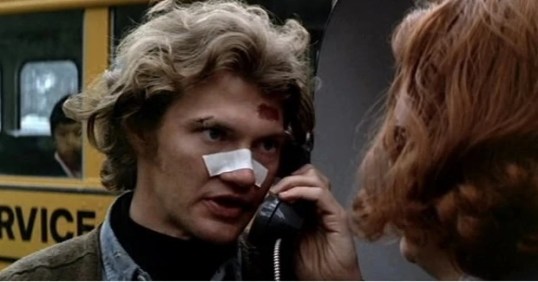
Instead, the role went to Andrew Robinson, who an unknown at the time.  He was also, in real life, a pacifist who had difficulty not flinching whenever he had to fire a rifle in the film.  That said, Robinson gave a brilliantly unhinged performance as Scorpio and reportedly had to get an unlisted telephone number because of all the angry and threatening phone calls that he received after the movie was released.

Now, I have to admit that I personally find the idea of Frank Sinatra/James Caan or, for that matter, a John Wayne/Audie Murphy police procedural to be kind of intriguing.  And goodness know, I would certainly like a chance to see Marlon Brando doing the “do you feel lucky, punk?” speech.  In the end, though, I think things turned out for the best.

Horror Scenes That I Love: The End of The Original Invasion of the Body Snatchers


This is from the original 1956 Invasion of the Body Snatchers.  This is how director Don Siegel wanted the film to end, with Kevin McCarthy vainly warning drivers that they’re coming for them.  The studio, however, insisted that Siegel add a scene that suggested that the authorities might be able to stop the invasion.

Incidentally, Don Siegel was born 108 years ago, today!  He was one of the great American genre directors.  Unfortunately, he didn’t really do enough horror films for me to devote a 4 Shots from 4 Films post to him but, that being said, it’s impossible to keep track of how many subsequent horror films would be influenced by Invasion of the Body Snatchers.

4 Shots From 4 Films: Special Clint Eastwood Edition


Clint Eastwood in Revenge of the Creature (1955)

4 Shots From 4 Films is just what it says it is, 4 shots from 4 of our favorite films. As opposed to the reviews and recaps that we usually post, 4 Shots From 4 Films lets the visuals do the talking!

Today is Clint Eastwood’s 90th birthday!

Though Clint famously had to go to Italy to really get his film career going, he’s gone on to become an icon of American film.  While his early films were often criticized as glorifying violence and of being reactionary, his later films have — more often than not — been meditations on aging, moral ambiguity, and what a lifetime of violence does to a person’s soul.  Though Eastwood has fallen out-of-favor with a few critics as a result of the speech he gave at the 2012 Republican Convention (Film Twitter, to the shock of no one, had a particularly over-the-top reaction to it as many of them discovered, I guess for the first time, that not every artist is a Leftist), he’s a filmmaker whose legacy will be rediscovered and probably appreciated in the future.

Here are….

4 Shots From 4 Films

For A Few Dollars More (1965, dir by Sergio Leone)

Dirty Harry (1971, dir by Don Siegel)

Unforgiven (1992, dir by Clint Eastwood)

Gran Torino (2008, dir by Clint Eastwood)

Scenes That I Love: Harry Meets The Mayor From Dirty Harry


Today, we wish a happy 89th birthday to the one and only Clint Eastwood!

At this point of his career (from which he says he is now semi-retired), Clint Eastwood has become an American icon.  In many ways, his persona epitomizes all of the contrasts and extremes of the American experience.  A political conservative who specializes in playing taciturn and rather grouchy men, he is also one of our most humanistic directors, specializing in films that often question the traditional view of history and morality.  He may have first become a star in Europe but Clint Eastwood is definitely an American original.

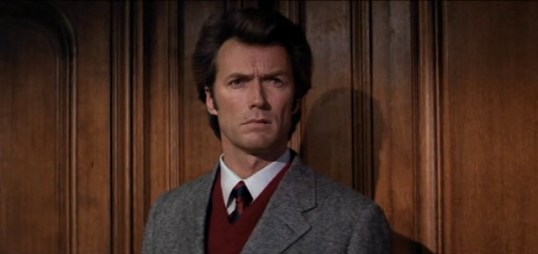
In honor of his birthday, I’m sharing a scene that I love from 1971’s Dirty Harry.  In this scene, Detective Harry Callahan (Clint Eastwood) meets the Mayor of San Francisco (John Vernon).  The mayor is concerned that there’s a psycho on the loose, gunning people down and demanding money.  Callahan’s annoyed that he’s spent a lot of time sitting in a waiting room.  Things pretty much go downhill from there.

There’s so much that I love about this scene.  Both Eastwood and Vernon do a wonderful job playing off of each other.  The Mayor may be in charge of the city but Callahan probably didn’t vote for him.  One thing that I especially love about this scene is the look of annoyance that crosses Harry’s face whenever he’s interrupted.

And, of course, there’s that final line!  Eastwood does a great job explaining Harry’s “policy” but ultimately, it’s Vernon’s “I think he’s got a point,” that provides the perfect closing note.

Happy birthday, Mr. Eastwood!