Retro Television Review: The American Short Story Episode 5: Bernice Bobs Her Hair


Welcome to Retro Television Reviews, a feature where we review some of our favorite and least favorite shows of the past!  On Saturdays, I will be reviewing The American Short Story, which ran semi-regularly on PBS in 1974 to 1981.  The entire show can be purchased on Prime and found on YouTube and Tubi.
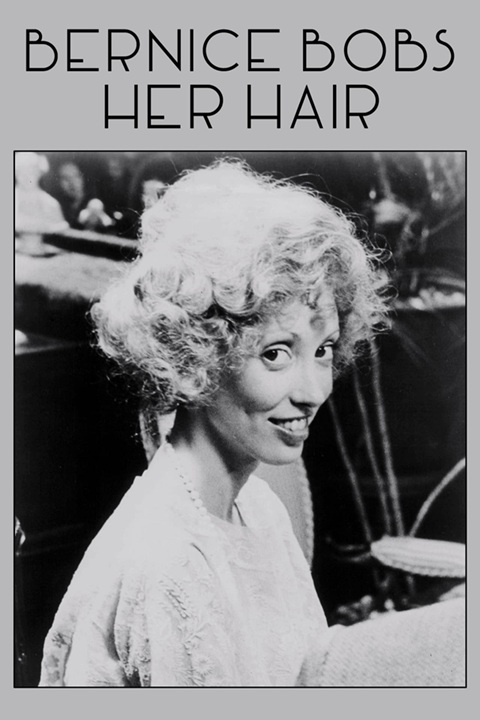
This week, we have an adaptation of the short story that brought F. Scott Fitzgerald his first great literary success.

Episode #5 “Bernice Bobs Her Hair”

(Dir by Joan Micklin Silver, originally aired in 1976)

In this adaptation of a short story by F. Scott Fitzgerald, Shelley Duvall plays Bernice.  Bernice is a socially awkward young woman from the country who, at the start of the glorious 1920s, spends the summer in the city with aunt (Polly Holliday) and her popular cousin, Marjorie (Veronica Cartwright).  Though initially annoyed with having to watch over her cousin, Marjorie eventually decides to teach Bernice how to be a “society girl.”  Marjorie teachers her how to flirt and, even more importantly, Marjorie spreads a rumor that Bernice is not only going to get her hair bobbed (which, at that time, was associated with being a flapper) but she’s going to let all the boys watch.  Bernice goes from being seen as someone who is boring to being someone who is daring and rebellious.  The rumor of her bobbing her hair gives Bernice a mystique, one that will only last as long as there’s a possibility of it happening.

Soon, all of the boys are interested in Bernice and Bernice becomes even more popular than Marjorie.  Marjorie, with her long braids and her cultivated manners, watches in jealousy and horror as the boy across the street, Warren (Bud Cort), suddenly goes from liking Marjorie to liking Bernice.  Marjorie is herself in love with Warren, though one gets the feeling that the love was more about the idea of Warren pining for her than any real desire to be with him.  Realizing that the key to Bernice’s popularity is due to her unfulfilled promise to get hair bobbed, Marjorie tricks Bernice into actually doing it.  Suddenly, Bernice is no longer as popular and her aunt is no longer comfortable with her being seen as a member of the family.  The party invitations dry up and Marjorie once again claims her place as the long-haired society queen.  Bernice prepares to return home but she has one more trick up her sleeve before she leaves.

I liked this one.  Joan Micklin Silver gets wonderful performances from her cast and shows that she, more than even Robert Altman, understood how to best utilize Shelley Duvall’s quirky screen presence.  While this adaptation is dominated by Duvall, I also really enjoyed Bud Cort’s earnest eccentricity as Warren.  (“I’m getting old.” — 19 year-old Warren.)  Finally, Veronica Cartwright gave an intelligent performance, one that kept Majorie from just becoming a one-dimensional villain.  A look at the mystique of popularity and the way that social standards are casually accepted and rarely questioned, Bernice Bobs Her Hair works as both a wonderful short story and a witty short film.

Late Night Retro Television Review: Monsters 3.22 “Hostile Takeover”


Welcome to Late Night Retro Television Reviews, a feature where we review some of our favorite and least favorite shows of the past! On Wednesdays, I will be reviewing Monsters, which aired in syndication from 1988 to 1991. The entire series is streaming on YouTube.

This week, Monsters takes a look at what is required to get ahead in the cut-throat world of corporate finance.

Episode 3.22 “Hostile Takeover”

(Dir by Randall Moldave, originally aired on February 24th, 1991)

Ruthless but not particularly intelligent corporate executive Laurence Bauer (Dennis Christopher) thinks that he has figured out the perfect way to take over the business from CEO Tom Hart (William Lanteau).  He teams up with a voodoo priestess named Matilde (Pam Grier) and, with her help, he manages to force Hart out.  However, Matilde explains that all of this comes with a price.  The Voodoo Gods want a piece of Bauer’s body.  Bauer responds by killing Matilde.

In his office, getting faxes from the Voodoo Gods and dealing with taunting messages on his computer screen, Bauer decides to sacrifice the janitor, Ed (Tracey Walter).  However, Ed turns out to be not just any old janitor.  He’s a demon who reacts to Bauer’s condescension by plucking out his right eye.

“You’re my boy now!” Ed shouts.

Agck!  Scary!

This was a good episode.  Christopher, Walter, and Grier all gave memorable performances and the demon effects were genuinely disturbing.  The final season of Monsters wasn’t perfect.  I’ve reviewed more than a few bad episodes from season 3.  That said, it was still a marked improvement over the first two seasons, as demonstrated by episodes like this one.  The whole point of the show was to show off the Monsters and this episode featured a truly effective one.

Two more episodes to go and then a new show will be premiering in this time slot!

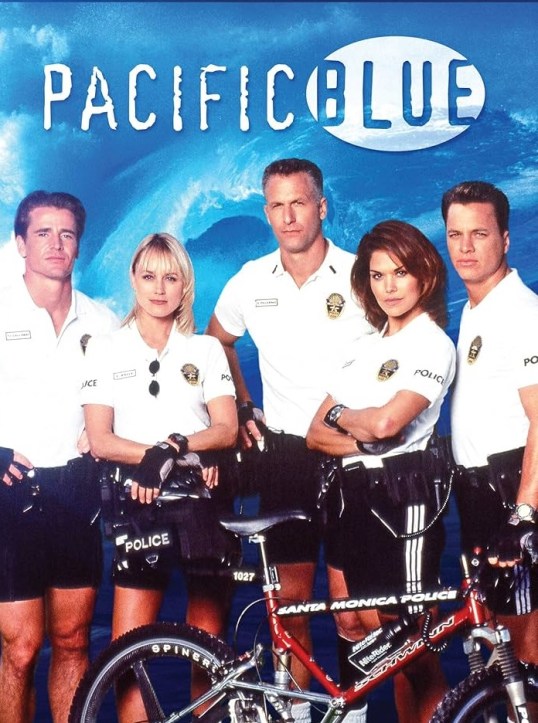
Late Night Retro Television Review: Pacific Blue 1.11 “The Phoenix”


Welcome to Late Night Retro Television Reviews, a feature where we review some of our favorite and least favorite shows of the past! On Tuesdays, I will be reviewing Pacific Blue, a cop show that aired from 1996 to 2000 on the USA Network!  It’s currently streaming everywhere, though I’m watching it on Tubi.

A serial arsonist is setting Malibu on fire so, of course, the bike patrol is called in.

Episode 1.11 “The Phoenix”

(Dir by Charles Siebert, originally aired on May 11th, 1996)

Fires are breaking out all over Malibu.  Whoever the arsonist is, he seems to be targeting a shady businessman named Curtis Bilson (Michael Cavanaugh).  TC and Chris decide to start investigating the arsons themselves, even though neither one of them is in the arson division.  “Bike patrol?” the arson detective asks, when he first meets them.  However, because everyone respects Lt. Palermo, TC and Chris are allowed to investigate.  Chris, being a former jet pilot, is naturally an expert on accelerants.  “Smells like jet fuel.”  Wow, really?

(Basically, this is the equivalent of allowing a school crossing guard to head up the search for a serial killer.)

A surfer named Suicide (Sam Hennings) insists that he saw the fire being set by The Phoenix, a legendary arsonist who the police consider to be dead.  His real name was Willoughby (Tim DeZarn) and the official story is that he got caught in one of his own fires and his body was reduced to ash and that’s why he disappeared without leaving a trace behind.  That seems awfully convenient and really doesn’t make much sense when you think about it but, then again, Malibu has their bike patrol investigating a serial arsonist.  We’re through the looking glass here.

(Myself, I’m concerned by the fact that no one seems to find it weird that their source is nicknamed “Suicide.”  I’m going to guess that’s a surfer thing but still, I cringed every time TC said, “My friend, Suicide….”)

TC and Chris’s investigation leads them to Dr. Anton (Dennis Christopher), an arsonist who is currently in a mental hospital.  They try to do a Lecter/Clarice thing between Anton and Chris.  Dennis Christopher is a good actor and it appears that he was having fun playing a thoroughly demented character.  Jim Davidson and Darlene Vogel were very bad actors and it seems almost unfair to force them to share a scene like Dennis Christopher.  It’s like giving me a chance to play tennis on national television and then telling me, right when the cameras start rolling, that I’m going to be playing against the Williams sisters.  It’s just adding insult to injury.

Anyway, it turns out Willoughby is still alive and he’s targeting the businessman and he also kidnaps Lt. Palermo for some reason.  Chris and TC are able to save Palermo and the crooked guy from the inferno and Willoughby once again vanishes.  Because, of course, he does….

Meanwhile, Cory tries to catch a man who keeps bringing a snake to the boardwalk.  At one point, she accidentally gets doused in a wet t-shirt contest.  She’s win the trophy and then come back to the station without bothering to change shirts, which kind of goes against everything we’ve seen about Cory’s personality up until this point.  For some reason, Palermo also puts Cory in charge of catch a mouse that’s running around the station.  The snake, once captured, eats the mouse but then gets lost in the station.  That made me laugh just because I like it whenever its acknowledged that the bike patrol is totally incompetent.

Next week …. Chris has a new boyfriend!  Dr. Anton, maybe?  We’ll find out!


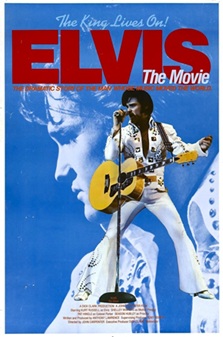
Elvis (1979, directed by John Carpenter)


Elvis, not to be confused with the later film starring Austin Butler, is a historically-interesting film for a number of reasons.

Made for television, it was the first of many biopics to be made about the King of Rock and Roll.  Seeing as how it went into production just a year after Elvis’s death and that its script was vetted and approved by Priscilla Presley herself, it’s not surprising that Elvis doesn’t really delve into the darker aspects of his life.  Elvis shoots a television, gets frustrated with his bad movies, and wonders who he can trust but we don’t see him get fat nor do we see him popping pills.  The movie ends with Elvis making his comeback in 1969, allowing a happy ending for the title character.

The film was directed by John Carpenter.  It was his first film to be released after the monster success of Halloween, though Carpenter actually started work on Elvis before Halloween was released.  Though the film’s television origins means there aren’t many examples of Carpenter’s signature style in Elvis, Carpenter does a good job recreating Elvis’s performances and, most importantly, he comes up with a film that holds your interest for three hours.

Finally, the role of Elvis is played by Kurt Russell, who was at the time still struggling to prove himself as being something more than just a Disney star.  Russell, who made his film debut kicking Elvis in the shins, throws himself into playing the role and captures the look, the swagger, and the voice of Elvis without ever descending into caricature.  His singing voice is dubbed for the performances but Russell is still convincing as the King.  It takes skill to wear that white jumpsuit without looking like you’re wearing a bad Halloween costume.  While this film showed that Russell was capable of more than just Disney films, it even more importantly launched his friendship with John Carpenter.  Escape From New York, The Thing, and Big Trouble In Little China all began with Elvis.

The movie doesn’t really tell us anything that we didn’t already know about Elvis but its entertaining and it has a big, colorful cast that include Pat Hingle as Tom Parker, Shelley Winters as Elvis’s mother, and Bing Russell (Kurt’s father) as Elvis’s father.  Priscilla is played by the beautiful Season Hubley, who married Kurt Russell shortly after filming.  (They divorced in 1983.)  Joe Mantegna, Ed Begley Jr., Ellen Travolta, and Dennis Christopher all appear in small roles and do their part to bring Elvis’s world to life.  Elvis is a fitting tribute to the King of Rock and Roll, one that gave Elvis a happy ending and started a great collaboration between a director and his star.

The Falling (1986, directed by Deran Serafian)


After a piece of the Skylab space station crashes into rural Spain, first the cows and then the wolves are infected by a cosmic virus that turns them into cannibalistic monsters.  Soon, the virus spreads to a nearby town and the villagers also start to transform into mindless flesheaters.  While NASA tries to contain the virus and keep the rest of the world from finding out, three American college students drive their RV into the village.  Damon (Dennis Christopher), Michael (Martin Hewitt), and Samantha (Lynn-Holly Johnson) soon find themselves fighting for survival as they are pursued by both the mutants and the government.  Working with a helpful scientist, they try to recover an antidote before it is too late.

Also released under the title Alien Predator, The Falling deserves a lot of  credit for knowing exactly what it is.  It’s a low budget, B-movie and it doesn’t try to convince us that it’s anything else.  As soon as I saw the red buggy that was hooked up to the book of the RV, I knew that this was going to be good.  Eventually, Michael gets in the dune buggy and gets chased around the village by the flesheaters and the movie starts to feel like an extended episode of Starsky and Hutch.  The three leads are likable, even if they are also too old to be believable college students.  Christopher makes jokes and tries to sound like James Cagney, Hewitt does a Rod Serling impersonation, and Lynn-Holly Johnson looks good while screaming.  People who watch movies like this for the gore will appreciate the exploding head scene.  All in all, The Falling is an enjoyable “bad” movie.

Horror on TV: FreakyLinks 1.11 “Live Fast Die You” (dir by David Barrett)


On tonight’s episode of FreakyLinks, Ethan Embry and the crew investigate real-life adrenaline vampires!  Agck!

This episode features appearances from Jeffrey Combs, Dennis Christopher, Paige Moss, and everyone’s favorite, Eric Baflour!

This episode originally aired on June 1st, 2001.

Horror Film Review: It (dir by Tommy Lee Wallace)


Last month, before I saw the latest film version of Stephen King’s It, I watched the 1990 miniseries version.

This was my first time to watch the It miniseries, though I had certainly heard about it.  Most of the reviews that I had read seemed to be mixed.  Everyone seemed to agree that Tim Curry was the perfect choice for the role of Pennywise the Dancing Clown.  However, many other reviewers complained that the program’s television origins kept It from being as effective as it could be.  “Not as scary as the book,” everyone seemed to agree.  The actors who played the members of the Loser Clubs as children all seemed to receive general acclaim but not everyone seemed to be as enamored with the adult cast.  And everyone, even those who liked the miniseries as a whole, complained about the show’s finale, in which Pennywise took the form of a giant spider.

Well, I have to agree about the giant spider.  That spider looked painfully fake, even by the standards of 1990s television.  Not only does the spider look too fake to truly be scary but, once that spider showed up, that meant that Tim Curry disappeared from the film.  Curry deserved every bit of acclaim that he received for playing the role of Pennywise.

All that said, the miniseries was still a lot better than I had been led to believe.

Certainly, it’s not as frightening as the book or the movie.  Considering that the It miniseries was produced for network television, that’s not surprising.  As opposed to the movie, the miniseries attempts to cover King’s entire novel.  That’s a lot of material, even when you have a five hour running time.  Obviously, a good deal of the story had to be cut and there are a few scenes in the miniseries that feel a bit rushed.  Characters like Audrey Denbrough and Stanley Uris, who were compelling in the novel, are reduced to being mere bystanders.  Some of the novel’s most horrific scenes — like Henry Bowers cutting Ben — are either excised or heavily toned down.  If the novel was as much about the hypocrisy of the adults of Derry as the paranormal horror of Pennywise, that theme is largely left out of the miniseries.

That said, It still had its share of memorable moments.  The image of a clown standing on the side of the road, holding balloons, and waving is going to be creepy, regardless of whether it’s found in a R-rated film or on ABC.  The death of little George Denbrough is horrific, regardless of whether you actually the bone sticking out of his wound or not.  Even the library scene, in which a grown-up Richie Tozier deals with a balloon filled with blood, was effectively surreal.

As for the actors who played the members of the Losers Club, the results were occasionally uneven.  The actors who played them as children were all believable and had a credible group chemistry.  You could imagine all of them actually being friends.  As for the adults, some of them I liked more than others.  Harry Anderson, Dennis Christopher, and Tim Reid gave the best performances out of the group.  John Ritter and Annette O’Toole were somewhere in the middle.  Richard Thomas was absolutely awful and I found myself snickering whenever he was filmed from behind and I saw his pony tail.  Richard Masur, unfortunately, wasn’t around long enough to make much of an impression one way or the other.

Ultimately, though, the miniseries (much like the book) suffers because the adults are never as interesting as Pennywise.  Tim Curry dominates the entire movie and, when he’s not onscreen, his absence is definitely felt.  Watching the miniseries made me appreciate why the film version kept Pennywise’s screen time to a minimum.  Pennywise is such a flamboyant and dominant character that, if not used sparingly, he can throw the entire production out of balance.

Despite its flaws, I liked the miniseries.  Yes, it’s uneven.  Yes, it’s toned down.  Yes, it works better in pieces than as a whole.  But, taken on its own terms, It was effective.  Director Tommy Lee Wallace creates a suitably ominous atmosphere and the child actors are all properly compelling.  And, finally, that damn clown is always going to freak me out.

Just for fun, here’s a trailer for It, recut as a family film:

Back to School Part II #12: Breaking Away (dir by Peter Yates)


Has Indiana changed much since 1979?

I ask because I just watched Breaking Away, a 1979 nominee for best picture.  Breaking Away was shot on location in Bloomington, Indiana and on the campus of Indiana University.  And though the film doesn’t go out of its way to idealize either the state, the town, or the university –in fact, the title refers to the desire of several characters to break away from their life in Bloomington — it still manages to make Indiana look like the nicest place on Earth.  Add to that, Indiana University is home to the Eskenazi Museum of Art, which I will someday visit.

Breaking Away is actually a film about a lot of things: it’s a comedy, it’s a quasi-love story, it’s bittersweet coming-of-age story, it’s a sports film, and it’s a sweet, good-natured film that made me cry.  At the heart of the film is Dave Stoller (Dennis Christopher), who has just graduated from high school and whose cheerful and eccentric exterior hides the fact that he appears to have no real future.  Dave is obsessed with bicycle racing and idolizes that the Italian cycling team.  In fact, he idolizes them so much that he decides to be Italian.  He rides around Bloomington, greeting people with a merry “Ciao!”  At home, he listens to opera and renames the family cat “Fellini.”  While his mother (Barbara Barrie) is understanding, his father (Paul Dooley) cannot understand what’s happening to his son.  Of course, Dave doesn’t truly believe that he’s Italian.  He just desperately wants to be something other than who he is.

And who is Dave?  He’s a citizen of Bloomington, a town that is divided between the upper class students at Indiana University and the blue-collar townies.  The students call Dave and his friends “cutters,” because the only real industry in town is working in the quarry, cutting stone.  The students look down on the cutters and the cutters resent the students.

Dave has three close friends, all of whom were big in high school and who are now facing an uncertain future of anonymity.  Cyril (Daniel Stern) is the funny and quirky one, the former basketball player who talks about how he would like to be a cartoon character.  Moocher (Jackie Earle Haley) is usually easy-going but loses his temper whenever anyone mentions that he’s short.  (At one point, Moocher’s boss orders him to, “Punch the time clock, Shortie!”  Moocher literally does just that.)  And finally, there’s Mike (Dennis Quaid).  Mike is their leader, a former high school quarterback who idolizes the Marlboro Man and who knows that he’s destined to spend the rest of his life in Bloomington, going from “20 year-old Mike” to “mean old man Mike.”

When Dave meets a student named Katherine (Robyn Douglass), he pretends to be an Italian exchange student and, soon, he’s serenading her on the lawn of her sorority house.  That doesn’t make Katherine’s boyfriend, Rod (Hart Bochner), happy.  Rod and his friends beat up Cyril, which leads to another fight at a bowling alley.  (Cyril, for his part, gets his finger stuck in a bowling ball.)  Seeking to broker some sort of peace and understanding between the students and the town, the university president (played by John Ryan, who was the real-life President of Indiana University at the time) announces that the cutters will be invited to take part in the annual Little 500 bicycle race at Indiana University.

And you can probably guess how the race turns out.  It’s a feel-good sports film so you already know who is going to win and that he’s going to have to win after initially falling behind and sacrificing a big lead.  You know all that but it doesn’t matter.  Breaking Away is such a sweet and well-acted movie that it still brought tears to my eyes even if the ending didn’t surprise me.

And really, the film does have a few surprises.  For one thing, Rod turns out to be not as bad a guy as you initially think he’s going to be.  Over the course of the film, he gets two small reaction shots, both of which hint that he’s not as much of a jerk as he often appears to be.  It’s a minor detail and it’s easy to miss but what’s important that it’s there and it’s one of the many small details that makes Breaking Away feel alive.  After watching the movie, I feel like I could go to Bloomington and still find all these character hanging out at the quarry.

There’s another scene that I want to mention.  This is the scene that made me cry.  Dave and his father walk around the university and his dad talks about how he and the fathers of all of Dave’s friends helped to cut the stone that was used to build campus.  His dad admits that, even though he helped to build it, he’s never felt comfortable on the campus and then tells his son that he doesn’t have to be a cutter.  And it’s such a heartfelt scene and so beautifully performed by Paul Dooley and Dennis Christopher that I started to cry.  Perfectly acted, perfectly directed, and perfectly written, what a great scene!  Fantastico!, as Dave might say.

I loved Breaking Away and I bet you would to.

Breaking Away

Lisa Watches An Oscar Winner: Chariots of Fire (dir by Hugh Hudson)


Chariots_of_fire

It took me two viewings to really appreciate the film Chariot of Fire.

First released in 1981, Chariots of Fire won the Oscar for best picture.  It’s also one of the few British productions to take the top award.  (British films are regularly nominated but the winner is usually an American production.)  A few nights ago, it was broadcast on TCM and I watched it for the first time.  And I have to admit that I struggled to follow the film.

It’s not that the film’s story was exceptionally complicated.  At heart, it’s an inspirational sports film and it features all of the clichés that one usually associates with inspirational sports films — i.e., come-from-behind victories, eccentric trainers, athletes who are determined to compete under their own terms, training montages, and a memorable score.  (The score for Chariots of Fire was so effective that it’s still used as the background music for countless Olympic specials.)

No, I struggled to follow the film because it really was just so extremely British, featuring everything from Cambridge to Gilbert and Sullivan to a rigidly enforced class system to casual anti-Semitism,  This may have been a sports film but it was a very reserved sports film.  If Chariots of Fire had been an American film, we would have gotten countless shots of people screaming, “YESSSSS!  GO! GO! GO! GO!” Instead, the characters in Chariots of Fire are far more likely to say, “Good show, old boy.”  Whereas an American sports film would have scored a montage of competition to the sound of “Eye of the Tiger,” Chariots of Fire features a men’s chorus singing, “For he is an Englishman….”

It takes a bit of getting used to and perhaps I knew that because, even as I was watching Chariots of Fire, I still set the DVR to record it.  The first time I watched the film, I was overwhelmed by the culture shock and the resolute Britishness of it all.  My reaction was to think that, much like The Big Chill, Chariots of Fire was a “you just had to be there” type of film, the type of film that was once impressive but now just inspires you to go “meh.”

And I was prepared to write a review stating just that.  But, somehow, in the back of my mind, I knew that I should give Chariots of Fire another chance before I dismissed it.  Maybe it was the fact that I couldn’t get the damn music out of my head.  Who knows?  But I couldn’t think about the film’s opening — with all those men running on the beach and getting mud all over their white uniforms — without smiling.

So, seeing as how I am currently snowed in for the weekend, I spent this morning watching Chariots of Fire for a second time and I’m glad that I did.  Because you know what?  Chariots of Fire is actually a pretty good film.  It tells the story of Eric Lidell (Ian Charleson) and Harold Abrahams (Ben Cross), two British runners who competed at the 1924 Olympics.  Harold is a student at Cambridge.  He’s an angry young man who is running to prove all of the anti-Semites wrong.  (Of course, Harold is angry in a very sort of upper class British way).  Eric is the son of missionaries who views running as a mission from God and who refuses to run on a Sunday.  The film looks gorgeous, Charleson and Cross both give good performances, and that music demands an emotional response.  While Chariots of Fire may not be a great film, it’s definitely a likable film and there’s something to be said for that.

Plus, did I mention that the music’s great?

http://www.youtube.com/watch?v=L-7Vu7cqB20


Back to School #9: The Young Graduates (dir by Robert Anderson)


I have to admit that, as someone who watches a lot of movies that were made before she was even born and who is just fascinated by history in general, I have often wondered what the 60s and the 70s were really like.  Oh, don’t get me wrong.  I know what everyone says they were like — hippies, disco, cocaine, Watergate, Jimmy Carter, Viet Nam, and all the rest.  But people’s memories usually fade with the passage of time and it’s always hard not to feel that whatever I’m hearing is either an idealization or an exaggeration.  That’s one reason why I like watching the often critically reviled, low-budget films of that period.  Since these films were usually made by people who didn’t really care what judgmental viewers like me would think 20 years in the future, they are usually far more accurate when it comes to portraying the world from which they came than a film that was by a big studio whose main concern was to present an idealized portrait of existence that would not alienate any potential ticket buyers.  Crown International Pictures may never have been an acclaimed film studio but, as one of the more prolific producers of 70s exploitation fare, their films now serve as a valuable historical record of the time in which they were made.

If I want to know what it was like to be young and perhaps stupid in the 70s, I go to Crown International Pictures.

CIP_Logo

Take The Young Graduates for example.  First released all the way back in 1971, The Young Graduates was advertised as being “a report card on the love generation.”  The Young Graduates gives us a clue as to what it was like to be a teenager in 1971.  Judging from the film, it really sucked.

The Young Graduates tells the story of Mindy (Patricia Wymar), who is on the verge of graduating from high school.  She has a boyfriend named Bill (Gary Rist) but wow, is he boring!  All he wants to do is compete in drag races and it quickly becomes apparent that he’s incapable of expressing his emotions.  (Assuming that he has any.  The film is a bit ambiguous on this point.)  So, Mindy gets bored and has an affair with one of her teachers, the very married Jack Thompson (Steven Stewart).  Soon after realizing that Mr. Thompson will never leave his wife for her, Mindy suspects that she might be pregnant.  So, she and her friend Sandy (Marly Holliday) decided to take a road trip to Big Sur.  Along the way, they meet a sweet hippie (Dennis Christopher), a bunch of bad hippies, and some really bad bikers.  During their entire journey, they are pursued by Bill, Mr. Thompson, and Sandy’s boyfriend, Les (Bruno Kirby).

Though you wouldn’t know it from the film’s peppy soundtrack or Wymar’s cheerful performance as the continually put upon Mindy, The Young Graduates is actually a pretty dark movie.  With the exception of Pan, everyone that Mindy meets outside of high school is not to be trusted.  Essentially, she’s exploited by everyone that she meets and what makes it all the more disturbing is that Mindy smiles throughout the whole ordeal, almost as if Candide had been reincarnated in the form of a teenage girl.

So, The Young Graduates is really not much of a film.  Subsequent Crown International films would revisit high school and almost all of them would feature better acting and a far more interesting plot than the The Young Graduates.  No, the film does not work as a drama.  But as a documentary and as a time capsule, there’s a lot to enjoy about The Young Graduates.  The fashion, the haircuts, the music, and just the film’s general attitude are such relics of the late 60s and early 70s that the film is the next best thing to owning a working time machine.

That said, if The Young Graduates was an accurate picture of that time — well, I might not be asking for a time machine this Christmas after all!

younggraduates-1