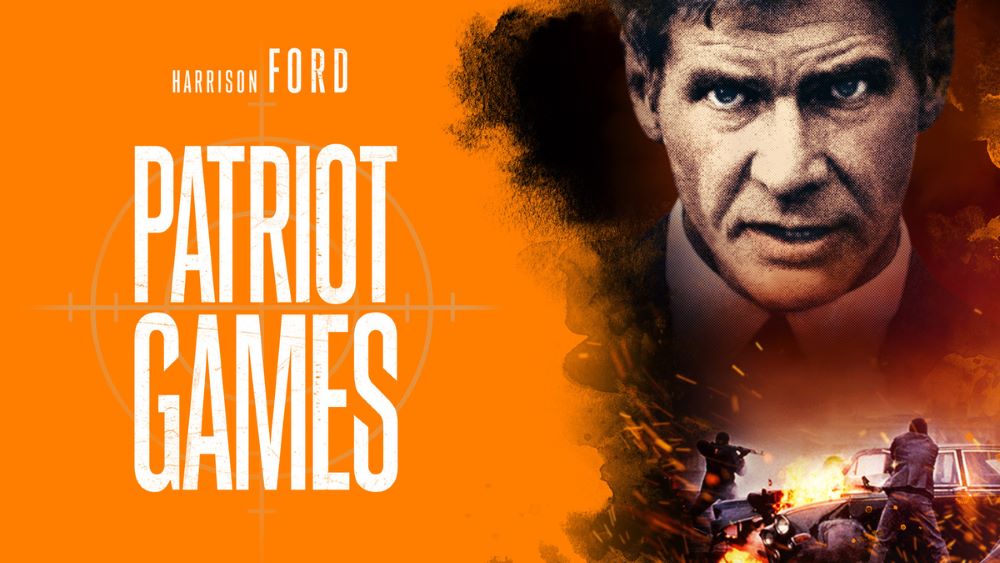
Review: Patriot Games (dir. by Phillip Noyce)


“You don’t know what it’s like to have your life destroyed by one stupid mistake!” — Sean Miller

Patriot Games hits the ground running by thrusting Jack Ryan and his family into the heart of a terrorist ambush on a London street, targeting a key British official tied to the royal family. Harrison Ford plays Ryan as a sharp-minded history professor and former CIA analyst on a simple vacation with his wife Cathy and daughter Sally, but his old Marine training surges up—he charges in, kills two attackers including one terrorist’s brother, and gets winged by a bullet himself. Right away, this setup grabs attention by showing how a random act of guts can boomerang into endless trouble, forcing a guy who craves quiet lectures to dodge bullets and betrayal across oceans, and it plants seeds about whether playing hero is worth the fallout on everyone you love.

Back in Maryland at the Naval Academy, Ryan tries piecing together normalcy, grading papers and dodging CIA calls, but Sean Miller—the captured terrorist whose sibling Ryan killed—gets sprung in a brutal prison convoy hit that leaves cops dead in the dirt. Miller, now laser-focused on payback, reroutes his rogue Ulster splinter group’s rage straight at Ryan’s home front, culminating in a savage freeway pileup where goons ram Cathy’s car off the road, injuring her and Sally badly. Ford nails the shift from composed academic to seething protector, his clenched jaw and urgent phone calls conveying a dad pushed to the brink, while these family-targeted strikes crank the paranoia, transforming everyday drives and school runs into potential kill zones that linger long after the crashes fade.

Sean Bean invests Miller with a coiled, wordless intensity—scarred features and piercing glares that scream obsession without needing speeches, flipping Ryan’s principled stand into the villain’s fuel for a mirror-image crusade. This fictional IRA offshoot rolls with pro-level gear for hits from UK alleys to U.S. suburbs, dodging authorities with insider tips, but their flat-out villainy skips any cracks in loyalty or ideology, turning them into efficient machines rather than messy humans with grudges worth unpacking. Anne Archer holds Cathy together through hospital beds and hushed fears, emerging tougher, as James Earl Jones’ Admiral Greer supplies the gruff guidance that tugs Ryan toward Langley, balancing the intimate home front with globe-spanning spycraft that feels like a real squeeze on one man’s bandwidth.

The camera shifts smoothly from rain-slicked London corners to bright Maryland bays, capturing open spaces that make characters look small and exposed against the sprawl. Gunshots snap clean and engines growl low during pursuits, pulling you deeper into the fray without drowning out the quieter beats. Horner’s soundtrack builds with brooding pipes and driving rhythms that hit hard in the final bay showdown, boats tearing through darkness with bursts of flame from hands-on stunts that pack a punch even now. Action ramps up step by step from early scraps to that watery chaos, mixing smarts with muscle, even if plot points line up a bit too neatly at times.

CIA war rooms buzz with satellite feeds sharpening grainy Libyan camp footage into proof of terror training, a tech showcase that echoes Clancy’s gearhead love and ramps brainpower against brute force without flashy overkill. Ryan hashes out returns to duty with British contacts, including a Sinn Féin type disavowing the extremists, sketching post-Cold War shifts where lone wolves replace nation-states in the threat lineup. Book-to-screen changes crank Ryan’s field time over desk strategy, letting Ford flex rugged moves that thrill audiences but sand off novel layers of naval tactics and alliance chess for punchier pacing.

Ford and Archer capture the raw friction in Ryan’s marriage through tense, whispered spats about diving back into danger, their easy chemistry making the pushback feel lived-in and real rather than scripted melodrama. Miller’s storyline hurtles toward a frantic leap onto Ryan’s rocking boat, boiling his grudge down to savage, no-holds-barred combat amid crashing waves. On-screen locations—from echoing Naval Academy corridors to churning bay waters—breathe life into the settings, casting national pride as a bruising, up-close shield instead of hollow cheers. Subtle audio touches, like distant creaks in the dim Ryan house, crank up the exposed feeling, linking slick production values to gut-punch emotions without piling on the noise.

Those procedural deep dives—poring over red-haired accomplice sketches or grilling shaky informants—add authentic wonkery, like Ryan spotting tells in grainy photos that crack the case wide, but they drag amid family rehab montages where Sally’s recovery mirrors the slow-burn hunt. The baddies’ cartoonish zeal glosses Northern Ireland’s brutal splits, opting for clear-cut evil over thorny politics that could’ve mirrored real headlines from the era, a choice that streamlines tension yet dates the take harshly next to modern nuance. Endgame flips the house siege into a decoy boat trap, Ryan baiting Miller solo on fiery Chesapeake swells, evolving his street-brawl start into tactical payback, though the tidy win lacks the submarine slyness of earlier Ryan yarns.

This swap prioritizes visceral family shields over shadowy sub hunts, hooking casual viewers while purists miss the book’s flowchart plotting, yet it spotlights Ford’s prime reluctant-warrior groove amid practical blasts that crush today’s green-screen slop. Pacing ebbs in alliance huddles, but peaks like the SAS desert wipeout—watched live via infrared ghosts—deliver clinical thrills tying brains to bangs seamlessly.

Taken together, the taut opener, vengeful pursuits, tech-savvy thrills, emotional anchors, dated politics, and solid craftsmanship add up to a clear verdict: Patriot Games is a good film, a reliable ’90s thriller that delivers crowd-pleasing tension and strong leads without reinventing the wheel. It holds up for its practical stunts and intimate stakes, earning replays as Ford’s standout Ryan turn, even if flaws like simplification and lulls keep it from greatness. Worth the watch for anyone craving balanced action with heart.
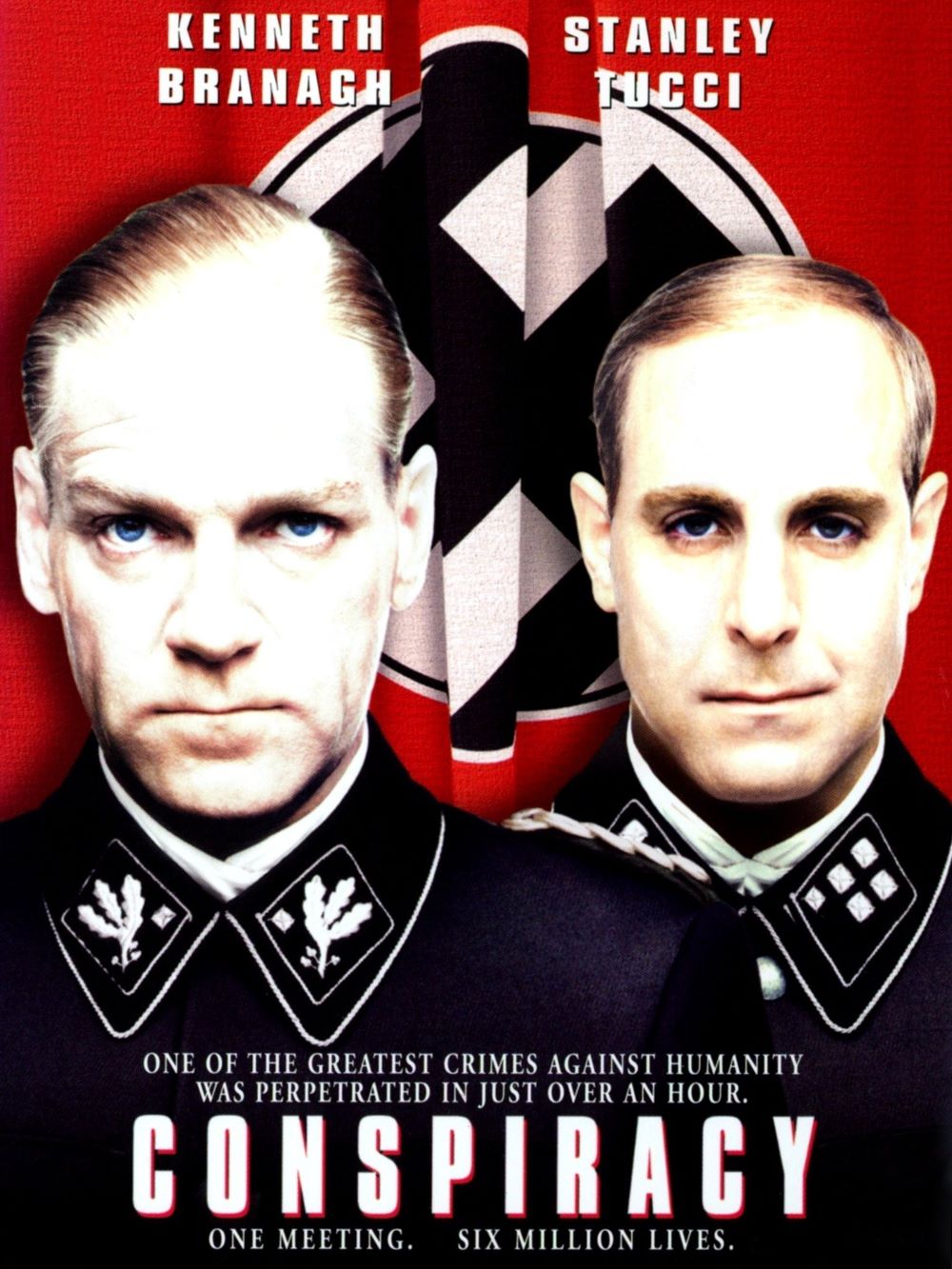
Review: Conspiracy (dir. by Frank Pierson)


“We will not sterilize every Jew and wait for them to die. We will not sterilize every Jew and then exterminate the race. That’s farcical.” — Reinhardt Heydrich

HBO’s Conspiracy (2001) masterfully dramatizes the infamous Wannsee Conference, held on January 20, 1942, where high-ranking Nazi officials orchestrated the Final Solution. The film’s running time mirrors the historical meeting itself, distilling one of the darkest moments in history into a single, chilling sitting that balances historical fidelity, psychological insight, and dramatic restraint. The premise is stark and deceptively simple: a group of men, most of whom had never previously met, gather in a sun-drenched villa outside Berlin to discuss systematic mass murder while enjoying fine food and polite conversation. This contrasting setting, rendered with careful attention to period detail, powerfully underscores what Hannah Arendt called the “banality of evil.” In Conspiracy, evil is not the property of villainous caricatures, but of functionaries and technocrats—chillingly rational and disturbingly mundane.

Much of the film unfolds in real time, utilizing dialogue taken from the sole surviving minutes of the Wannsee Conference. Screenwriter Loring Mandel and director Frank Pierson avoid unnecessary embellishments, allowing the facts and the conversations themselves to carry the full, horrifying weight. Kenneth Branagh gives an Emmy-winning performance as Reinhard Heydrich, the orchestrator and presiding presence at the conference. Branagh’s portrayal is both urbane and authoritative, presenting Heydrich as a figure whose affable composure thinly veils his unwavering commitment to genocide. There is no soaring rhetoric or overt menace; Heydrich’s evil is presented with administrative casualness, making it all the more chilling.

Stanley Tucci is equally compelling as Adolf Eichmann, Heydrich’s logistical right hand and the architect of the machinery of death. Tucci infuses Eichmann with a quiet efficiency and bureaucratic pride—a portrait of a man more attached to process than morality, disturbingly bland in his demeanor. The supporting cast is no less impressive. Colin Firth, as Dr. Wilhelm Stuckart, portrays a legal architect of Nazi race law who appears increasingly unsettled as the agenda shifts from disenfranchisement to extermination. Each attendee is rendered with psychological nuance. Some are disturbingly enthusiastic about their roles, while others are quietly apprehensive, yet ultimately complicit. These subtle gradations of doubt, ambition, and opportunism animate the film’s psychological landscape.

The dialogue, rooted in the actual transcript and skillful dramatic writing, eschews melodrama. The horror emerges not through spectacle, but in analytic exchanges about logistics, quotas, and definitions—the cold calculus of genocide. The men’s debates around how to classify mixed-race Jews, whether sterilization is preferable to extermination, and who should be spared create a bureaucratic puzzle as vile as its intent. Their discussions are delivered in a neutral, even mundane tone, which heightens the chilling reality of what they are planning. Pierson’s direction is restrained; the film never leaves its confined setting, emphasizing the claustrophobic mood of collective complicity. The camera lingers on faces rather than violence, building tension through small gestures—a glance, a pause, the clinking of glassware. The impact of what is said is matched only by the weight of what goes unsaid, until Heydrich, in a quietly devastating moment, makes the true purpose explicit.

More than a simple history lesson, Conspiracy meditates on themes of collective guilt, moral responsibility, and the terrifying ease with which ordinary people become accessories to atrocity. The film is haunted by bureaucracy; if everyone is “just following orders” or “simply doing their job,” the boundaries of blame blur and diffuse. The characters’ debates skillfully skirt the language of murder, favoring euphemisms such as “evacuation” or “resettlement.” This allows viewers to witness, in real time, the kind of moral erosion that enables atrocity on a massive scale. The dry, matter-of-fact tone of the film deepens its emotional impact, forcing the audience to comprehend that such horrors were conjured not in a frenzy, but in calm administrative exchanges over lunch.

For both historians and general audiences, Conspiracy earns praise for its meticulous adherence to historical detail. The screenplay closely follows the Wannsee minutes, and the film’s design choices—muted score, period-accurate costumes, and careful pacing—all serve to render bureaucratic evil as mundane and unremarkable. This unwavering restraint, however, does impose certain limits. The film’s dramatic arc is inherently subdued; the absence of conventional action or narrative tension makes it unfold like an extended negotiation rather than a traditional drama. Some viewers may find this lack of overt conflict stifling or static, resulting in a work that feels more “important” than “entertaining,” but this is clearly by design.

Conspiracy received widespread acclaim for both its historical gravity and psychological depth. Branagh and Tucci, in particular, were celebrated for their nuanced performances. The film is often cited as a model example of how the “banality of evil” operates—not through monsters, but through functionaries in tailored uniforms, sipping wine and rationalizing extermination. For those unfamiliar with the events, the manner in which these men discuss matters of life and death with casual detachment is shocking. As one critic noted, “Most people believe they know what evil looks like… But in Conspiracy, men of true evil met in pristine, gorgeous surroundings… and go about their business leisurely… with a smile and barely a hint of remorse.”

Within the canon of Holocaust cinema, Conspiracy stands apart from films like Schindler’s List or The Pianist, which focus on the suffering and survival of victims. Instead, it occupies a space similar to Downfall and the earlier Die Wannseekonferenz, dramatizing not the machinery of genocide but the mindsets of its architects. By confining itself to dialogue and implication, the film compels viewers to reflect on how civilization’s facades both enable and obscure horror.

The film’s lingering effect is not found in dramatic catharsis or tears, but in an enduring sense of discomfort. Conspiracy dramatizes not just a choice among evil options, but the ease with which those choices become rote procedure and social negotiation. The silence in the final act, as the men calmly disperse after codifying genocide, lands with a cold, almost procedural finality. The closing captions, briefly summarizing the fates of those present, deliver a sobering message: accountability was sporadic, often delayed, and never guaranteed.

Conspiracy is not casual entertainment, nor is it meant to be. Instead, it is essential viewing for anyone interested in the psychology of atrocity, the peril of bureaucratic amorality, and the enduring question of how ordinary people become complicit in extraordinary evil. With a screenplay of surgical precision, outstanding ensemble cast (especially Branagh and Tucci), and a director committed to understatement, HBO’s film demonstrates how history’s darkest decisions are forged not in chaos, but in chilling consensus. To those seeking to understand not only what happened at Wannsee, but how, Conspiracy offers an unblinking and quietly devastating answer.

Film Review: Conspiracy (dir by Frank Pierson)


The 2001 film, Conspiracy, takes place at a villa on the outskirts of Berlin.  It’s a lovely villa and, as we can see during the film’s opening moments, it’s about to play host to a meeting of very important people.

The date is January 20th and the year is 1942.  Having conquered much of Europe, Nazi Germany is now at war with the Allies.  Reinhard Heydrich (Kenneth Branagh), the young chief of the Reich Security Main Office and the man who many feel will eventually succeed Adolf Hitler as the leader of the Third Reich, has been directed to call a conference so that he and his deputy, Adolf Eichmann (Stanley Tucci), can “discuss” ways to solve “the Jewish question.”  One-by-one, representatives of the Reich’s bureaucracy show up at the villa.

At the start of the meeting, the men discuss various ways to force the Jews out of Germany and all of the occupied territories.  The men chose their words carefully, speaking in euphemisms and doing their best to sound like concerned government officials.  The men know what they’re talking about but they still seem to feel the need to avoid coming right and saying it.  As they talk, it becomes clear that everyone is trying to stay in Heydrich’s good graces while, at the same time, avoiding the fact that they understand the truth about what Germany is doing.  It’s not until halfway through the meeting that Heydrich and Eichmann reveal that Germany’s policy has already been determined and that concentration camps with gas chambers have already been designed and built.  The meeting is less about discussing the policy and more about getting each man at the meeting to sign off on it.  The unspoken subtext is that each man is being tested to determine who will support (and, if need be, help to cover up) the Final Solution and who will have to be otherwise dealt with.

Based on the actual minutes of the meeting, Conspiracy is film that is perhaps even more important now than when it was first released.  It’s a film that explores not only the banality of evil but also seeks to answer the question of why no one in Hitler’s government forcefully objected to the Final Solution.  (Many, of course, claimed not to know what was going on.  This film reveals just how little credibility that claim had.)  Some of the men go along because they understand not going along would mean the end of their careers and maybe their lives.  Some of the men agree because, as members of the military, they believe in supporting their country’s leadership, regardless of what that leadership represents.  Some of the men agree because they want to stay in Heydrich’s good graces.  These men represent a society where anti-Semitism is so normalized that it is accepted as a given and, while some of the men are not as outspoken in their prejudice as the others, it’s clear that all of them view the Jewish people as being a unique problem.  Those who do raise concerns do so only out of worry of what will happen to them if the rest of the world discovers what Germany is planning.  Heydrich insists that there is no need to worry because Germany will win the war.  Some of the men at the Conference are clearly not convinced of Germany’s pre-destined victory but not a single one has either the morality or the courage to refuse to endorse the Final Solution.  The film ends with a series of title cards, letting us know what became of the men who attended the Wannsee Conference.  Heydrich was assassinated during the war.  Eichmann fled to South America and hid there until he was captured by Israel in 1960.  Many of the men were executed for war crimes but a surprising number of them were either acquitted or never put on trial and went to live peacefully after the war.

Well-directed by Frank Pierson, Conspiracy has a distinguished cast who brings the historical characters to terrible life.  It’s one thing to read about what was said and planned at the Conference.  It’s another thing to actually hear those words spoken aloud and it’s a reminder that the evil of the Holocaust was not an accident nor was it something that took its perpetrators by surprise.  It was something that meticulously planned by human beings who were fully aware of what they were doing.  Kenneth Branagh makes for an arrogant and intimidating Heydrich while Stanley Tucci plays Eichmann as being the type of bureaucratic robot who is incapable of seeing human beings as anything more than just dwindling numbers on a report.  Colin Firth and David Threlfall make strong impressions as two of the more weary members of the Conference, as does Ian McNeice in the role of the type of crude, career-driven government functionary who has survived by pretending to be dumb.

At a time when anti-Semitism is on the upswing and Holocaust denialism is being mainstreamed, Conspiracy is an important film.  When others say that the Holocaust didn’t happen or that it doesn’t matter, Conspiracy defiantly says, “Yes, it did and yes, it does.”

Quickie Review: Master and Commander: The Far Side of the World (Peter Weir)


If there was a film which deserved better when it first came out in 2003 it would be Peter Weir’s epic adaptation of the Patrick O’Brian seafaring novels starring the character of Capt. Jack Aubrey. It was just bad luck on the part of Weir’s film that it came out the same year and month as the juggernaut that would sweep through not just the box-office for the 2003 holiday season, but all through the award-season. If Master and Commander: The Far Side of the World had only come out a year later there’s a great chance it would’ve been the frontrunner for 2005 Academy Awards for Best Picture, Best Director, Best Adapted Screenplay and many more. But the juggernaut that was Peter Jackson’s Lord of the Rings: The Return of the King would not be denied after two previous years when Jackson and his magnum opus were passed over.

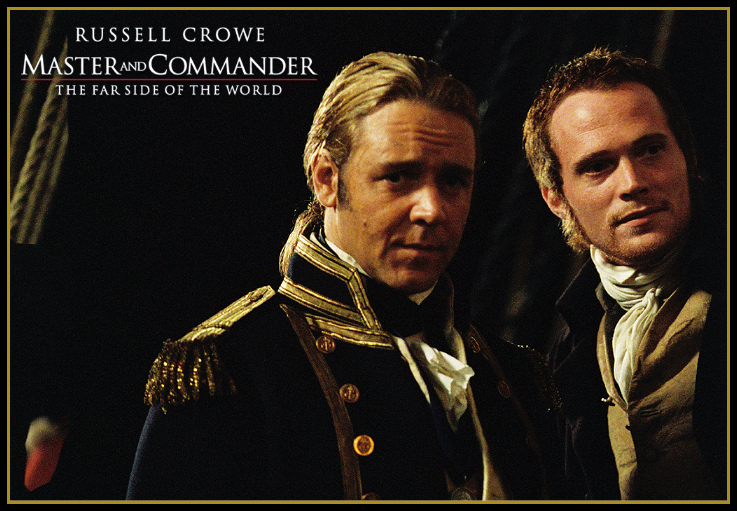
To say that Peter Weir was at the top of his game with Master and Commander would be an understatement. Working from a script written by Weir himself and John Collee, the film would take several episodes from the Patrick O’Brian Aubrey-Maturin novels and combine them to make a coherent and thrilling period piece that rarely ever get made anymore. This was epic filmmaking at its finest with Weir’s direction keeping the long-running time of the film from becoming too tedious. Yet, he was also able to keep the film from becoming one battle setpiece following another. There was enough of a balance between the quiet storytelling, especially between the characters of Capt. “Lucky” Jack Aubrey (played by Russell Crowe in what had to be his best role ever) and his close friend and ship’s doctor Stephen Maturin (Paul Bettany matching Crowe scene for scene) to keep the film grounded in reality.

Master and Commander is set during the Napoleonic Wars when France and England battle it out on land and in the high seas. On one side is the HMS Surprize captained by Jack Aubrey which patrols the sea lanes from French privateers looking to attack and loot the rich English whaling ships to help fund Napoleon’s ambitions. The film is actually a cat-and-mouse thriller wrapped around a character piece as Aubrey’s ship and crew, outgunned and less armored than the French frigate Acheron it has come across during its patrol, must not just try and survive but find a way to beat it’s larger opponent. It’s during the quiter scenes in-between sea engagements that the film actually becomes stronger. We see life onboard the HMS Surprize as being quite harsh and primitive and not so glamourous as past films about sailing life would have audiences believe. The film shows how this harsh life for volunteers and press-ganged crew ratings creates a strong bond of fellowship amongst the crew members that when they believe someone is jeopardizing their lives they quickly turn on that individual. But it’s through the near-dictatorial handling of his crew which keeps both ship and crew from devolving into mutiny. Crowe does a great job of giving Jack Aubrey that balance of ruthless taskmaster whose word is law onboard, but also gives his captain that bon vivant flair which when used accordingly makes Aubrey a hero to the very men he has to lord over.

This benevolent dictator was balanced out by Bettany’s Dr. Maturin who acts not just as the scientific counter to Aubrey’s militaristic personality, but also as the conscience of the ship who looks first to the crew’s well-being. This dynamic between Crowe and Bettany kept the film anchored and stabilized as we see the long-standing friendship between these two get tested not just by the crisis they find themselves in but also the vast ideological differences between the military man and the scientist. Yet, despite all their problems and difference when things became rough the two would settle it amicably and concentrate on their shared task with their bond of friendship intact and much stronger after.

The film doesn’t shirk it’s thrills as Master and Commander provides audiences with some of the most thrilling and accurate portrayal of naval combat during the Napoleonic era. There are no steel-hulls or rapid-fire guns. The engagements between the HMS Surprize and the Acheron were all brutal affairs from the first time the latter ambushes Aubrey’s ship early in the film to the final battle which sees not just ship-to-ship fighting but boarding actions as the crew of the Surprize attempt a desperate gamble to take the fight to the bigger French privateer. It’s a testament to Weir’s direction that even through the chaotic nature of each battle he’s able to keep each scene easy to follow and allow for main characters to stand out for audiences to recognize.

It’s a shame that the film didn’t succeed in the box-office more than it did. Master and Commander: The Far Side of the World showed that there was still old-school epic filmmaking left in Hollywood with filmmakers willing to tell a grand story with bigger-than-life characters on a broad canvas. The fact that it took an even more epic film to surpass Peter Weir’s film shouldn’t detract from this film’s accomplishments.