This was filmed in 2016. Not only do we have Harry Dean Stanton, Kris Kristofferson, and Johnny Depp but David Lynch puts in an appearance early on in the video as well.
This was filmed in 2016. Not only do we have Harry Dean Stanton, Kris Kristofferson, and Johnny Depp but David Lynch puts in an appearance early on in the video as well.
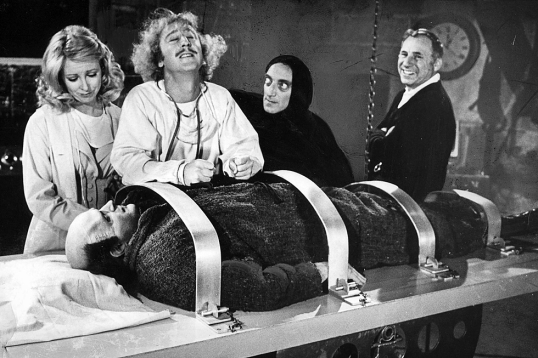
Today, Mel Brooks is 99 years old!
Mel Brooks. What can you say Mel Brooks? Not only did he help to redefine American comedy but he was also responsible for bringing David Lynch to Hollywood. Brooks was the one who hired Lynch to direct The Elephant Man. It can probably be argued that, if not for Brooks, Lynch’s feature film career would have begun and ended with Eraserhead. Brooks not only hired Lynch but also protected him for studio interference. When the execs tried to make Lynch remove two surrealistic sequences from The Elephant Man, Brooks stood up to them. When they requested a more conventional biopic, Brooks defended Lynch’s vision and the result was one of the best films ever made.
Of course, Brooks isn’t listed in the credits of The Elephant Man. Though he produced the film, he went uncredited because he didn’t want people to assume that the movie was a comedy. By doing so, Brooks missed out on an Oscar nomination but he also ensured that the film was taken seriously. It’s hard not to respect someone who was willing to go uncredited to help make the film a success.
Though Brooks, as a producers, was responsible for a number of serious films, there’s a reason why Brooks is associated with comedy. He’s a very funny man and he directed some very funny films. In honor of Mel Brooks, here’s a scene that I love from 1974’s Young Frankenstein.
Happy birthday, Mel Brooks!
From Mulholland Drive:
RIP, Rebekah Del Rio.
4 Shots From 4 Films is just what it says it is, 4 shots from 4 of our favorite films. As opposed to the reviews and recaps that we usually post, 4 Shots From 4 Films lets the visuals do the talking!
Today, let us take a look back at a classic cinematic year. It’s time for….
4 Shots From 4 1997 Films
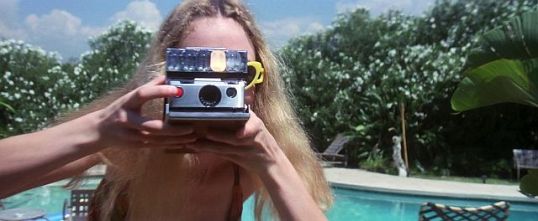
Boogie Nights (1997, dir by Paul Thomas Anderson, DP: Robert Elswit)

Kundun (1997, dir by Martin Scorsese, DP: Roger Deakins)
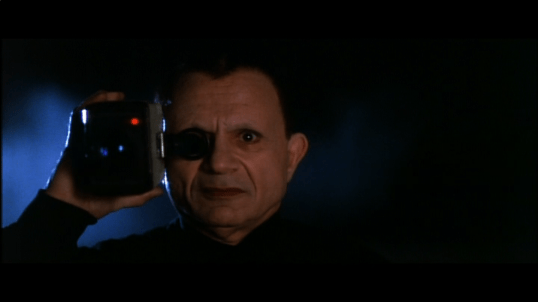
Lost Highway (1997, dire by David Lynch, DP: Peter Deming)
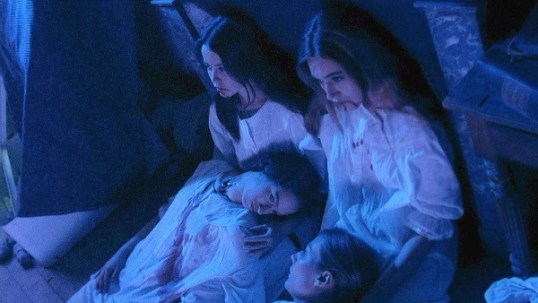
Two Orphan Vampires (1997, dir by Jean Rollin)
4 Or More Shots From 4 Or More Films is just what it says it is, 4 shots from 4 of our favorite films. As opposed to the reviews and recaps that we usually post, 4 Shots From 4 Films lets the visuals do the talking!
Today, I want to celebrate one of my favorite photography techniques, the double exposure!
4 Shots From 4 Films: Celebrating Double Exposure
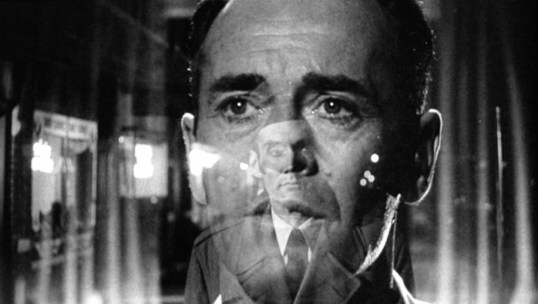
The Wrong Man (1956, Dir. by Alfred Hitchcock)
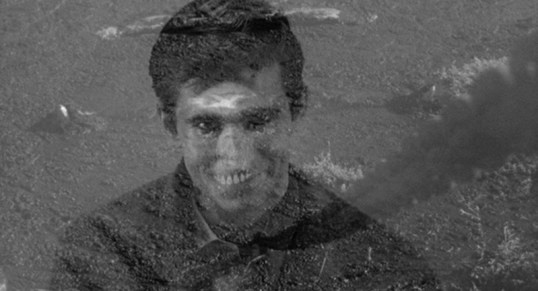
Psycho (1960, Dir. by Alfred Hitchcock)
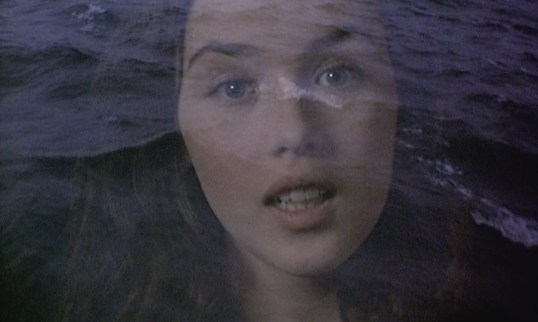
The Story of Adele H. (1975, Dir. by Francois Truffaut)
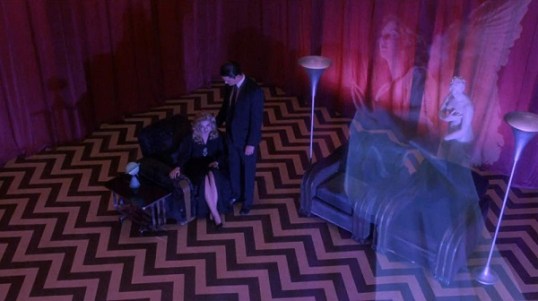
Twin Peaks: Fire Walk With Me (1992, Dir. by David Lynch)
First released in 1986 and still regularly watched and imitated, Blue Velvet is one of the most straight forward films that David Lynch ever made.
For all the talk about it being a strange and surreal vision of small town America, the plot of Blue Velvet is not difficult to follow. After his father has a stroke that leaves him confined to a hospital bed, Jeffrey Beaumont (Kyle MacLachlan) returns home from college. Lumberton appears to be a quiet and friendly little town, with pretty houses and manicured lawns and friendly people. Jeffrey, with his dark jacket and his expression of concern, appears a little out-of-step with the rest of the town. He’s been away, after all. One day, while walking through a field, Jeffrey discovers a rotting, severed ear. Jeffrey picks up the ear and takes it Detective Williams (George Dickerson). Detective Williams, who looks like he could have stepped straight out of an episode of Dragnet, is such a man of the innocent 1950s that his wife is even played by Hope Lange.
“Yes, that’s a human ear, alright,” Williams says, deadpan.
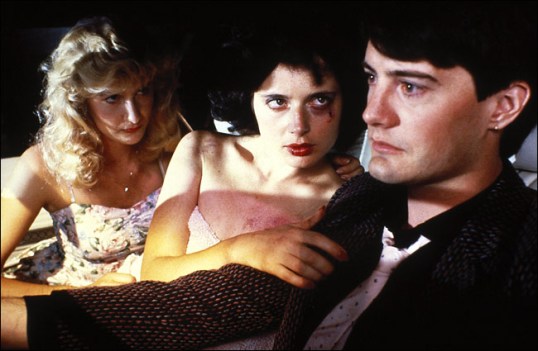
Blue Velvet (1986, dir by David Lynch, DP: Frederick Elmes)
With the help of Detective Williams’s blonde and seemingly innocent daughter, Sandy (Laura Dern), Jeffrey launches his own investigation into why the ear was in the field. He discovers that Lumberton has a teeming criminal underworld, one that is full of men who are as savage as the ants that we saw, in close-up, fighting over that ear in the field. Jeffrey discovers that a singer named Dorothy (Isabella Rossellini) is being sexually blackmailed by a madman named Frank Booth (Dennis Hopper). When Dorothy discovers Jeffrey hiding in her closet (where he had been voyeuristically watching her and Frank), it leads to Jeffrey and Dorothy having a sadomasochistic relationship. “Hit me!” Dorothy demands and both the viewer and Jeffrey discover that he’s got his own darkness inside of him. “You’re like me,” Frank hisses at Jeffrey at one point and, if we’re to be honest, it almost feels like too obvious a line for an artist like David Lynch. Lynch once described the film as being “The Hardy Boys in Hell,” and the plot really is as straightforward as one of those teenage mystery books.
That said, Blue Velvet also features some of Lynch’s most memorable visuals, from the brilliant slow motion opening to the moment that the camera itself seems to descend into the ear, forcing us to consider just how fragile the human body actually is. The film goes from showcasing the green lawns and blue skies to Lumberton to tossing Jeffrey into the shadowy world of Dorothy’s apartment building and suddenly, the entire atmosphere changes and the town becomes very threatening. We find ourselves wondering if even Detective Williams can be trusted. That said, my favorite visual in the film is a simple one. Sandy and Jeffrey walk along a suburban street at night and the camera shows us the dark trees that rise above them, contrasting their eerie stillness to Sandy and Jeffrey’s youthful flirtation.
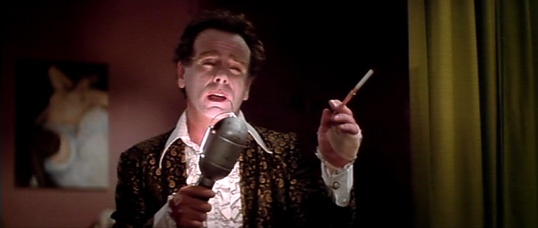
Dean Stockwell in Blue Velvet
Dean Stockwell shows up as Ben, an associate of Frank’s who lip-synchs to Roy Orbison’s In Dreams while Frank himself seems to have a fit of some sort beside him. In retrospect, Blue Velvet played a huge role in Dennis Hopper getting stereotyped as an out-of-control villain but that doesn’t make him any less terrifying as Frank Booth. Hopper, recently sober after decades of drug abuse and self-destructive behavior, summoned up his own demons to play Booth and he turns Frank into a true nightmare creature. Isabella Rossellini is heart-breaking as the fragile Dorothy. That said, the heart of the film belongs to Kyle MacLachlan and Laura Dern and both of them do a wonderful job of suggesting not only the darkness lurking in their characters but also their kindness as well. For all the talk about Lynch as a subversive artist, he was also someone who had a remarkable faith in humanity and that faith is found in both Jeffrey and Sandy. MacLachlan and Dern manage to sell moments that should have been awkward, like Sandy’s monologue about the returning birds or Jeffrey’s emotional lament questioning why people like Frank have to exist. Both Jeffrey and Sandy lose their innocence but not their hope for a better world.
Blue Velvet is a straight-forward mystery and a surreal dream but mostly it’s an ultimately hopeful portrait of humanity. The world is dark and full of secrets, the film says. But that doesn’t mean that it can’t be a beautiful place.
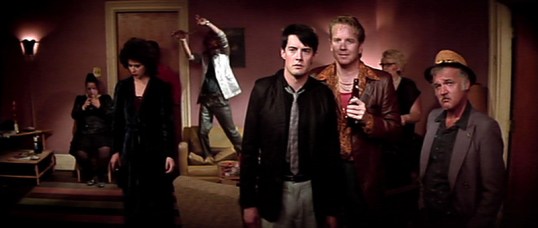
Blue Velvet (1986, dir by David Lynch, DP: Frederick Elmes)
Our song of the day is the haunting Main Theme from Mulholland Drive, composed by Angelo Badalamenti, who would have been 88 years old today.
4 Shots From 4 Films is just what it says it is, 4 shots from 4 of our favorite films. As opposed to the reviews and recaps that we usually post, 4 Shots From 4 Films lets the visuals do the talking!
Today, we pay tribute to the year 1999. It’s time for….
4 Shots From 4 1999 Films
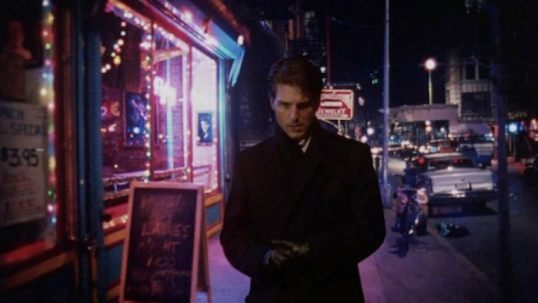
Eyes Wide Shut (1999, dir by Stanley Kubrick, DP: Larry Smith)
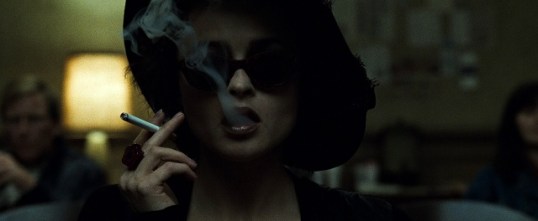
Fight Club (1999, dir by David Fincher, DP: Jeff Cronenweth)
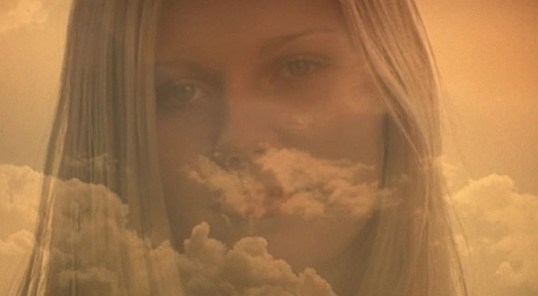
The Virgin Suicides (1999, dir by Sofia Coppola, DP: Edward Lachman)
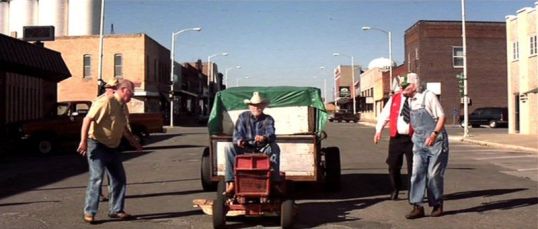
The Straight Story (1999, dir by David Lynch, DP: Freddie Francis)
4 Shots From 4 Films is just what it says it is, 4 shots from 4 of our favorite films. As opposed to the reviews and recaps that we usually post, 4 Shots From 4 Films lets the visuals do the talking!
Today, let us take a look back at a classic cinematic year. It’s time for….
4 Shots From 4 1992 Films
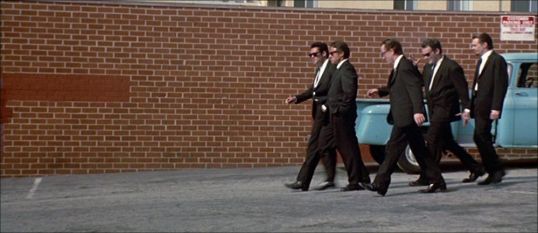
Reservoir Dogs (1992, dir by Quentin Tarantino, DP: Andrzej Sekuła)
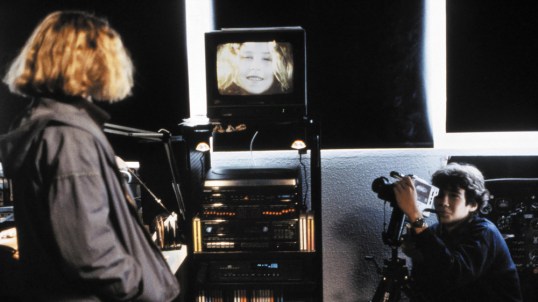
Benny’s Video (1992, dir by Michael Haneke, DP: Christian Berger)
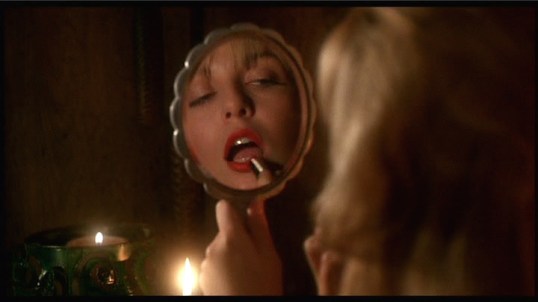
Twin Peaks: Fire Walk With Me (1992, dir by David Lynch, DP: Ron Garcia)
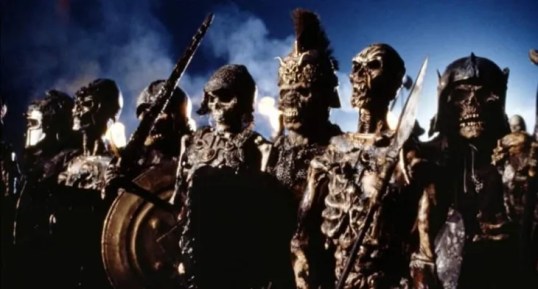
Army of Darkness (1992, dir by Sam Raimi, DP: Bill Pope)
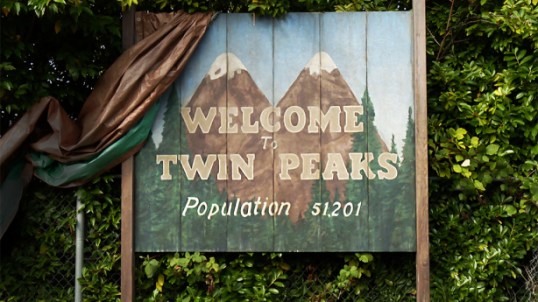
6 Shots From 6 Films is just what it says it is, 6 shots from 6 of our favorite films. As opposed to the reviews and recaps that we usually post, 6 Shots From 6 Films lets the visuals do the talking!
It is Twin Peaks Day, after all.
6 Shots From 6 Films: Special Twin Peaks Edition
Twin Peaks: Fire Walk With Me (1992, dir by David Lynch, DP: Ron Garcia)

Twin Peaks: The Pilot (1989, dir by David Lynch, DP: Ron Garcia)
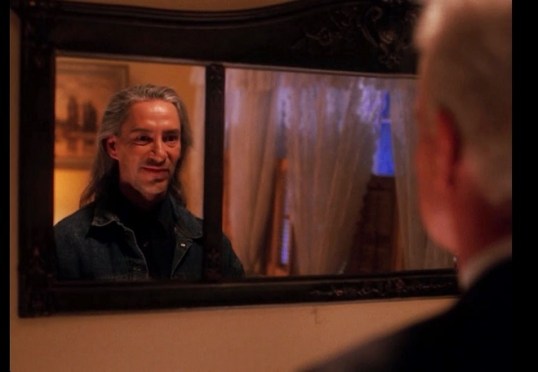
Twin Peaks 2.7 “Lonely Souls” (1990, dir by David Lynch, DP: Frank Byers)
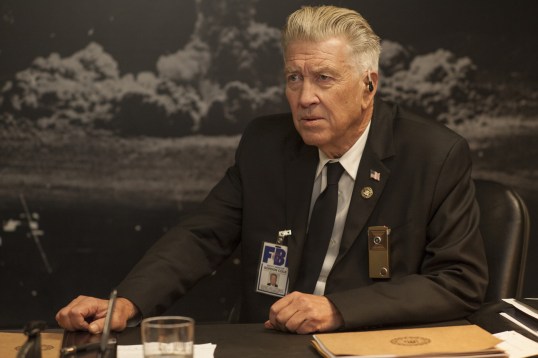
Twin Peaks The Return Part Three (2017, dir by David Lynch, DP: Peter Deming)
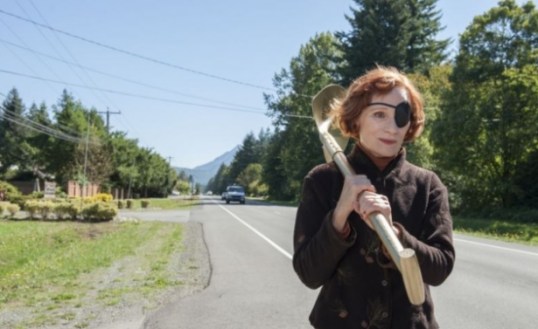
Twin Peaks: The Return Part 15 (dir by David Lynch, DP: Peter Deming)
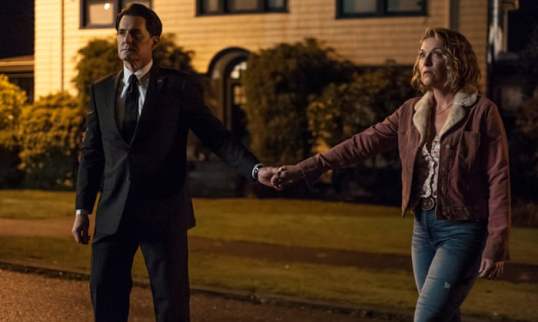
Twin Peaks: The Return Part 18 (2017, dir by David Lynch, DP: Peter Deming)
 Through the Shattered Lens