4 Shots From 4 Films: In Tribute To Sidney Poitier


4 Or More Shots From 4 Or More Films is just what it says it is, 4 shots from 4 of our favorite films. As opposed to the reviews and recaps that we usually post, 4 Shots From 4 Films lets the visuals do the talking!

Earlier, today, it was announced that Sidney Poitier had passed away at the age of 94.

Poitier was, of course, the first black actor to win the Oscar for Best Actor.  He won that award for 1962’s Lillies of the Field.  He would go on to star in the Oscar-winning In The Heat of the Night, where he delivered the famous line, “They call me Mr. Tibbs!”  Poitier was one of the first black actors to be acknowledged as a movie star.  In the 70s and the 80s, he chafed at the limited selection of roles that he was being offered in mainstream productions and he started to produce and direct his own films.  He also served as a diplomat, serving as the Bahamian ambassador to both Japan and UNESCO.

In honor of Poitier’s life and legacy, here are….

4 Shots From 4 Sidney Poitier Films

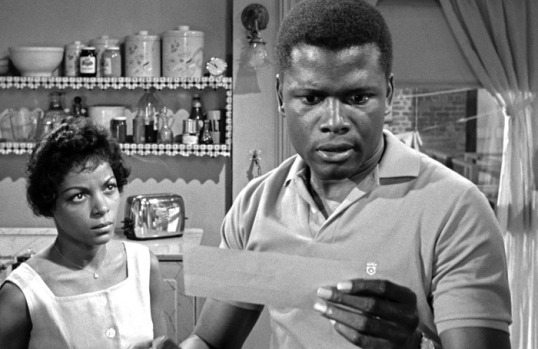
A Raisin in the Sun (1961, dir by Daniel Petrie, DP: Charles Lawton Jr.)

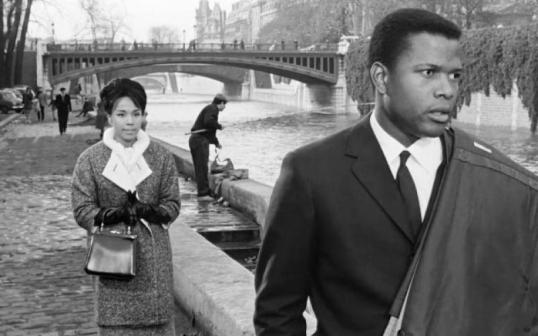
Paris Blues (1961, dir by Martin Ritt, DP: Christian Matras)

In The Heat of the Night (1967, dir by Norman Jewison, DP: Haskell Wexler)

Brother John (1971, dir by James Goldstone, DP: Gerald Perry Finnerman)

Cleaning Out The DVR: Lifeguard (dir by Daniel Petrie)


I had a long day on Wednesday so I unwound the only way that seemed appropriate.  I watched Road House, the classic film in which Patrick Swayze plays Dalton.  Dalton is the second-greatest bouncer of all time.  Who is the greatest?  None other than Dalton’s mentor, Wade Garrett!

Now, there’s a lot of reasons to love Road House but the performance of Sam Elliott in the role of Wade Garrett is definitely one of them.  If you don’t cry a little when Ben Gazzara’s goons murder old Wade, you just don’t have a heart.  In the end, of course, Wade’s bloody corpse gets left on top of the bar and, honestly, I think that’s the way Wade would want to go.

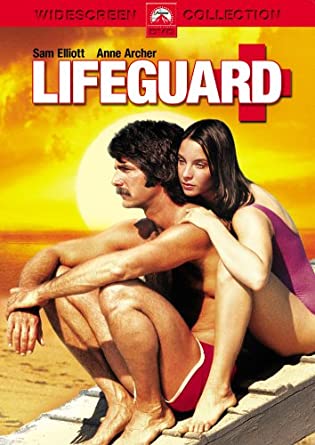
Anyway, watching Road House reminded me of just how awesome Sam Elliott is so I decided to follow it up by watching another Sam Elliott film, one that I had previously DVR’d off of TMC last week.  Filmed in 1975 and released in ’76, Lifeguard features a youngish Sam Elliott as the title character.  Even though the lifeguard in question might be named Rick Carlson, it’s hard not to think of this film as essentially being Wade Garrett: The Early Years.

When Lifeguardopens, Rick Carlson is 32 years old.  He’s been a lifeguard since he graduated high school.  In his youth, he was a championship-winning surfer.  Now, he’s an aging beach bum who is content to spend both the summer and the winter sitting in his lifeguard tower, watching life on the beach and occasionally saving someone from drowning.  Rick has a small apartment, several girlfriends, and a legion of adoring fans.  Younger lifeguards like Chris (Parker Stevenson, who would later co-star on Baywatch) view him as being a mentor.  Beachgoers view him as being an authority figure, the type that can go to if the surfers are being obnoxious or if some old perv is wandering around exposing himself.  17 year-old Wendy (Kathleen Quinlan) flirts with him and, against his better instincts and common sense, Rick often flirts back.  Despite a bit of gray in his hair and the fact that he gets winded a bit easier, Rick is still living the same life that he was living when he first graduated high school and he’s happy with that.

Or, at least, he is until he gets an invitation to his 15 year high school reunion and he discovers that everyone else is actually living a real life with real responsibilities.  When he discovers that his former girlfriend, Cathy (Anne Archer), is now divorced, Rick starts to think about what could have been.  When another former high school friend, Larry (Stephen Young), offers Rick a high-paying job selling cars, Rick finds himself wondering if it’s time to leave the beach and finally get a “real” job.

Lifeguard is an episodic film, a mix of comedy and drama that has an unexpectedly melancholy feel to it.  For the most part, the film asks us to sympathize with Rick’s desire to spend the rest of his life on the beach but, at the same time, it also doesn’t deny that there are drawbacks to Rick’s lifestyle.  Rick’s living the life he wants but he’s largely doing so alone, unable to build up any sort of personal connection with anyone who isn’t 16 years younger than him.  Interestingly enough, for a film called Lifeguard, we really don’t see Rick rescuing many people or doing anything else that you might expect to see a lifeguard doing.  Modern viewers will probably spend the entire movie waiting for Rick to give a speech about why being a lifeguard is a holy calling but that moment never happens.  Instead, it’s pretty clear that Rick mostly just enjoys hanging out at the beach and being a lifeguard allows him to get paid to do just that.  Watching the film, I could not help but compare Rick’s laid back attitude to the overly earnest lifeguards who populated Baywatch.  Mitch Buchannon would have kicked Rick off the beach for not taking the job seriously enough.  As well, as opposed to the vibrant cinematography that we’ve come to expect from beach movies, the visual style of Lifeguard is often moody and underlit.  At times, the beach itself looks like it’s suffering from an existential crisis.  The sand looks dull.  The skies above the water often appear to be gray and full of clouds.  Rick has apparently decided to spend the rest of his life on the ugliest beach in California.

It’s a flawed film, to be sure.  The attempts to mix drama and comedy often lead to uneven results and Anne Archer, Parker Stevenson, and Stephen Young are stuck with underwritten characters.  (The film’s script especially lets Young down, making Larry such an obnoxious character that it’s hard to believe that he and Rick would have ever been friends in the firs place.)  When the film does work, it’s due to the performances of Kathleen Quinlan and Sam Elliot.  Though her character is a cliché (the rebellious teenager who isn’t as worldly as she thinks she is), Quinlan does a good job of giving the character a personality that makes her more than just a stock temptation.  

The film belongs, of course, to Sam Elliott and he is perfectly cast.  As he would do decades later in The Hero, Elliott does a wonderful job of suggesting the little doubts that lurk underneath the laid back surface of his character.  His strongest moment occurs not on the beach but when Rick goes to his high school reunion and realizes that he no longer fits in with his former classmates, all of whom have careers and families.  Rick goes from being cocky to insecure in a matter of minutes and Elliott captures Rick’s emotions beautifully.  At that moment, it’s hard not to feel sorry for Rick.  One can understand why he’s tempted to leave the beach for the real world but, at the same time, one can also see that Rick understands that it might be too late for him to do so.  He’s spent the last 15 years in a perpetual adolescence and the rest of the world has moved on.  Elliott perfectly captures the moment when Rick realizes that his happiness has come with a price.  Rick is a flawed (if ultimately good) person but Sam Elliott gives a flawless performance in the role.  Just as surely was Wade Garrett rescued Dalton when Wesley’s men tried to stop the beer delivery, Sam Elliott saves Lifeguard.

Embracing The Melodrama Part III #6: The Betsy (dir by Daniel Petrie)


“Wheeeeeeee!”

— Loren Hardeman Sr. (Sir Laurence Olivier) in The Betsy (1978)

Here’s a little thought experiment:

Imagine if The Godfather had starred Laurence Olivier and Tommy Lee Jones.

That may sound strange but it actually could have happened.  When Francis Ford Coppola first started his search for the perfect actor to play Don Vito Corleone, he announced that he could only imagine two actors pulling off the role.  One was Marlon Brando and the other was Laurence Olivier.

As for Tommy Lee Jones, he was among the many actors who auditioned for the role of Michael Corleone.  At the time, Jones was 26 years old and had only recently made his film debut in Love Story.  As odd as it may be to imagine the quintessentially Texan Tommy Lee Jones in the role, Coppola always said that he was looking for a brooder as Michael and that’s definitely a good description of Jones.

Of course, as we all know, neither Olivier nor Jones were ever cast in The Godfather.  Marlon Brando played Don Vito and Al Pacino was cast as Michael.  However, a few years later, Olivier and Jones would co-star in another family saga that combined history, organized crime, and melodrama.  That film was 1978’s The Betsy and, interestingly enough, it even co-starred an actor who actually did appear in The Godfather, Robert Duvall.

Of course, now would probably be a good time to point out that The Godfather is perhaps the greatest American film of all time.  And The Betsy … well, The Betsy most definitely is not.

The film’s German poster even gives off a Godfather vibe

Based on a novel by Harold Robbins, The Betsy exposes the secrets of Detroit.  Decades ago, Loren Hardeman founded Hardeman Motors and started to build his considerable fortune.  Sure, Loren had to break a few rules.  He cut corners.  He acted unethically.  He had an affair with his daughter-in-law and then drove his gay son to suicide.  Loren never said that he was perfect.  Now in his 80s, Loren has a vision of the future and that vision is a new car.  This car will be called the Betsy (named after his great-granddaughter) and it will be the most fuel-efficient car ever made.

Since the film appropriates the flashback structure used in The Godfather Part II, we get to see Loren Hardeman as both an elderly man and a middle-aged titan of industry.  Elderly Loren is played by Laurence Olivier.  Elderly Loren spends most of the film in a wheelchair and he speaks with a bizarre accent, one that I think was meant to be Southern despite the fact that the film takes place in Michigan.  Elderly Loren gets really excited about building his new car and, at one point, shouts out “Wheeeeeee!”

Middle-aged Loren is played by … Laurence Olivier!  That’s right.  Olivier, who was 71 years old at the time, also plays Loren as a younger man.  This means that Olivier wears a hairpiece and so much makeup that he looks a bit like a wax figure come to life.  Strangely, Middle-aged Loren doesn’t have a strange accent and never says “wheeeee.”

To build his car, Loren recruits race car driver Angelo Perino (Tommy Lee Jones).  Angelo’s father was an old friend of Loren’s.  When Angelo agrees, he discovers that the Hardeman family is full of drama and secrets.  Not only is great-granddaughter Betsy (Kathleen Beller) in love with him but so is Lady Bobby Ayers (Lesley-Anne Down), who is the mistress of Loren’s grandson, Loren the 3rd (Robert Duvall).

Because he blames his grandfather for the death of his father, Loren the 3rd has no intention of building Loren the 1st’s car.  Loren the 3rd wants to continue to make cars that pollute the environment.  “Over my dead boy!” Loren the 1st replies.  “As you wish, grandfather,” Loren the 3rd replies with a smile.

But we’re not done yet!  I haven’t even talked about the Mafia and the union organizers and the automotive journalist who ends up getting murdered.  From the minute the movie starts, it’s nonstop drama.  That said, most of the drama is so overdone that it’s actually more humorous than anything else.  As soon as Laurence Olivier shouts out, “Wheeeee!,” The Betsy falls into the trap of self-parody and it never quite escapes.  There’s a lot going on in the movie and one could imagine a more imaginative director turning the trashy script into a critique of capitalism and technology.  However, Daniel Petrie directs in a style that basically seems to be saying, “Let’s just get this over with.”

The cast is full of interesting people, all of whom are let down by a superficial script.  Nothing brings out the eccentricity in talented performers quicker than a line of shallow dialogue.  Jane Alexander, who plays Duvall’s wife, delivers all of her lines in an arch, upper class accent.  Edward Herrmann, playing a lawyer, smirks every time the camera is pointed at him.  Katharine Ross, as Olivier’s mistress and Duvall’s mother, stares at Olivier like she’s trying to make his head explode.  Tommy Lee Jones is even more laconic than usual while Duvall always seems to be struggling not to start laughing.

And then there’s Olivier.  For better or worse, Olivier is the most entertaining thing about The Betsy.  He doesn’t give a good performance but he does give a memorably weird one.  Everything, from the incomprehensible accent to a few scenes where he literally seems to bounce up and down, suggests a great actor who is desperately trying to bring a spark of life to an otherwise doomed project.  It’s a performance so strange that it simply has to be seen to be believed.

Tomorrow, we take a look at another melodrama featuring Robert Duvall, True Confessions!