Four suburbanites (Emilio Estevez, Stephen Dorff, Jeremy Piven, and Cuba Gooding, Jr.) are driving to a boxing match in pricey RV when Piven takes a wrong turn and they end up lost in the wrong side of the city. Not only are they lost but they also witness Fallon (Denis Leary) and his gang murdering a young man. Jeremy Piven thinks that he can negotiate with Fallon and get his friends out of the situation by pulling out his wallet and flashing a few bills. Guess how well that works out for them? With Fallon chasing them through the city, these formerly smug and complacent yuppies are forced into a battle for survival.
Judgment Night is a deeply stupid but compulsively watchable movie. From the minute that Piven shows up with that RV and Estevez says goodbye to his wife and newborn child, it is obvious what’s going to happen. Fortunately, the cast is better than average and Stephen Hopkins does a good job of making the city look menacing and keeping up the pace. There are a few times that Judgment Night pretends like it has something to say about wealth and society but it never tries too hard to be anything more than an exciting B-movie. Though it may not have been hard to do considering that his main competition was Emilio Estevez, Denis Leary easily dominates Judgment Night. Fallon may be a cartoon villain but Judgment Night is a cartoonish movie so it works.
Today, Judgment Night is best remembered for its soundtrack, on which nearly every song was a collaboration between hip hop and metal artists. The Judgment Night soundtrack may not have invented the genre of rap rock but it was many people’s first exposure to it. The Teenage Fan Club/De La Soul collaboration Fallin‘ opens the movie on just the right note while Biohazard and Onyx’s Judgment Night is such a strong track that there’s no way the rest of the movie can hope to live up to it.
Judgment Night. The movie is ok. The soundtrack is fucking amazing.
Whenever the subject of Twin Peaks comes up, that question gets asked a lot. Marshall played the sensitive (and oft-ridiculed) motorcycle-riding rebel James Hurley on Twin Peaks and, after the show’s cancellation, he went on to play a key supporting role in A Few Good Men. Marshall’s role may not have been huge but he managed to hold his own against actors like Tom Cruise, Jack Nicholson, and Kevin Bacon.
And then after A Few Good Men, nothing.
Why did James Marshall disappear?
He starred in a movie called Gladiator.
No, not the Russell Crowe movie that won all the Oscars. This Gladiator is about Tommy Riley (played by James Marshall), a teenager who moves to Chicago from Massachusetts. As one of the only white kids in his new neighborhood, Tommy finds himself being harassed by the local gangs. One night, he gets into a fight in a parking lot. (Fortunately, none of the neighborhood gangs carry guns or knives. They settle everything with fists.) Pappy Jack (Robert Loggia) is so impressed with Tommy’s fighting skills that he recruits Tommy to fight in illegal, underground boxing matches. Normally, Tommy would say no but he needs the money to help his father (John Heard) pay off his gambling debts.
Once recruited, Tommy is trained by the wise Noah (Ossie Davis) and works for boxing promoter, Jimmy Horn. Horn is played by all-purpose bad guy Brian Dennehy, who gives such a villainous performance that even Lance Henriksen would say, “Dude, dial it down a notch.” Tommy befriends two other boxers, Romano (Jon Seda) and Lincoln (Cuba Gooding, Jr.). At the time that Gladiator was filmed, Marshall was hot off of Twin Peaks and Gooding was hot off of Boyz ‘n The Hood. Fortunately, Gooding’s role is actually pretty small so he survived Gladiator and was able to go on to win an Oscar for Jerry Maguire and play O.J. Simpson in American Crime Story. Marshall was less lucky.
At one time, I thought that no one could be a least convincing boxer than Damon Wayans was in The Great White Hype. Then I watched Gladiator and saw James Marshall dancing around the ring and throwing punches. Normally, good editing can be used to disguise a lack of athletic ability but both Marshall and Gooding are so miscast as boxers that all the editing in the world can’t help. Jon Seda, who actually was an amateur boxer before getting into acting, is more convincing in the ring but his character is so saintly that anyone watching will know better than to get too attached to him.
A still notorious flop at the box office, Gladiator was directed by Rowdy Herrington but it’s no Roadhouse.
Nurse Evelyn Johnson (Kate Beckinsale) in Pearl Harbor (2001)
The “this” that Evelyn Johnson is referring to is the Japanese attack on Pearl Harbor. You know, the date will live in infamy. The attack that caused the United States to enter World War II and, as a result, eventually led to collapse of the Axis Powers. The attack that left over 2,000 men died and 1,178 wounded. That attack.
In the 2001 film Pearl Harbor, that attack is just one of the many complications in the romance between Danny (Ben Affleck), his best friend Rafe (Josh Hartnett), and Evelyn (Kate Beckinsale). The other complications include Danny briefly being listed as dead, Danny being dyslexic before anyone knew what dyslexia was (and yet, later, he’s still seen reading and writing letters with absolutely no trouble, almost as if the filmmakers forgot they had made such a big deal about him not being able to do so), and the fact that Rafe really, really likes Evelyn. Of course, the main complication to their romance is that this is a Michael Bay film and he won’t stop moving the camera long enough for anyone to have a genuine emotion.
I imagine that Pearl Harbor was an attempt to duplicate the success of Titanic, by setting an extremely predictable love story against the backdrop of a real-life historical tragedy. Say what you will about Titanic (and there are certain lines in that film that, when I rehear them today, make me cringe), Leonardo DiCaprio and Kate Winslet had genuine chemistry. None of that chemistry is present in Pearl Harbor. You don’t believe, for a second, that Ben Affleck and Josh Hartnett are lifelong friends. You don’t believe that Kate Beckinsale is torn between the two of them. Instead, you just feel like you’re watching three actors who are struggling to give a performance when they’re being directed by a director who is more interested in blowing people up than in getting to know them.
Continuing the Titanic comparison, Pearl Harbor‘s script absolutely sucks. Along with that line about “all this” happening, there’s also a scene where Franklin D. Roosevelt (Jon Voight) reacts to his cabinet’s skepticism by rising to his feet and announcing that if he, a man famously crippled by polio and confined to a wheelchair, can stand up, then America can win a war.
I’ve actually been to Pearl Harbor in Hawaii. I have gone to the USS Arizona Memorial. I have stood and stared down at the remains of the ship resting below the surface of the ocean. It’s an awe-inspiring and humbling site, one that leaves you very aware that over a thousand men lost their lives when the Arizona sank.
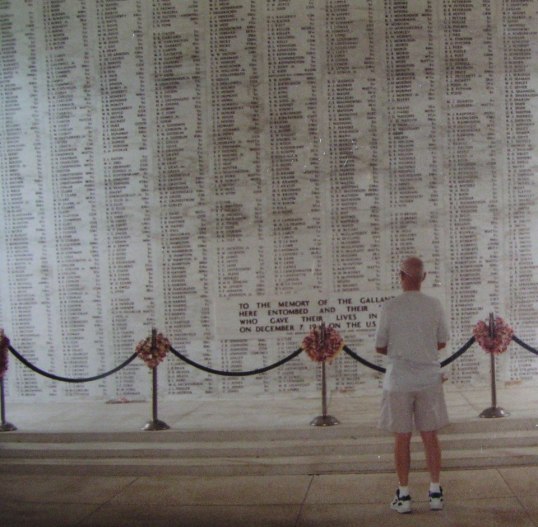
I have also seen the wall which lists the name of everyone who was killed during the attack on Pearl Harbor and until you’ve actually been there and you’ve seen it with your own eyes, you really can’t understand just how overwhelming it all is. The picture below was taken by my sister, Erin.
If you want to pay tribute to those who lost their lives at Pearl Harbor, going to the Arizona Memorial is a good start. But avoid Michael Bay’s Pearl Harbor at all costs.
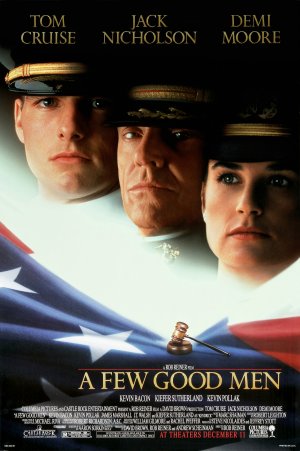
So, late Saturday night, I turned over to TCM’s 31 Days Of Oscar and I was watching the 1992 best picture nominee, A Few Good Men, and I noticed that not only was there only one woman in the entire film but she was also portrayed as being humorless and overwhelmed. While all of the male characters were allowed to speak in quippy one liners and all had at least one memorable personality trait, Lt. Commander Joanne Galloway (Demi Moore) didn’t get to do much beyond frown and struggle to keep up.
“Hmmmm…” I wondered, “why is it that the only woman in the film is portrayed as basically being a humorless scold?” Then I remembered that A Few Good Men was written by Aaron Sorkin and it all made sense. As I’ve discussed on this site before, Aaron Sorkin has no idea how to write woman and that’s certainly evident in A Few Good Men. Joanne (who goes by the masculine Jo) is the one character who doesn’t get to say anything funny or wise. Instead, she mostly serves to repeat platitudes and to be ridiculed (both subtly and not-so subtly) by her male colleagues. You can tell that Sorkin was so busy patting himself on the back for making Jo into a professional that he never actually got around to actually giving her any personality. As a result, there’s really not much for her to do, other than occasionally scowling and giving Tom Cruise a “that’s not funny” look.
(“C’mon,” Tom says at one point, “that one was pretty good.” You tell her, Aaron Tom.)
A Few Good Men, of course, is the film where Tom Cruise yells, “I want the truth!” and then Jack Nicholson yells back, “You can’t handle the truth!” At that point in the film, I was totally on Nicholson’s side and I was kinda hoping that the scene would conclude with Cruise staring down at the floor, struggling to find the perfect come back. However, this is an Aaron Sorkin script which means that the big bad military guy is never going to have a legitimate point and that the film’s hero is always going to have the perfect comeback. Fortunately, the scene took place in a courtroom so there was a wise judge present and he was able to let us know that, even if he seemed to be making the better point, Nicholson was still in the wrong.
As for the rest of the film, it’s a courtroom drama. At Guantanamo Bay, a marine (Michael DeLorenzo) has died as the result of a hazing. Two other marines (Wolfgang Bodison and James Marshall) have been accused of the murder. Daniel Kafee (Tom Cruise), Joanne Galloyway (Demi Moore), and Sam Weinberg (Kevin Pollack) have been assigned to defend them. Jack Ross (Kevin Bacon) is prosecuting them. Kafee thinks that the hazing was ordered by Col. Nathan Jessup (Jack Nicholson) and Lt. Kendrick (Kiefer Sutherland).
We know that Kendrick’s a bad guy because he speaks in a Southern accent and is religious, which is pretty much the mark of the devil in an Aaron Sorkin script. We know that Jessup is evil because he’s played by Jack Nicholson. For that matter, we also know that Kafee is cocky, arrogant, and has father issues. Why? Because he’s played by Tom Cruise, of course. And, while we’re at it, we know that Sam is going to be full of common sense wisdom because he’s played by Kevin Pollack…
What I’m saying here is that there’s absolutely nothing surprising about A Few Good Men. It may pretend to be about big issues of national security but, ultimately, it’s a very slick and somewhat hollow Hollywood production. This, after all, is a Rob Reiner film and that, above all else, means that it’s going to be a very conventional and very calculated crowd pleaser.
Which isn’t to say that A Few Good Men wasn’t enjoyable. I love courtroom dramas and, with the exception of Demi Moore, all of the actors do a good job. (And, in Demi’s defense, it’s not as if she had much to work with. It’s not her fault that Sorkin hates women.) A Few Good Men is entertaining without being particularly memorable.
When I saw Lee Daniels’ The Butler, I was not impressed.
Yes, the audience applauded as the end credits rolled. And yes, I know that almost all of the mainstream critics have given it a good review. I know that Sasha Stone has been hyping it as a surefire Oscar contender. I know that, up until 12 Years A Slave introduced us all to an actress named Lupita Nyong’o, Oprah Winfrey was considered to be the front-runner for the Best Supporting Actress Oscar.
But it doesn’t matter. The Butler did little for me.
I also realize that the film ended with a title card that announced that what I had just watched was dedicated to the American civil rights movement. In many ways, that title card felt like emotional blackmail, implying that if you criticized The Butler than that meant you were also criticizing the brave, real life men and women who risked their lives to fight for equal rights.
However, when you put emotions and good intentions to the side, the fact of the matter is that Lee Daniels’ The Butler is not that good of a movie. One need only compare The Butler to some of the other films that were released this year that dealt with the African-American experience — films like 12 Years A Slave and Fruitvale Station — to see just how safe and uninspiring The Butler truly is.
The Butler tells the story of Cecil Gaines (Forrest Whitaker), the son sharecroppers (played by David Banner and Mariah Carey) in the deep south. After Cecil’s father is murdered by plantation owner Thomas Westfall (Alex Pettyfer), Cecil is raised and educated by the wealthy Annabeth Westdall (Vanessa Redgrave). Eventually, the teenaged Cecil leaves the plantation and ends up working in a hotel where he’s educated in how to be a master servant by the elderly Maynard (Clarence Williams III, who brings a quiet dignity to his role). Cecil eventually gets promoted to a hotel in Washington, D.C. It’s there that he meets and marries Gloria (Oprah Winfrey).
In 1957, Cecil is hired to work at the White House. Along with befriending two others butlers (played by Cuba Gooding, Jr. and Lenny Kravitz), Cecil also gets the chance to observe history play out first hand. Starting with Dwight Eisenhower (played by Robin Williams) and ending with Ronald Reagan (Alan Rickman, giving a performance that is incredibly bad), Cecil watches as President after President deals with the civil rights movement. Some presidents, like John F. Kennedy (James Marsden) are portrayed as being heroes while others, like Richard Nixon (John Cusack), are portrayed as being villains but all of them have the watchful eye of Cecil Gaines in common.
Meanwhile, at home, Gloria has a brief affair with Howard (played by Terrence Howard and really, you have to wonder what Cecil was thinking leaving his wife alone with anyone played by Terrence Howard) and Cecil’s oldest son, Louis (David Oyelowo), gets involved with the civil rights movement and grow increasingly estranged from his father.
The Butler actually starts out pretty well. There’s a lengthy sequence where Louis and a group of students are trained on how to conduct a sit-in that’s extremely compelling to watch. However, then John Cusack shows up wearing a big fake nose and the entire film starts to fall apart.
From a cinematic point of view, the film fails because it ultimately seems to be more dedicated to trotting out a parade of celebrity cameos to actually telling a compelling story. As is his usual style, Lee Daniels directs with a heavy hand and, as a result, the film is full of emotionally-charged scenes that fail to resonate for longer than a handful of minutes.
My main issue with The Butler is that the film literally contains no surprises. Nothing out of the ordinary happens and, at no point, is the audience actually challenged to consider the way they view history or race relations. Whereas films like Fruitvale Station and 12 Years A Slave truly challenge our assumptions, The Butler encourages us to pat ourselves on the back for being so enlightened. Every single frame of The Butler is specifically designed to fool us into thinking that we’re watching an important and challenging movie.
Because of a silly copyright lawsuit, the official title of The Butler is Lee Daniels’ The Butler. However, that title is very appropriate because The Butler is definitely a Lee Daniels film. Even if you didn’t know it beforehand, it would be easy to guess that the same man who directed Precious and The Paperboy also directed The Butler. As a director, Daniels specializes in making simplistic points in the most bombastic way possible. The results are films, like The Butler, that are more concerned with manipulating an audience than challenging an audience. When audiences applaud at the end of The Butler, they aren’t so much applauding the film as much as they are applauding themselves for having seen it.
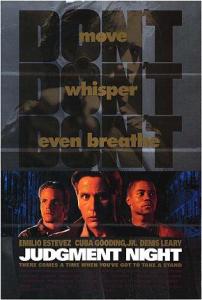 Four suburbanites (Emilio Estevez, Stephen Dorff, Jeremy Piven, and Cuba Gooding, Jr.) are driving to a boxing match in pricey RV when Piven takes a wrong turn and they end up lost in the wrong side of the city. Not only are they lost but they also witness Fallon (Denis Leary) and his gang murdering a young man. Jeremy Piven thinks that he can negotiate with Fallon and get his friends out of the situation by pulling out his wallet and flashing a few bills. Guess how well that works out for them? With Fallon chasing them through the city, these formerly smug and complacent yuppies are forced into a battle for survival.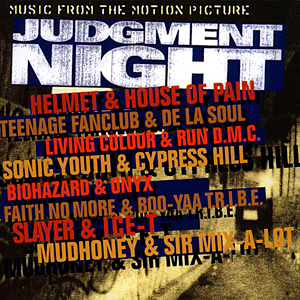
 What ever happened to James Marshall?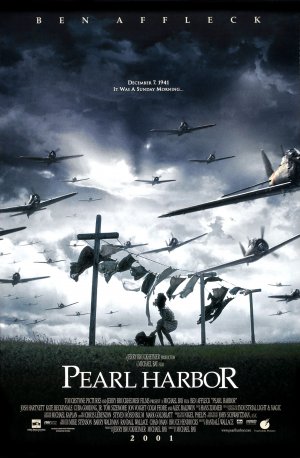
 Through the Shattered Lens