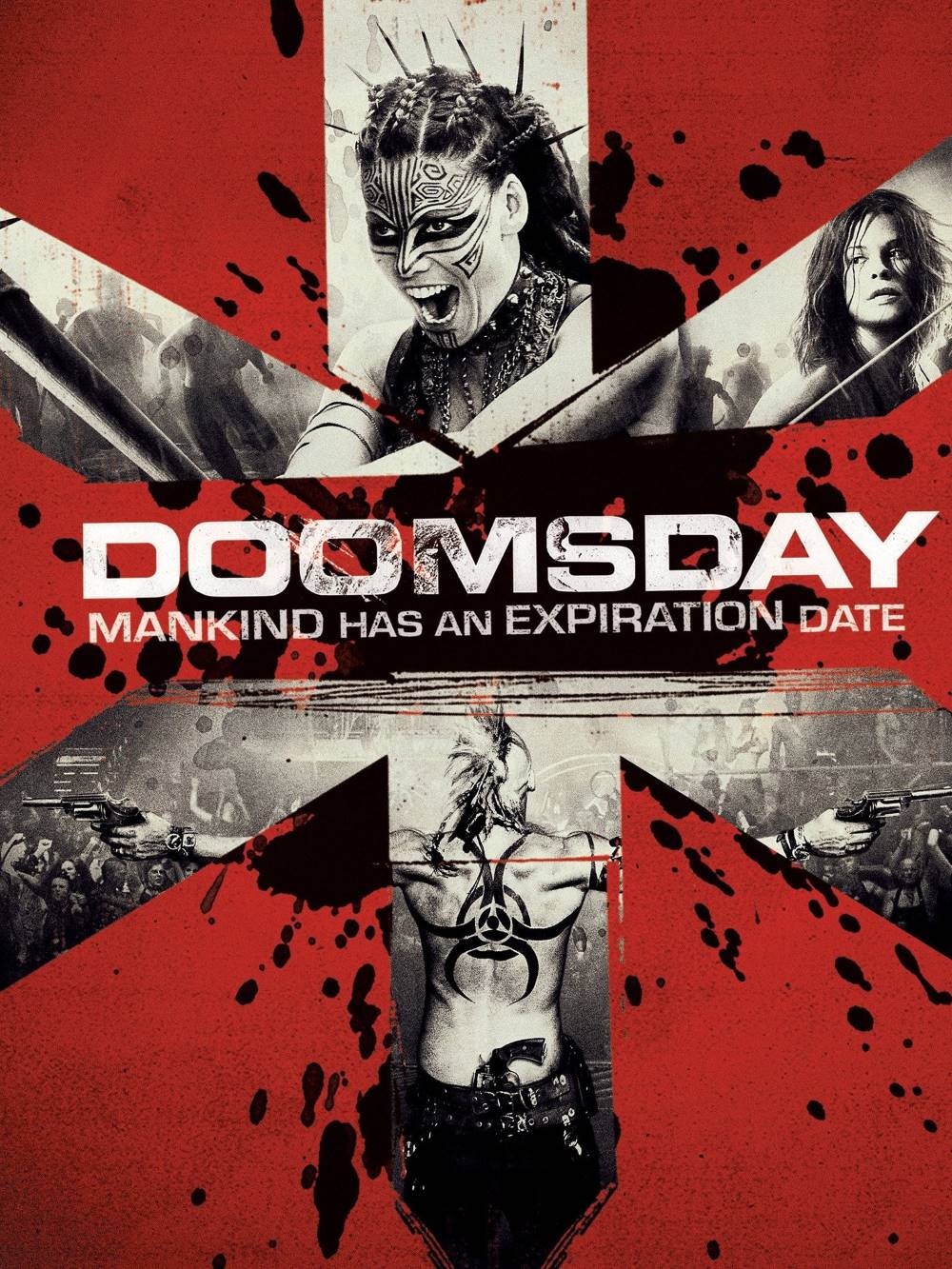
Review: Doomsday (dir. by Neil Marshall)


“Same shit, different era.” — Eden Sinclair

Doomsday tries to be a wild post-apocalyptic romp but ends up as such a profound disappointment, especially coming from Neil Marshall, whose previous two films, Dog Soldiers and The Descent, were much better entries in the horror genre where his attempts to inject new ideas landed the mark with precision and style. Here, Marshall shifts gears into a sprawling, uneven action-horror hybrid that feels like a highlight reel of better movies, bloated and unfocused where his earlier works thrived on tight scripting and fresh twists. While there are flashes of fun in the chaos, the film’s glaring flaws in plotting, tone, and originality outweigh any guilty-pleasure moments, leaving it as more of a curiosity than a recommendation.

The story kicks off with a decent hook: a deadly Reaper virus wipes out much of Scotland, prompting the government to seal it off behind a massive wall and leave the population to fend for itself. Years later, the virus resurfaces in London, and intel suggests survivors—and possibly a cure—lurk inside the quarantine zone. Major Eden Sinclair (Rhona Mitra) leads a ragtag military squad across the wall to hunt down a rogue scientist. It’s a setup that echoes classics like Escape from New York, but Doomsday quickly abandons any tension for a parade of borrowed set pieces that rarely gel, a far cry from the inventive werewolf siege of Dog Soldiers or the claustrophobic crawler terror in The Descent.

Once inside, the movie lurches from one aesthetic to the next without much logic or buildup. First comes a punk-anarchist wasteland with cannibals hosting gladiatorial freak shows amid flames and mohawks, then a sudden pivot to medieval knights in castles complete with jousts and sieges. These shifts feel arbitrary, like Marshall couldn’t decide on a vibe and just threw them all in—a scattershot approach that lacks the confident genre-blending of his prior successes. The worldbuilding is shallow—how did feudalism sprout up so neatly amid the apocalypse?—and the transitions are jarring, undermining any sense of immersion or stakes.

Rhona Mitra holds the center as Sinclair, a one-eyed badass who dispatches foes with grim efficiency, but even she can’t overcome the script’s limitations. Her character is a walking archetype: tough, quippy, and competent, with zero emotional depth or growth. The supporting players, including Malcolm McDowell as a scenery-chewing lord and Bob Hoskins as a gruff boss, are wasted on one-note roles. They’re recognizable enough to highlight how little the film does with its cast, turning potential strengths into reminders of squandered talent.

Visually, Doomsday has some grit thanks to practical effects and location shooting, especially in the grimy urban ruins and over-the-top chases that nod to Mad Max. The gore is plentiful and messy, which might appeal to splatter fans. But the action often devolves into incoherent shaky-cam slogs, and the pacing drags in spots despite the constant escalation. Worse, the film’s self-indulgent excess tips into silliness that undercuts its own grim premise, making it hard to buy the horror of the virus or the desperation of survival.

Tonally, Doomsday is all over the map, swinging from bleak quarantine dread to campy medieval farce without warning. This inconsistency is its biggest sin—serious moments clash with cartoon violence, and the humor lands flat or feels forced. Influences from 28 Days LaterThe Road Warrior, and even Excalibur are blatant, but Marshall doesn’t elevate them; he just remixes them into something louder yet less impactful. The result feels like fan fiction for genre nerds rather than a fresh take, missing the spark that made his earlier horrors stand out.

Thematically, there are glimmers of commentary on government abandonment, class divides, and viral panic, but they’re buried under the bombast and never explored. Instead of probing the ethics of walling off a nation, the film prioritizes spectacle, leaving those ideas as window dressing. It’s a missed opportunity that makes the whole endeavor feel hollow, especially when real-world parallels to pandemics could have added bite.

Doomsday struggles to stand on its own amid a crowded genre field, weighed down by narrative sloppiness and tonal whiplash that overshadow its few strengths. The positives—like visceral kills and Mitra’s presence—fail to overcome the disjointed plotting and lack of fresh ideas. Ultimately, it feels like a missed chance for something more cohesive, leaving little reason to revisit beyond a one-off curiosity.

In the end, Doomsday is a swing-and-a-miss for Neil Marshall, ambitious in scope but sloppy in execution, a letdown after the highs of Dog Soldiers and The Descent. The negatives dominate: uneven pacing, logical gaps, borrowed aesthetics without innovation, and a tone that alienates more than it entertains. If you’re in the mood for undemanding B-movie chaos on a slow night, it might scratch a minor itch. Otherwise, skip it for the films it rips off—they deliver the thrills without the frustration. At around 105 minutes, it’s not a huge time sink, but better options abound in the post-apoc genre.
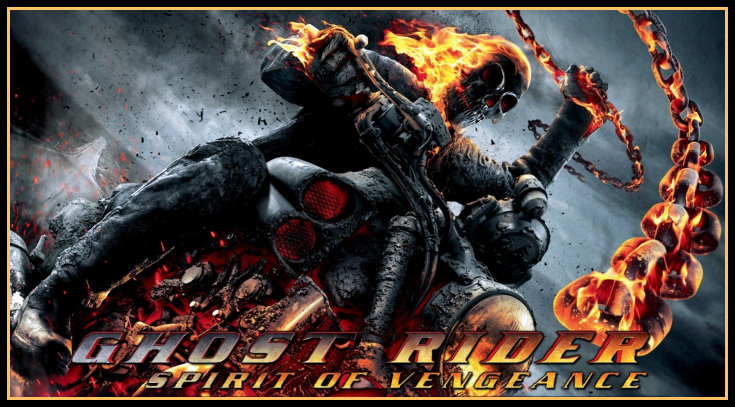
Quickie Review: Ghost Rider: Spirit of Vengeance (dir. by Neveldine/Taylor)


Ghost Rider has always been a niche character for Marvel Comics. The character was born out of an earlier Marvel character named Night Rider. After Marvel writers Roy Thomas and Gary Friedrich and artist Mike Ploog had rein-visioned the character into Ghost Rider during the early 70’s it has always remained on the extreme fringes of the Marvel Comics universe. This wouldn’t stop Sony (which owned the film rights to the character) to go ahead and adapt it for the big-screen. 2007’s Ghost Rider by Mark Johnson was the first and failed attempt to turn the character into a film franchise. It still made enough money despite a near-universal panning of the film by critics and audiences alike. This turn of profit is why Sony once again dipped into the Ghost Rider well and come up with 2012’s Ghost Rider: Spirit of Vengeance.

This “sort of” sequel ditches Mark Johnson and brings in the dynamic (and I’d say somewhat insane) directing duo of Mark Neveldine and Brian Taylor to helm the film. It brings back Nicolas Cage for the role of Johnny Blaze/Ghost Rider. Working from a script by Scott Gimple, Seth Hoffman and David S. Goyer one would think the film had nowhere else to go but up especially with the wacky and frenetic filming style by Neveldine/Taylor. To say that this sequel failed to do anything but finally give this film franchise a final nail in it coffin would be an understatement.

Ghost Rider: Spirit of Vengeance ditches pretty much most of what transpired with the first film and tries to retcon things for the sequel. I’d say this would’ve been a good idea seeing the first film was truly awful, but what the sequel ended up doing was confuse things even more. The film tries to turn the Ghost Rider persona from just a spirit of vengeance but an angelic being called the spirit of justice which had become corrupted. We get the Devil in the form of Roarke (played by Irish actor Ciaran Hinds) searching for the young boy Danny who is to be his perfect vessel.  Johnny Blaze comes into the picture after being recruited by a drunk French warrior-monk by the name of Moreau (Idris Elba whose performance was one of the lone highlights of the film) who promises to exorcise the demon from Blaze in exchange for finding and saving Danny.

This would’ve been a good premise if it had several more drafts of it worked on. Though there’s still a chance the film would’ve still sucked in the end. Even the direction from Neveldine/Taylor (Crank, Crank: High Voltage, Gamer) failed to add any heat to the proceedings. They come up with some unique camera angles and action sequences, but gone was the hyper-realistic and frenetic style they’ve become known for. Their previous films were not stuff to write to one’s film critic circles about but they at least had a sense of fun built into them even if their stories defied any sort of logic.

Even the performances by the cast seemed to be something that barely reached the level of one-dimensional. Nicolas Cage tries to channel his inner crazy by way of Bad Lieutenant: Port of Call New Orleans, but it’s too little too late to save the film which never found any sort of footing on the side of competent. Really, the only good thing worth of note was my previous mention of Idris Elba as Moreau who chews the scenery every time he shows up on the screen like it was his last meal. This performance alone wasn’t enough to save the film or even make it somewhat entertaining.

Ghost Rider: Spirit of Vengeance was not worth seeing in the theater (especially in 3D though that part of the film was actually quite well done despite being a post conversion) and I’d be willing to admit that it’s still not worth seeing on video unless it was for free. What could’ve been a restart to the series with the inclusion of Neveldine/Taylor instead gives this franchise it’s death-knell and most likely help Marvel get the rights back from Sony. Here’s to hoping that the flaming skull rider stays on the fringes of the Marvel Cinematic Universe for decades to come.

Trailer: Ghost Rider: Spirit of Vengeance


Ok, the first Ghost Rider wasn’t what one would call something great or even good. I’d say that in the scheme of how we judge films that one was quite awful. Yet, it also had a certain charm which made watching it on cable. Maybe not paying to see it makes it more enjoyable in a “guilty pleasure” sort of way. The fact that 2007’s Ghost Rider actually made a profit is why we have this sequel now set to come out in a couple months.

Ghost Rider: Spirit of Vengeance was suppose to be a sequel, but people involved in the project say it’s a sort of retooling/reboot. Whatever they need to do to make themselves justify this second film is ok by me as long as it’s entertaining in the end. From looking at the trailer, Ghost Rider: Spirit of Vengeance has less of the camp of the previous film and is all about action. Some of the action scenes look to be ludicrous, but cool looking and having directing-duo Neveldine/Taylor of Crank series and Gamer controlling the project means be prepared for even more over-the-top action.

If this film can be entertaining in a grindhouse way despite it’s flaws (like another early year film of Cage’s in 2011, Drive Angry) then I’d say making this second film would’ve been worth the price of admission (at least a matinee-ticket).