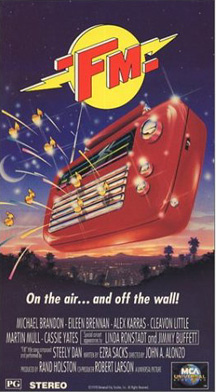
Retro Television Review: The American Short Story #15: The Sky Is Gray


Welcome to Retro Television Reviews, a feature where we review some of our favorite and least favorite shows of the past!  On Saturdays, Lisa will be reviewing The American Short Story, which ran semi-regularly on PBS in 1974 to 1981.  The entire show can be purchased on Prime and found on YouTube and Tubi.
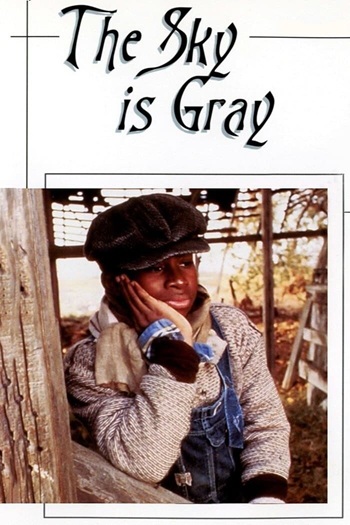
This week, we have an adaptation of a 1963 short story.

Episode #15: The Sky Is Gray

(Dir by Stan Lathan, originally aired in 1980)

This adaptation of an Ernest Gaines short story takes place in Louisiana during the 1940s.  James (James Bond III) is a young black child who lives on a farm.  His father is overseas, serving in the Army during World War II.  His mother (Olivia Cole) is a stern but loving woman who is trying to raise the sensitive James in a world where one often has to depend on their inner strength to survive.  When James comes down with a toothache, he and his mother travel to a nearby town so he can see the dentist.  From having to stand in the back of the bus to listening to a debate between a priest and a militant in the dentist’s office, it’s an eye-opening journey for James.  When the white receptionist at the dentist’s office arbitrarily cancels James’s appointment and tells him and his mother to come back tomorrow, the two of them seek shelter.  James discovers how strong his mother is when they’re harassed by a pimp (Reuben Collins).  He also learns that there is unexpected kindness in the world when a white store owner invites him and his mother inside to give them shelter from the cold and windy day.  During one trip to the dentist, James learns that the world is far more complicated than he originally knew.

This was an okay adaptation of Gaines’s acclaimed short story.  Young James Bond III gave a good performance as James and the episode was full of scenes that visually captured the feel of being an outsider.  That said, as was often the case with this series, the adaptation was so straight-forward that it didn’t really capture the nuance of Gaines’s writing.  In the short story, Gaines put the reader right into James’s head.  The adaptation doesn’t really do that.  A heavy-handed musical score doesn’t help matters but, with all that in mind, this was still an effective coming-of-age tale.
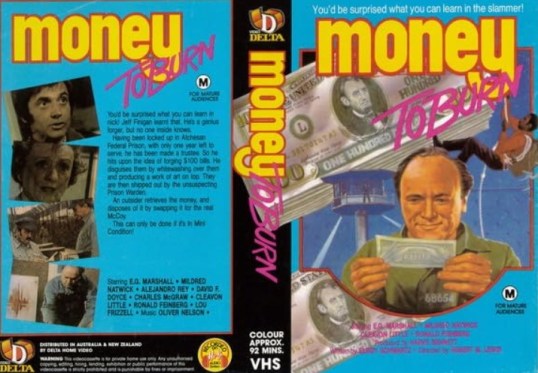
Retro Television Review: Money to Burn (dir by Robert Michael Lewis)


Welcome to Retro Television Reviews, a feature where we review some of our favorite and least favorite shows of the past!  On Sundays, I will be reviewing the made-for-television movies that used to be a primetime mainstay.  Today’s film is 1973’s Money To Burn!  It  can be viewed on YouTube.

For someone who has spent the past few years in prison, Jed Finnegan (E.G. Marshall) sure is a nice old man!  He runs the prison print shop and all of the other prisoners love him.  The guards trust him.  The warden (David Doyle) is really impressed with Jed’s watercolors and is interested in helping Jed launch a career as an artist after he gets out of prison.  Every weekend, Jed’s wife, Emily (Mildred Natwick), comes up to the prison with a picnic basket and she has lunch with her husband.  Jed admits that his wife is not a particularly good cook but it’s obvious that he really looks forward to her visits.

Emily’s sweet nature keeps a lot of people from noticing that she is just as cunning and clever a criminal as Jed ever was.  She knows that Jed had printed up one million dollars in counterfeit bills and she is looking forward to helping him exchange the fake money for real money.  Jed’s plan is to steal the payroll of the local army base and just leave the fake money in place of the real money.  However, Jed’s been in prison for so long that he doesn’t know that the military no longer pays anyone in cash.  Everyone’s paying everyone by check!

(This film is very much from the 70s.  While Jed and Emily were shocked to discover that people were no longer being paid in cash, I was shocked to discover that they were being paid by check.)

Working with two recently released ex-cons (played by Cleavon Little and Alejandro Rey), Emily tries to find a new way to switch out the money.  She discovers that there’s an incinerator nearby where the government burns the currency that it no longer needs.  But it won’t be easy to break in and make sure that the right money get burned….

And that’s not even mentioning the trouble of getting the fake money out of the prison in the first place!

Money to Burn is likable mix of comedy and (very mild) action.  It’s a film about criminals but they’re very likable criminals who go out of their way not to hurt people.  Emily is even happy about the idea of not only stealing a million dollars but also helping the government out by taking the old currency off their hands.  Marshall, Natwick, Little, and Rey all give such warm and cheerful performances that you can’t help but hope that they get away with their scheme.  The film, which deftly balances comedy and drama, clocks in at a brisk 73 minutes and it has an absolutely wonderful twist ending.  This is definitely a heist film that deserves to be better known.

Retro Television Review: Fantasy Island 4.21 “Basin Street/The Devil’s Triangle”


Welcome to Retro Television Reviews, a feature where we review some of our favorite and least favorite shows of the past!  On Tuesdays, I will be reviewing the original Fantasy Island, which ran on ABC from 1977 to 1984.  Almost the entire show is currently streaming on Daily Motion.

This week is a bit uneven.  Let’s dive into it!

Episode 4.21 “Basin Street/The Devil’s Triangle”

(Dir by George W. Brooks, originally aired on May 2nd, 1981)

Pilot Clay Garrett (Joe Namath — yes, the goofy football player) and cameraman Tom Spencer (Christopher Connelly) have come to Fantasy Island with Kerry Dawson (Trish Stewart).  Kerry is the host of a show where she explores isolated locations of the world.  Clay flies her where she’s going.  Tom films her.  Throughout the episode, it is suggested that — much like the characters at the center of Cannibal Holocaust — they’ve occasionally been guilty of staging the footage that has made them famous.

Kerry wants to search for the remains of an airplane that disappeared over 40 years ago.  The plane was flown by the famed aviatrix Wilma Deitrich.  Why they don’t just admit that Wilma is a stand-in for Amelia Earhart, I have no idea.  Mr. Roarke warns Kerry that the fantasy could be dangerous but he does not stop Clay, Tom, and Kerry from boarding a plane and then flying out across the ocean.

The plane ends up in the Devil’s Triangle, which I guess is this show’s version of the Bermuda Triangle.  The plane crashes on an uncharted island.  Kerry gets bitten by a snake and Clay sucks out the poison before he and Tom set off to look for the remains of Wilma’s plane.  Clay and Tom, incidentally, are both in love with Wilma.  Will Wilma select the boring cameraman or the boring pilot who sucked snake venom out of her body?

It’s a question that would perhaps be more compelling if Kerry had the slightest bit of chemistry with either man.  But she doesn’t.  Joe Namath is as stiff here as he was in C.C. and Company.  Christopher Connelly looks bored.  Kerry does eventually pick Clay so hopefully, they’ll be happy together.

(And yes, they do get off the island.  They find the wreckage of Wilma’s plane and use it to repair their own plane.  Amazingly, Wilma’s plan is still full of operational parts despite having spent over 40 years sitting on a deserted island.)

As for the other fantasy, Charlie Raines (Cleavon Little) wants to go to turn of the century New Orleans and meet his hero, jazzman Camptown Dodd (Raymond St. Jacques).  Roarke and Tattoo give him a magic clarinet and send him to New Orleans, where he immediately finds himself auditioning for Camptown.  Camptown wants Charlie to not only join his band but also lead it after his death.

DEATH!?

Yes, death.  Camptown refuses to sell Opium in his club and, as a result, he has been targeted for assassination by a corrupt police officer.  Charlie is so upset about this that Roarke himself steps into the fantasy to let Charlie know that he can’t change the past.

Okay, so Charlie can’t save Camptown but surely, he can bring Billie Joe (Berlinda Tolbert) into the present with him, right?  Afterall, Charlie has fallen in love with her.  No, Roarke says, that’s not how it works.

Fear not, though!  Once he’s in the present, Charlie discovers that Billie Joe was actually a guest at the Island and that Roarke combined two fantasies into one.  Yay!

The jazz fantasy was predictable but it was still better than the other fantasy.  Cleavon Little, Raymond St. Jacques, and Berlinda Tolbert all actually seemed to be invested in their characters, which made them a lot more fun to watch than the stiffs on the deserted island.

This week’s trip to the Island was a bit uneven.  The jazz fantasy was occasionally entertaining.  The other fantasy was forgettable.  I don’t hold that against, Mr. Roarke.  That’s just the way it goes sometimes.

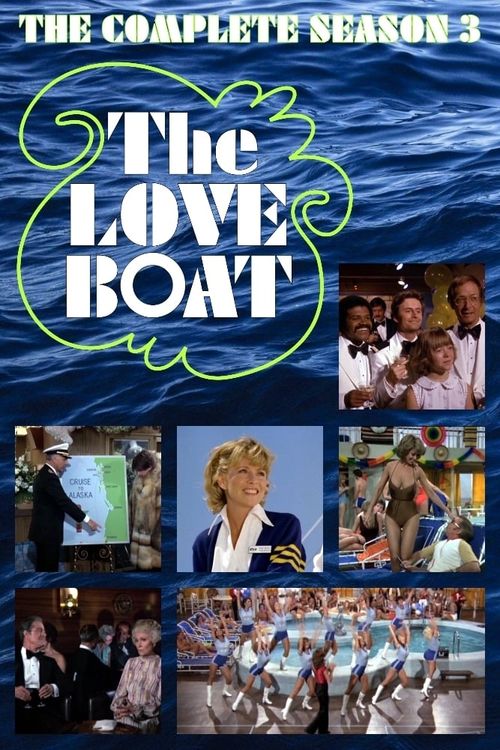
Retro Television Reviews: The Love Boat 3.20 “Rent a Romeo/Matchmaker, Matchmaker/Y’ Gotta Have Heart”


Welcome to Retro Television Reviews, a feature where we review some of our favorite and least favorite shows of the past!  On Wednesdays, I will be reviewing the original Love Boat, which aired on ABC from 1977 to 1986!  The series can be streamed on Paramount Plus!

This week, the Pacific Princess continues to be a lawsuit waiting to happen.

Episode 3.20 “Rent a Romeo/Matchmaker, Matchmaker/Y’ Gotta Have Heart”

(Dir by Roger Duchowny, originally aired on January 26th, 1980)

It’s time for another cruise on the Love Boat and once again, Doc Bricker is trying to get laid.

As I’ve often said in the past, The Pacific Princess really was a floating HR nightmare and that’s especially clear in any episode that opens with Doc bragging about how his latest girlfriend is about to board the ship.  This time, Doc is excited because he’s going to be joined by Sherry Holtham (Misty Rowe), who apparently took an acting class with Doc.  Imagine Doc’s surprise when Sherry boards the ship with her sister, the insecure and recently dumped Carol (Vicki Lawrence)!

Doc desperately wants some alone time with Sherry but, in order for that to happen, he’s going to have to find someone to show Carol a good time.  Gopher turns Doc down.  The Captain turns Doc down.  Fortunately, however, there is a legendary swinger on the boat.  Rod Baylor (football star Joe Namath) is on the boat and he’s always looking for a good time!  Gopher lies and tells Rod that Carol is notorious for being wild.  Rod takes a shot….

….and gets turned down because he came on too strong.  Gopher suggests that Rod open up to her about his insecurities.  Rod doesn’t have any insecurities but he lies to Carol and tells her that he’s actually very shy and reserved.  Carol is sympathetic and gives Rod her therapist’s card.

I guess the important thing here is that Sherry and Doc got to spend some time together.  They even get to wear matching red kimonos!  At the end of the cruise, Doc says a cheerful goodbye to Sherry but Rod is stuck with Carol and he looks absolutely miserable about it so …. wow, that was kind of a mean-spirited story, to be honest.

Speaking of sex, Sarah Conkle (Brett Somers) refuses to have sex with her husband, Harvey (Phil Harris), because she’s worried he’ll have another heart attack and die.  In fact, she spends almost the entire cruise telling Harvey not to do anything because she doesn’t think he’s healthy enough.  Finally, Harvey takes two bottle of champagne down to the cabin and he and Sarah not only have sex (off-screen, of course) but Harvey lives!  Sarah is so impressed that she lets Harvey carry their suitcases off the boat.  I’m going to guess that Harvey probably died a few days later.

Finally, young Jimmy Hopkins (Mark James) boards the ship with his amicably divorced parents, Evelyn (Ja’net DuBois) and Andrew (Cleavon Little).  Jimmy hopes that he can bring his parents back together (awwww!) and Vicki decides to help Jimmy come up with a plan.  That plan is to basically lie to every single man on the ship about Evelyn being married to a scary football player so that they’ll all stay away from her.  Jimmy also helps out by telling one of Evelyn’s suitors that he can’t wait for him to be his new stepfather.  (That guy is never seen again.)  Eventually, Evelyn and Andrew tell Jimmy that, though their marriage didn’t work, they will always love each other and that they will always be a part of his life.  Awwwww!

This was a mixed bag of an episode.  The storyline about Jimmy and his parents was sweet (even if it did involve a lot of lying) and featured good performances from DuBois and Little.  The storyline about the old couple was, if you’ll forgive the expression, dead in the water.  As for the Namath/Lawrence/Rowe storyline, it was pretty silly.  To be honest, any story that features Doc successfully seducing someone while wearing his red kimono is pretty silly.  Vicki Lawrence’s character didn’t go to do much, other than cry and complain.  Joe Namath, while hardly an actor of great range, had a goofy likability to him.  This episode was a breezy way to pass the time, even if it’s not one of the more memorable episodes of the series.

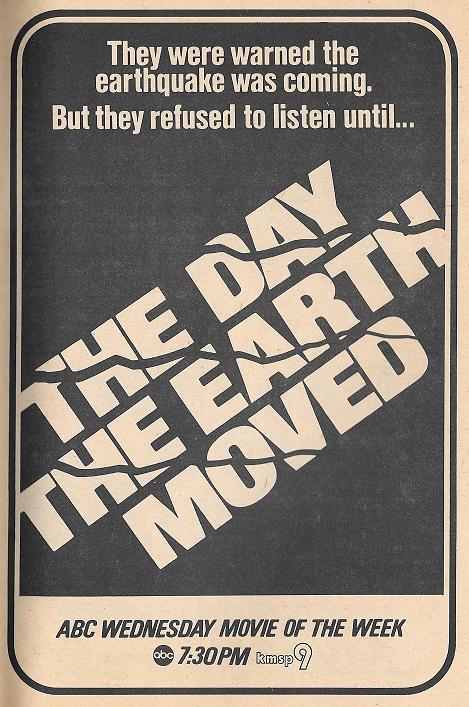
Retro Television Reviews: The Day The Earth Moved (dir by Robert Michael Lewis)


Welcome to Retro Television Reviews, a feature where we review some of our favorite and least favorite shows of the past!  On Sundays, I will be reviewing the made-for-television movies that used to be a primetime mainstay.  Today’s film is 1974’s The Day The Earth Moved!  It  can be viewed on YouTube!

Sitting in the middle of the Nevada desert, there’s a town called Bates.

Bates was once a thriving community but the years and the hot Nevada winds have not been kind to it.  Now, it consists of only a  few buildings and a speed trap.  Judge Tom Backsler (William Windom) is the most powerful man in this tiny community and he’s determined to return Bates to its former glory.  His plan is to open up a Christmas park and to remake Bates as “Santa Claus’s home away from the North Pole.”  In order to raise the money for that project, he and the police run an aggressive speed trap.  When pilot and photographer Steve Barker (Jackie Cooper) is caught in the speed trap, it turns out that he doesn’t have enough money to pay his fine.  So, his car is impounded and he’s put to work, sweeping up the dust and helping to get the Christmas park ready to open.

With the help of friendly little townsgirl, Steve is finally able to escape from Bates and return to his job.  He works with his wife, Kate (Stella Stevens), and his best friend, Harley (Cleavon Little), as surveyors.  When someone wants to buy a stretch of the Nevada desert, Steve and Harley fly over the land and take pictures.  Looking over the latest batch of pictures, Steve deduces that not only is there going to be an earthquake but it’s going to destroy the town of Bates!  Can Steve return to the town that once held him prisoner and convince the townspeople to leave with him before disaster hits!?

In many ways, The Day The Earth Moved is a standard made-for-TV disaster flick.  Only Steve and Kate realize what’s about to happen and they struggle to get anyone else to believe them.  Indeed, it seems like the world is almost conspiring to keep them from warning everyone about the incoming earthquake.  The film’s story checks off all of the expected disaster movie plot points.  That said, the town of Bates itself — with its gigantic Santa Claus standing in the middle of the desert — is a nicely surreal location and the repeated shots of a deserted farm being gradually destroyed by minor tremors achieve a certain ominous grandeur.  Jackie Cooper and Stella Stevens are believable as a husband and wife who love each other despite the fact that they’re often very annoyed with each other.  To the film’s credit, William Windom’s character is not portrayed as being a cardboard villain but instead as someone who simply wants to give his neighbors some place decent to live.  The Day The Earth Moved is predictable but well-done.

Of course, the main reason anyone will have to watch this film will be for the earthquake.  Unfortunately, this is where viewers will run into a common problem that has afflicted many made-for-TV movies.  The low-budget earthquake is just not that impressive.  For all the scenes of people yelling, it’s always pretty obvious that the camera is doing most of the shaking.  But you know what?  It’s a made-for-TV movie from 1974.  Cut it some slack and just go with it.

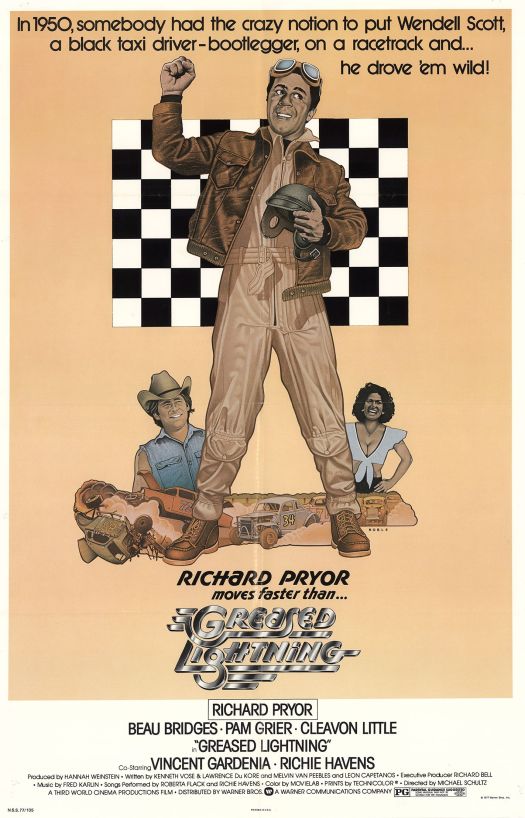
Built For Speed: Richard Pryor in GREASED LIGHTNING (Warner Brothers 1977)


gary loggins's avatarcracked rear viewer

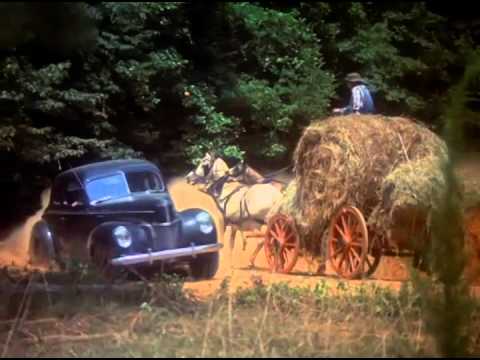
Richard Pryor  (1940-2005) has been hailed as a comedy genius, and rightly so. But Pryor could also more than hold his own in a dramatic role. Films like WILD IN THE STREETS, LADY SINGS THE BLUES, and BLUE COLLAR gave him the opportunity to strut his thespic stuff, and GREASED LIGHTNING gave him top billing as Wendell Scott, the first African-American NASCAR driver. Pryor plays it straight in this highly fictionalized biopic about a man determined to break the color barrier in the predominantly white sport of stock car racing.

We see Scott returning to his rural Danville, VA hometown after serving in WWII.  He tells everyone he wants to drive a cab and someday open a garage, but his secret wish is to become “a champion race car driver”. He meets and falls in love with Mary (Pam Grier, who’s never looked more beautiful), and they eventually marry…

View original post 427 more words

A Movie A Day #182: FM (1978, directed by John A. Alonzo)


Hey, California!  Are you ready to soft rock!?
That is the question asked by FM, a movie about rock that tries to stick it to the man with some of the safest, least revolutionary music ever recorded.

FM is centered around Q-Sky, an FM radio station in Los Angeles.  Because the laid back station manager (Michael Brandon) allows his DJs to program their own music with little commercial interruption, Q-Sky has become one of the most popular radio stations in California.  The corporate suits, though, demand that Q-Sky play less music and air more commercials, especially one that is specifically designed to get mellow Californians to join the Army.  When Brandon refuses, he is fired.  Outraged, Q-Sky’s motley crew of DJs (who include Martin Mull, Cleavon Little, Eileen Brennan, and even former football great Alex Karras) barricade themselves in the station and lead a protest by playing their music without commercials.

That would all be well and good except that the DJs spend most of their time playing songs by such noted rockers as Jimmy Buffett, Billy Joel, and REO Speedwagon.  A major set piece of the film is Q-Sky’s attempt to secretly broadcast a Linda Ronstadt concert that is being sponsored by a rival station.  At a time when Johnny Rotten was still singing Anarchy in the UK,  Q-Sky’s idea of rebellion was to go from Bob Seger to James Taylor with limited commercial interruption.

The always reliable Martin Mull is always good for some laughs and this was the only movie directed by award-winning cinematographer John A. Alonzo so, if nothing else, FM always looks good.  With its ensemble cast and episodic narrative, FM tries hard to be an Altmanesque satire but, ultimately, it fails because the revolution is not going to sound like The Doobie Brothers.

(Even though The Doobie Brothers clearly rock.)

“Who likes The Doobie Brothers?”

Because Michael Brandon looked like Gary Sandy and Martin Mull possessed a passing resemblance to Howard Hesseman, some reference books state that FM was the inspiration for WKRP in Cincinatti.  However, the first season of WKRP was already in production before FM was released to theaters and FM was such a financial flop that it is doubtful it inspired anything.

Add to that, while Venus Flytrap probably could have made it work, Dr. Johnny Fever would never have fit in at Q-Sky.  Johnny’s frequent acid flashbacks would have unnerved the mellow Q-Sky vibes.  Herb Tarlek, on the other hand…

“It must be a struggle to match the belt with the shoes.”
“Sometimes, I can’t do it.”


A Movie A Day #114: Scavenger Hunt (1979, directed by Michael Schultz)


When game designer Milton Parker (Vincent Price) dies, all of his greedy relatives and his servants gather for the reading of his will.  Parker’s lawyer, Benstein (Robert Morley), explains that Parker is leaving behind a $200 million dollar estate to whoever can win an elaborate scavenger hunt.  Dividing into five teams, the beneficiaries head out to track down as many items as they can by five o’clock that evening.  Among the items that they have to find: a toilet, a cash register, an ostrich, a microscope, and an obese person.  Hardy har har.

The five teams are made up of a who’s who of sitcom and television actors who had time to kill in 1979.  The Odd Couple‘s Tony Randall is Henry Motely, who is Parker’s son-in-law and who works with his four children.  Soap‘s Richard Mulligan plays a blue-collar taxi driver named Marvin Dummitz (because funny names are funny) who teams up with his friend, Merle (Stephen Furst).  The Mary Tyler Moore Show‘s Cloris Leachman (an Oscar winner, no less) gets stuck with the role of Milton’s greedy sister, Mildred.  She works with her conniving lawyer (Richard Benjamin) and her stupid son (Richard Masur).  Maureen Teefy plays Milton’s niece while his nephews are played by Willie Aames and Dirk Benedict.  Cleavon Little, James Coco, Roddy McDowall, and Stephanie Faracy play the servants.

It doesn’t stop there, though.  Avery Schreiber plays a zookeeper.  Meat Loaf plays a biker who beats up Richard Benjamin.  Ruth Gordon, Stuart Pankin, Pat McCormick, and Scatman Crothers all have cameos.  Even Arnold Schwarzenegger makes an appearance as a gym instructor who knocks Tony Randall out of a second story window.

There are a lot of famous people in Scavenger Hunt.  It’s just too bad that the movie itself is barely watchable and not at all funny.  It tries to go for the zaniness of It’s A Mad, Mad, Mad, Mad World but, unless watching Willie Aames steal a clown head from Jack in the Box is your idea of hilarity, the film never comes close to succeeding.  Michael Schultz directed some classic films (like Car Wash) during the 1970s but, unfortunately, he also directed Sgt. Pepper’s Lonely Hearts Club Band and this.

Scavenger Hunt used to show up on a late night television, where it was always advertised as starring Arnold Schwarzenegger.  (He barely has five minutes of screentime.)  It was released on DVD/Blu-ray earlier this year but watching for the cameos is the only reason to take part in this Scavenger Hunt.