October True Crime: The Onion Field (dir by Harold Becker)


This 1979 true crime drama opens in Los Angeles in 1963.

Rookie Detective Karl Hettinger (John Savage) has just joined the Felony Squad and met his new partner, Ian Campbell (Ted Danson, making his film debut).  Ian is a tall, somewhat eccentric detective, the type who practices playing the bagpipes in the basement and who takes Hettinger under his wing.

Meanwhile, Jimmy Smith (Franklyn Seales) has just been released from prison.  The nervous and easily-led Jimmy almost immediately runs into Gregory Powell (James Woods), a small-time hood with delusions of grandeur.  Powell is the type who talks a big game but who really isn’t even that good of a thief.  Smith and Powell form an uneasy criminal partnership.  They are easily annoyed with each other but they also share an instant bond.  Though the film doesn’t actually come out and say what most viewers will be thinking, there’s a lot of subtext to a brief scene where Powell appears to caress Smith’s shoulder.

One night, Hettinger and Campbell are kidnapped by Smith and Powell.  Smith and Powell drive them out to an onion field.  Because he’s misinterpreted the Federal Kidnapping Act and incorrectly believes that he and Smith are already eligible for the death penalty because they kidnapped two police officers, Powell shoots and kills Campbell.  (The close-up image of Campbell falling dead is a disturbing one, not the least because he’s played by the instantly likable Ted Danson.)  Hettinger runs and manages to escape.  He saves his life but he’s now haunted by the feeling that he abandoned his partner.

The rest of the film deals with the years that follow that one terrible moment in the onion field.  Treated as a pariah by his fellow cops, Hettinger sinks into alcoholism and eventually becomes a compulsive shoplifter.  Smith and Powell, meanwhile, use a variety of tricks to continually escape the death penalty and to keep their case moving through the California justice system.  Powell, for instance, defends himself and then later complains that he had incompetent counsel.  Smith, meanwhile, is defended by the infamous Irving Karanek, a legendary California attorney who specialized in filing nuisances motions.  (Later Karanek found a measure of fame as Charles Manson’s attorney.  Eventually, he had a nervous breakdown in 1989, lived in his car, and was briefly suspended by practicing law.)  While Smith and especially Powell quickly adjust to being imprisoned, Hettinger spends the next decade trapped in a mental prison of guilty and bitterness.

Based on a non-fiction book by Joseph Wambaugh, The Onion Field is a compelling look at a true crime case that continue to resonate today.  The film can be a bit heavy-handed in its comparisons between the two partnerships that define the story.  Both Hettinger and Smith are young and neurotic men who find themselves working with a more confident mentor.  The difference is that Hettinger’s mentor is the cool, composed, and compassionate Ian Campbell while Smith’s sad fate is to be forever linked to the erratic Gregory Powell.  While the film may have the flat look of something that was made for television, it’s elevated by the performances of its lead actors.  James Woods give an especially strong performance as the cocky Powell, a loser in the streets who becomes a winner behind bars.  Over the course of the film, he goes from being a joke to being the prisoner that others come to for legal advice.  John Savage, meanwhile, poignantly captures Hettinger’s descent as the trauma from that night leaves him as shell of the man that he once was.

The film’s supporting cast is full of familiar faces.  Christopher Lloyd and William Sanderson show up as prisoners.  Ronny Cox plays the detective in charge of the onion field investigation.  David Huffman plays a district attorney who is pushed to his breaking point by the obstructive tactics of Smith’s attorney.  Priscilla Pointer play Ian Campbell’s haunted mother.  All of them do their part to bring this sad story to life.

The Onion Field is a chillingly effective true crime drama and a look at a murder that was inspired by one man’s inability to understand federal law.
The Right To Remain Silent (1996, directed by Hubert de La Bouillerie)


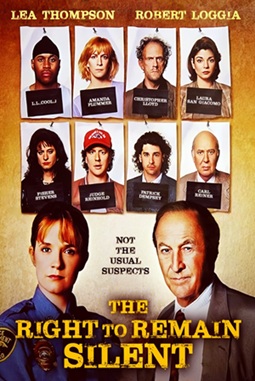
It’s one very busy night at a police station.  Everyone who is brought in from off the streets has the right to remain silent but no one exercises it.  Rookie cop Lea Thompson listens to everyone’s stories.  LL Cool J is the documentarian who thought it would be smart to put on Klan robes and a hood and try to infiltrate a demonstration undercover.  Patrick Dempsey is the drunk who killed a kid.  Carl Reiner comes in and confesses to mercy killing his wife.  Christopher Lloyd is homeless.  Fisher Stevens is a trans streetwalker.  Judge Reinhold, I don’t even know what he was supposed to be.  Reinhold actually plays two characters in this film and he’s miscast in both roles.  Amanda Plummer is a pizza delivery person who shoots someone in self-defense.  No one asks for a lawyer.  No one lies about what they did.  Instead, they just talk and talk and talk and talk some more.  Thompson listens while Robert Loggia, as the chief, growls about donuts.

The Right To Remain Silent is based on a play and that is its downfall.  Instead of being a story about a rookie cop and her first night on the job, it’s just a collection of rambling stage monologues.  Some of the actors, like Carl Reiner and Christopher Lloyd, do okay.  Most of them still seem to be acting for the folks sitting in the back row.  It ultimately doesn’t add up too much because the stories are too predictable to make much of an impression.  Everyone in this film had the right to remain silent and I wish they had exercised it.

Suburban Commando (1991, directed by Burt Kennedy)


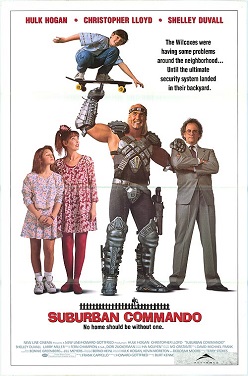
After screwing up a mission to save the leader of his planet from the intergalactic gangster Suitor (William Ball), Shep Ramsey (Hulk Hogan) is ordered to take a vacation.  When Shep gets mad and accidentally damages the controls of his spaceship, he’s forced to hide out on Earth while his ship repairs itself.  After stealing some clothes from a biker, Shep rents a room from Charlie (Christopher Lloyd) and Jenny Wilcox (Shelley Duvall).  Charlie is an architect who hates his job, his boss (Larry Miller), and a malfunctioning traffic light in the middle of town.   Charlie doesn’t trust Shep but when Suitor comes to Earth in search of his number one foe, Charlie and Shep are going to have to work together to save Charlie’s family.

Suburban Commando was originally envisioned as being an Arnold Schwarzenegger/Danny DeVito film.  Schwarzenegger and DeVito decided to do Twins instead and Suburban Command was (eventually) made with Hulk Hogan and Christopher Lloyd.  The idea behind the film had potential but the film itself never comes to life, thwarted by a low-budget and a cast that generates little in the way of chemistry.  Things start out well when Hogan is in outer space and the film parodies Star Wars but, once Hogan goes on vacation, the story crashes down to Earth in more ways than one.  Hogan was more of a personality than an actor and it’s impossible to see him as being anyone other than Hulk Hogan, even if he is flying through space and wearing intergalactic armor at the start of the movie.  Hogan getting angry in space is funny because space is not where you would expect to find him.  Hogan getting angry in the suburbs just feels like a half-baked sitcom.  Lloyd is too naturally eccentric to be believable as someone trapped in a go-nowhere job.  It’d hard to buy Christopher Lloyd as someone who would be scared to tell off his boss or who would need an alien warrior to come down and show him how to loosen up.  There’s a lot talented people in the cast but the ensemble never really gels.

This was the last film to be directed by veteran filmmaker Burt Kennedy.  Kennedy was best-known for his westerns, including Welcome to Hard Times, Support Your Local Sheriff, and Hannie Caulder.  He was not known for his wacky comedies and this film shows us why.

Live Tweet Alert – #MondayMuggers present NOBODY (2021), starring Bob Odenkirk!


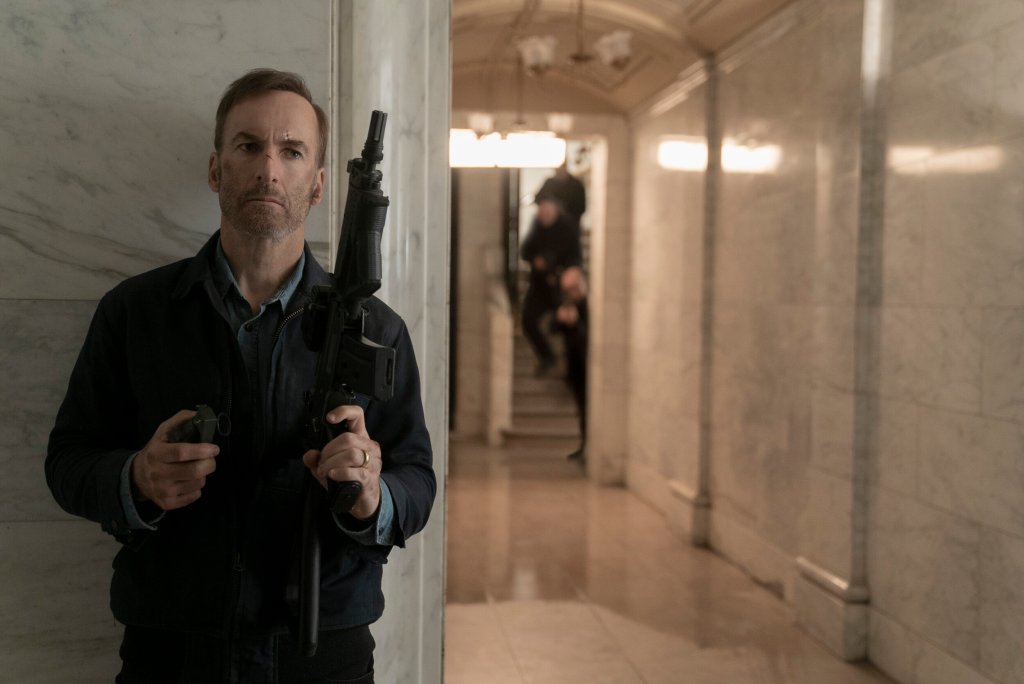
Every Monday night at 9:00 Central Time, my wife Sierra and I host a “Live Movie Tweet” event on X using the hashtag #MondayMuggers. We rotate movie picks each week, and our tastes are quite different. Tonight, Monday July 7th, we are showing NOBODY (2021), starring Bob Odenkirk, Aleksey Serebryakov, Connie Nielsen, Michael Ironside, Colin Salmon, RZA, and Christopher Lloyd.

The plot: A docile family man slowly reveals his true character after his house get burglarized by two petty thieves, which, coincidentally, leads him into a bloody war with a Russian crime boss.

So, if you think you might enjoy watching a “nobody” turn into a badass and take on the Russian mafia, and you’ve about 90 minutes to spare, then we’ve got the movie for you! Join us tonight for #MondayMuggers and watch NOBODY. It’s on Amazon Prime! I’ve included the trailer below:

Trailer: Nobody 2


Ilya Naishuller’s 2021 action-comedy Nobody caught everyone by surprise. Many thought it was just a quick cash-grab to take advantage of the success with the John Wick action series. Nobody was released in the middle of the pandemic, yet it was received very positive reviews from critics and audiences, alike.

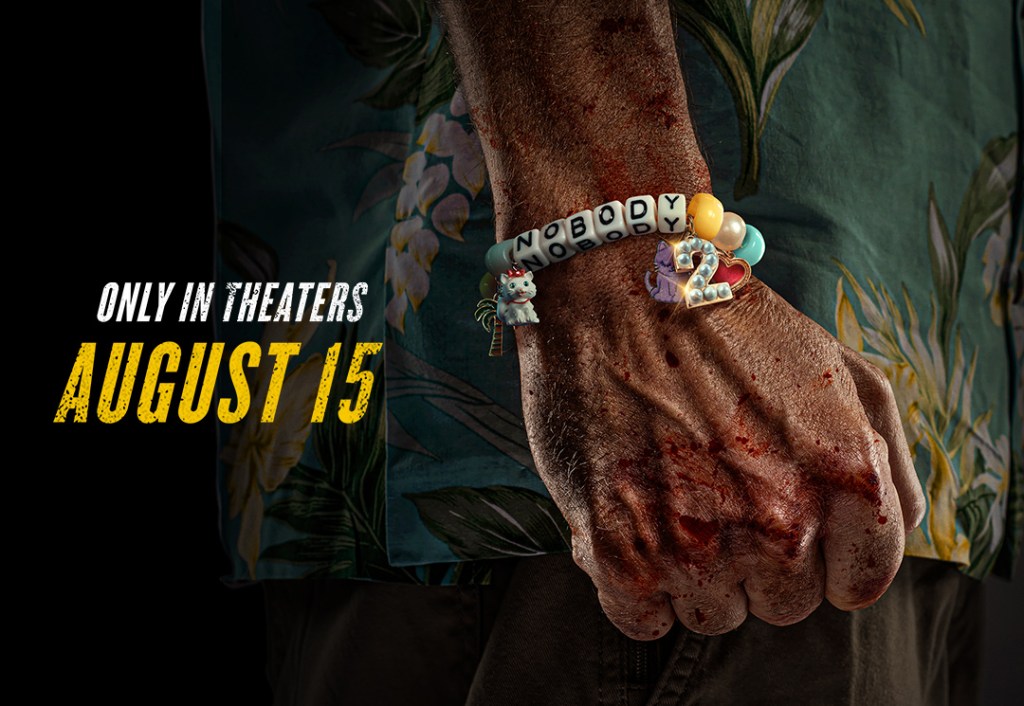
It was a no-brainer that a sequel would be greenlit. It took awhile to happen but most of the cast and crew are back with the exception of director Ilya Naishuller. Indonesian director Timo Tjahjanto now takes the director’s seat with some new, but familiar faces (Sharon Stone and Colin Hanks) joining the previous cast (Bob Odenkirk, Colin Salmon, Connie Nielsen, Christopher Lloyd and RZA).

From this first trailer, Nobody 2 looks to retain the action-comedy tone of the first, but with the visual flair of Timo Tjahjanto (see The Night Comes for Us for example of how batshit crazy his action turn out).

Nobody 2 arrives in theaters on August 15, 2025.

Scenes That I Love: Back To The Future


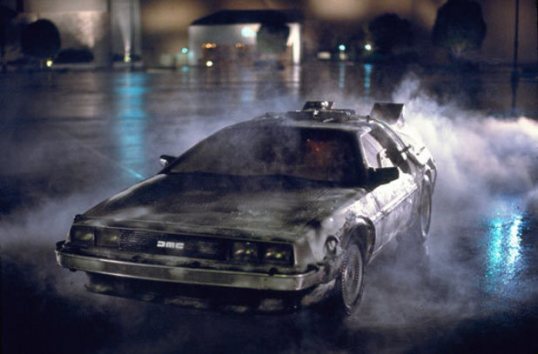
Today would have been the 100th birthday of inventor and would-be automotive tycoon, John DeLorean.  Today’s scene that I love comes from 1985’s Back To The Future and it features DeLorean’s most famous contribution to world of driving (not to mention Doc Brown’s most famous invention, as well!).

Thank you, John DeLorean, for giving us a car so cool that it could travel through time.

Music Video of the Day: Doubleback by ZZ Top (1990, directed by ????)


Doubleback was the lead single off of ZZ Top’s tenth studio album, Recycler.  It also appeared in the film Back To The Future Part III, where it was played over the end credits.  ZZ Top had a cameo in the film, performing a country music version of the song.

The music video features both Christopher Lloyd and scenes from Back to the Future Part III and was nominated for the Video Music Award for Best Video From A Film.  It lost to Billy Idol’s Cradle of Love, which was featured in The Adventures of Ford Fairlane.  The Adventures of Ford Fairlane also cleaned up at the Razzies that year.

Enjoy!

Film Review: Clue (dir by Jonathan Lynn)


It was a dark and stormy night in 1954….

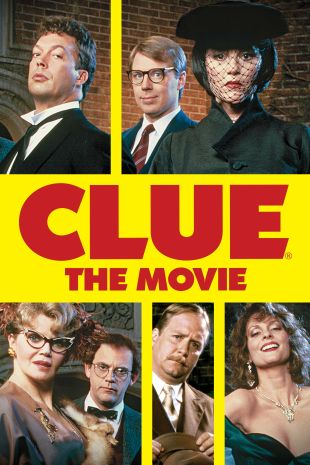
The 1985 comedy, Clue, opens with a set of six strangers arriving at an ominous mansion in New England.  They’re meet by Wadsworth (Tim Curry), an oddly charismatic butler who explains that all six of the strangers have a few things in common.  They all work in Washington D.C.  They are all, in some way, involved with the government.  And they’re all being blackmailed by Mr. Boddy (Lee Ving), the owner of the house.

The six strangers have all been assigned nicknames for the night.

Miss White (Madeleine Khan) is the enigmatic widow of a nuclear physicist who may have had communist sympathies.  Actually, Miss White is a widow several times over.  All of her husbands died in circumstances that were a bit odd.  Is Miss White a black widow or is she just unlucky?  And what about the flames of jealousy that she occasionally mentions?

Professor Plum (Christopher Lloyd) is a psychiatrist who once worked for the World Health Organization and who has an unfortunate habit of sleeping with his patients.

Mr. Green (Michaele McKean) explains that he works for the State Department and that he is also secretly gay.  If his secret got it, he would be deemed a security risk or perhaps even a communist agent.

Mrs. Peacock (Eileen Brennan) is the wife of a U.S. Senator who forced to resign after getting caught up in a bribery scandal.

Colonel Mustard (Martin Mull) is a somewhat stuffy war hero-turned-arms dealer.

And finally, Miss Scarlet (Lesley Ann Warren) is Washington D.C.’s most powerful and most witty madam.

Once everyone is in the house, Wadsworth explains that the police have been called and will arrive in 45 minutes, at which point Mr. Boddy will be arrested and everyone’s secrets will be exposed.  Mr. Boddy’s solution is to suggest that one of the six kills Wadsworth.  After tossing everyone a weapon, Mr. Boddy turns out the lights.  When the lights come back on, Wadsworth is still alive but Mr. Boddy is not.  But who murdered Mr. Boddy?  And in what room?  And with what weapon?  And what to make of the other people who were either in the house or show up at the front door, like the maid, Yvette (Collen Camp), or the motorist (Jeffrey Kramer) who shows up to use the phone or the traveling evangelist (Howard Hesseman)?  Can the mystery be solved before the police show up and presumably arrest everyone?

Based on the old board game, Clue is a hilariously exhausting film, one that mixes smart wordplay and broad physical comedy to wonderful effect.  It’s not often that you see a film that gets equal laughs from two people colliding in a hallway and from characters accusing each other of being communists.  In fact, it’s so easy to marvel at the physical comedy (especially the lengthy scene where Tim Curry runs from room to room while explaining his theory about who committed the murders) that it’s easy to forget that the film is also a sharp satire on political corruption, national paranoia, 50s morals, and the McCarthy era in general.  Since all of the characters are already convinced that they’re either surrounded by subversives or in danger of being accused of being a subversive themselves, it’s not a great leap for them to then assume that any one of them could be a murderer.  I mean, if you’re willing to betray your country than who knows what you might be willing do in the study with a candlestick?

The cast is full of comedy veterans, all of whom know how to get a laugh out of even the mildest of lines and none of whom hold back.  Madeline Kahn, in particular, is hilarious as Miss White though my favorite suspect, in both the game and the movie, has always been Miss Scarlet.  Not only is she usually portrayed as being a redhead in the game but, in the movie, her dress is to die for.  In the end, though, it’s perhaps not a surprise that the film is stolen by Tim Curry’s energetic performance.  The film’s final 15 minutes are essentially a masterclass in physical comedy from Tim Curry but he’s just as funny when he’s delivering his frequently snarky dialogue.  Both Wadsworth the character and Tim Curry the actor appear to be having a blast, running from room to room and shouting out accusations.

When Clue was originally released, it was released with three different endings.  Apparently, the audience wouldn’t know which ending they were going to get before the movie started.  I guess that the idea was to get people to go the movie three times to see each ending but I imagine few filmgoers had the patience to do that and who knows how many viewers went to multiple showings just to discover that the randomly selected ending was one that they had already seen.  I’m surprised that I haven’t come across any reports of riots breaking out.  Fortunately, the version of Clue that is now available for viewing features all three endings.  Of course, none of the endings make much sense.  Hercule Poirot would demand a do-over, especially if he was being played by Kenneth Branagh.  But the fact that it’s all so ludicrous just adds to the comedy.  I watched Clue two Fridays ago with a group of friends and we had a blast.  It’s definitely a movie that’s more fun when you watch it with other people.

(That said, as far as incoherent solutions are concerned, the third one was my favorite and I think Poirot would agree.)

As for the board game itself, I used to enjoy playing it when I was a kid.  We had really old version from the 60s and I always used to imagine what all of the suspects were like when they weren’t being accused of murder.  I always imagined that Mr. Green and Miss Scarlet probably had something going on.  Today, I’ve got a special Hitchcock edition of the game.  It’s all good fun, this never-ending murder mystery.

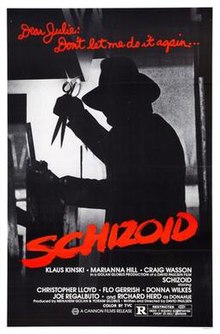
The TSL’s Grindhouse: Schizoid (dir by David Paulsen)


The 1980 film, Schizoid, is all about the things you can do with scissors.

For instance, in the days before email, text messages, and social media, scissors could be used to cut words out of a magazines.  Those words could then be carefully pasted onto construction paper and then sent to an advice columnist like Julie Caffret (Marianna Hill).  Julie is pretty upset when she starts getting the notes, largely because they promise an anonymous reign of terror and murder.  The police, however, say that the notes probably don’t meant anything.  They’re probably just a hoax.  I mean, it’s true that several members of Julie’s therapy group have recently been murdered but the letters all talk about committing murder with a gun.  Whereas the members of the therapy group are being murdered by someone wielding …. SCISSORS!  (Cue that dramatic music.)

Of course, Julie has other things to worry about.  For instance, her ex-husband, Doug (Craig Wasson), is still in her life.  He’s putting up wallpaper in her office.  Or, at least, that’s what he says he’s doing.  It’s hard not to notice that he doesn’t seem to be making much progress with the job.  Plus, he apparently sleeps in the office, which just seems odd.  Then, there’s the building’s creepy maintenance man, Gilbert (Christopher Lloyd), who specializes in making people uncomfortable on elevators.  And then there’s the fact that Julie’s therapist, is played by Klaus Kinski!

Seriously, if you were looking for a therapist, would you go to Klaus Kinski?

From the minute Klaus shows up, it’s pretty obvious that the film wants us to assume that he’s the killer and really, it’s hard not to make that assumption.  We’re so used to seeing Klaus Kinski play evil and villainous characters and, even 30 years after his death, there are so many stories out there about how difficult Klaus Kinski could be to work with in real life that our natural reaction is to believe any character he plays must have a sinister motivation.  In this film, Klaus’s character has an out-of-control teenage daughter (Donna Wilkes) who tries to commit suicide by locking herself in the garage with a running car.  When Klaus takes an axe to the garage door, we’re left to seriously wonder if he’s planning on killing her or if he’s actually trying to save her life.  That said, Schizoid actually makes good use of Kinski’s menacing persona and Kinski himself gives a performance that elevates the entire film.  Kinski actually does manage to keep you guessing as to whether or not the therapist is a monster or if he’s just kind of a jerk.

Schizoid is usually classified as a slasher film, though it actually has more in common with the classic Italian giallo films that it does with any of the Friday the 13th sequels.  The killer’s identity is masked through POV shots and, in typical giallo fashion, the killer wears black gloves while committing his crimes.  We spend a good deal of the film following the police investigation, which is a typical element of the giallo genre but which is usually treated as an afterthought in post-Friday the 13th slasher films.  Much like Fulci’s The New York Ripper, Schizoid is a violent journey into the heart of darkness, a look at a world with no morality and no safety.  Also like Fulci’s film, it’s so shamelessly sleazy that it’s easy to miss the fact that it’s actually rather well-directed and acted.

Schizoid turned out to be a better film that I was expecting.  That said, I still have to wonder why anyone would select Klaus Kinski to be their therapist.

Lisa Reviews An Oscar Winner: One Flew Over The Cuckoo’s Nest (dir by Milos Forman)


Technically, the 1975 film One Flew Over The Cuckoo’s Nest is not a horror film.

Though it may take place in a creepy mental hospital, there are no ghosts or zombies.  There’s no masked killer wandering the halls.  The shadows do not leap off the walls and there are no ghostly voice in the night, unless you count the rarely heard voice of Will Sampson’s Chief Bromden.

Admittedly, the cast is full of horror and paranormal veterans.  Michael Berryman, of the original Hills Have Eyes, plays a patient.  Louise Fletcher, who won an Oscar for playing the role of Nurse Ratched, went on to play intimidating matriarchs in any number of low-budget horror movies.  Vincent Schiavelli, a patient in this film, played the angry subway ghost in Ghost.  Another patient, Sidney Lassick, played Carrie’s condescending English teacher in Carrie.  Brad Dourif, who received an Oscar nomination for playing the meek Billy Bibbit, has become a horror mainstay.  Will Sampson appeared in the Poltergeist sequel.  Both Scatman Crothers and Jack Nicholson would go on to appear in The Shining.

Nicholson plays Randle Patrick McMurphy, a career criminal who, hoping to get out of prison early, pretends to be mentally ill.  He ends up getting sent to an Oregon mental institution, where his rebellious ways upset the administrators while, at the same time, inspiring the patients to actually try to take some control over their lives.  The film is, in many ways, a celebration of personal freedom and rebellion.  The only catch here is that, in One Flew Over The Cuckoo’s Nest, being a little bit too rebellious can lead to not only electroshock treatment but also a lobotomy.  Those in charge have a way of making you permanently compliant.

And really, to me, that’s what makes One Flew Over The Cuckoo’s Nest a horror film.  It’s about the horror of conformity and bureaucracy.  The film may start out as something of a comedy and Nicholson brings a devil-may-care attitude to the role of McMurphy but then, eventually, you reach the scene where McMurphy is tied down and given electrical shocks to make him compliant.  You reach the scene where Ratched coldly informs Billy Bibbit that she will be telling his mother that Billy lost his virginity to a prostitute and Billy reacts by slicing open his wrists.  Finally, you reach the scene where McMurphy returns to the ward having had a bit of his brain removed.  In those scenes, One Flew Over The Cuckoo’s Nest becomes a horror movie.  The monster is not a ghost or a demon or a serial killer.  Instead, it’s a system that is determined to squash out any bit of rebellion or free thought.

What makes Nurse Ratched such a great villain is the fact that, as opposed to being some sort of a maniacal force of evil, she’s really just someone doing her job and refusing to question her methods.  She’s the ultimate symbol of bland authoritarianism.  Her job is to keep the patients from getting out of control and, if that means lobotomizing them and driving one of them to suicide …. well, that’s what she’s going to do.  For all the time that Ratched spends talking about therapy, her concern is not “curing” the patients or even helping them reach a point where they can leave the hospital and go one with their lives.  Ratched’s concern is keeping everyone in their place.  As played by Fletcher, Ratched epitomizes the banality of evil.  (That’s one reason why it was so silly for Ryan Murphy to devote his most recent Netflix series to giving her an over-the-top origin story.  Ratched is a great villain because she doesn’t have any complex motivations.  She’s just doing whatever she has to do to keep control of the people are on her ward.  Part of keeping control is not to allow anyone to question her methods.  Everyone has had to deal with a Nurse Ratched at some point in the life.  With the elections coming up, we’re about to be introduced to whole new collection of Nurse Ratcheds.)

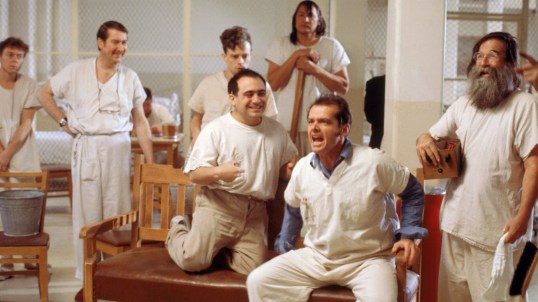
I like One Flew Over The Cuckoo’s Nest, even though it’s an undeniably dated film.  That said, it’s not as dated as the novel on which it’s based, nor is it as appallingly misogynistic.  Jack Nicholson’s rough but charismatic performance holds up wonderfully well.  (I don’t know if an actor has ever matched a character as perfectly as Nicholson does with McMurphy.)  Louise Fletcher brings a steely resolve to the role of Nurse Ratched.  Fans of spotting character actors in early roles will probably get a kick out of spotting both Danny DeVito and Christopher Lloyd as patients.  The movie skillfully combines drama with comedy and the ending manages to be both melancholy and hopeful.

When it comes to the 1975 Oscar race …. well, I don’t know if I would argue that One Flew Over The Cuckoo’s Nest deserved to win Best Picture over Nashville, Dog Day Afternoon, or Barry Lyndon or Jaws.  Dog Day Afternoon and Nashville feel as if they were ahead of their time, with their examination of the media and politics.  Jaws set the template for almost every blockbuster that would follow and it’s certainly one of the most influential horror films ever made.  Barry Lyndon is a stunning technical achievement.  Compared to those films, One Flew Over The Cuckoo’s Nest seems rather simplistic.  Watching it today, you’re very much aware of how much of the film’s power is due to Jack Nicholson’s magnetic screen presence.  Nicholson definitely deserved his Oscar but it’s debatable whether or not the same can be said of One Flew Over The Cuckoo’s Nest as a whole.

So no, I wouldn’t necessary say that One Flew Over The Cuckoo’s Nest was the best of the films nominated that year.  Still, it’s an entertaining film and a helluva ride.  It’s a great film to watch whenever you’re sick of faceless bureaucrats trying to tell you what to do.  And, in its own odd way, it’s a great film for Halloween season.