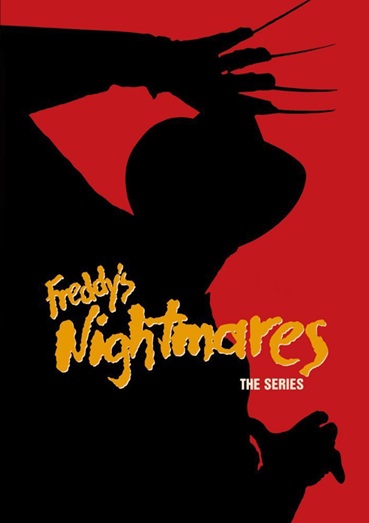
Welcome to Late Night Retro Television Reviews, a feature where we review some of our favorite and least favorite shows of the past! On Fridays, I will be reviewing Freddy’s Nightmares, a horror anthology show which ran in syndication from 1988 to 1990. The entire series can be found on Tubi!
This week, we begin the second season! Welcome back to Springwood!
Season 2.1 “Dream Come True”
(Dir by George Kaczender, originally aired on October 8th, 1989)
The second season of Freddy’s Nightmares features Freddy getting involved in the action.
The first story features Freddy haunting the nightmares of teenager Randy Jennings (David Kaufman), who has only recently moved to Springwood with his mother, Cathy (Linda Miller). Randy is having nightmares about Freddy so his mother buys tickets to attend a talk show hosted by Stan Brooks (Jay Thomas). Stan’s guest is therapist Dr. Brandon Kefler (Scott Marlowe), who has written a book about nightmares. Cathy begs Brandon to see Randy and, after being pressured by Stan, Brandon agrees. Stan arranges for cameraman Garry Heath (Gerard Prendergrast) to film the session.
At the Jennings home, Brandon talks to Randy about his nightmares. Brandon’s therapy seems to work as, afterwards, Randy is able to sleep peacefully and without having any nightmares. However, it turns out that Freddy just jumped from Randy’s mind to Brandon’s! (Hey, didn’t almost the same thing happen in a movie, something about an exorcism….) Soon, Brandon is the one who is having nightmares and being driven mad by visions….
As for the second story, it deals with Garry the cameraman and his belief that Freddy Kruger is real. One reason why Garry believes that Freddy is real is because Freddy keeps showing up in footage that he’s filmed. Unfortunately, no one else can see Freddy, certainly not Garry’s boss (Charles Cyphers). Even more unfortunately, the body of Garry’s girlfriend is found in a dumpster and the police aren’t buying Garry’s story that Freddy did it….
This episode actually wasn’t that bad, especially compared to some of the episodes that aired during the show’s first season. Perhaps it’s because this episode was the first of the season and the production budget hadn’t gone dry yet but Dream Come True actually features some adequate production values. The house looks like a real house. The television studio looks like a place where something would actually be filmed. The abandoned warehouse with Garry tries to confront Freddy is actually an atmospheric location and the episode even manages to generate a little suspense, even if neither plot is particularly original. Both Scott Marlowe and Gerard Pendergrast give decent performances in their stories and, as always, Robert Englund is a properly evil Freddy.
(That said, the show did manage to misspell Charles Cyphers’s name in the opening credits, despite the fact that he was this episode’s big guest star. I did a double take when I saw “Charles Syphers,” on my screen. Seriously, the man was Sherriff Brackett!)
Despite getting Charles Cypher’s name wrong, this was still a good start to the final season. It’ll be interesting to see if the remaining episodes live up to it.
I was a bit shocked to realize that I hadn’t reviewed Escape from New York for this site. Leonard’s reviewed it.Jeff’s reviewed it. I’ve reviewed quite a few Italian films that were inspired by Escape from New York. Last year, I devoted an entire day to how much I love Kurt Russell. I’ve shared John Carpenter’s theme music, more than once. I’ve reacted to Mamdani’s election by telling my friends that it’s time to escape from New York. I’ve lost track of the number of times that I’ve told Leonard that it is “Time to leave the Bronx,” even though he doesn’t live in the Bronx. (What do I know? I live in Texas.) But I’ve never actually reviewed Escape From New York.
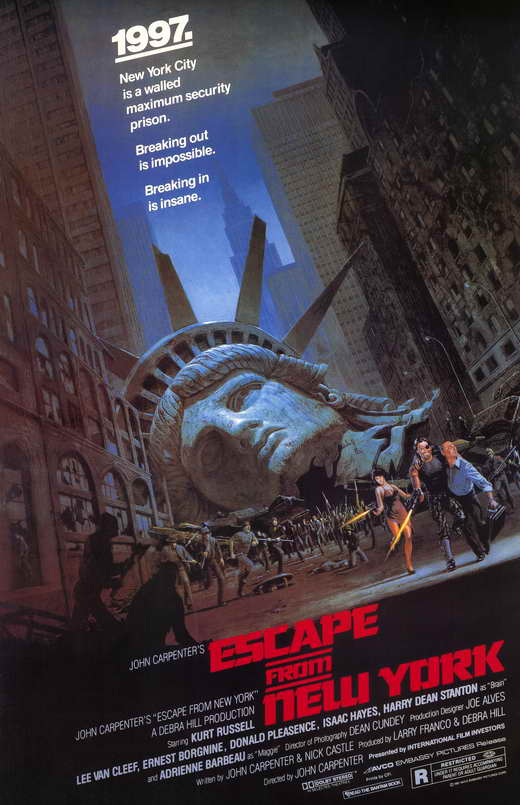
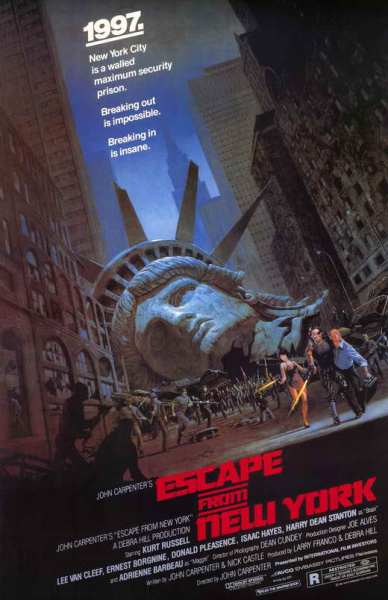
I love Escape from New York but I have to say that the film itself can’t live up the brilliant poster art. The first time I watched Escape from New York, I was really disappointed that the Statue of Liberty’s head never appeared in the middle of a street in Manhattan. If the film were made today, one imagines that the filmmakers would be able to do all sorts of things with the Statue of Liberty. But Escape from New York was made in 1981, in the days before rampant CGI. Escape from New York was made at a time when directors had to be somewhat clever and that definitely works to the film’s advantage. The lack of big time special effects meant that Carpenter had to emphasize character and atmosphere. Escape From New York might not feature the Statue of Liberty’s head but it does feature an amazing cast and a host of unforgettable characters. When you manage to get Kurt Russell, Ernest Borgnine, Donald Pleasence, Harry Dean Stanton, Adrienne Barbeau, Lee Van Cleef, and Isaac Hayes all in the same film, there’s no way it isn’t going to be memorable.
We all know the plot. Kurt Russell plays career criminal Snake Plissken. (Everyone thought Snake was dead.) When the President (Donald Pleasence) finds himself trapped on the prison island of Manhattan, Snake is the man who is sent to rescue him. The fate of the world depends on rescuing the President. If the President isn’t rescued, it could lead to nuclear war. Snake doesn’t really care about the fate of the world. He does care about the fate of himself, however. He’s been injected with a poison that will kill him unless he receives the antidote in 24 hours.
(The doctor who gives Snake the poison is named Dr. Cronenberg. Meanwhile, Frank Doubleday appears as a thug named Romero. Lee Van Cleef’s police commissioner is named Hauk, as in Howard Hawks. Tom Atkins plays Captain Rehme, as in producer Bob Rehme. The film may be about the collapse and possible end of the world but John Carpenter’s having fun. And, of course, so are we.)
The President has been captured by the Duke of New York (Isaac Hayes). It doesn’t take Snake long to track down the Duke. But rescuing the President and making it back to safety turns out to be far more difficult and violent than anyone was anticipating. Snake gets some help, from characters like Cabbie (Ernest Borgnine), Brain (Harry Dean Stanton), and Maggie (Adrienne Barbeau). Of course, that help is largely due to everyone’s self-interest. The recurring theme is that no one really cares that much about whether or not the President or even Snake lives or dies. Maggie loves Brain but, otherwise, there’s not much individual loyalty to be found in this film. Instead, everyone just cares about getting the Hell out of New York. In the end, even the President turns out to be a bit of a jerk.
(I do have to say that I absolutely love Donald Pleasence’s performance in Escape from New York. The “You’re the Duke! You’re the Duke! A Number One!” scene? That was Pleasence at his most brilliant.)
It’s a wonderfully acted and directed film, one that is often darkly humorous. (While Kurt Russell delivers his lines with a endearing self-awareness, Carpenter has a lot of fun imagining the type of criminal society that would emerge on an isolated Manhattan.) It’s also a film that understands the power of New York City. Depending on who you ask, New York either represents the worst or the best of America. That’s true today and, watching Escape from New York, it’s easy to guess that was probably true in 1981 as well. There’s a power to the “New York” name and it’s why this film wouldn’t have worked if it had been called Escape From Houston or Escape From Spokane. (One reason why Escape From LA failed was because the cartoonishness of Los Angeles couldn’t compete with the grit of New York.) We all know the saying — “New York, New York: If you can make it there, you can make it anywhere.” This film reminds us that it’s also true that if you can escape from there, you can escape from anywhere. Escape from New York brilliantly captures the way that most of the rest of country view New York but, by limiting the action to Manhattan, it also presents a story that can be enjoyed by people in Brooklyn, the Bronx, Queens, and Staten Island. I imagine the film is especially popular on Staten Island.
Escape From New York is a brilliant work of the pulp imagination. It’s a film that will probably outlive the city.
Legend has it that, when John Carpenter originally offered the role of Dr. Sam Loomis to Donald Pleasence, Pleasence was reluctant to accept it. To Pleasence, Halloweensounded like it would just be another forgettable horror film.
However, when Donald mentioned to his daughter, actress Angela Pleasence, that he had been offered a role in a film by a young director named John Carpenter, Angela immediately told him to accept. She assured him that it would turn out to be a great film. When Donald asked her why she was so sure about this, Angela replied that she had seen Assault on Precinct 13 at the Cannes Film Festival.
1976’s Assault on Precinct 13 was John Carpenter’s second feature film. (The first was Dark Star,which started out as a student film and, even after being extended to feature length, still ended up feeling very much like a student film.) The film takes place in Los Angeles, at an isolated police precinct house that is scheduled to be abandonedd. When the father (Martin Lawson) of a girl (Kim Richards) who was murdered earlier in the day seeks refuge at the precinct, a Che Guevara-influenced street gang launches a relentless late night attack on the building. (Frank Doubleday, who later played Romero in Escape From New York, appears as a member of the gang.) Lt. Ethan Bishop (Austin Stoker) is forced to work with criminal Napoleon Wilson (Darwin Joston) to defeat the gang.
Assault on Precinct 13 (1976, dir by John Carpenter. DP: Douglas Knapp)
John Carpenter later said that Assault of Precinct 13 was his attempt to make a Howard Hawks-style western and, despite taking place in the modern era, it is very much a western. Ethan Bishop is the strong and moral lawman who refuses to allow the untamed land around him to change who he is and what he believes. Napoleon Wilson is the outlaw who finds redemption. In most westerns, the attackers would represent the last gasp of the lawless frontier fighting against encroaching civilization. In the case of Assault on Precinct 13, the opposite is true. The attackers represent the collapse of society and the people in the precinct find themselves fighting not only for their lives but also the ideals of modern civilization. With their relentless drive to attack, the members of the street gang resemble the zombies from George Romero’s Night of the Living Dead. They’re so nihilistic and destructive that even a hardened criminal like Napoleon Wilson knows that they have to be stopped. The film’s ultimate message seems to be that, even if Bishop and Wilson and Leigh (Laurie Zimmer) survive the night, the assault on Precinct 13 will never truly end. In a way, we’re all trapped in that abandoned precinct house.
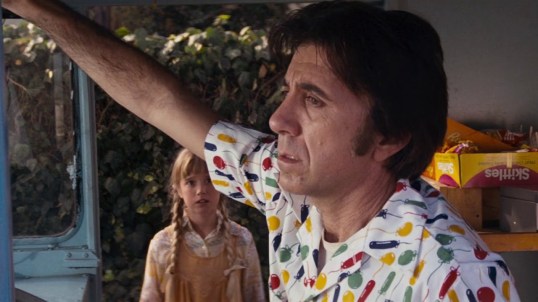
Wow, that sounds pretty grim! And really, it is a grim film. This, after all, is the film in which little Kim Richards is graphically shot in the chest while trying to buy ice cream. (From the start, Carpenter understood the importance of shocking the audience.) That said, there are unexpected moments of dark humor to be found in the film. (Even Kim Richards’s indignation over being given the wrong flavor ice cream is rather humorous, up until she asks for a replacement and gets shot as a result.) Both Bishop and Wilson make for compelling heroes. As Angela Pleasence realized when she saw the movie at Cannes, John Carpenter was and is a natural-born storyteller. Assault on Precinct 13 is a film that wastes no time in getting started and is relentless in both its suspense and its action.
Assault on Precinct 13 has been overshadowed by Carpenter’s subsequent successes but it’s still one of Carpenter’s best films. Without Assault on Precinct 13, we would never have gotten Donald Pleasence as Dr. Sam Loomis. That alone is reason enough to celebrate the film.
This 1979 true crime drama opens in Los Angeles in 1963.
Rookie Detective Karl Hettinger (John Savage) has just joined the Felony Squad and met his new partner, Ian Campbell (Ted Danson, making his film debut). Ian is a tall, somewhat eccentric detective, the type who practices playing the bagpipes in the basement and who takes Hettinger under his wing.
Meanwhile, Jimmy Smith (Franklyn Seales) has just been released from prison. The nervous and easily-led Jimmy almost immediately runs into Gregory Powell (James Woods), a small-time hood with delusions of grandeur. Powell is the type who talks a big game but who really isn’t even that good of a thief. Smith and Powell form an uneasy criminal partnership. They are easily annoyed with each other but they also share an instant bond. Though the film doesn’t actually come out and say what most viewers will be thinking, there’s a lot of subtext to a brief scene where Powell appears to caress Smith’s shoulder.
One night, Hettinger and Campbell are kidnapped by Smith and Powell. Smith and Powell drive them out to an onion field. Because he’s misinterpreted the Federal Kidnapping Act and incorrectly believes that he and Smith are already eligible for the death penalty because they kidnapped two police officers, Powell shoots and kills Campbell. (The close-up image of Campbell falling dead is a disturbing one, not the least because he’s played by the instantly likable Ted Danson.) Hettinger runs and manages to escape. He saves his life but he’s now haunted by the feeling that he abandoned his partner.
The rest of the film deals with the years that follow that one terrible moment in the onion field. Treated as a pariah by his fellow cops, Hettinger sinks into alcoholism and eventually becomes a compulsive shoplifter. Smith and Powell, meanwhile, use a variety of tricks to continually escape the death penalty and to keep their case moving through the California justice system. Powell, for instance, defends himself and then later complains that he had incompetent counsel. Smith, meanwhile, is defended by the infamous Irving Karanek, a legendary California attorney who specialized in filing nuisances motions. (Later Karanek found a measure of fame as Charles Manson’s attorney. Eventually, he had a nervous breakdown in 1989, lived in his car, and was briefly suspended by practicing law.) While Smith and especially Powell quickly adjust to being imprisoned, Hettinger spends the next decade trapped in a mental prison of guilty and bitterness.
Based on a non-fiction book by Joseph Wambaugh, The Onion Field is a compelling look at a true crime case that continue to resonate today. The film can be a bit heavy-handed in its comparisons between the two partnerships that define the story. Both Hettinger and Smith are young and neurotic men who find themselves working with a more confident mentor. The difference is that Hettinger’s mentor is the cool, composed, and compassionate Ian Campbell while Smith’s sad fate is to be forever linked to the erratic Gregory Powell. While the film may have the flat look of something that was made for television, it’s elevated by the performances of its lead actors. James Woods give an especially strong performance as the cocky Powell, a loser in the streets who becomes a winner behind bars. Over the course of the film, he goes from being a joke to being the prisoner that others come to for legal advice. John Savage, meanwhile, poignantly captures Hettinger’s descent as the trauma from that night leaves him as shell of the man that he once was.
The film’s supporting cast is full of familiar faces. Christopher Lloyd and William Sanderson show up as prisoners. Ronny Cox plays the detective in charge of the onion field investigation. David Huffman plays a district attorney who is pushed to his breaking point by the obstructive tactics of Smith’s attorney. Priscilla Pointer play Ian Campbell’s haunted mother. All of them do their part to bring this sad story to life.
The Onion Field is a chillingly effective true crime drama and a look at a murder that was inspired by one man’s inability to understand federal law.
I’ve been a fan of actor Jan-Michael Vincent for about as long as I can remember. I was a grade schooler in the mid-80’s when AIRWOLF was playing on network TV. I loved the show and Vincent’s character, Stringfellow Hawke. It was also around that time that I began my obsession with Charles Bronson, and Vincent co-starred in the iconic 1972 Bronson film THE MECHANIC (1972). Fox 16 out of Little Rock played the movie often, further cementing my appreciation for his work. And I specifically remember renting his 1980 movie DEFIANCE where his character takes on a ruthless gang in New York. It was my kind of movie, and I still watch it every few years. There’s just something I’ve always liked about Jan-Michael Vincent. July 15th, 2025 would have been his 80th birthday so I decided to watch one of his movies that I’ve never seen, VIGILANTE FORCE from 1976. It was playing on Amazon Prime, so I fired it up for my initial viewing.
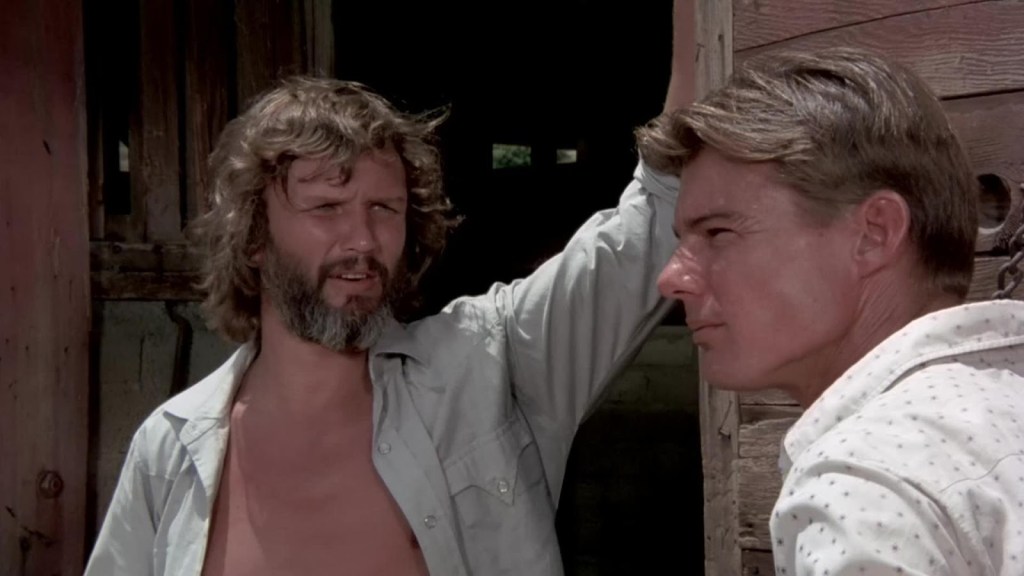
In VIGILANTE FORCE, Jan-Michael Vincent plays Ben Arnold, a guy from the small town of Elk Hills, California. It seems that the discovery of oil in the area has brought about a financial boom, but it’s also brought in a lot of rowdy out-of-towners and a surge in violent crime. Ben convinces the local community leaders to allow him to bring in his brother Aaron (Kris Kristofferson), a Vietnam war hero, to help restore order in town. Aaron assembles a group of ex-military types, friends of his, to help the local police restore order in town. Successful in cleaning out the riffraff at first, Aaron and his team of vigilantes eventually become the riffraff and use their law enforcement powers for their own corrupt, get-rich-quick schemes. Realizing that he made a horrible mistake in bringing in his brother, Ben is forced to confront Aaron and his team of murderous mercenaries in order to reclaim Elk Hills for its citizens.
I had not read anything beyond the title VIGILANTE FORCE and the basic cast list when I sat down to watch this film. I guess that’s a good thing, because I wasn’t expecting this movie to pit the brothers played by Vincent and Kristofferson against each other. I thought the two guys would be working together to get rid of a bunch of rednecks, and we do get that for the first half of the film, but when Kris goes bad, he really goes bad! And nobody is safe. This is one of those movies where he just kills whoever gets in his way, no matter how important or attractive they are. Writer-Director George Armitage, who would direct the excellent MIAMI BLUES (1990) fourteen years later, has said that he was trying to make a point about America’s involvement in the Viet Nam war with the Kristofferson character. Armitage apparently enjoys his references, as the film was made during the USA’s bicentennial year, but his two main characters are named after Benedict Arnold and Aaron Burr. While these ideas may have amused the director, his heavy-handed approach is not good for Kristofferson’s character in this film. His Viet Nam vet basically turns into an evil cartoon about halfway through the film and is no longer interesting, which is a shame because he gives a good performance.
Allegories aside, at its heart VIGILANTE FORCE is B-movie, drive-in fodder, and it’s pretty good at being that. It’s got that unpolished look and raw, energetic feel that I like in my low budget 70’s action movies. As you would expect in a film at this time, Jan-Michael Vincent is impressive and believable as the tough, good guy of the flick. Highly motivated due to the actions of our evil, out of control villain, Vincent handles the action scenes well in the film’s explosive finale. And I mean that literally, it seems that everything blows up big time at the end! Besides Kristofferson and Vincent, the film has a very recognizable supporting cast, which is one of the things I love about 70’s movies. Producer Gene Corman put together a cast that also includes Brad Dexter, Andrew Stevens, Victoria Principal, Bernadette Peters, Paul Gleason, Charles Cyphers, Loni Anderson and a host of other familiar voices and faces who add their unique talents to the proceedings. Principal, still a couple of years away from her career defining role as Pamela Ewing in the DALLAS TV series, is especially beautiful as Vincent’s girlfriend.
Overall, while VIGILANTE FORCE is not required viewing, I can definitely recommend it to anyone who likes 70’s redneck action cinema, or to fans of the main stars. I enjoyed it!
Though the Academy of Motion Picture Arts and Sciences claim that the Oscars honor the best of the year, we all know that there are always worthy films and performances that end up getting overlooked. Sometimes, it’s because the competition too fierce. Sometimes, it’s because the film itself was too controversial. Often, it’s just a case of a film’s quality not being fully recognized until years after its initial released. This series of reviews takes a look at the films and performances that should have been nominated but were, for whatever reason, overlooked. These are the Unnominated.
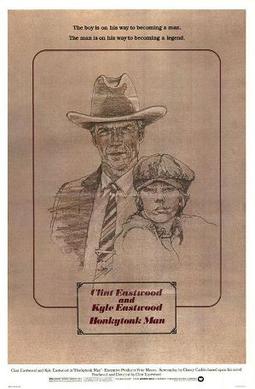
1982’s HonkytonkMan was a Clint Eastwood film that I had never heard of, until I came across it on Prime. I decided to take a chance and I rented it. I’m glad that I did because it turned out to be one of Eastwood’s best films.
Clint stars as Red Stovall, a country singer turned farmer during the Great Depression. Kyle Eastwood stars as Red’s nephew, 14 year-old Whit “Hoss” Wagoneer. When Red gets an opportunity to perform at the Grand Old Opry, he decides to head for Tennessee. Since Red is dying of tuberculosis and barely knows how to drive a car, he is accompanied by Grandpa Wagoneer (John McIntire) and Whit. Whit may be young but he knows how to drive and soon, he’s driving Red and Grandpa across the country. When a highway patrolman (Tim Thomerson) stops them, he says that Whit is too young to drive. After watching a speeding Red struggle to keep the car in the right lane, the patrolman pulls up beside them and says, “Let the kid drive.”
HonkytonkMan features an unexpected performance from Eastwood. Typically, we think of Eastwood’s characters as being the epitome of cool. Red is definitely not that. Red is a screw-up, someone who gets arrested while trying to steal chickens and who frequently gets conned by those that he meets during his journey. When the car breaks down in Arkansas, Red is too busy drinking to remember to catch the bus to Tennessee. He spends the night with a hitchhiker named Marlene (Alexa Kernin). The next morning, Whit wakes Red up and informs him that he only has a few minutes before the next bus leaves. Marlene announces that she’s pregnant. “HOLD THE BUS!” Red yells as he hastily puts on his clothes.
That said, Whit loves his uncle and the two Eastwoods, Clint and Kyle, both give excellent performances in HonkytonkMan. In fact, his performance here is probably the best that Clint Eastwood has ever given. Clint plays with his own image here. Initially, the film almost feels like a satire of Clint’s hypermasculine persona. (There is one scene where Eastwood handles a gun but it doesn’t play out the way that you might expect it to.) But, as the film progresses and Red’s illness grows worse, we start to understand Red and his way of looking at the world. Red is flawed but he loves his nephew and he loves music and, in the end, what’s important is not whether or not his song were recorded but instead that he spent his final days with Whit. The film may start out as a comedy but it ultimately becomes a meditation on aging and how one faces the inevitability of death.
As a director, Eastwood takes his time. He lets the movie play out slowly, with the casual pace of country story. It’s a film full of wonderful performance and beautiful visuals and it more than earns our patience. Wisely, Eastwood the director realizes that this story really isn’t about Red. The story is about Whit (or Hoss, as he asks to be known) and his experiences with his uncle. Whit worships his uncle but he also comes to learn that the most important thing is to be able to respect yourself. In this film, Clint Eastwood knows the story that he’s telling and he knows exactly how to tell it.
HonkytonkMan went unnominated as far as the Oscars are concerned. In the year when the well-intentioned but dramatically inert Gandhi dominated the awards and the nominations, HonkytonkMan was forgotten. That’s a shame.
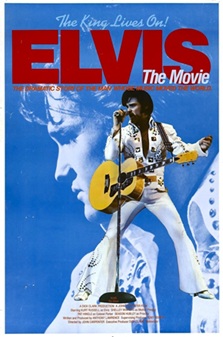
Made for television, it was the first of many biopics to be made about the King of Rock and Roll. Seeing as how it went into production just a year after Elvis’s death and that its script was vetted and approved by Priscilla Presley herself, it’s not surprising that Elvis doesn’t really delve into the darker aspects of his life. Elvis shoots a television, gets frustrated with his bad movies, and wonders who he can trust but we don’t see him get fat nor do we see him popping pills. The movie ends with Elvis making his comeback in 1969, allowing a happy ending for the title character.
The film was directed by John Carpenter. It was his first film to be released after the monster success of Halloween, though Carpenter actually started work on Elvis before Halloween was released. Though the film’s television origins means there aren’t many examples of Carpenter’s signature style in Elvis, Carpenter does a good job recreating Elvis’s performances and, most importantly, he comes up with a film that holds your interest for three hours.
Finally, the role of Elvis is played by Kurt Russell, who was at the time still struggling to prove himself as being something more than just a Disney star. Russell, who made his film debut kicking Elvis in the shins, throws himself into playing the role and captures the look, the swagger, and the voice of Elvis without ever descending into caricature. His singing voice is dubbed for the performances but Russell is still convincing as the King. It takes skill to wear that white jumpsuit without looking like you’re wearing a bad Halloween costume. While this film showed that Russell was capable of more than just Disney films, it even more importantly launched his friendship with John Carpenter. Escape From New York, The Thing, and Big Trouble In Little China all began with Elvis.
The movie doesn’t really tell us anything that we didn’t already know about Elvis but its entertaining and it has a big, colorful cast that include Pat Hingle as Tom Parker, Shelley Winters as Elvis’s mother, and Bing Russell (Kurt’s father) as Elvis’s father. Priscilla is played by the beautiful Season Hubley, who married Kurt Russell shortly after filming. (They divorced in 1983.) Joe Mantegna, Ed Begley Jr., Ellen Travolta, and Dennis Christopher all appear in small roles and do their part to bring Elvis’s world to life. Elvis is a fitting tribute to the King of Rock and Roll, one that gave Elvis a happy ending and started a great collaboration between a director and his star.
After a couple of decades of toiling away in TV and supporting roles, Charles Bronson became a huge international film star in 1968 when he starred in the films FAREWELL, FRIEND (with Alain Delon), and Sergio Leone’s ONCE UPON A TIME IN THE WEST (with Henry Fonda). For the next 5 years, Bronson would star in successful international co-productions, before hitting it big in the United States with the influential 1974 blockbuster, DEATH WISH. From 1974 to 1977, Bronson had his pick of any role that he wanted. This was probably the most interesting time in his career as he truly tried to expand his range with films like the depression-era HARD TIMES (1975), the romantic comedy FROM NOON TILL THREE (1976), the Raymond Chandler-esque ST. IVES (1976), and the surreal western THE WHITE BUFFALO (1977). But after 1977’s TELEFON and a series of underwhelming box office returns in the states, Bronson’s star was on the wane. He wouldn’t have his next #1 box office hit until he joined forces with the infamous Cannon studios in 1982 for the sequel to his biggest hit and DEATH WISH II. Cannon Studios would provide Bronson with a guaranteed paycheck and a non-stop presence on cable TV and at the video store for the remainder of the decade. I call the films that Bronson made between 1977 and 1982 the in-betweens. They don’t really fit into his European phase (1968-1973), his post-DEATH WISH phase (1974-1977) or his Cannon phase (1982-1989). To be completely honest, it seemed his career was somewhat in limbo at this point, and the movies he made during these years are some of his least well-known.
One of the movies that Charles Bronson made during the in-between years was 1980’s BORDERLINE. In this film, he plays Jeb Maynard, a border patrolman and expert tracker who will stop at nothing to find the human smuggler responsible for killing his friend and fellow patrolman Scooter, played by Wilford Brimley. I like this lower-key Bronson film. Director Jerrold Freedman has made a more realistic film than a lot of the movies in Bronson’s filmography. Outside of the murder that gets the story going, and the final showdown with the lead smuggler (a young Ed Harris), most of the film is made up of good old-fashioned field work and investigation. Bronson even based much of his performance on the technical advice of legendary border patrolman Albert Taylor. Now that doesn’t mean there aren’t some solid, action-packed scenes during the movie. My favorites include a scene where an undercover Maynard goes into Mexico with the mother of a young Mexican boy who was accidentally killed at the same time as Maynard’s friend Scooter. Maynard poses as a family member of the woman in hopes of being smuggled across the border so he can see how the illegal immigrants are being brought in. When thieves intercept the group, all hell breaks loose, and Maynard and the woman must fight their way out. Another badass moment occurs when Bronson beats needed information out of one of the smugglers in a nasty bathroom. This last scene is especially enjoyable for us Bronson fans.
There are so many good actors in this film. Outside of Bronson, Brimley, and Ed Harris, the cast is filled out by other veterans like Bruno Kirby, Bert Remsen, Michael Lerner, John Ashton, and Charles Cyphers. On a side note, Ed Harris gets the “introducing” credit here, even though he had appeared in several TV shows, as well as the movie COMA with Michael Douglas. This was his first major role in a feature film though. I also want to throw out special mention to Karmin Murcelo. She’s not a household name, but she’s excellent as the mother of the young boy who gets killed with Wilford Brimley’s character, who then helps Bronson in his quest to find the killer. Her career extended over 3 decades, and it’s easy to see why based on this performance.
BORDERLINE may not be an explosive action film like some of Bronson’s other work, but it’s an effective drama with a good performance from the star. I think he embodies the character perfectly. It’s also just as relevant in 2025 as it was in 1980, and I give the film a solid recommendation.
You have to appreciate a movie that does what it’s poster claims.
Halloween Kills might not be the best film in a 40 year old franchise that branched off into 3 separate storylines, a remake (with a sequel) and an Anthology entry in the middle. Still, it’s so much better than 1995’s Halloween 6: The Curse of Michael Myers and Halloween: Resurrection. It brings the carnage in quick, and despite some missteps, it tries to do some good. However, there’s only so much you can bring to the table with a story that’s gone on for this long. I didn’t outright hate it, but I didn’t see myself returning to it in the way I did with Malignant or Dune, even though it’s available to watch on NBC/Universal’s Peacock streaming service.
Much like 1981’s Halloween II, Halloween Kills takes place just a few minutes right after 2018’s Halloween, with the Strode house burning and Michael believed to be stuck in the basement. Laurie Strode (Jamie Lee Curtis) is injured and on her way to the hospital with her daughter Karen (Judy Greer) and granddaughter (Andi Matichak). The town of Haddonfield is attempting to recover from yet another Myers incident. You’d think that after 40 years of all this, they’d have an entire Myers Assault Force or something, but we’re not quite there yet. After all, in this continuity change, Haddonfield only has Michael’s childhood incident and the 1978 one. Despite this, the town has finally had enough of Michael’s antics and band together (with Tommy in the lead) to finish him. To quote Laurie, “Evil Dies Tonight!”
They’re so doomed.
Mind you, this isn’t the first time that Haddonfield’s tried to turn the tables on Myers, though it is a first for this particular universe. They tried back in Halloween 4, but it didn’t quite work out. Halloween Kills poses a quiet question of who is worse: The single killer on the loose, or the angry mob that’s after him?
I’ll admit that I enjoyed the return of some familiar faces in Pamela Susan Shoop (the nurse who was with Loomis when Michael stole their station wagon) and Kyle Richards (Lindsay, the little girl who Laurie was babysitting). Tommy Doyle is there as well, but the adult version of him is played by Anthony Michael Hall (The Dark Knight). They even managed to bring back Charles Cyphers as the former Haddonfield Sheriff. I’ll give this version kudos for delivering some fan service with those cameos. By far, the best addition to the cast was a cameo by The Wolf of Snow Hollow‘s Jim Cummings as one of the Haddonfield Police. Having played a cop in both of his previous films, it was a perfect fit here.The film also weaves a bit of Saw-like magic by expanding on the 1978 Halloween Night. While it’s not a perfect fit to the original events, it adds a somewhat fresh coat of paint to the new storyline that’s in effect here. It’s one of the places where the movie actually shines. They can weave a whole new backstory for Michael, and I’m here for it.
The gore levels in Halloween are your typical fare, as this version of Michael is much more vicious than his earlier counterparts. We can chalk that up to the changing times, I imagine. Like every Halloween, there are a few unnecessary kills – random families that are taken out just to up the body count while you may wonder what these individuals have to do with anything. If you don’t have any problems with that, then the film’s definitely worth a watch. At least in Halloween & Halloween II, the murders were connections to Laurie (her friends) or obstacles in Michael’s way (the Hospital Staff). With Halloween Kills, Michael just executes anyone who’s in his vicinity, which was the same problem I had with the film before it.
The other issue is that Laurie sits this fight out for most the film. With her injuries being pretty extensive, she instead takes on the role of harbinger, reminding her children and her Sheriff friend (played by Will Patton) that Michael is coming and has to be stopped. She’s the new Loomis, for the most part. Anyone walking into this film expecting a face off between Laurie and Michael will probably want to hold out for the next installment.
The Carpenters (Cody and his dad, John) do a good job, musically. There’s no complaints there. I also have to admit that the sound quality is also pretty good in this film. Overall, Halloween Kills is a fun film if you’re not expecting too much and you need something to close your night with. With a runtime of about an hour and 50 minutes, it doesn’t lag too much, though it stumbles a little through the town revenge plot. It’s definitely worth it to get to the last 15 minutes or so.
When I was little, my Aunt would sometimes take my older brother and I with her into Manhattan. In a little movie theatre near 82nd Street, she’d get us a set of tickets for a film, help us get seated with snacks and then either stay for the movie or leave to perform housekeeping duties for someone nearby if she had work and we weren’t allowed to hang out on site. John Carpenter’s Escape From New York wasn’t a film she stayed for (she loved Raiders of the Lost Ark), but it was okay. I was introduced to Snake Plissken, who ended up being cooler than Han Solo to my six year old eyes. Instead of being the hero, here was a criminal being asked to a mission. It showed me that even the bad guys could be heroes, now and then (or better yet, not every hero is cookie cutter clean). The film became an instant favorite for me. As I also do with Jaws and The Fog, I try not to let a year go by without watching Escape From New York at least once. It was my first Carpenter film.
The cultural impact of Escape From New York is pretty grand, in my opinion. It had a major influence on Hideo Kojima’s Metal Gear video games and also spawned a few comics with Plissken, complete with Jack Burton crossovers with Carpenter’s Big Trouble in Little China.
Carpenter brought in most of the same crew he worked with in his previous movies. The film was the third collaboration between Carpenter and Debra Hill, who previously worked with him in 1978’s Halloween and 1980’s The Fog. Though Hill didn’t write this one, she was still the producer, along with Larry Franco. There’s also a bit of speculation on whether Hill performed the opening vocals describing New York or Jamie Lee Curtis handled that. Cinematographer Dean Cundey (who worked on most of Carpenter’s early films) returned to help give the movie it’s gritty look, which is helpful considering how much of it takes place either at night or in darkened rooms. Another interesting part of the production is James Cameron, who was the Director of Photography when it came to the effects and matte work. One of the best effects shots in the film has Plissken gliding over Manhattan, which was designed by Effects member John C. Wash. The shot on his plane’s dashboard of the city was made from miniature mock up with reflective tape that made it appear as if it were digital, which was pretty cool given that they weren’t on an Industrial Light and Magic budget. There’s a fantastic article on We Are The Mutantsand on theEscape From New York/LA Fan Pagethat focus on Wash’s technical contributions to the film.
For Carpenter’s career, Escape From New York marked the start of a great working relationship with Alan Howarth. Howarth, who also worked on the sound in the film, assisted Carpenter with the soundtrack. I’ve always felt this brought a new level to Carpenter’s music overall. You can easily hear the difference when Howarth was involved. Where Carpenter excelled at general synth sound, Howarth’s touch added some bass and depth. Together, they’d work on Christine, Big Trouble in Little China, Halloween III: Season of the Witch, Prince of Darkness and They Live together. On his own, Howarth was also responsible for both Halloween 2, 4 and 5.
For the writing, Carpenter worked with Nick Castle, who played Michael Myers for him in the original Halloween. Escape From New York’s story is simple. In 1988, the crime rate for the United States rises 400 percent. As a result, someone had the notion to turn Manhattan into a prison for an entire country, setting up walls around the borough and mines in the waterways. When Airforce One crashes in the borough nearly a decade later, the recently arrested war hero / fugitive Snake Plissken (Kurt Russell) is given a mission. Go in, rescue the President and/or the tape he’s carrying in 22 hours, and Plissken receives a pardon for all his crimes. To ensure that he follows through, he’s injected with nano-explosives that will kill him when the deadline hits. What seems like a simple mission becomes a little complicated when Snake discovers the President was captured by The Duke of New York, played by Issac Hayes (I’m Gonna Git You Sucka). Given that I’ve commuted to Manhattan more times than I can count, the film holds a special place in my heart. The concept of the entire borough being a prison was mind blowing as a kid. The concept still holds up for me as an adult.
For a film about New York, there were only two days of filming actually spent on location there, according to Carpenter’s commentary. Most of that was used for the opening shot at the Statue of Liberty. The bulk of the film was made in Los Angeles, Atlanta and St. Louis. At the time, there was a major fire in St. Louis. The damage made for a great backdrop for both the crash site and the city at night. The film does take some liberties with locations, though. For example, as far as I know, we don’t have a 69th Street Bridge in Manhattan, but as a kid, it didn’t matter much. From an action standpoint, it might not feel as intense as other films. Even when compared to other films in 1981 – like Raiders of the Lost Ark (released a month earlier) – Escape From New York doesn’t have a whole lot, though I still enjoy what it does provide.
Snake Plissken (Kurt Russell) has 22 hours to save the President in John Carpenter’s Escape from New York.
Casting seemed to come easy for the film. Hill, Castle and Carpenter reached out to some friends. Kurt Russell and Carpenter worked together on Elvis, that was easy enough. Russell’s work with Carpenter would continue on in The Thing, Big Trouble in Little China and Escape from L.A. From Halloween, Donald Pleasance was brought on to play the President, along with Charles Cyphers and Nancy Stephens as one pissed off flight attendant. From The Fog, we have Tom Atkins as Nick and Adrienne Barbeau as Maggie, who happened to be married to Carpenter at the time. According to Carpenter on the film’s commentary track, the sequence for Maggie’s exit needed to be reshot and extended. The scene with her body on the ground was filmed in Carpenter’s garage and added to the film.
Ernest Borgnine’s (The Poseidon Adventure) Cabbie was a favorite character of mine. Like most cabbies, he knew the city well. He even prepared for some of its challenges with molotov cocktails. Harry Dean Stanton (Alien, Christine) played Brain, the smartest individual in the room and the supplier for gas for the Duke. If you look close, you’ll also catch Assault on Precinct 13’s Frank Doubleday as Romero, which his crazy looking teeth. To round it all out, Lee Van Cleef (The Good, The Bad & The Ugly) plays Hauk, who puts Snake on his mission. And of course, it wouldn’t be a Carpenter film without a George ‘Buck’ Flower cameo. Buck was kind of Carpenter’s lucky charm in the way Dick Miller was for Joe Dante’s films. Good Ol’ Buck plays an inmate who sings Hail to the Chief.
Overall, Escape From New York is a classic Carpenter film that’s worth the watch. Whether you do so while wearing an eyepatch or not, that’s on you. We all have our preferences.



 Before you start, note that Escape From New York was recently showcased in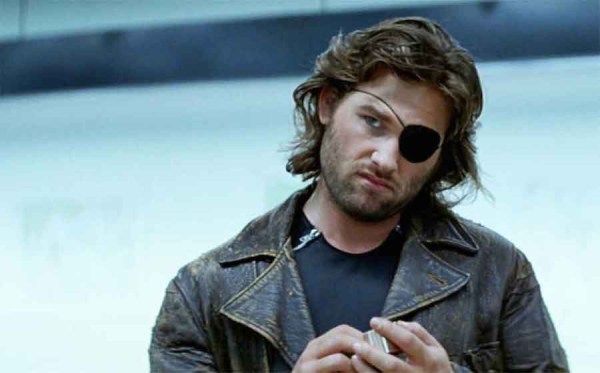
 Through the Shattered Lens