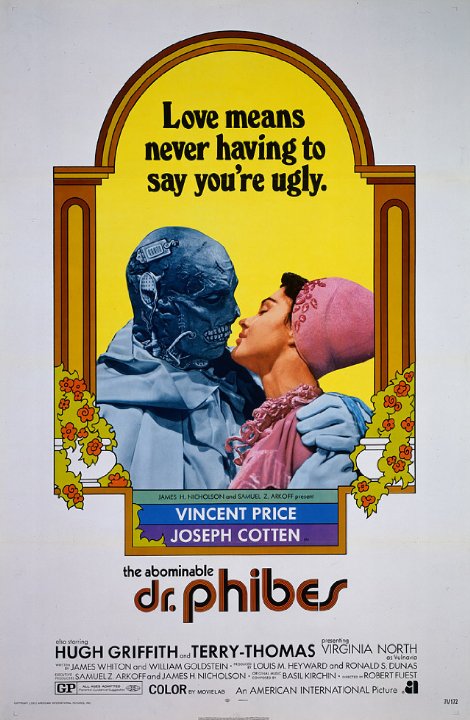
For a 13-year-old monster-crazed kid in 1971, attending the latest Vincent Price movie at the local theater on Saturday afternoon was a major event. Price was THE horror star of the time, having assumed the mantle when King Karloff passed away a few years before. Not to take anything away from Mr. Cushing and Mr. Lee, but “Vincent Price Movies” had become, like “John Wayne Movies “, a sort of genre unto themselves. AIP had squeezed about every nickel they could out of the Edgar Allan Poe name so, with the release of THE ABOMINABLE DR. PHIBES, a new character was created for the horror star, the avenging evil genius Dr. Anton Phibes.
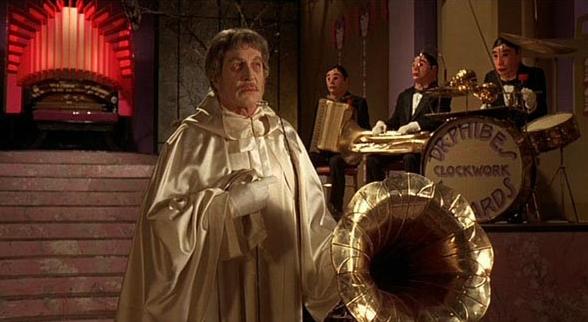
Phibes is a concert organist, theologian, scientist, and master of acoustics who uses his knowledge and vast wealth to gain revenge on the nine surgeons who (to his mind) botched an operation that killed his wife. We first see…
Whenever it comes time to review a film like 1988’s Faceless, movie bloggers like me are faced with a very important question. Which name should we use for this film’s prolific director? The director was born Jesus Franco Manera and, for a very small handful of his 200+ film, he’s actually credited by his full name. However, for the majority of his films, he dropped the Manera. Sometimes, he is credited as Jesus Franco and then other times, the director’s credit reads Jesse Franco or just simply Jess Franco.
Myself, I usually prefer to go with “Jess Franco,” because it just seems to go with his “never give up” style of filmmaking. At the same time, it seems rather appropriate that Franco is known by more than one name because he was a director with a many different personas, occasionally a serious artist, occasionally a subversive prankster, and sometimes a director-for-hire. Franco was a lover of jazz and his films often had a similarly improvised feel. Sometimes, the results were, to put it lightly, not very memorable. But, for every Oasis of the Zombies, there was always a chance that Franco would give the world a film like Female Vampire. The imdb credits Franco with directing 203 films before his death in 2013 but it’s generally agreed that he probably directed a lot more. A lot of his films may not have worked but the ones that did are memorable enough to justify searching for them.
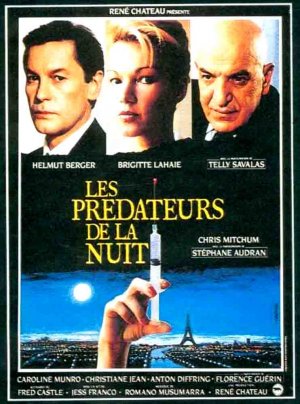
Faceless is Franco’s take on Eyes Without A Face, as well as being something of a descendant of his first film, The Awful Dr. Orloff. All three of these films deal with a doctor trying to repair a loved one’s disfigured face. In Faceless, the doctor is Dr. Flammad (Helmut Berger), a wealthy and decadent Paris-based plastic surgeon. One night, while out with his sister Ingird (Christiane Jean) and his nurse and lover Nathalie (Brigitte Lahaie, the former pornographic actress who appeared in several of Jean Rollin’s best films, including the brilliant Night of the Hunted), Dr. Flammad is confronted by a former patient. Flammad botched her operation so the patient tries to get back at him by tossing acid in his face. However, Ingrid shoves Flammad out of the way and ends up getting splashed by the acid instead.
Now disfigured, Ingrid spends her time hidden away in Flammad’s clinic and wearing a mask. Flammad and Nathalie start to kidnap models and actresses, searching for a perfect face. Flammad’s plan is to perform a face transplant, giving Ingrid a new and beautiful face.
Needless to say, a face transplant is not a simple thing to do. In order to get some advice, they go to the mysterious Dr. Orloff (Howard Vernon) and Orloff directs them to a Nazi war criminal named Dr. Moser (Anton Diffring). Now, if you’re not familiar with Franco’s work, the scene with Dr. Orloff will probably seem like pointless filler. However, if you are a Francophile, you will feel incredibly relieved to see Howard Vernon suddenly pop up. When it comes Franco’s films, a Howard Vernon cameo is usually a good sign.
Flammad’s search for the perfect face is complicated by the fact that his assistant, the moronic Gordon (Gerard Zalcberg), keeps accidentally killing and otherwise damaging all of the prospects. As the bodies continue to pile up, Nathalie even points out that there’s “too many dead bodies” in the clinic.
(Of course, Nathalie isn’t doing much to solve that problem. When the film got to the moment where Nathalie plunged a syringe into one troublesome patient’s eye, I ended up watching the movie between my fingers.)
Eventually, Nathalie kidnaps a coke-addicted model named Barbara (Caroline Munro). Flammad thinks that Barbara might finally be the perfect face that they’ve been looking for but there’s a problem. (Actually, two problems if you count Gordon…) Barbara’s father (Telly Savalas) is a wealthy industrialist and he wants his daughter back. He hires an American private investigator, Sam Morgan (Chris Mitchum, looking a lot like his father Robert), to track her down.
Actually, it’s not that much of a problem. It quickly turns out that Sam is kind of an idiot. Plus, since he’s American, nobody in Paris wants to help him. A Paris police inspector orders him to go home, yells at him for always chewing gum, and then adds, “You are not Bogart!”
And things only get stranger from there…
Faceless is one of Franco’s better films, a mix of over-the-top glamour (Faceless was filmed in Paris, after all) and grindhouse sleaze. Though there is a definite storyline, the film still feels like an extended improvisation, with characters and plot points coming out of nowhere and then disappearing just as quickly. If we’re going to be totally honest, the film is kind of a mess but it’s a glorious and stylish mess, one that is never less than watchable.
One of the great tragedies of American politics is that Chris Mitchum has twice been defeated when he ran for a seat in the U.S. House of Representatives (though he did come close to winning in 2014). Not only would it be great to have Robert Mitchum’s son as a member of Congress but it would be even better to know that our laws were being written, in part, by the star of Faceless. Unfortunately, Chris is sitting out the 2016 election. Hopefully, he’ll reconsider and file for at least one office.
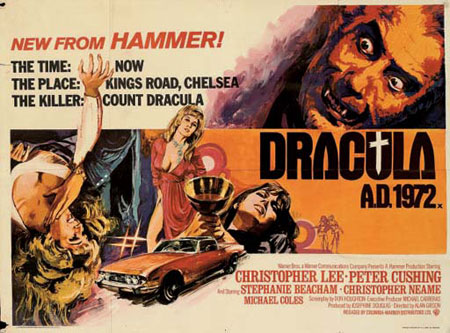
Dracula A.D. 1972 opens in 1872 with a genuinely exciting fight on a runaway carriage that ends with the death of both Count Dracula (Christopher Lee) and his nemesis, Prof. Van Helsing (Peter Cushing). However, as Van Helsing is buried, we see one of Dracula’s disciples (played by Christopher Neame, who had an appealingly off-kilter smile) burying Dracula’s ashes nearby. The camera pans up to the clear Victorian sky and, in a sudden and genuinely effective jumpcut, we suddenly see an airplane screeching across the sky.
Well, it’s all pretty much downhill from there. Suddenly, we discover that a hundred years have passed and we are now in “swinging” London. The city is full of red tourist buses, hippies wearing love beads, and upright policemen who always appear to be on the verge of saying, “What’s all this, then?” We are introduced to a group of hippies that are led by a creepy guy named Johnny Alculard (also played — quite well, actually — by Christopher Neame). One of those hippies (Stephanie Beacham) just happens to be the great-great-granddaughter of Prof. Van Helsing. Apparently, she’s not really big on the family history because she doesn’t notice that Alculard spells Dracula backwards. Then again, her father (played by Peter Cushing, of course) doesn’t either until he actually writes the name down a few times on a piece of a paper.
Anyway, the film meanders about a bit until finally, Alculard convinces all of his hippie friends to come take part in a black mass. “Sure, why not?” everyone replies. Well, I don’t have to tell you how things can sometimes get out-of-hand at black mass. In this case, Dracula comes back to life, kills a young Caroline Munro, and eventually turns Johnny into a vampire before then setting his sights on the modern-day Van Helsings.
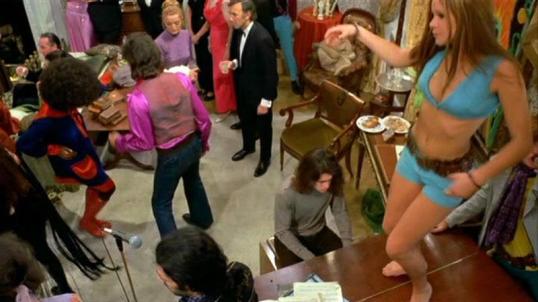
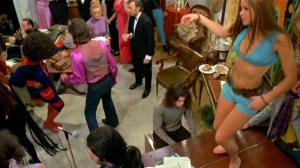
Dracula A.D. 1972 was Hammer’s attempt to breathe some new life into one of its oldest franchises and, as usually happens with a reboot, its critical and (especially) commercial failure ended up helping to end the series. Among even the most devoted and forgiving of Hammer fans, Dracula A.D. 1972 has a terrible reputation. Christopher Lee is on record as regarding it as his least favorite Dracula film. And the film definitely has some serious flaws. Once you get past the relatively exciting pre-credits sequence, the movie seriously drags. There’s a hippie party sequence that, honest to God, seems to last for about 5 hours. As for the hippies themselves, they are some of the least convincing middle-aged hippies in the history of fake hippies. You find yourself eagerly awaiting their demise, especially the awkward-looking one who — for some reason — is always dressed like a monk. (Those crazy hippies!) But yet…nothing happens. All the fake hippies simply vanish from the film. Yet, they’re so annoying in just a limited amount of screen time that the viewer is left demanding blood. Add to that, just how difficult is it to notice that Alculard is Dracula spelled backwards? I mean, seriously…
To a large extent, the charm of the old school Hammer films comes from the fact that they’re essentially very naughty but never truly decadent. At their heart, they were always very old-fashioned and actually quite conservative. The Hammer films — erudite yet campy, risqué yet repressed — mirrors the view that many of my fellow Americans have of the English. For some reason, however, that Hammer naughtiness only works when there’s the sound of hooves on cobblestone streets and when the screen is populated by actors in three-piece suits and actresses spilling out of corsets. Dracula A.D. 1972 did away with the support of the corset and as a result, the film is revealed as a formless mess with all the flab revealed to the world.
Still, the film isn’t quite as bad as you may have heard. First off, the film — with its middle-aged hippies — has a lot of camp appeal. It’s the type of film that, once its over, you’re convinced that the term “groovy” was uttered in every other scene even though it wasn’t. As with even the worst Hammer films, the film features a handful of striking images and Christopher Neame is surprisingly charismatic as Alculard.
As with the majority of the Hammer Dracula films, the film is enjoyable if just to watch the chemistry between Christopher Lee and Peter Cushing. Both of these actors — so very different in image but also so very stereotypically English — obviously loved acting opposite of each other and whenever you see them on-screen together, it’s difficult not to enjoy watching as each one tried to top the other with a smoldering glare or a melodramatic line reading. As actors, they brought out the best in each other, even when they were doing it in a film like Dracula A.D. 1972. In this film, Cushing is like the father you always you wished you had — the stern but loving one who protected you from all the world’s monsters (both real and cinematic).
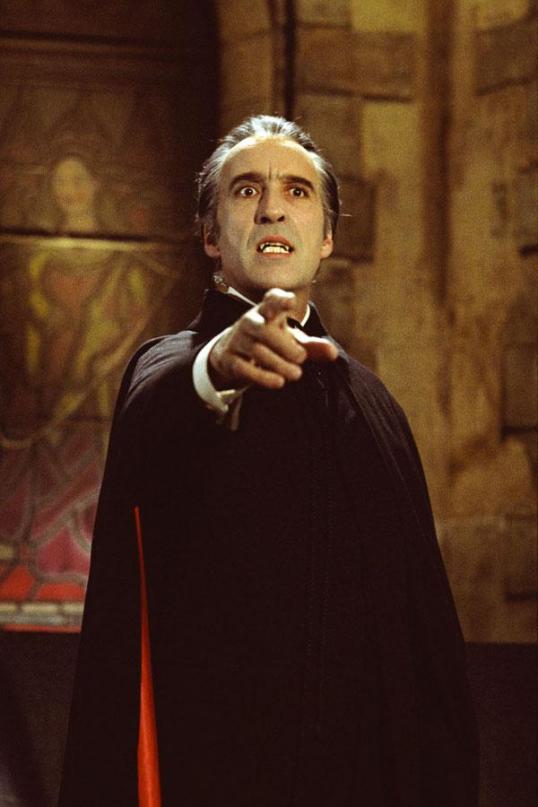
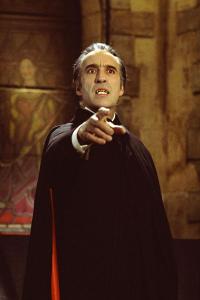
As for Lee, he’s only in six or seven scenes and he has even fewer lines but, since you spend the entire film wondering where he is, he actually dominates the entire movie. Lee apparently was quite contemptuous of the later Hammer Dracula films and, oddly enough, that obvious contempt is probably why, of all the Draculas there have been over the years, Lee’s version is the only one who was and is actually scary. F0rget all of that tortured soul and reluctant bloodsucker crap. Christopher Lee’s Dracula is obviously pissed off from the minute he first appears on-screen, the embodiment of pure destructive evil. And, for whatever odd reason, the purity of his evil brings a sexual jolt to his interpretation of Dracula that those littleTwilight vampires can only dream about. Even in a lesser films like Dracula A.D. 1972, Christopher Lee kicks some serious ass.
So, in conclusion, I really can’t call Dracula A.D. 1972 a good film nor can I really suggest that you should go out of your way to see it.. I mean, I love this stuff and I still frequently found my mind wandering whenever Cushing or Lee wasn’t on-screen. However, it’s not a terrible movie to watch if you happen to find yourself trapped in the house with 90 minutes to kill.
For the past few days, the Shattered Lens has been taking a journey through the history of the James Bond film franchise. Today, we continue that journey by taking a look at 1977’s The Spy Who Loved Me. This was the 10th film in the “official” James Bond series and the 3rd to star Roger Moore as 007. It was also the first of Moore’s films to be embraced by contemporary critics and it’s still considered to be one of the best films in the entire series. It’s also one of my personal favorites.
The Spy Who Loved Me opens with one of the most of brilliant pre-credit sequences in the history of the franchise. British and Russian submarines are mysteriously vanishing. M (a returning Bernard Lee) summons James Bond (Roger Moore) to investigate. Not surprisingly, Bond is with a woman at a ski resort when the summons comes. As Bond starts to leave, the woman says, “But James, I need you.”
“So does England,” Bond replies.
Now, this was long before my time so I can’t say for sure but I always like to imagine that line got some applause when it was first heard in theaters. It is with that line (and, even more importantly, with his self-assured but humorous delivery of that line) that Roger Moore truly claims the role of James Bond as his own. No, this scene seemed to be telling us, Moore would never be Sean Connery. But he would be James Bond.
After leaving the chalet, Bond finds himself being pursued by several Russian agents. This downhill ski chase, filmed by real people who were truly putting their lives in danger in the days before CGI, is one of the most exciting of all the chases to be found in Bond films and it builds up to a perfect climax. After Bond manages to kill one of his pursuers, he skis right over the edge of a cliff. Luckily, he has a parachute in his backpack and, of course, it’s a union jack parachute. Again, I like to imagine that audiences applauded at this moment.
Bond’s escape leads to the opening credits and, even more importantly, Carly Simon singing the film’s theme song, “Nobody Does It Better.” Seriously, I love this song.
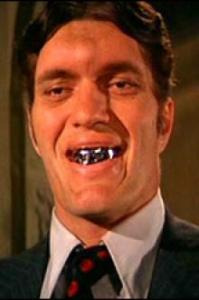
Both MI6 and the KGB discover that the plans for a submarine tracking system are being sold on the Egyptian black market. Suspecting that this is connected to the missing submarines, both James Bond and the Russian agent Anya Asamova (Barbara Bach) are sent to Egypt. Bond and Anya team up to find the plans. Along the way, they are attacked multiple times by Jaws (Richard Kiel), a hulking man with steel teeth.
Eventually, Bond and Anya discover that the man responsible for the missing submarines is Karl Stromberg (Curt Jurgens), a shipping magnate who is planning on destroying the surface world so that he can start a new society underwater. The two secret agents work together to defeat Stromberg even though Anya assures Bond that she’s going to kill him as soon as their mission is completed. Remember the man who Bond killed during that opening ski chase? It turns out that man was Anya’s lover and she’s only putting off getting her revenge so that she and Bond can save the world first.
With its confident mix of humor, intrigue, and spectacular action, The Spy Who Loved Me remains one of the most popular of the Bond films. It’s certainly one of my favorites.
Along with From Russia With Love and On Her Majesty’s Secret Service, this is the most romantic of the Bond films. Roger Moore and Barbara Bach have a very real chemistry and, as a result, you actually care about whether or not Bond and Anya will still be together after the end credits. As played by Barbara Bach, Anya is one of the strongest of the Bond girls. For once, Bond and his lover are truly equals. For anyone who doubts the importance of having a strong Bond girl, I invite them to compare this movie to The Man With The Golden Gun.
For those who are more into action than romance, The Spy Who Loved Me will not leave them disappointed. This film features some of the best set pieces in the history of the Bond franchise. Along with the ski chase at the start of the film, there’s also a genuinely exciting car chase that features Bond and Anya being pursued by a helicopter piloted by Caroline Munro.
(Speaking of cars, this film also features one of my favorite Bond gadgets — a car that doubles as a submarine.)
Karl Stromberg makes for an interesting villain. His plan makes absolutely no sense but he may be the first Bond bad guy to motivated by perverted idealism as opposed to pure greed. As you would expect from a Bond film, his secret underwater HQ is quite an impressive set. However, the best thing about Stromberg is that he employs Jaws. With his stainless steel teeth, Jaws was the best henchman since Goldfinger‘s Oddjob and he proved to be such a popular character that he actually returned in the next Bond film.
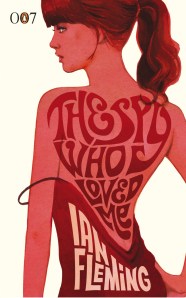
One final note: As has often been noted, The Spy Who Loved Me was the first Bond film to have absolutely nothing in common (beyond a title) with the book that it was based on. This is largely because the literary Spy Who Loved Me wasn’t really about James Bond. Instead, it told the life story of Vivienne Michel, a Canadian woman who just happens to meet Bond towards the end of the book. Fleming reportedly considered this book to be a failed experiment on his part and reportedly he only sold the film rights when he was assured that only the book’s title would be used.
That said, I recently read The Spy Who Loved Me and it’s not that bad. Vivienne Michel is a compelling character and it’s interesting to, for once, see James Bond through the eyes of a lover as opposed to the other way around. If it is a failed experiment, it’s still an experiment that’s worth reading.
As for the cinematic James Bond, he conquered the sea in The Spy Who Loved Me so it only made sense that, in his next film, he would attempt to conquer space. We’ll take a look at Moonraker tomorrow.
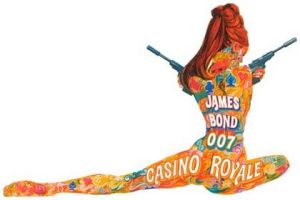
As you probably already know, we here at the Shattered Lens have been counting down the days until the American release of Skyfall by reviewing every single film in the James Bond franchise. Today, we take a look at the first non-EON Bond film, the epic, psychedelic 1967 spoof Casino Royale.
Where to begin?
When Ian Fleming’s first James Bond novel, Casino Royale, was published in 1953, veteran Hollywood producer Charles K. Feldman bought the film rights. However, Feldman didn’t buy the rights to Fleming’s subsequent novels and was forced to sit by and watch as Albert Broccoli and Harry Saltzman had unexpected success with Dr. No and the subsequent EON-produced Bond films. Much as Kevin McClory did with Thunderball, Feldman first attempted to co-produce a serious adaptation of Casino Royale with Broccoli and Saltzman. However, when Feldman, Broccoli, and Saltzman couldn’t come to an agreement on how each side would be compensated in the proposed production deal, Feldman decided to make Casino Royale on his own. He also decided that, instead of trying to compete with EON by making a “straight” James Bond film, his version of Casino Royale would be a satirical extravaganza.
Feldman’s vision of James Bond is apparent from Casino Royale’s opening credits. While the credits are definitely based on the iconic openings of the EON Bond films, they’re also designed to play up the fact that Casino Royale — in the grand tradition of the Hollywood studios at their most excessive — is meant to be a big budget, all-star extravaganza.
Casino Royale actually starts out with a pretty clever premise. It seems that the name “James Bond,” is simply a code name that has been assigned to several British spies over the years. As M (played by John Huston, who also directed the first third of the film), explains it, the name “James Bond” strikes such fear in the hearts of Britain’s enemies that the name must be kept alive.
(Speaking for myself, this is an idea that I kinda wish that the official James Bond series would adopt. If nothing else, it would certainly explain how Pierce Brosnan and Daniel Craig could possibly be the same person.)
The original James Bond (played by David Niven) has long since retired to his stately country estate, where he spends his time playing the piano and complaining about how the agents who have inherited his name are sullying his reputation with excessive womanizing and violence. It turns out the Sir James Bond is a man renowned for his “celibate image.” At the start of the film, Bond is asked to come out of retirement by not only M but the heads of the CIA, KGB, and French secret service as well. SMERSH, an organization of female assassins that’s led by the mysterious Dr. Noah, has been eliminating agents worldwide and only the original (and very chaste) Bond can defeat them. Bond, however, refuses and M responds by ordering a mortar attack on Bond’s estate. The estate is blown up but so is M and Bond soon finds himself returning to London as the new head of MI6.
Interestingly enough, David Niven was one of the actors who was considered for the role of James Bond in Dr. No. Reportedly, Ian Fleming was quite enthusiastic for Niven to take the role but, by the time that Dr. No went into production, Niven was considered to be too old. There’s a nice bit of irony here in seeing David Niven playing a retired James Bond who spends a good deal of the film complaining about the men who have subsequently assumed his name.
Once Niven takes over MI6, he orders that, in order to confuse SMERSH, all British agents (including female agents) will be known as James Bond. The rest of the film is divided into episodes that feature these new James Bonds battling SMERSH and the mysterious Dr. Noah.
Among these agents, there’s the handsome Coop (played by Terrence Cooper) who has been trained to resist all sexual temptations.
There’s Mata Bond (Joanna Pettet), the daughter of Sir James Bond and Mata Hari.
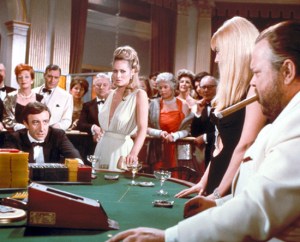
There’s Vesper Lynd (Ursula Andress) who is sent to seduce and recruit the expert gambler Evelyn Tremble (Peter Sellers) so that Tremble can beat SMERSH agent Le Chiffre (Orson Welles) at the Casino Royale.
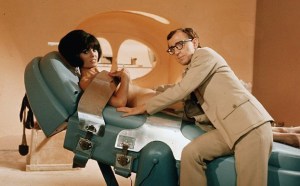
Best of all, there’s Sir James Bond’s nephew, Jimmy Bond. Jimmy Bond is played by Woody Allen and … well, let’s just take a look at Jimmy’s first scene in the film:
Casino Royale had a notoriously troubled production history and most of those troubles seemed to center on Peter Sellers. While the film was designed to be a broad, slapstick comedy, Sellers reportedly insisted on trying to play his role straight and even rewrote his lines to make his scenes more dramatic. Welles eventually grew so disgusted with Sellers that he refused to be in the same room with him. This caused quite a bit of difficulty since Sellers was in almost every scene that featured Welles. Eventually, Sellers walked off the film and the film had to be hastily (and awkwardly) rewritten to account for his sudden absence.
When one watches Casino Royale today, it’s hard to escape the conclusion that Sellers was essentially correct. While most of Casino Royale often feels disjointed and incoherent, the scenes featuring Sellers, Andress, and Welles are some of the strongest in the film. Sellers’ dramatic approach doesn’t negate the film’s comedy. If anything, it makes the comedy even stronger because Sellers actually seems to be invested in the reality his character, regardless of how ludicrous a situation that character may find himself in.
When I watched Casino Royale, I was struck by the stark contrast between the parts of the film that worked and the parts that didn’t. This is a movie that truly swings from one extreme to another. Either the film’s satire is working brilliantly (mostly in the scenes featuring Woody Allen and Peter Sellers) or it’s falling completely flat (like in an extended sequence that features Deborah Kerr as a SMERSH assassin).
I found myself laughing more at the little scenes than the big set pieces. For instance, I loved it when David Niven embraces Miss Moneypenny (Barbara Bouchet) just to be then told that she’s actually the daughter of the original Miss Moneypenny. I don’t know much about the actor Terrence Cooper (though, according to Wikipedia, he was also a contender to take the role of James Bond in the official series) but I enjoyed the brief sequence where Moneypenny “tests” him to see if he can take on the Bond identity. Unfortunately, the film doesn’t really have enough of these small, clever moments.
Ultimately, I found that Casino Royale works best when viewed as a time capsule. Casino Royale was made at a time when the established major Hollywood studios (and veteran producers like Charles K. Feldman) were struggling to remain relevant. Foreign films (including, it must be said, the James Bond films) were challenging the common assumptions of what could and what couldn’t be shown on-screen and the studio system reacted by trying to make films that would appeal to younger audiences while also reassuring older audiences that the movies hadn’t really changed that much. The end result were films like Casino Royale that featured the occasional psychedelic sequence along with cameos from old (and safe) Hollywood stars like George Raft, William Holden, and Charles Boyer. Casino Royale is the type of self-indulgent film that could only have been made in 1967 and, as such, it’s a valuable time capsule for all of us cinematic historians.
I also have to admit that, as excessive as Casino Royale may be, I happen to love excess. Casino Royale might be overlong and occasionally incoherent but the costumes are simply to die for. The film is a visual feast, if nothing else.
Casino Royale was released to scathing reviews and terrible box office but, in the years since, it has become something of a cult favorite. Our own Trash Film Guru has identified Casino Royale as his favorite Bond film. Myself, I found the film to be extremely flawed and yet oddly fascinating to watch. Casino Royale is a total mess and that is both its greatest flaw and greatest strength.
Tomorrow, we’ll return to the official James Bond series by taking a look at You Only Live Twice.
Before I left on my vacation, I watched several free horror movies on Fearnet. The majority of those films were worth exactly what I paid for them but, occasionally, I came across a film that was worth a quarter or two more. One of those fifty cent films was Slaughter High.
Though it was obviously made a few years earlier, Slaughter High was released in 1986 and was a part of the whole mid-80s slasher cycle. Like many of the films in this cycle, Slaughter High opens with a high school prank gone wrong. Poor Marty (Simon Scuddamore) is the victim of an incredibly cruel April Fool’s Day prank that ends with him totally naked and being dunked in a toilet by a group of 8 students who are surprisingly sadistic. Of course, part of that sadism could have something to do with the fact that they all appear to be in their 30s, yet they’re still students in high school. A coach (who appears to be the only teacher in the entire school) happens to come across the students tormenting Marty and he punishes them by ordering them to go to the gym and start doing push ups.
“This is all Marty’s fault!” one of the 8 sadists exclaims.
So, naturally, they play yet another prank on poor Marty. This prank involves Marty smoking a poisoned joint and then accidentally spilling a jug of acid on his face. As his tormenters watch, a seriously disfigured Marty is taken out of the school on a stretcher.
Exactly ten years later, the 8 sadists (who have now all graduated) get an invitation to attend a reunion at the old high school. When they arrive, they discover that 1) they’re the only ones who have been invited and 2) the high school has been abandoned and is on the verge of collapsing. Now, you might think that this might lead at least one of them to remember that it’s been exactly 10 years since they totally destroyed Marty’s face and life but you would be wrong. Instead, the group decides to break into the old school and spend the night.
You can probably guess how well that works out. Even as our guests discover that random pictures of Marty have been posted throughout the school, none of them suspects that something bad might be about to happen. In fact, it’s not until one of them drinks a beer that’s been spiked with acid that it occurs to any of them that they might not be alone…
Slaughter High is something of a surprise, a low-budget horror film that works exactly because it doesn’t make any sense. Nobody in this film acts like a logical (or halfway intelligent) human being and that — along with a genuinely creepy setting, a camera that never stops prowling through the dark corridors of that dilapidated school, and some surprisingly brutal death scenes — all comes together to create a narrative that feels more and more dream-like as the story continues. Narrative logic is ignored in favor of nightmarish imagery and the end result is a slasher film that seems to be directly descended from Lucio Fulci’s Beyond trilogy.
It’s hard to talk about Slaughter High without talking about the film’s ending and it’s impossible to talk about that ending without spoiling the entire film. So, I’ll just say that Slaughter High has two endings. One concludes the action at the school and then, a few minutes later, there’s a twist ending that concludes the film as a whole. Just on the basis of a few online reviews that I’ve read, the “twist ending” is something that people either love or they hate. Myself, I felt that the film’s first ending would have been a perfect place to end things but, at the same time, the twist didn’t bother me. If nothing else, it nicely complimented the entire film’s lack of narrative logic.
A sad sidenote: Simon Scuddamore, who plays Marty here, never made another film because he apparently killed himself a few weeks after filming his role. On another odd casting note, Caroline Munro plays one of Marty’s high school tormentors despite being in her mid-30s at the time.
Much like Twilight, Deathmaster combines the true life crimes of Charles Manson with vampires. In this one, the Manson character is played by Robert Quarry. Speaking of which, did anyone see those pictures of the modern-day, incarcerated Manson that were released last week? I took one look at those and I went, “Santa Claus is really letting himself go.”
3) The Last Horror Film (1984)
Speaking of maniacs, this film reunited the two stars of the infamous movie of the same name, Caroline Munro and Joe Spinell.
4) Hercules (1983)
For the past month and a half, I’ve been watching Lou Ferrigno on The Celebrity Apprentice and, even though I’m rooting for Aubrey O’Day, it’s impossible not to like Lou. Here’s Lou starring as Hercules in a film from the infamous Luigi Cozzi. (I wanted to also include the trailer for Hercules In New York, the 1970 debut of Arnold Schwarzenegger but every single Hercules in New York YouTube video is embedding disabled. Bleh!)
5) Ironmaster (1983)
Yes, it’s yet another history lesson from the Joel Schumacher of Italian exploitation, Umberto Lenzi.
6) The Phantom of the Opera (1998)
Since it’s the holidays, let’s end with some Argento.
If you’re following the news then you probably heard that Dallas got hit with like a 100 inches of snow yesterday. Seriously, more snow fell yesterday than has even fallen in recorded history (or, at the very least, in my recorded history). You want to talk about Snowmageddon? Well, we had a Snowpocalypse.
The neighborhood on Friday morning (picture taken by Erin Nicole Bowman)
So, I spent most of yesterday cooped up inside with my sister and our cat and once we got over the whole fun of being able to go outside and scream, “SNOW DAY!” at the top of our lungs, there really wasn’t much to do. So, in an attempt to fight off cabin fever, I raided my DVD collection and we ended up watching one of the old Christopher Lee-as-Dracula-films from Hammer Studios. Specifically, we ended up watching Dracula A.D. 1972.
The film opens in 1872 with a genuinely exciting fight on a runaway carriage that ends with the death of both Count Dracula (Christopher Lee) and his nemesis, Prof. Van Helsing (Peter Cushing). However, as Van Helsing is buried, we see one of Dracula’s disciples (played by Christopher Neame, who had an appealingly off-kilter smile) burying Dracula’s ashes nearby. The camera pans up to the clear Victorian sky and, in a sudden and genuinely effective jumpcut, we suddenly see an airplane screeching across the sky.
Well, it’s all pretty much downhill from there. Suddenly, we discover that a hundred years have passed and we are now in “swinging” London. The city is full of red tourist buses, hippies wearing love beads, and upright policemen who always appear to be on the verge of saying, “What’s all this, then?” We are introduced to a group of hippies that are led by a creepy guy named Johnny Alculard (also played — quite well, actually — by Christopher Neame). One of those hippies (Stephanie Beacham) just happens to be the great-great-granddaughter of Prof. Van Helsing. Apparently, she’s not really big on the family history because she doesn’t notice that Alculard spells Dracula backwards. Then again, her father (played by Peter Cushing, of course) doesn’t either until he actually writes the name down a few times on a piece of a paper.
Anyway, the film meanders about a bit until finally, Alculard convinces all of his hippie friends to come take part in a black mass. “Sure, why not?” everyone replies. Well, I don’t have to tell you how things can sometimes get out-of-hand at black mass. In this case, Dracula comes back to life, kills a young Caroline Munro, and eventually turns Johnny into a vampire before then setting his sights on the modern-day Van Helsings.
Dracula A.D. 1972 was Hammer’s attempt to breathe some new life into one of its oldest franchises and, as usually happens with a reboot, its critical and (especially) commercial failure ended up helping to end the series. Among even the most devoted and forgiving of Hammer fans, Dracula A.D. 1972 has a terrible reputation. Christopher Lee is on record as regarding it as his least favorite Dracula film. And the film definitely has some serious flaws. Once you get past the relatively exciting pre-credits sequence, the movie seriously drags. There’s a hippie party sequence that, honest to God, seems to last for about 5 hours. As for the hippies themselves, they are some of the least convincing middle-aged hippies in the history of fake hippies. You find yourself eagerly awaiting their demise, especially the awkward-looking one who — for some reason — is always dressed like a monk. (Those crazy hippies!) But yet…nothing happens. All the fake hippies simply vanish from the film. Yet, they’re so annoying in just a limited amount of screen time that the viewer is left demanding blood. Add to that, just how difficult is it to notice that Alculard is Dracula spelled backwards? I mean, seriously…
To a large extent, the charm of the old school Hammer films comes from the fact that they’re essentially very naughty but never truly decadent. At their heart, they were always very old-fashioned and actually quite conservative. The Hammer films — erudite yet campy, risqué yet repressed — mirrors the view that many of my fellow Americans have of the English. For some reason, however, that Hammer naughtiness only works when there’s the sound of hooves on cobblestone streets and when the screen is populated by actors in three-piece suits and actresses spilling out of corsets. Dracula A.D. 1972 did away with the support of the corset and as a result, the film is revealed as a formless mess with all the flab revealed to the world.
Still, the film isn’t quite as bad as you may have heard. First off, the film — with its middle-aged hippies — has a lot of camp appeal. It’s the type of film that, once its over, you’re convinced that the term “groovy” was uttered in every other scene even though it wasn’t. As with even the worst Hammer films, the film features a handful of striking images and Christopher Neame is surprisingly charismatic as Alculard.
As with the majority of the Hammer Dracula films, the film is enjoyable if just to watch the chemistry between Christopher Lee and Peter Cushing. Both of these actors — so very different in image but also so very stereotypically English — obviously loved acting opposite of each other and whenever you see them on-screen together, it’s difficult not to enjoy watching as each one tried to top the other with a smoldering glare or a melodramatic line reading. As actors, they brought out the best in each other, even when they were doing it in a film like Dracula A.D. 1972. In this film, Cushing is like the father you always you wished you had — the stern but loving one who protected you from all the world’s monsters (both real and cinematic).
As for Lee, he’s only in six or seven scenes and he has even fewer lines but, since you spend the entire film wondering where he is, he actually dominates the entire movie. Lee apparently was quite contemptuous of the later Hammer Dracula films and, oddly enough, that obvious contempt is probably why, of all the Draculas there have been over the years, Lee’s version is the only one who was and is actually scary. F0rget all of that tortured soul and reluctant bloodsucker crap. Christopher Lee’s Dracula is obviously pissed off from the minute he first appears on-screen, the embodiment of pure destructive evil. And, for whatever odd reason, the purity of his evil brings a sexual jolt to his interpretation of Dracula that those little Twilight vampires can only dream about. Even in a lesser films like Dracula A.D. 1972, Christopher Lee kicks some serious ass.
So, in conclusion, I really can’t call Dracula A.D. 1972 a good film nor can I really suggest that you should track down a copy of the DVD. I mean, I love this stuff and I still frequently found my mind wandering whenever Cushing or Lee wasn’t on-screen. However, it’s not a terrible movie to watch if you happen to find yourself trapped in the house by a mountain of snow.
I was so happy today and it didn’t even have anything to do with the movies, either! Early this afternoon, I was watching my cat twitch in his sleep (he has very violent dreams, apparently) when I happened to look out my bedroom window and you know what I saw? Snow! “Yay!” I yelled, waking up the cat.
Now, I know that everyone else in the country gets a blizzard every other month but I live in Texas so snow is kind of a big deal to me. I jumped off my bed, threw my Hello Kitty robe on, and went running down stairs. I threw open the door, ran out to the front porch, and then slipped and fell right on my backside.
My neighbor stared at me from his yard. “Are you okay?” he asked.
“Yay!” I replied, “it’s snowing!”
He nodded and then went, “Better hope those power lines don’t ice over or we might be without electricity.”
At that point, I resolved to never speak to my neighbor again.
So, I was very, very happy but now, the snow’s gone. It’s moved along to Arkansas and Mississippi. Now, the only thing falling rom the sky is freezing rain and the roads will probably be really icy and scary when I’m going to work tomorrow. So, as I sit here all kinds of pantsless with a big purple bruise on my ass, I’m cheering myself up by putting together the latest installment of Lisa Marie’s Favorite Grindhouse and Exploitation Trailers.
From 1970: Dean Stockwell kidnaps and brainwashes Sandra Dee and he’s doing it all in the name of all mighty Cthulhu. This is actually kind of a fun film as long as you can get the image of H.P. Lovecraft spinning in his grave out of your mind.
I’ve never seen this 80s slasher film but I’ve read about its troubled production on various web sites. I’m kinda embarrassed to admit it but I actually get scared when I see this trailer. First off, that mask is disturbing. And secondly, that doll…
Fortunately, even if this world does occasionally give us a demon doll, it can also give us a Black Belt Jones. I loved the trailer as soon as I saw Gloria Hendry shooting the dishes…
Jess Franco has directed close to a thousand films and approximately 12 of them are worth watching. This is one of the lucky dozen, a remake of Eyes Without A Face. The film gave Brigitte LaHaie her best role outside of the films of Jean Rollin and it also co-stars the great Caroline Munro. And since it’s a Franco film, Howard Vernon plays a character named Dr. Orloff. Plus, its got that cute little panther animation at the start of the trailer.
Finally, it’s up to Robert Blake to restore some order. This is actually a fairly interesting little movie as long as you realize that it’s such a 70s film, it might as well be wearing a suit with lapels stretching all the way to the end of the shoulders.
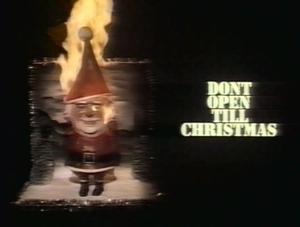
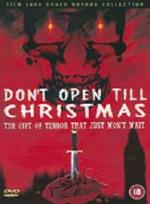
It’s been a while since I reviewed a real grindhouse/exploitation film on this site so I want to remedy that by talking about an English slasher film called Don’t Open ‘Til Christmas.
As the movie opens, we find ourselves in England with Christmas quickly approaching. The fog-drenched streets of London have apparently been besieged by drunk old men dressed up like Santa Claus. However, at least one citizen has taken things into his own hands by wandering the streets at night and killing anyone he comes across dressed as Santa Claus. Seriously, we see a lot of Jolly St. Nicks meeting an untimely end in this film. Most of them are done in by straight razor but at least one ends up getting shot and then another ends up bursting into flame and one Santa even up getting a spear driven through the back of his head.
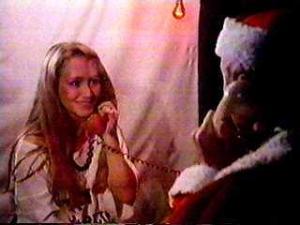
That Santa has a daughter named Kate (Belinda Mayne) and Kate has a boyfriend named Cliff (Gerry Sundquist). While they make most of their money by standing out in the middle of street and playing the flute, Cliff also has a side job as just a generally sleazy guy. The day after Kate’s father dies, Cliff tries to convince Kate to take part in a pornographic, Santa-themed photo shoot. Needless to say, Kate doesn’t react well to this and storms out. So, Cliff convinces another model to wear the Santa suit. That model is later caught outside in that Santa suit by the killer. However, after opening the suit and giving the camera an excuse to linger over the model’s body the killer leaves without harming her. This would seem to indicate that he’s only looking to kill men in Santa suits. Normally, I’d be all for this development because fair play is fair play except for the fact that its eventually revealed that the whole Santa suit thing is pretty much just a red herring. But, more on that later.
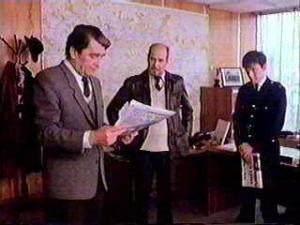
Anyway, Kate wants justice for her father but unfortunately, the police investigation is being headed up by Inspect Harris and you know that Harris isn’t going to be much help because he’s played by Edmund Purdom. Purdom appeared in a lot of Italian and Spanish horror films in the 70s and 80s and he was always the epitome of British incompetence. Purdom is also credited as being director here but again, more on that later.
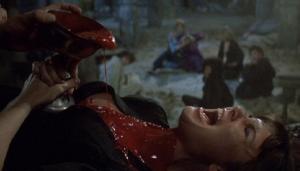
Now, by the time the 100th Santa has been brutally murdered, you might think that people would just naturally stop dressing up as Santa Claus when they’re out in public but no, that doesn’t appear to occur to anyone. Instead, we get a mall Santa getting castrated while standing at a urinal. And then we get another one getting killed while visiting a local sex shop and talking to a character credited as “the Experience Girl” (played surprisingly well by Kelly Baker). Yet another Santa finds himself getting murdered while backstage at a TV variety show. His body is discovered by Caroline Munro (star of Starcrash and Maniac) who plays herself and gets to sing a disco song before finding the body. She also gets to wear this really amazing red dress that I would kill to own because, seriously…
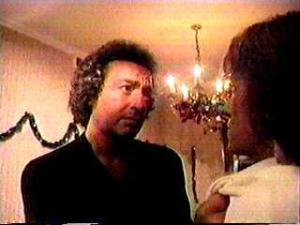
Suddenly, this guy named Giles (played by Alan Lake, who apparently died right before this film was released) pops up and tells Kate that he’s a reporter and he starts asking her all theese questions about her father. Kate gets mad and tries to call up Inspector Harris just to be told that Harris is out for the day taking care of some personal business. Hmmm…could Harris be our killer? It makes sense since he’s played by Edmund Purdom. Then again, Cliff could be the killer as well because, while Kate is doing all this, Cliff is making money by selling her sexual favors to his friends. Then again, it seems that Giles might be the killer because he then promptly shows up and kills Kate.
Meanwhile (we’re only about 40 minutes in to the film by this point), the Experience Girl is being interviewed by Harris’s partner, a tall guy named Powell who hates women. The Experience Girl tells Powell that she would know who the killer is if she saw the killer smile. Powell tells her she’s an idiot. So, the Experience Girl goes back to work. Giles shows up and smiles. Experience Girl screams. Giles kidnaps her but instead of killing her, he takes her to his flat and chains her up. Giles explains that he’s a killer because Inspector Harris is his brother and Giles is jealous. The Experience Girl knows who Harris is despite the fact that we’ve only seen her meet Powell.
Speaking of Powell, he investigates Kate’s death and realizes he may have made a mistake dismissing the Experience Girl. Then he tries to open a car door and gets electrocuted until he eventually ends up blowing up.
Now, none of this qualifies as being a spoiler because, even at this point, there’s still nearly 40 minutes of plot left.
Like a lot of 80s grindhouse films, the production of Don’t Open ‘Til Christmas is shrouded in mystery. Shooting on the film apparently started in 1981 but it the film wasn’t actually completed and released until 1984. Reportedly, Edmund Purdom was the original director but he ended up walking off the set which led to screenwriter Derek Ford taking over the movie for two days before he was apparently fired. The film was then completed by Alan Birkinshaw (and possibly a few other people), working under the name of Al McGoohan.
Certainly, this explains why the film is such a huge mess but it’s also a part of the fun as watching the movie becomes a game of trying to figure out who directed what.
Since Purdom walked off the film, I think it’s fairly safe to assume that he directed all of the scenes that he appears in. (It also explains why his character disappears from the movie after the first 40 minutes.) These scenes are all distinguished by the general immobility of the camera. Purdom’s scenes are so static and so defiantly dull that they almost work in a strangely Warholian way. The actors wander into frame, the actors wander out of the frame, the out-of-focus lens rebelliously refuses to follow them.
The non-Purdom scenes — the scenes in which men dressed like Santa are graphically murdered and the scenes featuring the “Rxperience Girl” — appear to have snuck in from a totally different movie and often, they’re only link to anything we’ve seen in the Purdom scenes is some awkwardly dubbed dialogue. These scenes feel as if they’re drenched in sleaze. The camera not only moves, it lingers and it invades like a voyeur looking at dirty pictures in a public library. Unpleasant on their own, these scenes somehow become even more distasteful when compared to the aritificiality of the Purdom scenes.
It all makes for a very disorienting viewing experience and if the film isn’t really well-done enough to ever become disturbing or nightmarish, it still had a very odd dream-like feel to it. Major characters wander through the film without every actually meeting each other. Seemingly important plot points are brought up just to be quickly abandoned and forgotten. Even all the multiple murders turn out to have very little to do with Santa Claus or Christmas. If nothing else, this is a unique slasher film in that the murders are pretty much just red herrings.
There’s a lot in this movie that doesn’t work but, as with many grindhouse films, that just adds to the charm of Don’t Open ‘Til Christmas. Even the ending — which everyone seems to criticize — is oddly appropriate in that it makes as little sense as everything else we’ve seen on screen. Also, like most grindhouse films, there’s a handful of memorable moments that actually do work. For instance, the killer’s mask is genuinely creepy. The scene where Giles chases the Experience Girl through the streets of London is also handled well and is even more suspenseful in that it takes place during the day as opposed to expected dark and foggy night. And again, Kelly Baker is a sympathetic, if unexpected, protaganist in the role of the Experience Girl (though you get the feeling that the role was created and cast long after Purdom left the initial production). Finally, this is a film that epitomizes the spirit that makes the Grindhouse great — i.e., it may have taken two years and multiple directors and the end result might be kind of chaotic but, in the end, the movie got made.
I ended up watching Don’t Open ‘Til Christmas last night because there have been reports that its about to finally snow here in North Texas and, as a result, I was in a holiday mood. Since this is apparently one of those movies that has entered the public domain, the version I own is a part of one of those “50 Horror Classics” collections that Mill Creek puts out. As a result, the transfer looked and sounded terrible. But you know what? That terrible transfer added a certain charm to the film. Don’t Open ‘Til Christmas is a movie that was meant to be seen with a lot of random scratches and faded colors flashing across the screen.
So, in the end, Don’t Open ‘Til Christmas is a pretty bad movie but it’s an undeniably watchable and oddly memorable one. Plus, it features that really great red dress. Seriously, just to die for…





 Through the Shattered Lens