Brad reviews THE STONE KILLER (1973), starring Charles Bronson!


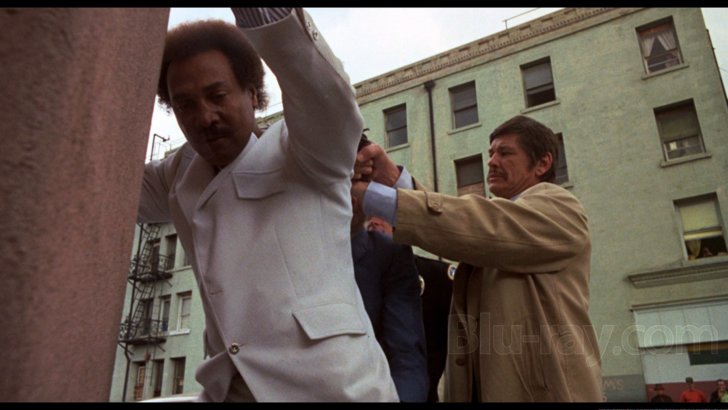
THE STONE KILLER opens in Spanish Harlem with detective Lou Torrey (Charles Bronson) following a young man, who had just shot a cop, into an abandoned building. When the young man refuses to turn himself in, and even tries to shoot Torrey, he gets blown away. In trouble with his superiors on the force, and being dragged in the press for the shooting, Torrey decides to change locations and continue his law enforcement career under his friend Les Daniels (Norman Fell) in Los Angeles. Soon after he arrives in Los Angeles, Torrey and his partner Mathews (Ralph Waite) are working a case against a drug dealer, when they arrest “Bootlace” Armitage (Eddie Firestone), a drug addict, but also a well-known hitman from New York. Torrey is delivering the “mechanic” back to New York for outstanding warrants when Armitage says that he is willing to give up some big information on “Wexton” in exchange for a reduced sentence. When Armitage is gunned down in what is obviously a professional hit, it’s clear that there is something going on that involves the name Wexton. We soon learn more as we meet mafia leader Al Vescari (Martin Balsam). As Vescari walks through a cemetery, he tells the leader of his operation, Lawrence (Stuart Margolin), of his plans to get revenge for a string of mafia killings that occurred 42 years earlier by using “stone killers,” in this case, former military men with no connection to the mob. As the film moves forward, Detective Lou Torrey and his fellow cops will eventually put the pieces together and find themselves taking on these “stone killers” and the mob! 

I’ll just go ahead and say up front that I’m a big fan of THE STONE KILLER these days, but that’s because the movie has grown on me over the years with repeat viewings. When I first watched the film as a teenager in the 1980’s, I enjoyed it as a tough cop film, but it wasn’t one of my favorites. I think that part of the reason I didn’t appreciate it as much back then is the more convoluted plot of the film. Most Bronson films have simple and easy to follow plot lines, but THE STONE KILLER includes a somewhat complicated mafia assassination plan, and it also sends the cops on wild goose chases that have nothing to do with the actual story. Watching the film as an adult, I appreciate Director Michael Winner taking us with him on some of those 1970’s flavored tangents that include getting to hang out with some hippies at an ashram, as well as some unjustly accused black militants. 

Even though the plot is more complicated than the average Charles Bronson film, director Michael Winner gives us some of the best action sequences of Charles Bronson’s career. There are two sequences in particular that stand out to me. After the impressive opening scenes where Torrey blows away the gun wielding young man in Spanish Harlem, it takes a while to get to the next extended action sequence, but it’s definitely worth the wait. The scene involves Detective Torrey in a car chase where he’s after one of the stone killers, Albert Langley (Paul Koslo), who’s on a motorcycle. In an era of great car chases, this is a doozy that features many amazing and dangerous stunts. The late 60’s and early 70’s are an embarrassment of riches for cinematic car chases and this one stands the test of time. The next great action sequence occurs later in the film when Detective Torrey and the cops bust the home and facility where the killers have trained for the planned massacre. Bronson is still in his physical prime in 1973, and his athletic prowess is clearly on display as he slides across floors, jumps on tables, and does anything else that is required to take down the bad guys. The film is not wall to wall action, but what’s here is as badass as it gets. 

Detective Lou Torrey is a really good role for Charles Bronson. In his best roles, Bronson is tough, but you can also tell that he cares about other people. That’s definitely the case here as he consistently shows empathy for some of the people he’s after. For example, at the beginning of the film, he has to shoot the young man in Spanish Harlem in self-defense, but he later explains to his sister that he didn’t want to do it, even expressing some understanding of how the young man may have found himself in that situation. A little later while arresting a drug dealer with his partner Mathews, Torrey is clearly disgusted when his partner uses racial slurs during the arrest. Torrey then talks to the man with respect and gets the needed information to arrest the man buying the drugs. There are further examples later in the film as he deals with other drug addicts and militants. I say none of this to insinuate that Bronson’s character is weak in any way. Rather, he seems to want to do his job and arrest criminals in a professional manner. He’s also a complex character in some ways as he will bend the rules to get what he needs if he has to. He does end up punching the car thief, Jumper (Jack Colvin), a couple of times during an interview. While this is definitely not legal, in the context of this film, it’s required in order to get to the facts of the case. Bronson is actually quite great in the film. 

Besides international superstar Charles Bronson, Michael Winner put together an amazing cast for THE STONE KILLER. Martin Balsam had won an Oscar a few years earlier, and he’s good here as the mafia boss with four decades worth of patience for revenge. Ralph Waite is also excellent as Bronson’s incompetent, racist partner Mathews. It’s hard to believe the guy would go on to play Papa Walton based on the ignorance he shows in both this film and in the Bronson/Winner collaboration CHATO’S LAND from the prior year. It’s fun watching both Norman Fell and John Ritter work together in this film, especially knowing that they would be making television history a few years later on the classic TV sitcom “Three’s Company.” The last two actors I want to mention are Stuart Margolin as the leader of the stone killers, Lawrence, and Paul Koslo as the bi-sexual badass musician Albert Langley. Both actors, especially Koslo, are good here and would have important roles with Bronson the next year as well. Margolin was an important character in DEATH WISH, and Koslo may have even outdone his work here the next year as a particularly slimy weasel in MR. MAJESTYK. Oh yeah, be sure to look for a short, uncredited cameo from B-movie queen Roberta Collins! I also want to shout out the musical score from Roy Budd, who also did the score for GET CARTER (1971). Thanks to Budd’s work, the opening credits are very cool and memorable. 

THE STONE KILLER was marketed as Charles Bronson’s “Dirty Harry” and meant to be his breakout hit in America. Unfortunately, while the film was an international hit, the actual grosses in the United States were respectable but not as much as the filmmakers had hoped for. As such, we didn’t get any more entries in the case log of Detective Lou Torrey and Bronson would have to wait another year for his American box office breakout with DEATH WISH. But that’s okay because THE STONE KILLER has stood the test of time as an excellent 1970’s cop film, emerging in my personal rankings as a major feather in the cap of Charles Bronson’s career. 

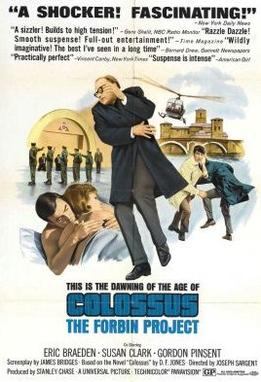
Colossus: The Forbin Project (1970, directed by Joseph Sargent)


Deep in a complex that is hidden away in the Rocky Mountains, Dr. Charles Forbin (Eric Braeden) has put together and programmed a computer called Colossus.  A super computer, Colossus has been designed to control the nuclear arsenal of the United States and its allies.  Colossus will not only keep America safe but it was also remove the chance of human error or human hesitation.  No longer will two men sitting in a silo with a key have to make the decision whether to obey the orders coming from the commander in chief.  No longer will people have to make the split-second decision that could plunge the world into war.

To Forbin’s surprise, the Soviet Union has developed their own super computer, called Guardian.  Colossus asks to be “linked” to Guardian and the Russians agree to allow it as a gesture of good will.  What no one realizes is that both computer systems have become sentient and that they soon decide that humans cannot be trusted to not destroy themselves and the planet.  To Forbin’s horror, Colossus starts to take over the world.

Based on a novel by Dennis Feltham Jones, Colossus was originally filmed in 1968 but it wasn’t released until 1970.  The film looks dated with its gigantic computer but it feels prophetic with its storyline about an AI taking over the world and deciding that it knows better than its makers.  Director Joseph Sargent adroitly mixes science fiction with Bond-style intrigue as Charles Forbin tries to reason with his creation and both the CIA and the KGB try to take down the computers.  The film even tosses a bit of 70s-style paranoia, with both the American and the Soviet governments trying to keep the public from discovering that the supercomputers are trying to take over the world.

Colossus: The Forbin Project is an intelligently written and thought-provoking science fiction film.  Eric Braeden does a great job as Charles Forbin, the engineer who goes from being arrogant and cocky to desperate to finally defiant as his creation slips out of his control.  William Schallert, so often cast as a nice father figure, turns in a good performance as the head of the CIA as does Susan Clark, cast as a colleague who has to pretend to be Forbin’s mistress just so she and Forbin can talk and plot without being monitored by Colossus.

Colossus is a smart sci-fi film that is more relevant than ever.

Late Night Retro Television Review: Highway to Heaven 2.6 “Birds of a Feather”


Welcome to Late Night Retro Television Reviews, a feature where we review some of our favorite and least favorite shows of the past!  On Thursdays, I will be reviewing Highway to Heaven, which aired on NBC from 1984 to 1989.  The entire show is currently streaming on Freevee and several other services!

This week, Jonathan becomes the Birdman!

Episode 2.6 “Birds of a Feather”

(Dir by Michael Landon, originally aired on November 6th, 1985)

While driving down the highway, Mark is ordered to stop by Jonathan.  Jonathan gets out of the car and walks over to a nearby reservoir, where he discovers a dying bird.  In fact, he discovers several dead birds and he wastes no time in deciding that the nearby chemical plant is to blame.  Despite the fact that they are on a tight schedule and have an assignment waiting for them in another town, Jonathan decides that it’s important that he and Mark first battle against the people who poisoned the reservoir.

How does Jonathan decide to do this?  First, he tells Mark to get a job at the plant.  Mark does so, though it’s never really clear what he was hired to do.  It’s funny how Mark always gets every job that he applies for, despite not having much work experience beyond being a cop.

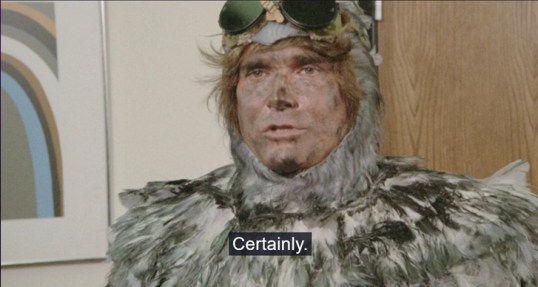
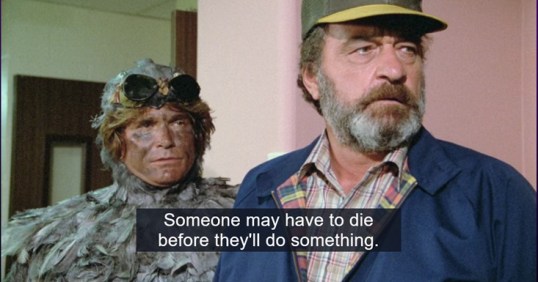
Jonathan then decides that it would be a good idea for him to 1) dress up like a bird, 2) ride a bicycle around town, 3) decorate the bicycle with balloons, and 4) continually shout things like, “Caw!  Caw!”

Now, I’m not really sure what Jonathan thinks this will accomplish.  That said, just two days ago, a bunch of idiots thought they could bring peace to the Middle East by standing on the Golden Gate Bridge and blocking traffic.  And let’s not forget those Extinction Rebellion morons who keep damaging paintings and gluing themselves to floors.  Compared to today’s protestors, Jonathan’s methods seem brilliant.

What’s odd about Jonathan’s bird costume is that he never takes it off.  Even when he’s not protesting, he wears the costume.

Evil businessman Horton Drake (Philip Abbott) doesn’t care about the dead birds because he’s evil.  Even when the children of some of his employees get sick, Drake refuses to clean up the water.  This leads to Jonathan making an ominous declaration.

In a scene that has to be seen to be believed, Jonathan lines up all the dead birds outside of Drake’s corporate headquarters.  And then Jonathan lies down, resting his head on the contaminated birds.  By the time everyone arrives for work, Jonathan’s dead!

Realizing that an autopsy will reveal that Jonathan died due to chemical exposure, Drake sends three of his men to steal Jonathan’s body from the morgue.  However, at the morgue, Jonathan is not only alive but he’s still wearing his bird costume.  “Caw!  Caw!” Jonathan shouts as the men flee.

The next morning, Drake holds a press conference and denies dumping toxic waste in the water.  Moved by Jonathan’s sacrifice, Drake’s former administrative assistant (Marianne McAndrew) reveals the truth about how Drake has been polluting the water and paying off the health inspectors.  Incidentally, the assistant’s son is played by a young Paul Walker.

Mark goes for a walk along the beach.  He looks up to Heaven and tells Jonathan that his plan worked.  Suddenly, Jonathan walks up to Mark and Mark realizes that Jonathan is still alive.  Of course, Jonathan’s an angel so it’s not like he could have really died in the first place.  As Jonathan has pointed out in previous episodes, he already died once.

This episode was about as heavy-handed as anything I’ve ever seen.  One can support a clean environment while also acknowledging that Drake was portrayed as being cartoonishly evil.  Michael Landon’s heart was in the right place but the episode still sometimes verged on unintentional self-parody.  This is the type of thing that AI would come up with if prompted to write a stereotypical episode of Highway to Heaven.

Myself, I’m just wondering where Jonathan found the bird costume.

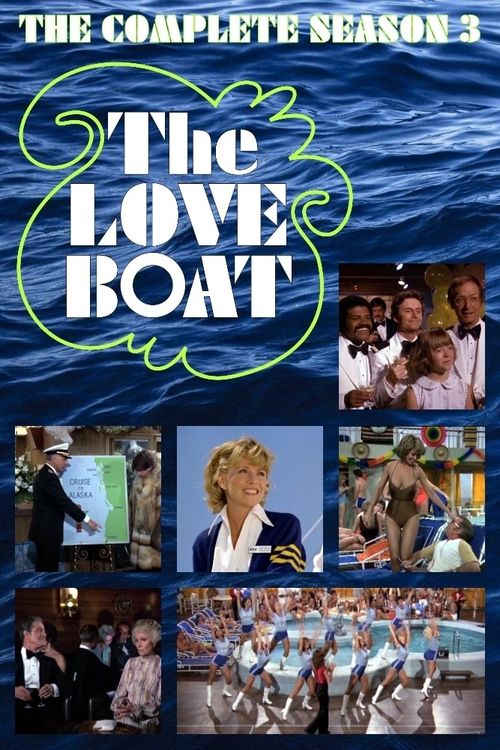
Retro Television Review: The Love Boat 3.27 “Invisible Maniac/September Song/Peekaboo”


Welcome to Retro Television Reviews, a feature where we review some of our favorite and least favorite shows of the past!  On Wednesdays, I will be reviewing the original Love Boat, which aired on ABC from 1977 to 1986!  The series can be streamed on Paramount Plus!

This week, The Love Boat has a very special passengers!

Episode 3.27 “Invisible Maniac/September Song/Peekaboo”

(Dir by George Tyne, originally aired on April 19th, 1980)

This week, the pop cultural stars align as a young David Hasselhoff boards the Love Boat!

Hasselhoff plays Tom Bell, a 20-something attorney who is dating a 30-something attorney named Cathy (Shelley Fabares).  Cathy insists that they keep their romance a secret due to the age difference.  She doesn’t want people to think that she’s a cradle robber or an older woman with a gigolo.  (Cathy might also want to consider that she’s a senior partner at the firm while Tom is just a junior partner.)  Tom doesn’t care about the age difference.  In fact, he wants to marry Cathy!

And yes, they do eventually get married.  Tom even has his grandparents waiting for them when the boat docks in Los Angeles so that they can act as witnesses.  There’s not really any suspense as to whether or not Tom and Cathy will end up married because this is The Love Boat, the show that combined the swinging culture of the 70s with the morality of the 50s.  The Hoff is his usual dramatic but self-aware self while Shelley Fabares is endlessly likable.  They’re a cute couple and, minor age difference aside, they just look like they belong together.  It was a sweet story.

As for the other passengers:

Fay Piermont (Peggy Cass) is married to Bill (Gordon Jump).  Bill’s a nice guy but Fay fears that they’ve become a boring couple.  She wants to be an exciting couple and she’s figured out that the way to do this is to get a makeover, buy a new wardrobe, and then toss her glasses and all of her frumpy clothes overboard.  (At first, both Julie and Vicki are worried that Fay is planning on throwing herself overboard.  One would think that would be cause for ship-wide alarm but Julie and Vicki just check on Fay occasionally to make sure she’s still alive.)  At first, Bill is freaked out by Fay’s new attitude but, eventually, he comes to accept it and Fay comes to realize that she loves Bill, even if he is a bit reserved.  This is the type of story that The Love Boat did frequently.  Fay and Bill are a nice couple, even if they’re no Tom and Cathy.

Finally, Isaac is reunited with a former high school classmate, a model named Janet (BernNadette Stanis).  Janet is upset that her husband (Clifton Davis) is more into sports than romance so she tries to make him jealous by lying about what a womanizer Isaac was in high school.  Gopher overhears and tells Isaac that Janet referred to him as being “all hands” in high school.  Now, most people would understand that Janet was just trying to make her husband jealous but Isaac somehow becomes convinced that he is a womanizer but he just can’t remember his actions because he suffers from dissociative identity disorder and he even goes to Doc Bricker for help!  Why would Isaac believe that?  It makes no sense that Isaac — cool, calm Isaac — would suddenly be so stupid.  This is something that would happen to Gopher not Isaac.

That one silly storyline aside, this was a pleasant cruise on The Love Boat.  I’m glad things worked out for Tom and Cathy.  Seriously, the world is so lucky to have The Hoff.

Retro Television Review: The Love Boat 3.26 “Vicki’s First Love/The High Cost of Living/Accident Prone”


Welcome to Retro Television Reviews, a feature where we review some of our favorite and least favorite shows of the past!  On Wednesdays, I will be reviewing the original Love Boat, which aired on ABC from 1977 to 1986!  The series can be streamed on Paramount Plus!

The Love Boat promises something for everyone!

Episode 3.26 “Vicki’s First Love/The High Cost of Loving/Accident Prone”

(Dir by George Tyne, originally aired on April 5th, 1980)

It’s not easy growing up on a cruise ship.  That was one of the main takeaways that I took from this week’s episode of The Love Boat.  Vicki is really excited when singer Mark Redding (Rex Smith) boards the ship.  She has a huge crush on him and she even gets to give him a tour of the boat.

Of course, despite his teen idol status, Mark is an adult and famous and being pursued by almost every woman on the ship.  Vicki feels insecure compared to the other women who are pursuing Mark.  (Of course, those women are all in their 20s while Vicki is 12.)  Eventually, Captain Stubing has one of his fatherly conversations with her and Vicki realizes that she doesn’t have to grow up quickly.  It’s a simple storyline but it’s nicely performed by both Jill Whelan and Gavin MacLeod and, speaking as someone who wanted to be an adult when she was 12, I could relate to Vicki’s feelings.  I was also glad that Mark turned out to be not a sleazy rock star, even if he was a bit superficial.  The Love Boat is a place for romance, not debauchery.

As for the other two storylines, one featured Steve Kanaly as Mr. Massey, a wealthy man who is paying a former lover palimony.  At his lawyer’s insistence, he boards the boat with a series of contracts.  Before he get involved with any woman, he is supposed to get her to sign an agreement not to sue him for palimony.  Needless to say, this does not make Massey’s romantic life easy.  Finally, he decides to forget about the contract, just for his shipboard hook-up to present him with a contract of her own.  Apparently, everyone’s scared of getting sued!

Speaking of getting sued, Tom Barry (Alan Feinstein) boards the boat with a broken leg and is shocked to discover that the bad driver responsible for the accident that injured him is on the boat as well!  Karen (Britt Ekland) is a bit accident-prone but, despite the awkwardness of their first meeting, Tom and Karen fall in love.  Tom even agrees to not sue her.  Yay!  I love a happy ending.

This was an enjoyable episode of The Love Boat.  With the exception of Tom and Karen’ story, there really wasn’t much romance.  There was just Vicki feeling insecure but coming to realize that she was just fine the way she was and then there was Mr. Massey trying to balance getting laid with remaining legally safe.  But the Vicki storyline was sensitive and intelligent while the Mr. Massey storyline featured some nice comedic desperation from Steve Kanaly.  Even Alan Feinstein and Britt Ekland had a really likable chemistry.  All in all, this was a pleasant cruise.

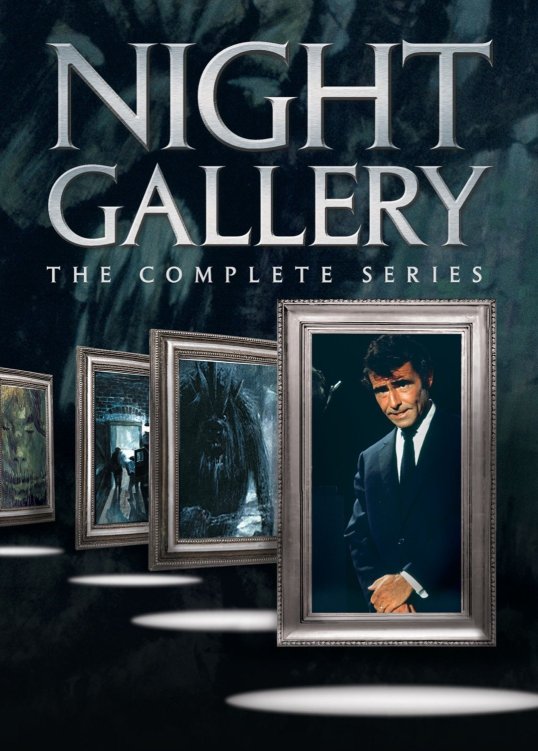
Film Review: Night Gallery (dir by Boris Sagal, Barry Shear, and Steven Spielberg)


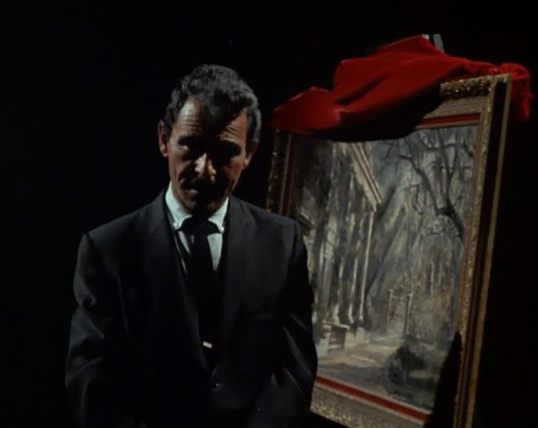
Night Gallery was a horror anthology series that aired on NBC in the early 70s.  Each episode featured Rod Serling, of Twilight Zone fame, serving as the curator of a museum where all of the paintings have a somewhat macabre theme.  (One could even say that the museum was a …. wait for it …. night gallery!)  Serling would give each painting a properly pithy introduction and then the audience would see the story behind the artwork.  It was a bit like the Twilight Zone, except the Night Gallery episodes were in color, they were all horror-themed, and, for the most part, they steered away from social commentary.  The series ran from 1970 and 1973 and it still airs in syndication and on some of the retro stations.  (I believe it currently airs on Comet TV.)  Even if it wasn’t as consistently good as Twilight Zone, it’s still a pretty fun little series.

Two Christmases ago, I was gifted  Night Gallery: The Complete Series on DVD.  Though I’ve watched several episodes from the DVD, I recently realized that I have never actually sat down and watched every episode in order.  With the world currently shut down due to the pandemic (a development that, if we’re going to be honest, sounds like something Rod Serling would have used on the Twilight Zone), I figured what better time to watch the entire series then now?

I started out by watching the Night Gallery pilot film.  This originally aired on November 8th, 1969, a full year before Night Gallery became a weekly series.  It features three different stories (all written by Rod Serling) of the macabre.  As with every episode of the subsequent series, each story is introduced by Serling standing in front of a painting.  In the pilot, though, the museum is rather bare and the painting’s are a bit minimalist.  I have to admit that, as a lover of the baroque, I was a bit disappointed in that aspect of the pilot.

But what about the stories themselves?  Read on!
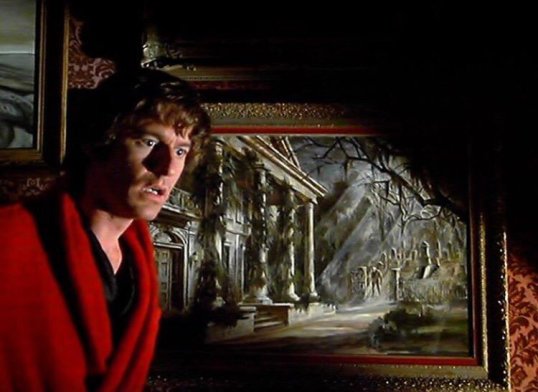
The Cemetery (dir by Boris Sagal)

The first story was The Cemetery, a cheerfully gruesome little tale that featured Roddy McDowall and Ossie Davis.  McDowall plays Jeremy, a spoiled young man who murders his uncle so that he might inherit the dead man’s estate.  At first, it looks like McDowall’s plot is a complete success but then McDowall notices a painting of the family graveyard hanging above a staircase.  (To be honest, it seems odd to hang a painting of a graveyard in the foyer but I guess that’s something old rich people do.)  The painting keeps changing.  One minute, the painting looks normal.  The next minute, it features a newly dug grave.  And then something emerging grave.  And then something heading towards the house….

Is Jeremy losing his mind or is the painting warning him that his uncle has risen from the dead and is seeking revenge!?  You’ll probably be able to guess the answer long before poor Jeremy but no matter.  This is a fun little horror story and it benefits from two enjoyably arch performances, from McDowall and, in the role of a butler who may have an agenda of his own, Ossie Davis.
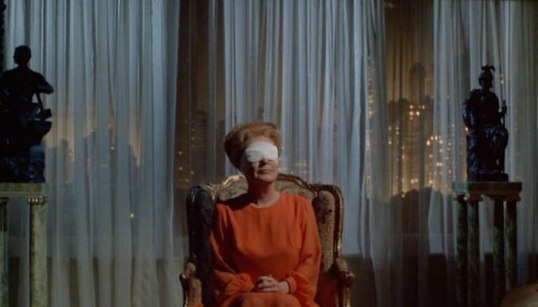
Eyes (dir by Steven Spielberg)

Of the three stories presented in the pilot, Eyes probably gets the most attention from critics because it not only stars Joan Crawford in one of her final performances but it was the professional directorial debut (if you don’t count Amblin’) of 22 year-old Steven Spielberg.  Spielberg apparently had some issues dealing with the veteran crew members, many of whom didn’t like the idea of taking orders from a 22 year-old.  (It probably didn’t help that pictures from that era suggest that Spielberg looked several years younger than his age.  Let’s just say that it’s easy to understand why he eventually grew that beard.)  I’d like to think that Joan Crawford yelled at everyone and defended Spielberg and maybe even Rod Serling came down with Luca Brasi and said, “You’re going to the give this kid the respect he deserves or your brains are going to be all over that union contract.”  I don’t know if that’s true but it’s a nice thought.

That said, Eyes is pretty good.  Even if the crew doubted him, Spielberg proved himself as a director with this story.  It’s about a hateful and selfish woman (Joan Crawford) who happens to be both rich and blind.  She has manipulated a doctor into performing an experimental operation that will allow her to see.  The only catch is that the operation will only be good for 22 hours and a donor (Tom Bosley, as a bookie who is in trouble with the mob) will be required to give up his eyes so that Crawford can have those 22 hours.

On the one hand, this is very-much a Rod Serling-type tale.  It’s easy to imagine Eyes, with its belief in karma and its final macabre twist, as a Twilight Zone episode.  At the same time, Spielberg very much brings his own signature style to the film, livening up dialogue-heavy scenes with interesting camera angles and getting good performances from Crawford, Barry Sullivan, and Tom Bosley.  Eyes is a clever story but, for modern viewers, the most interesting thing about it will be discovering that, even at the age of 22, Spielberg already had a clear directorial style.
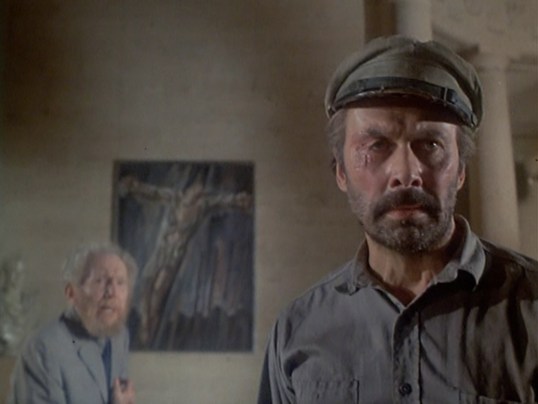
The Escape Route (dir by Barry Shear)

The Escape Route is about an Nazi war criminal named Joseph Strobe (played by Richard Kiley) who is hiding out in South America and spending all of his time nervously looking over his shoulder.  One day, he enters a museum where he finds himself drawn to two paintings.  One painting features a man who has been crucified in a concentration camp, which we learn was Strobe’s trademark back when he, himself, was a camp commandant.  The other painting features a fisherman in a peaceful setting.  Even though Strobe imagines himself as the peaceful fisherman, his attention keeps getting redirected to the painting of the concentration camp.  Soon, Strobe realizes that a survivor of the camp (played by Sam Jaffe) is also in the museum and that he is studying the painting as well.

Compared to Eyes and especially The Cemetery, The Escape Route may seem like a rather low-key story but it has a power that sneaks up on you.  Hiding out (as many real-life Nazi war criminals did) in South America, Strobe is full of excuses for his past and he may indeed be sincere in his wish that he had just become a fisherman as opposed to a brutal Nazi.  But, in the end, Strobe can neither escape his past nor his final punishment.  Justice cannot be escaped, no matter how hard Strobe tries to outrun it.  In the end, there is no escape for the wicked.  Richard Kiley and Sam Jaffe both give excellent performances.  The Escape Route will stick with you.

As a series, Night Gallery was a bit uneven but the pilot stands as a classic of its type, featuring three short films that all deserve to be remembered.

As for me, I’m going to try to watch an episode or two a day.  I may review a few more Night Gallery episodes here on the Shattered Lens.  As I said, the series itself was a bit uneven and not every episode is as good as the pilot.  Still, there’s definitely some gems to be found in the Night Gallery and I’ll share them as I come across them.
Horror On TV: Kolchak: The Night Stalker 1.13 “Primal Scream” (dir by Robert Scheerer)


Tonight on Kolchak….

What happens when an oil company discovers new, undefined organic matter in the arctic circle?

Well, first off, they mishandle it and it ends up turning into a prehistoric, killer ape-man.

Secondly, it’s time for a corporate cover-up!

Fortunately, the world’s greatest (if unluckiest) journalist, Carl Kolchak, is on the case!

Anyway, this is an okay episode of Kolchak.  If I don’t seem as enthused about it as I’ve been about some of the previous episodes, it’s because a killer, prehistoric ape-man just isn’t as much fun as a Cajun demon or a killer robot.  Still, this episode has a nicely done, underground tunnel-set climax.  Seriously, you can’t go wrong with an underground tunnel.

This episode originally aired on January 17th, 1975.

Enjoy!

http://www.youtube.com/watch?v=osIun8gef6I