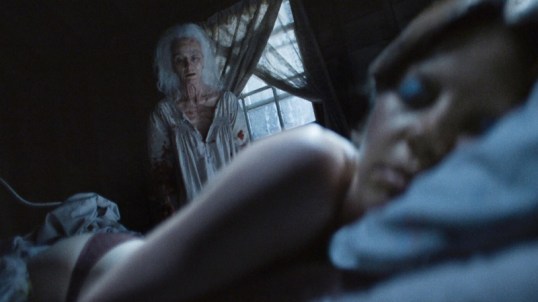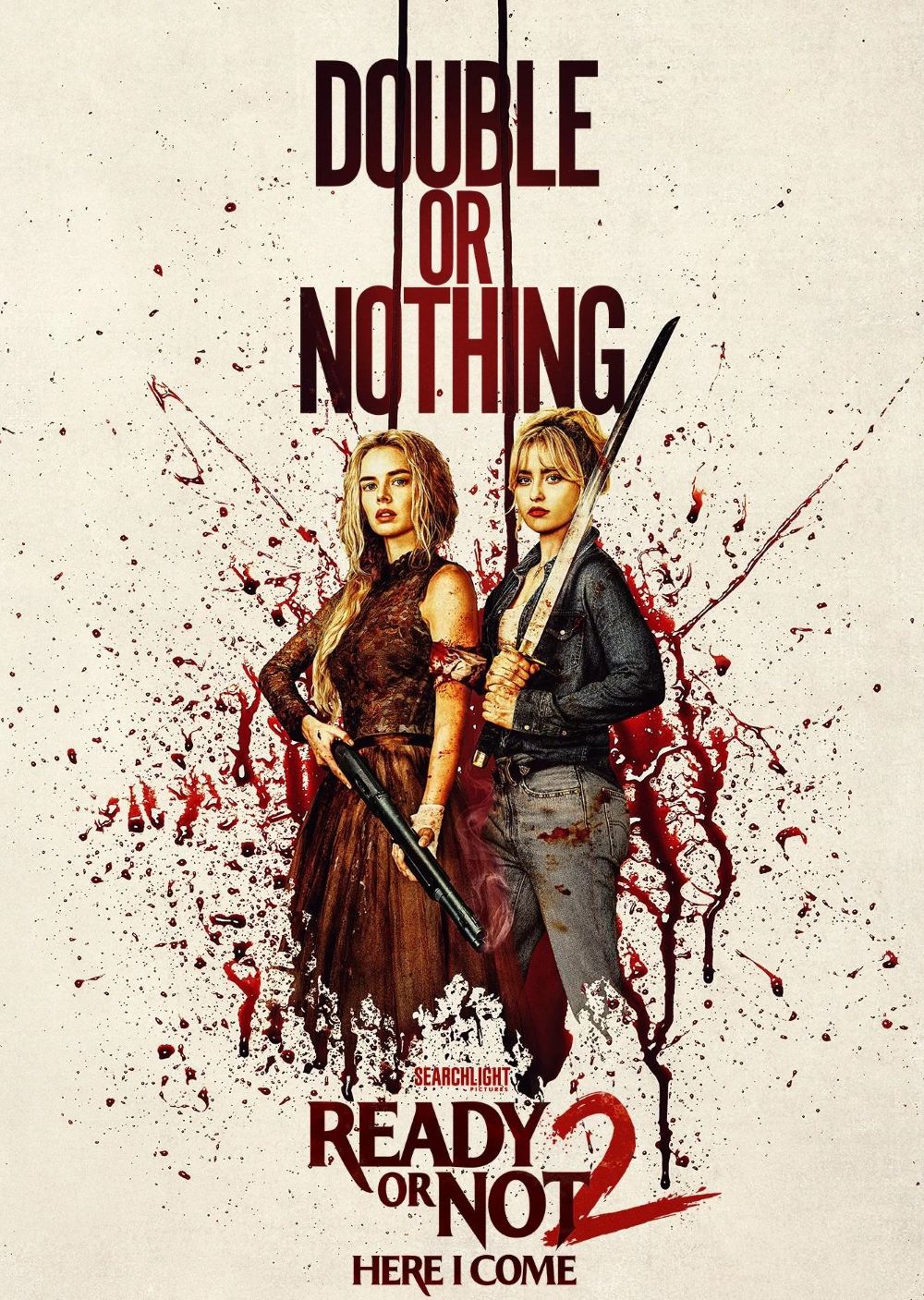
Ready or Not 2: Here I Come (dir. by Matt Bettinelli-Olpin & Tyler Gillett) Review


“You call it tradition. I call it rich people practicing murder.” — Grace

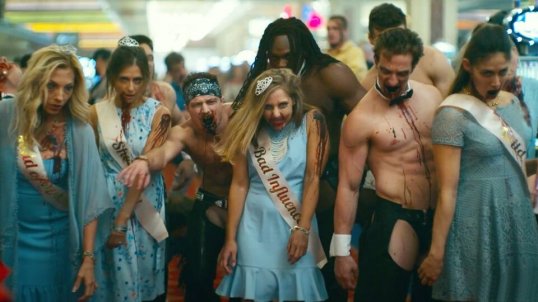
Ready or Not 2: Here I Come returns to the savage, high‑class dystopia of the Le Domas bloodline with a more manic, more crowded, and far bloodier version of the original’s “game‑night‑from‑hell” premise. Picking up years after the events of Ready or Not (2019), the film keeps Samara Weaving’s Grace at the center but expands the stakes beyond one family’s cursed estate into a loose oligarchy of ultra‑rich cultists, each with their own warped sense of tradition and entitlement. The result is a horror‑comedy that feels less like a slow‑burn ambush and more like a running, blood‑slicked marathon, where the line between satire and spectacle blurs but rarely collapses.

What distinguishes Ready or Not 2: Here I Come from many sequels is how deliberately it both leans into and pushes past the formula that made the first film such a cult hit. Rather than replay a single night of hide‑and‑seek in a shuttered mansion, this chapter sends Grace and her newly introduced estranged sister Faith (played by a suitably frazzled and sardonic Kathryn Newton) hurtling through multiple estates, country clubs, and private compounds, each governed by its own set of sadistic rules. The “game” is no longer a one‑family ritual but a broader network of wealthy families that have weaponized occult tradition as a way to justify their casual cruelty. This widening of the universe gives the film a more sprawling, almost procedural feel, as if the audience is being dragged through a gauntlet of different flavors of rich‑person depravity.

The script’s decision to pair Grace with another female lead is one of the film’s stronger creative choices. The strained sibling dynamic between Grace and Faith mirrors the original’s examination of family, but through a more grown‑up, emotionally messy lens. Their bickering and reluctant cooperation prevents Grace from simply repeating the same resilient‑final‑girl schtick; instead, she becomes a kind of worn‑out mentor forced to drag someone else into the nightmare she barely survived. The sisters’ chemistry—equal parts snark, vulnerability, and grudging solidarity—stops the film from devolving into pure nihilism and keeps the audience invested in their survival, even when the body count around them threatens to overwhelm the narrative.

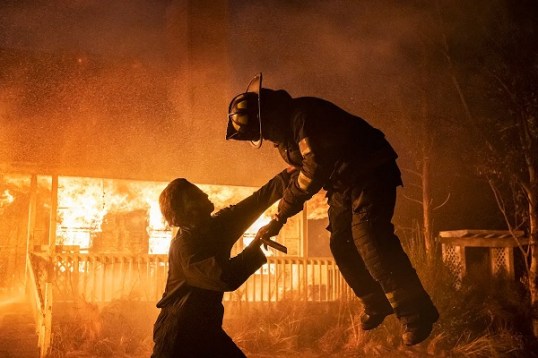
Visually, Ready or Not 2 leans harder into its gore‑buff aesthetic than the first film did. The kills are more elaborate, more inventive, and frankly more grotesque, with set‑pieces involving everything from industrial kitchen equipment to ritualized animal sacrifice and spiked pits. Director Matt Bettinelli‑Olpin and Tyler Gillett, collectively known as Radio Silence, understand that the franchise’s appeal lies as much in its darkly comic carnage as in its social commentary, and they lean into that balance with gusto. The camera lingers on the absurdity of seeing millionaires in bespoke suits and designer gowns being dismantled in grotesque, almost slapstick fashion, which heightens the film’s “eat‑the‑rich” subtext without feeling like a lecture. The horror is still visceral, but it’s also frequently absurd, which fits the tone they’ve established since the original.

The escalation of violence, however, is also the film’s most obvious point of tension. Some of the more extreme set‑pieces verge on the gratuitous, and the pacing occasionally stumbles when the movie pauses between massacres to re‑establish lore or introduce new cult families. Not every supporting antagonist lands with the same impact as the original Le Domas clan; a few of the new patriarchs and matriarchs feel more like walking punchlines than genuinely threatening presences. The film compensates by front‑loading its energy with early, high‑impact kills and goofy one‑liners, but there are stretches where the plot feels like it is waiting for the next big set‑piece rather than organically building toward it.

One of the more interesting additions to the cast is Sarah Michelle Gellar, who pops up in a mid‑film role that taps into genre‑fan nostalgia while also deepening the film’s exploration of complicity and corruption. Gellar’s character is not the altruistic hero she personified in earlier horror‑adjacent roles; instead, she embodies a kind of jaded, self‑interested survivor who has learned to weaponize the same systems of privilege that the Le Domas exploited. Her presence calls attention to the cyclical nature of abuse and privilege in the film’s world: evil tendencies don’t disappear with one family’s downfall; they simply migrate to the next generation of the wealthy and powerful. This commentary on systemic rot is not subtle, but it also doesn’t feel out of place in a franchise that has always mixed political anger with slapstick brutality.

Where Ready or Not 2 arguably falters is in its structural confidence. The original film’s strength lay in its tight runtime and single‑location claustrophobia; the sequel’s sprawling geography and ensemble of killers make it feel looser and more episodic. The middle section in particular risks feeling like a series of vignettes tied together more by tone than by forward momentum. Some of the attempted twists and revelations toward the end rush past the audience before they can fully land, and there is at least one late‑stage development that feels less like a surprise and more like a contractual obligation to franchise‑building. The film clearly wants to set up a possible trilogy, but in doing so it occasionally sacrifices the emotional and narrative payoff that would make its closing sequences truly memorable.

Even with these flaws, the core appeal of Ready or Not 2: Here I Come remains intact. Samara Weaving continues to command the screen with a mix of physical toughness and wounded intelligence, and she’s paired here with a credible foil in Kathryn Newton who pushes her character into new emotional territory. The film also maintains the sharply satirical DNA of its predecessor, using its murderous rituals as a funhouse‑mirror reflection of real‑world conversations about wealth, inheritance, and generational trauma. The kills are over‑the‑top, the politics are broad, and the pacing is uneven, but the movie never loses sight of what it wants to be: a darkly comic splatterfest that lets audiences cheer for the underdog while watching the decadent one percent spectacularly implode.
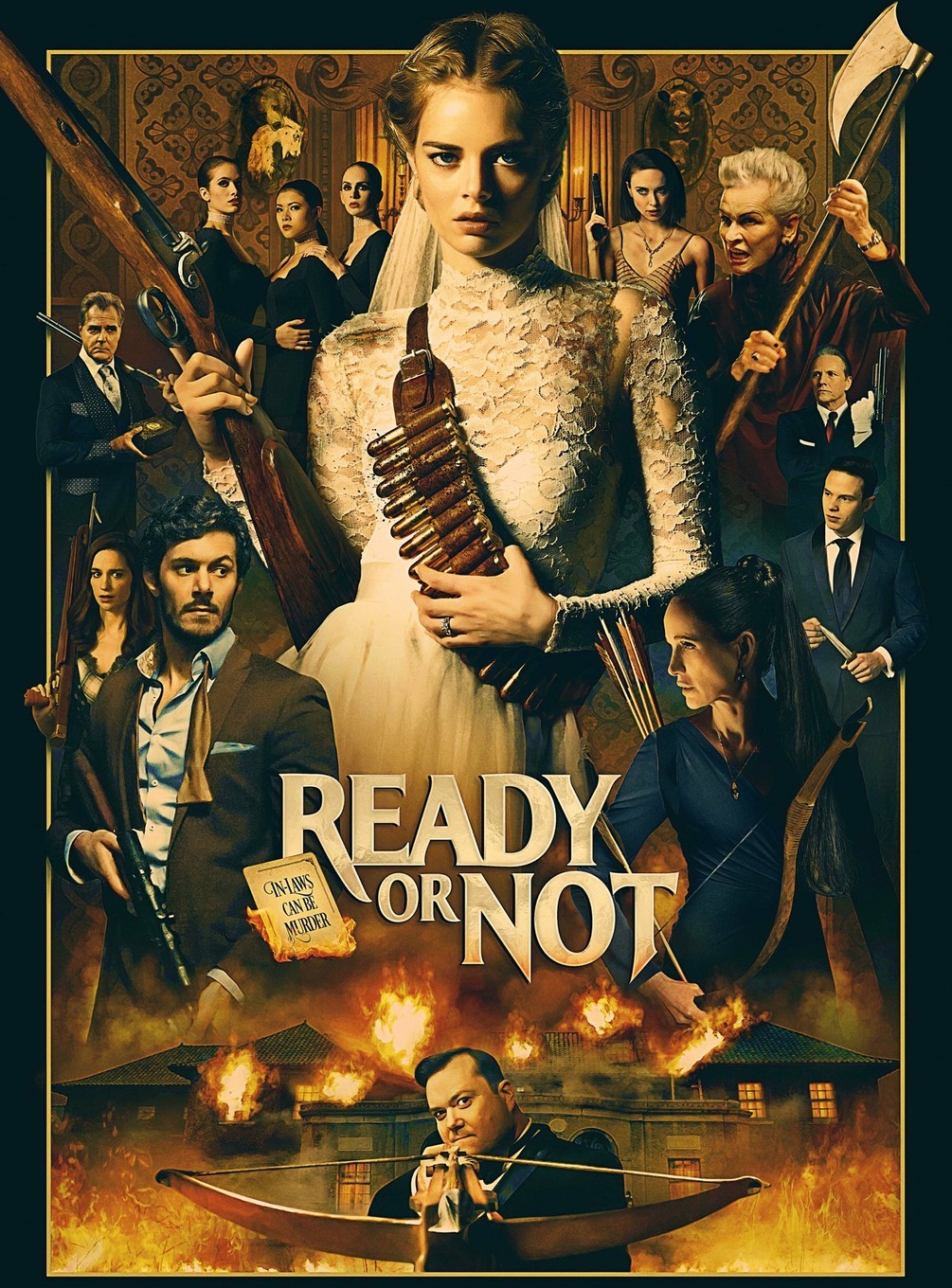

Review: Ready or Not (dir. by Matt Bettinelli-Olpin & Tyler Gillett)


“This is some Lord of the Rings bullshit!” — Grace

Ready or Not is a sharp, nasty, and often very funny horror-comedy that turns a nightmare wedding into a vicious class satire. It works best when it embraces its wild premise with full confidence, even if some of its deeper ideas are only lightly explored.

Directed by Tyler Gillett and Matt Bettinelli-Olpin, the film follows Grace, played by Samara Weaving, on what should be the happiest night of her life, only for her new in-laws to force her into a lethal game of hide-and-seek. That setup is simple, but it gives the movie a strong engine: one part survival thriller, one part dark comedy, and one part social commentary about money, power, and inherited privilege. The elegance of the concept is that it does not need much explanation to be effective, because the rules are clear, the stakes are immediate, and the movie wastes little time before letting the chaos begin.

The biggest strength of Ready or Not is Samara Weaving’s performance. Grace is written as someone who feels believable under pressure, which matters because the film asks her to go through absurd, increasingly brutal scenarios while still retaining her humanity. Weaving handles the tonal balancing act extremely well, moving between fear, frustration, disbelief, and darkly comic determination without losing the character’s core. She gives the film an emotional anchor, and without that, the movie would risk becoming just another splatter-heavy genre exercise.

The supporting cast also deserves credit because the Le Domas family is not just rich, but memorably awful in different ways. Adam Brody, Andie MacDowell, Henry Czerny, and the rest of the ensemble help create a household that feels polished on the surface and rotten underneath. Their performances are broadly heightened, but that fits the movie’s tone. The family’s panic, incompetence, and stubborn devotion to tradition become part of the joke, and the film gets a lot of mileage out of watching these people unravel while trying to appear dignified.

Tonally, the movie is strongest when it leans into the tension between horror and comedy. The violence is graphic, but the film rarely treats gore as the whole point; instead, it uses bloodshed as part of a larger joke about entitlement and ritual. That gives the movie a mischievous energy. It wants you to laugh at the absurdity of the situation while still feeling the danger, and for the most part it succeeds. The pacing is also a real asset, since the film avoids spending too long on setup and gets to the conflict quickly. Once the game begins, it keeps finding new ways to escalate the mayhem.

Thematically, Ready or Not is clearly aiming at class resentment and inherited wealth, and that angle gives the film bite. The Le Domas family represent old money, secrecy, and self-preserving tradition, and the movie uses their ridiculous customs to expose how fragile that world really is. There is a satirical edge to how the film portrays privilege as both absurd and dangerous, especially when the family’s traditions are treated with near-religious seriousness. At the same time, the movie is not especially subtle about this, and that can be either a strength or a limitation depending on what you want from it.

That lack of subtlety is one of the film’s few weaknesses. The “eat the rich” angle is easy to understand, but it is not always developed with much nuance, and some viewers may wish the script pushed its social ideas further. The mythology behind the family’s tradition is also deliberately loose, which helps the movie stay nimble but can make the lore feel less important than the film suggests it should be. In addition, the third act gets increasingly outrageous, and while that is part of the fun, not every twist lands with the same force. A few viewers may find the ending more satisfying than the logic that gets it there.

Even so, the film’s swagger largely carries it through those rough spots. Ready or Not understands that tone is everything in a movie like this, and it keeps its balance surprisingly well for something so gleefully chaotic. It is gory without becoming tedious, funny without undercutting the danger, and mean-spirited without losing sympathy for its lead. That is not an easy combination to pull off, and the filmmakers deserve credit for making the material feel brisk and controlled rather than sloppy or overextended.

What makes Ready or Not memorable is that it knows exactly what kind of movie it is. It is not trying to be profound in the heavy, prestige-drama sense, but it is smarter than a simple bloodbath and more disciplined than a pure shock machine. Its pleasures come from its energy, its attitude, and its willingness to let a ridiculous premise keep escalating without apology. The result is a horror-comedy with enough style, bite, and performance power to remain entertaining even when its thematic ambitions are a little broader than deep.

In the end, Ready or Not is a highly watchable genre piece with a terrific lead performance, a savage sense of humor, and a premise that stays potent from beginning to end. It is not perfect, and its satire can feel a little blunt, but it delivers exactly what it promises: a tense, bloody, darkly funny ride through a family dinner from hell.

8 Shots From 8 Horror Films: 2020 — 2022


4 Or More Shots From 4 Or More Films is just what it says it is, 4 shots from 4 of our favorite films. As opposed to the reviews and recaps that we usually post, 4 Shots From 4 Films lets the visuals do the talking!

This October, I’m going to be doing something a little bit different with my contribution to 4 (or more) Shots From 4 (or more) Films.  I’m going to be taking a little chronological tour of the history of horror cinema, moving from decade to decade.

Today, we conclude by taking a look at 2020, 2021, and 2022!

8 Shots From 8 Horror Films: 2020 — 2022

A Quiet Place Part II (2020, dir by John Krasinski, DP: Polly Morgan)

The Invisible Man (2020, dir by Leigh Wannell;, DP: Stefan Duscio)

Army of the Dead (2021, dir by Zack Snyder, DP: Zack Snyder)

Halloween Kills (2021, dir by David Gordon Green, DP: Michael Simmonds)

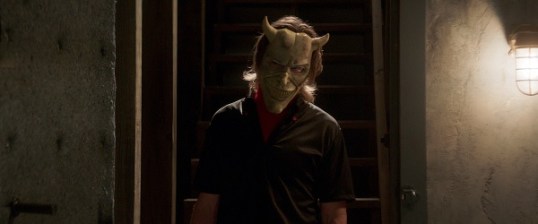
The Black Phone (2022, dir by Scott Derrickson. DP: Brett Jutkiewicz)

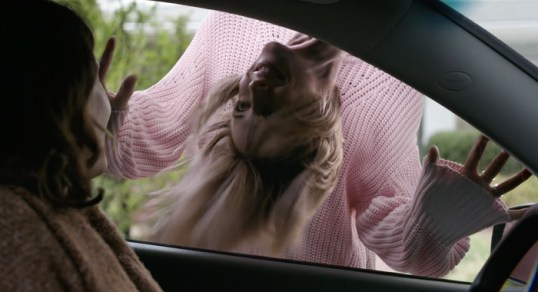
Smile (2022, dir by Parker Finn, DP: Charlie Sarroff)

Nope (2022, dir by Jordan Peele, DP: Hoyte van Hoytema)

X (2022, dir by Ti West, DP: Eliot Rockett)