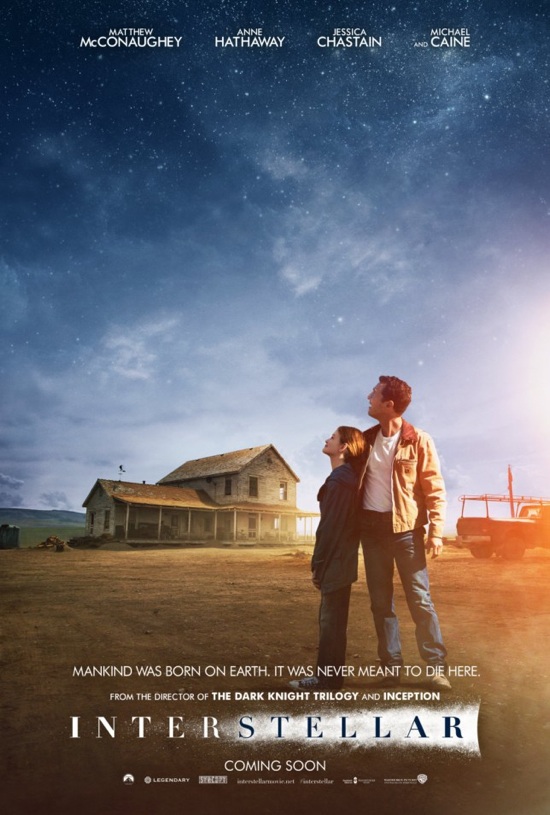
‘Interstellar’ Review (dir. Christopher Nolan)


interstellar2

It would be disingenuous of me to not start this review by saying that I went into ‘Interstellar’ with a clear and present bias. Not towards Nolan – though I think he is a wonderful director who has not yet made a truly bad film. But a bias towards the scientific theories and potential themes I expected – based on trailers and the concept of the film – that it would explore. I have always been very interested in astronomy and astrophysics – and have a soft spot for science fiction films with a strong emotional core (‘Close Encounters of the Third Kind’, ‘Contact’). So when I headed to the theater I knew I was walking a very fine line (one that many reviewers walk but won’t admit to). If the film met (even marginally) my high expectations then it would in no doubt lead to high praise that bordered on hyperbole – and if it didn’t – if it disappointed – then it would cause a reaction a lot more negative than it really needed to be.

Where did ‘Interstellar’ ultimately fall? Hyperbole…or disappointment? Well luckily for me it was the former…to a fairly strong degree. I’ll say it now – this is not just probably  my favorite film of the year so far, but like with ‘Gravity’ and ‘The Tree of Life’ (yes, more on that later) in recent years, this may  fall within my favorite films of all time. It is a dazzling, visually stunning, emotionally resonant and incredibly well made sci-fi space epic – one with the power to keep you on the edge of your seat one minute and in tears the next. It explores big ideas about the cosmos while also staying incredibly grounding with an intimate story about family, regret, sacrifice and love. Like I said…hyperbole.
coop2

The film takes place in a not so distant future in which the world is becoming unlivable. After population growth, climate shifts and diseases ravishing crops, the world is struggling to produce enough of what little food sources they have left – which means a heavy reliance on corn farms. It is very bleak future where dust from dust storms covers everything, and the only focus of mankind is struggling to survive with what they know and have. Innovation, free thinking and exploration are at a standstill – and unless schools deem you smart enough to go on to a university, your only career prospective is farming.

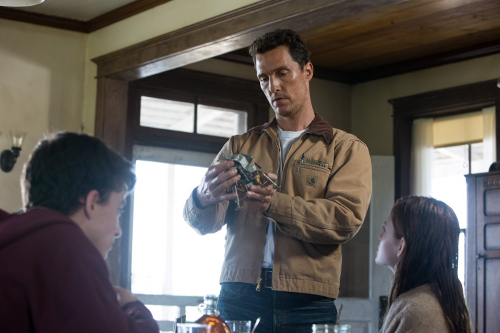
Matthew McConaughey stars as Cooper, a widower and former pilot who now owns a farm where he lives with his two young children. He does his best to provide for his family but clearly wants more for them than what the current world can provide. After finding a mysterious message in his daughter Murph’s room, Cooper finds himself being recruited by what is left of NASA. They are secretly putting together a mission to journey through a wormhole that has appeared near Saturn. They do not know how it got there but they do know that beyond it is a solar system with some potentially habitable planets. They want Cooper to pilot an expedition through the wormhole to explore these planets and see if one is suitable to set up a new human colony. Cooper reluctantly agrees, even though it means leaving his children behind. He knows that the journey could kill him or – due to the laws of relatively – that by the time he does return his children may be much older than he is or already dead. But the fate of the human race – including his son and daughter – relies on finding a new home. So he sets out with a team of astronauts – and one pretty funny robot – on a journey that will take them farther than any humans have ever gone. The decision devastates his young daughter Murph – who he had a close relationship with – and it sets her out on a journey of her own to save humanity in a way she believes her father couldn’t.

To go into much more detail of the plot would ruin much of the experience. But I will say it becomes a fast paced and exciting journey. It does sometimes fall back on the usual genre tropes but there is never a dull moment; and it all builds up to an emotional and rewarding conclusion.
murph

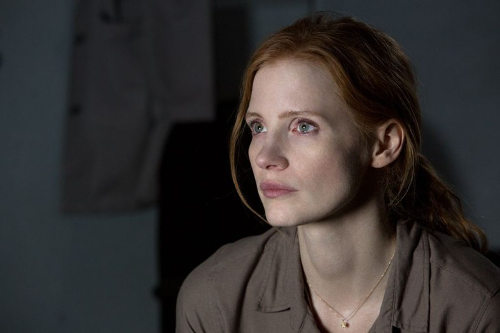
The performances are truly superb. For all his technical mastery, Nolan is also an actors’ director and he gets the most out of his casts. McConaughey is at his best here – which is saying a lot considering his work in recent years. The emotion he brings is on a whole different level than anything he has done before. Jessica Chastain, who plays the adult Murph, also has a strong presence. Both actors wear the burden of their decisions and regrets on their shoulders, and you can see it in every scene. They are the heart and soul of the film. Hathaway also did a wonderful job – as did Wes Bently, Michael Caine, and David Gyasi.

The score from Hans Zimmer is loud and heart pounding. He always manages to perfectly convey the intensity of some truly exciting set pieces – while also slowing down to capture the emotions of the more intimate moments, and this score is no different.

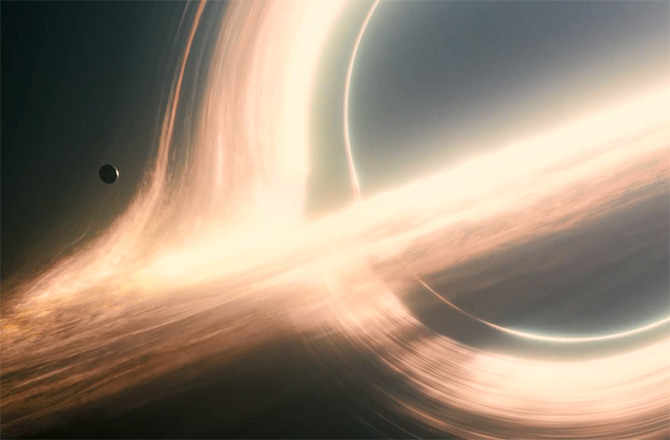
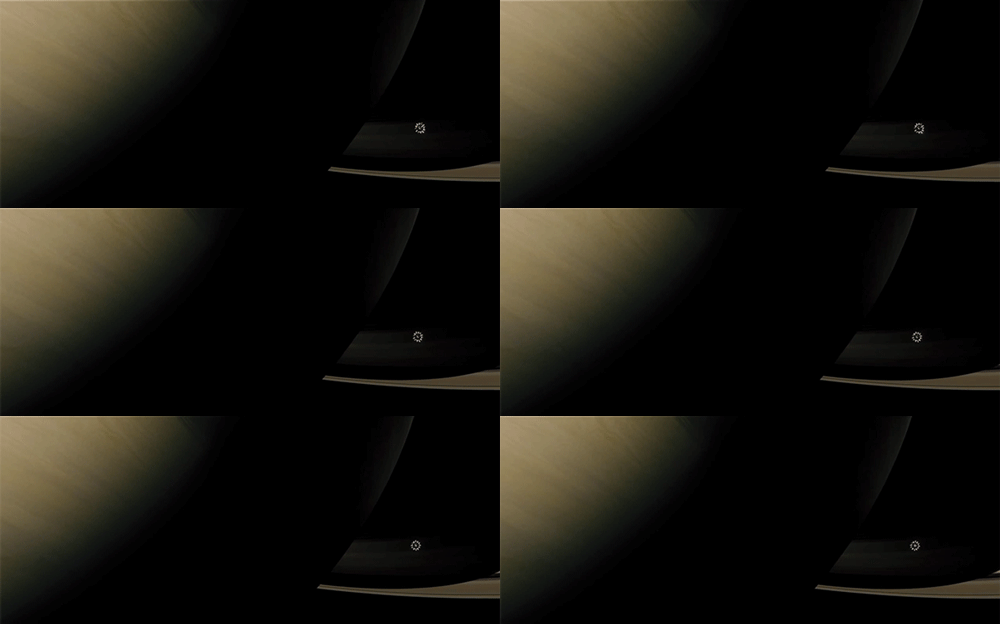
The visuals are absolutely stunning. The effects (most of them created through practical means) were influenced by physicist Kip Throne – who also oversaw a lot of the science in the film – and the result is dream-worthy space imagery. Interestingly, the depictions of the wormhole and black hole in ‘Interstellar’ are considered to be the most accurate ever created. The results are gorgeous, especially on a big screen – with one scene with Saturn making me all teary eyed.
tumblr_nel0c0Oncj1qd479ro1_1280

Below the spectacle and hard science is an emotionally resonant tale of exploration and human ambition that puts its faith not only in science but also the human soul.  Does it become heavy handed at times? Of course! This is a space opera – a science fiction epic – with a big budget, big ideas, big name actors, big visuals and so the emotions at times match that. The first 40 minutes or so do a fantastic job setting up the bond between Cooper and his daughter. It is a wonderful relationship – but a complex one filled with love, anger and regret. It is also the backbone of the story and Nolan builds the emotion from there.

Like with ‘The Tree of Life’ (I told you I was going here), the juxtaposition of dazzling space images and the exploration of the cosmos with this grounded and intimate family story about love and nature make for a challenging but truly rewarding experience. One that asks big questions about our relationship with each other and the universe we inhabit; and examines how the flow and clash of such things as love and instinct with nature can change and inspire us for better or worse. Nolan does seem to want to show how love has the ability to conquer and transcend even the harshest things nature and its laws can throw at us. It is almost fitting then that Chastain stars in each, and has a roll in both stories that could be almost viewed as similar – as the focal point of love that guides the main character and the audience. And like with ‘The Tree of Life’ I can totally understand why people would not like ‘Interstellar’. Neither are films for everyone. I believe most reviews I have seen are so mixed because ultimately ‘Interstellar’ relies so heavily on the emotions at the core of the story that it was inevitable that it wouldn’t connect with some people. You have to be open to some extreme sentimentalism, which just isn’t the case for everybody.

coop mur

I won’t go into much detail over the film’s final act, but I think it makes perfect sense within the logical and emotional progression of the story – though some critics disagree. They seem to think that Nolan’s often straight forward hard science approach is too stern and takes the wonder and ambiguity out of his stories and I found that to not be the case with ‘Interstellar’. Mainly because the ending does in fact have some level of ambiguity – but what it does explain adds a level of wonder and hope that would be lost had it been open ended. I will also say that I find it absolutely absurd that some critics who praise and accept the ending to’2001: A Space Odyssey’ have dismissed this one for being too convoluted or even nonsensical…as if those couldn’t also be said of the ending of Kubrick’s film.

But again maybe this is all just me. As I warned you, hyperbole was expected and I think this review lived up to that. I truly loved the film. It generated in me the same feeling of wonder, excitement and curiosity I got from the spectacle and emotions of ‘Close Encounters of the Third Kind’ and ‘Contact’ –the realism of ‘Gravity’ – and the complexity and mind bending theories of ‘2001: A Space Odyssey’. Throw in with that the connections I felt it had with such films as ‘The Tree of Life’ and there was no way I wasn’t going to love it. This is cinema at its finest. Whatever flaws it might have I can easily overlook due to not only how moving and entertaining of an experience it all is – but also because it is just so damn ambitious. Whether you see it on a large IMAX screen or not, you’ll be moved in one way or another.
tumblr_nejbrwgYQs1qanm80o3_500

Now, I don’t usually do this but I would like to end by quickly addressing the small group of people who have been crying sexism before the film even got its wide release. Apparently, because the lead is a scruffy male and the film is about the will power of mankind to journey off and explore the unknown, that it is somehow a male centric film that is about masculinity above all else. If the idea of human endeavor, innovation, the struggle to survive, and the pursuit of knowledge brings to your mind nothing but masculinity and male dominance then blame society – not the film – because it was clearly not its intentions  and really is just not even remotely the case here. You could easily replace McConaughey’s character with a female lead (like in ‘Contact’) and the narrative, emotional and thematic results would be EXACTLY the same. This all seems even more ridiculous given the fact that the female characters play a much more important role than any of the men. Their work, decisions and perspective essentially save the day. It isn’t until the men view the situations and universe through them that they are able to succeed.

I have also been thrown off by the complaints of Nolan’s reliance on “daddy issues” or the “dead wife/spouse” tropes, and fail to see how these (which I admit are often present in his films) should at all matter when they fit so well into the story and are so emotionally effective. Not to mention Cooper being a widower has nothing to do with any decision he makes; and the relationship Murph has with him is far more complex than simply being “daddy issues”. It is actually a wonderfully realized one, with Nolan drawing experience from the relationship he has with his own daughter.

But why are these even being brought up by people, so early and with such vigor? Do not get me wrong, I understand and appreciate the opinions of those who simply did not like it…but for the few who have criticized it for the aforementioned reasons I just cannot wrap my head around where they are coming from. Sexism is often an issue in cinema and film making as a whole and something that could clearly be worked on…but it just does not apply to ‘Interstellar’ in any way. And I say this as someone who isn’t a Nolan fan boy. Yes, I appreciate his work – he has made some truly great films – but I am not one of those who think he is the best director working right now. But it is hard to not be disappointed and confused by the fact that every time he releases a film there are tons of articles that pop up to critique what would otherwise be completely ignored in other films – or in some case they critique things they didn’t even care about in his other films. Maybe this is just the price a director like him faces. His work tends to be so popular that critics seem to try extra hard to make their voices heard – an attempt to quell the masses of fans excited to see it – by overreaching in their criticism. This is made all the more disheartening when you consider he is one of a very few filmmakers willing to take such big risks to make smart and ambitious films. But maybe I am wrong. Please, let me know your thoughts!

———

Twitter.

Review: War of the Worlds (dir by Steven Spielberg)


Steven Spielberg’s War of the Worlds shows that he hasn’t lost his touch when it comes to creating blockbuster spectacle. While he has spent much of the 2000’s creating dramatic films (The Terminal, Catch Me If You Can and Munich) he hadn’t made a film which spoke epic in both spectacle and themes. He had made two unique films with sci-fi themes with A.I. and Minority Report, but still they lacked the size and oomph of Spielberg’s past blockbusters. It took him remaking for the current generation a classic sci-fi story to bring us back the Spielberg many grew up with. His take on H.G. Wells tale of aliens invading Earth was both grandiose in it’s set-up, but he was also able to deftly weave a very personal story within the larger scheme of the narrative.

Working from David Koepp and Josh Friedman’s adaptation of the classic H.G. Wells novel, Spielberg goes back to his roots as a maker of thrillers that first showed his talents as a director. War of the Worlds has its spectacular CG moments when the alien Tri-Pods first rise up and out of the ground to the look of awe and fear from people witnessing the event. Spielberg begins the film’s unrelentless tension from these scenes and never lets go. Once the Tri-Pods start unleashing their death-rays on the populace and whatever else is in their way the film starts moving at breakneck speed. It’s these same apocalyptic scenes of the alien’s extermination of humans that has prompted critics (both positive and negative) to bring up Spielberg’s use of 9/11 imagery. From the clouds of ash and floating pieces of clothes to the sight of people running in panic as destruction rains upon them from out of nowhere.

Some critics have labeled Spielberg’s film as exploiting the horror of 9/11 and its aftermath, yet when a film like 28 Days Later use the same imagery and themes these same critics applaud the director of this film as daring. Its an unfair criticism of Spielberg and just shows how some people just seem to use the events of 9/11 as a crutch. Yet, it is this same use of people vaporised into nothing but ash and clothng that adds to the tension and horror. It is easy to use blood and gore to bring up a feel of horror, but Spielberg one up’s this and forgo grand guignol scenes. His technique actually brings an inhuman and alien quality to the death and destruction on the screen. From the moment the aliens arrive Spielberg lets us know that this is a war that has not been seen on Earth.

Spielberg and his writers have stuck pretty close to what Wells’ wrote in the original novel, but have decided to look at the story through the eyes of a father and his son and daughter. This gives the film a more personal, disjointed and chaotic feel. There’s no scenes of the government powerbrokers debating and deciding how best to combat the aliens and their machines. No scenes of scientists trying to figure out how best to fight and get through the aliens’ defenses. In fact, War of the Worlds is the anti-Independence Day. What we get instead is a story of a man and his children trying to just survive the apocalypse occuring around them as best as they can. This choice by Spielberg and his writers to go this route is best shown in a scene where Tom Cruise’s character with his kids run into a convoy of military vehicles heading towards the frontline. We see Humvees, M1A2 Main Battle Tanks and other assorted military hardware and hundreds of soldiers. We can hear the sound of the battle just over the ridge of a hill, but just like Cruise’s character we do not actually see the battle happening. We hear snippets of commands and reports from the soldiers around Cruise. Spielberg could’ve easily panned the camera up over the ridge to see how the battle was progressing, but he stays his hand focuses instead on the dad and his family. It’s easier to go the route that Bay or Emmerich would take and show the sturm und drang, but that wasn’t the story Spielberg was trying to tell.

ILM’s work in creating the alien Tri-Pods and the subsequent terraforming the aliens begin were some very good work from an FX company with a history of impressive work. The Tri-Pods kept the original H.G. Wells description from the novels but gave them a modern take. While the George Pal version of the alien ships remain classic sci-fi icons these new Tri-Pods in Spielberg’s War of the Worlds definitely conveyed alien menace and destruction the moment they began to come out of the ground. It was a joy as a sci-fi fan to actually see that Spielberg and the writers decided to show just how menacing the alien invaders were in the way they began to terraform the planet to suit their needs. It definitely put a new definition to the term “the blood is life”.

The acting is what you expect from a Spielberg/Cruise collaboration. Cruise is actually very believable as a loser father who seem to look at his kids as more of a hindrance and a scheduled paternal duty than something he actually enjoys and looks forward to. Some of the best scenes Cruise has in the film are quiet ones between him and his daughter (played by Dakota Fanning) where he realizes that he really doesn’t know his daughter that well and can’t even remotely figure out how to calm her down and make her feel safe. When his daughter asks him to sing her a lullaby, the look of incomprehension at not knowing any showing on Cruise’s face is just brilliant. The one misfire in terms of characters in the film is Tim Robbins. The sequence in the film where they meet up with his paranoid and slowly going nuts character is actually very good in terms of ratcheting up the tension, but Robbins’ performance was more funny than anything else. Spielberg had created such a doom and gloom atmosphere that Robbins’ character’s appearance ruins it abit.

One other thing which kept me from calling this film an outright great film are the kids of Cruise’s character. While the performances by Dakota Fanning as the daughter and Justin Chatwin as the son were quite good the way they were written left them annoying and baffling. Either the daughter was a shrieking and emotional mess or the son was written as a rebellious teen who wanted to get into the fight despite knowing he was his sister’s lone protector to begin the film. It made Cruise’s character seem less of an unattentive father and boor, but more of a parent who tried his best with children who defied and talkbacked at every turn. If the writers just made the kids even remotely sympathetic it definitely would’ve rounded out their characters as real people.

Overall, I think Spielberg’s War of the Worlds succeeds in what it set out to do despite some flaws with some of the characters. It entertains and it also shows that when it comes to blockbuster filmmaking he is still the master and everyone else just pretenders to his throne. As for the ending that some think as being short, abrupt and just a tad deus ex machina in execution, well I suggest they read or reread the book again. The ending fit the film perfectly. If the film was an all-out blast to the senses then a different one may be a better fit, but for the type of story Spielberg decided to film the ending made sense in its execution.

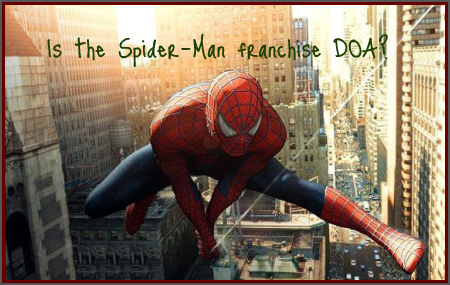
Spider-Man 4 Delayed til 2012, Raimi/Maguire Out


It looks like the one major comic book film franchise of the last decade has started to fall apart.

The past couple weeks have seen news of the disagreements between the Spider-Man franchise’s only director (Sam Raimi) and it’s studio (Sony Pictures) ranging from script ideas to who should be the main villain of the fourth installment in the series. Raimi’s been very insistent in using the classic Spider-Man villains such as Green Goblin, Doctor Octopus and, in the third film, Sandman. The studio wants the newer villains such as Venom and Carnage (two villains I thought were given too much press by comic book fans of the younger generation).

With the fourth film’s start date for filming having been delayed the targeted release date for the film on May 2011 wouldn’t be met. Visual-effects teams and houses have been told not to start work. It is these production teams who need the most time to do their work and the fact that they’ve been told not to even start pre-prod work means the delay will most likely affect not just the targeted date of 2011, but probably it’s new release date of 2012 (FX quality could suffer if rushed for the latter which Sony may just take a chance on).

All these delays and postponements have just cost the franchise it’s two most visible frontmen. Director Sam Raimi and Tobey Maguire (the only actor to play Peter Parker in all three films) are not out of the fourth film. Sony looks to reboot the franchise with a new director and a new lead actor as they move forward to try and make a 2012 release.

Will taking in a new director and a new lead mean a fourth film in the franchise that will have less of a budget to work with (the three films averaged between 150-250 million budget per)? Is Sony trying to rush this fourth film and giving up on the franchise’s only director and lead actor to try and keep their licensing rights to the franchise? Will Marvel (now a subsidiary of Disney Corp.) play hardball with Sony and the other studios which hold the licensing rights to Marvel characters?

While the third Spider-Man film wasn’t on the same level in terms of quality as the first two it still made a ton of money. One would think that a studio such as Sony would listen to the director who actually made the franchise become a juggernaut when summertime comes around. As a company Sony has made many missteps in their consumer and entertainment divisions. The struggle between studio and filmmaker may just have started the death-knell to the franchise which ushered in the Golden Age of comic book-based films.

Only time will tell, but unless Sony is able to get a director who can bring in the sort of inventive and imaginative vision to the franchise and a lead actor who can easily step into Maguire’s shoes and make audiences forget about the change, then I see this franchise heading down a fast slope into B-movie territory. A development which would further cement Marvel’s desire to take back all it’s properties under it’s fold.

Source: http://www.hollywoodreporter.com/hr/content_display/news/e3iddf4077045b31afc6088f148eaee3ac2

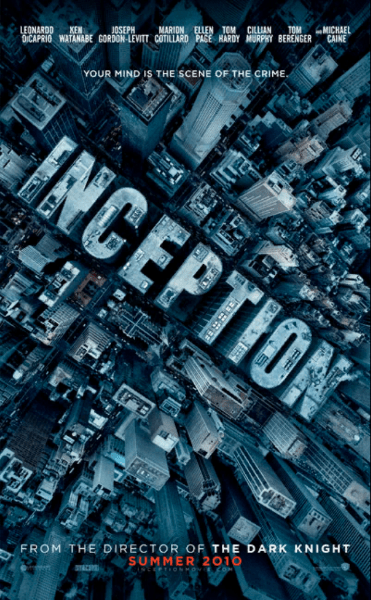
Inception 2nd Teaser Trailer


I still have no clear idea what Christopher Nolan’s follow-up film to The Dark Knight is all about. Inception seems to be about the power of the mind to alter things. From this latest trailer there a sense of Proyas’ Dark City in the some of the visuals and more than just a passing influence from the Wachowski Brothers’ Matrix Trilogy. But this being Nolan whatever influences we may see will probably be supplanted by his own take on the nature of reality, memory and dreams.

If rumors are true about the supposed budget for this film (some saying it’s 200million or more) then Nolan is really inching towards Cameron territory when it comes to acquiring the sort of budget to make his ideas come to life. I’m interested in knowing if Nolan will be shooting some of this film on IMAX like how he did some of the more expansive sequences in The Dark Knight. From the look of some of the scenes in this trailer I wouldn’t be shocked if he did.

ThinkHero: http://www.thinkhero.com/2009/12/28/inception-teaser-trailer-2-video/

HD ver. @Quicktime: http://www.apple.com/trailers/wb/inception/

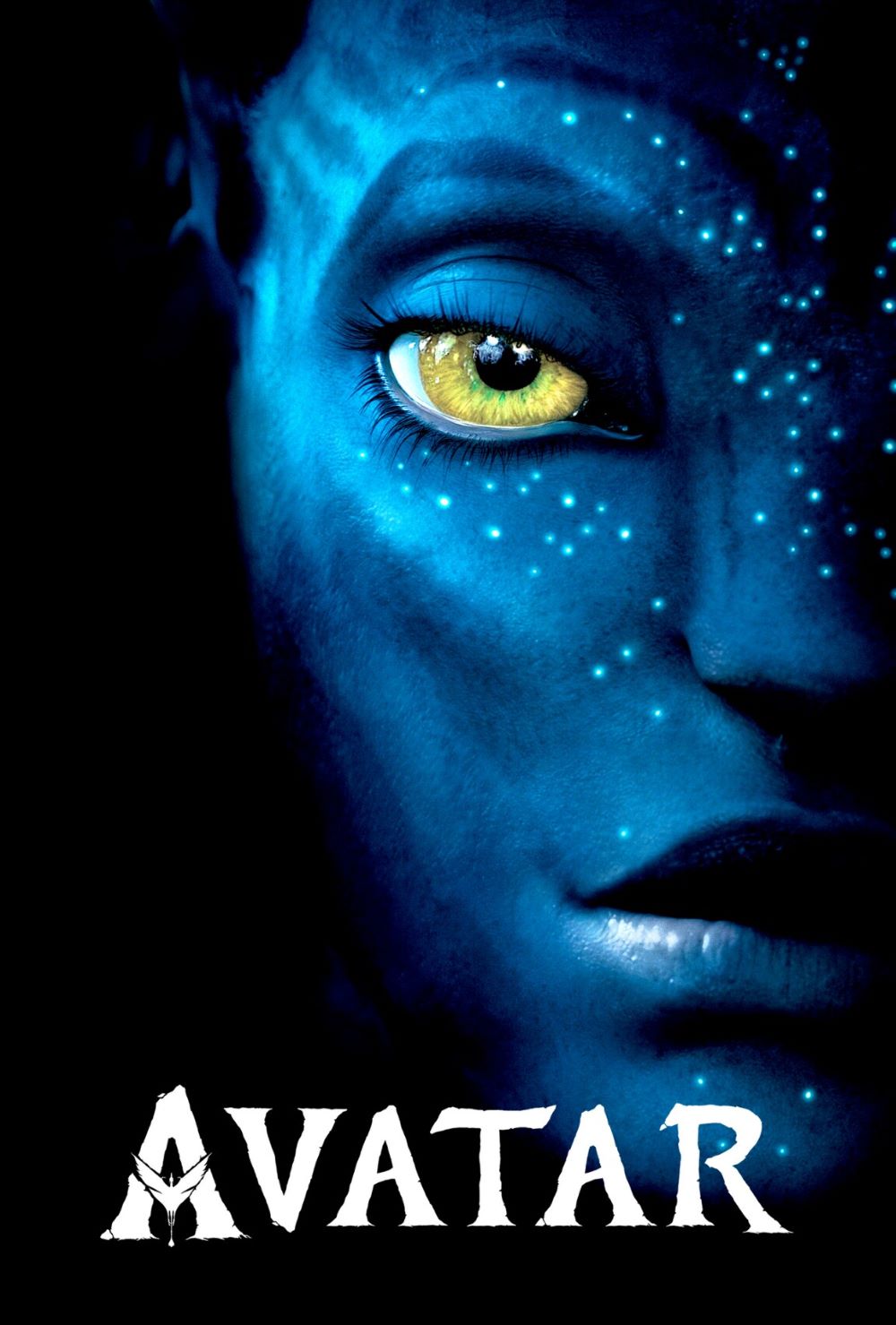
Film Review: Avatar (directed by James Cameron)


“Everything is backwards now, like out there is the true world, and in here is the dream.” — Jake Sully

When was the last time a film became an experience for you—not just a story that made you think, but one that swept you up and immersed you completely? The most hyped film of 2009, and likely of this decade, was such an experience for me. James Cameron’s Avatar, a project over fifteen years in the making, more than lived up to the hype that followed it from the earliest production leaks.

Avatar is not the greatest film ever made, nor does it revolutionize filmmaking the way Technicolor did in the late 1950s and early 1960s. What Cameron has accomplished is providing a blueprint for how filmmakers can bring audiences closer to the stories they tell. Stories and ideas once considered unfilmable due to technological limitations are now within reach. Avatar is an experience that should be seen, regardless of whether one embraces its story. The narrative is not original—some may be reminded of an Oscar-winning film directed by Kevin Costner or an animated feature with “Gully” in the title. While the lack of originality is noticeable, the story works within the context of Cameron’s vision. Clichéd and hackneyed dialogue aside, it serves the film well. Cameron’s writing may not rival that of Kaufman or Mamet, but he knows how to tell a simple story and keep the audience engaged.

With that flaw acknowledged, I haven’t felt this way about a film—nor even the best I’ve seen this year—since the first time I watched The Fellowship of the Ring or, before that, Spielberg’s Jurassic Park. Only a few films truly sweep me into their world and hold me there. It didn’t matter that Avatar wasn’t the second coming of Rashomon or this generation’s Citizen Kane. What I watched, I fully bought into. The world of Pandora, imagined by Cameron and brought to life by WETA Digital and ILM, felt real. The detail, clarity, and dedication in its creation gave me hope that creative boundaries once thought uncrossable are now being stepped over.

While the film is also available in 2D for theaters without 3D capabilities, it must be seen in 3D, ideally in IMAX 3D. Cameron’s use of the new “emotion capture” cameras he helped develop achieves a level of CGI photorealism that avoids the “Uncanny Valley” effect seen in films like The Polar ExpressBeowulf, and A Christmas Carol. The groundbreaking “mo-cap” technique, refined by WETA Digital for The Lord of the Rings trilogy, convinced Cameron it was time to make Avatar as he envisioned. The Na’vi are now the most realistic CGI characters ever put on screen, surpassing even Gollum. Cameron demonstrates that the limit of CGI use is not quantity, but how it is implemented. Lucas, Bay, and others who have misused CGI have much to learn from Cameron’s achievement.

It took a few minutes to adjust to the 3D effect, but once my eyes adapted, the film’s magic took hold. The distinction between CGI and live-action scenes blurred and eventually disappeared. Even the best CGI-heavy films sometimes break immersion, but Avatar never did. This total immersion helped me overlook the story’s familiarity and, for some, its ordinariness.

Despite the material, the performances ranged from good to excellent. The villains, while written one-dimensionally, were played with enough conviction to be believable. Giovanni Ribisi’s corporate weasel, a clear echo of Burke from Aliens, was cartoonish in motivation, but Cameron is not known for deep, well-rounded characters. The standout was Stephen Lang as Colonel Miles Quaritch. His scenery-chewing performance was riveting, stealing the film from Sam Worthington’s “hero on a journey.” While Lang’s performance may not win awards, it stands as one of the year’s most memorable, joining the ranks of characters audiences love to hate.

Some may think I’ve joined the Cameron fan club, but I can’t explain why I love this film despite its flaws: the familiar story, clichéd dialogue, and one-dimensional characters. Is Avatar just a technical and visual marvel? Yes, and more. Does the CGI and bombastic climax overshadow the storytelling? No, it actually propels the story forward, much like Jake Sully’s own fragile legs.

In the end, my love for Avatar comes down to the experience it provided—a rare occurrence in modern cinema. Cameron didn’t make a perfect film, nor one better than sliced bread. But he created a filmgoing experience that will be remembered decades from now, much like the first time audiences saw Star Wars and believed in Jedi and space battles, or Superman and believed a man could fly. Cameron’s Avatar made me believe in Pandora, a place I hope to visit, or at least experience through his eyes. I’m eager to see what he—and other filmmakers inspired by his work—will create next.