In honor of James Stewart’s birthday, our scene that I love comes from one of my favorite Stewart films, 1959’s Anatomyofa Murder.
In today’s scene that I love, James Stewart explains to his client (played by Ben Gazzara) that there are four ways that he can defend a murder charge. The contrast between Stewart’s classic style and Gazzara’s intense method style makes for an intense scene between two very talented and unique actors.
As some of our regular readers undoubtedly know, I am involved in a few weekly watch parties. On Twitter, I host #FridayNightFlix every Friday and I co-host #ScarySocial on Saturday. On Mastodon, I am one of the five hosts of #MondayActionMovie! Every week, we get together. We watch a movie. We tweet our way through it.
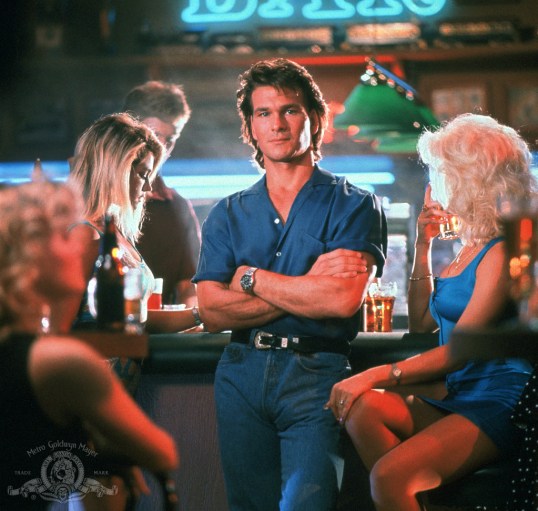
Tonight, at 10 pm et, I will be hosting #FridayNightFlix! The movie? 1989’s Road House!
The name is Dalton! Everyone thought that Dalton would be bigger but he’s the second best bouncer in the world and if anything happens to Wade Garrett, he’ll be the absolute best. He’s a legend but can he clean up the wildest bar in Missouri? Will Ben Gazzara convince him to switch sides? Will Doc convince him to give peace a chance? And will Tinker ever get over his fear of polar bears? Just remember, pain don’t hurt. Be nice until it’s time not to be nice. And always check the boots for blades.
If you want to join us this Friday, just hop onto twitter, start the movie at 10 pm et, and use the #FridayNightFlix hashtag! I’ll be there tweeting and I imagine some other members of the TSL Crew will be there as well. It’s a friendly group and welcoming of newcomers so don’t be shy.
First released in 1982, this epic recreation of one key battles of the Korean War was an expensive film with a cast of well-known actors. Jacqueline Bisset plays a wealthy army wife who tries to protect five South Korean children who have found themselves in the middle of the battle. Ben Gazzara plays her husband, a major who is having an affair with the daughter of Toshiro Mifune. David Janssen and real-life film critic Rex Reed wander through the film as journalist. (Janssen growls like a man dealing with a serious hangover while Reed struggles to not look straight at the camera.) Richard Roundtree plays a tough sergeant. The great Italian actor Gabriele Ferzetti plays a Turkish officer. And, finally, the role of legendary American general Douglas MacArthur — of “I will return” fame — is played by the very British Sir Laurence Olivier. Olivier was apparently told that, in real life, MacArthur often sounded like the comedic actor W.C. Fields and Olivier often seems to be imitating Fields’s pinched style of speaking. Olivier also wears almost as much makeup here as he did in his production of Othello. MacArthur is portrayed as being almost a mystic warrior, a man who relies as much on his faith as his strategic genius to repel the communists. (In victory, he recites The Lord’s Prayer.) The film was directed by Terence Young, who previously brought James Bond to cinematic life.
Inchon is notorious for being a flop with both critics and audiences. The film had a budget of $46,000,000 and reportedly made $5,000,000 at the box office before it was withdrawn. The entirety of the budget was put up by the Unification Church, which is an organization that many people consider to be a cult. (I like neither communists nor cultists so this film left me with no one to root for.) The film proved to be such a flop at the box office that it has never been released on home video. It did, however, air on television a few times and, in recent years, the television cut has been posted to YouTube. That’s how I saw Inchon.
I watched Inchon because I’ve frequently seen it referred to as being one of the worst films ever made. Watching the film, I have to say that I think the “worst film” label is a bit extreme. For the most part, it’s just an extremely uneven and often rather boring film, one that mixed scenes of surprisingly brutal combat with dialogue-heavy scenes that just seem to drag on forever. It’s a film that belongs as much in the disaster genre as the war genre as the film is full of rather shallowly-written characters who all have their own individual dramas to deal with. Will Jacqueline Bisset save the children? Who will sacrifice their lives to defeat the communists? Will Ben Gazzara, who often seems to be the sole member of the cast who is at least tying to give a credible performance, choose his wife or his mistress? The film ultimately feels like a compressed miniseries. Everyone has a story but hardly anyone makes an impression.
That said, Laurence Olivier’s performance as Douglas MacArthur …. agck! Seriously, it’s hard to know where to even begin when it comes to talking about just how miscast Olivier is as the quintessential all-American general. It’s been said that it takes a truly great actor to give a truly bad performance and Olivier certainly proves that to be true in this film. Obviously frail and trying to sound like W.C. Fields, Olivier’s MacArthur is a general who would inspire zero confidence. The film doesn’t help by portraying MacArthur as being an almost holy figure, one who is often framed to look like almost an angel descending from Heaven to lead the battle against America’s enemies. The film is full of scenes of people discussing MacArthur’s genius just to be followed by a scene of Olivier looking old, tired, and rather grumpy. There were a few times when I thought I could see Olivier’s hair dye running down the side of his face. It may have been my imagination or just the graininess of the upload on YouTube but, given the quality of the film, I can’t really dismiss the possibility that it happened and no one felt like doing a second take.
As I said, Inchon can be found on YouTube. It’s not the worst film ever made but that doesn’t mean it’s a good one.
In 1939, an ocean liner named the MS St. Louis set sail from Hamburg. Along with the crew, the ship carried 937 passengers, all of whom were Jewish and leaving Germany to escape Nazi persecution. The ship was meant to go to Havana, where the passengers had been told that they would be given asylum. Many were hoping to reunite with family members who had already taken the voyage.
What neither the passengers nor Captain Gustav Schroeder knew was that the entire voyage was merely a propaganda operation. No sooner had the St. Louis left Hamburg than German agents and Nazi sympathizers started to rile up anti-Semitic feelings in Cuba. The plan was to prevent the passengers from disembarking in Cuba and to force the St. Louis to then return to Germany. The Nazis would be able to claim that they had given the Jews a chance to leave but that the rest of the world would not take them in. Not only would the Jews be cast as pariahs but the Germans would be able to use the world’s actions as a way to defend their own crimes.
Captain Schroeder, however, refused to play along. After he was refused permission to dock in Cuba, he then attempted to take the ship to both America and Canada. When both of those countries refused to allow him to dock, Schroeder turned the St. Louis toward England, where he planned to stage a shipwreck so that the passengers could be rescued at sea. Before that happened, Belgium, France, the Netherlands, and the United Kingdom jointly announced that they would accept the refugees.
Tragically, just a few days after the passengers disembarked, World War II officially began and Belgium, France, and the Netherlands all fell to the Nazi war machine. It is estimated that, of the 937 passengers on the St. Louis, more than 600 of them subsequently died in the Nazi concentration camps.
The journey of the St. Louis was recreated in the 1976 film, Voyage of the Damned, with Max von Sydow as Captain Schroeder and a collection of familiar faces playing not only the ship’s passengers and crew but also the men and women in Cuba who all played a role in the fate of the ship. In fact, one could argue that there’s a few too many familiar faces in Voyage of the Damned. One cannot fault the performances of Max von Sydow, Malcolm McDowell, and Helmut Griem as members of the crew. And, amongst the passengers, Lee Grant, Jonathan Pryce, Paul Koslo, Sam Wanamaker, and Julie Harris all make a good impression. Even the glamorous Faye Dunaway doesn’t seem to be too out-of-place on the ship. But then, in Havana, actors like Orson Welles and James Mason are awkwardly cast as Cubans and the fact that they are very obviously not Cuban serves to take the viewer out of the story. It reminds the viewer that, as heart-breaking as the story of the St. Louis may be, they’re still just watching a movie.
That said, Voyage of the Damned still tells an important true story, one that deserves to be better-known. In its best moments, the film captures the helplessness of having nowhere to go. With Cuba corrupt and the rest of the world more interested in maintaining the illusion of peace than seriously confronting what was happening in Germany, the Jewish passengers of the St. Louis truly find themselves as a people without a home. They also discover that they cannot depend on leaders the other nations of the world to defend them.
Defending the passengers falls to a few people who are willing to defy the leaders of their own country. At the start of the film, Nazi Intelligence Chief Wilhelm Canaris (Denholm Elliott) explains that Captain Schroeder was selected specifically because he wasn’t a member of the Nazi Party and could not be accused of having ulterior motives for ultimately returning the passengers to Germany. Canaris and his fellow Nazis assume that anti-Semitism is so natural that even a non-Nazi will not care what happens to the Jewish passengers. Instead, Schroeder and his crew take it upon themselves to save the lives of the passengers. It is not Franklin Roosevelt who tries to save the passengers of St. Louis. Instead, it’s just a handful of people who, despite unrelenting pressure to do otherwise, step up to do the right thing. Max von Sydow, who was so often cast in villainous roles, gives a strong performance as the captain who is willing to sacrifice his ship to save his passengers.
Flaws and all, Voyage of the Damned is a powerful film about a moment in history that must never be forgotten.
First released in 1999, Summer of Sam is Spike Lee’s sprawling, frustrating, flawed, occasionally compelling, and ultimately rather intriguing film about the summer of 1977 in New York City.
As one can guess from the title, it was a summer that was dominated by the reign of terror of the serial killer known as the Son of Sam. While New York suffered one of the hottest summers on record, the Son of Sam shot couples while they sat in their cars. Because all of his victims had been women with long, dark hair, women across the city wore blonde wigs. While the police searched for the killer, the city was also caught up in the World Series. Club 57 was the hottest club in New York but a growing number of rebels, inspired by the news that was coming out of the UK, eschewed the glitz of disco for the gritty and deliberately ugly aesthetic of punk and the Mud Club.
Though the film is centered around the murders of the Son of Sam, he remains a largely shadowy figure in the film. Played by Michael Badalucco, David Berkowitz spends most of his time in his filthy home, yelling at the dog across the street and writing cryptic messages on the walls. He only gets a few minutes of screen time because the film is ultimately less about the Son of Sam’s crimes and more about how one Italian-American neighborhood in New York deals with the atmosphere of fear and paranoia created by those crimes. It’s a neighborhood that’s ruled over by the ruthless but benevolent Luigi (Ben Gazzara). When the two detectives (Anthony LaPaglia and Roger Guevener Smith) come to the neighborhood in search of information, they know that Luigi is the man to see.
Vinny (John Leguizamo) is one of the neighborhood’s citizens, a hairdresser who hasn’t let his marriage to Dionna (Mira Sorvino) stand in the way of his compulsive womanizing. Vinny is the type who cheats on his wife and then goes to Confession to get forgiveness. He’s the type who gets angry whenever Dionna wants to have sex with the lights on or do anything other than a quick three minutes in the missionary position. When he realizes that the Son of Sam was watching him while he was having sex in a car with Dionna’s cousin and that he could have been one of his victims, Vinny starts to spin out of control. Vinny’s childhood friend is Ritchie (Adrien Brody), who shocks everyone when he spikes his hair, puts on a Union Jack t-shirt, and starts speaking with a fake British accent. Ritchie and his girlfriend, Ruby (Jennifer Esposito), embrace the punk lifestyle and even put one the Son of Sam’s letters to music when they perform at the Mud Club.
It’s an ambitious film but it’s also an overlong film, one where the slow spots can truly test the viewer’s patience. With a 142-minute running time, Summer of Sam finds the time to touch on almost every trope of the late 70s. Vinny and Dionna hit the clubs, where the usually quiet Dionna truly comes to life as she dances. (Vinny’s moves are far less impressive. Tony Manero would have laughed at him.) Ritchie not only embraces punk rock but he also makes his money by performing in live sex shows. When a mysterious man offers to give Vinny and Dionna a ride in his limo, it’s hard not to smile when it’s revealed that he’s taking them to the infamous sex club, Plato’s Retreat. One can respect Lee’s ambition while still finding the film itself to be a bit too self-indulgent for it’s own good.
Spike Lee, for all of his other talents, has never been a particularly subtle director. Vinny and his friends spend a lot of time hanging out at the end of street, strategically placed in front of a sign that loudly proclaims, “DEAD END.” At one point, Vinny is inspired to run to his window and start screaming insults at the Son of Sam and Leguizamo’s histrionic delivery of the lines make it impossible to take his anguish seriously. At the same time, there are moments that work brilliantly. I particularly liked the scenes that took place during the blackout of 1977. Luigi automatically knows how to keep control in his neighborhood and he sends his men out with baseball bats, channeling their aggression into a search for the phantom serial killer. For every scene that doesn’t work, there’s a scene like the Baba O’Riley montage or Vinny, Dionna, Ritchie, and Ruby having a candlelit dinner.
“We really dig your vibe.”
John Leguizamo is shrill and miscast as Vinny, though I’m not sure if anyone could have made much of such a one-dimensional characters. I preferred the performances of Mira Sorvino, Adrien Brody, and Jennifer Esposito, who all brought their characters to authentic life. (I especially liked how Brody switched from being tough to being a wounded child at the drop of a hat.) As is so often the case with Lee’s films, it’s the supporting actors who make the strongest impression. I loved Mike Starr’s earthy performance as Ritchie’s father and Ben Gazzara’s sly turn as the neighborhood mobster. Bebe Neuwirth is underused but memorable as Vinny’s boss.
The film is overstuffed and overlong but it effectively portrays a community in the grips of paranoia and anger. In the end, the film is epitomized by a scene in which the neighbor’s dog enter David Berkowtiz’s living room and starts yelling at him in the voice of John Turturro. It’s a scene that’s so ludicrous that it somehow becomes effective. It’s a scene that most directors would have left on the editing room floor but Spike Lee included it. It takes courage to write, film, and keep a scene like that. Summer of Sam is a wreck of a film but it’s also ultimately a compelling portrait of a community coming apart. In the end, just as in real life, Berkowitz is brought to justice and a community is left wondering what to do now.
Summer of Sam features some of Spike Lee’s best work and also some of his worst. The film opens with columnist Jimmy Breslin describing New York as being the city that he both loves and hates and that’s the way that I feel about this film. For all of its flaws, there’s enough strengths to make up for them. It’s a New York story and, appropriately, it’s just as messy as the city that it is about.
Though the Academy of Motion Picture Arts and Sciences claim that the Oscars honor the best of the year, we all know that there are always worthy films and performances that end up getting overlooked. Sometimes, it’s because the competition too fierce. Sometimes, it’s because the film itself was too controversial. Often, it’s just a case of a film’s quality not being fully recognized until years after its initial released. This series of reviews takes a look at the films and performances that should have been nominated but were, for whatever reason, overlooked. These are the Unnominated.
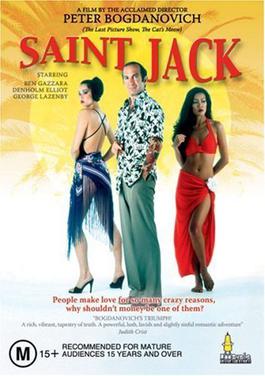
In 1979’s Saint Jack, Ben Gazzara stars as Jack Flowers. Jack was born in Brooklyn in 1931, a first-generation Italian-American. Though Jack himself prefers to keep his past something of a mystery, it’s implied that his family had less-than-savory “connections.” Jack served in the Korean War. After the war, he served in the Merchant Marine and spent a while trying to pursue a career as a writer. Now, in the early 1970s, Jack lives in Singapore.
What does Jack do in Singapore? He seems to know everyone and everyone seems to like him, with the exception of a few members of a Chinese triad who view Jack as being their competition. Jack is friendly and he knows how to talk to people. With the Vietnam War waging, Singapore is full of American soldiers on R&R and Jack is always willing to help set them up with companionship during their stay. He does the same thing for the businessmen who stop off on the island. At the same time, if someone just wants to play a game of squash, Jack can direct them to nearest health club. Whatever someone needs, Jack know how to get it.
This episodic film is largely a character study, following Jack over three eventful years of his life. We learn a lot about Jack just from watching his interactions with his friend William (Denholm Elliott), an alcoholic accountant who visits Singapore once a year and who is one of the few people with whom Jack is comfortable just being himself around. For all of his friendliness and good humor, Jack never quite lets anyone get too close to discovering who he really is. In many ways, Jack feels trapped in Singapore. He’s getting older and the world around him is changing and becoming less safe. Jack’s true goal is to open his own brothel, make a fortune, and eventually return to Brooklyn a rich man. At times, with the help of the CIA and a shady businessman (played by the film’s director, Peter Bogdanovich), it appears that Jack is going to do just that. But when his business associates put pressure on Jack to help them blackmail a gay U.S. Senator (played by George Lazenby, of On Her Majesty’s Secret Service fame), Jack is forced to finally decide how far he’s willing to go to achieve his dream.
The film works best as a showcase for Ben Gazzara, the character actor who may be best remembered for his over-the-top villainous turn in Roadhousebut who also gave excellent performances in films that rarely got the appreciation that they deserved. Starting his career as the accused killer in Anatomy of a Murder, Ben Gazzara brought his trademark intensity to several independent and mainstream films. He was a favorite of John Cassavetes. Over the course of his long career, Gazzara was never nominated for a single Oscar, though he certainly deserved to be nominated for one here. I would rate his work in Saint Jack as being superior to the performance that won that year’s Oscar, Dustin Hoffman’s rather self-satisfied turn in Kramer vs. Kramer. From the minute that Gazzara appears onscreen, he simply is Jack. The film was shot on location in Singapore and Gazzara walks through the streets with the an appealing confidence. As Jack, he’s a likable raconteur but, in the film’s quieter moments, Gazzara allows us to see just how alone Jack actually is. Jack may know every corner of Singapore but he also knows that it will never truly be where he belongs. There’s a particular poignance to Gazzara’s scenes with Denholm Elliott. Jack and Bill are two very different men but they share a desire to return to their homes.
Saint Jack should have been a comeback for Peter Bogdanovich, the film critic-turned-director who got off to a strong start with Targetsand The Last Picture Show but whose career floundered as the 70s moved on. Following the Oscar-nominated Last Picture Show and Paper Moon, Bogdanovich directed three big budget films — Daisy Miller, At Long Last Love, and Nickelodeon — that all failed at the box office. Finding himself a sudden pariah in Hollywood, Bogdanovich returned to his low-budget roots with Saint Jack, getting funding from Roger Corman and directing the film in a gritty, cinéma vérité-style. Roger Ebert loved the film, declaring that it proved that Bogdanovich was still a director worthy of appreciation. Unfortunately, the film was never widely distributed and it proved to be another box office disappointment for Bogdanovich. Sadly, the film was also ignored by the Academy, despite award-worthy performances from both Gazzara and Elliott.
Bogdanovich, who was born 84 years ago on this date, would often be cited as a cautionary tale for other directors who peaked early and spent the rest of their career on a downward slope. That’s not quite fair to Bogdanovich, who did continue to direct good films like Saint Jack, Mask, and The Cat’s Meow. Before he passed away in 2022, Bogdanovich found new popularity as both a character actor and as a frequent guest on TCM. And, fortunately, his films have come to be better appreciated with age. Saint Jack may not have gotten the attention it deserved in 1979 but it has since been rediscovered and rightfully acclaimed.
On this date, in 1908, James Stewart was born in Pennsylvania. Over the course of a long career that saw him become a favorite of every director from Frank Capra to John Ford to Alfred Hitchcock to Anthony Mann, Jimmy Stewart gave a series of amazing performances. My favorite Stewart film is, of course, It’s A Wonderful Life. But I also love Stewart’s performance in 1959’s Anatomy of a Murder. Playing a somewhat cynical attorney, Stewart received his final Oscar nomination for Best Actor for his work in this classic and influential film.
In today’s scene that I love, James Stewart explains to his client (played by Ben Gazzara) that there are four ways that he can defend a murder charge. The contrast between Stewart’s classic style and Gazzara’s intense method style makes for an intense scene between two very talented and unique actors.
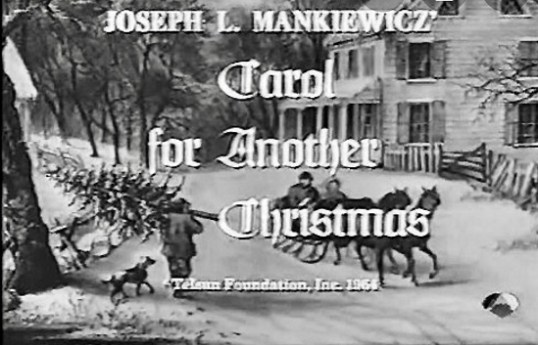
Daniel Grudge (Sterling Hayden) is a wealthy American industrialist who served in World War II and who, despite seeing first hand the horrors of Hiroshima, still believes that war is sometimes the only answer. He spends his Christmas Eve sitting in darkened study, thinking about his dead son (who was killed in combat) and listening to an old record. When his nephew, Fred (Ben Gazzara), stops by, it leads to an argument about American foreign policy. (Who stops by their uncle’s house on Christmas Eve to argue politics?) Fred is do-gooder. Daniel Grudge hates do-gooders.
So, naturally, it’s time for Daniel Grudge to be visited by three ghosts! The Ghost of Christmas Past (Steve Lawrence) takes Grudge first to a troop ship that is full of coffins, representing the dead of World War I. Then he forces Grudge to relive his own callous reaction to Hiroshima. Grudge sees how his actions upset the nurse (Eva Marie Saint) who was traveling with him. The Ghost of Christmas Present (Pat Hingle) invites Grudge to eat a feast in front of a camp full of refugees. The Ghost of Christmas Future (Robert Shaw) takes Grudge to the future where, after a devastating nuclear war, a buffoonish leader (Peter Sellers) encourages his followers to continue to make war and to live only for themselves. Grudge watches as his former butler (Percy Rodriguez) is murdered for advocating for peace. Back at his mansion, Fred shows up again and Grudge must now decide …. will he support the work of the United Nations?
YEEEEESH! What a heavy-handed movie! Really, I guess I shouldn’t be surprised at how unsubtle the film’s message was. Originally made for television, A Carol For Another Christmas was actually co-produced by the United Nations. It was the first of four UN-produced films that aired on ABC between 1964 and 1966. Seen today, with all that we know about the UN’s signature mix of corruption and incompetence, the film’s message seems almost laughably naïve. “Only the UN can bring peace,” the film says. Tell that to Israel, the next time that the UN passes a resolution condemning it for existing and defending itself. Say that only the UN can make the world a better place when some of the worst dictatorships on the planet are sitting on the Human Rights council.
The heavy-handed message aside, A Carol For Another Christmas was full of talent both behind and in front of the camera. This was the only TV movie to be directed by Joseph L. Mankiewicz and, whatever else one might say about the film, he was responsible for some intriguingly moody shots. The script was written by Rod Serling who, unfortunately, allowed his didactic tendencies to get the better of him and wrote a film where characters didn’t have conversations as much as they just gave speeches. The cast, however, is uniformly strong. Sterling Hayden, Robert Shaw, and Steve Lawrence are obvious stand-outs. Pat Hingle does fine until his role is diminished to one long harangue. Playing the so-called “Imperial Me,” Peter Sellers brings so much needed unpredictability to the film, even if his character is saddled with the film’s most heavy-handed moment. The Imperial Me teaches his followers that the individual is more important than the state and that everyone should focus on “me” instead of “we.” Cutting-edge satire this is not and again, there’s something rather offensive about the UN being held up as humanity’s last hope against rampant individualism.
This is very much a film of its time. The fear of nuclear war runs through every frame. The disillusionment that came with the assassination of John F. Kennedy is present in the film’s open-ended conclusion. What good is convincing one man when the rest of the world continues to think for itself? the film seems to be asking. Dickens, I think, would probably say that Serling missed the point of A Christmas Carol and it’s hard not to feel that Dickens would be correct.
As some of our regular readers undoubtedly know, I am involved in a few weekly live tweets on twitter. I host #FridayNightFlix every Friday, I co-host #ScarySocial on Saturday, and I am one of the five hosts of #MondayActionMovie! Every week, we get together. We watch a movie. We tweet our way through it.
Tonight, at 10 pm et, I will be hosting #FridayNightFlix! The movie? 1989’s Road House!
The name is Dalton! Everyone thought that Dalton would be bigger but he’s the second best bouncer in the world and if anything happens to Wade Garrett, he’ll be the absolute best. He’s a legend but can he clean up the wildest bar in Missouri? Will Ben Gazzara convince him to switch sides? Will Doc convince him to give peace a chance? And will Tinker ever get over his fear of polar bears? Just remember, pain don’t hurt. Be nice until it’s time not to be nice. And always check the boots for blades.
If you want to join us this Friday, just hop onto twitter, start the movie at 10 pm et, and use the #FridayNightFlix hashtag! I’ll be there tweeting and I imagine some other members of the TSL Crew will be there as well. It’s a friendly group and welcoming of newcomers so don’t be shy.
This is NOT a drill! This Friday, we have got …. DALTON! Join us as we watch 1989's ROAD HOUSE! The film is available on Prime, Netflix, and Paramount Plus and we start at 10 pm et on Friday! pic.twitter.com/JheJ2l1O5e
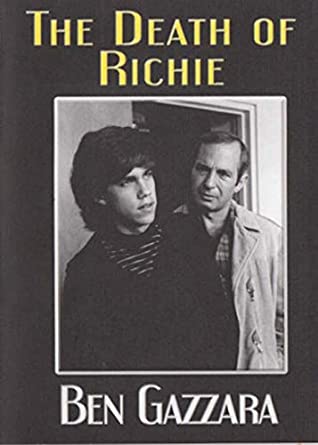
Welcome to Retro Television Reviews, a feature where we review some of our favorite and least favorite shows of the past! On Sundays, I will be reviewing the made-for-television movies that used to be a primetime mainstay. Today’s film is 1977’s The Death of Richie. It can be viewed on YouTube!
It’s not a spoiler to tell you that this film ends with the death of a teenager named Richie. It’s right there in the title. We start the film knowing that Richie is going to die. The only question is how it’s going to happen and who, if anyone, is going to be held responsible for it.
Played by Robby Benson, Richie Werner is a sensitive teenager living in the suburbs. He’s painfully shy and he deals with that shyness by taking the drugs that are supplied to him by friends like Brick (Charles Fleischer) and Peanuts (Clint Howard, yes that Clint Howard). His parents, George (Ben Gazzara) and Carol (Eileen Brennan), knows that Richie is struggling with both drugs and school. However, neither one of them have a clue as to how to help him. Carol spends most of the film silently hoping that things will somehow just magically get better. Meanwhile, George can’t understand his son and, even worse, he makes no attempt to understand him. George holds back his feelings and he’s obviously uncomfortable with his emotional son. George is the type who retreats to his basement when he needs to get away from the world and yet, he can’t understand why his son needs a similar sanctuary. When he discovers that Richie has set up a mini-bedroom in his closet, George destroys it.
Throughout the film, Richie tries to get his life straightened out. He gets a job working at a restaurant but he quits after his friends laugh at his dorky uniform. He tries to date a girl named Sheila (Cindy Eilbacher) but is heartbroken when he discovers that she’s going out with someone else. When Richie tries to talk his dad, George refuses to listen. When George tries to talk to Richie, Richie tells him to get out of his room. Finally, after Richie crashes his car one last time, it leads to an act of shocking violence. After all, the film is called The Death of Richie.
It’s also based on a true story, though there’s some debate over whether or not the film gets the story correct. In real life, Richie’s named was George Richard “Richie” Diener and he lived in Long Island. (The film appears to take place in a generic California suburb.) Richie’s death inspired a magazine article and book, both of which inspired this film. While I was doing research for this review, I came across a website about Richie’s death, one that argued that both the film and the book were too sympathetic to George’s version of what happened the day that Richie died. The site has comments from many of the people who knew Richie and I recommend it to anyone who watches this film and want to know the other side of the story.
As for the film itself, it’s well-directed, intense, and, at times, rather heart-breaking. As portrayed in the film, Richie is so desperate for some sort of approval that your heart just goes out to him. Robby Benson is one of those actors who you come across in a lot of 70s films. I’ve always found his performances to be a bit inconsistent and that’s certainly the case here. He’s good when he’s allowed a quiet moment or two but there are other times when he gets so shrill that it takes you out of the reality of the film. Ben Gazarra does a good job playing George as someone who loves his family but who is incapable of understanding his son’s pain. Gazarra adds just a hint of ambiguity to his anger toward Richie. Is he upset because Richie keeps getting trouble or has he reached the point where he’s just looking for an excuse to get Richie out of the family’s life? According to the comments that I read at the blog mentioned above, both the film and the subsequent book based solely their portrayal of the last minutes of Richie’s life on George’s account. Many people felt that there was more to what happened.
The film is a bit quick to blame all of Richie’s problems on the drugs. While the drugs probably didn’t help, there are times when the film seems to suggesting that Richie would have been a happy, go-lucky kid if he had never taken that first Seconal. Watching the film today, it’s obvious that there was a lot more going on with Richie than just weed and pills and it’s also obvious that calling the cops having them search his room while he watched was not the solution either. Richie needed someone to talk to and, in the film at least, that was apparently the one thing that he could not get. As the song says, things get a little easier once you understand.



 Through the Shattered Lens