Retro Television Review: St. Elsewhere 1.3 “Down’s Syndrome”


Welcome to Retro Television Reviews, a feature where we review some of our favorite and least favorite shows of the past! On Fridays, I will be reviewing St. Elsewhere, a medical show which ran on NBC from 1982 to 1988.  The show can be found on Hulu!
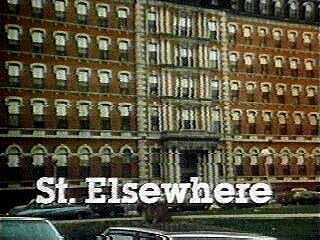
This week, we get to know a very bad doctor.

Episode 1.3 “Down’s Syndrome”

(Dir by Mark Tinker, originally aired on November 16th, 1982)

St. Eligius is home to several doctors, some of whom are good at their job and some of whom are really, really bad.

One of the bad ones appears to be Dr. Peter White (Terrence Knox), a resident who was in the background during the previous two episodes but who was at the center for a good deal of this episode.  Peter has a terrible bedside manner, absolutely no social skills, and his knowledge of medicine appears to be subpar at best.  When a homeless man comes in and complains of pain, Peter gives him a dose of potassium that nearly kills him.  (Only the quick thinking of Dr. Ehrlich — who himself hardly appears to be the perfect doctor — keeps the patient alive.)  Dr. White seems to be overwhelmed and it certainly doesn’t help that his wife is constantly calling the hospital and demanding to speak to him about every little thing.  That said, it’s hard to have much sympathy for Dr. White.  Yes, he’s overwhelmed but his mistakes nearly kill a man.

I have to admit that, as I watched Dr. Peter White on this week’s episode, I kept thinking about some of the doctors who treated my father after he had his car accident in May.  Whenever I spoke to them, they would brusquely answer my questions, usually in technical language that reflected that it had been a long time since they talked anyone who hadn’t gone to medical school.  At the time, I made the same excuses for them that I just made for Dr. White.  They were young, they were busy, and they were overwhelmed.  After my father died, though, I stopped making excuses for them and I instead just accepted that they weren’t very good at their job.  And perhaps Dr. White should admit the same.

It doesn’t help that Dr. White is contrasted with Dr. Auschlander, a kind and elderly liver specialist who is battling cancer but who still manages to treat all of his patients with kindness and respect.  The episode made it clear that all of the residents should hope to become a doctor like Dr. Auschlander.  While Peter snaps at his patients and nearly kills a man, Auschlander takes the time to play cards with a woman who is dying.  We should all be so lucky as to have an Auschlander in our life.

Finally, Brian Whitehill (Tony Bill) and his pregnant wife, Denise (Maureen Whitehill) are informed that their baby will be born with Down’s Syndrome.  In a scene that brings to mind Icelandic eugenics, Brian suggests that Denise get an abortion but Denise refuses, especially when she learns that she’s going to have a son.  (She already has two daughters.)  A day later, Brian comes home from work and tells Denise that he’s realized that she’s right and he’s prepared to be the father of a special needs child.  Denise replies that she had the abortion earlier in the day.  Seriously, what a depressing story!  That said, I respected what the show was doing here.  The patients are just as important as the doctors.

(And while Denise is getting an abortion, Dr. Morrison is learning that he’s going to be a father and, in contrast to Brian Whitehill, joyfully cheering in the hospital stairwell.)

As with the previous episode, there was a lot going on in the background.  Dr. Beale attempted to analyze terrorist Andrew Reinhardt (Tim Robbins), who is still basically acting like an arrogant prick.  Kathleen McAllister, the victim of Reinhardt’s attack, is still in a coma.  Dr. Westphall gave a tour of the hospital to two community leaders who both suggested that St. Eligius should shut down and move its operations to a wealthier neighborhood.  Dr. Fiscus got a blow job in an elevator from Kathy Martin.  (“Going down?” Fiscus asked the next guy who got on the elevator.)  It was a busy day at the hospital!  It was a good episode, even if it didn’t really have any of the big wow moments that the previous two episodes featured.  This episode was more about following a few days in the life of a hospital and the emphasis was on the nonstop flow of patients and doctors, some of whom were doing their best and some of whom were on the verge of giving up.  In the end, the main thing I took away from this episode was that there may not be enough Aucschlanders to make up for all the Peter Whites.


Retro Television Review: St. Elsewhere 1.2 “Bypass”


Welcome to Retro Television Reviews, a new feature where we review some of our favorite and least favorite shows of the past! On Fridays, I will be reviewing St. Elsewhere, a medical show which ran on NBC from 1982 to 1988.  The show can be found on Hulu!

This week, William Daniels claims the show as his own.

Episode 1.2 “Bypass”

(Dir by Thomas Carter, originally aired on November 9th, 1982)

“Hey, it’s Tim Robbins!”

Yes, the future Oscar winner shows up in the second episode of St. Elsewhere, playing a rich kid-turned-terrorist named Andrew Reinhardt.  Reinhardt, who no doubt learned all about Marxism during his first semester away at college, set off a bomb in a bank, killing two people and putting a woman named Kathleen McCallister into a coma.  Both Reihnhardt and McCallister have been brought to St. Eligius.  While Kathleen’s husband, Stephen (Jack Bannon), sobs in the hallway, Reinhardt acts like a petulant brat in his hospital room.

With the nurses refusing to change his sheets or even give him his morphine shots, it falls to Dr. Morrison to take care of him.  Reinhardt is not at all appreciative and Morrison finds himself conflicted.  How is he supposed to give proper medical treatment to someone who he despises?  Morrison is so conflicted that he even goes to Dr. Westphall.  Westphall responds by telling a long story about a time that he fell in love with a patient.  I’m getting the feeling that Morrison feeling conflicted and Westphall telling long stories are both going to be regular features on this show.

(The correct answer to Morrison’s question about how he can take care of a bad person is as follows: It’s your job and you’re getting paid to do it.)

This episode also gave the viewer a chance to get to know Dr. Craig, the very talented but very egotistical head of surgery who is played by the great William Daniels.  Dr. Craig holds a press conference to inform reporters about the conditions of both Reinhardt and Kathleen McCallister and declares that, despite its bad reputation, “St. Eligius is the place to be!”  He then proceeds to get angry when the press is more interested in talking to the surgeon who actually saved Kathleen’s life than to him.

Dr. Craig browbeats a Mr. Broadwater (Robert Costanzo) into getting bypass surgery done.  The surgery appears to have been a success but it’s hard to ignore that Craig essentially bullied the guy into getting a major operation, one that could have killed him if the least little thing had gone wrong.  Resident Victor Ehrlich (Ed Begley, Jr.) assists in the operation and, at one point, Dr. Craig intentionally head butts him when Ehrlich cannot name all of the arteries leading into the heart.  It’s a bit aggressive but, on the plus side, Ehrlich does learn all of the names.  Afterwards, Dr. Craig brags about how his own son is following in his footsteps and tells Mr. Broadwater’s son that some day, a new Dr. Craig will operate on him.  In other words, Dr. Craig is kind of a jerk but he’s good at what he does and he’s played by William Daniels so it’s hard to hold anything against him.

There were other subplots playing out in the background, the majority of which just seemed to be there to remind us that St. Elsewhere is an ensemble show and that, just because someone isn’t a major character in this episode, that doesn’t mean they won’t be important later on.  Psychiatrist Hugh Beale (G.W. Bailey) attempted to learn how to swim and ended up taking a class with a bunch of children.  Dr. Fiscus (Howie Mandel, the least convincing doctor ever) held court in the cafeteria and claimed that the hormones used in processing food were causing children to develop earlier than ever before.  Dr. Peter White (Terrence Knox) wandered around with a bunch of X-rays and begged everyone he met to help him understand what he was (or wasn’t) seeing.  If nothing else, this episode did a good job of capturing the idea of the hospital as being a place that’s always busy.

For the most part, though, it was Dr. Craig who carried this episode.  While Morrison and Westphall ponderously considered the implications of doing their jobs, Craig was an arrogant, angry, and brilliant dynamo and William Daniels’s high-energy performance was a pleasure to watch.  Whenever the episode started to slow down, Dr. Craig would liven things up by yelling at someone.  The hospital was lucky to have Dr. Craig and St. Elsewhere was lucky to have William Daniels.

Retro Television Review: St. Elsewhere 1.1 “Pilot”


Welcome to Retro Television Reviews, a new feature where we review some of our favorite and least favorite shows of the past! On Fridays, I will be reviewing St. Elsewhere, a medical show which ran on NBC from 1982 to 1988.  The show can be found on Hulu!

When I started reviewing Homicide, Jeff suggested that I should also review St. Elsewhere because the two shows shared a similar sensibility and a lot of behind-the-scenes personnel.  (Homicide showrunner Tom Fontana started out as a writer on St. Elsewhere.)  Apparently. a few characters from St. Elsewhere would eventually cross-over to Homicide.  Since I’m planning on soon reviewing two shows that were descended from HomicideOz and The Wire — it only seemed right to also review a show that was Homicide’s ancestor.

Though the show aired largely before my time, St. Elsewhere is definitely a show that I have heard about.  Everyone who follows American pop culture has either read about or seen the show’s infamous final episode and knows about the Tommy Westphall Universe Hypothesis.  Obviously, I can’t get into it now because that would be a spoiler but we’ll discuss it when the time comes!

For now, let’s start at the beginning, with the pilot!

Episode 1.1 “Pilot”

(Dir by Thomas Carter, originally aired on October 26th, 1982)

St. Eligius is a hospital in Boston that has obviously seen better days.  From the outside, it looks old.  On the inside, the hallways have the dim and dull look of a building that hasn’t been renovated in over ten years.  As Dr. Mark Craig (William Daniels, long before he played Mr. Feeney on Boy Meets World) angrily puts it, the hospital gets no respect in Boston.  It’s seen as being a “dumping ground” for patients who can’t afford anything better.  Dr. Craig is world-renowned heart surgeon whose wealthy patients have donated what few improvements the hospital has seen over the past few years.  (“All of our clocks now read the same time!” Dr. Craig brags at one point.)  But not even Dr. Craig can change the hospital’s reputation as being secondary to Boston General.

There are actually a few good things about St. Eligius.  For one thing, a young Denzel Washington is on staff, playing resident Phillip Chandler.  Denzel doesn’t get to do much in the pilot but still, his presence fills the viewer with confidence.  St. Eligius is also home to a world-renowned liver specialist, Dr. Daniel Auschlander (played by Norman Lloyd, who also worked with Hitchcock and Orson Welles).  Auschlander has liver cancer but the hospital chief-of-staff, Dr. Donald Westphall (Ed Flanders), assures everyone that Auschlander will probably “out live us all.”  (And he was right, to an extent.  Norman Lloyd lived to be 106 years old before passing away in 2021.  Ed Flanders died, tragically by suicide, in 1995.)  St. Eligius is a teaching hospital and the residents want to make a good impression by keeping their patients alive.  That’s always a good thing.

At the same time, how secure can you feel when Howie Mandel is one of the residents?  Mandel plays Dr. Wayne Fiscus, who wears a baseball cap and acts …. well, he acts a lot like Howie Mandel.  Like Washington, Mandel doesn’t do a lot in the pilot.  He does get a subplot where he apparently has sex in the morgue with goth pathologist Cathy Martin (Barbara Whinnery) but otherwise, we don’t see him treating a patient or anything like that.  Still, it’s a bit jarring to see Howie Mandel as a doctor.  I would not necessarily want him for my doctor because he’s to be easily distracted.  Maybe he’ll change my mind as the series progresses.

Speaking of sex, Dr. Ben Samuels (David Birney) has gonorrhea and spends most of the pilot approaching doctors and nurses and informing them of his conditions and suggesting that they might want to get tested themselves.  That’s not exactly the best way to be introduced to a character but it also lets us know that this show is not just going to be about dedicated doctors who spend all of their time worrying about their patients and making amazing medical discoveries.  Instead, this show is also about doctors who get venereal diseases.  Has anyone checked on Fiscus in the morgue?

(That said, Dr. Samuels does get a scene where he saves the life of a woman who was injured in a terrorist bombing, as if the show does want to make sure that we know that he can do his job, even if he is spreading VD through the hospital.)

The majority of the episode follows Dr. Jack Morrison (David Morse), a first-year resident who has been working several 24-hour shifts and who complains, at one point, that he hasn’t seen his wife for days.  Dr. Morrison gets upset when a surgeon wants to operate on one of his patients, a 15 year-old girl named Sandy (Heather McAdams).  Morrison believes that surgeons always want to cut into somebody.  Morrison gets even more upset when Sandy’s mother requests that Sandy be transferred to Boston General, which has a reputation for being a better, more modern hospital.  In fact, Morrison is so upset and exhausted that he forgets to file a death certificate for a patient who dies during the night.  As a result, it’s believed that the patient, who has a reputation for being violent, has gone missing and is stalking the hospital.  Dr. Annie Cavanero (Cynthia Sikes) spends the entire episode looking for a dead man, which at least gives her an excuse to visit every ward and introduce the viewers to the members of the show’s ensemble cast.

Having lost my mom to cancer and now my Dad to Parkinson’s, I was hesitant about reviewing St. Elsewhere.  (Actually, I was hesitant about reviewing any medical show.)  When my Dad was in the hospital, I felt like I couldn’t get anyone to give me a straight answer about his condition and I often felt the doctors were talking down to me.  To be honest, my worst conflicts were with the nurses, one of whom told me that I would have to “lose the attitude” before she would explain why my father had been moved to the Delirium Ward.  (It didn’t help that, at the same time my Dad was in the hospital, there was a huge storm that left us without power for a week.)  At the same time, there were other doctors who were helpful.  The staff at the rehab center that my dad was sent to were also wonderful.  I have my regrets about agreeing to hospice care but the nurse who was assigned to my Dad was very empathetic and totally understanding whenever I asked her for a cigarette.  (Under normal circumstances, I don’t smoke because I have asthma but seriously, the stress was killing me.)  I’m bitter and angry about a lot of what happened but I’m also thankful for the small moments of kindness.

Watching a show set in a hospital was not easy for me but the pilot of St. Elsewhere appealed to me with its mix of melodrama and humor.  There was a quirkiness to it that I appreciated.  William Daniels made me laugh with his annoyed rant about how little respect the hospital received.  Most of all, I cared about whether or not Dr. Morrison would still be alive at the end of his shift.  David Morse’s performance won me over.  He’s the type of doctor that I would want to have.  Well, actually, I’d probably want Denzel to my doctor but Dr, Morrison could assist.  Just keep Dr. Howie Mandel away from me.  Nothing against him but he seemed to be having way too much fun at the hospital….

Most importantly, the show ended with a cat.

Next week, the drama continues at St. Elsewhere!

Film Review: Crawlspace (dir by David Schmoeller)


Before moving into a new place, always do a little research.

That would seem to be the main lesson that one can take from the 1986 horror film, Crawlspace.  As the film begins, Lori Bancroft (Talia Balsam) thinks that she’s found the perfect little apartment.  It’s clean.  It’s roomy but cozy.  It’s got space for all of her stuff.  It’s perfect for hosting friends.  You can bring a date back to the place without feeling embarrassed.  The apartment even comes with a charmingly eccentric landlord, an older German gentleman named Karl Gunther.  Gunther is played by Klaus Kinksi and….

Wait …. he’s played by who?

Klaus Kinski?  You mean the infamously difficult actor who appeared in not only a countless number of horror films and spaghetti westerns but also Doctor Zhivago?  Would this be the same Klaus Kinski who was briefly Werner Herzog’s muse?  That Klaus Kinski?

Uh-oh.  That’s not good.

It soon turns out that Gunther is not quite the friendly man that he pretends to be.  Gunther’s got some issues.  For instance, he spends a lot of time intentionally burning his hand and then smiling afterwards.  And there’s his habit of playing Russian Roulette.  Throughout the film, we see him sitting at a table and putting one bullet in a gun, just so he can then point it at his head and take his chances.

Gunther also has a thing for ventilation shafts.  He loves to crawl around in them, specifically so he can spy on his tenants.  When we first meet him, he’s obsessed with Sophie (Tane McClure) but he soon turns his attention to Lori.  Often, he’ll release rats into a tenant’s apartment.  When Lori merely laughs at the rat as opposed to screaming in fear, Gunther is impressed.

Of course, Karl Gunther wasn’t always a landlord.  He used to be quite a respectable doctor.  Of course, then all of his patients started dying and Gunther’s career went downhill.  Gunther, of course, claims that he only murdered his patients because they were in pain and suffering.  However, it could be more likely that his actions had something more to do with the fact that Gunther’s father was a Nazi war criminal, a doctor who justified his crimes with the same excuses as Gunther.

If all that’s not enough to convince you that Gunther’s got some issues, you should just take a look in the attic.  That’s where Gunther spends most of his time, writing in his journals.  It’s also where he keeps jars that are full of body parts.  One jar has a tongue in it.  A pair of eyes float in the other.  There’s a finger in another.  The attic is also where Gunther keeps one of his previous tenants in a cage.  Gunther says that he likes to talk to her, despite the fact that he long ago removed her tongue….

Plot-wise, Crawlspace is pretty much your standard low-budget 80s horror film.  There’s not much here that could really be called surprising but director David Schmoeller does find some creative ways to film all of the expected mayhem and the frequent shots of Kinski crawling through the ventilation shafts are genuinely creepy.  Kinski, giving a performance that’s even more unhinged than usual, is the best thing about the film and the main reason to see it.  By making Karl Gunther the self-loathing son of a war criminal, Schmoeller and Kinski bring an interesting subtext to the film.  Gunther is more than just a slasher movie villain.  Instead, he’s the embodiment of Hitler’s hateful legacy.

As I mentioned at the start of this review, Klaus Kinski was a legendary for being difficult.  Years after both the release of Crawlspace and Kinski’s own death, director David Schmoeller released a 9-minute documentary about the experience of making a film with Kinski.  The title of that film: “Please kill, Mr. Kinski.”  Apparently, this was a request that several members of the crew made to Schmoeller over the course of filming.  (Interestingly enough, Werner Herzog would make his own Klaus Kinski documentary — My Best Fiend — in which he mentioned that, during the shooting of Fitzcarraldo in Brazil, a native chief offered to have Kinski killed.)  Please Kill, Mr. Kinski is a fascinating look at not only low-budget exploitation filmmaking but also what it’s like to have to work with a talented monster.  As of this writing, it can be viewed on YouTube.