Retro Television Review: Miami Vice 4.13 “Vote of Confidence”


Welcome to Retro Television Reviews, a feature where we review some of our favorite and least favorite shows of the past!  On Mondays, I will be reviewing Miami Vice, which ran on NBC from 1984 to 1989.  The entire show can be purchased on Prime!

This week, Crockett and Tubbs are not looking for bull semen.

Episode 4.13 “Vote of Confidence”

(Dir by Randy Roberts, originally aired on February 12th, 1988)

After spending last week trying to retrieve a cannister of bull semen, this episode finds Crockett, Tubbs, and Switek actually doing Vice work for once.  At the start of this episode, they stop a train that doubles as a rolling bordello.  They arrest a man named Tom Pierce (Larry Pine), a congressman who just happens to be running for governor!

(Tubbs thinks that Pierce has some good ideas.  Crockett doesn’t believe in voting.  Try to get away with that on a television show in today’s hyperpartisan climate.)

Tubbs and Crockett are frustrated when the district attorney declines to prosecute Pierce.  The D.A. says that they can’t prove that Pierce was actually on the train to hook up with a prostitute.  He could have just been passing out campaign literature.  Crockett and Tubbs are outraged, wondering why the prostitutes should be arrested but not the people who keep them in business.  Crockett and Tubbs see it as another example of the rich and powerful being let off the hook and they’re probably right about that.

Still, Pierce’s campaign is rocked by the news of his arrest and, when he withdraws from the election, Internal Affairs investigates to make sure that Crockett and Tubbs didn’t set him up.  While Crockett and Tubbs are definitely innocent, they still suspect that someone may have indeed set Pierce up.  When Pierce disappears, they wonder if maybe he’s been abducted or murdered.  Their investigation leads them to a notorious political prankster (Barry Lynch) and a shady press operative (Jonathan Hadary).

This episode was apparently based on the same scandal that, decades later, would inspire The Front Runner.  It was an improvement on last week’s but then again, anything would have been an improvement on last week’s episode.  Just the fact that Crockett and Tubbs were actually doing police work as opposed to stifling laughs every time someone mentioned “bull semen” guaranteed that this episode would shine compared to last week’s episode.  On the plus side, this episode features a return of the cynical Crockett and Tubbs that we all know and love.  On the negative side, the story itself is so bland that it fades from the memory as soon as the episode ends.  This episode was competently done but bland.  That’s the problem with episodes that are meant to be “ripped from the headlines.”  Headlines eventually fade.
Days of Paranoia: The Anderson Tapes (by Sidney Lumet)


In 1971’s The Anderson Tapes, Sean Connery stars as Duke Anderson.

Duke is a career criminal, a safecracker who has just spent ten years in prison.  He’s released, alongside Pops (Stan Gottlieb), who spent so much time behind bars that he missed two wars and the Great Depression, and the quirky Kid (Christopher Walken, making his film debut).  Duke immediately hooks up with his former girlfriend, Ingrid (Dyan Cannon), and decides to rob the luxury apartment building where Ingrid is now living.

Of course, Duke will have to put together a crew.  It’s not a heist film without a quirky crew, is it?  Duke recruits the Kid and Pops.  (The Kid is happy to be in the game but he’s not a fan of violence.  Pops, meanwhile, has none of the skills necessary for living in the “modern” world and would much rather return to prison.)  Duke also brings in the flamboyant Tommy Haskins (an overacting Martin Balsam) and driver Edward Spencer (Dick Anthony Williams).  Duke goes to the mob for backing and Pat Angelo (Alan King) gives it to him on the condition that he take along a sociopathic racist named Socks (Val Avery) and that Duke kills Socks at some point.  Duke reluctantly agrees.

So far, this probably sounds like a conventional heist film.  Director Sidney Lumet mixes comedy and drama with uneven results but, overall, he does a good job of ratcheting up the tension and The Anderson Tapes is a good example of one of my favorite mini-genres, the “New Yorkers will be rude to anyone” genre.  At first glance, Sean Connery seems to be playing yet another super smooth operator, a confident criminal with a plan that cannot fail.  Duke seems like a criminal version of James Bond,  However, as the film progresses, we start to suspect that things might be getting away from Duke.  When Duke has to go the Mafia for support and is told that killing Socks is now a part of the job, we see that Duke isn’t as in-control of the situation as we originally assumed.  This is the rare Sean Connery film where he has someone pushing him around.

(Apparently, Connery took this role as a part of his effort to escape being typecast as Bond.  Perhaps that explains why Duke seems like almost a deconstruction of the James Bond archetype.)

Of course, what really lets us know that Duke isn’t as in-charge as he assumes is the fact that four different law enforcement agencies are following his every move.  From the minute he gets out of prison, Duke is being watched.  The apartment is bugged.  Security cameras records his every move.  Once the heist begins, we’re treated to flash forwards of breathless news reports.  The Anderson Tapes is less a heist film and more a portrait of the early days of the modern Surveillance State.  Of course, none of the agencies make any moves to stop Duke because doing so would reveal their own existence.  The film really does become a portrait of a government that has gotten so big and intrusive that it’s also lost the ability to actually do anything.

The Anderson Tapes is entertaining, even if it’s not really one of Lumet’s best.  Connery is, as always, a fascinating screen presence and it’s always entertaining to see a young Christopher Walken, showing early sings of the quirkiness that would become his signature style.  The Anderson Tapes is a portrait of a world where you never know who might be listening.

Film Review: McCabe & Mrs. Miller (dir by Robert Altman)


First released in 1971, McCabe & Mrs. Miller takes place in the town of Presbyterian Church at the turn of the 19th Century.

Presbyterian Church is a mining town in Washington State.  When we first see the town, there’s not much to it.  The town is actually named after its only substantial building and the residents refer to the various parts of the town as either being on the right side or the left side of the church.  The rest of the town is half-constructed and appears to be covered in a permanent layer of grime.  This is perhaps the least romantic town to ever appear in a western and it is populated largely by lazy and bored men who pass the time gambling and waiting for something better to come along.

When a gambler who says that he is named McCabe (Warren Beatty) rides into town, it causes a flurry of excitement.  The man is well-dressed and well-spoken and it’s assumed that he must be someone important.  Soon a rumor spreads that McCabe is an infamous gunfighter named Pudgy McCabe.  Pudgy McCabe is famous for having used a derringer to shoot a man named Atwater.  No one is really sure who Atwater was or why he was shot but everyone agrees that it was impressive.

McCabe proves himself to be an entrepreneur.  He settles down in Presbyterian Church and establishes himself as the town’s pimp.  Soon, he is joined by a cockney madam names Mrs. Miller (Julie Christie).  The two of them go into business together and soon, Presbyterian Church has its own very popular bordello.  Sex sells and Presbyterian Church becomes a boomtown.  It attracts enough attention that two agents of a robber baron approach McCabe and offer to buy him out.  McCabe refuses, thinking that he’ll get more money if he holds out.  Mrs. Miller informs him that the men that he’s dealing with don’t offer to pay more money.  Instead, they just kill anyone who refuses their initial offer.

Three gunmen do eventually show up at Presbyterian Church and we do eventually get an answer to the question of whether or not McCabe killed Atwater or if he’s just someone who has borrowed someone else’s legend.  The final gunfight occurs as snow falls on the town and the townspeople desperately try to put out a fire at the church.  No one really notices the fact that McCabe is fighting for his life at the time and, as befits a revisionist western, there’s nothing romantic or dignified about the film’s violence.  McCabe is not above shooting a man in the back.  The killers are not above tricking an innocent cowboy (poor Keith Carradine) into reaching for his gun so that they’ll have an excuse so gun him down.  McCabe may be responsible for making Presbyterian Church into a boomtown but no one is willing to come to his aid.  The lawyer (William Devane) that McCabe approaches is more interested in promoting his political career than actually getting personally involved in the situation.  Mrs. Miller, a businesswoman first, smokes in an opium den with an air of detachment while the snow falls outside.

It’s a dark story with moments of sardonic humor.  It’s also one of director Robert Altman’s best.  The story of McCabe and Mrs. Miller and the three gunmen is far less important than the film’s portrayal of community growing and changing.  Featuring an ensemble cast and Altman’s trademark overlapping dialogue, McCabe & Mrs. Miller puts the viewer right in the heart of Presbyterian Church.  There are usually several stories playing out at once and it’s often up to the viewer to decide which one that they want to follow.  Yes, the film is about Warren Beatty’s slick but somewhat befuddled McCabe and Julie Christie’s cynical Mrs. Miller.  But it’s just as much about Keith Carradine’s Cowboy and Rene Auberjonois’s innkeeper.  Corey Fischer, Michael Murphy, John Schuck, Shelley Duvall, Bert Remsen, and a host of other Altman mainstays all have roles as the people who briefly come into the orbit of either McCabe or Mrs. Miller.  Every character has a life and a story of their own.  McCabe & Mrs. Miller is a film that feels as if it is truly alive.

As with many of Altman’s films, McCabe & Mrs. Miller was not fully appreciated when initially released.  The intentionally muddy look and the overlapping dialogue left some critics confused and the film’s status as a western that refused to play by the rules of the genre presented a challenge to audience members who may have just wanted to see Warren Beatty fall in love with Julie Christie and save the town.  But the film has endured and is now recognized as one of the best of the 70s.

Lisa Reviews An Oscar Nominee: All That Jazz (dir by Bob Fosse)


“Bye bye life….

Bye bye happiness….

Hello loneliness….

I think I’m going to die….”

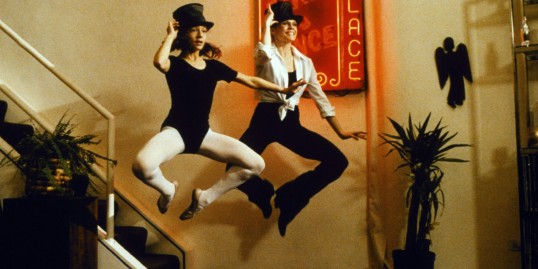
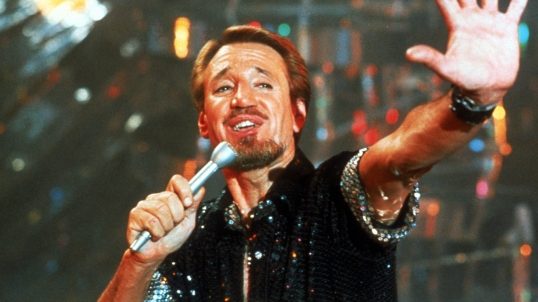
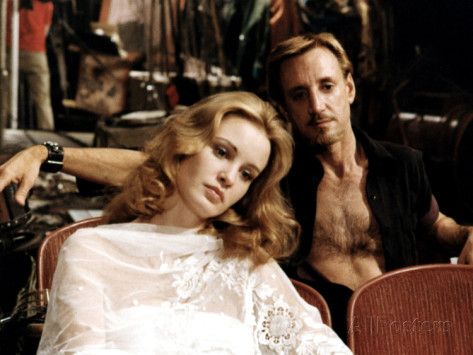
So sings Joe Gideon (Roy Scheider) at the end of the 1979 film, All That Jazz.  And he’s right!  It’s hardly a spoiler to tell you that All That Jazz ends with Joe Gideon in a body bag.  It’s not just that Gideon spends a good deal of the film flirting with the Angel of the Death (Jessica Lange).  It’s also that, by the time the film ends, we’ve spent a little over two hours watching Joe engage in non-stop self-destruction.  Joe is a director and a choreographer who is so in love with both death and show business that his greatest triumph comes from choreographing his own death.

Joe wakes up every morning, pops a handful of pills, stares at himself in the mirror and says, “It’s showtime!”  He spends his day choreographing a Broadway play.  He spends his nights editing his latest film, a biopic about Lenny Bruce called The Stand-Up.  He’s particularly obsessed with a long monologue that Lenny (played by Cliff Gorman) delivers about the inevitability of death.  When he’s not choreographing or editing, he’s smoking, drinking, and cheating on his girlfriend (Ann Reinking).  It’s obvious that he’s still in love with his ex-wife (Leland Palmer) and that she loves him too but she’s also too smart to allow herself to get fully sucked back into his self-destructive orbit.  He loves his daughter (Erzsébet Földi) and yet still ignores her when she begs him not to die.

Joe and the Angel of Death

When Joe has a heart attack and ends up in the hospital, he doesn’t change his behavior.  Instead, he and the Angel of Death take a look back at his youth, which was spent hanging out in strip clubs and desperately trying to become a star.  Joe Gideon, we see, has always know that he’s going to die early so he’s pushed himself to accomplish everything that he can in what little time he has.

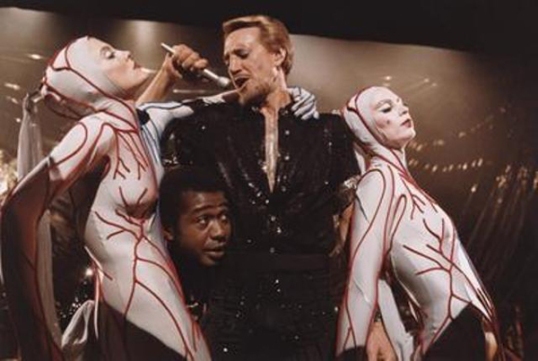
As a result of his drive and his refusal to love anyone but himself, Gideon is widely recognized as being an artistic genius.  However, as O’Connor Flood (Ben Vereen, essentially playing Sammy Davis, Jr.) puts it, “This cat allowed himself to be adored, but not loved. And his success in show business was matched by failure in his personal relationship bag, now – that’s where he really bombed. And he came to believe that show business, work, love, his whole life, even himself and all that jazz, was bullshit. He became numero uno game player – uh, to the point where he didn’t know where the games ended, and the reality began. Like, for this cat, the only reality – is death, man. Ladies and gentlemen, let me lay on you a so-so entertainer, not much of a humanitarian, and this cat was never nobody’s friend. In his final appearance on the great stage of life – uh, you can applaud if you want to – Mr. Joe Gideon!”

Now, of course, Connor doesn’t really say all that.  Gideon just imagines Connor saying that before the two of them launch into the film’s final musical number, Bye Bye Life.  It should be a totally depressing moment but actually, it’s exhilarating to watch.  It’s totally over-the-top, self-indulgent, and equally parts sincere and cynical.  It’s a Bob Fosse production all the way and, as a result, All that Jazz is probably about as fun as a movie about the death of a pathological narcissist can be.  This is a film that will not only leave you thinking about mortality but it will also make you dance.

All That Jazz was Bob Fosse’s next-to-last film (he followed it up with the even darker Star 80) and it’s also his most openly autobiography.  Roy Scheider may be playing Joe Gideon but he’s made-up to look exactly like Bob Fosse.  Like Joe Gideon, Bob Fosse had a heart attack while trying to direct a Broadway show and a film at the same time.  Gideon’s girlfriend is played by Fosse’s real-life girlfriend.  The character of Gideon’s ex-wife is clearly meant to be a stand-in for Gwen Verdon, Fosse’s real-life ex-wife.  When the film’s venal Broadway producers make plans to replace the incapacitated Gideon, Fosse is obviously getting back at some of the producers that he had to deal with while putting together Chicago.  It’s a confessional film, one in which Fosse admits to his faults while also reminding you of his talent.  Thank God for that talent, too.  All that Jazz is self-indulgent but you simply can’t look away.

It helps that Gideon is played by Roy Scheider.  Originally, Scheider’s Jaws co-star Richard Dreyfuss was cast in the role but he left during rehearsals.  Dreyfuss, talented actor that he was, would have been all-wrong for the role of Gideon.  One can imagine a hyperactive Dreyfuss playing Gideon but one can’t imagine actually feeling much sympathy for him.  Scheider, on the other hand, brings a world-weary self-awareness to the role.  He plays Gideon as a man who loves his talent but who hates himself.  Scheider’s Joe Gideon is under no illusions about who he is or how people feel about him.  When Fosse’s own instincts threatens to make the film unbearably pretentious, Scheider’s down-to-Earth screen presence keeps things grounded.

I love All That Jazz.  (Admittedly, a good deal of that love is probably connected to my own dance background.  I’ve known my share of aspiring Joe Gideons, even if none of them had his — or Bob Fosse’s — talent or drive.)  It’s not for everyone, of course.  Any musical that features actual footage of open heart surgery is going to have its detractors.  For the record, Stanley Kubrick called All That Jazz “the best film I think I’ve ever seen.”  It won the Palme d’Or at Cannes and it was nominated for Best Picture, though it ultimately lost to the far more conventional Kramer vs. Kramer.

All that Jazz would be the last of Fosse’s film to receive a best picture nomination.  (Fosse directed five features.  3 of them were nominated for Best Picture, with the other two being Cabaret and Lenny.)  8 years after filming his cinematic doppelganger dying during heart surgery, Fosse would die of a heart attack.  Gwen Verdon was at his side.

Lisa Watches An Oscar Winner: Midnight Cowboy (dir by John Schlesinger)


midnight_cowboy

Tonight, I watched the 1969 winner of the Oscar for Best Picture, Midnight Cowboy.

Midnight Cowboy is a movie about Joe Buck.  Joe Buck is played by an impossibly young and handsome Jon Voight.  Joe Buck — and, to be honest, just calling him Joe seems wrong, he is definitely a Joe Buck — is a well-meaning but somewhat dumb young man.  He lives in Midland, Texas.  He was raised by his grandmother.  He used to go out with Annie (Jennifer Salt) but she eventually ended up being sent to a mental asylum after being raped by all of Joe Buck’s friend.  Joe Buck doesn’t have many prospects.  He washes dishes for a living and styles himself as being a cowboy.  Being a Texan, I’ve known plenty of Joe Bucks.

Joe Buck, however, has a plan.  He knows that he’s handsome.  He’s convinced that all women love cowboys.  So, why shouldn’t he hop on a bus, travel to New York City, and make a living having sex with rich women?

Of course, once he arrives in the city, Joe Buck discovers that New York City is not quite as inviting as he thought it would be.  He lives in a tiny and dirty apartment.  He can barely afford to eat.  Walking around the city dressed like a cowboy (and remember, this was long before the Naked Cowboy became one of the most annoying celebrities of all time) and randomly asking every rich woman that he sees whether or not she can tell him where he can find the Statue of Liberty, Joe Buck is a joke.  Even when he does get a customer (played, quite well, by Sylvia Miles), she claims not to have any money and Joe Buck feels so sorry for her that he ends up giving her his money.

midnight3crowd

As I watched the first part of the movie, it stuck me that the main theme of Midnight Cowboy appeared to be that, in 1969, New York City was literally Hell on Earth.  But then Joe Buck has flashbacks to his childhood and his relationship with Annie and it quickly became apparent that Midland, Texas was Hell on Earth as well.  Towards the end of the film, it’s suggested that Miami might be paradise but not enough to keep someone from dying on a bus.

Seriously, this is a dark movie.

Joe Buck eventually meets Ratso Rizzo (Dustin Hoffman).  Ratso’s real name is Enrico but, after taking one look at him, you can’t help but feel that he’s a perfect Ratso.  Ratso is a con man.  Ratso is a petty thief.  Ratso knows how to survive on the streets but New York City is still killing him.  As a child, Ratso had polio and now he walks with a permanent limp.  He coughs constantly, perhaps because he has TB.  Ratso becomes Joe Buck’s manager and roommate (and, depending on how you to interpret certain scenes and lines, perhaps more) but only after attempting to steal all of his money.

Unfortunately, Ratso is not much of a manager.  Then again, Joe Buck is not much of a hustler.  Most of his customers are men (including a student played by a young but recongizable Bob Balaban), but Joe Buck’s own sexual preference remaining ambiguous.  Joe Buck is so quick to loudly say that he’s not, as Ratso calls him, a “fag” and that cowboys can’t be gay because John Wayne was a cowboy, that you can’t help but suspect that he’s in denial.  When he’s picked up by a socialite played by Brenda Vaccaro, Joe Buck is impotent until she teases him about being gay.  In the end, though, Joe Buck seems to view sex as mostly being a way to make money.  As for Ratso, he appears to almost be asexual.  His only concern, from day to day, is survival.

Did I mention this is a dark movie?

And yet, as dark as it is, there are moments of humor.  Joe Buck is incredibly dense, especially in the first part of the movie.  (During the second half of the film, Joe Buck is no longer as naive and no longer as funny.  It’s possible that he even kills a man, though the film is, I think, deliberately unclear on this point.)  Ratso has a way with words and it’s impossible not to smile when he shouts out his famous “I’m walking here!” at a taxi.  And, as desperate as Joe Buck and Ratso eventually become, you’re happy that they’ve found each other.  They may be doomed but at least they’re doomed together.

warhols-party

There’s a lengthy party scene, one that features several members of Andy Warhol’s entourage.  I was a bit disappointed that my favorite 60s icon, Edie Sedgwick, was nowhere to be seen.  (But be sure to check out Ciao Manhattan, if you want to see what Edie was doing while Joe Buck and Ratso Rizzo were trying not to starve.)  But, as I watched the party scene, I was reminded that Midnight Cowboy is definitely a film of the 60s.  That’s both a good and a bad thing.  On the positive side, the late 60s and 70s were a time when filmmakers were willing to take risks.  Midnight Cowboy could only have been made in 1969.  At the same time, there’s a few moments when director John Schlesinger, in the style of many 60s filmmakers, was obviously trying a bit too hard to be profound.  Some of the flashbacks and fantasy sequences veer towards the pretentious.

Fortunately, the performances of Voight and Hoffman have aged better than Schlesinger’s direction.  Hoffman has the more flamboyant role (and totally throws himself into it) but it really is Voight who carries the film.  Considering that he’s playing a borderline ludicrous character, the poignancy of Voight’s performance is nothing short of miraculous.

Midnight Cowboy was the first and only X-rated film to win best picture.  By today’s standards, it’s a PG-13.

Embracing the Melodrama #34: The Lonely Lady (dir by Peter Sasdy)


The_lonely_lady

“I guess I’m not the only who has had to fuck her way to the top!” — Jerilee Randall (Pia Zadora), accepting an award at The Awards Ceremony in The Lonely Lady (1983)

When I first started doing research on which movies were worthy of being considered for inclusion in this series about embracing the melodrama, I had no idea that it would eventually lead to me watching the worst film ever made.

However, that is exactly what happened.  1983’s The Lonely Lady is without a doubt the worst film that I have ever seen.  Normally, this is where I would say that the film is entertaining specifically because it is so bad but no, this movie just terrible.  Is it so bad that its good?  No, it’s just bad.  Is it one of those films that you simply have to see to believe?  Well, that depends on how much faith you have in God.  Does the film at least have a curiosity value?  Well, maybe.  As bad as you think this movie may be, it’s even worse.

Seriously, to say this film is a piece of crap is to do a disservice to crap.

The Lonely Lady tells the story of Jerilee Randall (Pia Zadora, who also played the girl martian in the classic Santa Claus Conquers the Martian), an aspiring writer who learns about the dark side of Hollywood.  The movie opens with Jerilee graduating from Valley High School and receiving a special prize for being the school’s most promising English major.  Now, from the very beginning, we run into several issues.  Number one, Pia looks way too old to be in high school and the fact that they decided to put her hair in pig tails doesn’t change the fact.  Number two, Pia Zadora is even less convincing as a writer than she was as a girl martian.

At the graduation party, Joe (played by Ray Liotta, of all people) violates Jerilee with a garden hose, in an amazingly ugly scene that pretty much sets the tone for the rest of the film.  No longer an innocent optimist, Jerilee moves out to Hollywood where she ends up married to award-winning screenwriter Walter Thornton (Lloyd Bochner).  When she secretly helps Walter rewrite his latest script (she replaces a long monologue with two lines of dialogue: “Why!?  Why!?”), Walter grows jealous and starts to taunt her by holding up a garden hose.  Jerilee and Walter divorce and Jerilee ends up sleeping with everyone else in Hollywood in an attempt to get a screenplay of her own produced.  Eventually, this leads to Jerilee having a nervous breakdown in which the keys of her typewriter are replaced with the accusatory faces of everyone in her life…

Bleh!  You know what?  Describing this plot is probably making The Lonely Lady sound a lot more interesting than it actually is.  Imagine if Beyond The Valley Of The Dolls was meant to be taken seriously and you have a pretty good idea what The Lonely Lady is like.

Furthermore, I’ve seen a lot of films that claim to be about writers.  Occasionally, we get lucky and the writer is played be an actor who you could actually imagine writing something worth reading.  (Perhaps the best recent example would be Paul Dano, who was completely believable as a critically acclaimed writer in Ruby Sparks.)  However, most of the time, we end up with actors who you can hardly imagine having the either the discipline or the intellectual ability to write anything worth reading.  And then, in the case of The Lonely Lady, we get Pia Zadora who is not only unbelievable as a writer but also as a human being as well.  Watching her performance, you’re shocked that she can remember to breathe from minute to minute, much less actually write anything longer than her first name.

I know it’s a pretty big claim to say that one movie is the worst ever made.  So, feel free to watch The Lonely Lady and then let me know if you agree.

(Be warned — this movie is NSFW and generally sucks.)