“I’m scared of my family, but I want to go home.” — Miyuki
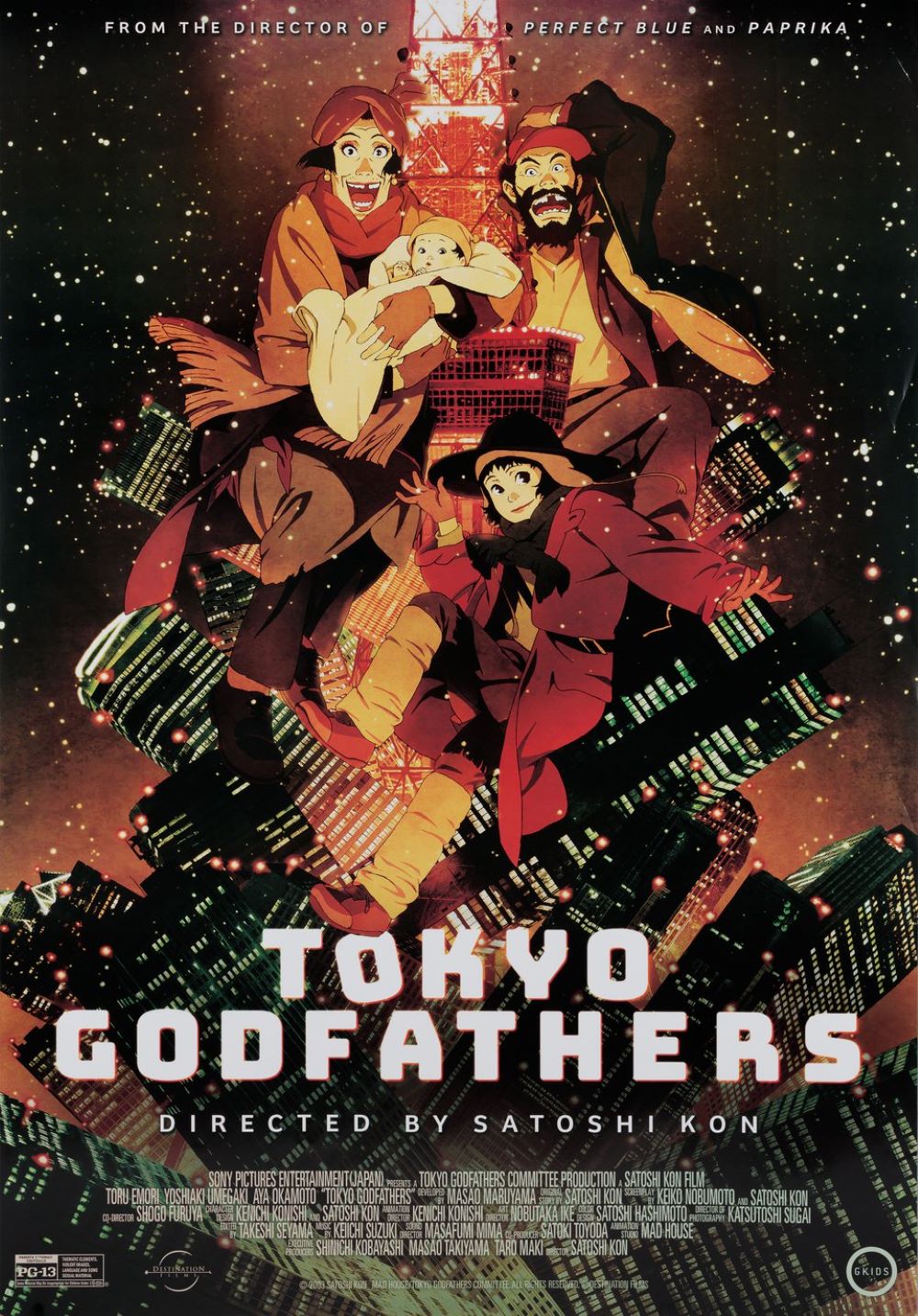
Tokyo Godfathers is a film that shows how hope and kindness can be found in the most unexpected places, all wrapped up in a hilarious, chaotic, and heartwarming story set on Christmas Eve in Tokyo. Directed by Satoshi Kon, this 2003 anime follows three unlikely characters: Gin, a middle-aged alcoholic with a troubled past; Hana, a lively transgender woman who dreams of being a mother; and Miyuki, a guarded teenage runaway dealing with her own pain.
The adventure begins when the trio, scavenging through garbage for Christmas presents, discovers an abandoned newborn baby. Hana names the baby Kiyoko, meaning “pure child,” and the three set off on a mission to find the baby’s parents using a few clues left behind. Their journey takes them into the depths of Tokyo’s bustling city life—through snowy streets, a yakuza wedding, and encounters with all kinds of characters, from hitmen to estranged families.
What makes Tokyo Godfathers stand out is its perfect blend of humor and emotional depth. It’s easy to laugh at the trio’s bickering and mishaps, but the film also offers sincere moments of vulnerability and growth. Hana’s fierce protectiveness, Gin’s struggle for redemption, and Miyuki’s search for acceptance form a trio of deeply relatable characters. Their rough lives and personal regrets are shown honestly, but the warmth they create together feels genuine and touching.
The film doesn’t shy away from depicting the harsh realities of their world, including violence, abuse, and loss. Yet even in moments of hardship and conflict, acts of giving and empathy persist. Sometimes these harsh and tender moments intersect in the same sequence—such as tense confrontations that unexpectedly end in compassion, or scenes where despair is met with generosity. This layering creates a powerful sense of life’s complexity, showing that kindness can shine brightest amidst chaos and pain.
Visually, the film captures the chilly, neon-lit cityscape with beautiful detail. The animation highlights not only the busy and bright streets of Tokyo but also the subtle emotions of the characters, from shy glances to moments of frustration or tenderness. The film’s mix of grounded realism with moments of coincidence or miracle lends it a magical yet believable atmosphere.
At its core, the film explores what family really means. The three main characters, though not related by blood, support and care for each other in ways many traditional families don’t. The baby Kiyoko serves as a catalyst for each character to confront their past and rethink their relationships. The story gently shows that family can be chosen, formed through shared hardship and love rather than just genetics.
The film’s holiday setting works beautifully because it taps into the holiday themes of forgiveness, second chances, and hope. But it doesn’t shy away from showing the harsh realities of homelessness, loss, and loneliness—making the moments of joy feel even more earned. The characters are flawed but deeply human, and their journey toward reconciliation and connection is both honest and uplifting.
Though the story relies on some lucky coincidences and wild turns, these moments of serendipity feel like part of the film’s charm, highlighting how unpredictable and strange life can be. These surprises keep the story moving and weave a sense of wonder through the gritty city streets.
The supporting characters the trio meet add layers of complexity and humor, and small scenes—like Miyuki bonding with a single mother despite a language barrier or Hana’s reflections on her past love—enrich the narrative. These interactions remind us that no one’s story is simple and everyone carries hidden struggles.
By the end, each main character faces their own moment of truth—whether it’s Gin reconnecting with his daughter or Miyuki standing up to her past. The film leaves viewers with a hopeful message: even when life feels broken, it’s possible to find grace, redemption, and unexpected family.
Tokyo Godfathers is perfect if you want a holiday movie with heart, humor, and a refreshing dose of realness. You don’t need to be an anime fan to appreciate its warmth and message. It’s a touching reminder that kindness and connection can be found in the most unlikely places—even on the coldest winter nights.
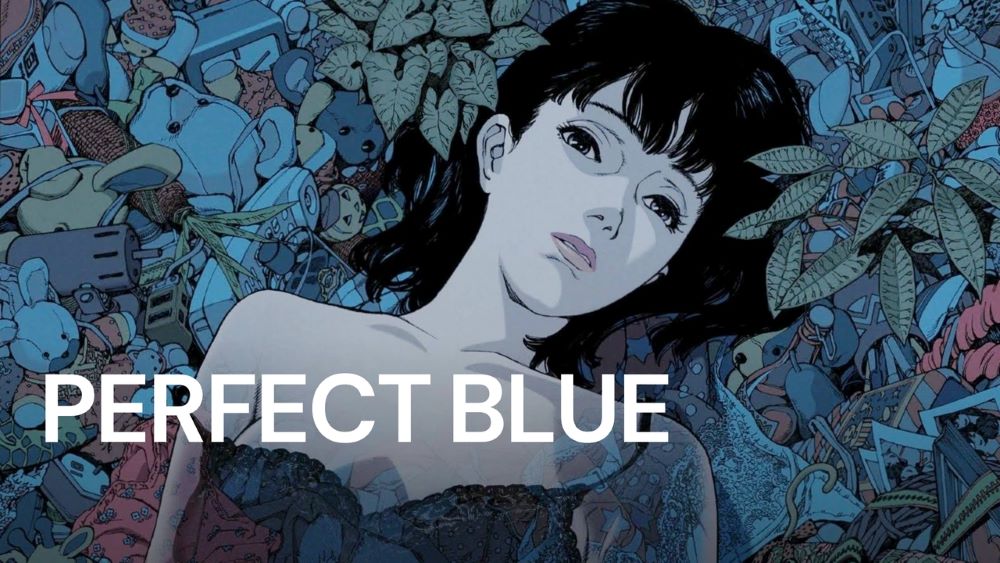
Satoshi Kon’s 1998 psychological thriller Perfect Blue remains a striking and influential work nearly three decades after its release. Despite being an animated film, it evokes the unsettling style and tension found in the classic Italian giallo thrillers of the 1970s and ’80s—films by directors like Dario Argento and Mario Bava—and melds them admirably with elements of 1970s Eurotrash exploitation and arthouse psychological thriller reminiscent of Brian De Palma. Kon’s debut feature is a haunting exploration of fractured identity, blending show-business satire, Hitchcockian suspense, and surreal nightmare imagery into a profoundly relevant story in today’s age of parasocial fandom and digital voyeurism.
The film centers on Mima Kirigoe, a member of the bubblegum J-Pop group “CHAM!” who decides to leave the idol world to pursue a career in serious acting. This choice, rooted in her desire for personal growth and artistic expression, sets off devastating consequences. For her managers and many fans, Mima’s break from the manufactured idol persona is viewed as betrayal—a dissolution of a carefully crafted image designed for maximum market appeal. The pristine, innocent figure worshipped by fans begins to crumble, replaced by the complicated reality of adulthood and the harsh glare of fame.
To fully grasp the horror underpinning Perfect Blue, it’s important to understand the nature of Japanese idol culture. These idols are not merely singers or performers—they are highly managed brands. Every lyric, outfit, choreographed move, and public appearance is tightly controlled to project purity and accessibility. This system bears close resemblance to the meticulously produced Western pop acts of the late 1990s and early 2000s like Britney Spears and the Backstreet Boys. Both rely on constructing polished, artificial personas that maximize commercial appeal, often at the expense of genuine selfhood. When an idol deviates from this script, it frequently provokes obsession, confusion, and even violent reactions from a subset of fans unable to reconcile the constructed image with evolving reality.
Mima’s transition from ingénue pop star to serious actress thrusts her into an intense psychological crucible. Her first major acting role requires her to perform a deeply disturbing rape scene, one that blurs lines between professional obligation and personal violation. Kon lingers on Mima’s shocked expression—a powerful mask of confusion and repressed trauma. This sequence sets the tone for the film: a world where performance, identity, and exploitation intertwine irrevocably, creating a landscape where self and roles imposed by society become indistinguishable.
As Mima’s public persona shifts, darker forces emerge. An eerie fan website titled “Mima’s Room” chronicles her life with disturbing accuracy but is clearly authored by an unknown party. Even more threatening is an obsessed fan fixated on the idol version of Mima, stalking her and insisting that the “real” Mima no longer exists. This duality—between reality and imitation, self and construct—becomes the film’s thematic centerpiece. The narrative loops and fractures, cutting between dreams, televised drama, and supposed reality until neither Mima nor the viewer can be sure what is authentic. This masterful ambiguity immerses us in the protagonist’s psychological collapse.
The horror in Perfect Blue operates on two deeply intertwined levels. First, it is a psychological portrait of a young woman’s unraveling, echoing themes explored in Roman Polanski’s Repulsion and Darren Aronofsky’s Black Swan—films focused on fragile female psyches under immense pressure. While Aronofsky has publicly denied that Black Swan was directly inspired by Perfect Blue, the similarities in theme and specific visual motifs suggest otherwise. Both films explore the disintegration of identity in a young woman caught between innocence and adult roles, with dreamlike, unsettling sequences blurring reality and hallucination. The parallels in their portrayal of psychological breakdown, stalking, and the pressure of performance are striking, though Aronofsky’s work is set in the world of ballet rather than pop music and acting.
Second, Perfect Blue channels the lush, stylized dread characteristic of giallo cinema. Kon borrows Argento’s fascination with voyeuristic camera angles, saturated color palettes, and the interplay of beauty and violence. Like Argento’s heroines trapped in a hall of mirrors, Mima finds herself caught in a labyrinth where surreal horror becomes tangible and murder might be just another staged act in a disturbing performance.
Yet unlike Suspiria’s occult grotesques, Kon’s horror resides not in supernatural forces but within the mind and media itself. Animation becomes a revelatory choice—rather than softening violence, it frees Kon from physical constraints, allowing reality to fracture visually with startling fluidity. Identities shift from frame to frame, reflections move independently of their sources, and timelines collapse and fragment like psychic glitches. The medium’s flexibility intensifies the film’s psychological disorientation, blurring fact and fantasy in ways live-action cinema would struggle to capture so viscerally.
Kon’s prescient understanding of media obsession resonates more strongly than ever today. Long before social media reshaped how identity is constructed and perceived, Perfect Blue envisioned the internet as a distorting mirror that erases the line between self and performance. The “Mima’s Room” website serves both as diary and prison—a disturbing precursor to the carefully curated digital personas that dominate social media platforms now. As Mima reads falsified diary entries that resemble her life more “truthfully” than her own memory, she grows alienated from reality. The omnipresent gaze of fans, stalkers, and producers merges into an oppressive force she cannot escape.
This taps into a modern phenomenon: parasocial relationships. These one-sided emotional bonds fans develop with celebrities or fictional characters foster a dangerous illusion of intimacy and knowledge, often masking boundaries between admiration and entitlement. In Perfect Blue, the deranged fan believes he “knows” Mima in a way that justifies controlling her, even committing violence to preserve the image he idolizes. This mirrors the darker side of parasocial dynamics today, where fans demand absolute authenticity or control over public figures’ identities, sometimes leading to harassment or stalking. Kon’s film foreshadows how internet culture can exacerbate these fragile boundaries, blurring realities and fueling destructive obsession.
The film’s editing amplifies this psychological suffocation. Kon intercuts scenes from Mima’s TV drama—ironically titled Double Bind—with moments from her “real” life until one blurs imperceptibly into the other. Viewers are drawn deeper into uncertainty: are we witnessing actual events, staged fiction, or yet another deceptive layer? This deliberate manipulation creates unease without relying on cheap jump scares or graphic violence. The horror is existential—losing trust not only in others but in one’s own mind.
This theme has become exponentially more relevant with the rise of social media influencers and online streaming personalities. Today, countless individuals cultivate personal brands that blend their private lives with public personas online, often with blurred or deliberately ambiguous boundaries. The intense fan interaction, constant scrutiny, and expectation of accessibility echo the pressures Mima faces. As social media blurs the line between “real” self and online performance, the risks of losing grip on one’s identity—as Mima does—feel more immediate and widespread than ever.
It is extraordinary that Perfect Blue was Kon’s first feature film. His command of cinematic language is masterful—harnessing animation as a means to probe psychological depths rather than as mere escapism. His subsequent works—Millennium Actress, Tokyo Godfathers, Paprika—build on themes of identity, memory, and the fluid borders of reality, but Perfect Blue remains his rawest and most unsettling contribution. His untimely death from pancreatic cancer in 2010 at just 46 left the film community mourning a visionary whose full promise was tragically unfulfilled.
One of Perfect Blue’s greatest achievements is rejecting outsider stereotypes about anime. It is neither childish fantasy nor gratuitous erotica, though it fearlessly explores sexual anxiety, trauma, and performance under intense scrutiny. Kon’s film proves that animation can tackle mature themes—mental illness, societal pressure, gender identity—with subtlety and emotional gravitas usually reserved for live-action cinema. It challenges the misinformed Western association of adult anime with “hentai,” affirming animation’s capacity as a serious art form.
Kon’s film also critiques fandom’s darker impulses, asking difficult questions about ownership and identity. How much of a celebrity’s life belongs to the public? How much of one’s self must be sacrificed under the weight of expectation? In today’s hyperconnected online world, Kon’s portrayal of obsessive fans demanding idealized idols is uncannily relevant and urgent.
Ultimately, Perfect Blue transcends genre and era. It is not merely a psychological thriller or celebrity critique but a mirror held to an increasingly performative world. Long before social media dissolved the lines between private and public selves, Kon foresaw how image can consume reality. The result is a masterful fusion of paranoia, empathy, and stunning visual style—a giallo-inspired fever dream painted in blood-red and neon blue. For animation, it remains a landmark in artistic maturity; for cinema as a whole, it stands as one of the most chilling and insightful portraits of fame’s corrosive gaze and the dark side of parasocial obsession.
In my absence, Lisa Marie did quite a great job picking up the slack when it came time to put up a new anime music video. She had quite the eclectic choice of videos that ran the gamut from comedy, space opera, ecchi to drama.
As I continue my return back I thought it was high time to put up a new AMV and this time from an anime I haven’t even seen. It’s actually an anime that even the site expert pantsukudasai56 hasn’t seen but had heard of. The anime in question is the supernatural romance anime film Hotarubi no Mori e.
Just from researching what the anime was about I knew this was going to be one of those shoujo fares that I would need to find time to watch. It helps that the video’s creator, youlazybum, did such a great job pairing scenes from the anime with one of my favorite songs these past ten years, Lauren Aquilina’s “King.”
So, here’s my latest AMV of the Day, “You Can Be King Again.”
Typically, site anime expert pantsukudasai56 would be the one to recommend anything and everything anime. Anime in its series form, OVA (original video animation) and/or straight up film. I like to think my knowledge of anime is second only to his.
While I’ve had an off and on love affair with anime throughout the years I have seen my fair share of anime film. From pantsukudasai56’s viewpoint, only those anime that were produced from beginning to end with the intent of having a film release qualifies as anime film. OVA productions he sees as a sort of straight-to-video releases and shouldn’t qualify. his own initial 4 Shots From 4 Films entry were all anime films.
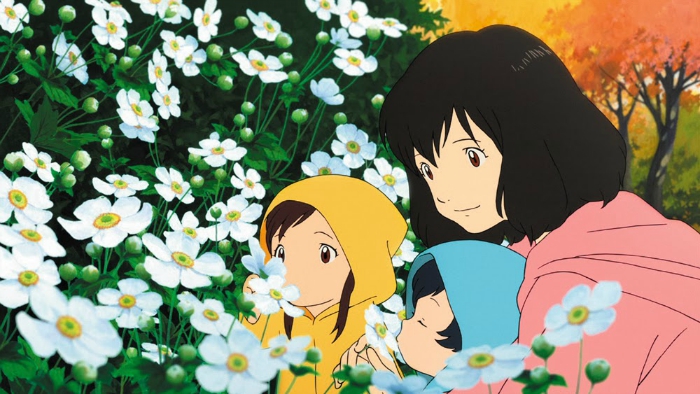
With his example as a guide I have chosen four anime films that veteran and burgeoning fans of the art form should check out. Two come from the heir apparent to the great Satoshi Kon. Another is a hyperkinetic (even for an anime) traditional hand-drawn anime which has had a major influence on the more recent Fast and Furious films. The fourth is a film from the late 80’s which rekindled my love for anime during my high school years.
One of the most entertaining and fun games of this current generation of consoles that I’ve ever played came out in the Spring of 2010. The game I speak of is the hack-and-slash title Bayonetta from Platinum Games. It’s a game that was born from the hyper-kinetic action game series Devil May Cry. In fact, the game’s designer was also the designer for the Devil May Cryseries and it shows in this heroine-led title.
As I had mentioned on a very early review of the title, Bayonetta is quite the over-the-top game with unique-looking visuals and imagery that combined Judeo-Christian art designs with the anime-inspired aesthetics that has been the design staple of the Devil May Cry series.
I was actually surprised that the game didn’t get an anime series right away to complement it the way some Japanese games tend to get when they become popular. Yet, despite waiting over three years to get one fans of the game will finally have their wish.
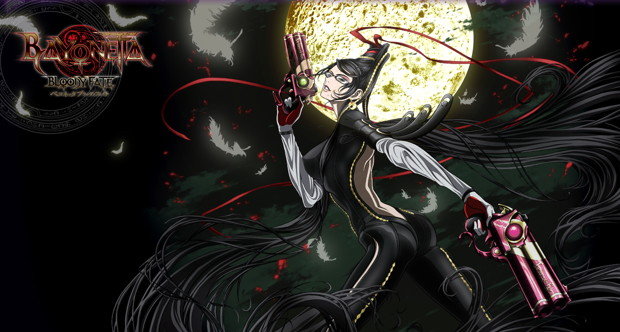
Bayonetta: Bloody Fate is an anime series due out this November from studio house GONZO. It looks to be an adaptation of the game’s storyline and will have Fuminori Kizaki of Afro Samuraifame in the director’s chair. The art design of the series will lean heavily on the game’s original character designs by Mari Shimazaki which should be good news to Bayonetta fans everywhere.
The trailer for the anime already hints at using the fan service moments from the game that made the title so popular but at the same time so controversial within some of the gaming community. The anime will be shown in a limited release in Japan this November with no word yet on whether it will make it over to the West in one type of release or another. I bet on it becoming a video release down the line.