4 Or More Shots From 4 Or More Films is just what it says it is, 4 shots from 4 of our favorite films. As opposed to the reviews and recaps that we usually post, 4 Shots From 4 Films lets the visuals do the talking!
Today, we celebrate the birthday of Mexican director and actor Alfonso Arau! It’s time for….
4 Shots From 4 Alfonso Arau Films
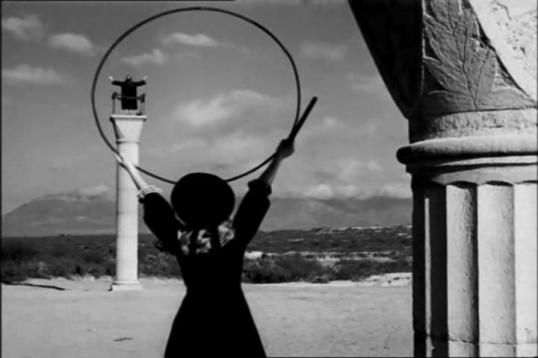
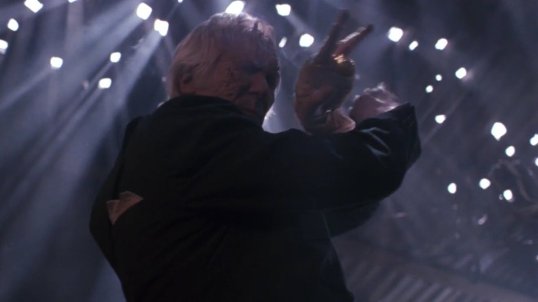
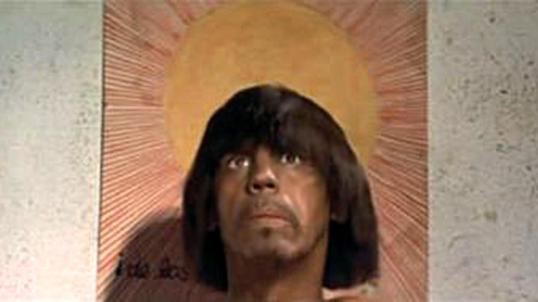
Calzonin Inspector (1973, dir by Alfonso Arau, DP: Jorge Stahl Jr.)
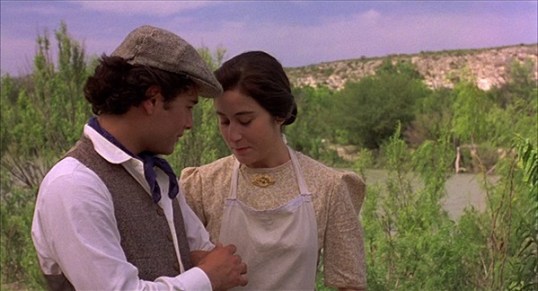
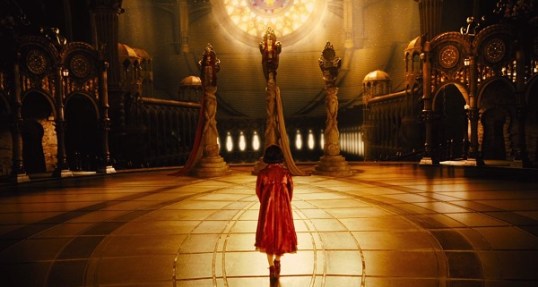
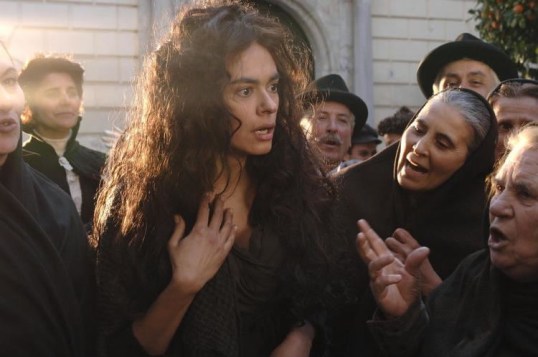
Like Water For Chocolate (1992, dir by Alfonso Arau, DP: Emmanuel Lubezki)
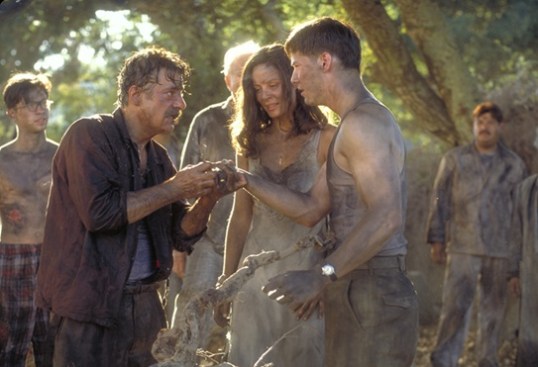
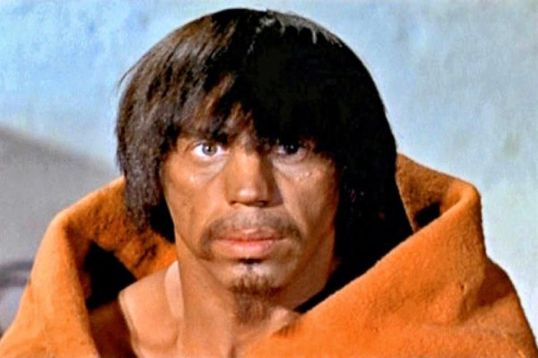
A Walk In The Clouds (1995, dir by Alfonso Arau. DP: Emmanuel Lubezki)
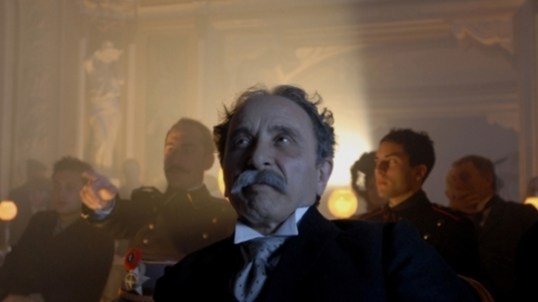
The Trick In The Sheet (2010, dir by Alfonso Arau, DP: Vittorio Storaro)
“We’ve got to start thinking beyond our guns. Those days are closin’ fast.” — Pike Bishop
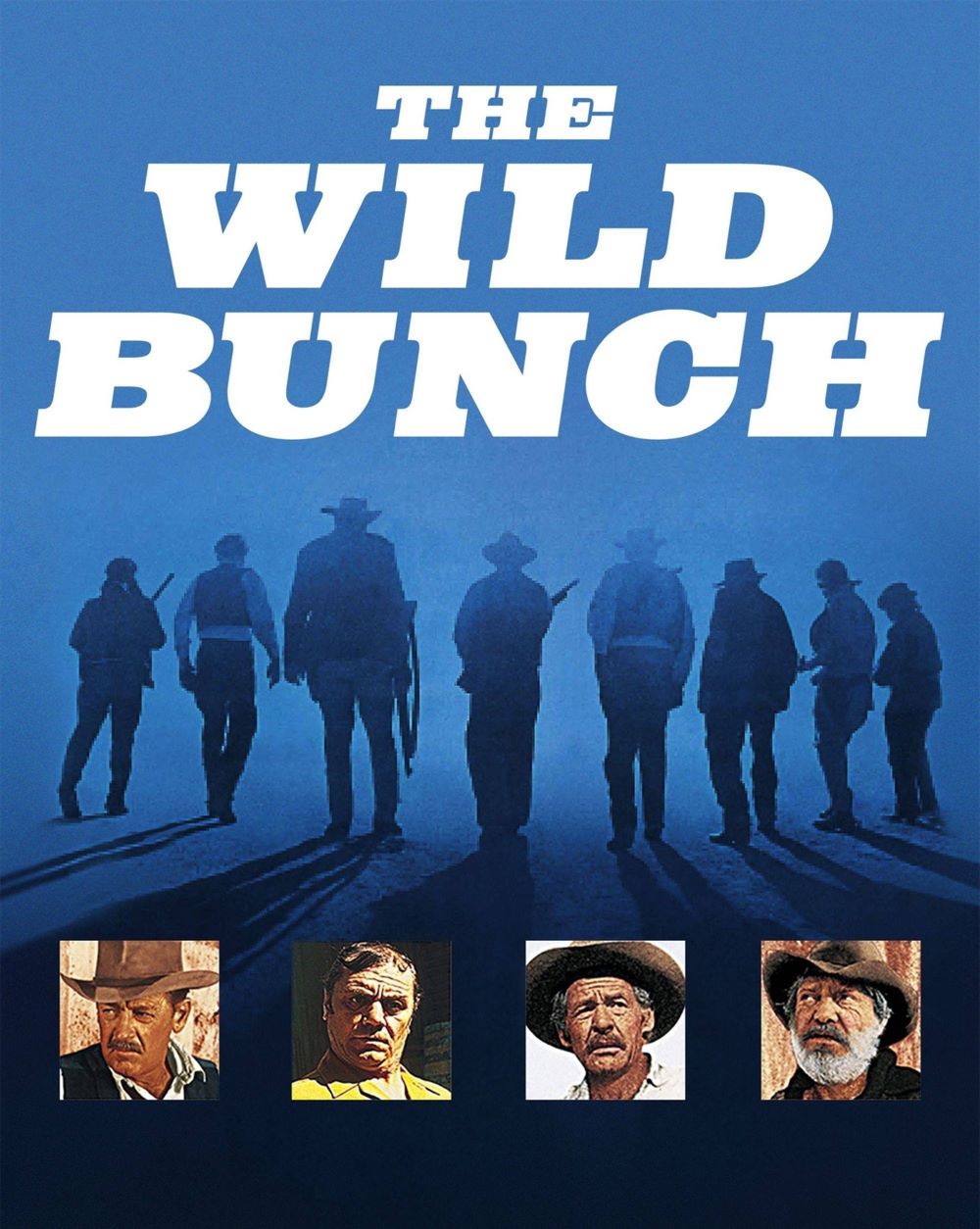
Sam Peckinpah’s The Wild Bunch stands out as a landmark in the Western genre, famous for its daringly harsh depiction of both violence and the fading mythos of the American West. Rather than following the traditions of earlier Westerns, the film presents a gritty portrait of aging outlaws on the edge of extinction, wrestling with a society that has evolved past them. It’s a movie that’s difficult to shake, both for its unapologetic style and the unresolved feelings it leaves long after the final shots ring out.
At its core, the story centers on Pike Bishop and his band—a crew of seasoned criminals aiming for one last grand heist as modernity encroaches on their world. Hoping to pull off a train robbery, they end up entangled in deeper complications after being betrayed and soon are thrust into the turbulence of the Mexican Revolution. Peckinpah builds a narrative where clear-cut morality falls away. The criminals and those pursuing them, supposed bringers of justice, are equally compromised and dangerous. This balancing act challenges the audience to reassess their sympathies, since the characters rarely line up as traditional heroes or villains.
The film’s notoriety is inseparable from its treatment of violence. In an era when Westerns often depicted gunfights as almost bloodless, The Wild Bunch arrived blazing with slow-motion fatalities, realistic wounds, and chaos that feels nearly documentary. Peckinpah didn’t intend to sugarcoat death; the film’s fight scenes are designed to unsettle rather than thrill, making viewers register the true cost of violence on screen. The movie’s most infamous sequences, particularly the opening and closing shootouts, still provoke debate over whether their artistry justifies their brutality. Peckinpah reportedly wanted to expose the real consequences of violence, not celebrate them, and the resulting imagery remains both striking and disturbing decades later.
Beyond its bloodshed, the film is packed with melancholy, exploring the futility and obsolescence of its central figures. The Wild Bunch themselves—Pike, Dutch, Lyle, Angel, and others—all feel the weight of their era’s end. They are not just outdated in terms of time; their entire way of life has been mechanized and modernized beyond their grasp. The film depicts this through powerful imagery, from horses being supplanted by cars and trucks to rifles giving way to machine guns. This mechanization highlights that Pike and his men live in a world that has moved on, leaving them behind. Their code of honor and rough camaraderie are relics in a brutal, mechanized landscape that favors efficiency and merciless violence. The emergence of rapid-fire weaponry and vehicles is more than a backdrop; it symbolizes their growing irrelevance and the passing of a wild, untamed frontier.
Technically speaking, The Wild Bunch is as impressive as it is influential. The cinematography captures wide Mexican landscapes with dust and sunlight, conveying both beauty and bleakness. The editing—particularly in the action scenes—was ahead of its time, with its expressive use of multiple camera angles and slow-motion adding an almost ballet-like rhythm to chaotic violence. The music, a mix of Jerry Fielding’s score and traditional Mexican songs, deepens the film’s sense of place and loss. All of this technical prowess merges in set pieces that are still studied by action directors today.
One of the film’s most enduring legacies is its profound influence on a slew of filmmakers in the years following its release. Directors like Martin Scorsese, Quentin Tarantino, and John Woo have all cited The Wild Bunch as a key inspiration, particularly in how it reshaped the depiction of violence and complex characters onscreen. Peckinpah’s innovative use of slow motion during action scenes transformed gunfights into sequences that feel almost balletic, bringing an eerie beauty to brutality. This technique became a hallmark of John Woo’s work, where slow-motion shootouts are choreographed with a dance-like precision, making the violence stylized yet emotionally impactful. Meanwhile, Scorsese and Tarantino embraced the moral ambiguity and character complexity Peckinpah championed, pushing their own stories beyond clear-cut good and evil. Through these directors and many others, The Wild Bunch continues to resonate and shape modern cinema.
The performances in The Wild Bunch are integral to its powerful impact, with its ensemble cast bringing layered humanity to otherwise rough, sometimes brutal characters. William Holden leads as Pike Bishop with a mix of weary charisma and existential urgency, embodying a man caught between the fading wild past and a ruthless present. Holden’s Pike is not just a leader of outlaws, but a man wrestling with his own moral contradictions—as loyal and protective as he is capable of cold violence. This complexity allows the character to stay compelling rather than becoming a cliché tough guy.
Ernest Borgnine as Dutch Engstrom offers a grizzled, weary presence, conveying the toll that years of violence have taken on his spirit, while Warren Oates imbues Lyle Gorch with a volatile and rebellious energy that adds tension within the gang. His brother, Tector Gorch, played by Ben Johnson, brings a contrasting steadiness, portraying a man caught between loyalty and survival. Robert Ryan’s portrayal of Deke Thornton, the relentless bounty hunter, stands out as a tragic figure torn between his past friendship with Pike and his duty. This character conflict gives the story a deeper emotional layer and adds weight to the relentless pursuit central to the plot.
Supporting performances by Edmond O’Brien as Freddie Sykes and Jaime Sánchez as Angel enrich the group dynamic, each adding distinct personality traits that feel authentic and lived-in. The chemistry between the cast helps ground the film’s heavy themes in real human experience, making the characters’ struggles with obsolescence and loyalty resonate beyond the screen.
However, despite the strong male performances, the film’s treatment of female characters is notably sparse and limiting. Women in the film often fall into marginal roles, lacking development or agency, which reflects the gender dynamics of many Westerns from the era but feels particularly dated today.
For viewers seeking straightforward heroism or moral clarity, The Wild Bunch can be a challenging experience. Its bleak, nihilistic worldview and refusal to deliver easy answers may leave some feeling drained. The story culminates in a violent, unresolved climax with no tidy resolution, emphasizing loss and the end of an era. But it is precisely this rawness and technical mastery that keep the film compelling and worthy of close viewing.
The Wild Bunch demands you shed simple notions of good versus evil and prepare for a rough, often brutal ride. It’s a story about men fighting not just other men but inevitability—caught between their own fading values and the relentless march of modernization and change. Peckinpah doesn’t offer comfort; instead, he forces the viewer to reckon with violence’s cost and the price of nostalgia. Even with all its grit and flaws, the film’s artistry and influence remain undeniable, securing its status as a masterwork that redefined Westerns and action cinema alike. It’s a wild ride that continues to inspire and provoke long after the credits roll.
Welcome to Retro Television Reviews, a feature where we review some of our favorite and least favorite shows of the past! On Mondays, I will be reviewing Miami Vice, which ran on NBC from 1984 to 1989. The entire show can be purchased on Prime!
After a two-week hiatus, the retro television reviews are back! Let’s start with MiamiVice.
Episode 4.6 “God’s Work”
(Dir by Jan Eliasberg, originally aired on November 6th, 1987)
Father Ernesto Lupe (Daniel Lugo), an old friend of Castillo’s, runs an AIDS hospice in Miami. When Father Ernesto is shot and murdered, Castillo takes a particular interest in the case.
Was Father Ernesto shot by one of the neighborhood homophobes, the same punks who spend their free time spray-painting obscene graffiti on the front doors of the hospice?
Was Father Ernesto’s death connected to his brother-in-law, notorious drug lord Jorge Cruz (Alfonso Arau)? The Vice Squad has been investigating the Cruz family. Francesco (Franceso Quinn) is the brutish son, the one who enjoys throwing his weight around and who goes out of his way to bully everyone that he meets. Felipe (Esai Morales) is the young son, who has just returned from Miami after making a fortune as a stockbroker in New York. Is Felipe looking to take over the family business?
Actually, Felipe wants nothing to do with the family business. He’s returned to Miami because an ex-boyfriend is a patient at the AIDS hospice and Felipe wanted to spend time with him before he died. And Father Ernesto’s death had nothing to do with drugs. Instead, Jorge shot him because Jorge blamed Ernesto’s sermons, which stressed God’s love above all else, for being responsible for Felipe “becoming” gay. Even after Felipe explains that the sermons had nothing to do with it and that he’s always been gay, Jorge still thinks that he can “cure” his son by making him a part of the family business.
Yikes!
There was a lot going on in this episode. In fact, there was almost too much going on. Between Castillo investigating Ernesto’s death and Tubbs (working undercover) trying to arrest Franceso, this episode sometimes felt a bit overstuffed. It was still an effective episode, though, featuring good performances from Arau, Quinn, Morales, and Edward James Olmos. Castillo actually got to laugh at one point in this episode. I don’t think that’s ever happened before.
This episode did remind me — as I think almost every episode does — that Crockett and Tubbs undercover work has never made much sense. Tubbs spends the majority of the first half of the episode pretending to be a criminal looking to make a deal with Francisco. That’s fine. It even allows Tubbs to use his fake Caribbean accent. It’s been a while since we’ve heard that. But then, after Father Ernesto is shot, Tubbs shows up at the crime scene with his badge. Now, seriously, Father Ernesto is Francesco’s uncle. Francesco is a suspect in the murder. Why would Tubbs run the risk of blowing his cover like that? For that matter, why was Vice investigating a homicide?
Even when Vice is good, it often doesn’t make sense.
4 Or More Shots From 4 Or More Films is just what it says it is, 4 shots from 4 of our favorite films. As opposed to the reviews and recaps that we usually post, 4 Shots From 4 Films lets the visuals do the talking!
Happy Cinco De Mayo to all of our readers! It’s time for….
4 Shots From 4 Great Mexican Films
Simon of the Desert (1965, dir by Luis Bunuel, DP: Gabriel Figueroa)
Like Water For Chocolate (1992, dir by Alfonso Arau, DP: Emmanuel Lubezki)
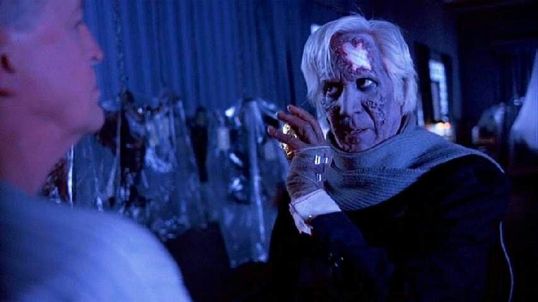
Cronos (1993, dir by Guillermo del Toro, DP: Guillermo Navarra)
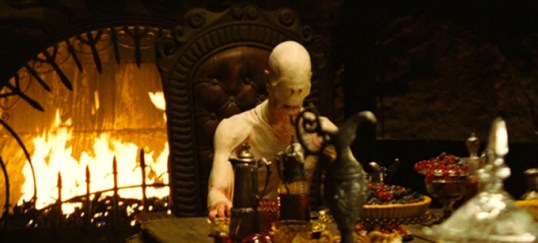
Pan’s Labyrinth (2006, dir by Guillermo del Toro, DP: Guillermo Navarro)
4 Or More Shots From 4 Or More Films is just what it says it is, 4 shots from 4 of our favorite films. As opposed to the reviews and recaps that we usually post, 4 Shots From 4 Films lets the visuals do the talking!
Today, we celebrate the birthday of Mexican director and actor Alfonso Arau! It’s time for….
4 Shots From 4 Alfonso Arau Films
Calzonin Inspector (1973, dir by Alfonso Arau, DP: Jorge Stahl Jr.)
Like Water For Chocolate (1992, dir by Alfonso Arau, DP: Emmanuel Lubezki)
A Walk In The Clouds (1995, dir by Alfonso Arau. DP: Emmanuel Lubezki)
The Trick In The Sheet (2010, dir by Alfonso Arau, DP: Vittorio Storaro)
4 Or More Shots From 4 Or More Films is just what it says it is, 4 shots from 4 of our favorite films. As opposed to the reviews and recaps that we usually post, 4 Shots From 4 Films lets the visuals do the talking!
Happy Cinco De Mayo to all of our readers! It’s time for….
4 Shots From 4 Mexican Films
Los Olvidados (1950, dir by Luis Bunuel, DP: Gabriel Figuero)
Like Water For Chocolate (1992, dir by Alfonso Arau, DP: Emmanuel Luzbeki)
Cronos (1993, dir by Guillermo Del Toro, DP: Guillermo Navarro)
Pan’s Labyrinth (2006, dir. by Guillermo Del Toro, DP: Guillermo Nava)
4 Or More Shots From 4 Or More Films is just what it says it is, 4 shots from 4 of our favorite films. As opposed to the reviews and recaps that we usually post, 4 Shots From 4 Films lets the visuals do the talking!
Today, we celebrate the birthday of Mexican director and actor Alfonso Arau! It’s time for….
4 Shots From 4 Alfonso Arau Films
Calzonin Inspector (1973, dir by Alfonso Arau, DP: Jorge Stahl Jr.)
Like Water For Chocolate (1992, dir by Alfonso Arau, DP: Emmanuel Lubezki)
A Walk In The Clouds (1995, dir by Alfonso Arau. DP: Emmanuel Lubezki)
The Trick In The Sheet (2010, dir by Alfonso Arau, DP: Vittorio Storaro)
“Do you think we like being associated with the President of the United States? I mean, we run an honest business here!” —
Jeff (Gerrit Graham) in Used Cars (1980)
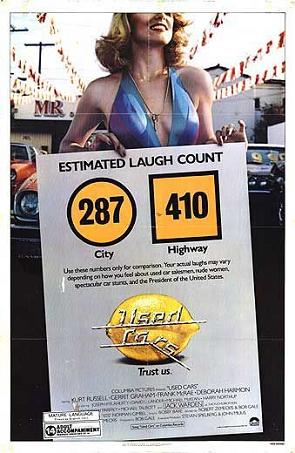
As a film lover, I’ve sat through so many disappointing commentary tracks that, when I come across one that’s actually fun and informative, it causes me to like the film even more. One of the best commentary tracks that I’ve ever heard was the one that Robert Zemeckis, Bob Gale, and Kurt Russell recorded for the DVD release of the 1980 comedy Used Cars.
The film — which was an early credit for both director Zemeckis and screenwriter Gale — tells the story of two rival used car lots. The bad guy car lot is owned by Roy L. Fuchs (Jack Warden). The good guy car lot is owned by Roy’s brother, Luke Fuchs (also played by Jack Warden). The top salesman at the good guy car lot is Rudy Russo (Kurt Russell). The film shows what happens when Luke dies and Rudy tries to prevent Roy from taking over the lot.
The commentary track is distinguished by just how much Zemeckis, Gale, and Russell seem to truly enjoy watching and talking about the film. Kurt Russell, in particular, has an incredibly engaging laugh and his sense of fun is contagious. However, for me, the most interesting part of the commentary track came when Bob Gale explicitly compared Rudy Russo and Luke’s daughter (played by Deborah Harmon) to Bill and Hillary Clinton and then even starts to do a surprisingly good imitation of Bill’s hoarse Arkansas accent.
What made it interesting was that the comparison was absolutely correct.
Politicians are salesmen. Much as politicians will say anything to get your vote, the salesmen in Used Cars will say and do anything to get your money. Politicians sell promises that are too good to be true. Rudy Russo and Roy L. Fuchs do the same thing, claiming that their used cars are just as good and safe as a car that’s never been owned before.
In fact, one of the major plotlines in Used Cars is that Rudy is plotting to make the move from selling cars to buying votes. There’s a vacancy in the state senate and Rudy is planning on running for the seat. All he has to do is come up with the $10,000 necessary to buy the nomination from the local political machine. (I imagine it would be more expensive to buy a nomination today.) Luke agrees to loan Rudy the money but, before he can, Luke goes on a test drive with a former race car driver.
The driver works for Luke’s evil brother, Roy. Roy knows that Luke has a heart condition and he specifically sends over that driver to give Luke a fatal heart attack. Just as Rudy is trying to sell a car to a costumer who is skeptical about whether or not he should pay an extra fifty dollar for something he doesn’t want (“$50.00 never killed anyone!” the customer insists), Luke staggers into the office and dies.
(The shocked customer agrees to pay the extra fifty dollars. Ever the salesman, Luke grabs the fifty before he dies.)
With Luke dead and his estranged daughter nowhere to be seen, Roy is next-in-line to take over Luke’s car lot. So, Rudy hides the body and tells everyone that Luke is down in Florida. Both he and his fellow salesman, the hilariously superstitious Jeff (Gerrit Graham), conspire to make as much money as possible before anyone discovers the truth.
How do they do it? Illegally, of course!
First off, they break into the broadcast of a football game and do an ad. Then, they use strippers to attract customers. And finally, Rudy comes up with his master plan, interrupting a televised address from the President of the United States.
“You can’t fuck with the President!” Jeff says.
“Hey, he fucks with us…” Rudy responds.
Seriously, I love Rudy.
In fact, I really liked Used Cars. It’s a good combination of broad humor and clever satire and both Kurt Russell and Gerrit Graham give such likable performances that you can ignore the fact that they’re both playing total jerks. (In fact, I would argue that one reason that we love Rudy is because he’s so honest about being so crooked.) Not every scene worked perfectly. The scene where Rudy and Jeff interrupt that football game goes on forever and, after a spokesmodel’s dress is ripped off, becomes so uncomfortable to watch that it actually takes the film a while to recover. But then, after that, you get the interruption of the President’s speech. You get Jeff freaking out over whether or not red cars or unlucky. You get some fun driving school humor. And, of course, you get a cute dog that can do tricks and helps to sell cars. The film recovers and, ultimately, Used Cars is a celebration of small businesses everywhere.
And you know what?
I really hope Rudy did make it into the state senate.
We need more Rudy Russos in government.
And we really need more commentary tracks featuring Kurt Russell!






 Through the Shattered Lens