What Lisa Watched Tonight #204: Escaping My Stalker (dir by Linden Ashby)


Tonight, I watched the first Lifetime movie of 2020 — Escaping My Stalker!

Why Was I Watching It?

Because it was the first Lifetime film of 2020, of course!

Seriously, though, 2019 was not an easy year for me as a reviewer.  I got busy.  My time management skills mysteriously fell apart.  As a result, I missed a few Lifetime films and I also didn’t always have time to review quite a few of the ones that I did see.  One of my resolutions for 2020 is to not let that happen again.

I mean, don’t get me wrong.  If I’m not going to be at home when the movie airs, I’m going to set the DVR.  But, this year, I’m not going to let movies pile up on my DVR before I watch them and, even more importantly, I’m not going to get behind on my reviews.  That’s my 2020 resolution and if I break it, I’m blaming everyone who follows me on social media.

Those are the stakes, my friends.

(For the record, I will be watching and hopefully reviewing the remaining Lifetime films on my DVR this weekend.)

What Was It About?

Up until a year ago, 17 year-old Taylor (Ezmie Garcia) was homeless.  Fortunately, she was eventually taken in and adopted by Larry (Linden Ashby) and his wife, Sandy (Alexandra Paul).  Now, Taylor has a job at the local skatepark and her life appears to be heading in the right direction.  However, Taylor also has a stalker!  When that stalker breaks into Taylor’s home and shoots Larry in the leg, Taylor realizes that her new life isn’t as secure as she thought it was.

It’s no spoiler to tell you that Taylor’s stalker is Miles (Andrew James Allen).  Miles lives with his grandmother (Mariette Hartley) and it quickly turns out that grandma is actually encouraging Miles!  Miles and grandma have got their own reasons for wanting to destroy Taylor’s new family, reasons that only become clear as the film progresses.

What Worked

It all worked!

Seriously, Escaping My Stalker was a perfect way to start the new year.  The story was interesting.  The film was well-directed by Linden Ashby.  Ezmie Garcia did a great job playing a character who was a bit tougher than the average Lifetime teenager.  Meanwhile, Mariette Hartley appeared to be having a lot of diabolical fun in the role of the Grandma from Hell.  Even though Miles was not necessarily a sympathetic character, it only took one look at Grandma to understand why Miles turned out the way that he did.

Also, Escaping My Stalker featured a Clu Gulager shout-out!  When Taylor first meets Clu Dunsten (Pedro Correa), she asks him if he’s named after the great character actor Clu Gulager.  They even spend a few minutes talking about Return of the Living Dead!  If that isn’t the best way to start off 2020, I don’t know what is.

Finally, this was not just a Lifetime melodrama.  It was also a film about the homeless situation, which is getting worse day-by-day (and not just on the West Coast, either).  This was a Lifetime film with a conscience.

What Didn’t Work

As I said, it all worked.  This was exactly the type of film that one hopes to see while watching the Lifetime Movie Network.

“OH MY GOD!  JUST LIKE ME!” Moments

To be honest, I could only hope to be as tough and resourceful as Taylor.

Lessons Learned

There are still people out there who appreciate a good Living Dead film.

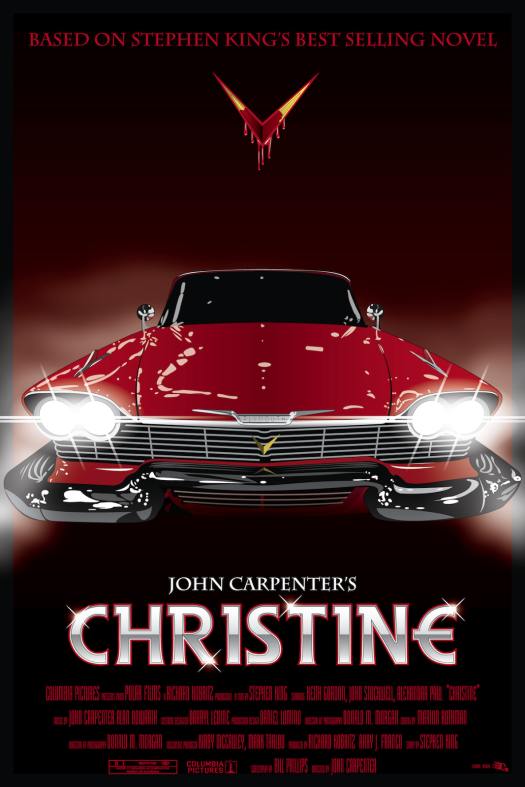
Halloween Havoc!: CHRISTINE (Columbia 1983)


gary loggins's avatarcracked rear viewer

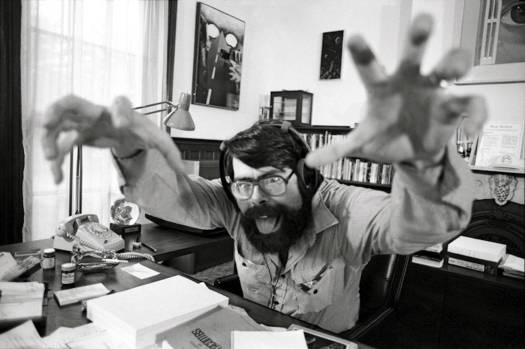
Stephen King turned 70 last month, and the Master of Horror’s grip on the American psyche is stronger than ever, thanks to the unprecedented horror hit IT!, now playing at a theater near you. King’s macabre novels have been adapted for the screen since 1976’s CARRIE with  varying degrees of success; some have been unabashed genre classics, others complete bombs, most lie somewhere in the middle.

Top: Stephen King 1983
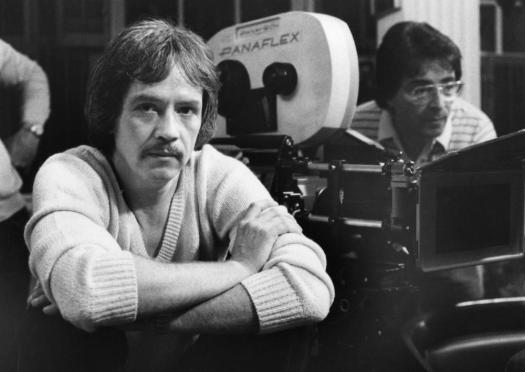
Bottom: John Carpenter 1983

Director John Carpenter had a string of successes beginning with 1978’s seminal slasher film HALLOWEEN, but his 1982 remake of THE THING, now considered a masterpiece of the genre, was a box office disappointment. Carpenter took on King’s novel CHRISTINE as a work-for-hire project. I recently watched it for the first time, and think not only is it one of the best adaptations of King’s work to hit the screen, it’s one of Carpenter’s best horror…

View original post 592 more words

Let’s Talk About Sharknado 4!


ChoJAlUXEAAXMhJ

Last Sunday night saw the premiere of Sharknado: The Fourth Awakens!

For the fourth year in a row, SyFy and the Asylum allowed us to take a peak into the shark-filled life of Finn Shepherd (Ian Ziering) and his family.  Also for the fourth year in a row, the premiere of the latest Sharknado film was practically a national holiday.  Long before the film even started, #Sharknado4 was the number one trending topic on twitter.  I actually live tweeted the film twice, once for the east coast and then a second time for my friends on the west coast.  That’s right — I sent out over 300 tweets about Sharknado 4 on Sunday and I’ve never been more proud of myself.  Live tweeting the latest Sharknado is a lot like wishing someone you barely know a happy birthday on Facebook. It’s a part of the ritual of social media.  It’s like the Internet’s version of a Thanksgiving parade or a 4th of July fireworks show.

After four films, it’s easy to forget that Sharknado started out like almost any other SyFy film.  The first Sharknado film featured no celebrity cameos and very little of the self-referential comedy that has come to define the series.  In fact, I didn’t even see Sharknado when it first aired because it premiered, opposite a Big Brother eviction show, on a Thursday.  It was only on Friday morning that I discovered that Sharknado had become a phenomena, largely due to the fact that celebrities like Mia Farrow had decided to live tweet it.

After all this time, it’s easy to forget just how much we veteran live tweeters resented that attention that was paid to celebrities like Farrow, the majority of whom were virgins as far as live tweeting SyFy was concerned.  (The fact that the majority of Farrow’s Sharknado tweets weren’t that good only added insult to injury.)  The media acted as if those celebs had invented live tweeting.  They also acted as if Sharknado was the first entertaining and over-the-top film to ever premiere on SyFy.  Among those of us who had been live tweeting SyFy film long before the premiere of Sharknado and who had loved pre-Sharknado movies like Jersey Shore Shark Attack and Shark Week, there was more than a little resentment.

But you know what?  I watched Sharknado the following Saturday and I had a great time live tweeting it.  The next year, I made sure to watch and live tweet Sharknado 2 the night that it premiered.  The same was true of Sharknado 3 and I even ended up casting a vote on the question of whether or not April should survive that film’s cliffhanger.  With its cheerful absurdity and determination to continually top the glorious absurdity of each previous entry, the Sharknado franchise won me over.  In fact, the franchise won over not only me but hundreds of thousands of other viewers.  Sharknado has become very much a part of our culture.

As I mentioned above, Sharknado 3 ended with a cliffhanger and that alone indicates just how big a deal Sharknado has become.  Sharknado 2 was made because the first Sharknado was an unexpected success.  Sharknado 3 followed because Sharknado 2 had proven that the first one was not a fluke and that there was an audience for these films.  However, by the time 3 was in production, there was never any doubt that there would be a Sharknado 4.  Sharknado 4 also ends with a rather abrupt cliffhanger, leaving little doubt that there will be a Sharknado 5.  At this point, not doing another Sharknado film would be the same as canceling summer all together.

medium_2016-07-31-bad427aee1

As for what Sharknado 4 was about … well, does it really matter?  At this point, we know that there’s going to be another sharknado and that Finn is just going to happen to be nearby when it strikes.  We know that landmarks will be destroyed (in this case, Las Vegas is thoroughly ravaged during the film’s first 30 minutes).  We know that Al Roker will show up and say stuff like, “There are reports of a Lightningnado near Kansas…”  (Both Roker and Natalie Morales apparently survived being attacked by sharks during Sharknado 3, though Morales does have an eyepatch in 4.  Matt Lauer is nowhere to be seen so I assume he wasn’t as lucky.)  We know that celebrities will appear in a cameos and that the majority of them will be promptly eaten by a flying shark.  We know that Finn and his family will eventually have to use a chainsaw to battle the sharks and we know that at least one person will be rescued from the inside of a shark’s stomach.

We don’t really watch a movie a like Sharknado 4 for the plot.  We watch it for the communal experience.  Last Sunday was Sharknado Day and it seems like the entire world was on twitter, talking about Sharknado 4.  The majority of us weren’t tweeting about the plot.  Instead, we were acknowledging that we had picked up on the in-jokes and the references to other films.  When April (Tara Reid) showed up alive and was revealed to now by a cyborg, many references were made to the Terminator — both in the film and on twitter.  When we learned that David Hasselhoff has been rescued from the moon, it was time to make jokes about The Martian.  When it was announced that a sharknado was headed towards Kansas, I made a Wizard of Oz joke on twitter.  Three minutes later, in the movie, a house fell on a character who could charitably be called a witch.  We briefly got a shot of her feet sticking out from under the house.

(I should also mention that Gary Busey shows up, playing a mad scientist.  The fact that Sharknado 4 could find prominent roles for both the Hoff and the Busey says a lot about what makes this franchise so endearingly entertaining.  Considering that Penn Jillette was in Sharknado 3, you have to wonder if the franchise will eventually feature every single person who appeared on The Celebrity Apprentice.  Who doesn’t want to see a flying shark bite off Piers Morgan’s head?)

(Actually, as long as I’m mentioning stuff — here’s my favorite inside joke.  Finn and his family are driving through North Texas.  Just judging by the hills and the mountains in the background, this scene was not actually filmed in Texas.  Anyway, they stop off at a general store where Dog Chapman — the bounty hunter — sells them a chainsaw.  When the sharks attack Texas, a chainsaw-wielding army is waiting for them.  Among that army is Caroline Williams, who starred in Texas Chainsaw Massacre 2.  On the one hand, everyone viewing will immediately get the chainsaw joke.  But only the dedicated horror fans will truly understand why it’s so brilliant that Caroline Williams was credited as playing a character named Stretch.)

At this point, the Sharknado franchise is no longer just a series of films.  Instead, it’s a deliriously over-the-top experience.  In these times of partisan rancor, it briefly did not matter if you were a liberal or a conservative, a Democrat or a Republican.  For two hours on Sunday night, if you were watching and live tweeting Sharkando 4, you were a part of a gigantic family, a community of people with an appreciation for over the top silliness.  Sharknado 4 brought this country together.

That’s not bad for a film about a bunch of flying sharks.

If you missed Sharknado 4 the first time, catch it when it’s shown again.  Just make sure that you watch it with a friend, someone who you can trust to make you laugh.

And, for God’s sake, enjoy yourself!

Life’s too short not to enjoy a Sharknado film!

hqdefault

What Else Lisa Watched Last Night #139: The Bride He Bought Online (dir by Christine Conradt)


Last night, after I watched UnGodly Acts, I watched The Bride He Bought Online.

The Bride He Bought 2

Why Was I Watching It?

The Bride He Bought Online actually premiered a few months ago but, for some reason, I missed it.  Even though all of my friends told me that I had not missed much, I took a solemn vow last December to watch every Lifetime film released this year.  So, when I saw that The Bride He Bought Online would be airing again last night, I made sure to watch it.

What Was It About?

This is the story of three teenage girls who have a blog where the specialize in doing mean things to their friends and occasionally to complete strangers.  Kaley (Annalisa Cochrane) dreams of making the blog so successful that she’ll be able to sell it for so much money that she won’t have to bother going to college after high school.  Mandy (Lauren Gaw) is a former unpopular girl who is now awkwardly trying to decide if she really wants to be a mean girl.  And Avery (Anne Winters) is the responsible one who worries that Kaley is going to go far.

And Avery has ever right to be worried because Kaley does go too far.  Pretending to be a mail order bride, Kaley starts an online relationship with a dorky guy named John (Travis Hammer).  Convinced that he’s finally found a woman who will love him, John sends her money and even takes guitar lessons so that he can serenade his bride to be.  When he spends hours waiting at an airport for his nonexistent bride to show up, Kaley and Mandy record him and then upload the video to the blog.

Up until this point, you’ve been feeling pretty sorry for John.  But it turns out that John is actually a pretty dangerous and unstable guy.  Once he figures out what has happened, he kidnaps the three girls and makes plans to sell them to a group of human traffickers.

What Worked?

A lot of people have told me that they didn’t like The Bride He Bought Online but I thought it was actually a very well-done and well-acted film.  It’s a great example of one of my favorite Lifetime movie genres — the Everything Bad That Can Happen Will Happen genre.  Yes, it’s melodramatic and it’s a bit extreme but then again, that’s kind of what we want from Lifetime.

Plus, I’ve had friends just like Kaley, Mandy, and Avery.  Their friendship felt very real to me.  Also way too plausible was the character of John.  As played by Travis Hammer, he was both pathetic and scary at the same time.

What Did Not Work?

Lifetime movies are always so phobic of the internet.  Anytime someone says that they have a blog, you know that something bad is going to happen as a result.

“Oh my God!  Just like me!” Moments

I’m happy to say that, even at my brattiest, I was never as bad as Kaley.  However, I did know quite a few girls like Kaley and I often found myself wondering just why exactly I was friends with them.  So, in the end, I related to Avery.

Lessons Learned

Be nice or you’ll get sold to the Russian mafia.

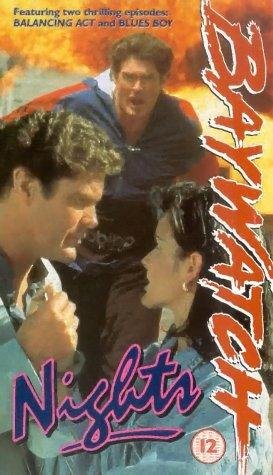
Horror on TV: Baywatch Nights 2.19 “The Eighth Seal”


NM

Did y’all know that there used to be a TV show that featured David Hasselhoff as a paranormal investigator who battled supernatural monsters on the beaches of California?

Well, don’t feel too bad because, up until my boyfriend told me about it last night, I didn’t know either.  But apparently, there was and it was called Baywatch Nights!

And here’s an episode of it for tonight’s excursion into the world of televised horror!

The Eighth Seal was originally broadcast on April 26th, 1997 and it features David Hasselhoff getting possessed.  So, there’s always that.

What Lisa Marie Watched Last Night: Betrayed at 17 (dir. by Doug Campbell)


It’s been too long since I did a What Lisa Marie Watched Last Night post so allow me to correct that by telling you about what I watched last night.  Last night, I turned on the Lifetime Movie Network and I watched a future classic — Doug Campbell’s Betrayed at 17.

Why was I watching It?

I was watching it for two reasons.  First off, I’m an unapologetic admirer of director Doug Campbell’s previous film, Accused at 17.  I’m hoping that Campbell will go the trilogy route and give us a Convicted at 17 at some point in the near future.  Secondly, this film was on the Lifetime Movie Network and I love LMN.

What Was It About?

Okay, there was a lot of plot to deal with here.  The film starts out with scummy high school football player Greg (Andy Fischer-Price) seducing insecure virgin Lexi (Amanda Bauer) and secret recording the encounter on his laptop because, apparently, that’s the type of terrible things that 17 year-old boys do.  Anyway, Greg’s got an ex-girlfriend named Carleigh (Katie Gill) and we know that Carleigh has some issues because she’s blonde, rich, drives a convertible, and says stuff to Lexi like: “I nearly ran your fat ass over.”  Well, Carleigh finds out about the sex tape and gets so upset that she uploads the video to YouTube and soon, the whole school is watching it and Lexi gets so upset that she runs out into the middle of the street and gets run over by a truck.

So far, we’ve got the makings of a typical anti-bullying polemic and the film seems to be going down that route as Lexi’s mom (Alexandra Paul) demands justice for her daughter.  However, then the film takes a sudden turn and just goes freaking crazy!  See, Greg is feeling guilty about his part in Lexi’s death so Carleigh shows up with a gun and kills him!  Then she steals Greg’s wallet and uses it to frame Lexi’s drug addict older brother (Shane Ross).  So, Lexi’s mom and Greg’s mom (Paula Trickey) team up to try to take Carleigh down.

By the way, did I mention that Carleigh’s Dad is apparently in the Mafia?  Well, I’m not sure if he actually is but he certainly acts like he is…

Seriously, this is a deceptively simple movie that’s really quite odd and compulsively watchable in the best Lifetime tradition.

What Worked?

In many ways, this film epitomized everything that I love about a good Lifetime film.  It took a serious issue (bullying, in this case) and then explored it in the most melodramatic, over-the-top, tawdry, and silly way possible. 

Just the title itself — Betrayed at 17 — is genius.  Seriously, when you’re 17, everything is such a drama!  Or at least it was for me.  And I can remember that everything — and I do mean everything — was framed through the lenses of nonstop, over-the-top melodrama.  Whether it was some other girl talking to “my man” or my best friend failing to answer her phone or any of the countless arguments that I had with my mom over things that seem so amazingly unimportant now, it was always all about being and feeling betrayed.

Finally, while this film is full of histrionic dialogue, there’s one scene that manages to perfectly capture the excruciating awkwardness of being in love when you’re in your teens.   Greg, while admiring Lexi’s legs, asks her about a scar.  “I cut myself shaving,” Lexi replies.  Now, believe it or not, I had almost the exact same conversation when I was 17 and this film got it right.

What Didn’t Work?

Well, originally this looked like it was going to be yet another mawkish, if well-intentioned anti-bullying polemic but once people started drawing guns on each other and desperately trying to take out security cameras, it all worked.  This was two hours of pure, silly Lifetime goodness.

“OMG!  Just like me!” Moment:

Oh my God, a few!  Listen, what 17 year-old girl didn’t get filmed having sex with a jock or accidentally end up shooting her ex-boyfriend?  Seriously, that’s just a part of growing up.

Lessons Learned:

1) Guns are dangerous.  So are videos of your ex having sex with some other girl.  Put them together and inevitably, someone’s going to end up dead.

2) Fortunately, it’s apparently very easy and simple to frame someone for murder.  So, if you haven’t done it yet, hurry up before things get complicated.

Horror Review: Christine (dir. by John Carpenter)


During the late 1970s and early 1980s, one could hardly step into a theater during the fall or winter movie season without seeing a trailer for the newest Stephen King adaptation. His name had become synonymous with cinematic horror, and nearly every year brought a new film promising supernatural terror or psychological unease.

Among this wave of adaptations came a 1983 film that united two masters of the genre—Stephen King, the reigning literary giant of horror, and John Carpenter, the filmmaker who had already cemented his reputation with Halloween and The Thing. Their collaboration resulted in the sleek, deadly story of a boy and his car: Christine.

The film opens on the assembly line of a Plymouth factory in 1957, immediately signaling that something is off about this particular 1958 Plymouth Fury. From the first note of the retro rock soundtrack to the gleam of that deep crimson paint, Carpenter frames the car with both nostalgia and menace. The lighting in this opening feels almost clinical—bright, sterile, mechanical—yet Christine’s red sheen cuts violently through it, a visual omen that this machine is infused with something beyond metal and chrome. Carpenter wastes no time making it clear that this car is not an inanimate prop; it’s a living entity from the moment it’s born.

We’re soon introduced to the film’s human core—Arnie Cunningham (Keith Gordon), a shy, bookish teenager tormented by bullies and smothered by his controlling parents, and his best friend Dennis Guilder (John Stockwell), the confident star athlete who often looks out for him. One afternoon, during their drive home from school, Arnie spots a rusting, decrepit Plymouth Fury in the front yard of an old man named Roland D. LeBay. Where Dennis sees a heap of junk, Arnie sees perfection. Ignoring his friend’s concerns—and later, his parents’ outrage—Arnie buys the car and names it Christine.

As Arnie begins restoring Christine to her former glory, a transformation occurs—not just in the car, but in Arnie himself. The once timid, acne-scarred teenager grows into a confident, even arrogant young man, donning slicker clothes, sharper speech, and a darker aura. Christine becomes his obsession, his refuge, and ultimately, his identity.

Carpenter crafts this metamorphosis with eerie precision, pairing the car’s physical renewal with Arnie’s psychological decay. The cinematography shifts accordingly—the lighting grows darker, drenched in neon reds and shadowy blues, mirroring Christine’s two faces: seductive allure and demonic possession. Carpenter’s score, a pulsing blend of electronic rhythm and minimalistic dread, underscores these shifts. It functions almost like Christine’s heartbeat—steady, mechanical, and ominously sensual.

Between the vintage rock tracks that accompany Arnie’s moments of infatuation and the electronic motifs that follow Christine’s predatory stalks, Carpenter manipulates sound to blur the lines between teenage romance and supernatural horror. Every rev of the engine feels rhythmic, almost musical, as if the car itself communicates through vibration and tone rather than words.

Arnie’s newfound confidence even earns him Leigh Cabot (Alexandra Paul), the most desired girl in school—a relationship that initially feels like a symbol of his triumph. But Christine is no fairy tale. When Arnie’s bullies vandalize his beloved car, the story turns from eerie to vengeful.

In a now-iconic sequence, Christine repairs herself before Arnie’s stunned eyes—the crumpled metal expands, glass re-forms, headlights ignite like eyes opening from a nightmare. Carpenter lights the scene with a soft, golden underglow that turns mechanical resurrection into a hauntingly beautiful transformation. It’s both horrifying and hypnotic—a perfectly scored ballet of vengeance set to the hum of machinery and the director’s unmistakable electronic pulse.

What follows is a furious killing spree. Christine prowls the night streets for retribution, a creature of fire and gasoline more alive than metal should ever be.

While Carpenter’s adaptation diverges from King’s novel, it remains faithful to its emotional and thematic essence. King’s book delves deeply into the idea of objects absorbing the evil of their owners, suggesting that malevolence can linger in things as much as in people. Carpenter, however, turns the focus inward.

His version becomes a tragic character study—a battle for Arnie’s soul between the cold, seductive power of obsession and the fragile warmth of human connection. In one corner stands Christine, the car that offers Arnie unconditional love but demands total possession. In the other are Dennis and Leigh, desperate to save the friend they’re rapidly losing to something they can’t fully understand.

Carpenter’s signature touches—his electronic score, minimalist framing, and cynical tone—imbue the film with a dark romanticism. Christine is less a haunted object than a femme fatale: a mechanized embodiment of jealousy and desire. The film’s atmosphere bridges two eras, combining the nostalgic vibe of 1950s Americana with the grim realism of Reagan-era suburbia.

By the end, Christine becomes both a story of supernatural obsession and a commentary on teenage identity—the hunger to shed weakness, to command respect, and to control one’s fate, even at the cost of one’s soul.

Upon its release in December 1983, Christine performed modestly at the box office but was far from a failure. Over time, it has developed a strong cult following, cherished by both Carpenter devotees and Stephen King fans. Though often overshadowed by Carpenter’s heavier-hitting works like The Thing or Escape from New York, Christine remains one of his most technically polished films. It also stands as a fascinating bridge between studio horror and Carpenter’s independent sensibilities—where the shine of a Hollywood production mingles with the grit of a B-movie heart.

If Christine teaches any lesson, it’s that love and possession are two sides of the same coin. Arnie’s tragedy lies not in falling for the wrong woman, but in falling for one that burns with literal hellfire. In Carpenter’s vision, the road to damnation isn’t paved with good intentions—it’s lined with chrome, lit by headlights, and always hungry for one more ride.