Retro Television Review: Fantasy Island 7.20 “Don Juan’s Last Affair/Final Adieu”


Welcome to Retro Television Reviews, a feature where we review some of our favorite and least favorite shows of the past!  On Tuesdays, I will be reviewing the original Fantasy Island, which ran on ABC from 1977 to 1984.  The show is once again on Tubi!
This week, a tramp and a wimp seek romantic advice.

Episode 7.20 “Don Juan’s Last Affair/Final Adieu”

(Dir by Philip Leacock, originally aired on April 14th, 1984)

Fashion marketer Whitney Clark (Phyllis Davis) is having an affair with her boss, Daniel Garman (David Hedison).  Whitney’s fantasy is to end the affair.  Myself, I have to wonder why she would have to come to Fantasy Island to end the affair.  Why can’t she just save the money and end the affair in New York or wherever it is that they’re from?  Better yet, why can’t she end the affair in New York and then come to Fantasy Island and actually have an enjoyable fantasy?

Daniel is on the Island, putting together a fashion show that he hopes will convince Roarke to commission a line of Fantasy Island fashions.  Whitney wants to end the affair but then she meets Daniel’s wife, Elizabeth (Marion Ross).  Elizabeth is in a wheelchair and, as she explains it, Daniel only stays with her out of guilt and a sense of responsibility.  When she offered Daniel a divorce, he turned it down.  Whitney comes to realize that Daniel loves both her and Elizabeth but that Daniel’s heart will always belong to Elizabeth.  “If you love me, let me go,” she tells Daniel.  She leaves Fantasy Island alone but looking forward to the future.  “I’ve come to admire your courage,” Lawrence tells her.  I’m not sure what courage he’s referring to.  She couldn’t even break up with her married lover without Mr. Roarke’s help.

Meanwhile, nerdy Alan Curtis (Michael Spound) is in love with his best friend, Pat Grayson (Geena Davis, in an early role).  Mr. Roarke arranges for Alan to go into the past to Madrid so that the legendary Don Juan (Fernando Rey) can give him advice but, due to a mix-up in the space-time continuum, Don Juan ends up in the present and on Fantasy Land.  Pat falls for Don Juan!  While Roarke fences with Don Juan, Alan finally tells Pat that he loves her.  At first, Pat is like, “But Don Juan….” but then Don Juan mentions that he’s had 14,000 lovers and Pat decides to give Alan a try.

*sigh*  The seventh season of Fantasy Island has been really depressing to review.  The first few seasons were fun but the seventh season has just been a drag.  This episode featured a lively performance from Geena Davis but that was pretty much it.  Everyone else seemed bored and unlikable.  Whitney and Alan were both wimps.

This was my final trip to the Island for 2025.  Retro Television Reviews will be going on break for the Holidays so that I can focus on both the Awards Season and Christmas movies!  Fantasy Island will return on January 6th, 2026.  There’s only two shows left and then something new will be appearing in this time slot.
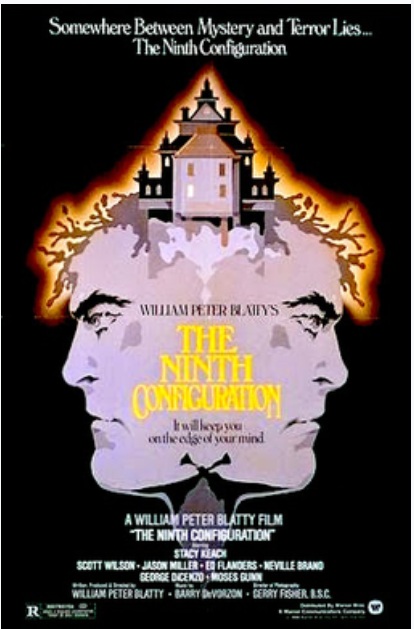
The Unnominated #20: The Ninth Configuration (dir by William Peter Blatty)


Though the Academy of Motion Picture Arts and Sciences claim that the Oscars honor the best of the year, we all know that there are always worthy films and performances that end up getting overlooked.  Sometimes, it’s because the competition too fierce.  Sometimes, it’s because the film itself was too controversial.  Often, it’s just a case of a film’s quality not being fully recognized until years after its initial released.  This series of reviews takes a look at the films and performances that should have been nominated but were, for whatever reason, overlooked.  These are the Unnominated.

Some films defy easy description and that’s certainly the case with 1980’s The Ninth Configuration.

The film opens with a shot of a castle sitting atop of a fog-shrouded mountain.  A voice over tells us that, in the early 70s, the castle was used by the U.S. government to house military personnel who were suffering from mental illness.  Inside the castle, the patients appear to be left to their own devices.  Lt. Reno (Jason Miller) is trying to teach dog how to perform Shakespeare.  Astronaut Billy Cutshaw (Scott Wilson) is haunted by the thought of being alone in space and refuses to reveal why he, at the last minute, refused to go to the moon.  The men are watched over by weary and somewhat sinister-look guards, who are played by actors like Joe Spinell and Neville Brand.

Colonel Kane (Stacy Keach) shows up as the new commandant of the the castle.  From the first minute that we see Kane, we get the feeling that there might be something off about him.  Though he says that his main concern is to help the patients, the man himself seems to be holding back secrets of his own.  With the help of Colonel Fell (Ed Flanders, giving an excellent performance), Kane gets to know the patients and the guards.  (Despite the objections of the guards, Kane says that his office must always be unlocked and open to anyone who want to see him.)  He takes a special interest in Cutsaw and the two frequently debate the existence of God.  The formerly religious Cutshaw believes the universe is empty and that leaving Earth means being alone.  Kane disagrees and promises that, should he die, he will send proof of the afterlife.  At night, though, Kane is haunted by dreams of a soldier who went on a murderous rampage in Vietnam.

The film start out as a broad comedy, with Keach’s smoldering intensity being matched with things like Jason Miller trying to get the dogs to perform Hamlet.  As things progress, the film becomes a seriously and thoughtful meditation on belief and faith, with characters like Kane, Billy, and Colonel Fell revealing themselves to be quite different from who the viewer originally assumed them to be.  By the time Kane and Cutshaw meet a group of villainous bikers (including Richard Lynch), the film becomes a horror film as we learn what one character is truly capable of doing.  The film then ends with a simple and emotional scene, one that is so well-done that it’ll bring tears to the eyes of those who are willing to stick with the entire movie.

Considering all of the tonal shifts, it’s not surprising that the Hollywood studios didn’t know what to make of The Ninth Configuration.  The film was written and directed by William Peter Blatty, the man who wrote the novel and the script for The Exorcist.  (The Ninth Configuration was itself based on a novel that Blatty wrote before The Exorcist.)  By most reports, the studio execs to whom Blatty pitched the project were hoping for another work of shocking horror.  Instead, what they got was an enigmatic meditation on belief and redemption.  The Ninth Configuration had the same themes as The Exorcist but it dealt with them far differently.  (Because he wrote genre fiction, it’s often overlooked that Blatty was one of the best Catholic writers of his time.)  In the end, Blatty ended up funding and producing the film himself.  That allowed him complete creative control and it also allowed him to make a truly unique and thought-provoking film.

The Ninth Configuration was probably too weird for the Academy.  Though it received some Golden Globe nomination, The Ninth Configuration was ignored by the Oscars.  Admittedly, 1980 was a strong year and it’s hard to really look at the films that were nominated for Best Picture and say, “That one should be dropped.”  Still, one can very much argue that both Blatty’s script and the atmospheric cinematography were unfairly snubbed.  As well, it’s a shame that there was no room for either Stacy Keach or Scott Wilson amongst the acting nominee.  Keach, to date, has never received an Oscar nomination.  Scott Wilson died in 2018, beloved from film lovers but never nominated by the Academy.  Both of them give career-best performances in The Ninth Configuration and it’s a shame that there apparently wasn’t any room to honor either one of them.

The Ninth Configuration is not a film for everyone but, if you have the patience, it’s an unforgettable viewing experience.

Previous Entries In The Unnominated:

  1. Auto Focus 
  2. Star 80
  3. Monty Python and The Holy Grail
  4. Johnny Got His Gun
  5. Saint Jack
  6. Office Space
  7. Play Misty For Me
  8. The Long Riders
  9. Mean Streets
  10. The Long Goodbye
  11. The General
  12. Tombstone
  13. Heat
  14. Kansas City Bomber
  15. Touch of Evil
  16. The Mortal Storm
  17. Honky Tonk Man
  18. Two-Lane Blacktop
  19. The Terminator

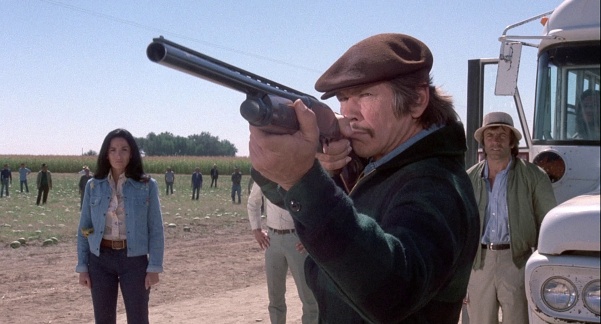
MR. MAJESTYK (1974) and a shotgun butt to the nuts! Happy Friday!


One of my favorite Charles Bronson films is MR. MAJESTYK, and one of my favorite scenes in any movie is this badass masterpiece. It encompasses just about everything I love in a movie. It has the beautiful Linda Cristal. It has the slimy Paul Koslo who doesn’t really understand who he’s dealing with. It has Bronson saying tough guy lines in a way that only he can say them…”you make sounds like you’re a mean little ass-kicker…” And finally it has that shotgun. It just doesn’t get any better than this. 

Enjoy my friends, and have a great weekend!! This should help! 

Retro Television Review: The Love Boat 4.23 “The Duel/Two For Julie/Aunt Hilly”


Welcome to Retro Television Reviews, a feature where we review some of our favorite and least favorite shows of the past!  On Wednesdays, I will be reviewing the original Love Boat, which aired on ABC from 1977 to 1986!  The series can be streamed on Paramount Plus!

This week, Hollywood royalty boards the Love Boat!

Episode 4.23 “The Duel/Two For Julie/Aunt Hilly”

(Dir by Ray Austin, originally aired on March 14th, 1981)

Who is Aunt Hilly?

She’s Olivia de Havilland!

And who is Aunt Hilly’s latest husband, Col. Von Ryker?

He’s Joseph Cotten, making his final screen appearance before retiring from acting!

Even for a show that was known for featuring stars from Hollywood’s Golden Age, de Havilland and Cotten are welcome additions to this episode of The Love Boat.  They bring a lot of class to the ship, both as themselves and as the characters that they’re playing.  It’s not just all of the wonderful Hollywood history that they bring with them.  It’s also that they both give charming performances, showing that they still had the screen presence that made them stars to begin with.

Hilly is Captain Stubing’s aunt, a wealthy woman who has devoted so much of her life to work that she missed out on spending much time with her family.  She wants to make up for the past by arranging for Vicki to attend an exclusive private school in Switzerland.  Captain Stubing is reluctant but ultimately, he agrees that it would be best for Vicki to be able to have friends her own age and to get a formal education as opposed to just receiving lessons from the occasionally mentioned but never-seen tutor who apparently lives on the Love Boat.

However, Col. Van Ryker knows that Vicki would be happier on the boat and that Hilly is just trying to deal with her own guilt over her strained relationship with her son, Conrad.  With the Colonel’s gentle help, Hilly realizes that it would be better for Vicki to stay with Captain Stubing.

Now, to be honest, I do kind of wonder if it’s a good idea for Vicki to live on the boat.  I mean, does she really have any friends outside of the members of the crew, all of whom are much older than her?  Personally, I think going to school is Switzerland and spending her summers on the Love Boat would have been a great idea.  But no matter!  This was a sweet story.  What I really appreciated is that, even though they were on opposite sides, both the Captain and the Aunt had the best of intentions and motivations.  It would have been easy to just portray Hilly as being a snob who thought living on a cruise ship was beneath the dignity of a Stubing.  Instead, she was a genuinely nice woman trying to do what she felt was the right thing.  Gavin MacLeod, Jill Whelan, Olivia de Havilland, and Joseph Cotten all did wonderful work with this story.

The other two stories were overshadowed by Cotten and de Havilland.  In the sillier of the two, Linda Cristal played a woman who tried to make her husband jealous by flirting with Doc Bricker.  Her husband (Alejandro Rey) reacted by challenging Doc to a duel.  Isaac and Gopher tried to convince the husband that Doc was an experienced and deadly duelist.  Again, it was just as silly as it sounds.

Meanwhile, Julie had two men (Ken Kercheval and Dack Rambo) hitting on her.  The two men were also competing to be the new vice president of Don Ameche’s company.  In the end, Julie remained single and good for her.

One silly story.  One boring story.  And one story that was so good that the other two stories didn’t matter.  This was a great cruise.

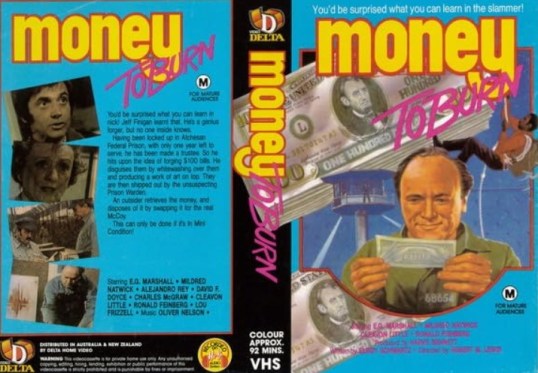
Retro Television Review: Money to Burn (dir by Robert Michael Lewis)


Welcome to Retro Television Reviews, a feature where we review some of our favorite and least favorite shows of the past!  On Sundays, I will be reviewing the made-for-television movies that used to be a primetime mainstay.  Today’s film is 1973’s Money To Burn!  It  can be viewed on YouTube.

For someone who has spent the past few years in prison, Jed Finnegan (E.G. Marshall) sure is a nice old man!  He runs the prison print shop and all of the other prisoners love him.  The guards trust him.  The warden (David Doyle) is really impressed with Jed’s watercolors and is interested in helping Jed launch a career as an artist after he gets out of prison.  Every weekend, Jed’s wife, Emily (Mildred Natwick), comes up to the prison with a picnic basket and she has lunch with her husband.  Jed admits that his wife is not a particularly good cook but it’s obvious that he really looks forward to her visits.

Emily’s sweet nature keeps a lot of people from noticing that she is just as cunning and clever a criminal as Jed ever was.  She knows that Jed had printed up one million dollars in counterfeit bills and she is looking forward to helping him exchange the fake money for real money.  Jed’s plan is to steal the payroll of the local army base and just leave the fake money in place of the real money.  However, Jed’s been in prison for so long that he doesn’t know that the military no longer pays anyone in cash.  Everyone’s paying everyone by check!

(This film is very much from the 70s.  While Jed and Emily were shocked to discover that people were no longer being paid in cash, I was shocked to discover that they were being paid by check.)

Working with two recently released ex-cons (played by Cleavon Little and Alejandro Rey), Emily tries to find a new way to switch out the money.  She discovers that there’s an incinerator nearby where the government burns the currency that it no longer needs.  But it won’t be easy to break in and make sure that the right money get burned….

And that’s not even mentioning the trouble of getting the fake money out of the prison in the first place!

Money to Burn is likable mix of comedy and (very mild) action.  It’s a film about criminals but they’re very likable criminals who go out of their way not to hurt people.  Emily is even happy about the idea of not only stealing a million dollars but also helping the government out by taking the old currency off their hands.  Marshall, Natwick, Little, and Rey all give such warm and cheerful performances that you can’t help but hope that they get away with their scheme.  The film, which deftly balances comedy and drama, clocks in at a brisk 73 minutes and it has an absolutely wonderful twist ending.  This is definitely a heist film that deserves to be better known.

Horror on the Lens: Satan’s Triangle (dir by Sutton Roley)


Hi there and welcome to October!  This is our favorite time of the year here at the Shattered Lens because October is horror month.  For the past three years, we have celebrated every October by reviewing and showing some of our favorite horror movies, shows, books, and music.  That’s a tradition that I’m looking forward to helping to continue this year.

Let’s start things off with the 1975 film. Satan’s Triangle!  Satan’s Triangle tells the story of what happens when a derelict boat is spotted floating in the middle of the ocean.  An attempt to rescue the boat leads to mystery, tragedy, horror, and …. well, let’s just say that there’s a reason why this stretch of ocean belongs to Satan.

Featuring atmospheric direction from Sutton Roley and a great performance from none other than Kim Novak, Satan’s Triangle is one of the best made-for-TV horror films that I’ve ever seen and I think it’s the perfect way to start off this year’s horrorthon!

Enjoy!

Horror on TV: Thriller 2.17 “La Strega” (dir by Ida Lupino)


For tonight’s excursion into televised horror, we have an episode of Thriller!

This episode is called T and it deals with an artist (Alejandro Rey) who saves a young woman (Ursula Andress) from drowning.  It turns out that the local villagers believe that the woman is a witch.  The artist has no time for superstition and takes the woman back to his home.  She starts as his model and then becomes his lover.  She may not be a witch but her mother (Jeanette Nolan) definitely is…

And, of course, this episode is introduced by the one and only Boris Karloff!

The episode premiered on January 15th, 1962.

More Of Bronson’s Best: Mr. Majestyk (1974, directed by Richard Fleischer)


Mr_Majestyk_movie_posterWhat happens when you combine the great tough guy writer Elmore Leonard with the great tough guy actor Charles Bronson?

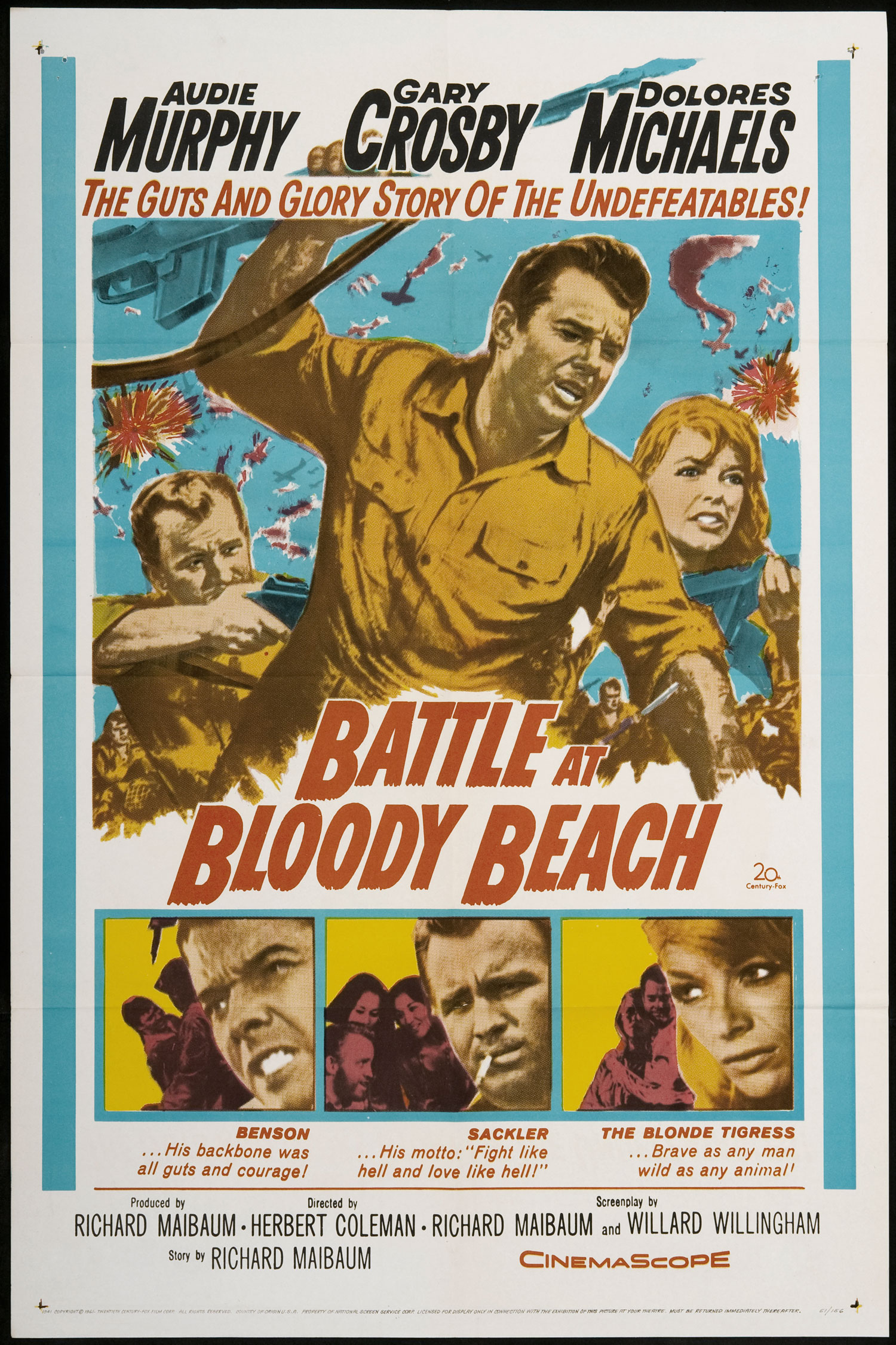
You get Mr. Majestyk, one of Bronson’s finest films.

Vince Majestyk (Bronson) may be a former U.S. Army Ranger instructor and a decorated Vietnam vet but now that he has returned home to Colorado, all he cares about is running his watermelon farm.  With a lucrative harvest approaching, Majestyk hires a group of unionized Mexican migrant workers, led by the fiery Linda Chavez (Linda Cristal), to pick his crops.  When a local criminal named Bobby Kopas (Paul Koslo) shows up and demands that Majestyk hire his drunken crew instead, Majestyk does what Bronson does best.  He gives Kopas an ass-kickin’ beat down.

After Kopas charges him with assault, the local police arrest Majestyk and, despite his request that he be allowed three days to finish harvesting his crop, Majestyk is thrown in jail.  Also in the jail is a Mafia hitman named Frank Renda (Al Lettieri).  Renda may be a tough guy but nobody’s tougher than Vince Majestyk.  When Renda’s associates attempt to hijack a prison bus, Majestyk ends up hijacking it instead.  Majestyk plans to hold Renda hostage until the police agree to give him his three days of freedom so he can get back to his farm.  Renda even offers to pay him off but Majestyk doesn’t care about his money.  He just cares about melons.

Because he was the only 1970s action star who could be believable as both a decorated combat veteran and a no-nonsense watermelon farmer, Charles Bronson is the only actor who could have brought Mr. Majestyk to life.  Before he became an actor, Bronson worked for a living.  From the age of ten until he enlisted in the Army, Bronson worked in the Pennsylvania coal mines, earning one dollar for each ton of coal that he mined.  Though Bronson was never a great actor, his legitimately working class background allowed him to bring an authenticity to a role like Vince Majestyk that most other actors would have lacked.  When Bronson says that all he cares about is bringing in the harvest on time, you believe him just as much as you believe him when he’s beating up Paul Koslo or hijacking a prison bus.

The rest of the cast is full of good 1970s actors who have never really been given their due.  Al Lettieri may be best known for playing Sollozzo in The Godfather but he also does a good job as Frank Renda.  Paul Koslo plays another one his sleazy villains here and does a great job as Bobby Kopas.

Mr. Majestyk was directed by Richard Fleischer but, with its colorful characters, working class hero, and modernized brand of frontier justice, the film is clearly the work of Elmore Leonard. Though Mr. Majestyk is credited as being based on a novel by Leonard, Leonard actually wrote the screenplay before the novel.

The combination of Elmore Leonard and Charles Bronson makes Mr. Majestyk one of the best action films of the 1970s.

majestyk_rifle


Special Memorial Day Edition: Audie Murphy in BATTLE AT BLOODY BEACH (20th Century Fox 1961)


gary loggins's avatarcracked rear viewer

bbb1

When I was in college, I wrote a paper on Audie Murphy for history class. Murphy was a real American hero, the most decorated combat soldier of World War II. He held off an entire squad of German soldiers alone, armed with a machine gun and bleeding from a leg wound, under fire from both foot soldiers and tank fire. Then he rejoined his men and led an attack on the Germans, driving them back and earning the Medal of Honor for his valiant efforts.

Murphy was noticed by Hollywood upon his return from the war, and soon was cast in a successful series of Westerns: THE KID FROM TEXAS, KANSAS RAIDERS, DUEL AT SILVER CREEK, RED BADGE OF COURAGE, GUNSMOKE, and a remake of DESTRY. His autobiography TO HELL AND BACK was a national best seller, and Audie played himself in the film version. Surprisingly, Murphy only starred in one other war film…

View original post 644 more words

Embracing the Melodrama Part II #43: The Stepmother (dir by Howard Avedis)


stepmotherJust looking at the poster for the 1972 film The Stepmother, I bet you think it’s a pretty scandalous and sordid film.  I mean, there’s a picture of a woman wearing a black bra and there’s a tagline that reads, “She forced her husband’s son to commit the ultimate sin!”

CIP_Logo

Well, perhaps not surprisingly considering that this is a Crown International film, The Stepmother‘s poster and tagline have very little do with the actual film.  Yes, the film does feature a stepmother and, during the final 20 or so minutes of the film, her stepson does finally show up and she does end up sleeping with him.  It’s consensual.  There’s no forcing involved.  And, as far as the ultimate sin part is concerned — well, her husband has been doing a lot worse.

The film itself is actually about the husband.  Frank Delgado (Alejandro Rey) is a wealthy architect who is also insanely jealous of his new wife, Margo (Katherine Justice).  Whenever he suspects that Margo is cheating on him, he ends up killing someone.  And, as a matter of fact, even when he doesn’t think Margo is cheating on him, he ends up killing someone.  Frank, of course, has to find a way to cover up all of his various murders.  It doesn’t help that Inspector Darnezi (John Anderson) is constantly snooping around.  And then, once he discovers that his stepson actually has slept with Margo (as opposed to all the people he killed just because he assumed they had slept with Margo), Frank is forced to decide whether or not to kill his own son.

The Stepmother is available in about a dozen Mill Creek boxsets and it’s fun in a 1972 sort of way.  Frank and all of his friends are decadent rich people so you could argue that the film is meant to be a portrait of the immorality of the 1%.  (That would actually be a pretty stupid argument but it’s one that you could make if you’re trying to impress someone who hasn’t read this review.)  Director Howard Avedis tries to liven up the plot by including a lot of artsy touches that don’t really add up to much but which are still fun to watch.  Occasionally, he’ll toss in a freeze frame for no particular reason.  As well, Frank has a habit of hallucinating.  He continually sees his first victim running across the beach in slow motion.  Make a drinking game out of it.  Every time it’s obvious that The Stepmother was trying to fool people into thinking it was a European art film, take a drink.

To be honest, the most interesting thing about The Stepmother is that it is the only Crown International film to have received an Oscar nomination!  That’s right!  The Stepmother was nominated for Best Original Song.  The name of the song was Strange Are The Ways Of Love.  You can listen to it below if you want.  Feel free to dance.

Anyway, that’s The Stepmother for you.  It’s not my favorite Crown International film but, as a historical oddity, it’s still worth watching.

http://www.youtube.com/watch?v=lKO-U5J4Vrs