“Oh my God! A Nicolas Cage western!? This is going to be great!”
That was my initial reaction when I heard about The Old Way, a film in which Nicolas Cage plays a former gunslinger who returns to his old ways while seeking revenge for the murder of his wife. Who knew which Nicolas Cage would show up for The Old Way? Would we get the wild, unpredictable Cage? Would we get the soulful and haunted Cage? Would this be one of the films that Cage cared about or would this be one of the films that Cage clearly just made for the money? Hearing that Nicolas Cage walked off the set because of an accident with one of the guns did not fill me with confidence. (The armorer who worked on The Old Way was the same one who went on to work on Rust and again, that did not exactly fill me with confidence.) Still, I was definitely curious to see The Old Way for myself.
Unfortunately, The Old Way is neither Cage at his best nor Cage at his most eccentric. Instead, Cage gives a quiet and emotionally restrained performance as Colton Briggs. When Briggs is first seen, he’s taking part in an extrajudicial execution and then coldly killing a man who first shoots him in the back. Jump forward 20 years and, much like Clint Eastwood in Unforgiven, Colton Briggs is now a married man and a somewhat uptight shop owner who rarely shows a hint of emotion. His 10 year-old daughter (Ryan Kiera Armstrong) is as rebellious as Colton once was and she has no idea about Colton’s past. However, when the nephew of the man that Colton killed at the start of the film, murders Colton’s wife, Colton sets out for revenge. His daughter follows him, along with Marshal Jarret (Nick Searcy, giving the film’s best performance). Jarret is a former friend of Colton’s but both men make it clear that they will kill the other if they have to. That’s the old way.
It’s a typical western and, on a purely technical level, it’s not a bad one. The cinematography is frequently gorgeous and the members of the rival gang are made up of memorable character actors like Clint Howard and Abraham Benrubi. Obviously, a certain amount of care went into recreating the old west. As I said before, Nick Searcy is ideally cast as Marshal Jarret and he gives a performance that will keep you guessing as to whether or not Jarret should be trusted. Nicolas Cage is adequate in the lead role, even if he’s never quite as eccentric as most of his fans would probably prefer him to be. When he first shows up, he’s wearing an obviously fake mustache but that’s about as odd as his performance gets.
But, in the end, The Old Way just isn’t a particularly memorable film. It’s one of those films that you watch with the hope that it will suddenly spring an unexpected detail or a bizarre moment on the audience but it never happens. The Old Way is way too formulaic for its own good, borrowing liberally from True Grit and Unforgiven without ever really establishing its own identity.
How far would you go if all you had to do was follow orders? That is the question posed by The Belko Experiment.
A violent and disturbingly plausible social satire/horror film, The Belko Experiment was released into theaters on March 17th. It was one of the best films of the first half of 2017 but, as so often happens whenever a genre film subverts the traditional narrative, The Belko Experiment is also one of the most overlooked films of 2017. It got mixed reviews, with most critics focusing on the fact that the script was written by James Gunn. (Though Gunn may be best known for directing Guardians of the Galaxy, his non-MCU work has always been distinguished by a subversive, often transgressive sensibility.) A few critics dismissed it as being just another lurid celebration of violence, showing once again that you can always count on certain mainstream critics to unfairly categorize any film that doesn’t neatly fit into their preconceptions. Yes, The Belko Experiment is violent. And yes, it is gory and sometimes hard to watch. However, to dismiss The Belko Experiment as merely being that latest entry in the torture porn genre is to totally miss the point.
Mike Milch (John Gallagher, Jr.) is one of the many employees of Belko Industries. He’s a nice enough guy. In fact, if I worked for Belko Industries, Mike would probably be one of my favorite co-workers. He’s friendly. He’s funny. He’s not unattractive. He’s kind of a less smirky version of The Office‘s Jim Halpert. I’d want to be his friend. Since Belko’s offices are located in a remote area of Colombia, I would want to make all the friends that I could.
(Early on in the film, we’re informed that every employee of Belko Industries has been required to get a tracking device implanted at the base of their skull. They’re told that this is because there’s always the risk that one of them will be kidnapped by drug traffickers. Of course, as the film plays out, we discover that it’s actually for a totally different reason.)
When The Belko Experiment begins, it’s a day like any other. People show up for work. Some people actually do work. Some people slack off. Everyone tries to look busy whenever the boss, Barry Norris (Tony Goldwyn), wanders by. The maintenance workers (Michael Rooker and David Dastmalchian) do their thing. A few employees sneak up to the roof of the office building and get high. Everyone tries to avoid Wendell Dukes (John C. McGinely), a pervy executive. The security guard (James Earl) watches the door. The newest employee (Melonie Diaz) learns about her new job and coworkers.
Of course, there are a few strange things. Some new security guards have shown up and they don’t appear to be particularly friendly. They turn away all of the locals who work at the office, only allowing in the American employees. Everyone agrees that it’s strange but, instead of thinking about it too much, they just keep going about their day.
Then, the steel shutters slam down, effectively sealing the building off.
Then a voice (Gregg Henry) demands that they select two co-workers to die. When the employees of Belko Industries refuse (with several dismissing the whole thing as being a tasteless prank), tracking devices start to randomly explode until four employees are dead. The voice goes on to say that, unless 30 employees are killed in the next two hours, 60 people will be randomly killed…
Some of the co-workers refuse to kill their friends but many more do not. And soon, even those who refused to take part in the murders, are forced to start killing just to keep from being killed themselves…
The Belko Experiment wastes no time in establishing that anyone can die at any moment. It doesn’t matter how funny you were a few seconds ago or how likable you may be. If the unseen voice decides to flip your switch, that “tracking device” will explode and it’ll take your head with it. And, even if the unseen voice doesn’t get you, your coworkers might.
That, by itself, would be disturbing enough. However, The Belko Experiment ultimately succeeds as a work of horror because it illustrates a truth that many people would prefer to ignore. When the employees of Belko Industries start to kill each other, it feels all too plausible. Culturally, human beings are conditioned to follow orders. We like to have an authoritarian around to tell us what to do. It’s a good way of avoiding responsibility for our own actions. (“I was following orders.” “I was following protocol.” “I’m just doing my job.”) As The Belko Experiment demonstrates, most people would never dream of hurting someone else … unless they were ordered to do so. The characters in The Belko Experiment start the movie as individuals but, as the experiment unfolds, all quirks and differences vanish. All that is left are drones who slavishly do what they’re told.
Making the nightmare scenario feel all the more believable is a large and strong cast of familiar faces. As the closest thing that this film has to a hero, John Gallagher, Jr. is likable and you find yourself hoping that he’ll somehow manage to survive all of this with his humanity intact. Tony Goldwyn brings some interesting shades to his role while John C. McGinley is memorably creepy as Wendell. Micheal Rooker, Abraham Benrubi, Sean Gunn, Josh Brener, Melonie Diaz, Brent Sexton, and Adria Arjone all shine in smaller roles. To be honest, you really don’t want to see any of these people suffer, which makes their inevitable fate all the more disturbing.
The Belko Experiment is ultimately a portrait of how easily people can be persuaded (or ordered) to surrender their humanity. It’s the exact mentality that we currently see everyday, with people willingly becoming slaves to one ideology or another and then tossing around terms like “treason” whenever anyone dares to do something other than obey. It’s the exact mentality that leads to people accusing you of being “selfish” when you refuse to surrender your right to self-determination. Our real-life Belko Experiment has been going on for several years now and it doesn’t appear to be ending anytime soon. This movie is frightening because it’s real.
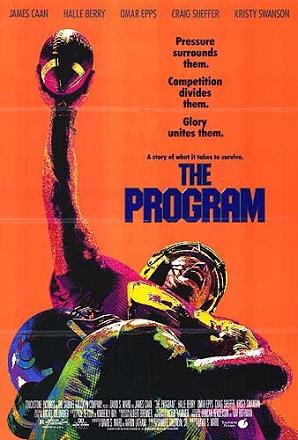
There’s not a single sports cliché that goes untouched in The Program.
A veteran college football coach who, after two disappointing seasons, is now being told that he must get wins at any cost? Check!
A cocky senior quarterback who is trying to live up to his father’s expectations? Check!
A cocky freshman who matures during the season? Check!
A cocky NFL prospect who suffers a career ending injury? Check!
Corrupt rich backers? Check!
Beer? Check!
Steroids? Check!
Hazing? Check!
Football groupies? Check!
Halle Berry wasted in a one-note role? Check!
Kristy Swanson as the one girl on campus who is not impressed by football? Check! Check! Check!
The Program has its good points. James Caan does a good job as the coach and Andrew Bryniarski, playing a player who is always on the verge of flying into roid rage, dominates every scene in which he appears. Kristy Swanson looks good in a tennis outfit, so it’s not all bad. But Craig Sheffer is neither credible nor likable as the star quarterback and there is not a single scene that won’t be seen coming.
When The Program came out in 1993, it included a scene where the team bonded by laying down in the middle of a busy street, while cars zoomed by on either side of them. Things turned out alright for the people in the movie but, for the idiots who tried to imitate the stunt in real life, it was a different story. It turns out that, in real life, drivers don’t always stay in their lane and, if you lay down in the middle of the street, there is a good chance that you are going to get run over. After several deaths, the scene was taken out of the film. If you’re going to die for a movie, do it for a movie better than The Program.
2003 marked a sort of a small comeback for Kevin Costner both as a director and as an actor. The work in question was the very well-done Western, Open Range. Open Range was a moderately budgeted film which has more in common with Costner’s first directorial work, Dances with Wolves than his last big-budget flop, The Postman.
The film was an adaptation of the Lauran Paine novel, The Open Range Men, and it captures much of the themes found in the novel. This was probably due to the fact that screenwriter Craig Storper didn’t deviate from the novel’s basic story. There were no superfluous action sequences and gunfights to ratchet up the action. Everything about Open Range was about the gradual and inevitable final confrontation between the “free-grazers” and the “barbed-wire” men. The free-grazers were played by Kevin Costner and Robert Duvall as Charles Waite and Boss Spearman, respectively. On the other side of the conflict was Michael Gambon playing Denton Baxter, the ruthless land-baron whose attempt to keep the free-grazers from grazing on his land also hides another agenda. Caught in-between these two strong-willed groups were the people in the town Baxter pretty much controls through his “town marshal” (played with fake bravado by James Russo) and the herd helpers under Boss Spearman’s employ.
The theme of freedom to roam the open country versus the rights of a landowner echoes throughout the film. Set in the latter end of the 19th-century, Open Range shows the clash of the more natural ways of the Old West slowly eroding to be replaced by the more industrial, monopolistic practices that became prevalent during the 1880’s, also known in US History as the Gilded Age. Even the personalities of the conflicting characters mirror this theme as the free-grazers only want to use the land as it has been used for years upon years and thats sharing between all men of the West. The land-baron has other ideas in mind and everything boils down to him owning everything around him, even if it means using ruthless tactics to gather even more property.
Open Range also has a bit of modernism in its subplot of Charley Waite’s growing attraction to the sister of the town doctor and the same sister’s well-rounded characterization. It’s not often that a traditional Western shows women in a very positive light instead of the usual submissive and stay-at-home characters of Western’s past. This could also be attributed to the wonderful, underrated performance by Annette Bening who plays Sue Barlow, the doctor’s sister and Charley Waite’s love interest. Bening doesn’t play Sue as the traditional Western female. She also doesn’t go overboard and turn Sue into a 20th-century feminist. She instead plays the character as someone who knows her place in the world, but also one who is strong-willed and willing to stand for what is right.
Open Range was a wonderful throwback to what made such modern Westerns like Unforgiven and Tombstone such a success both for traditionalists and new fans. Kevin Costner’s direction was very low-key. Allowing the story to tell itself at its own pace until the final confrontation. The final gunfight in the end gets a lot of well-earned attention from critics and fans. The entire sequence takes at least 10-15 minutes from start to finish. The fight itself was done in a realistic fashion. There was no sharpshooter dead-eyes in this film, but individuals who had skill but still missed. It was a fight where it wasn’t who was the fastest, but who was the calmest under fire. There’s also a suddenness to the brutality in the final gunfight that demystifies the old-style Western shootouts of past. Some complained that the film was very slow and took too long to get to the “good stuff”, but I actually thought the gradual pacing of most of the film’s length gave the final confrontation even more impact. Costner seem to have learned the lesson all good directors know: less means more.
Open Range won’t go down as a great piece of film making. It surely won’t go down as one of the best in history. What Open Range did accomplish was putting the Western back to its epic and majestic roots, but at the same time keeping the intimacy of a character-driven story. In time, Open Range would probably go down as one of the underrated gems of the last decade and find a place next to its closest comparison, Unforgiven, as one of the best Westerns of the new era.


 There’s not a single sports cliché that goes untouched in The Program.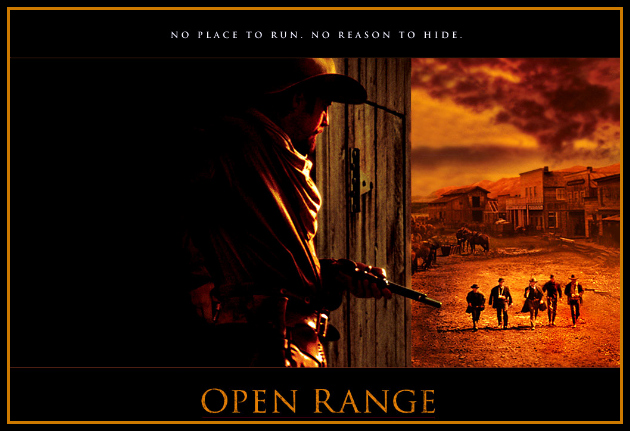
 Through the Shattered Lens