Since it’s Spring Break for many people in the United States, I figured this would be a good time share some of my favorite Spring Break scenes.
This one comes from Umberto Lenzi’s 1988 film, Welcome to Spring Break. In this scene, a student has decided to have a little bit of fun by pretending to be dead on the beach. Since there’s an actual murderer on the loose, his friends are less than impressed with his sense of humor.
It’s a short scene but it features one of the greatest line readings ever.
4 Shots From 4 Films is just what it says it is, 4 shots from 4 of our favorite films. As opposed to the reviews and recaps that we usually post, 4 Shots From 4 Films lets the visuals do the talking!
104 years ago, on this date, Pier Paolo Pasolini was born in Italy. His controversial films and his mysterious death continue to inspire debate to this very day. Both the man and his works were full of intriguing contradictions. Pasolini was an atheist who made one of the best Biblical films ever made. He was a communist who made films that celebrated individual freedom and who had little use for the upper class liberals who made up much of the European counterculture of the 1960s. In the end, he was an artist unafraid to challenge all assumptions, whether they were found on the right or the left. His final film, Salo, was the most controversial of his career. It was also projected to be the first part of a trilogy, though those plans were ended by Pasolini’s murder.
It’s time for….
4 Shots From 4 Pier Paolo Pasolini Films
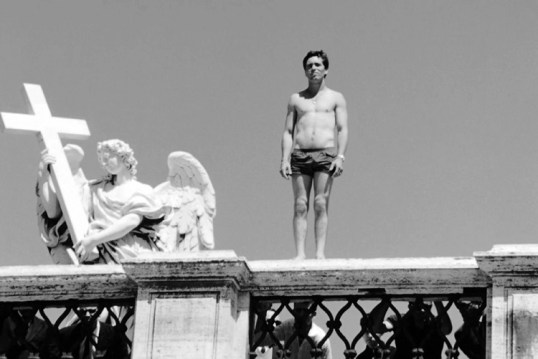
Accatone (1961, dir by Pier Paolo Pasolini, DP: Tonino Delli Colli)
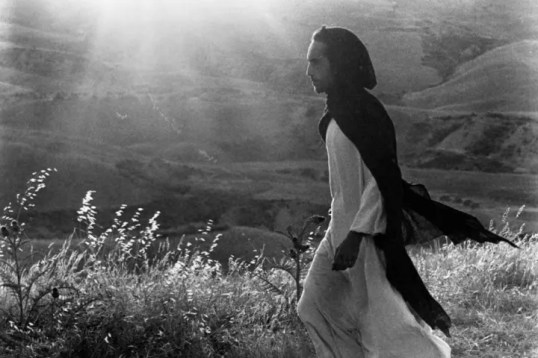
The Gospel According To St. Matthew (1964, dir by Pier Paolo Pasolini, DP: Tonino Delli Colli)
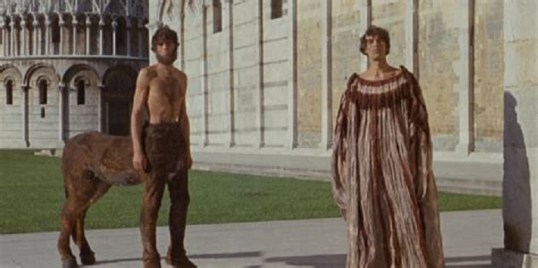
Medea (1969, dir by Pier Paolo Pasolini, DP: Ennio Guarnieri)
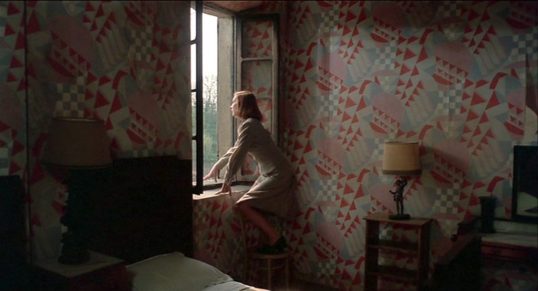
Salo (1975, dir by Pier Paolo Pasolini, DP: Tonino Delli Colli)
The song is by The Smiths but the cover version is by t.A.T.u., the Russian duo who became famous by allowing people to (incorrectly) assume that they were a couple. When I first met my BFF Evelyn one of the things that we immediately bonded over was our shared appreciation for the absurdity of t.A.T.u.
As far as the cover goes, it’s not that bad. t.A.T.u. has frequently been criticized for lacking vocal range but, here, that doesn’t really become an issue until the end of the song, when Julia start to struggle. Who cares? It’s all about that guitar chord at the beginning.
As far as the video goes, it’s made up of a mix of footage of Julia and Lena performing on stage and some “candid” backstage stuff. By “candid,” I mean obviously staged. There’s another version of this video, which is even more candid.
Welcome to Late Night Retro Television Reviews, a feature where we review some of our favorite and least favorite shows of the past! On Wednesdays, I will be reviewing 1st and Ten, which aired in syndication from 1984 to 1991. The entire series is streaming on Tubi.
This episode was confusing. Is syndication to blame?
Episode 3.6 “The Bulls Change Hands”
(Dir by Stan Lathan, originally aired on September 9th, 1987)
Diana no longer owns the Bulls!
That was the main plot development to be found in this cluttered episode of 1st & Ten. As I’ve mentioned before, the episodes of 1st & Ten that are available on Tubi are the heavily edited versions that were sold into syndication as opposed to the original, R-rated versions that appeared on HBO. With quite a few of these episodes, it’s obvious that entire plotlines have been pretty much chopped out. That certainly feels like the case here because, despite having watched the episode, I’m still not totally sure how Diane lost the Bulls in the first place.
What I do know is that she threatened to expose Teddy’s insider trading. Teddy responded by leaving the country but, before he left, he gave his ownership shares to his daughter, Jill (Leah Ayres). Teddy explains that this makes Jill the owner of the Bulls. But my understanding was that Teddy only owned half the team so it seems like that would mean Jill and Diane would now be co-owners. Perhaps I missed something in an earlier episode or maybe some line of dialogue was cut out for syndication, I’m not sure. What I do know is that Jill now owns the Bulls. The first thing she does is break up with Yinessa because she can’t be both his boss and his girlfriend.
In her final locker room speech, Diane orders the Bulls to win because Diane is taking Jill to court and she wants the team to be in the playoffs once she returns as the owner. It’s not a bad speech but again, I thought Diane still owned at least half of the team.
Meanwhile, Yinessa is back as quarterback. And he leads the Bulls to their first victory of the season. His new wide receiver, Billy Cooper (Michael Toland) catches the game-winning pass. At the same time that Billy is scoring, some guy who we’ve never seen before is shooting at him from the roof of the stadium. The police arrest the guy and Billy later discovers a bullet lodged in his helmet.
Bubba’s sex therapist (Penny Johnson) is now obsessed with him, despite Bubba’s attempts to set her up with with Jethro. I have a feeling that the Jethro/Bubba storylines were the ones that really got left on the cutting room floor when it came to editing these episodes for syndication. Jethro and Bubba have been with the show since the beginning and they’ve got prominent billing in the opening credits but, when it comes to their roles in the episodes themselves, it seems like the only thing that happens is Bubba says that he needs to get laid and then the two of them disappear for several weeks. When they do finally reappear, Bubba is always in some sort of new trouble with his wife.
Speaking of marriage, in this episode, TD Parker finally confesses to his wife that he’s been having an affair.
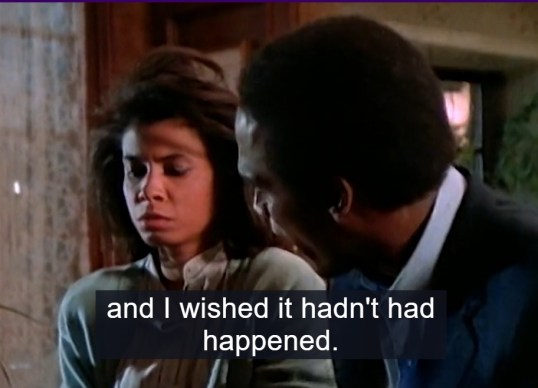
TD apologizes. His wife tells him to get out. Agck! I can see where this storyline is heading but OJ Simpson fighting with his wife still lands differently in 2026 than it probably did in 1987.
This episode was a mess but I guess Jill is the owner of the Bulls now and Teddy’s fled to South America. Can’t the Bull just concentrate on playing football and earning their paycheck?
Welcome to Retro Television Reviews, a feature where we review some of our favorite and least favorite shows of the past! On Wednesdays, I will be reviewing the original Love Boat, which aired on ABC from 1977 to 1986! The series can be streamed on Paramount Plus!
Love wont hurt anymore….
Episode 7.11 “The World’s Greatest Kisser/Don’t Take My Wife, Please/The Reluctant Father”
(Dir by Ted Lange, originally aired on November 26th, 1983)
Sawdust Radell (Dan Haggerty) is looking for revenge. The woman he loved dumped him after having a romance with one of the officers on the Pacific Princess. She didn’t tell him the officer’s name but she did say that he was “the greatest kisser in the world.” Ol’ Sawdust boards the ship with his best friend, Bonnie Lee Boone (Elaine Joyce). He wants Bonnie Lee to kiss each of the ship’s officers and then report back on which one is the greatest kisser. What is Sawdust planning on doing? I have no idea but I have a feeling that Sawdust might have a prison stint in his future.
(That was certainly true for actor Dan Haggerty who, two years after this episode ended, was arrested for trying to sell cocaine to an undercover police officer.)
Bonnie Lee kisses the Captain, Doc, and Gopher. She causes a lot of jealousy amongst the crew but they’re not the only ones getting jealous. Sawdust realizes that he’s in love with Bonnie Lee. He also gets a cable from his ex, informing him of the name of the officer. It turns out that the “world’s greatest kisser” is some guy who we have never seen or heard of before and he has since transferred to a different ship. Well, that’s convenient.
Before leaving the ship, the Captain asks Bonnie who the best kisser amongst the remaining crew was. Wisely, Bonnie Lee looks over at Sawdust and says, “Him!”
(No, she did not kiss Isaac. Then again, Ted Lange was busy directing this episode so Isaac’s not really around that much.)
Young executive Matt Stevens (Parker Stevenson) is taking a business cruise. He boards with his new wife, Marion (Kirstie Alley). Uh-oh, it turns out that Matt’s boss, Arthur Boggs (David Doyle), gave strict orders that wives were not allowed on the cruise! As Arthur explains it, “If I let you bring your wife, then I have to bring my wife.” And it turns out that Arthur — who says stuff like “As they say in Moscow, I’m hot to Trotsky!” — really wants to cheat on his wife.
Matt asks Marion to remove her wedding ring and pretend she doesn’t know him. Marion agrees. (Personally, I would have just asked for a maritime divorce.) But when Arthur starts hitting on Marion and Marion starts spending time with Arthur, Matt is finally forced to stand up and announce, “This is my wife!”
“You’re fired!” Arthur replies.
And you’re sued, Matt should have said. Seriously, you can’t fire someone for being married. And perhaps Arthur figures that out because he later offers to give Matt back his job. Matt smiles and accepts. Does Matt have any self-respect?
Finally, teenage Melissa Weatherly (Danielle Brisebois) boards the boat with her father, Elliot (William Christopher). Melissa’s parents divorced when Melissa was young and she’s never really known her father. But now that her mom has died, Melissa is living with Elliot and the two are trying to adjust. Elliot makes the mistake of suggesting that Melissa go to boarding school. Melissa becomes convinced that Elliot doesn’t love her. Fortunately, Vicki is there to talk to Melissa and the Captain is there to talk to Elliot.
This storyline made me think of my own relationship with my Dad and, as a result, it brought tears to my eyes. Gavin MacLeod always did well whenever the show gave him a serious storyline. Plus, it was good that Vicki actually had someone her own age to hang out with for once. I always worry about the fact that Vicki seems to spend all of her time on a cruise ship, surrounded by people who are about 40 years older than her.
This is one of the many episodes that Ted Lange directed. Lange always seemed to get better-than-average performances out of both the regulars and the guest stars and that’s certainly the case here. William Christopher and Danielle Brisebois both turn in strong performances as the father and the daughter. Parker Stevenson and Kirstie Alley were themselves newlyweds when they did this episode and their chemistry comes through, even if Stevenson is playing an annoyingly wimpy character.
“Now when they remember us, they ask themselves: Why didn’t we all get to come back? What does it all mean? You’ll need to find out yourselves. ‘Cause the answer is in you.” — Numa Turcatti
Society of the Snow is the kind of survival movie that sneaks up on you, starting as a rugby team’s joyride and morphing into an existential gut-punch about faith, God, and what binds people when hell freezes over. Directed by J.A. Bayona, it revisits the 1972 Andes crash of Uruguayan Air Force Flight 571, stranding the Old Christians rugby club, pals, and kin in a snowy nightmare 72 days long. No heroes hog the spotlight; it’s an ensemble of mostly newbie Uruguayan and Argentinian actors embodying a group forged by crisis, tackling taboos like cannibalism not as shock value, but as a collective leap of desperate faith.
The setup hooks you quick: carefree banter on the flight from Montevideo to Santiago, singalongs, rugby dreams bubbling. Then boom—the wings shear off, the fuselage cartwheels into a glacier, and 45 souls face subzero isolation with slim rescue odds. Bayona’s crash sequence is visceral chaos: screams swallowed by crunching metal, bodies tumbling, sudden silence under starlit peaks. It’s not Hollywood gloss; it’s the indifferent brutality of nature claiming lives, leaving the rest to improvise in a metal tomb.
Early days blur into tending wounds, rationing snacks, scanning skies for choppers that never come. Characters emerge gradually—Numa Turcatti’s narration grounds us, Nando Parrado’s grit shines later, Roberto Canessa’s smarts anchor medicine—but it’s the group’s dynamic that carries the load. Some introductions rush by, making deaths more statistical than soul-crushing at first, a fair knock since 16 eventually perish from crashes, avalanches, exposure. Still, that haze mirrors real panic, where faces and flickers of personality become your lifeline.
As weeks grind on, Society of the Snow almost becomes an existential exercise in the meaning of faith, belief in God, and how disaster can pull survivors together despite their differences to make that collective decision to perform something that others safe and sound would consider abhorrent. These devout Catholics debate God’s role: Is the crash punishment, test, or sheer accident? Priests invoke Eucharist parallels—body of Christ sustaining the living—while doubters rage at a silent heaven amid freezing nights and howling winds. Disaster doesn’t just bond them through shared misery; it forces this collective buy-in, where atheists, believers, and everyone in between hash it out in the fuselage’s dim light, snow piling up outside.
Differences in personality or background fade fast when hypothermia and starvation make every choice a referendum on humanity itself; rugby jocks, quiet thinkers, hotheads form a tribe, voting on the unthinkable: eating the dead to cheat death themselves. Safe outsiders might recoil in horror, but up there, it’s reframed as sacred reciprocity, a group oath blending survival instinct with spiritual rationale. Bayona doesn’t linger on gore—he shows enough to unsettle, focusing on the hushed consent, the tears, the way it reshapes their souls without breaking the bond.
Visually, it’s stunning restraint: Pedro Luque’s cinematography paints the Andes as majestic jailer, vast whites dwarfing ant-like survivors. Makeup sells the toll—cheeks hollow, skin ashen, eyes haunted—as bodies waste away on meager flesh. Sound design immerses: fuselage creaks like a dying beast, wind a constant roar, silence after avalanches deafening. Score stays subtle, melancholic strings underscoring faith’s quiet wrestling rather than cueing cheap tears.
Mid-film drags a tad, the routine of despair—avalanche buries them alive, failed expeditions limp back—testing patience as it mirrors their grind. At 144 minutes, repetition risks numbing, though it aptly conveys time’s cruelty. Humor peeks through: dumb jokes, rugby chants, home stories keeping spirits flickering, proving they’re not just victims but vibrant lives interrupted.
Climax shifts to Parrado and Canessa’s epic trek—shoeless, rag-wrapped, scaling cliffs with rugby posts as ice axes. Physically punishing to watch, it culminates in that eerie rescue meet: a gaucho across a torrent, civilization’s whisper after eternity. Their return sparks media frenzy, but the film ends introspective, faith renewed not in miracles, but in human will and collective defiance.
Bayona’s take earns widespread acclaim, including Oscar nods for International Feature, makeup, and score, praising its dignity over prior adaptations like Alive. It honors survivors’ input, shot partly on location with Uruguayan authenticity. Downsides? Ensemble sprawl blurs some arcs; heavy themes demand stamina, no popcorn thrills here. If gore or bleakness turns you off, skip it—but for raw humanity amid atrocity, it’s top-tier.
Ultimately, Society of the Snow lingers because it asks: What’s faith when God seems absent? How does abhorrence become salvation through unity? Just as Frank Marshall’s 1993 Alive left an indelible mark on that generation’s filmgoers, grappling with survival’s raw ethics amid the early ’90s thirst for true-story grit, this film resonates powerfully in today’s fractured world. In an age of endless online division and existential dread—from climate crises to global unrest—it spotlights unbreakable human bonds forged in the worst conditions, reminding us that shared ordeal can still transcend differences and redefine what we’re capable of. Disaster doesn’t divide; it welds them, turning horror into testament. Powerful, flawed, profoundly human.
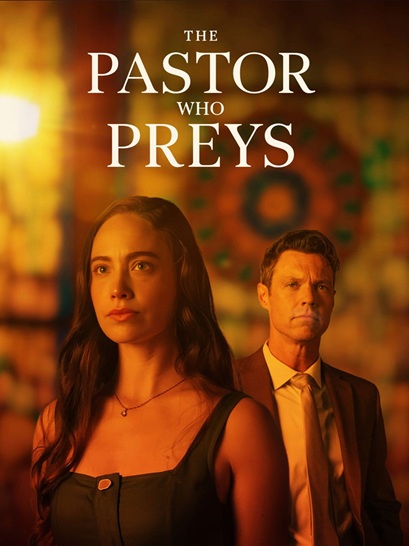
Caleb Whitley (Daniel Stine) is an energetic and handsome pastor who is also a coach at the local high school. His father was a pastor and Caleb inherited the church that his old man founded. Caleb’s loyal mother, Hattie (Annette Saunders), is there to protect Caleb in all that he does because she believes that he is meant for something special. Caleb’s wife, Jenn (Clark Sarullo), appears to be the perfect pastor’s wife. She’s blonde, she’s composed, and she always seem to have control over the situation.
And that’s good because Caleb …. well, Caleb often falls to temptation.
Caleb is the type of pastor who makes a big deal about running shirtless every morning so that the single women of the neighborhood can appreciate him. Caleb says he’s just trying to take care of his body but we all know what he’s doing. Caleb also has a history of cheating on Jenn and his mistresses have a tendency to turn up dead once they become inconvenient. Is the Pastor truly preying? Or is something else happening?
That’s what fashion designer Nicole (Amanda Nicholas) is determined to find out. After her cousin, Amanda (Analisa Wall) is found dead, Nicole immediately suspects the pastor. She shares her concerns with Detective Chandler (Wade Hunt Williams) but does she have any proof? Not yet….
I should say a few words about Detective Chandler. There are a lot of memorable characters to be found in The Pastor Who Preys but Detective Chandler is one of the most entertaining, just because he seems to be so genuinely perplexed by everything that he hears. Most detectives tend to be cynical but Detective Chandler seems to be genuinely shocked at the idea that the pastor could be a serial adulterer. When the detective later talks to Jenn about the rumors of her husband’s infidelity, he has no problem revealing the name of the person who said that Caleb’s a cheater. It seems like most detectives would know better than to reveal the name to a potential suspect. Chandler is so incompetent at his job that he becomes oddly likable. I mean, he’s just trying so hard! His facial expressions during the film’s finale really should be put in a museum.
This is a Lifetime church melodrama. I have to admit that almost everything I know about protestant churches, I learned from watching Lifetime. I’ve learned that the pastors are always charismatic but they shouldn’t be trusted. The church men always want to get home to watch the game. The church women always spend their meetings gossiping about who is cheating on whom. There’s always a divorcee who wears leopard-print dresses and who has her eye on the pastor. In this film, that role is filled by Lacey (Erika Monet Butters) and she’s definitely the best character in the film.
The Pastor Who Preys is an enjoyable melodrama in the time-honored Lifetime tradition. It offers up several credible suspects and I have to admit that my first guess as to who was guilty turned out to be wrong. Caleb is one smooth operator. I expect he’ll return when they get around to The Pastor Who Stalked Me.
Today, we celebrate the birthday of actor and musician, Ronn Moss!
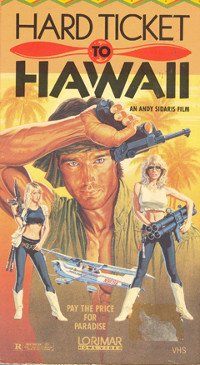
In honor of this day, here is a classic scene fromHard Ticket to Hawaii! In this scene that I love, Ronn Moss not only blows up a skateboard assassin but the assassin’s sex doll as well. No one messes with Ronn Moss, his driver, or the Molokai cops!


 Through the Shattered Lens