Today’s holiday movie is …. well, it’s a little bit odd.
Santa Claus is a 1959 Mexican film that reminds us that before he became an advertising icon, Nicholas Claus was a Catholic saint. According to this film, St. Nick also apparently lives in outer space with a bunch of singing children. His best friend is Merlin and he apparently gets along with Vulcan, the Roman God of fire, as well.
Perhaps angered by the way that Santa is beloved by children of all races and figures of all mythologies, Lucifer orders a little demon named Pitch to go to Earth and turn the children against Santa.
So yeah, Santa Claus is really weird. However, if you’ve ever wanted to see a movie where Santa is revealed to be a God-like action hero who holds the fate of the world in his hands, this is the film for you!
Today’s scene that I love comes from 1957’s Paths of Glory. In this scene, Colonel Dax (Kirk Douglas) fights a losing battle to save the lives of three soldiers who have been accused of cowardice after refusing to take part in a suicidal attack during World War I.
Douglas not only starred in this film but his also production company also helped to finance it. The film was co-written and directed by Stanley Kubrick.
4 Or More Shots From 4 Or More Films is just what it says it is, 4 shots from 4 of our favorite films. As opposed to the reviews and recaps that we usually post, 4 Shots From 4 Films lets the visuals do the talking!
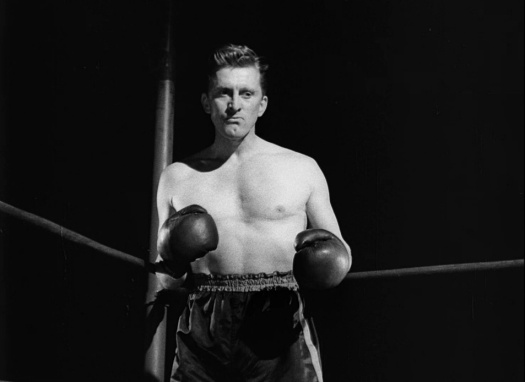
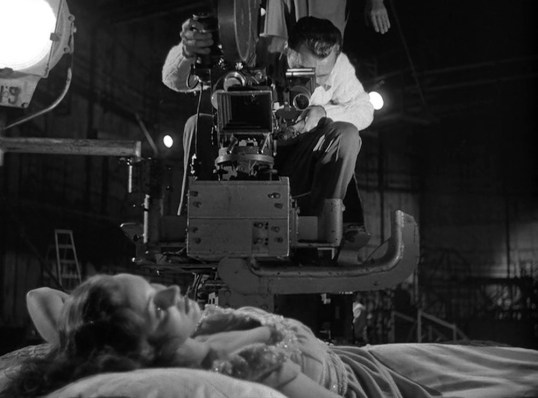
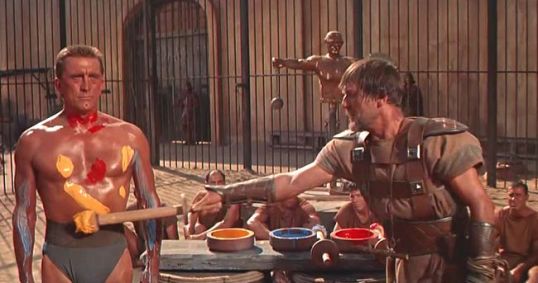
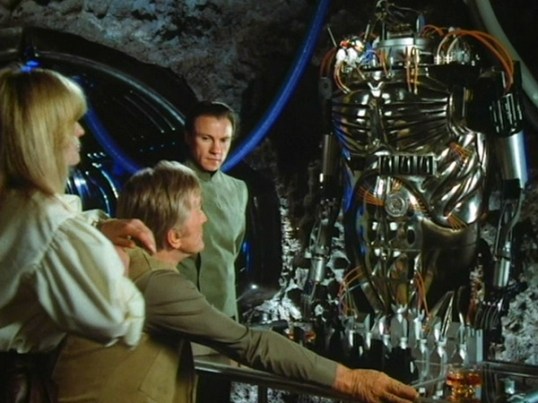
Today would have been the 109th birthday of actor Kirk Douglas! It’s time for….
4 Shots From 4 Kirk Douglas Films
Champion (1949, dir by Mark Robson, DP; Franz Planer)
The Bad and the Beautiful (1952, dir by Vincente Minnelli, DP: Robert L. Surtees)
Spartacus (1960, dir by Stanley Kubrick, DP: Russell Metty)
Saturn 3 (1980, dir by Stanley Donen, DP: Billy Williams)
Here are the 2025 nominations of the Indiana Film Journalists Association.
There’s a lot of them.
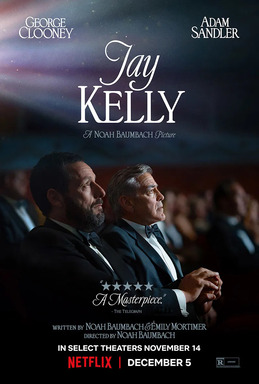
BEST FILM 28 Years Later Black Bag Bob Trevino Likes It Bugonia Frankenstein Friendship Hamnet Jay Kelly The Life of Chuck Marty Supreme No Other Choice One Battle After Another The Phoenician Scheme The Plague Sinners Splitsville Superman Train Dreams Wake Up Dead Man: A Knives Out Mystery Weapons
BEST ANIMATED FILM In Your Dreams KPop Demon Hunters The Legend of Hei 2 Little Amélie Or The Character Of Rain Ne Zha 2 Predator: Killer of Killers Zootopia 2
BEST FOREIGN LANGUAGE FILM Cloud It Was Just an Accident Left-Handed Girl No Other Choice Reflection In A Dead Diamond Rental Family The Secret Agent Sentimental Value Universal Language The Voice of Hind Rajab
BEST DOCUMENTARY Are We Good? Deaf President Now! Disposable Humanity Grand Theft Hamlet Hacking at Leaves Orwell: 2+2=5 Pavements The Perfect Neighbor
The Tenderness Tour
BEST ORIGINAL SCREENPLAY Noah Baumbach and Emily Mortimer – Jay Kelly Mary Bronstein – If I Had Legs I’d Kick You Ronald Bronstein and Josh Safdie – Marty Supreme Ryan Coogler – Sinners Michael Angelo Covino and Kyle Marvin – Splitsville Zach Cregger – Weapons David Koepp – Black Bag Tracie Laymon – Bob Trevino Likes It Jafar Panahi – It Was Just an Accident Charlie Polinger – The Plague
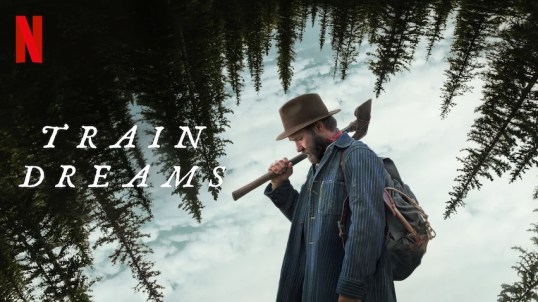
BEST ADAPTED SCREENPLAY Paul Thomas Anderson – One Battle After Another Clint Bentley and Greg Kwedar – Train Dreams Guillermo del Toro – Frankenstein Mike Flanagan – The Life of Chuck Alex Garland – 28 Years Later Dan Gregor, Doug Mand, and Akiva Schaffer – The Naked Gun James Gunn – Superman Rian Johnson – Wake Up Dead Man: A Knives Out Mystery Park Chan-wook, Lee Kyoung-mi, Don McKellar and Lee Ja-hye – No Other Choice Will Tracy – Bugonia
BEST DIRECTOR Paul Thomas Anderson – One Battle After Another Clint Bentley – Train Dreams Ryan Coogler – Sinners Michael Angelo Covino – Splitsville Zach Cregger – Weapons James Gunn – Superman Park Chan-wook – No Other Choice Charlie Polinger – The Plague Josh Safdie – Marty Supreme Steven Soderbergh – Black Bag
BEST LEAD PERFORMANCE Everett Blunck – The Plague Jessie Buckley – Hamnet Rose Byrne – If I Had Legs I’d Kick You Timothée Chalamet – Marty Supreme David Corenswet – Superman Leonardo DiCaprio – One Battle After Another Joel Edgerton – Train Dreams Michael Fassbender – Black Bag Barbie Ferreira – Bob Trevino Likes It Ethan Hawke – Blue Moon Michael B. Jordan – Sinners Liam Neeson – The Naked Gun Josh O’Connor – Wake Up Dead Man: A Knives Out Mystery Jesse Plemons – Bugonia Emma Stone – Bugonia
BEST SUPPORTING PERFORMANCE Pamela Anderson – The Naked Gun Miles Caton – Sinners Benicio del Toro – One Battle After Another Jacob Elordi – Frankenstein Nicholas Hoult – Superman Chase Infiniti – One Battle After Another John Leguizamo – Bob Trevino Likes It Amy Madigan – Weapons Paul Mescal – Hamnet Sean Penn – One Battle After Another Adam Sandler – Jay Kelly Stellan Skarsgård – Sentimental Value French Stewart – Bob Trevino Likes It Teyana Taylor – One Battle After Another
BEST VOCAL / MOTION-CAPTURE PERFORMANCE Oona Chaplin – Avatar: Fire And Ash Ebon Moss-Bachrach – The Fantastic Four: First Steps Will Patton – Train Dreams Dimitrius Schuster-Koloamatangi – Predator: Badlands Zhu Jing – The Legend of Hei 2
BEST ENSEMBLE ACTING Black Bag Bugonia The Life of Chuck Marty Supreme One Battle After Another The Plague Sinners Superman Wake Up Dead Man: A Knives Out Mystery Weapons
BEST EDITING Ronald Bronstein and Josh Safdie – Marty Supreme Barry Alexander Brown and Allyson C. Johnson – Highest 2 Lowest Mike Flanagan – The Life of Chuck Jon Harris – 28 Years Later Andy Jurgensen – One Battle After Another Kim Sang-bum – No Other Choice Brian Scott Olds – The Naked Gun Sara Shaw – Splitsville Michael P. Shawver – Sinners Steven Soderbergh – Black Bag
BEST CINEMATOGRAPHY Autumn Durald Arkapaw – Sinners Michael Bauman – One Battle After Another Steven Breckon – The Plague Darius Khondji – Marty Supreme Dan Laustsen – Frankenstein Anthony Dod Mantle – 28 Years Later Larkin Seiple – Weapons Steven Soderbergh – Black Bag Fraser Taggart – Mission: Impossible – The Final Reckoning Adolpho Veloso – Train Dreams
BEST MUSICAL SCORE Jerskin Fendrix – Bugonia Ludwig Göransson – Sinners Jonny Greenwood – One Battle After Another Ryan Holladay, Hays Holladay and Zach Cregger – Weapons David Holmes – Black Bag Johan Lenox – The Plague Daniel Lopatin – Marty Supreme John Murphy and David Fleming – Superman Nine Inch Nails – Tron: Ares Young Fathers – 28 Years Later
BEST STUNT / MOVEMENT CHOREOGRAPHY Wade Eastwood (second unit director / stunt coordinator) – Mission: Impossible – The Final Reckoning Timothy Eulich (stunt coordinator) – Eddington Tyler Hall (stunt coordinator / stunt driver) and Dave McKeown (stunt coordinator) – Splitsville Brian Machleit (stunt coordinator) – One Battle After Another Mandy Moore (choreographer) – The Life of Chuck Alain Moussi (stunt coordinator), Brahim Chab (fight coordinator), László Kósa (stunt coordinator, Hungary) and Balázs Lengyel (fight coordinator, Hungary) – Fight or Flight Celia Rowlson-Hall (choreographer) – The Testament of Ann Lee Jacob Tomuri (stunt coordinator) – Predator: Badlands
BEST SPECIAL EFFECTS Dennis Berardi, Ayo Burgess and Ivan Busquets (VFX supervisors) and José Granell (miniatures / models supervisor) – Frankenstein Jeff Capogreco (VFX supervisor), Dave Funston (VFX supervisor, OPSIS), Ross McCabe (VFX supervisor, Image Engine), Abishek Nair (VFX supervisor, Industrial Light and Magic / VFX supervisor, second unit), Vincent Papaix (VFX supervisor, Industrial Light and Magic) and Cameron Waldbauer (SFX supervisor) – Tron: Ares Stephane Ceretti, Enrico Damm, Stéphane Nazé and Guy Williams (VFX supervisors) – Superman Olivier Dumont and Sheldon Stopsack (VFX supervisors, Wētā), Kathy Siegel (VFX producer / co-producer) and Karl Rapley (animation supervisor, Wētā) – Predator: Badlands Dan Glass, Chris McLaughlin and Stuart Penn (VFX supervisors) and Dominic Tuohy (SFX supervisor) – Mickey 17 Joe Letteri (senior VFX supervisor), Richard Baneham (VFX supervisor, Lightstorm / virtual second unit director), Eric Saindon (senior VFX supervisor, Wētā Digital) and Daniel Barrett (senior animation supervisor, Wētā Digital) – Avatar: Fire And Ash Charlie Noble (VFX supervisor), David Zaretti (VFX supervisor, ILM), Russell Bowen (VFX supervisor, beloFX) and Brandon K. McLaughlin (SFX coordinator) – The Lost Bus Michael Ralla, Espen Nordahl and Guido Wolter (VFX supervisors) and Donnie Dean (SFX coordinator) – Sinners Scott Stokdyk (VFX supervisor, Marvel), Robert Allman (VFX supervisor, Framestore), Daniele Bigi (VFX supervisor, ILM), Theodore Bialek (VFX supervisor, SPI) and Alistair Williams (SFX supervisor) – The Fantastic Four: First Steps
BREAKOUT OF THE YEAR Clint Bentley (director / co-writer) – Train Dreams Everett Blunck (performer) – The Plague Miles Caton (performer) – Sinners Aidan Delbis (performer) – Bugonia Chase Infiniti (performer) – One Battle After Another Jacobi Jupe (performer) – Hamnet Tracie Laymon (director / writer) – Bob Trevino Likes It Charlie Polinger (director / writer) – The Plague Eva Victor (director / writer / performer) – Sorry, Baby Alfie Williams (performer) – 28 Years Later
ORIGINAL VISION Good Boy If I Had Legs I’d Kick You One Battle After Another The Plague Reflection In A Dead Diamond The Testament of Ann Lee Train Dreams
Anything new from Quentin Tarantino is a big deal at my house. When you consider that it’s been over six years since the auteur released his most recent film, ONCE UPON A TIME IN HOLLYWOOD (2019), I was understandably excited when I saw that the full “extended cut” version of the KILL BILL films, dubbed “The Whole Bloody Affair” was being released to theaters. Then, after seeing the trailer, I became really curious about the new scenes that were added, as well as the different presentations of the previous material. When I originally watched the separate volumes at the movie theater in 2003 and 2004, I enjoyed the first movie slightly more than the second based on the fact that it had more action. Now, I wanted to see how the two volumes flowed as one single film. My wife was working this weekend, so I had some time on my hands and decided to spend about four hours of that time watching KILL BILL: THE WHOLE BLOODY AFFAIR.
First, a quick summary of the film… on the eve of her wedding, a pregnant bride-to-be (Uma Thurman) and her entire wedding party is gunned down by the Deadly Viper Assassination Squad, commanded by her former lover, Bill (David Carradine). Somehow surviving the rehearsal massacre, the Bride, who was once a member of the same assassination squad, sets her sights for revenge on each of the members, beginning with O’Ren Ishii (Lucy Liu), and then moving on to Vernita Green (Vivica A. Fox), Budd (Michael Madsen), Elle Driver (Daryl Hannah), and finally Bill himself. It’s a simple premise, but Tarantino uses that premise as a springboard to share his love of kung fu movies, samurai cinema, spaghetti westerns and grind house fare and create something truly special. I loved the KILL BILL films when they were originally released, and the four hours seemed to go by very quickly today as I had a blast watching this definitive version with a relatively full theater of fans.
After watching KILL BILL: THE WHOLE BLOODY AFFAIR, my first thought is that it wouldn’t be that different if the theater just showed Volume One, had a 15-minute intermission, and then showed Volume Two. This isn’t putting down the new version in any way, but there are not a large number of changes that enhance the overall quality of the film itself, and screening the original volumes back-to-back would provide the context for the “big picture” of the story that was lacking when the movies were released in the separate years of 2003 and 2004. With that said, watching the film in this new version was a lot of fun for me, and it should become the norm moving forward as it is truly Tarantino’s vision. It does flow better, mainly by eliminating the unnecessary, late cliffhanger reveal of the daughter in Volume One, as well as the Bride’s “direct to the camera” update at the beginning of Volume Two.
For those who want to go see this new version, I did want to point out the significant differences I noticed while viewing KILL BILL: THE WHOLE BLOODY AFFAIR. The first sequence where I noticed obvious additions to the film occurred in the anime sequence that introduces the background of O’Ren Ishii. This extended version adds additional footage of the Yakuza assassin Pretty Riki to the sequence, and once O’Ren is a slightly older schoolgirl, we get to see her execute a plan of vengeance against him. I would guess somewhere between five and ten minutes of action was added to the sequence. I enjoyed it in Volume One, and I also enjoyed the extended anime sequence in this new version. Does the sequence really add to the overall quality of the film, though? Even though I enjoyed the new material and am glad it was added, I would say no. The next significant difference I noticed with this version concerns the addition of color to the fight sequence between the Bride and the crazy 88’s in the House of Blue Leaves, as compared to the sequence in Volume One that was shown largely in black and white. As a person who doesn’t enjoy a lot of gore in my movies, it never bothered me that the scene switched from color to black and white once the limbs and heads started getting lopped off. With that said, it was kind of fun watching all those limbs hacked off in glorious color this time around. Finally, there is a post-credits animated sequence called “The Lost Chapter: Yuki’s Revenge” where Gogo Yubari’s twin sister tries to get revenge on the Bride. It lasts about ten minutes or so, but honestly, it didn’t add much to the overall experience for me, and I doubt I’ll ever watch it again. As a completist though, I am glad that I stuck around and watched it. These are the only big changes I noticed while watching THE WHOLE BLOODY AFFAIR. I’m sure there had to be some more changes, but I don’t think they were significant.
I did want to share some final thoughts I had while watching KILL BILL: THE WHOLE BLOODY AFFAIR this afternoon. I noticed on the opening title card that the movie is dedicated to the great Japanese director Kinji Fukasaku, and you can definitely see his influence all over this film. It also affected me more watching Michael Madsen’s excellent performance as Bill’s brother Budd. Tarantino just knows how to get the best out of Madsen, and considering that he passed away a few months ago, I just really appreciated his work while watching the film. I also enjoyed the multiple shoutouts to my movie hero Charles Bronson in the film. First, there’s a MR. MAJESTYK poster hanging on the wall in Budd’s trailer that is featured often throughout the various shenanigans and fights that take place in the trailer. Second, Charles Bronson passed away in 2003, the year that Volume One of KILL BILL was released. In the final credits of the film, Bronson receives an RIP credit. I’ve always loved the fact that Tarantino loves Charles Bronson, and that’s on full display in KILL BILL: THE WHOLE BLOODY AFFAIR. I would have given anything if Bronson had been in better health as Tarantino was coming into his own as a filmmaker. I have no doubt that he would have been offered a chance to appear in one of the director’s films.
At the end of the day, I had a great time watching KILL BILL: THE WHOLE BLOODY AFFAIR. The four hours flew by, and I truly appreciated seeing Tarantino’s full vision realized on screen. While I do think this should be the definitive version moving forward, I loved the KILL BILL films before today. THE WHOLE BLOODY AFFAIR improves the overall flow of the film and adds some fun new stuff, but my love for the film didn’t really change that much today… it just runs a tad bit deeper.
Here are the 2025 nominations of the New York Film Critics Online!
PICTURE
Hamnet If I Had Legs I’d Kick You It Was Just an Accident Marty Supreme No Other Choice Nuremberg One Battle After Another Sentimental Value Sinners Train Dreams
DIRECTOR
Paul Thomas Anderson – One Battle After Another Park Chan-wook – No Other Choice Ryan Coogler – Sinners Mona Fastvold – The Testament of Ann Lee Olivier Laxe – Sirāt Jafar Panahi – It Was Just an Accident Lynne Ramsey – Die, My Love Josh Safdie – Marty Supreme Joachim Trier – Sentimental Value Chloe Zhao – Hamnet
SCREENPLAY
Bugonia Hamnet If I Had Legs I’d Kick You It Was Just an Accident Marty Supreme One Battle After Another Sentimental Value Sinners Sorry, Baby Train Dreams Twinless
ACTOR
Timothee Chalamet – Marty Supreme Leonardo DiCaprio – One Battle After Another Sope Dirisu – My Father’s Shadow Joel Edgerton – Train Dreams Ethan Hawke – Blue Moon Lee Byung Hun – No Other Choice Dylan O’Brien – Twinless Michael B. Jordan – Sinners Wagner Moura – The Secret Agent Jesse Plemons – Bugonia
ACTRESS
Rose Byrne – If I Had Legs I’d Kick You Jessie Buckley – Hamnet Kathleen Chalfant – Familiar Touch Kate Hudson – Song Sung Blue Jennifer Lawrence – Die, My Love Renate Reinsve – Sentimental Value Amanda Seyfried – The Testament of Ann Lee Emma Stone – Bugonia Sydney Sweeney – Christy Tessa Thompson – Hedda
SUPPORTING ACTOR
Michael Cera – The Phoenician Scheme Benicio Del Toro – One Battle After Another Jacob Elordi – Frankenstein Noah Jupe – Hamnet Delroy Lindo – Sinners Pierre Lottin – When Fall is Coming Paul Mescal – Hamnet Sean Penn – One Battle After Another Adam Sandler – Jay Kelly Alexander Skarsgard – Pillion Stellan Skarsgard – Sentimental Value
SUPPORTING ACTRESS
Odessa A’zion – Marty Supreme Glenn Close – Wake Up Dead Man Elle Fanning – Sentimental Value Ariana Grande – Wicked: For Good Regina Hall – One Battle After Another Inga Ibsdotter Lilleaas – Sentimental Value Amy Madigan – Weapons Wunmi Mosaku – Sinners Da’Vine Joy Randolph – Eternity Teyana Taylor – One Battle After Another
ENSEMBLE CAST
Avatar: Fire and Ash Hamnet It Was Just an Accident Marty Supreme No Other Choice One Battle After Another Sentimental Value Sinners The Testament of Ann Lee Wake Up Dead Man
USE OF MUSIC
Hamnet KPop Demon Hunters Marty Supreme One Battle After Another Sinners Sirāt Song Sung Blue Springsteen: Deliver Me From Nowhere The Testament of Ann Lee Wicked: For Good
CINEMATOGRAPHY
Avatar: Fire and Ash Frankenstein Hamnet No Other Choice One Battle After Another Sinners Sirāt Train Dreams The Testament of Ann Lee 28 Years Later Wicked: For Good
DEBUT DIRECTOR
Akinola Davies Jr. – My Father’s Shadow Harris Dickerson – Urchin Sarah Friedland – Familiar Touch Scarlett Johansson – Eleanor the Great Harry Lighton – Pillion Carson Lund – Eephus Charlie Polinger – The Plague Kristen Stewart – The Chronology of Water Constance Tsang – Blue Sun Palace Eva Victor – Sorry, Baby
BREAKTHROUGH PERFORMER
Odessa A’zion Everett Blunck Miles Caton Chase Infiniti Jacob Jupe Inga Ibsdotter Lilleaas Kayo Martin Abou Sangare Eva Victor
ANIMATION
A Magnificent Life Arco Elio KPop Demon Hunters Little Amelie or the Character of Rain 100 Meters Predator: Killer of Killers Scarlet Zootopia 2
INTERNATIONAL FEATURE
It Was Just an Accident Left-Handed Girl No Other Choice Resurrection The Secret Agent Sentimental Value Sirāt Sound of Falling The Voice of Hind Rajib We Will Not Be Moved
DOCUMENTARY
Afternoons of Solitude BLKNWS: Terms & Conditions Come See Me in the Good Light Cover-Up My Undesirable Friends: Part 1 — Last Air in Moscow Pee-wee as Himself Put Your Soul in Your Hand and Walk The Perfect Neighbor The Alabama Solution 2000 Meters to Andriivka
“Memories… memories are not to be toyed with!” — Heinz
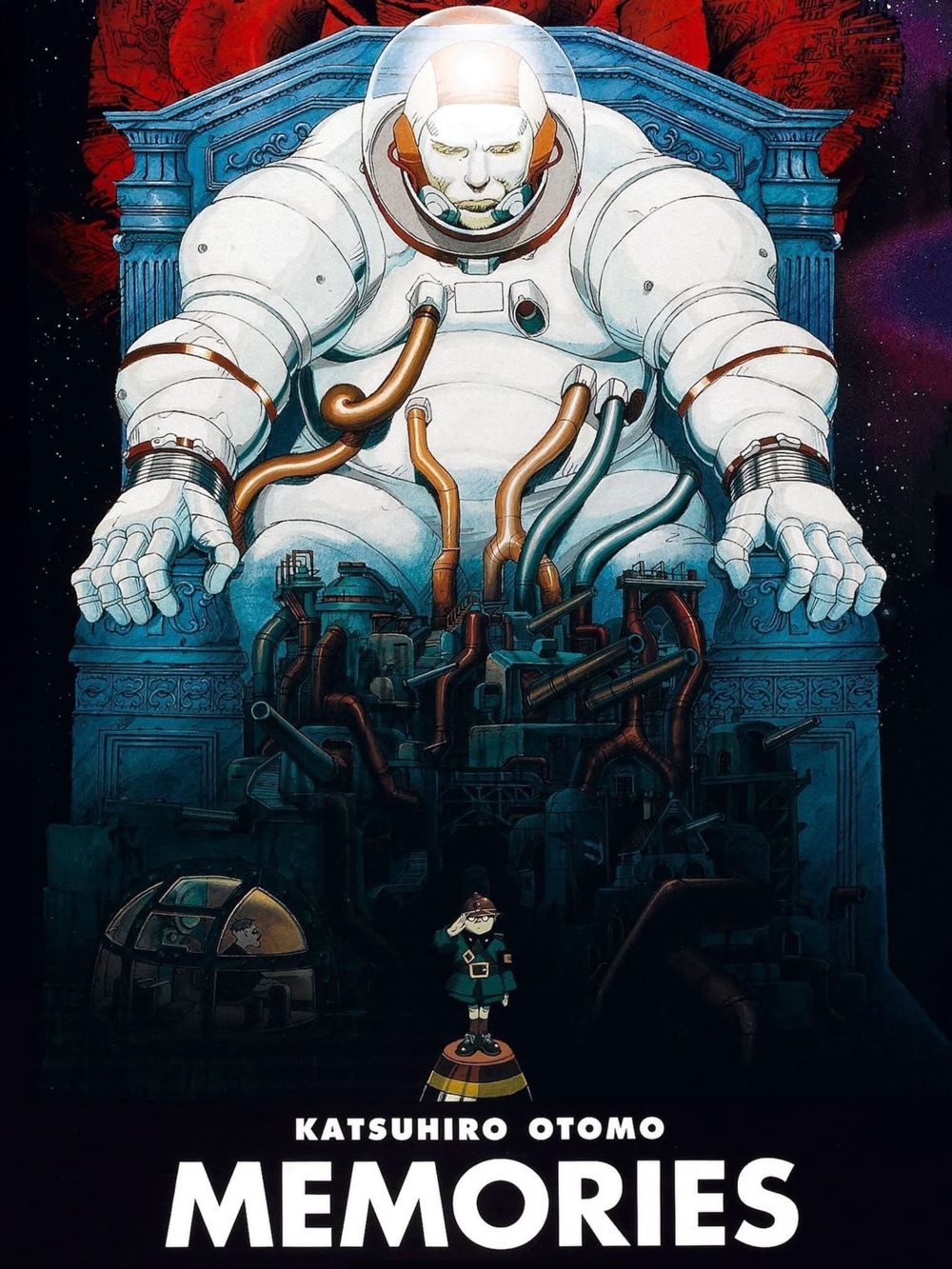
Memories is a mid‑90s anime anthology that feels like a snapshot of how wild and experimental the medium could be when a bunch of heavy hitters got to play in the same sandbox. It’s made up of three separate stories—“Magnetic Rose,” “Stink Bomb,” and “Cannon Fodder”—that don’t connect plot-wise but circle around similar ideas: how technology intersects with memory, systems, and human weakness. The end result is uneven in spots but consistently interesting, and when it clicks, it’s honestly outstanding.
“Magnetic Rose” is the clear showpiece. Directed by Kōji Morimoto and written by Satoshi Kon, it follows a deep-space salvage crew that investigates a distress signal and discovers a derelict structure haunted by the lingering memories of a famous opera singer. The visual approach blends cold, utilitarian sci‑fi hardware with crumbling, ornate interiors, so it feels like the crew is trespassing inside someone’s decaying mind as much as an abandoned ship. The way the environment morphs and lies to the characters, folding past and present together, already hints at the kind of reality‑slipping storytelling Kon would later become famous for.
The sound design and score really push this one over the top. Yoko Kanno leans into big, emotional, opera‑flavored cues that give the segment a tragic, almost theatrical sweep rather than just standard genre tension. Instead of simply backing up jump scares or space thrills, the music amplifies the grief and obsession at the heart of the story, so it plays less like straightforward sci‑fi horror and more like a ghost story built out of longing and denial. The characters themselves are drawn pretty broadly—they mostly function as recognizable types (the seasoned veteran, the younger hothead, the crew just doing their job) rather than deep, fully explored people—but that simplicity keeps the short moving and leaves room for the atmosphere to breathe. In practice, the combination of visuals, sound, and escalating psychological pressure makes “Magnetic Rose” feel rich and layered even without a lot of explicit character backstory.
After that, Memories swerves sharply into “Stink Bomb,” a dark comedy directed by Tensai Okamura. The premise is almost absurd on its face: a lab worker accidentally turns himself into a walking biohazard and slowly becomes the epicenter of a massive crisis. The tone is much lighter, even cartoonish, but there’s a sharp satirical edge underneath. Most of the jokes come from watching institutional systems totally fail to understand or handle what’s happening, ramping up their response in increasingly overblown ways while the poor guy at the center of it all has no idea how dangerous he’s become. It’s a fun, briskly paced piece that lets the animators go wild with chaos and destruction.
That said, “Stink Bomb” is also the segment that feels the most limited conceptually. Once the central gag is in place—this one ordinary guy unintentionally leaving disaster in his wake while officials keep making things worse—the short mostly riffs on variations of that idea. The animation stays lively and the satire lands, and there are flashes of real bite in how it portrays bureaucracy and military decision‑making. But compared to the emotional and thematic density of “Magnetic Rose” or the chilling world‑building of “Cannon Fodder,” it leaves less to chew on once the credits roll. It’s enjoyable, just not as haunting.
“Cannon Fodder,” directed by Katsuhiro Otomo himself, is the quietest but in some ways the most unsettling of the three. It takes place in a city whose entire existence revolves around firing gigantic cannons at an enemy no one ever actually sees. Everything—from education to labor to family routines—is oriented toward that single, unexamined purpose. Visually, it stands apart from the rest of the film: the designs are rougher and more stylized, drawing on European comic and industrial influences rather than sleek anime polish. The big stylistic flex is the way the segment is staged to feel like one continuous movement, with the “camera” drifting through streets, factories, and cramped apartments, watching people go through their day.
There isn’t much conventional plot here, and that’s intentional. The story follows workers and a single family long enough to show how thoroughly the ideology of constant war has soaked into everyday life. Kids learn artillery math at school; adults talk about shell trajectories like it’s the weather. Because the short avoids big twists or overt exposition, it hits more like a living political cartoon: the point is how normalized the whole nightmare has become. Some viewers might find the slower, observational rhythm a bit dry or abstract, especially coming after two more immediately engaging segments. But if the mood clicks, “Cannon Fodder” leaves a lingering, uneasy aftertaste that fits the anthology’s preoccupation with systems and dehumanization.
Stepping back, the three shorts show off just how flexible this medium can be. You get operatic space horror, satirical disaster comedy, and austere anti‑war parable in a single package. There is no explicit framing device tying them together, and the shifts in tone are dramatic, so the film doesn’t feel “smooth” in the way a more unified narrative would. That can be a downside if you’re expecting a cohesive movie rather than a curated set of pieces. On the other hand, that variety is a big part of the appeal: each segment has its own personality and agenda, and the anthology structure lets them coexist without compromise.
On a technical level, Memories holds up surprisingly well. The hand‑drawn animation retains a level of texture and physicality that still looks great today, and the layouts and background work in all three segments are consistently strong. “Magnetic Rose” in particular could be screened alongside other top‑tier anime films from the era and not feel out of place. “Cannon Fodder” still feels formally bold because of its faux‑continuous-shot approach and its distinct visual tone. If anything has aged, it’s more about pacing—modern viewers used to ultra‑fast editing and constant exposition might find some stretches slower than expected—but the film rewards anyone willing to lean into its rhythms.
In terms of accessibility, Memories isn’t the most beginner‑friendly anime film. The first segment leans into psychological horror and tragedy, which can be intense if you’re mostly used to lighter or more straightforward sci‑fi. The comedic whiplash of “Stink Bomb” right after might feel tonally off if you’re still processing the emotional punch of “Magnetic Rose.” And “Cannon Fodder” asks you to be okay with a more metaphor‑driven, open‑ended piece rather than a neatly resolved story. That mix means the anthology is more likely to resonate with viewers who are already interested in anime as a cinematic form and are curious to see different approaches pushed side by side.
What really makes Memories feel important, though, is the cluster of talent involved and what they went on to do. Katsuhiro Otomo brings the weight of Akira and uses this film as a space to experiment with scale and structure. Kōji Morimoto’s work here sits right in the trajectory of his later, more explicitly experimental projects. Satoshi Kon’s script for “Magnetic Rose” reads almost like a prototype for the identity‑fracturing stories he’d later build entire films around. Tensai Okamura and Yoshiaki Kawajiri bring a sensibility for action and genre that gives “Stink Bomb” its bite, and Yoko Kanno is already showing the range and emotional intelligence that would make her one of anime’s most beloved composers. Even if you stripped away the historical context, the film would still be worth watching—but knowing what these creators went on to do makes it feel like catching a moment just before a lot of big ideas fully explode.
Taken as a whole, Memories plays like a compact tour through different corners of what anime could do in the 1990s when it wasn’t worried about franchising or playing it safe. It’s not flawless, and not every segment will work equally well for every viewer, but the high points are strong enough that the anthology earns its reputation. For anyone interested in the evolution of anime as an art form—especially on the sci‑fi and psychological side—it’s absolutely worth the time, both as a film in its own right and as a window into a formative creative era.


 Through the Shattered Lens