Late Night Retro Television Review: Freddy’s Nightmares 1.11 “Do Dreams Bleed?”


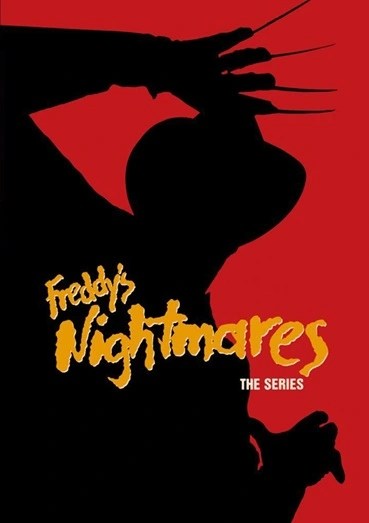
Welcome to Late Night Retro Television Reviews, a feature where we review some of our favorite and least favorite shows of the past! On Fridays, I will be reviewing Freddy’s Nightmares, a horror anthology show which ran in syndication from 1988 to 1990. The entire series can be found on Plex!

This week, there’s a new threat in town!

Episode 1.11 “Do Dreams Bleed?”

(Dir by Dwight H. Little, originally aired on January 8th, 1989)

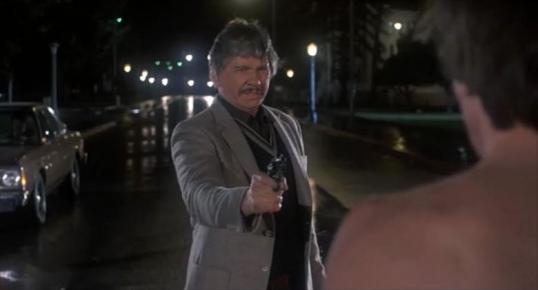
There’s a new serial killer in Springwood!

We don’t really learn much about the Chopper, other than he attacks people with an axe.  When the episode begins, high school football star John Warring (Damon Martin) is dealing with dual trauma of having not only found the Chopper’s latest victim but also being the number one suspect.  His grades start to slip.  (As was so often the case on this show, his parents are conveniently out-of-town.)  He fears that he’s going to lose his girlfriend, Roni (Sarah Buxton).  Not even John’s coach, Coach Gacey (Jeff McCarthy), is much help.  That’s probably because Coach Gacey actually is the Chopper, not that anyone figures that out.  Driven mad by his dreams, John finds himself being taken away to an asylum.

(Really?  Coach Gacey?  He should have been the number one suspect based on his name alone.)

The second half of the episode follows Ronni as she now starts to have nightmares.  She wants to believe that John is innocent but her dreams indicate that she has her doubts.  Eventually, John escapes from prison and is able to save Ronni from Coach Gacey.  However, when the police arrive, they just assume that Coach Gacey was trying to save Ronni and that John is the Chopper.  Ronni is so shaken by the entire experience that she no longer knows what’s true and what’s not.

Wow, that’s dark!

This was actually a pretty good episode.  For once the two stories had coherent plots, with Ronni’s story logically building off of John’s.  The dream sequences were effectively creepy, director Dwight Little kept the action moving at a good pace, and even the dark ending felt earned as opposed to forced on the narrative.  I would have liked to have heard Freddy’s thoughts on Springwood having a new serial killer (instead, during the host segments, Freddy just did his usual bad jokes) but otherwise, this was a surprisingly good episode.

Horror On TV: Hammer House Of Horror Episode #2: The Thirteenth Reunion (dir by Peter Sasdy)


In this episode of Hammer House of Horror, Julia Foster plays a tabloid reporter who is assigned to investigate an unconventional weight loss program.  Foster discovers that weight loss is actually the last thing that the clinic is concerned with.  This is an enjoyable macabre episode, one the features a particularly nasty twist.

The Thirteenth Reunion originally aired in the UK on September 20th, 1980.

Doctor Who — The Tomb of the Cybermen (1967, directed by Morris Barry)


In 1966, Doctor Who changed forever.

William Hartnell was in failing health and having difficulty remembering his lines.  He was also not getting along with the current production team and was unhappy with the direction of the show.  (He felt that it was getting too violent and dependent upon the bug-eyed monsters who he had originally been told would have no part of the show.)  It became obvious that Hartnell would not be able to continue as the Doctor.  At the same time, Doctor Who was an unqualified hit and one that the BBC wanted to keep going.

Producer Innes Lloyd and story editor Gerry Davis decided that since the Doctor was an alien, they could just say that he could transform himself physically at will, which would allow them to recast the role.  Hearing the news, Hartnell is said to have replied, “There’s only one man in England who can take over, and that’s Patrick Troughton.”

William Hartnell was correct.  Patrick Troughton, 46 at the time, was a stage-trained character actor who had become a television mainstay.  As opposed to Hartnell, whose Doctor was stern and stubborn, Troughton played the Doctor as being “a comic hobo,” (to quote show creator Sydney Newman).  The Second Doctor enjoyed his travels and had an unquenchable curiosity.  Like an interstellar Lt. Columbo, The Second Doctor often played the fool to get the better of his enemies.  He also become a father figure to many of his companions, a role that Troughton also played offscreen as well.

Unfortunately, many of the Second Doctor’s adventures are missing or are only available in audio form.  When I was growing up, my father and I would watch Doctor Who on PBS.  PBS started with the Fourth Doctor and the Fifth Doctor before then going back to the Third Doctor and then finally broadcasting what they had of The First and Second Doctor.  There were so few of the Second Doctor’s serials available that it only took PBS a month and a half to finish up with Troughton.  People like me got to know Troughton’s Doctor more through his later guest appearances (The Three Doctors, The Five Doctors, The Two Doctors) than through his original adventures.

The Tomb of the Cybermen is the earliest serial known to exist in its entirety to feature Troughton as the Second Doctor.  In this 4-epiosde serial (which also launched the show’s fifth series), The Doctor and his companions Jamie (Frazer Hines) and Victoria (Deborah Watling) materialize on the desolate planet Telos and discover an expedition of humans are trying to enter the Tomb of the Cybermen.

In those days before The Master, The Cybermen were one of the Doctor’s main recurring enemies.  Former humanoids who sacrificed their emotions and individual personalities to become cyborgs, the Cybermen were relentless and ruthless and just as dangerous as the Daleks.  (The Cyberman also had something Daleks lacked, the ability to climb stairs.)  In Tomb of the Cybermen, the expedition assumes that the Cybermen buried in the underground tomb are no longer functioning.  It turns out that the Cybermen are just waiting for someone to revive them.

Tomb of the Cybermen is a classic Doctor Who serial.  The plot borrows considerably from the legends about mummies and cursed Egyptian tombs.  The expedition arrogantly enters the tomb, despite being warned not to.  It turns out that the expedition’s leaders want to use the Cybermen as their own army and their willing to sacrifice everyone with them to try to achieve that goal.  The revived Cybermen aren’t interested in an alliance.  The Doctor and his companions try to escape the crypt while also ensuring that the Cybermen will never escape again.  The plot is simple but exciting.  The Second Doctor pretends to be baffled by the tomb and its technology but later reveals that he always understood more than he let on.

The Tomb of the Cybermen is not only a great Troughton showcase.  It’s also historically important as one of the first serials to really upset Britain’s moral guardians.  Reportedly, British children were left terrified and unable to sleep after witnessing the Cybermen bursting forth from their tombs.  The infamous Mary Whitehouse would often cite Doctor Who as being detrimental programming for children.  The Tomb of the Cybermen was one of the serials that she often cited as just being too violent and frightening.

It’s a shame that we don’t have more of Patrick Troughton’s serials to watch because The Tomb of Cybermen reveals him to be the prototype for almost every Doctor who would follow.  (There’s a small moment where The Doctor, Jamie, and Victoria hold hands while stepping into the Tomb and it says so much about who the Doctor was, post-Hartnell.)  I’m glad, though, that we do have this showcase of the Second Doctor at his best.

Retro Television Review: St. Elsewhere 2.18 “Equinox”


Welcome to Retro Television Reviews, a feature where we review some of our favorite and least favorite shows of the past! On Fridays, I will be reviewing St. Elsewhere, a medical show which ran on NBC from 1982 to 1988.  The show can be found on Hulu and, for purchase, on Prime!

This week, Peter White returns to the hospital.

Episode 2.18 “Equinox”

(Dir by David Anspaugh, originally aired on March 14th, 1984)

A college student (Thomas Byrd) comes in after taking a hit to the groin during a touch football game.  It turns out that he might have testicular cancer and it falls to Dr. Cavanero to let him know that he will soon be down a ball.

Dr. Chandler is upset when his new girlfriend prefers to hang out with Luther.  Chandler accuses Luther of “shuckin’ and jivin’.”  Chandler’s girlfriend dumps him for being “mean.”  In a well-acted scene, Chandler talks to Morrison about how he’s expected to act one way as a black man and another way as a black doctor.

Fiscus makes the mistake of giving Elliott Axlerod (Stephen Furst) his lucky baseball cap.  Axelrod spills a urine sample on it and then accidentally sets the hat on fire while attempting to dry it.  Axlerod is having a terrible day until a man dressed like Paul Revere brings his horse into the ER for treatment.  It turns out that Axlerod’s father was veterinarian.  Axlerod cures the horse but he still has to get Fiscus a new hat.

Finally, Dr. White returns.  His charges have been reduced from attempted rape to assault.  Wendy Armstrong is not happy and starts to binge eat.  (And yet, as several nurses point out, she doesn’t gain a pound.  We all know what that means….)  When Kathy Martin sees Peter in the cafeteria, she yells that he raped her.  “You’re crazy,” Peter lies.

The episode ends with Dr. Chandler going for a run outside, stopping, and screaming into the air.

This episode was a bit uneven.  The Axlerod story worked because of the likability of Stephen Furst and not because the story itself was particularly clever.  The Philip Chandler/Jack Morrison conversation was the highlight of the episode, though the ending with Chandler screaming into the void was a bit overdone.

As for Dr. White, I’ve reached the point where I can’t even stand to look at him and I feel foolish for having any sympathy for him earlier in the season.  Hopefully, this season will end with Dr. White going to prison for life because I’m not sure how many more episodes I can handle of him wandering around the hospital with that smug look on his face.

Seriously, St. Elsewhere, take care of this guy soon….

Late Night Retro Television Review: Highway to Heaven 4.16 “Back to Oakland”


Welcome to Late Night Retro Television Reviews, a feature where we review some of our favorite and least favorite shows of the past!  On Thursdays, I will be reviewing Highway to Heaven, which aired on NBC from 1984 to 1989.  The entire show is currently streaming on Tubi and several other services!

This week, Mark rejoins the police force and discovers that things have changed since he last wore the blue.

Episode 4.16 “Back to Oakland”

(Dir by Michael Landon, originally aired on February 3rd, 1988)

Jonathan and Mark return to Mark’s old hometown of Oakland, California.  When Mark stops by his old precinct, he discovers that most of the police force is home with “blue flu,” protesting budget cuts.  Mark volunteers to return to active duty for a few days.  He’s paired up with his former partner, Frank Lawler (Kenneth Kimmins).

Mark, however, discovers that things have changed in his absence.  Cops are viewed with suspicion by the people that they are supposed to be serving.  And Frank is an unrepentant racist who expects Mark to have his back no matter what.

Jonathan, meanwhile, gets a job as a security guard at an all-black apartment complex.  “You’re the first white man to ever work here,” he’s told by the landlady (Fran Bennett).  The landlady’s son, Albert (Guy Killum), doesn’t trust white people and resists Jonathan’s attempts to reach out to him.

When Albert is caught shoplifting by Mark and Frank, Frank takes him into a back alley.  Frank removes his handcuffs and dares Albert to take a swing at him.  Mark steps out of the store just in time to see Frank shoot and kill Albert.

“He attacked me!” Frank says.

“I put cuffs on him,” Mark says.

In the end, Mark refuses to cover for Frank.  Jonathan arranges for Albert’s younger brother (Kenny Ford, Jr.) to meet with Frank’s son (Mark Sussman).  The episode ends with the two of them introducing each other.

This episode was Highway to Heaven at its most earnest and heartfelt.  I imagine there are some that would complain that this episode attempts to “both sides” the issue of racism.  Both Albert and Frank are portrayed as being obsessed their hatred of another race.  That said, only one of the two men is portrayed as being in a position to kill the other and potentially get away with it.  The scene of Mark, who has spent the entire series bragging about his time as an Oakland cop, taking a stand and telling the truth about what happened in the alley is surprisingly powerful.  Mark does the right thing and he does it without hesitation.  Is the ending of the episode a bit naive?  Perhaps.  But it’s so sincerely done that it’s hard not to appreciate the show’s intentions.

In other words, this episode was an example of what Highway to Heaven did well.  It’s not subtle but it’s so heartfelt that the viewer can’t help but be moved.

Horror On TV: Hammer House Of Horror Episode #1: Witching Time (dir by Don Leaver)


Hammer House of Horror was a British anthology series that ran for 13 episodes in 1980.  As you can tell by the title, the show was produced by Hammer Films.  Each episode dealt with a different type of horror and featured some of the best actors working in British film and television.

The first episode aired on September 13th, 1980.  Lucinda Jessup (Patricia Quinn), a 17th century witch, escapes from a pack of witch hunters by traveling into the future.  Discovering that her former home is now occupied by a film composer (Jon Finch) and his wife (Prunella Gee) and that the marriage is not a happy one, Lucinda puts her mark  on the composer.  Can the man’s unfaithful wife save him from the witch?  The husband isn’t all that sympathetic and I think that many viewers will probably feel that it might be for the best to just let the witch have him but this is still a well-acted and atmospheric episode.  Keep an eye for Ian McCulloch of Zombi 2 fame as the wife’s lover.

This episode also features some brief nudity so don’t watch it at work.


Doctor Who — The Time Meddler (1965, directed by Douglas Camfield)


Today, everyone knows the origins of the Doctor.  We know that the Doctor is a Time Lord and a native of the planet Gallifrey.  We know that the Time Lords had a policy of not interfering with other civilizations.  They could travel through time but they were never to change history.  We know that the Doctor, even after stealing the TARDIS, remained true to that belief while other renegade Time Lords did not.

It wasn’t always like that.  During the show’s early years, the Doctor was meant to be a very mysterious figure and it was implied that he himself had invented (rather than stolen) his TARDIS.  It wasn’t until nearly two years into the show’s original run that we met anyone else from the Doctor’s home planet and that we finally got to see a TARDIS that could actually change shape.

All of that happened in The Time Meddler, a four-episode serial the originally aired from July 3rd, 1965 to July 24th.  In this episode, the Doctor’s TARDIS materializes in Northumbria in 1066.  With Ian and Barbara having recently returned to their own time, the Doctor (William Hartnell) is now traveling with Vicki (Maureen O’Brien) and Steven Taylor (Peter Purves), both of whom come from the future and who are much less argumentative than either Ian or Barbara.  Finally, the Doctor has companions who are not only happy to be there but who are willing to do whatever he says.  Though the Doctor tells Vicki that he will miss Ian and Barbara, he does seem much more relaxed in this serial than in previous ones.

The Doctor’s arrival is observed by The Monk (Peter Butterworth), a mysterious figure who doesn’t seem to be surprised at all to see a blue police call box materialize in 1066.  A time meddler who it is implied has met the Doctor before, the Monk is plotting on changing the course of history by wiping out King Harald Hardrada’s Viking invasion fleet, therefore leaving Harold Godwinson and his troops fresh and fully armed so that they can then defeat William The Conqueror at the Battle of Hastings.  The Doctor is captured early on by the Monk, leaving Steven and Vicki to deal with the suspicious locals.

The Meddling Monk was truly a great creation.  As played by Peter Butterworth, he wasn’t so much an evil-doer as he was just someone who thought it would be fun to change history.  (I’ve always disliked the theory that the Meddling Monk was an early incarnation of The Master.  The Master was always evil while the Monk was basically a prankster.)  Peter Butterworth gives an amusing and energetic performance as the Monk and the highlights of the serial are the scenes between him and Hartnell.  They both bring out the best in each other and Hartnell, who could often seem testy while acting opposite the younger actors who played his companions, truly seems to enjoy playing opposite an actor who was basically his equal in both skill and experience.

This episode is best-known for being the first episode to introduce another member of The Doctor and Susan’s race.  It was also the first episode to feature a TARDIS other than the Doctor’s.  (The Monk’s TARDIS works, which reminds the viewer of just how broken-down the Doctor’s vehicle actually is.)  It is often overlooked that it was also one of the better “historical” episodes.  Doctor Who was originally envisioned as a show that would teach younger viewers about history.  Unfortunately, the purely historical episodes were often dry and uninvolving.  This episode teaches about the Battle of Normandy but it also livens things up by giving the Doctor a worthy adversary.

It can be difficult to judge Hartnell’s time as the Doctor, just because so many of his serials are either incomplete or totally missing.  For viewers who are used to a younger and friendlier Doctor, Hartnell’s Doctor can seem rather grouchy.  The Time Meddler, though, features William Hartnell at his best and is one of the highlights of Doctor Who‘s early years.

Retro Television Review: Decoy 1.6 “The Savage Payoff”


Welcome to Retro Television Reviews, a feature where we review some of our favorite and least favorite shows of the past!  On Thursdays, I will be reviewing Decoy, which aired in Syndication in 1957 and 1958.  The show can be viewed on Tubi!

This week, Casey gets involved in the shady world of college athletics.

Episode 1.6 “The Savage Payoff”

(Dir by Teddy Sills, originally aired on November 18th, 1957)

When a college basketball player is killed in a car accident, the police discover evidence that he may have been throwing games for the mob.  Lt. Franklin (Bill Zuckert) suspects that the dead player’s best friend and roommate, Dave Carter (Don Hastings), might be taking money as well.  Disguising herself as the dead player’s sister, Casey introduces herself to Dave and befriends him in an attempt to discover the truth.  It turns out that the gangsters have been paying Dave off but, at the last minute, Dave decides not to throw the game and instead leads the team to victory.

This episode bothered me a little.  When the episode begins, there is no real evidence that Dave has been taking money from the mob.  Instead, Lt. Franklin just assumes that Dave is guilty and, with only his hunch to go on, he assigns Casey to befriend Dave and try to prove his guilt.  Obviously, there are times when the police have to go undercover but it was still hard not to feel that the police should have at least had some sort of solid evidence before upending Dave’s life.  The fact that Dave was both mourning his friend and was obviously attracted to Casey just made the whole thing feel all the more icky.  Indeed, a lot of Casey’s action in this episode seem like they would be considered to be entrapment.

Probably the most interesting thing about this episode was that Dave was played by a young Don Hastings.  If you’re like me and you grew up with an aunt who loved As The World Turns, you’ll immediately recognize him as Dr. Bob Hughes.  Hastings played Dr. Hughes for a record-setting 50 years and even spoke the show’s final lines when he said, “Good night” on September 17th, 2010.  Hastings gave a convincing performance as Dave.  I was happy to see him take a stand and refuse to fix the game.  I was also happy that Casey didn’t have to take him to jail.  That would have been depressing.

Speaking of jail, there’s where Casey’s going next week!  We’ll see what happens!

Great Moments In Television History #38: The Twilight Zone Premiers On CBS


“There is a sixth dimension, beyond that which is known to man. It is a dimension as vast as space and as timeless as infinity. It is the middle ground between light and shadow, between science and superstition, and it lies between the pit of man’s fears and the summit of his knowledge. This is the dimension of imagination. It is an area which we call The Twilight Zone.”

66 years ago today, viewers heard those words for the first time when The Twilight Zone premiered on CBS.  Those words were delivered by the show’s creator and the writer of its first episode, Rod Serling.  (In future episodes, “the sixth dimension” would be relabeled “the fifth dimension.”)

The first episode of The Twilight Zone starred Earl Holliman as a man who finds himself walking down a dirt road with no memory of how he got there.  He sees signs of civilization — a police station, a diner, and a movie theater — but no people.  The isolation and the loneliness threaten to drive him mad but, at the end of the episode, it’s revealed to have all been a simulation performed by the military to test whether the man, as astronaut, will be able to mentally handle being alone in space.

The barrier of loneliness: The palpable, desperate need of the human animal to be with his fellow man. Up there, up there in the vastness of space, in the void that is sky, up there is an enemy known as isolation. It sits there in the stars waiting, waiting with the patience of eons, forever waiting… in The Twilight Zone.

With no supernatural or extraterrestrial elements, this episode was not typical of what The Twilight Zone would eventually become.  But, on October 2nd, 1959, it was enough to launch the show and make television history.  It was truly a great moment in television history.

Previous Moments In Television History:

  1. Planet of the Apes The TV Series
  2. Lonely Water
  3. Ghostwatch Traumatizes The UK
  4. Frasier Meets The Candidate
  5. The Autons Terrify The UK
  6. Freedom’s Last Stand
  7. Bing Crosby and David Bowie Share A Duet
  8. Apaches Traumatizes the UK
  9. Doctor Who Begins Its 100th Serial
  10. First Night 2013 With Jamie Kennedy
  11. Elvis Sings With Sinatra
  12. NBC Airs Their First Football Game
  13. The A-Team Premieres
  14. The Birth of Dr. Johnny Fever
  15. The Second NFL Pro Bowl Is Broadcast
  16. Maude Flanders Gets Hit By A T-Shirt Cannon
  17. Charles Rocket Nearly Ends SNL
  18. Frank Sinatra Wins An Oscar
  19. CHiPs Skates With The Stars
  20. Eisenhower In Color
  21. The Origin of Spider-Man
  22. Steve Martin’s Saturday Night Live Holiday Wish List
  23. Barnabas Collins Is Freed From His Coffin
  24. Siskel and Ebert Recommend Horror Films
  25. Vincent Price Meets The Muppets
  26. Siskel and Ebert Discuss Horror
  27. The Final Scene of Dark Shadows
  28. The WKRP Turkey Drop
  29. Barney Pops On National TV
  30. The Greatest American Hero Premieres
  31. Rodney Dangerfield On The Tonight Show
  32. The Doors Are Open
  33. The Thighmaster Commercial Premieres
  34. The Hosts of Real People Say “Get High On Yourself”
  35. The 33rd NFL Championship Game Is Broadcast In Color
  36. The Sopranos Premieres on HBO
  37. Eisenhower Hosts The First Televised Press Conference

Late Night Retro Television Review: 1st & Ten 1.12 “Not Quite Mr. Right”


Welcome to Late Night Retro Television Reviews, a feature where we review some of our favorite and least favorite shows of the past! On Wednesdays, I will be reviewing 1st and Ten, which aired in syndication from 1984 to 1991. The entire series is streaming on Tubi.

Is this season over yet?

Episode 1.12 “Not Quite Mr. Right”

(Dir by Bruce Seth Green, originally aired on February 10th, 1985)

The Bulls are going to the “Championship Game!”

They should be getting ready for the game but instead, everyone’s distracted.

Wide receiver Mace Petty (Marshall R. Teague) has been cast in a movie where he will be co-starring with his favorite actor, Larry the Wonder Dog.

Diana is distracted when a former lover (Dennis Holohan) shows up and starts acting like he wants to get back together.

Denardo is distracted by the networks wanting to mic him up during the big game.  Everyone agrees that Denardo curses too much to wear a microphone.  Since this episode was edited for syndication, we don’t actually heard Denardo curse but we are assured that he does it.

This episode sucked.  Right when the football part of the show finally starts to get interesting, 1st & Ten does an episode that takes everyone off the field.  Now, I will add one caveat.  On Tubi, it appears that they are largely using episodes that were edited for syndication.  As a result, there was so pretty obvious dubbing (especially where Denardo was concerned) and some pretty abrupt jump cuts.  So, it’s totally possible that the HBO version of this episode might have been a masterpiece.  I doubt it, though.

Next week …. it’s not the Super Bowl.  It’s the Championship Game!